
As districts are finishing their hiring for the year, please remember that new, conditionally certified special education teachers who are beginning their first year of teaching with this status are required to contact Valerie Smith Valerie.smith@maine.edu (207) 581-2419 to participate in Maine’s Alternative Certification and Mentoring Program. MACM offers intensive, structured mentoring and coursework for new conditionally certified special educators. The program helps these teachers to work toward their professional certification and to become fully certified special educators. For more information on MACM please visit https://umaine.edu/edhd/research-outreach/macm/
Month: August 2019
The State of Maine Announces the Second Round of Competitive Funding Under the VW Environmental Mitigation Settlement Funds
Some public and private schools may have school buses eligible for Maine’s Volkswagen (VW) settlement allocation. The U.S. District Court in Northern California approved a partial consent decree to settle allegations that VW had installed defective devices on 2.0 and 3.0-liter diesel vehicles sold or leased in the United States. Maine’s VW settlement allocation totals just over $21 million dollars. Individuals and entities that have an interest in applying for Maine VW Environmental Mitigation Settlement funds are encouraged to submit a completed application.
Key Points
- Round 2 application open date is September 16, 2019.
- Round 2 application close date is November 15, 2019.
- Results are expected around January 2, 2020.
- Vehicles being replaced must be in operation and planned to be in operation. Vehicles not in service will not be considered.
- Eligible school buses include 2009 engine model year or older and class 4 school buses.
- Decision criteria are included in the application.
- Applicants for funding must use the fillable application form available at: https://www1.maine.gov/mdot/vw/application/
- Maine anticipates several application rounds for competitive Appendix D-2 qualifying actions. Approximately $3 million is expected to be distributed to qualifying proponents during round 2; however, the State of Maine reserves the option to adjust the total distribution based on applications received.
Maine Department of Transportation (DOT) is the lead State agency for Maine’s VW settlement. If you have any questions, please contact Maine Department of Transportation’s David Gardiner by email at David.Gardiner@maine.gov , or visit Maine’s VW settlement website: http://www.maine.gov/mdot/vw/ for more information.
Maine Teachers Engage in “K for ME” Curriculum Pilot Training
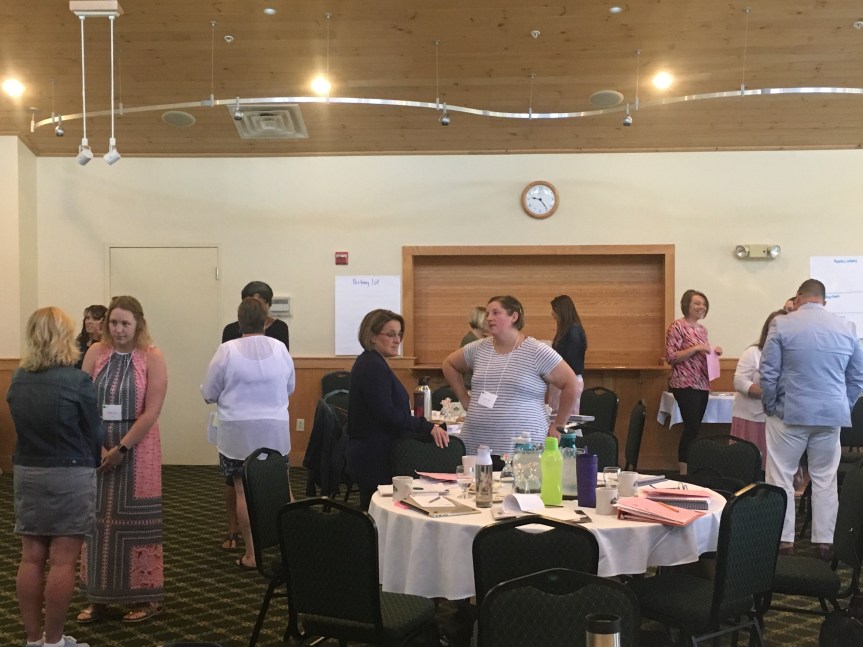
In Augusta, kindergarten teachers and their administrators from five Maine school districts participated in three days of training for the K for ME pilot, a research-based, discipline integrated, whole child curriculum for kindergarten.
Principals and teachers volunteered to implement this curriculum, based on the Boston Public Schools kindergarten program, to help tailor it for Maine’s children and school communities. Melissa Luc, consultant from the Boston Public Schools, facilitated the training and is working with participants from schools and Department to oversee the revisions.
During the 2018-19 school year, the Maine DOE piloted the PreK for ME curriculum in 14 preschool classrooms – the curriculum will soon be posted as an open source on the DOE website. K for ME expands upon this work by creating a vertical alignment for students building on concepts and content they learned in prek. K for ME will also be an open-source curriculum available on the Maine DOE website as a resource for districts after the pilot year.
For more information ,contact Lee Anne Larsen at leeann.larsen@maine.gov or 624-6628.
MSSM STEM Summer Camp Success Story
Submitted by Ryan McDonald, Summer Programs Director and Public Relations Coordinator at Maine School of Science and Mathematics.
The STEM Summer Camp at Maine School of Science & Mathematics ended the 2019 season on August 3rd. Over 550 middle school campers came to the small town of Limestone in beautiful Aroostook County to learn about science, technology, engineering, and math. The campers had three hands-on classes daily and then a non-STEM class called “Instructor’s Passion”. After that, they participated in traditional summer camp activities such as rock climbing, creating tie dye shirts, baking, capture the flag, swimming, and of course our special 100-foot mega slip-n-slide.
The camp started in 1997 as a camp for girls to get them interested in the STEM fields, but expanded to six weeks total with three for boys and three for girls. In 2018, the camp changed to five weeks with a co-ed week in the middle. We have found the new model to be very effective and plan to continue.
The classes are designed to keep kids academically stimulated through the summer and have no homework nor prerequisites. The only requirement is curiosity for how things work. Some of the classes this year and past years have included Real Life CSI, Model Rocketry, 3D Printing, You Can Do the Cube (Rubik’s Cube), The Science of Clay, Intro to Programming, LEGO Robotics, Catapults and Trebuchets, and many more. This year brought a new idea, Instructor’s Passion for the 4th class. It was a shorter class where each instructor taught a hobby or interest such as origami, Japanese language, drawing, creating your own game, appreciating Beethoven’s music, team building, etc.
The MSSM STEM Summer Camp brings educators, staff, and campers from all 16 counties, a few other states, and even a few foreign countries. Each year we strive to improve the camp based on feedback from the campers. We don’t make anyone an expert in each week of camp, but we do love when campers learn something and say, “Wow! This exists.”
For more information about the MSSM STEM Summer Camp and Maine School of Science and Mathematics, go to: www.mssm.org.
Get to Know the Maine DOE Team: Meet Valerie Chiang
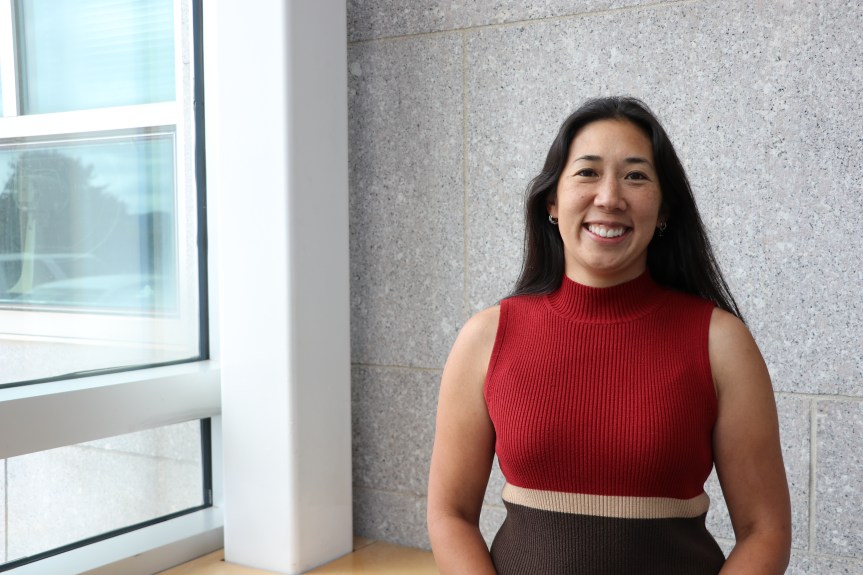
Valerie Chiang, Maine DOE School Construction Coordinator is being highlighted this week as the part of a Get to Know the DOE Team campaign! Learn a little more about Valerie in the brief question and answer below.
What are your roles with DOE?
I am a School Construction Coordinator with the Office of School Construction team. My role gives me the opportunity to work with various school departments on improvements to their facilities through a number of programs including the Major Capital School Construction, Revolving Renovations Funds, and when requested, provide assistance to any school departments taking on their own local projects. I assist school departments navigate DOE and other State construction related requirements, review and prepare contracts, review design documents, invoices, and oversee construction activities.
What do you like best about your job?
I really enjoy being a part of the overall process and helping it all come together every step of the way. Since the process takes years, it is a unique blend of patience and excitement – from hearing the thoughts and ideas generated by students, staff, and administrators, to working with the designs developed by architects and engineers and balancing their creativity with fair and equitable solutions, and finally watching it all transform into reality as construction goes on.
How or why did you decide on this career?
I’ve always been fascinated with the technical aspects of how things come together and how things work, with a twist of artistic flair thrown in the mix. Architectural drafting while I was in high school started me down my education and career path. Before I moved to Maine, I was working as an architect in New Jersey designing schools. Eventually, I started looking to move to Maine with dreams of a career change and becoming a forest ranger. (Little known fact – I had volunteered with the National Forest Service while I attended college in Virginia, and got to teach kids while dressed up as Smokey Bear!) When I finally made it to Maine 15 years ago, I stayed involved in construction, working for the Bureau of General Services in an architect position. While I was at BGS, part of my project load included participating in portions of the DOE school projects, reviewing design documents and overseeing construction. When the School Construction Coordinator position opened up where I could join DOE and get even more involved with all aspects of school projects, I jumped at the opportunity!
What do you like to do outside of work for fun?
The biggest reason why I moved to Maine was to live in my favorite playground, instead of just visiting Vacationland. You’ll find me outdoors as much as possible with my husband and 6 huskies – we’re always having fun restoring our apple orchard, hiking, kayaking, camping, snowmobiling, dogsledding…and occasionally building something!
Simplified Gifted and Talented Program Application Available
The Gifted and Talented Program Application has been simplified, digitized, and is now available for the 2019-20 school year.
You can access the new application and instructions for completion on the Department’s Gifted and Talented website.
All applications must be submitted by September 30, 2019.
Maine DOE Update – August 15, 2019
From the Maine Department of Education
Reporting Items
Graduation Reporting-Phase Two- Reminder and Webinar for Assistance
Phase II of graduation will allow schools the opportunity to review and make necessary changes to correct or update exit codes from the 2018/19 school year for their 4th, 5th and 6th year students. | More
| Visit the DC&R Reporting Calendar |
News & Updates
Education Leaders Convening at UMF for 2nd Annual Teach to Lead Conference
The 2nd annual Powered by Maine Teach to Lead® conference is taking place as a chance for educators and school administrators to network with other leaders throughout the state and to provide participants with the unique opportunity to collaborate with fellow teachers and school administrators on an action plan to accomplish common goals and solve identified issues for the coming school year. | More
Migrant Education Program School Survey
The Maine Migrant Education Program (MEP) provides the following School Survey to all Maine school districts to help the Maine MEP locate families that may qualify for related services. Families can elect to complete this form in their primary language. | More
Special Education Forms Update
Based on the periodic review and feedback from a stakeholder group of practitioners in the field, The Maine Department of Education’s Office of Special Services, has revised only a few required forms for special education. Specifically, the IEP form, the adverse effect form, and the optional referral form have been revised; all vendors have been notified of these changes. A complete list of all forms is available on our website. | More
Get to Know the DOE Team: Meet Shelly Chasse-Johndro
Title II Program Coordinator Shelly Chasse-Johndro is being highlighted this week as the part of a Get to Know the DOE Team campaign! Learn a little more about Shelly | More
Maine Schools Sharing Success Stories
- RSU 57 Prek Teachers Train Fellow Educators on Research-based Prek Practice
- Brunswick Community Support Group is Working Hard to Welcome Refugee Families
- Maine Teachers Learn About the Benefits of Technology in Elementary School Classrooms
- Class in a Canoe: Early College at Bryant Pond
| Submit your Maine School Success Story |
Professional Development & Training Opportunities
| Visit the Professional Development Calendar |
Latest DOE Career/Project Opportunities
- Public Service Manager II – Assessment Team Leader
- Education Specialist III – Certification Consultant (Anticipated Vacancy)
- Education Specialist III – Multi-Tiered System of Support Specialist
- Regional Education Representative – Social Emotional Behavioral Learning Specialist
- Education Specialist III – State Agency Client/State Ward/Educational Surrogate Coordinator
- View current Maine Department of Education employment opportunities here
Special Education Forms Update
Based on the periodic review and feedback from a stakeholder group of practitioners in the field, The Maine Department of Education’s Office of Special Services, has revised only a few required forms for special education. Specifically, the IEP form, the adverse effect form, and the optional referral form have been revised; all vendors have been notified of these changes. A complete list of all forms is available on our website. All changes on the revised forms go into effect August 1, 2019.
- Below are the detailed changes to the IEP form:
-
-
- Section 1: the effective date of the IEP has been changed to duration of the IEP, allowing for range (beginning and ending dates)
- Section 2: in the disability box, multiple disabilities used to require a list of concomitant disabilities. The revised version requires that all concomitant disabilities be checked.
- Section 3: the considerations section no longer requires a statement as to where the issue is addressed in the IEP.
- Section 3: question B – the two questions that were listed under question B are now combined into one question, still in the same location.
- Section 3: question D now has an option of N/A
- Section 3: question J – same as question B
- Section 4: changes in the arrangement of previously required information.
- Section 4: strengths and needs and effect on child’s involvement have been placed in a new block and are no longer in the goals section
- Section 5: now includes only present level measurable goal, objectives and progress; the CDS (3-5) section was eliminated; all CDS goals go in the Measurable Functional Goals section.
- Section 6B: Alternate Assessment: now has an option of N/A
- Section 9: the post-secondary transition plan has not been changed but looks different on the form because of the change from landscape to portrait orientation.
-
2. The adverse effect form was revised to add demographic information; this is now a stand-alone form. In addition, the reason for use of the form was updated to identify initial or continuing eligibility/dismissal. The remainder of the form is unchanged.
3. The optional referral form was revised to include more options for Tier 1 interventions, and blocks were added to provide additional Tier 1 interventions in the areas of Speech/Language, Modifying Time Demands, Modifying Assignments and Tests, and Maintaining Focus and Appropriate Behaviors.
The updated Procedural Manual will be posted on the Office of Special Services website by September 1, 2019.
For more information or assistance, please contact Roberta Lucas, Federal Programs Coordinator at 624-6621 or Roberta.lucas@maine.gov
Class in a Canoe: Early College at Bryant Pond
This article was written by Maine DOE Intern Emmeline Willey in collaboration with instructors from the 4H program at Bryant Pond and the UMaine Early College program.
It’s the type of overcast morning that settles in a dewy film over lakeside Maine, where the air hangs thick and heavy and silent canoes prickle with fishing rods. At the end of a dirt road sprawls the University of Maine 4-H Center at Bryant Pond. The rustic campus was built in 1956 and became part of UMaine Cooperative Extension in 2008. Today, it is home to the Outdoor Leadership Early College Program and the students who are pioneering it.
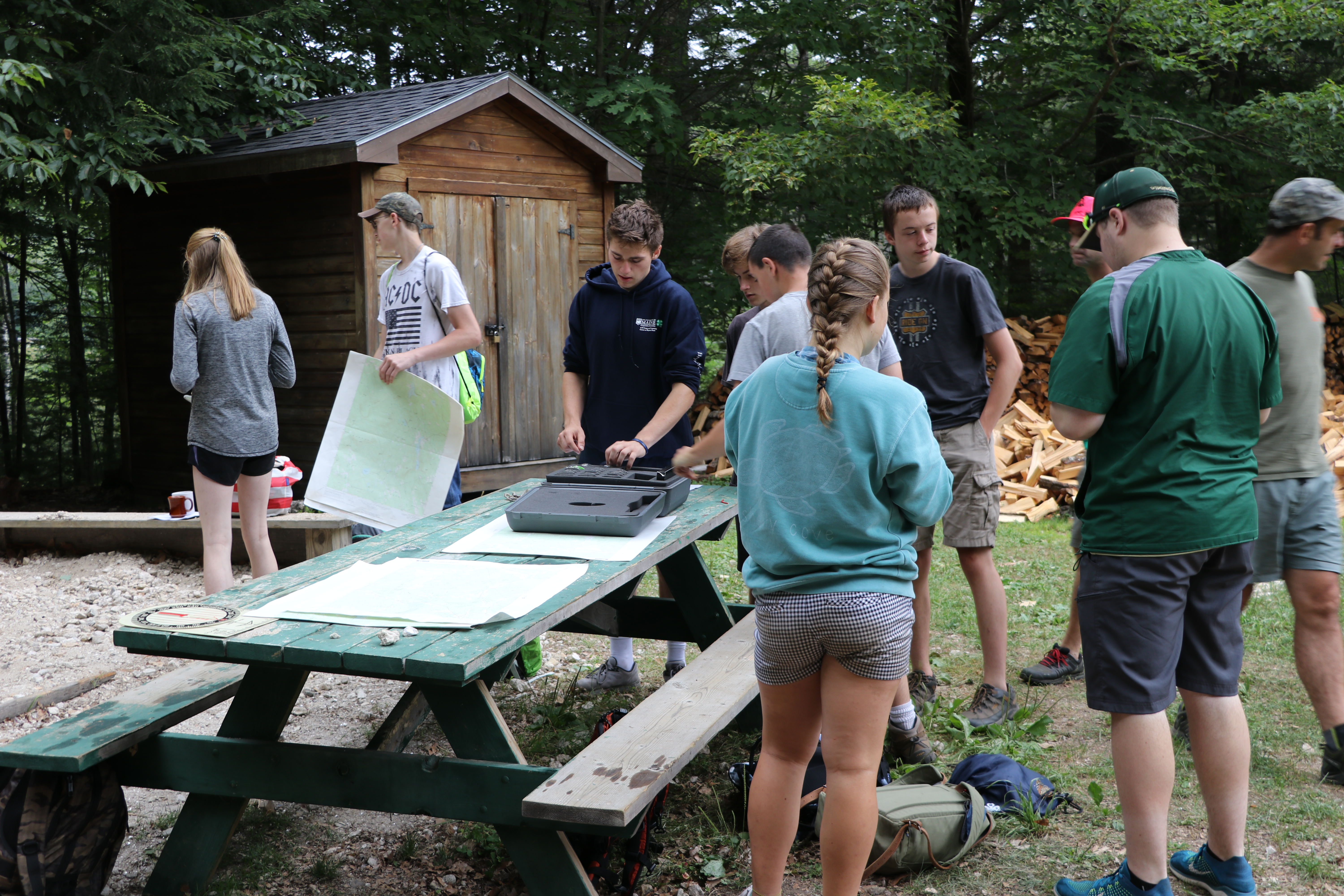
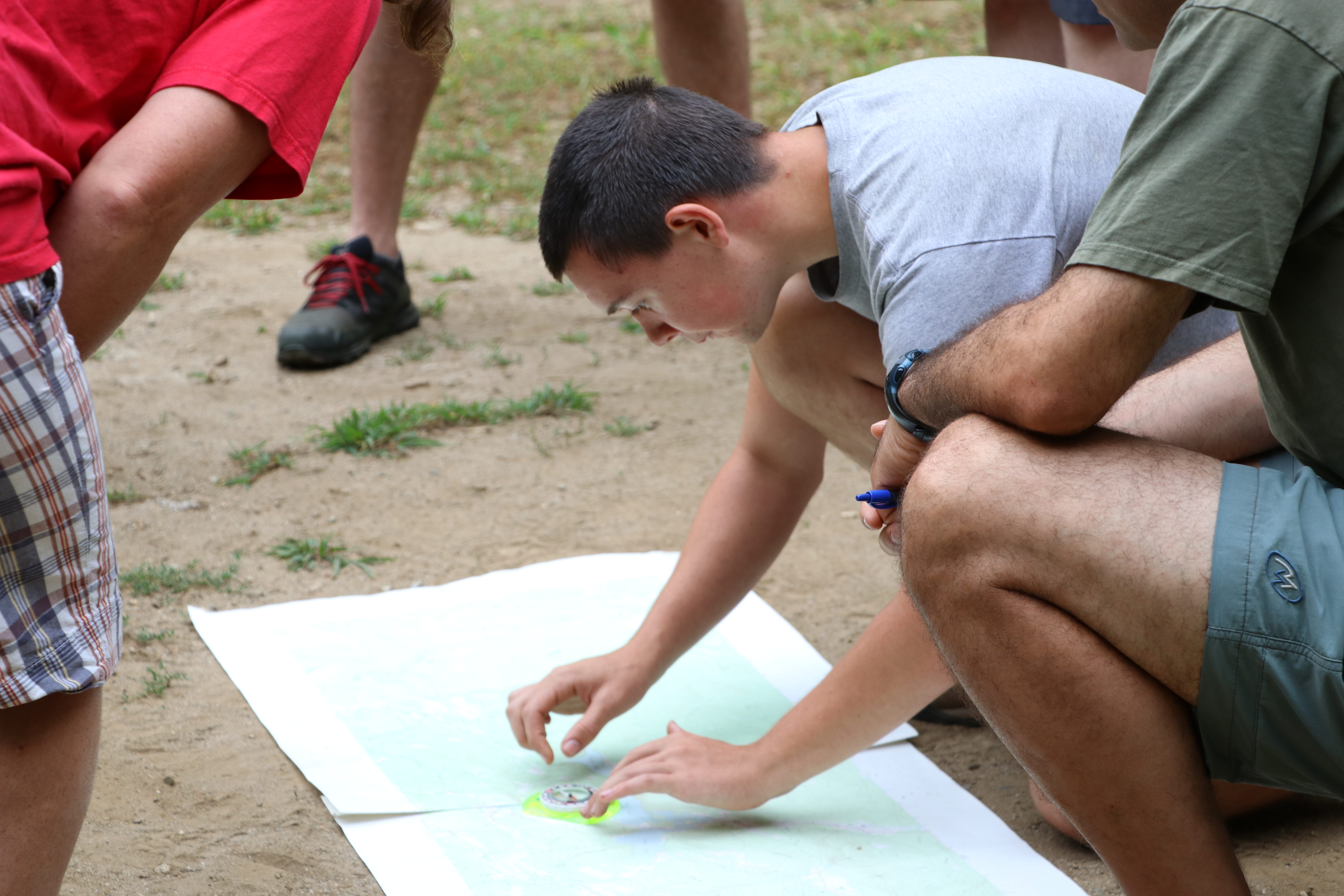
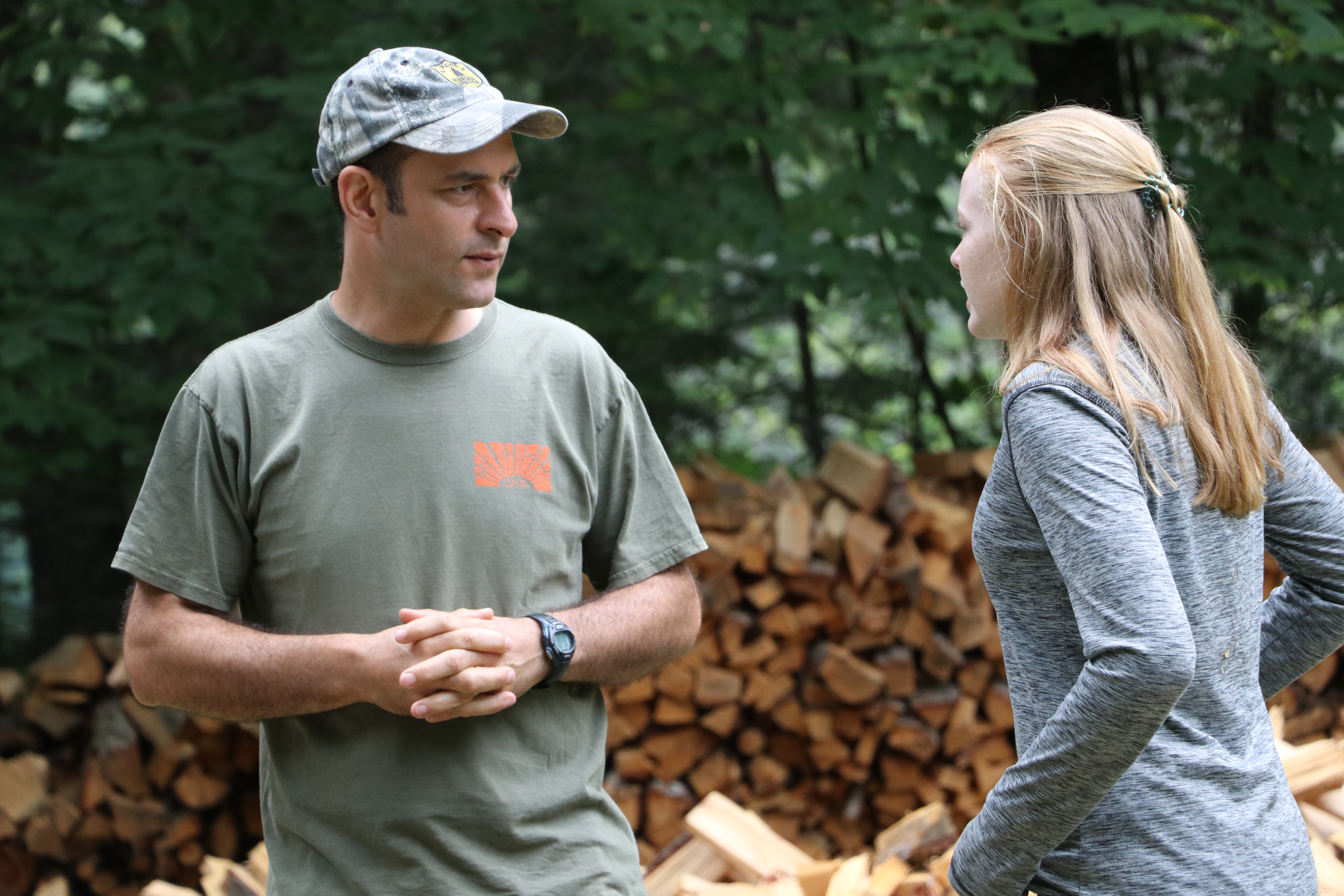
Upon my arrival, I catch a man as he’s sprinting out of the woods. He invites me to follow him back to the rest of the group after he retrieves a black case from a barn. I’m led up a steep hill on a rough draft of a path that opens on a dozen teenagers crouching over contour maps. Statewide Director Ryder Scott greets me in this clearing and explains that the students are finding their exact location using points of reference and geographic landmarks. Their knees are rooted in the ground and their sneakers are dirty; they tolerate the bugs with the nonchalance of camp kids on their second week of wilderness.
Minutes later, the group breaks, and the contents of the mysterious black case are revealed: compasses. The students retrieve them in pairs and trail off into the woods.
This is the sport of orienteering, one of many activities offered through the Outdoor Leadership Early College Program. In this competitive game, players are armed with a map and compass and sent into the wilderness to navigate their ways to checkpoints. Like many races, the goal is to finish in the shortest amount of time.
“Ryder! I have a question about trees!” yells a student, sprinting back out of the woods with a leaf in hand. They circle around the Ash leaf to take photos like scientists in an outdoor, worldwide laboratory. Shortly after, the rest of the class comes bounding out to regroup before they head to the lake.
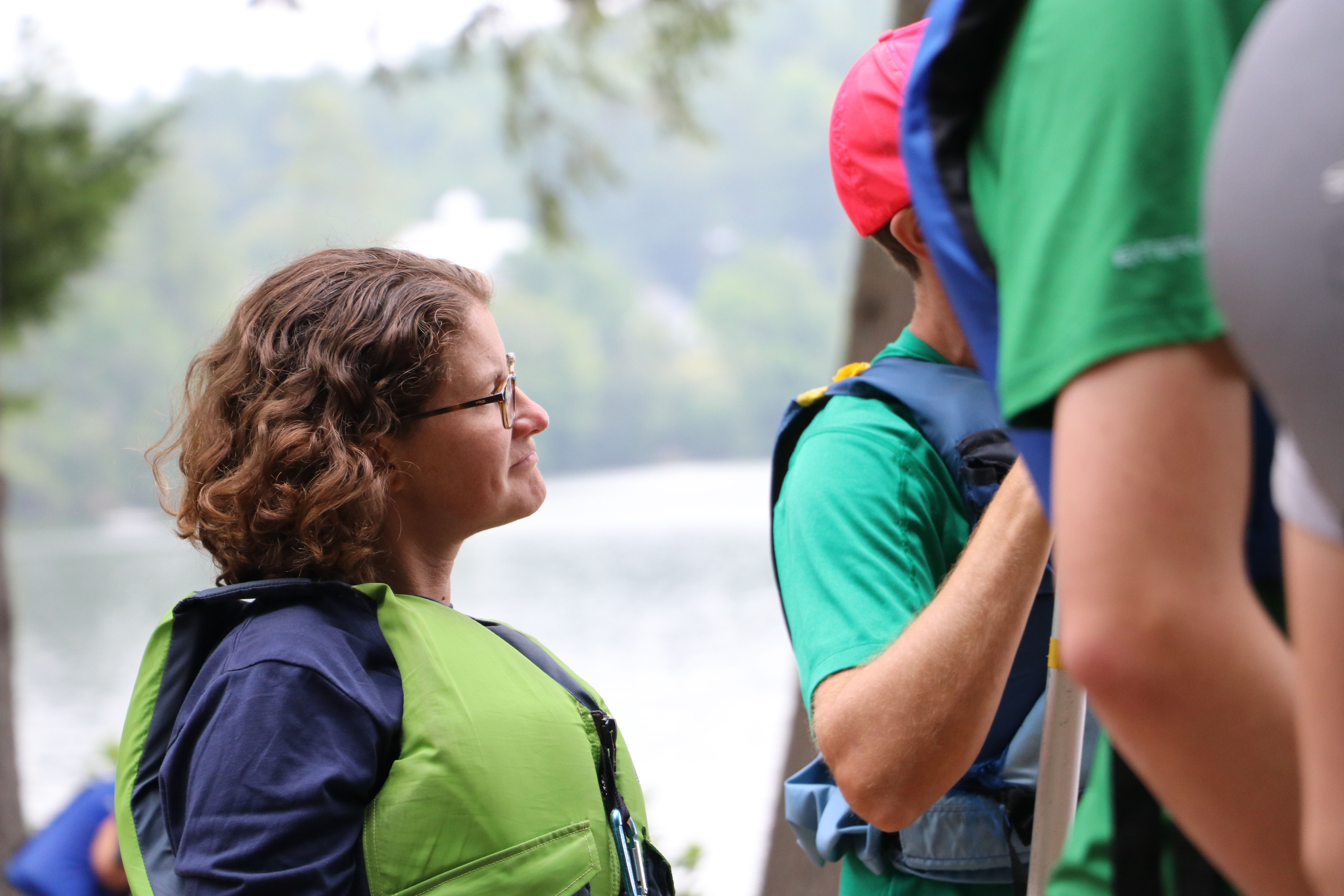
“They’re learning to appreciate the natural world, to be a part of nature and recognize their impact on the environment,” says Tara Pocock, a UMaine staff member and instructor at the 4-H Center, explaining that this understanding of the outdoors is important to help teenagers grow into responsible world citizens.
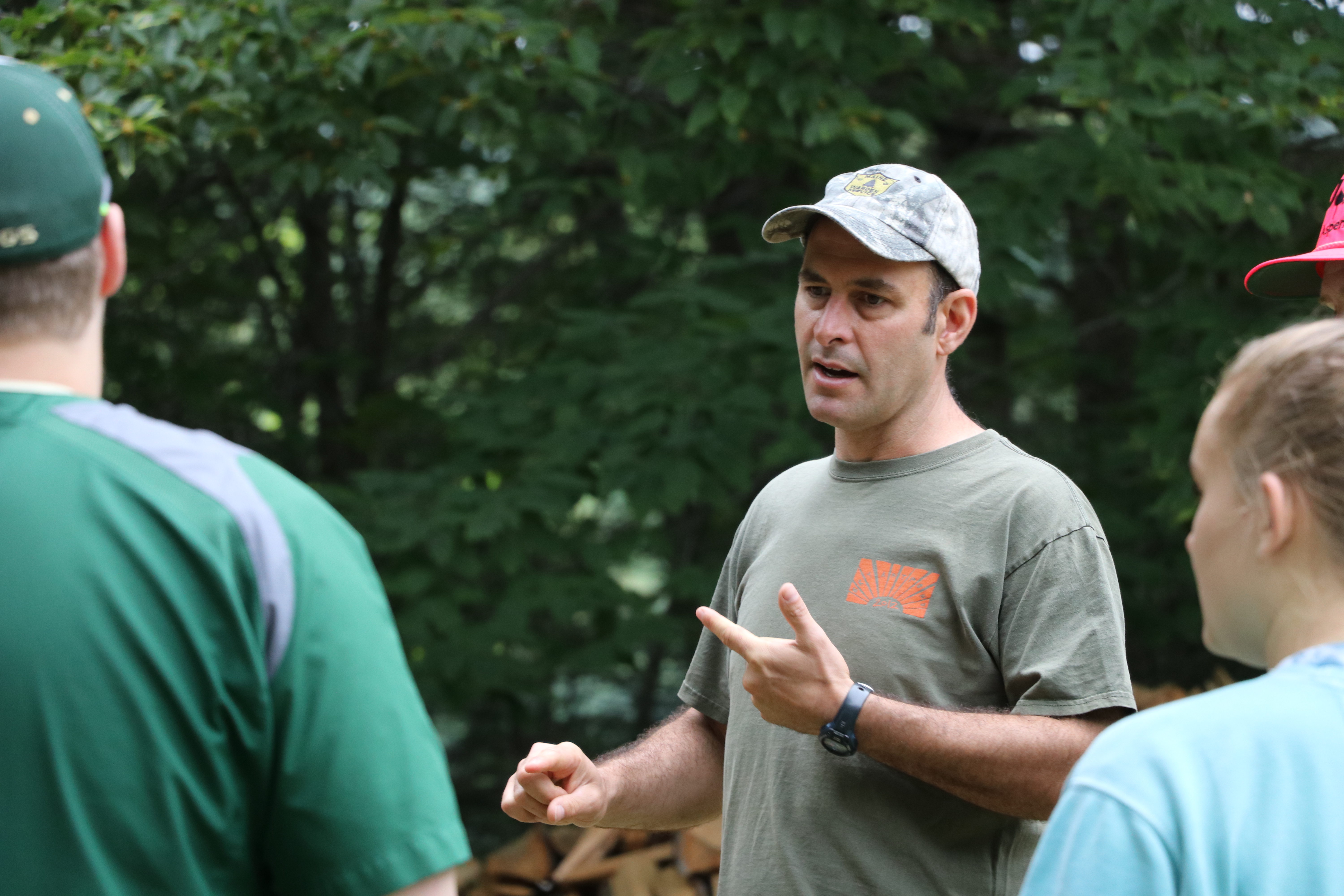
The three-week college course is offered to Maine high school students through the UMaine Early College Program. By the end of the course, students will earn three credits in Outdoor and Adventure Activities (KPE 265). Scott expressed UMaine’s goal to grow this program into a 12 credit outdoor leadership pathway that could lead to a four-year degree from the University of Maine, and support workforce development throughout the state of Maine.
“It’s experience with real-world consequences,” Ryder Scott tells me, describing the three-day canoe trip the students will be taking next week. “If they misread the compass, if they burn the oatmeal, it’s going to be a bad time.”
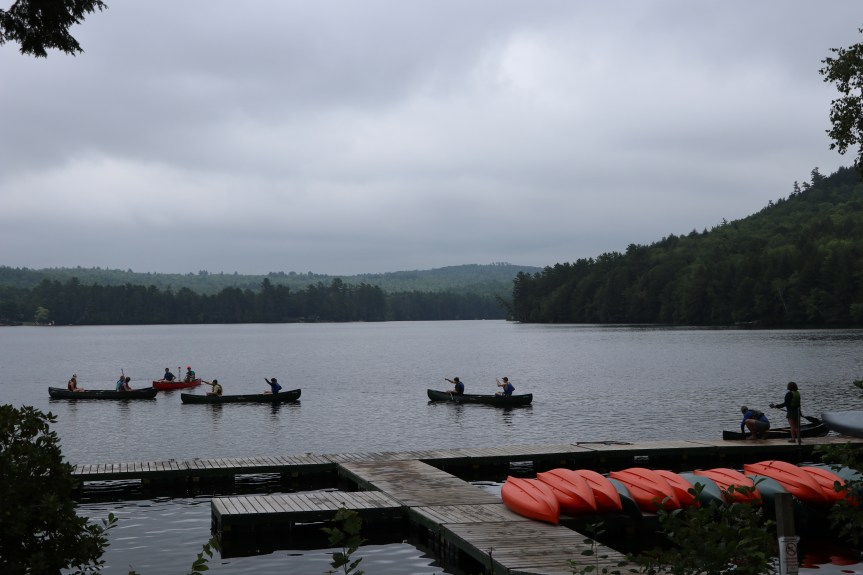
As the students make their way down to the water, discussion can be heard over the importance of wearing synthetic materials during aquatic activities. At the lakeside, the class gathers and student Laura Howe volunteers to give a lesson on proper paddling technique.
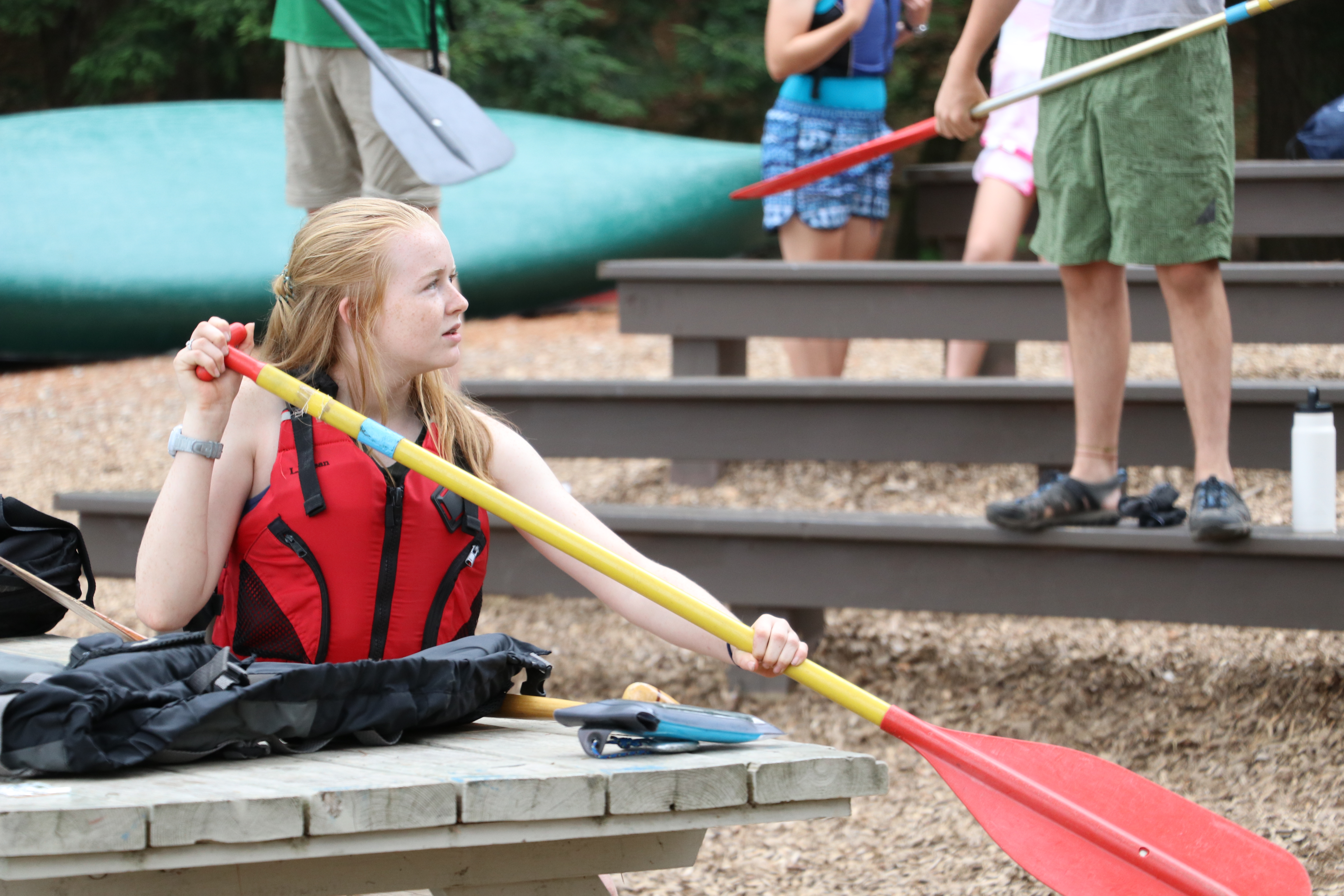
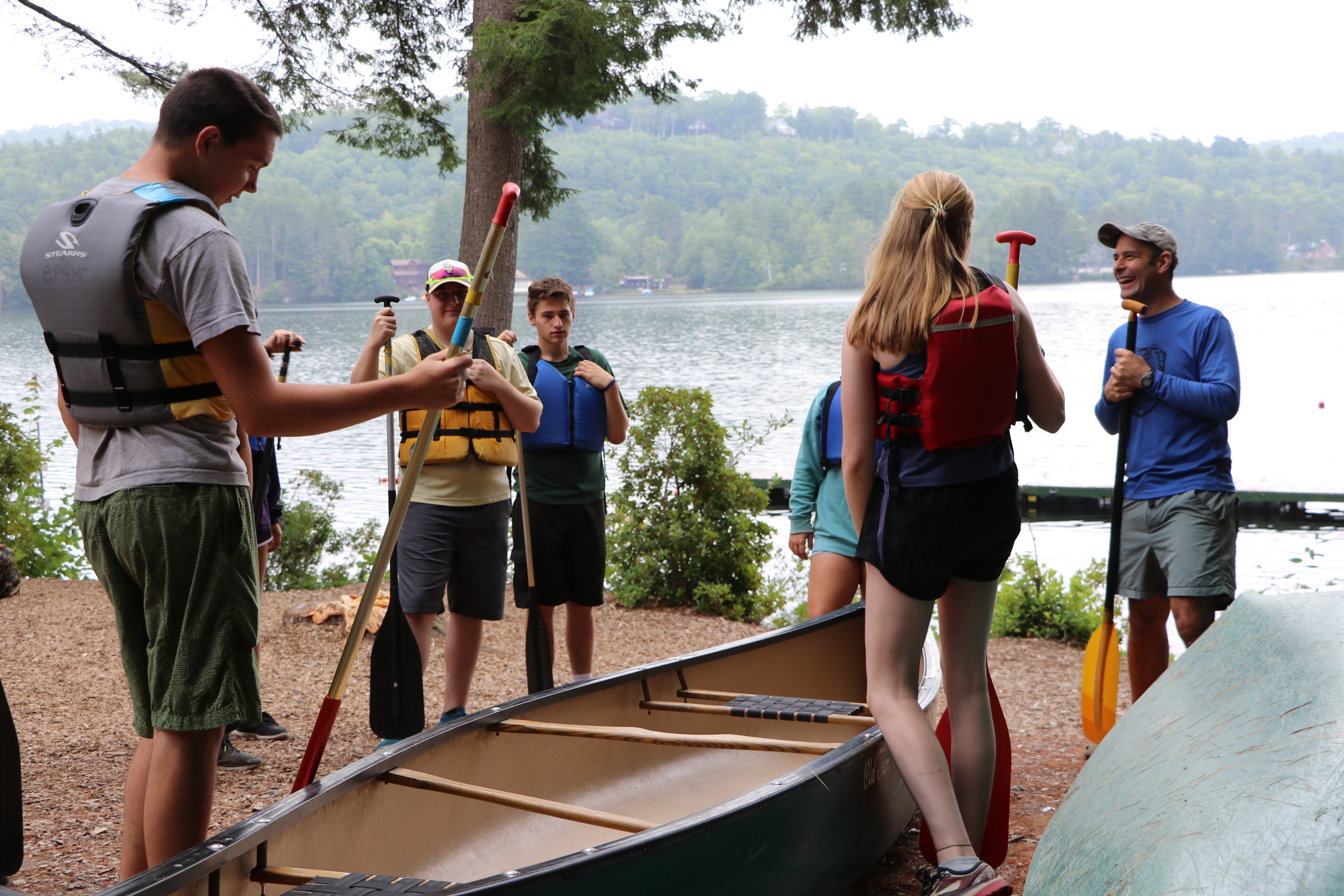
Halfway through the lesson, Scott interrupts to point out that the students are all holding their paddles correctly by balancing them on the tops of their shoes. Outdoor environments are conducive to this kind of rapid habit-building and learning via osmosis, as failure to remember instructions will have direct consequences on either expeditions or, in this case, expensive equipment.
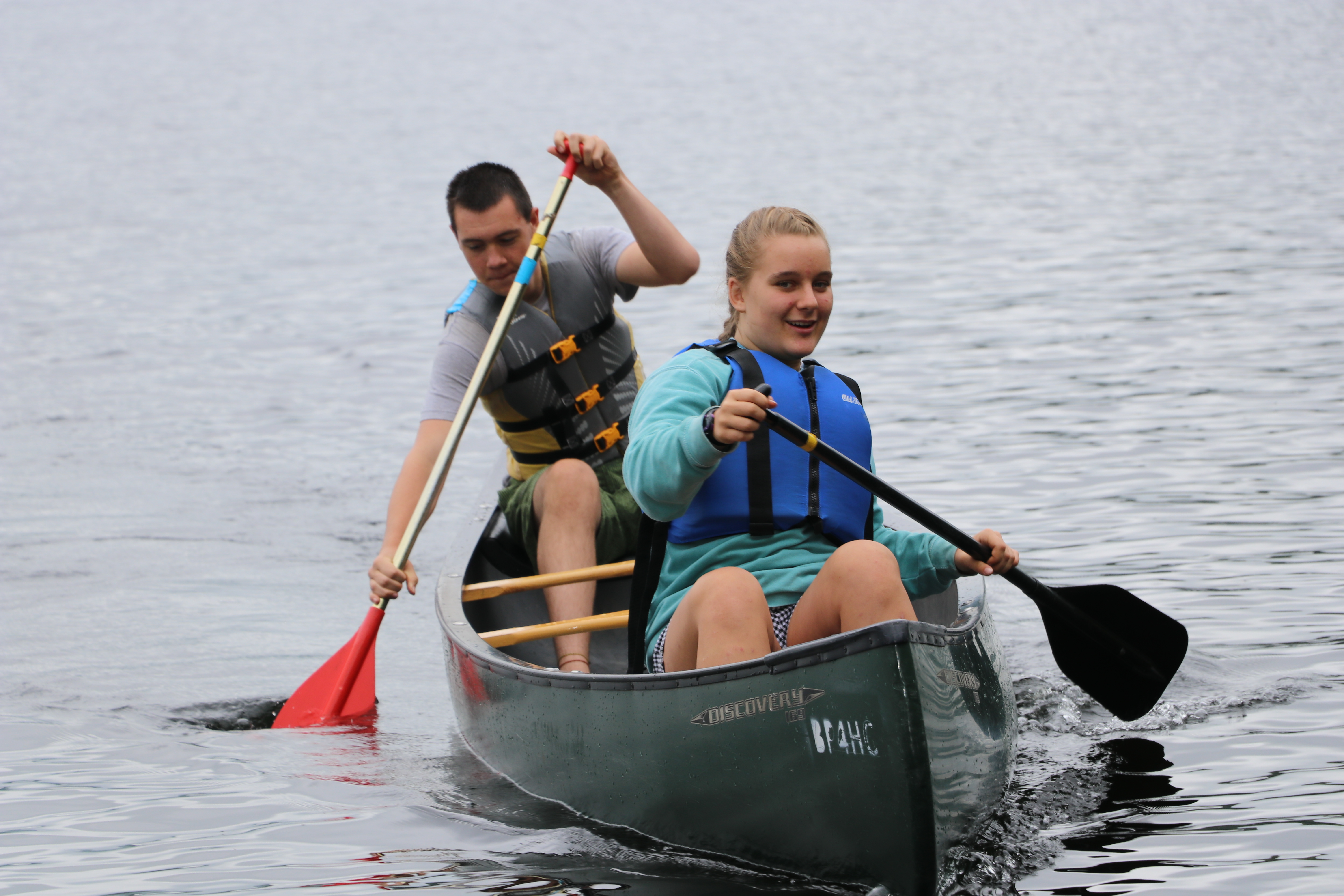
The class piles into canoes two at a time. They joke around with one another and hover nearby, waiting for their classmates. Students at experiential outdoors learning centers like this benefit from being a part of Maine and immersed in its enchanting wilderness. High school students can learn and adapt to the environment of the natural world, without missing out on the curriculum of the classroom. The UMaine Early College Program allows students to enjoy an outdoor summer, while still making critical progress toward their future careers and education.
This fall, UMaine Bryant Pond will be offering another course (KPE 209-Wilderness First Responder) as part of the Early College Outdoor Leadership program. For more information, contact Ryder Scott, Statewide Director of UMaine 4-H Centers at ryder.scott@maine.edu or 207-665-2935.
The University of Maine will be offering over 40 online courses in a wide range of academic disciplines to high school students this fall. Students across the state will benefit from the flexibility and variety of Academ–e online college courses. Through a partnership between the Maine Department of Education and the University of Maine, tuition is waived for students of Maine public and home schools for up to six college credits per semester and 12 college credits per year. Fall classes start Sept. 3. Registration is open at umaine.edu/earlycollege.
Interested students and parents are encouraged to contact Allison Small, Early College Programs Coordinator, 581.8004; um.earlycollege@maine.edu.


Maine Teachers Learn About the Benefits of Technology in Elementary School Classrooms
This article was written by Simon Handelman, a Maine DOE Intern from the Margaret Chase Smith Policy Institute.
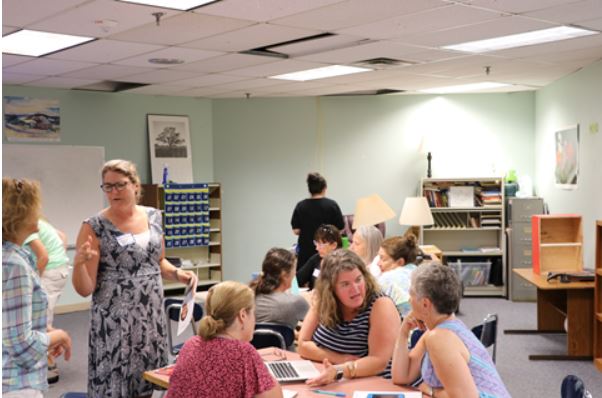
Imagine how surprising it was seeing my own mother sitting in a classroom at Casco Bay High School, on a Friday morning in August. Allow me to clarify, I was not surprised to see her attending the professional learning class there; she is an extremely dedicated teacher. All I mean is it was serendipitous to see her on a day I might have otherwise stayed in Augusta at the Department of Education. My mother, Ellen Handelman, is the art teacher at Harrison Lyseth Elementary School in Portland. She, like so many other enthusiastic Maine teachers, is spending her last weeks of summer vacation attending professional learning classes, one after another. I do not believe she has had so much homework since college.
We were at Casco Bay High School that day for the same reasons. A session was being taught by former Cushing Community School teacher Beth Heidemann, and philanthropist David Perloff. They were underscoring the benefits of technology in elementary school classrooms. For my mother, the highlight of that day was a winning a 3D printer for her very own classroom. When I asked her to express her excitement about the printer, she said “my students can witness (in real time) how science, technology, engineering, and math combine with art to create usable objects which pair form and function.”
My mother is constantly developing methods to display for her students the foundational importance of art education. She firmly believes “everyone is an artist,” and I agree. In fact, that same mantra of was repeated again and again at Casco Bay that day. Heidemann’s company Go2Science, which she founded with scientist Curtis Bentley, allows kindergarten through second grade students to travel virtually around the world, investigating hypotheses for a representative group of scientists. Heidemann’s message: “everyone is a scientist.”
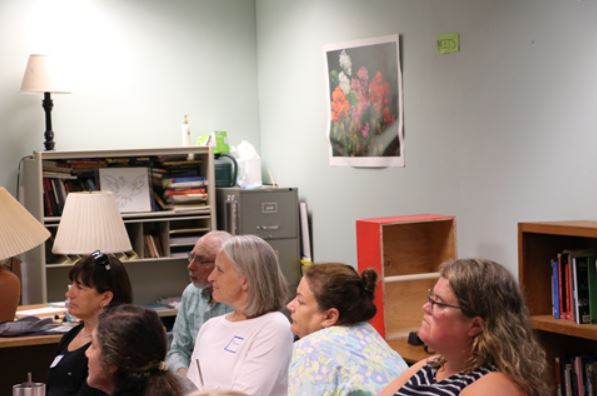
Perloff’s Perloff Family Foundation, which donated the printer my mother won, believes all young students are equipped to learn about complicated technology, if given the chance. His foundation provided three hundred fifty 3D printers to Maine public schools, and the Maine Medical Center Children’s Hospital. Perloff believes “everyone is an engineer.”
Other elementary school teachers in attendance raved about occasions in their own classrooms when young students expressed high level critical thinking. In one case a teacher told the group that her kindergarten class was able to fix the internet for a substitute teacher, using only verbal directions (for safety reasons).
As the summer months come to a close, teachers across the state are eager to return to their students. There are many fantastic professional learning opportunities available in Maine, and many more dedicated teachers prepared to become the best they can possibly be.
 Maine DOE Newsroom