PRIORITY NOTICE: Notice from Maine Charter School Commission- Public Input for Proposed New Public Charter School

Maine Charter School Commission Banner

The Maine Charter School Commission has received applications from two entities proposing a new public charter school opening in the fall of 2020. There are 9 public charter schools operating in the state of Maine. Current law allows for a maximum of 10.

Applications were received for:

  • Ecology Learning Center, located in Montville. will serve grades 9-12 with a target population of high school-aged youth seeking experiential, community-based learning. The catchment area of the school will be Waldo County.
  • Sheffwood Academy, located in Topsham, will serve grades 6-12 with a target population of students with a passion for the arts and/or technology. The catchment area of the school will be a 20-mile radius around Topsham.

At its August 6, 2019 Business Meeting, the Maine Charter School Commission determined whether the application(s) appear to demonstrate the applicant’s competence in each element of the Commission’s published approval criteria and appears to demonstrate that the applicant is likely to open and operate a successful public charter school in the state of Maine. The Maine Charter School Commission denied the application for Sheffwood Academy, with no further action recommended. The Maine Charter School Commission has moved the Ecology Learning Center application forward, and a public hearing will be held on August 7th for the Ecology Learning Center from 4:00pm-6:00pm in the Washington/York Room of the Augusta Civic Center.  The purpose of the hearing is to elicit public comment on the expected impact of the proposed charter school on students, parents, the community to be served by the school, and public education in the State. It’s important to note that if a school is approved for a charter, all students in the state of Maine are welcome to enroll.

If you are unable to attend a public hearing in person, written comments will be accepted through 5:00pm on Friday, August 23rd. Written comments can be mailed to the Maine Charter School Commission at 182 State House Station, Augusta, ME 04333 or emailed to mcsc@maine.gov.

Information will be provided on the Commission’s website http://www.maine.gov/csc.

Lincoln Elementary School Goes Above and Beyond to Keep Students Engaged in Reading During the Summer

This spring, Augusta School Department’s Lincoln Elementary School recorded videos of each of their teachers and staff members reading a book out loud and then posted it to their school Facebook page for students, parents, and families to enjoy. This effort was part of a read-a-thon initiative to keep kids engaged with reading and literacy activities over their week-long vacation in April.

With 25 videos posted over April break and hundreds of views by students and their families, they decided to expand the effort into the summer months and include community members as guest readers. “We have made an effort to post at least one video every day this summer,” said Lincoln Elementary School Principal Heather Gauthier. “Between June 14th and August 28th when school is back in session, we will have done over 75 videos, many of them with 200+ views on Facebook and YouTube, and positive engagement from parents and community members.”

Their guest readers include everyone from teachers, school administrators, staff, and education technicians to police officers, school board members, local authors, former students, local government officials, and even Maine DOE’s very own Lee Anne Larson, Early Learning Team Coordinator.

“We have received a lot of great feedback from community members who have been engaged and parents who have benefited from the videos,” said Heather. “One parent told us that she puts the videos on while she cooks dinner so that the kids can watch and listen to books while she is busy cooking.”

What started as an effort to keep students reading over the summer months has turned into a summer reading activity that has been successful in engaging students, parents, and community members alike.

Heather says that they plan to keep the guest reading videos going for as long as they can and hopes that people keep enjoying and watching them. Check out the Lincoln Elementary School Department’s videos on YouTube. Find Lincoln Elementary School Department on Facebook.

This article was written by Rachel Paling, Maine DOE Communications and Outreach Manager in collaboration with Lincoln Elementary School Principal, Heather Gauthier. If you have story ideas for the Maine DOE’s Maine Schools Sharing Success campaign, contact Rachel at rachel.paling@maine.gov.

Maine Reaches Federal Milestone in Special Education

Maine is proud to be one of 20 other states in the nation to meet federal requirements for serving the needs of children with disabilities. This rigorous effort was led by the Maine Department of Education (DOE) Office of Special Services.

Under the Individuals with Disabilities Education Act (IDEA), states are required to report each year to the US Department of Education regarding their progress in meeting “measurable and rigorous targets” to serve students with disabilities. This determination is based on how well schools address the needs of children with disabilities. As part of the review process, Maine and other states were evaluated based on several factors, including student performance and fulfilling IDEA’s procedural requirements.

Members of the Special Services Team at the DOE have been hard at work to partner with and support schools to ensure the quality of education for disabled students in Maine continues to improve. Their strategy has been to identify areas where the state has struggled and use targeted professional development and collaboration with district administrators and teachers to improve those areas. Child Development Services has also been utilized to enhance support for children with disabilities from birth to the age of five. As part of a broader Department-wide effort, this strategy has helped to further emphasize student support and achievement.

One, among many other, contributing factors for the 2019 review, was the increased amount of Maine students with disabilities who participated in standardized testing compared to the previous year. The state receives full points from the federal government if at least 90% of students with disabilities participate in standardized testing.

“We’ve been working really hard to make sure the Department is providing the support needed to help schools improve their practices with children with disabilities,” said Jan Breton, Acting Director of the Office of Special Services. “It takes a strong team of people, both here at the Department and in the field, to make sure that our State is meeting these requirements,” she added.

The commitment and collaboration of students, families, educators, and the Maine DOE has enabled Maine to meet requirements by several percentage points. Additionally, the support and guidance that enables students with disabilities to make smooth transitions from secondary school to post-graduation living has also improved, and the dropout rate for students with disabilities has decreased. With more Maine students receiving their diplomas, these young people can expect improved employability and a wider spread of higher education options after high school.

This milestone gives the Department the opportunity to refocus efforts on collaborative and student-focused growth, as well as areas in which Maine has not yet scored full points as part of the requirements. One example is around the team’s efforts to improve the state’s federal ratings for math scores through the Math4ME program. This program is grounded in hands-on activities and interactive professional learning experiences that allow participants to gain a deeper understanding of core concepts of mathematics and strategies. The program focuses on students with disabilities in grades 3-8.

Maine’s special education professionals are passionate and dedicated in their daily work to improve the lives and outcomes of children with disabilities. With our strong team of professionals here at the Maine DOE and our valuable partnerships with educators, administrators, families, and stakeholders statewide, we hope to continue our important work toward ongoing growth, improvement, and alignment in special education in our state.

Innovative New “Experiential” Educator Training Takes Center Stage

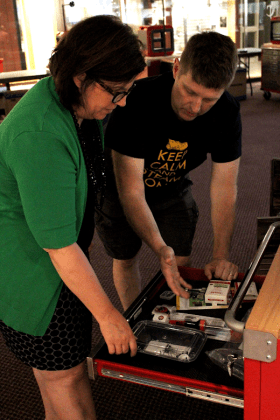
Course Instructor Keith Kelley and EMMC President Lisa Larson looking through a STEAMRoller cart included with the course.
Course Instructor Keith Kelley and EMMC President Lisa Larson looking through a STEAMRoller cart that is included with the course.

In a four-day educator training that took place last month at the United Technology Center (UTC) in Bangor, 14 educators from across Maine gathered for a unique professional development opportunity offered through a partnership between two educators from RSU 19, Eastern Maine Community College (EMCC), and UTC that aims to help educators integrate advanced technology and experiential learning into every lesson plan, and to help fill the workforce gap in Maine.

Utilizing a $50,000 grant that EMCC President Lisa Larson obtained through the Maine Community College System, the 3 credit Introduction to Experiential Teaching through Technology course was offered as an opportunity for educators to “learn practical learning experiences to integrate traditional and newly advanced technologies into project biased lesions,” similar to the teaching methods found in career and technical education (CTE) settings throughout the state. The idea is to bring the experiential teaching philosophy to classrooms long before the high school CTE experience. The earlier integration of experiential learning gives students a taste for possible career paths but just as importantly, learning experiences that allow them to utilize and understand the advanced technological tools of their future and to utilize and exercise their own problem-solving and management skills.

The course was led by RSU 19 educators, Keith Kelley and Kern Kelley who are brothers, partners, and advocates for integrated experiential student learning. It provides classroom teachers, at any grade level and of any subject matter expertise, with not only the tools but also the mindset and methods to teach project based and integrated lessons to their students. This type of learning environment provides students with real-world, problem solving experiences with technology, bringing full circle the content areas that make up the very well-known acronym STEAM (science, technology, engineering, art, and math).

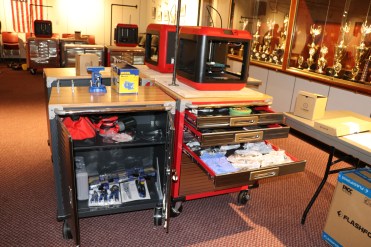
The STEAMRoller Cart includes: Seville Classics UltraHD 2-Door Rolling Cabinet and a 6-drawer Rolling Storage Cabinet, Vise, Portable Vise Table, Power Strips, Cordless Orbital Hand Sander, Corded Orbital Hand Sander, Power Drill, Impact Power Drill, Rotary Dremel Tool, Irwin Clamps, Kobalt 100-Piece Household Tool Set with Hard Case, Hand Tool Bag, Hammer, Locking Pliers, Tape Measure, Speed Square, Spade Bits, Flash Forge 3D Printer, 3D Printer Tool Set, Frog Tape, Duct Tape, Rocketbook, FriXion Pens, iPod Touch & Case, Tripod, Raspberry Pi, Soldering Iron, Scrappy Circuits, Safety Goggles, Disposable Gloves, Breakout of the Box DRAWER, and a Breakout EDU Kit.

Each educator’s school paid $381 total for the four-day hybrid course that includes the four in-person sessions, bi-weekly reading and reflection assignments and online discussions and provides educators with contact hours plus 3 college credits, in addition to a “STEAMRoller” cart of hardware and equipment valued at over $2,000 each. They will also each have the opportunity to host a STEAMRoller bus for a day at their school, which includes an experiential student conference provided by course instructors and their partners. At the student conference, educators and students will be able to participate in a day filled with breakout sessions on various topics such as 3D printing, drones, and virtual reality to name a few.

Hermon High School Principal Brian Walsh is excited that one of his 9th grade science teachers is attending the course this summer so that he can share his knowledge and the tool kit with the other 9th grade science teacher so that they can integrate hands-on project-biased learning experiences, not just to 9th graders but throughout the high school as well. Walsh has felt a void where they were unable to fill an industrial arts position in prior years and hopes this will help bring new STEAM learning experiences, career pathways, and experiential opportunities to the students at Hermon High School.

educators looking at a computer screen togetherTonya Therrien, Benton Elementary 5th Grade teacher decided to take the course with the hopes of bringing back to her classroom, “a way to utilize technology more with the kiddos, beyond just using it for research.” She wants her students to know how to use technology as a tool. When asked what she thought of the training so far, she said, “this is probably the most worthwhile class I’ve ever taken, and I’ve taken a lot of classes.” She then added that she has two master’s degrees which both required a fair amount of coursework.

Aaron Pody, a high school Life Sciences teacher from RSU 18 came to the class to learn about ways to teach the content with more relevance to his students. He has been pleased to find that there are ways to bring technology into the classroom that are not cost prohibitive.

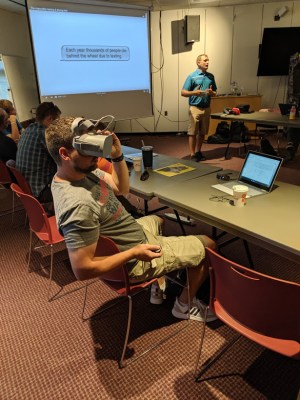
educator wearing VR gogglesRSU 26 educator Karen Frye from Orono was excited to bring back what she has learned at the course to provide her gifted and talented students with the rare opportunity to do some hands-on problem solving, which will further enrich their learning experience and give them some problem-solving skills.

The 3-credit course and the STEAMRoller bus events are intended to give participating educators and schools a taste of experiential learning methods, along with emerging technologies, tools and resources. The course is expected to be followed up by an Experiential Education certificate program that EMCC is expected to launch in January of 2020. The new program aims to provide the state with educators that can help fill the growing workforce gap in technologically skilled workers.

The launch of the experiential training was deemed a success by organizers and participants alike. The innovative approach to an obvious need has the potential to further help Maine schools lead their students toward successful career choices, experience with problem-solving, and the ability to successfully navigate the technology of our future.

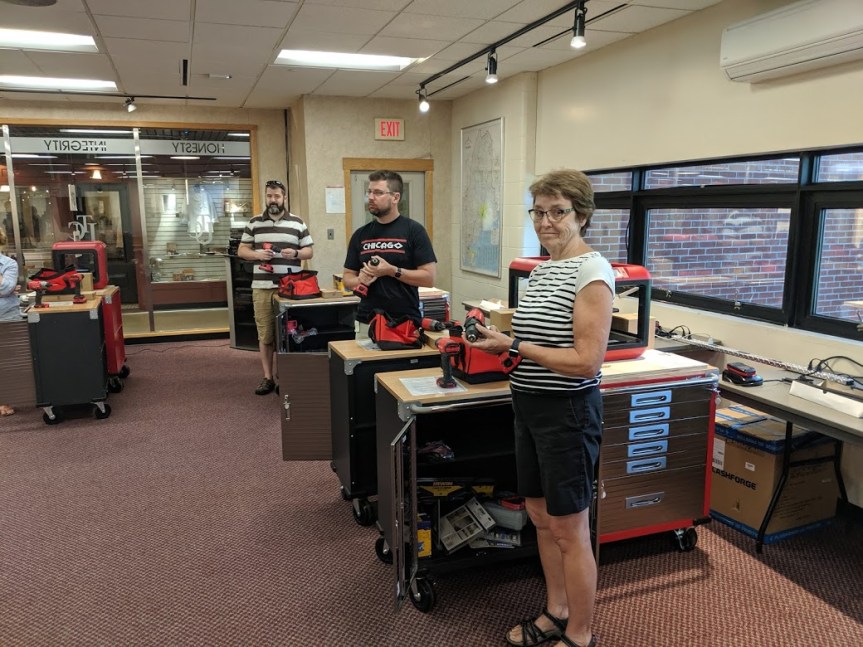
Educators standing with STEAMRoller Carts

This article was written by Rachel Paling in collaboration with course instructors Keith and Kern Kelley, and staff at both UTC and EMMC. If you have story ideas for Maine DOE’s Maine School’s Sharing Success campaign, please contact Rachel Paling at rachel.paling@maine.gov.

Conference: Collaborating to Address the Complex Mental and Behavioral Health Needs of Maine Youth

The Maine American Academy of Pediatrics (AAP), Maine Department of Education (DOE) and Maine Association of School Nurses (MASN) are collaborating to bring you best practices and current research on a variety of critical mental and physical health related topics facing adolescents. Recognizing that we are all supporting the needs of Maine children in different locations and ways we are bringing experts together to receive collaborative professional learning.

Hosted by: The Maine AAP, Department of Education and Maine Association of School Nurses

Intended audience: Those interested in the mental health of students (school nurses, medical providers, school counselors, social workers, and administrators)

Some topics covered: 

  • Identification and treatment of anxiety and depression in children and adults: How can we do better?
  • Addressing the Complex Mental and Behavioral Health Needs of Maine Youth: The Key Role of Adverse Childhood Experiences and Trauma Informed Care
  • Creating an Inclusive Environment for LGBTQ Youth
  • Tools for Screening and Safety for Youth at Risk of Suicide
  • Substance Use Disorder:  Impact on Youth and Families

Date: August 16, 2019

Time: 8:00 AM – 3:15 PM

Location: The program is being held in the Talbot Hall/Bonney Auditorium at the University of Southern Maine, located at 92 Bedford Street in Portland.

Cost: $50.00

Register here.

For questions or additional information, please contact Emily Poland at emily.poland@maine.gov.

Maine DOE Update – August 1, 2019

From the Maine Department of Education


Reporting Items

WHY DATA MATTERS: SAU Leaders Invited to Train and Talk!

Are you a school or district leader who wonders why the Department of Education collects certain data sets, and what they are used for?  Have you ever wanted to have a frank discussion with the DOE’s Data Team about the data collections and how they could be improved?  | More

| Visit the DC&R Reporting Calendar |


News & Updates

PRIORITY NOTICE: Conceptual Conversation Around the Performance Evaluation and Professional Growth Systems (PEPG)

Since 2012, educators across the State of Maine have worked collaboratively to create locally developed, effective models for professional growth. Since that time, plans have been revised and refined to reflect the requirements of Chapter 180 and school or district goals. In response to changes to Chapter 180 made during the 129th legislative session, The Maine Department of Education invites interested stakeholders to attend a conceptual conversation related to educator effectiveness on August 5, 2019 | More

RECOGNIZING GREAT EDUCATORS: Department of Education Talent Pool!

The Maine Department of Education believes that a great way to ensure a robust educator workforce is to develop and engage a network of outstanding educators as exemplars and leaders for our state.  By promoting the excellence that exists in classrooms and schools across Maine, we hope to increase the trust and respect given to educators, and encourage and support others in an outstanding career working with Maine’s students.| More

Seeking Innovative Educational Leaders to Join Maine’s Leadership Development Program

The Maine Department of Education is thrilled to announce that the facilitator candidates for Maine’s Leadership Development Program (Maine LDP) have been selected. | More

Preparing to Educate Students who Are English Learners- Reviewing Lau Plans

As schools prepare for the 2019-2020 academic year, the Maine Department of Education would like to offer its support to help educators proactively plan effective programs for students who are English learners (ELs). Each year many new families arrive to Maine over the summer, or transfer from one Maine district to another. When school enrollment begins in the fall, districts may enroll a student who is an EL for the first time or may experience an increase in the number of students who are ELs as compared to last school year. The following suggestions and resources can help educators prepare to identify and serve students who are ELs and engage their families and communities. | More

Maine Officially Adopts English Language Development Standards

Each of the eight content areas taught in Maine schools has its own set of standards, collectively known as the Maine Learning Results. Since 1997, the Maine Learning Results have provided a framework from which educators can build their curriculum, instruction, and assessments. Alongside these content standards, students learning English have been supported with a cohesive set of English language development (ELD) standards, aligned to the academic content they are learning. | More

Maine DOE Director of ESOL Selected as Finalist for US Department of State Award

April Perkins is the current Director of ESOL (English for Speakers of Other Languages)/Bilingual Programs & Title III at the Maine Department of Education (DOE). She is also one of four finalists for a prestigious national award. | More

Next Think Tank Scheduled for September 30!

In the ongoing effort to engage with all stakeholders, the Department of Education will hold its next Think Tank at the Schoodic Institute in Winter Harbor on September 30.  | More

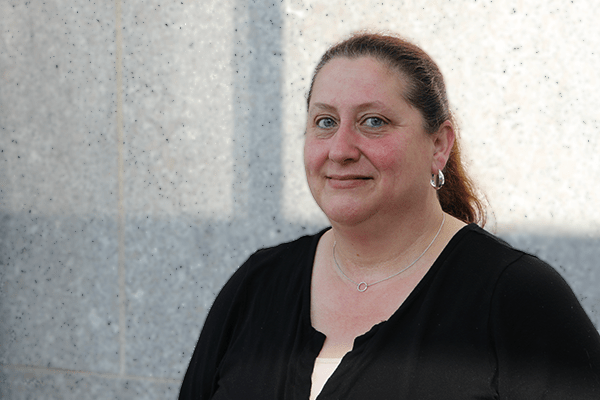
Get to Know the DOE Team – Meet Barbara McGowen

Maine DOE Fiscal Coordinator Barbara McGowen is being highlighted this week as the part of a Get to know the DOE Team campaign! Learn a little more about Barbara in the brief question and answer below. | More


Maine Schools Sharing Success Stories

| Submit your Maine School Success Story |


Professional Development & Training Opportunities

| Visit the Professional Development Calendar |


Latest DOE Career/Project Opportunities

Maine DOE Director of ESOL Selected as Finalist for US Department of State Award

April Perkins is the current Director of ESOL (English for Speakers of Other Languages)/Bilingual Programs & Title III at the Maine Department of Education (DOE). She is also one of four finalists for a prestigious national award. The English Language Fellow Alumni Impact Award “is designed to recognize and celebrate a former Fellow who has continued to use his or her fellowship experiences to positively impact his or her local teaching communities or career in TESOL in the United States post fellowship” (elprograms.org). “The winner with the most reach (likes, shares, comments) across platforms by August 12, 2019, at 5:00 PM EDT, will be selected as the award recipient.” Readers are encouraged to participate by liking, sharing, and commenting on Facebook, Instagram, and Twitter with the hashtag #fellowimpact2019.

But who is April and why is she one of four finalists nationally for this award?

Prior to 2010 April taught an intensive English program at Florida Institute of Technology. A dedicated group of students from Libya inspired April to want to travel to Libya to learn more about its rich linguistic and cultural history. She applied to the English Language Fellows Program and requested Libya as her top choice. Once selected, April was stationed in Tripoli, Libya in 2010. At the Academy of Graduate Studies in Janzour, April worked as a professor of linguistics training future teachers, interpreters, translators, and linguists. At the Academy she formed close professional relationships with her students and colleagues; however, her time in Libya was cut short. Popular uprisings in the neighboring countries of Tunisia and Egypt spread into Libya by February of 2011. Along with hundreds of other Americans, April was forced to evacuate the country. Dictator Muammar Gaddafi was eventually overthrown, but the security situation in Libya continues to be unstable.

“I was heartbroken to leave the place I had fallen in love with, and the many friends and colleagues I came to know during my all-too-brief stay,” April said. Over a year later the Fellows Program reopened the post in Libya and April eagerly anticipated her return. However, only two days before she was scheduled to fly back to Libya, the Benghazi attack resulted in the deaths of several American members of the foreign service.

Though April could not return to Libya, the Fellows Program was able to place her temporarily in Tangier, Morocco, where she taught conversational English to high school students and adults. After leaving Morocco, April spent the next four years in Egypt, where she received a grant through the US Department of State and AMIDEAST. Through this grant, April taught English and trained ESOL teachers for two years at Al-Azhar University. Now a finalist, April looks back at her time abroad.

“Throughout my time in North Africa, about five years in total, I learned invaluable skills that have served me well in my current role at the Maine DOE. Not only did I hone my teaching skills, but I also learned important lessons in cultural humility, intercultural communication, diplomacy, flexibility, and leadership,” April reflected.

“April is the epitome of a leader who has demonstrated the ability to effect change through her collaborative leadership style, her solutions-oriented approach to challenges, and her passion to make a difference in the lives of students learning English in Maine,” said Chelsey Fortin-Trimble, Maine DOE ESEA Federal Programs Director.

During her three years with the Maine Department of Education she has adeptly applied her cultural and leadership skills to co-develop the Maine Seal of Biliteracy, organize and facilitate the first Title III Districts Meeting, and bring together ESOL educators from across the state to share innovative practices and unify along common goals for English learners.

Emily Darby, ESOL and International Student Programs coordinator at the Brunswick School Department had the following to say about April:

April has been an invaluable resource for me as a professional in the ESOL/TESL field. She made huge advancements for Maine’s Department of Education by having current, timely, and relevant statutes, policies, guidelines, and best practices readily available to educators throughout the state. She promptly responds to issues and concerns by having vast knowledge at her fingertips and by diligently researching the tough questions. But what I appreciate the most about April is her thoughtful and sincere approach and passion for English learners, their families, and their futures. She is a true advocate for learners and educators alike. She makes my job much easier, more enjoyable, and more respected. Most importantly, she makes the lives of English learners and their families much easier, more promising, and more personal.

April is a tremendous asset to the ESEA Federal Programs Team. She leads by example, motivates others, and is equally motivated by others, which makes her an ultimate team member.  While she flawlessly manages many responsibilities in her current role, she continues to want to refine the ESEA Team’s processes and procedures to ensure that we are providing the best possible support to districts, schools, educators, students, and families.

Traveling abroad into extraordinary circumstances prepared April to expertly support ESOL education in Maine. Her hard work is transforming a fundamental educational experience for thousands of students in our state, to say nothing of the countless students April influenced abroad. As Carlos Gómez, Director of Language Development at Portland Public Schools puts it, “In short, April is a professional, an all-star, and an incredibly dedicated public servant!” These are only a few of the reasons April is among the four finalists for The English Language Fellow Alumni Impact Award. Regardless of whether April wins the award, she has awarded the state of Maine with trailblazing projects and the DOE eagerly anticipates her next move.

Students Engaged in STEM Challenges at Blue Hill Consolidated School’s Summer Program

Submitted by Dawn McLaughlin, ESEA Coordinator & Curriculum Coordinator at School Union 93.

For two weeks, twenty students of Blue Hill Consolidated School have been participating in a Title 1A Summer School, taught by Ms. Bradford and Ms. Longley. Summer School is being held at George Stevens Academy, with students ranging from grades K-8. Morning early sessions focus on Reading and ELA, and later morning is focusing on Math and STEM. Much of the student work is hands-on, and students are highly engaged.

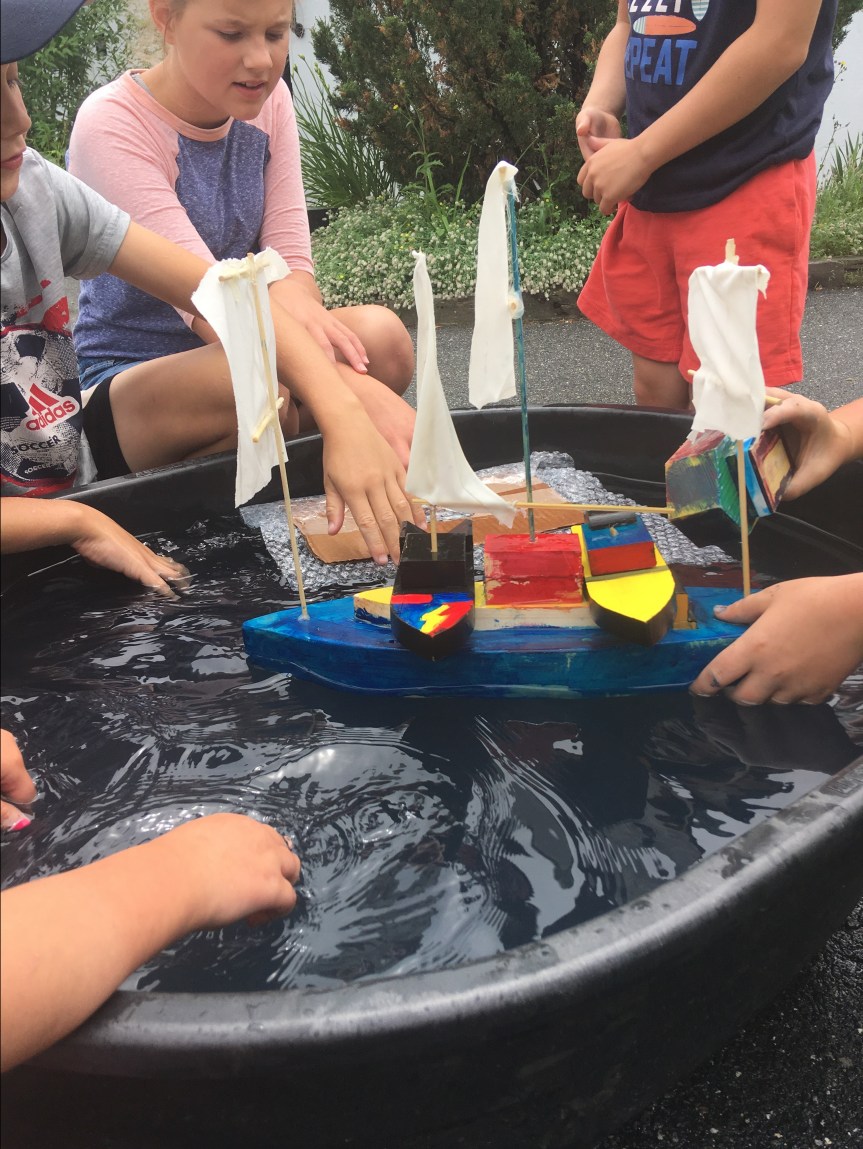
Much of the read aloud fiction is tied in with the STEM challenges. Last week’s theme was Water Week. Students read boat themed books like Who Sank the Boat? by Pamela Allen and Toy Boat by Randall de Seve. Students created their own boats out of reusable materials and pieces of wood. Younger students added plastic animals one at a time to see how many animals their boat could hold. Older students used keels and sails to balance their boats thinking about ideas like center of gravity and weight.

Next Think Tank Scheduled for September 30!

In the ongoing effort to engage with all stakeholders, the Department of Education will hold its next Think Tank at the Schoodic Institute in Winter Harbor on September 30.  Participants can choose  from four topics, and can attend morning or afternoon sessions only on one topic, or attend both sessions and discuss two topics! Topics include special education, defining school success, educator excellence (recruiting and retaining) and MLTI.  Lunch will be provided, and the think tank is FREE, however we do ask for participants to register, for planning purposes.  Please see the Registration Link for more information and to register. We look forward to hearing from you!

Get to Know the DOE Team – Meet Barbara McGowen

Maine DOE Fiscal Coordinator Barbara McGowen is being highlighted this week as the part of a Get to know the DOE Team campaign! Learn a little more about Barbara in the brief question and answer below.

What are your roles with DOE?

I am the Fiscal Coordinator for the Office of Special Services.  My team provides oversight of fiscal activities for the OSS teams, including, the State Agency Client Program, Due Process, Special Projects, IDEA and the Office of Special Services Grants and Contracts Program.  My team provides technical assistance and support to Maine administrators, working collaboratively with them to achieve federal and state fiscal compliance.

What do you like best about your job?

I love being able to play even a small role in supporting the education of Maine’s children.  My team works hard in tandem with SAUs to strengthen understanding of federal programs to create an environment of certainty and comfort.  I am blessed to be working with an incredible group of dedicated people who work tirelessly to make a difference in education.

How or why did you decide on this career?

My education and training background is in financial management.  I began my career in banking, eventually transitioning to work for a non-profit organization focused on creating opportunities for disenfranchised peoples.  I enjoyed the mission of the non-profit and the people I worked with.  When a position opened at the Department of Education it was at that moment in time when I was ready to let go of the endless search for funding and work to future retirement.  I am incredibly pleased to say that I have found a new mission supporting Maine’s educators, administrators and students.

What do you like to do outside of work for fun?

Outside of work I enjoy spending time with family.  Family get-togethers, picnics, celebrations, traveling, camping, you name it and I am there.