PRIORITY NOTICE: 2019/20 Subsidy Printouts (ED279s) Now Available with Explanation of Funding Changes

The fiscal year 2019-2020 ED 279 subsidy printouts are now available at: https://neo.maine.gov/DOE/NEO/eps/public/ed279.aspx

The subsidy printouts are provided based on the $1.1 Billion in General Purpose Aid funding recommended for FY 2019-2020 by Governor Janet Mills in her FY 2020-2021 biennial budget. This amount is an additional $41.3 million from last year, and reflects the Governor’s commitment to increase the state’s share of education funding.

Below is a list of changes to the funding formula, enacted during the second session of the 128th Legislature:

  • The Minimum Special Education Adjustment has increased from 40% to 45%.
  • Each town’s valuation is provided by the Maine Revenue Service annually and utilized as the calculation of fiscal capacity to determine the town’s ability to pay its required local share. Previously the amounts used were determined based on the average valuation of the 2 most recent years prior to the year of funding for each town. For FY 2019-2020, the calculation of fiscal capacity will be based on the average of the 3 most recent years, prior to the year of funding or, the most recent year, whichever is less.
  • The allocation for system administration is $47 per pupil.
  • The additional allocation for members of regional service centers, as formed under M.R.S. 20-A, Chapter 123, is $94 per pupil, indexed to the member unit’s state share percentage on the ED 279, with a member unit receiving no less than a 30% state share and no greater than a 70% state share.
  • We are pleased to announce that the increased state share in funding this year has resulted in a change to the mill expectation. The mill expectation determines a unit’s required local share when multiplied times its fiscal capacity. This year it is 8.28 mills, down from 8.48 in FY 2019.
  • Remember, an increase or decrease in student enrollment, disadvantaged student population, special education costs, and other key factors in the formula have a major impact on funding for each district as the EPS model is a student-centered funding model.
  • School units that have either paid off or have begun to pay principal or interest payments for State approved new school construction will realize changes in funding if either a payment no longer needs to be made or if a new payment has begun.

The ED 279 Subsidy Printouts are calculated using the Essential Programs and Services (EPS) Funding Formula. The Department is proud to be offering one of the most equitable school funding formulas in the nation. It is based on years of research and information, designed to respond to student needs, and to direct resources to the communities with the most need. That said, the Department understands that the formula is not responsive to every need a school administrative unit may have, especially given the different priorities in schools and communities throughout the state.

Should you have questions regarding subsidy printouts, please contact the School Finance Team: Tyler Backus at tyler.backus@maine.gov; Paula Gravelle at paula.b.gravelle@maine.gov; or Ida Batista at ida.batista@maine.gov.
Maine DOE Update – February 14, 2019

From the Maine Department of Education


Reporting Items

| Visit the DC&R Reporting Calendar |


News & Updates

School Safety and Security Bulletin: Planning for those with Access and Functional Needs

Throughout the 2018- 2019 school year, the Maine Department of Education, State Fire Marshal’s Office, Department of Health and Human Services, Maine State Police, Maine Sheriffs Association, Maine Chiefs of Police Association, and the Maine Emergency Management Agency will provide tips and resource information to Maine schools to help provide some guidance for identifying signs and preventing school violence. | More

U.S. Department of Education Acts on School Safety Report Recommendation to Improve Understanding of Student Privacy Law

The U.S. Department of Education released a comprehensive set of frequently asked questions (FAQs) on schools’ and districts’ responsibilities under the Family Educational Rights and Privacy Act (FERPA) in the context of school safety. | More

Maine Seeks Qualified Peer Reviewers for 21st CCLC Grant Applications

The Maine Department of Education is seeking qualified peer reviewers to read, assess, and score competitive grant proposals for the 21st Century Community Leaning Centers (21st CCLC) Program.  This federally-funded grant program provides opportunities for schools and communities to develop “community learning centers” that serve children and youth during out-of-school time.  Maine currently has 32 grant-funded 21st CCLC programs operating 55 individual centers in communities across the state.  | More


Maine Schools Sharing Success Stories

Mountain Valley Middle School (RSU 10) – A Safe Place To Learn

Mountain Valley Middle School in Mexico, is part of Regional School Unit #10, in the picturesque foothills of western Maine. At Mountain Valley Middle School, we strive to provide all students with a safe place to learn where all staff and students follow a code to be respectful, act responsibly, and do what is right, even when no one is watching. We pride ourselves on knowing where we need to grow and we all work toward becoming better students, teachers and learners.  | More

From Early Reading Struggles to Bowdoin College: One Student’s Story in RSU#34

Reading Recovery is designed to help struggling first graders catch up to their peers in 12 to 20 weeks. Specially trained reading teachers work with students in a one on one setting to meet each child’s individual needs. In RSU #34, about three quarters of these students reach the average of the class by the end of first grade. But we often wonder what happens to these students as they move on. Here is one student’s story. | More

Thomaston Grammar School Shares their School and Community Success

Thomaston Grammar School, located in the Mid-Coast town of Thomaston, is a great place to be. Our K-5 school has approximately one hundred and eighty-five students, with two classes at each grade level.  In addition to having a daily focus on mathematics, literacy, science, social studies, and health instruction, students also have weekly art, music, technology, SEL (social emotion learning), and physical education classes.   | More

Happenings in Afterschool Programs for RSU#13

At Broadreach’s 21st Century Learning Center, providing afterschool programming for the towns of RSU#13, we are proud to announce that students from grades K-12 participated in their town’s local “Pies on Parade!” | More

| Submit your Maine School Success Story |


Professional Development & Training Opportunities

Professional Learning Opportunity: Learning Design Lab at East Grand School

Maine Educators are invited to visit East Grand School in Danforth, Maine on Tuesday, March 5th, 2019, to join a Learning Design Lab lead by Kim Gray, a Kindergarten teacher, Jill Plummer, a Middle School teacher, and Jennifer Gilman, a 6-12 Mathematics teacher. This is an opportunity for educators to visit classrooms and talk with students and teachers about ways technology is successfully integrated into elementary, middle, and high school grades. | More

Bullying Prevention: Online Professional Development

Through a collaborative effort with Safe Schools, an industry leader in K-12 school safety, the Maine DOE is providing all schools free, equitable access to professional development that addresses Maine’s anti-bullying law.  The professional development course, Bullying: Recognition & Response, specifically highlights An Act to Prohibit Bullying and Cyberbullying in Schools and addresses the proper use of Maine DOE’s model bullying policy and procedures, which can be found here.  | More

Professional Development Opportunity: Fostering Musical Early Childhood Classrooms

The Maine Department of Education invites educators to be part of its upcoming professional development opportunity, Fostering Musical Early Childhood Classrooms. | More

| Visit the Professional Development Calendar |


Latest DOE Career/Project Opportunities

Thomaston Grammar School Shares their School and Community Success

DSC_0266Submitted by Ainslee Riley, Principal of Thomaston Grammar School

Thomaston Grammar School, located in the Mid-Coast town of Thomaston, is a great place to be. Our K-5 school has approximately one hundred and eighty-five students, with two classes at each grade level.  In addition to having a daily focus on mathematics, literacy, science, social studies, and health instruction, students also have weekly art, music, technology, SEL (social emotion learning), and physical education classes.  Our focus centers around our district goals of proficiency based learning and social emotional learning, which go hand in hand. Teachers have worked together to create appropriate grade level performance indicators that align with our state standards.  The school has also adopted Restorative Practices and Second Step to help us work toward meeting our goals in the area of social emotional learning.

IMG_8524We have a wonderful parent group that works to provide opportunities for our families to come together to have fun in the school community. They sponsor and run big events like our annual Fall Fest and Cookies with Santa weekend events, movie nights, family dances, Trunk-or Treat for Halloween, and more.  They have also brought in organizations like Mad Science of Maine for school wide learning opportunities.  In addition to these events that our parent group provides for our school community, we: have two concerts a year, host a Family Fun Night, hold a Talent Show, celebrate Read Across America week with a week filled with theme days, collect food for our local food pantry and hold a Passing of the Food event, and more.
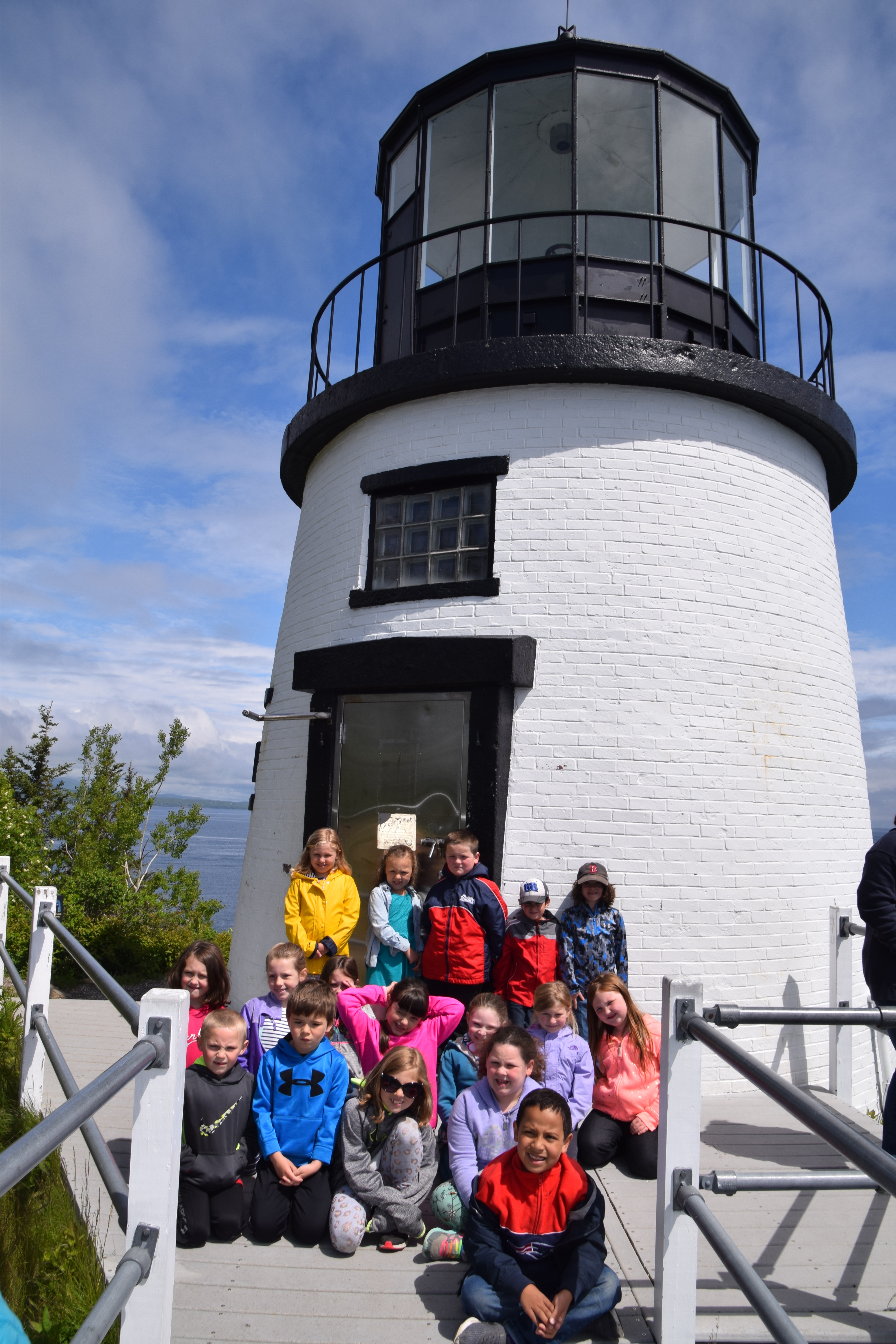
IMG_9238We partner with a variety of organizations that enable our students to have further educational enrichment during and outside the school day. We have partnered with Leaps of Imagination, allowing for art enrichment during the school day for all students in second and fourth grade.  We work with the Strand Theatre, which offers a variety of learning opportunities where we travel to the theatre or they bring in artists to do workshops inside our school.  Our older students have the opportunity to participate in after school art enrichment, after school programming through Youthlinks, and a Big Trek/Little Trek mentoring program.  Through funding from the Georges River Education Foundation, our second grade students and teachers, along with our PE teacher, have been working with an area gym, Hybrid Fitness, to complete an integrated unit on fitness and nutrition.  Our students in third grade have the opportunity to learn to ice skate at the MidCoast Recreation Center, and our students in fourth grade have the opportunity to learn to ski at the Camden Snow Bowl.  Fifth grade students are able to enrich their learning through our school’s fifth grade TGS Common Ground Garden and Outdoor Classroom.  Students in various grades have the opportunity to visit Herring Gut Learning Center, the Botanical Gardens, the Owl’s Head Lighthouse, Tanglewood, Old Fort Western and more, depending on the year, as part of integrated units they are studying.  This year the Georges River Education Foundation also helped to fund a birding unit for our fifth grade students that has involved bringing in a variety of experts to talk and work with our students.

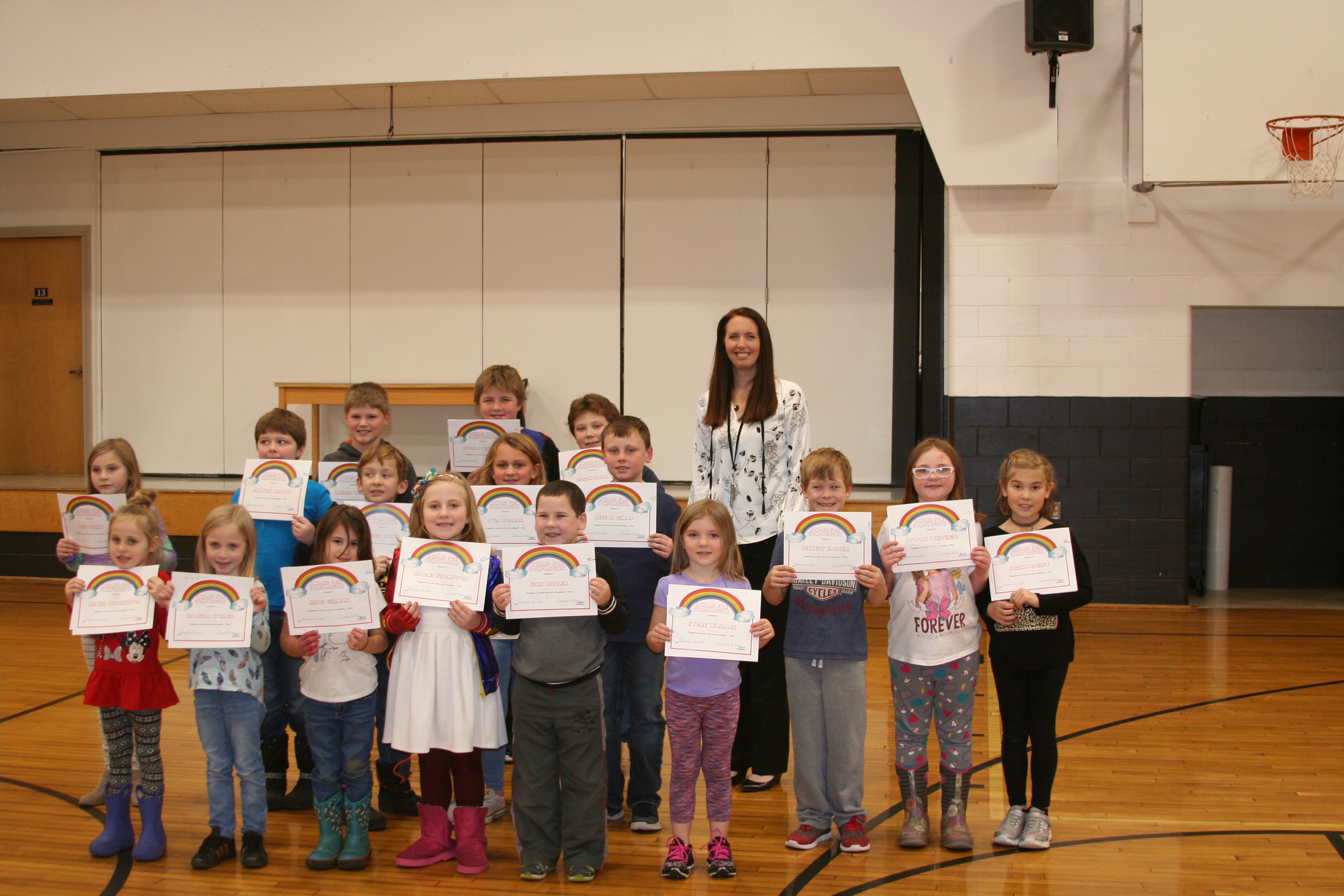
IMG_9325We recognize students at monthly theme-based assemblies. Our assemblies focus on a variety of attributes including, but not limited to, respect, compassion, and perseverance.  There is also a monthly Principal’s Award given to a student who exemplifies all these attributes on a daily basis. Students who are recognized have a special lunch with Principal Riley. Students who receive TGS tickets are recognized at this assembly as well. These are students who go above and beyond our school rules: Be Safe, Be Kind, and Try Your Best. Students who get tickets are also announced daily and earn prizes for receiving multiple tickets. Students are very excited to receive these tickets.

Teachers at Thomaston Grammar School work hard to make learning meaningful and fun for all of the students in our community.

Happenings in Afterschool Programs for RSU#13

RSU 13 Afterschool Programs

Submitted by Sarah Chadwick Rogers, Associate Director of After School Programming, Youthlinks at Broadreach Family & Community Services in RSU 13

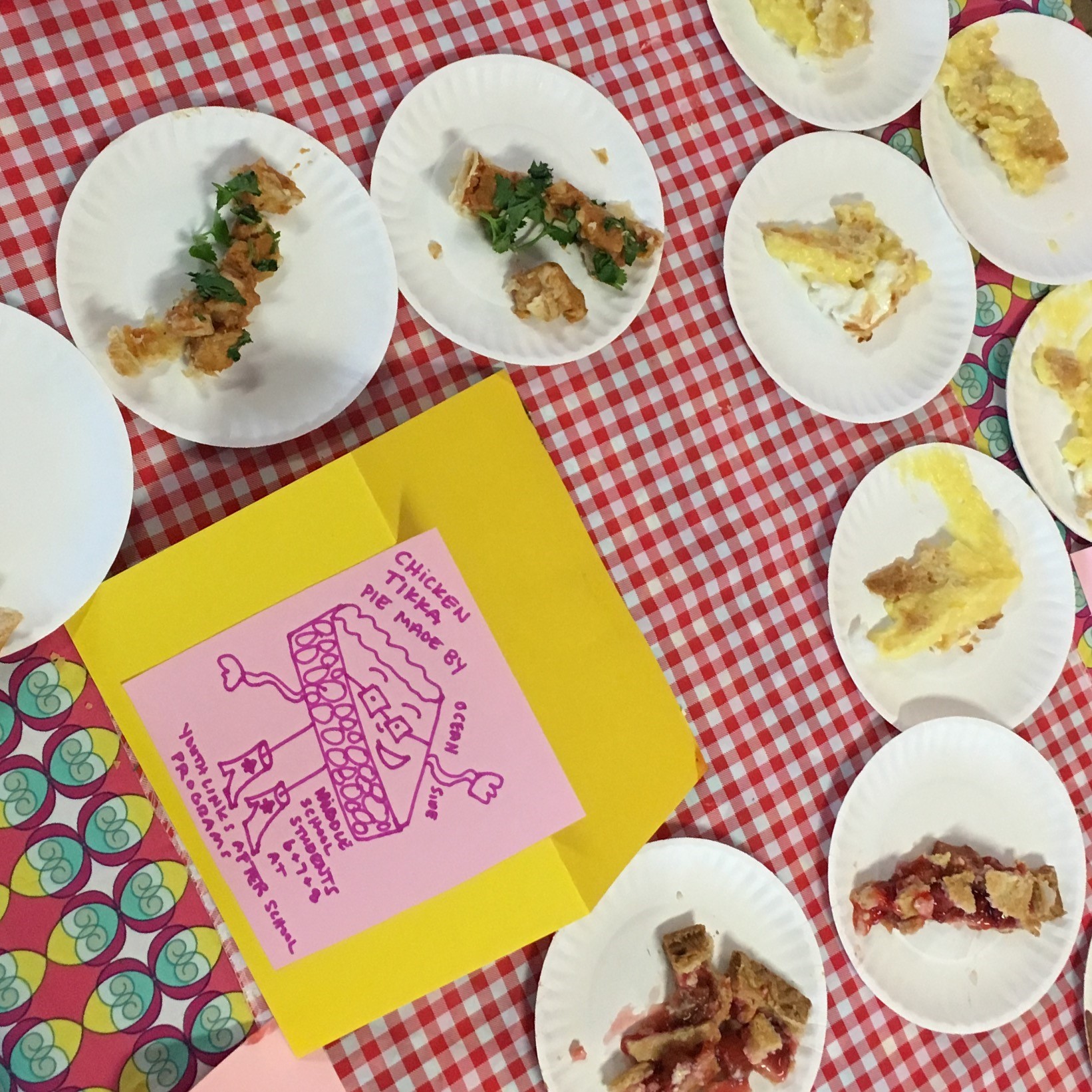
At Broadreach’s 21st Century Learning Center, providing afterschool programming for the towns of RSU#13, we are proud to announce that students from grades K-12 participated in their town’s local “Pies on Parade!” event. This annual event raises funds to help hungry Midcoast Maine families through the local Area Outreach Food Pantry.

Pies that the youth baked were enjoyed at our YMCA’s Community Building, which also featured a pie obstacle course, art projects and pie games – designed by students in the afterschool program.

Professional Development Opportunity: Fostering Musical Early Childhood Classrooms

The Maine Department of Education invites educators to be part of its upcoming professional development opportunity, Fostering Musical Early Childhood Classrooms.

Early Childhood Specialist, Sue Reed, and Visual and Performing Arts Specialist, Nate Menifield, are looking for teachers who want to energize their teaching and learning through focusing on music in the public preschool classroom.

Applicants must apply in teams of two: one public preschool teacher and one music teacher from the same district. The music teacher must currently teach at the elementary level.

Under the guidance of early childhood music experts, Catherine Newell and Danielle Collins, teams will work to build a collaborative partnership to ensure that preschool students receive a musical learning experience. Public preschool teachers will become familiar with research regarding why music is important in the preschool classroom; understand how it encompasses multiple early learning standards; and learn how to include music into their daily routines. Music teachers will learn developmentally appropriate pedagogical approaches to teaching music to our youngest learners. Teams will be expected to practice new pedagogy in between sessions and document their experiences. As a culmination of their work, participants will deliver a brief presentation to an audience of their choice.

Participating Teacher Responsibilities:

  • Attend three day-long, face-to-face professional development trainings. All trainings will take place from 8:30 a.m. to 3:00 p.m. at Educare, 56 Drummond Ave., Waterville, ME 04901. Dates for trainings are: March 15th, May 23rd, and May 24th.
  • Attend one online check-in support meeting between face-to-face meetings. These meetings will occur between individual teams and the trainers at a mutually convenient time.
  • Develop individual goals for music implementation in your classroom and collaboration with a music teacher.
  • Commit to incorporating music into the preschool schedule on a regular basis.
  • Develop a plan for communicating the importance of music to preschool families.
  • Present a brief presentation on the work to an audience of each team’s choice, and submit a copy of the presentation to the Department of Education.

Compensation:

Each team will receive up to $300 in music supplies (determined by individual need).

To Apply:

Interested parties should fill out and submit an application here by 11:59 p.m. on Thursday, February 28th (only one application is required per team). Applications will be reviewed immediately, and those accepted for participation will be notified by the afternoon of Monday, March 4th.

Please forward all questions to Visual and Performing Arts Specialist, Nate Menifield, at nathaniel.j.menifield@maine.gov.

U.S. Department of Education Acts on School Safety Report Recommendation to Improve Understanding of Student Privacy Law

The U.S. Department of Education released a comprehensive set of frequently asked questions (FAQs) on schools’ and districts’ responsibilities under the Family Educational Rights and Privacy Act (FERPA) in the context of school safety.

The Federal Commission on School Safety (FCSS) released an in-depth report last December, which observed that “substantial misunderstanding remains at the local level among officials and educators concerning (FERPA), and in particular its application to school-based threats.”

This FAQ document, titled, School Resource Officers, School Law Enforcement Units and the Family Educational Rights and Privacy Act (FERPA), consolidates previously issued guidance and technical assistance into a single resource to help raise schools’ and districts’ awareness of these provisions.

The document consists of 37 commonly asked questions about schools’ and school districts’ responsibilities under FERPA relating to disclosures of student information to school resource officers (SROs), law enforcement units and others, and seeks to explain and clarify how FERPA protects student privacy while ensuring the health and safety of students and others in the school community.

The FAQ document includes answers to common FERPA questions involving school safety, such as:

  • Can law enforcement unit officials who are off-duty police officers or SROs be considered school officials under FERPA and, therefore, have access to students’ education records?
  • Does FERPA permit schools and districts to disclose education records, without consent, to outside law-enforcement officials who serve on a school’s threat assessment team?
  • When is it permissible for schools or districts to disclose student education records under FERPA’s health or safety emergency exception?
  • Does FERPA permit school officials to release information that they personally observed or of which they have personal knowledge?

The full FAQ document can be found here.

For additional information on the meetings, field visits, listening sessions, roundtables and other resources used to produce the FCSS report, please visit the U.S. DOE’s school safety website.

Bullying Prevention: Online Professional Development

Through a collaborative effort with Safe Schools, an industry leader in K-12 school safety, the Maine DOE is providing all schools free, equitable access to professional development that addresses Maine’s anti-bullying law.  The professional development course, Bullying: Recognition & Response, specifically highlights An Act to Prohibit Bullying and Cyberbullying in Schools and addresses the proper use of Maine DOE’s model bullying policy and procedures, which can be found here.

Bullying: Recognition & Response is an online video that is 67 minutes in length and is divided into 7 sections, with a quiz at the end.  The video can be shown to a large group, small groups, or viewed individually.  Delivery of the video should be done in a way that best meets the staff’s professional development needs and is responsive to the school district’s efforts to address bullying.

To access this professional development, district or school leadership should contact Justin Moore, justin.moore@vectorsolutions.com, or Allison Byndas, allison.byndas@vectorsolutions.com at Safe Schools.

For more information related to bullying prevention efforts in Maine schools, please contact Sarah Adkins, Student Assistance Coordinator, at sarah.adkins@maine.gov or 624-6685.

Professional Learning Opportunity: Learning Design Lab at East Grand School

Maine Educators are invited to visit East Grand School in Danforth, Maine on Tuesday, March 5th, 2019, to join a Learning Design Lab lead by Kim Gray, a Kindergarten teacher, Jill Plummer, a Middle School teacher, and Jennifer Gilman, a 6-12 Mathematics teacher. This is an opportunity for educators to visit classrooms and talk with students and teachers about ways technology is successfully integrated into elementary, middle, and high school grades.

Elementary grades use digital learning portfolios to capture evidence of student learning over time and to engage families in their students’ learning journey. Middle grades have a new cohort that has embarked on project-based and place-based learning. Visiting educators can also engage with high school students who will demonstrate some of their work with 3D printing and the school’s Virtual Reality Lab. After visiting classrooms, educators will have time to debrief the experience with lead teachers and to be supported as they plan ways to bring what they’ve learned back to their schools.

  • Date: Tuesday, March 5th, 2019 (Snow date: Wednesday, March 13th)
  • Time: 9am – 2pm (arrival begins at 8:30am with light refreshments)
  • Location: East Grand School, 31 Houlton Road, Danforth, ME
  • Open to all Maine educators who have completed the fingerprinting and background check process through the Maine DOE as part of your employment in your local district.
  • Free to attend
  • Contact Hours: Educators can earn 5 contact hours
  • Registration (please complete by Wednesday, February 27th at 5pm): http://bit.ly/EastGrandLearningLabRegistration

Agenda

8:30am – 9:00am: Arrival (light refreshments will be provided)
9:00am – 9:30am:  Welcome and Introductions
9:30am – 11:00am: Classroom Visits
11:00 -11:45am: Lunch (will be provided)
11:45am – 12:45pm – Conversations with lead educators
12:45pm – 1:45pm: Supported planning time
1:45pm – 2pm: Closing and Reflections

For answers to questions or more information, please contact Amanda Nguyen, Digital Learning Specialist at Amanda.Nguyen@maine.gov or 207-624-6656.

From Early Reading Struggles to Bowdoin College: One Student’s Story in RSU#34

Emma Hargreaves, senior at Old Town High School

Written by Brenda Gardner, Gifted & Talented Teacher and and Dr. Sharon Greaney, Reading Educator. Submitted by Jon Doty, Director of Curriculum, Instruction, and Assessment
 at Regional School Unit #34
.

Reading Recovery is designed to help struggling first graders catch up to their peers in 12 to 20 weeks. Specially trained reading teachers work with students in a one on one setting to meet each child’s individual needs. In RSU #34, about three quarters of these students reach the average of the class by the end of first grade. But we often wonder what happens to these students as they move on. Here is one student’s story.

Emma Hargreaves is currently a senior at Old Town High School and will attend Bowdoin College next year. She remembers being a social butterfly in first grade, always babbling and asking questions but her reading was holding her back. Her mom was worried she wouldn’t be able to catch up. Her parents were happy when she was offered a spot in Reading Recovery. Emma says she doesn’t remember specifics about her lessons, but she does remember how much she adored her one-on-ones with Mrs. St. Louis. Emma says, “I think she taught me how to value progress and how to persevere when a process isn’t linear. Catching up with my peers often felt like two steps forward and one step back. Years later, I know that process is true for almost anything worthwhile, and I am forever thankful to the women who taught me that lesson.”

After a half year of Reading Recovery lessons, Emma says her success went off much like a rocket. She developed a love of reading and advanced to the top reading groups. Emma was identified as gifted and talented. At Old Town High School, Emma has taken all honors and AP classes and is on track to finish with a GPA at or near the top of her class. As president of the National Honor Society, she created a tutoring program to help her peers. Emma is a student leader who has served as a student school board representative as well as student representative to the Chapter 104 advisory committee. She traveled to Washington DC last summer as a representative for Dirigo Girl’s State. She has been published in the Portland Press Herald and Emma says, “Authoring and publishing the work was one of the most scary and rewarding things I have ever done. It was challenging and emotional and I used the same perseverant spirit Mrs. St. Louis and I cultivated way back in first grade to do so.”

Emma concludes that “the potential in everybody exists and the hardship is in its release, not in the question of its presence. Reading Recovery was the beginning of unlocking mine. What I’ve accomplished is much less important than how it has set me up to accomplish more things. Reading Recovery is valuable in its continued and immeasurable effects on its students. Reading Recovery is the beginning of stories of kids like me, and without teachers like Mrs. St Louis, the chapters of those stories would be completely different. You helped me find my voice, and while I can never repay you, I promise to write my life with the lesson you’ve taught me and the confidence you helped unlock.”

Mountain Valley Middle School (RSU 10) – A Safe Place To Learn

Submitted by Cheryl Gurney, Teacher/Assistant Principal at Mountain Valley Middle School

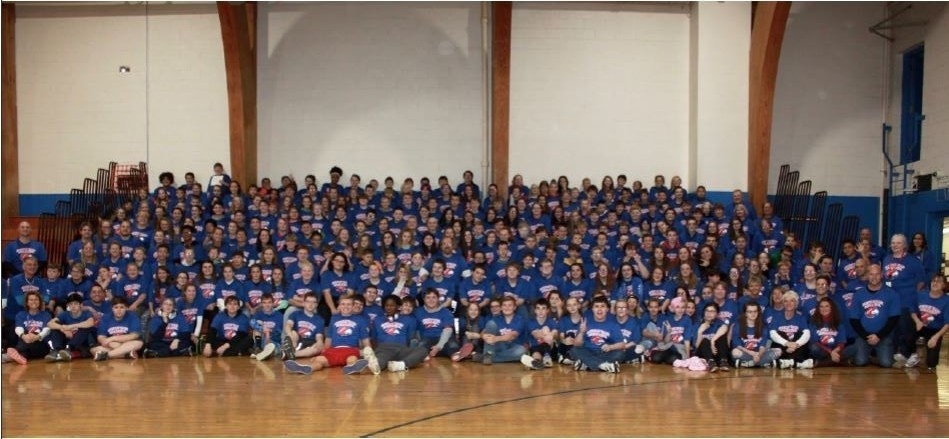
Mountain Valley Middle School in Mexico, is part of Regional School Unit #10, in the picturesque foothills of western Maine. At Mountain Valley Middle School, we strive to provide all students with a safe place to learn where all staff and students follow a code to be respectful, act responsibly, and do what is right, even when no one is watching. We pride ourselves on knowing where we need to grow and we all work toward becoming better students, teachers and learners. In particular, we have worked hard to provide our students with the opportunities to grow in the areas of academics and behavior. By using a Multi-Tiered Response to Intervention Approach we have been able to help our students to develop scholastically, behaviorally, socially, and emotionally.

To promote academic growth, Mountain Valley Middle School staff and students participate in a wide variety of activities and instructional opportunities that are designed to allow learners to fill in gaps and build on foundational skills. Within the first tier of supports, all students participate in an intervention period that is built into the daily schedule four days per week. We call this our Hawks SOAR period which stands for Student Opportunities to Aim for Results. Students receive focused instruction on topics and concepts in mathematics and literacy that have been determined to be weaknesses through disaggregation of EmpowerMe and NWEA data. Students are grouped and re-grouped according to their needs.When they have mastered specific concepts and they move onto new topics to begin the process again. Comparisons of recent NWEA data have shown very promising growth in both reading and mathematics.

Over the last five years, Mountain Valley Middle School has implemented Positive Behavior Intervention and Supports (PBIS) and in particular we have introduced a Bully Prevention program called Stop, Walk and Talk. When a student has a conflict with another student they are encouraged to tell that person to STOP. This warns the other person they are bothering someone and gives them the opportunity to change their behavior. If the behavior does not
change the offended student is asked to WALK away and TALK to the nearest adult to attain help in navigating the situation. The adult then steps into the situation and helps the students to work through the conflict. This program has helped Mountain Valley Middle School students to have a voice and office discipline rates have dropped significantly.

The staff and students at Mountain Valley Middle School are proud to be members of this community! We strive to have a growth mindset and continue to set goals and move toward their attainment. Go Hawks!

Mt-Valley-Middle-School-1777040748-1549904258242.jpg