The recovery of Q1’21 MaineCare Seed will occur in the January 2021 subsidy payment. In order to ensure timely payments and accurate adjustments to subsidy, Maine Department of Education(DOE) is asking School Administrative Units (SAUs)to review their reports by January 15, 2021. | More
Androscoggin, Cumberland, Oxford, and York counties continue with yellow designation, Aroostook and Penobscot counties closely monitored; all others designated green
The Mills Administration today released an update to its color-coded Health Advisory System that classifies counties’ relative risk of COVID-19 transmission to assist schools as they continue with their plans to deliver instruction and support to students safely.
The Maine Department of Health and Human Services (DHHS) and Maine Center for Disease Control and Prevention (Maine CDC) continue to review evidence that indicates lower transmission of COVID-19 in schools compared to the general population. Over the last 30 days, the rate of new cases is 33.5 per 100,000 staff and students, compared to 89.4 per 100,000 people statewide. This rate of new cases in schools is 37% lower than in the general population and is consistent with previous weeks. | More
Maine Center for Disease Control & Prevention Division of Environmental & Community Health hosted a virtual presentation on 12.22.20 called, Controlling Indoor Air Quality to Reduce COVID-19 Transmission – Guidance for Building Managers and Homeowners.| More
Each year at its annual conference, the Foreign Language Association of Maine (FLAME) recognizes those who have achieved outstanding results in teaching modern or classical languages. The FLAME Advisory Board invites you to nominate one of the many excellent language teachers who practice their profession here in Maine!| More
The Fenway Bowl has named several outstanding people in the field of education in New England, and we are proud to say that 6 Maine educators have made the list! | More
Androscoggin, Cumberland, Oxford, and York counties continue with yellow designation, Aroostook and Penobscot counties closely monitored; all others designated green
AUGUSTA — The Mills Administration today released an update to its color-coded Health Advisory System that classifies counties’ relative risk of COVID-19 transmission to assist schools as they continue with their plans to deliver instruction and support to students safely.
The Maine Department of Health and Human Services (DHHS) and Maine Center for Disease Control and Prevention (Maine CDC) continue to review evidence that indicates lower transmission of COVID-19 in schools compared to the general population. Over the last 30 days, the rate of new cases is 33.5 per 10,000 staff and students, compared to 89.4 per 10,000 people statewide. This rate of new cases in schools is 37% lower than in the general population and is consistent with previous weeks.
DHHS and Maine CDC assessed COVID-19 data and trends for all counties and released the designations a day early, due to tomorrow’s holiday.
REMAIN YELLOW: Androscoggin, Cumberland, Oxford, and York counties continue to have new case rates per 10,000 people and positivity rates that exceed the statewide average.
CLOSELY MONITOR: Aroostook and Penobscot counties remain green but their positivity rates have increased over the past 14 days, and are now above the statewide average.
All other counties remain in the green designation.
Under the “yellow” designation, which indicates an increased (moderate) level of community risk, schools may consider additional precautions, such as limiting numbers of people in school buildings at the same time, suspending extracurricular or co-curricular activities including competitions between schools, limiting interaction through cohorting, or other measures based on the unique needs of each school community.
These designations are made out of an abundance of caution and for the consideration of school administrative units in their decisions to deliver instruction.
The Health Advisory System categorizations are defined as follows:
RED: Categorization as “red” suggests that the county has a high risk of COVID-19 spread and that in-person instruction is not advisable.
YELLOW: Categorization as “yellow” suggests that that the county has an elevated risk of COVID-19 spread and that schools may consider additional precautions and/or hybrid instructional models to reduce the number of people in schools and classrooms at any one time.
GREEN: Categorization as “green” suggests that the county has a relatively low risk of COVID-19 spread and that schools may consider in-person instruction, as long as they are able to implement the required health and safety measures. Schools in a “green” county may need to use hybrid instruction models if there is insufficient capacity or other factors (facilities, staffing, geography/transportation, etc.) that may prevent full implementation of the health and safety requirements.
The county-level assessments are based on both quantitative and qualitative data, including but not limited to recent case rates, positivity rates, and syndromic data (e.g., symptoms of influenza or COVID-19). Those data are publicly posted every week on the Maine CDC website. DHHS and Maine CDC also consider qualitative factors, such as the presence of outbreaks that may potentially affect school-age children.
The Health Advisory System reflects ongoing analysis of evolving data, and serves as one piece of information that school and district leaders can use to make decisions about how to deliver education during the school year. The qualitative and quantitative considerations and data used by the CDC in determining community transmission risk levels for schools can be located here: How County Risk Levels for Maine Schools are Determined
The Health Advisory System can be found on the Maine DOE website in Part I of the Framework for Reopening Schools and Returning to In-Person Classroom Instruction: https://www.maine.gov/doe/framework/part-I.
The next update will be provided on January 15, 2021.
The recovery of Q1’21 MaineCare Seed will occur in the January 2021 subsidy payment. In order to ensure timely payments and accurate adjustments to subsidy, Maine Department of Education(DOE) is asking School Administrative Units (SAUs)to review their reports by January 15, 2021. This includes a review of student by student claims on both the public and private MaineCare reports for Q1’21.
To access the MaineCare Seed reports, please follow the instructions below.
Choose the quarterly Seed report and the report type (private/public)
Click view report button
Once the report appears on the screen, choose the export button.
You may export the reports to Excel but, please be aware that there may be multiple worksheet tabs within the workbook. Save the file to your computer.
If you have difficulty logging into NEO:
Anyone who currently has Special Education Director permissions to the Special Education module, will automatically have permissions to access MaineCare reports.
As in the past, if a new staff member needs permission to access this module, a request from the Superintendent to the Maine DOE helpdesk will be necessary. The helpdesk contact information is medms.helpdesk@maine.gov or 207-624-6896.
Dispute Process: If you disagree that a particular student or time period should be on the report, please provide a rationale along with the following to stephanie.clark@maine.gov.
Identify the type of report (public or private) and the quarter in which the claims are located.
State Student ID
Service provided dates (From and To)
Total amount of Seed being disputed
Summer services: Students must be enrolled for the time period they are receiving educational services. This means that students that are receiving extended school year services in district or extended school year services in an out of district placement must have a primary enrollment for that time period in order for the MDOE to have the most accurate enrollment data to determine SAU responsibility for MaineCare Seed.
Please contact stephanie.clark@maine.gov for more information or technical assistance related to MaineCare Seed.
The Fenway Bowl has named several outstanding people in the field of education in New England, and we are proud to say that 6 Maine educators have made the list!
In partnership with Cross Insurance, Samuel Adams, and Boston Globe Media, Fenway Bowl checked in with schools and associations across New England seeking the names and stories of educators, college professors, school administrators and staff members who are making a big impact in their community.
Congratulations to the 6 educators in Maine who were named as part of this wonderful recognition:
Michael Davis
Principal
Walton Elementary School, Auburn, ME
Melissa Guerrette
NBCT, 5th grade teacher
Oxford Elementary School
Bill Tracy
Principal
Hampden Academy
Jennifer McGee
Principal
Atwood Primary School
Dr. Flynn Ross
Chair, Teacher Education Dept.
University of Southern Maine
Alison Babb-Brott
Grade 2 teacher
St. George School
A huge THANK YOU to all of Maine’s educators, administrators, and staff members who work hard everyday to ensure that students and communities throughout Maine have support, resources, and opportunities to learn and grow. The Maine Department of Education appreciates everything that you do!
Each year at its annual conference, the Foreign Language Association of Maine (FLAME) recognizes those who have achieved outstanding results in teaching modern or classical languages. The FLAME Advisory Board invites you to nominate one of the many excellent language teachers who practice their profession here in Maine!
What are the criteria for nomination?
Nominees must have at least two years of FLAME membership.
Nominees must have a minimum of five years experience in teaching modern or classical languages.
Who may make a nomination?
A FLAME member
A teaching colleague
A school administrator
What is the procedure?
The nominator must submit a letter of nomination, including information about the nominee’s
Address, telephone number and email address
Teaching assignment
Educational background
Teaching experience
Special achievements, honors or awards
The nominator must include his or her contact information (address, telephone number and email address)
The nominator must arrange for submission of letters of recommendation from the following:
At least one colleague (not necessarily a modern or classical language teacher)
At least one supervisor (principal, head of department or superintendent)
At least one former or current student
In making its decision, the FLAME Advisory Board will consider the following kinds of evidence:
How has the nominee demonstrated best practice?
How has the nominee contributed to the teaching and learning of a modern or classical language?
What are some teaching practices and activities that the nominee uses to improve students’ language proficiency and motivation?
What kinds of professional growth activities (including travel relevant to teaching) has the nominee participated in?
How has the nominee served the students, the school or the school district?
The nominator must arrange for delivery of all documents to Christopher Gram, FLAME Awards Committee Chair, Carrabec High School, P.O. Box 220, North Anson, ME 04958. The postmarked deadline for submission is January 15, 2021.
For additional information, contact Christopher at: cagram@carrabec.org or (207) 635-2296.
Maine Center for Disease Control & Prevention Division of Environmental & Community Health hosted a virtual presentation on 12.22.20 called, Controlling Indoor Air Quality to Reduce COVID-19 Transmission – Guidance for Building Managers and Homeowners.
Below are the presentations materials and a recording of the session.
With the looming restrictions of school reopening in a pandemic this summer, Georgetown Central School created an outdoor education team and invited teachers, staff, community members and parents, to help brainstorm how Georgetown could adjust teaching practices to bring learning outdoors. A school already rich in the tradition of community, outdoor, and project-based learning, we knew that we had to make adjustments to a normal year (when students would participate in hands-on field trips such as digging for clams or studying the migration habits of crabs). In August, two teachers spent four days learning at Juniper Hill School ’s Summer Institute for Educators: Teaching with Nature. Juniper Hill School, a community school for PK-5th grade students, was founded 10 years ago on the foundation of outdoor, nature-based teaching and learning. Anne Stires, the School’s founder, offers year long coaching, professional development workshops, and summer institutes for educators.
Georgetown School began to pivot. With a lot of help from community members, parents and staff, and the guidance and vision of the teachers who attended the summer training at Juniper Hill, we were able to set up roughly twelve outdoor classroom spaces on school property and conservation land beyond the property. A musical garden was formed across from our school’s garden. Swinging reading nooks were created for younger classrooms, and rocks and roots were pulled from land to create a pathway to multiple classroom spaces.
WRITING CLASS, 1st/2nd graders, Georgetown Central School
Using CARES money and writing our title four federal funds application for outdoor education, we were able to supply classrooms with the instructional supplies and tools they needed. We purchased individual swings for students in kindergarten and grades one and two – a quiet space for students to take a break from the mandates of a pandemic education – and an opportunity to escape into the world of literature. We set up outdoor seating areas, using stumps and camp chairs, and purchased chalkboards to bring teaching outside.
As we asked ourselves the question, “How do we do this?” we knew it would be best to reach out to the experts. Anne Stires, from Juniper Hill School, brought outdoor learning professional development workshops to Georgetown Central School such as, “Stepping Outside for the First Time,” “Teaching with Nature: Curriculum,” “Teaching in Winter,” and lastly, “Safety and Risk Management.” From there, teachers have been bringing in more ideas around using the elements of nature to support learning. We have purchased a library collection of professional learning resources directly connected to outdoor education, and built classroom libraries with books that focus primarily on learning in nature and with nature.
In one class, morning meeting takes place outside; calendar and the days of the week are sung as children sit on donated tree stump seats arranged underneath a canopy of trees. An old playground slide is positioned neatly on the hillside leading to the classroom, a welcome experience for students as they make their way to a chalkboard and mud kitchen supplied with pots and pans. Imagination for students in these spaces runs wild and play-based learning has become more evident for the early childhood students. Instead of worksheets with math equations, students jump from sliced tree stump to tree stump adorned with numbers in order.
An experimental year, teachers have been learning first hand how to balance indoor and outdoor learning, especially as we approach the winter months. Simple things have allowed us to take students outside even on colder days. Each student in Georgetown has a warm pair of wool socks, a thermos to bring hot water or tea outside, a winter hat and a fleece neck gaiter (all items gathered by the community or purchased with CRF funds). Outdoor learning in the winter is all about movement. Students study tracks in the snow or other signs of animals that have quietly come and gone without notice on a walk through the playground fields or surrounding woods. An outdoor math class (counting by ones or tens), has students jumping in the snow–making tracks as they jump as far as they can to represent tens and as short as they can to represent ones.
Teachers bring out materials on their individual classroom carts or, in colder months, they will use the jet sleds purchased with CARES money to travel to outdoor classrooms. Outdoor education supplies are kept organized in a shed that is designated specifically for the outdoor classrooms. A walk further into the woods on conservation land, leads students and teachers to a beautiful open pavilion structure we are hoping to enclose, that acts as a shelter in the woods for learning. The timber frame structure was a collaborative effort between the school and school families.
Georgetown School will be continuing ongoing coaching with Anne Stires for the remainder of the year, beginning with our PK-2nd grade teachers. With model lessons, project-based integrated curriculum planning, and feedback sessions, teachers will gain even more confidence and creativity in working with their students outdoors. The ongoing pivot is exciting and rewarding and students and teachers are healthier and happier as a result!
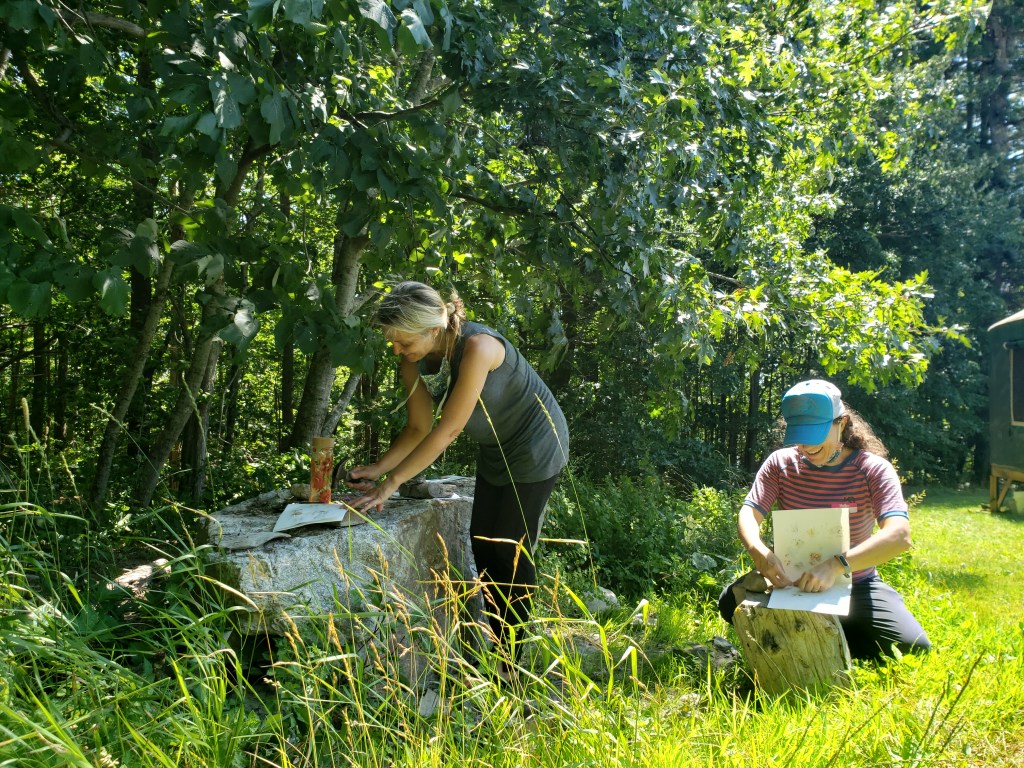
Images taken at Juniper Hill School’s Teaching with Nature: Summer Educator Institute
This story as provided by Juniper Hill School and Georgetown Central School as part of the Maine Schools Sharing Success Campaign. To submit a story or an idea, please email it to Rachel at rachel.paling@maine.gov.
New for 2019-2020: To assist schools in the data process, there have been changes to the Graduation Certification Report. The transfer-In/Out counts of students will no longer be used to determine adjusted cohort, and there will be no more validating of the start and exit codes of students during this report. The report will also no longer be required to be ‘Accepted’ by the Maine Department of Education (DOE). | More
Cumberland joins Androscoggin, Oxford, and York counties in yellow designation; all others designated green The Mills Administration today released an update to its color-coded Health Advisory System that classifies counties’ relative risk of COVID-19 transmission to assist schools as they continue with their plans to deliver instruction and support to students safely. The Maine Department of Health and Human Services (DHHS) and Maine Center for Disease Control and Prevention (Maine CDC) continue to review evidence that indicates lower transmission of COVID-19 in schools compared to the general population. Over the last 30 days, the rate of new cases is 25.2 per 100,000 staff and students, compared to 62.5 per 100,000 people statewide. This lower rate of new cases in schools is consistent with previous weeks. | More
The U.S. DOE annually designates teacher shortage areas for purposes of deferment of loan repayments or reductions of teaching obligation. On November 30, 2020 the Department of Education requested input regarding designated teacher shortage areas for federal reporting. The Department would like to thank all those who submitted information related to teacher shortage and, because of public input, have added a number of teaching endorsements to the US DOE proposal. The Maine DOE will be proposing the following as K-12 teacher shortage areas for the 2021-2022 school year: | More
Now that cold weather has arrived in Maine, people are spending more time indoors, adding additional considerations for indoor air and mitigation strategies for COVID-19. This webinar will cover some basic strategies including ventilation and filtration techniques that building managers and other education leaders can use to manage indoor air quality in a way that will help reduce the spread of the virus. Health engineers from Maine CDC will be joined by indoor air quality experts from the Maine Indoor Air Quality Council for this brief presentation, to be followed by a Q & A session. | More
The Maine Department of Education is thrilled to announce the launch of a new web experience designed to provide relevant content and valuable information about Multi-Tiered Systems of Support (MTSS). The new resource aims to be a useful guide and implementation tool that will help schools with the complex task of fully implementing MTSS. | More
The Maine Department of Education is seeking educators to create learning modules for MOOSE, Maine’s Online Opportunities for Sustained Education. MOOSE is an initiative that is grounded in innovation and made possible by technology. Learn with MOOSE is committed to creating learning experiences for students that are accessible and inclusive of all learners, and serves to provide anytime, anywhere learning options and resources for educators, students and their families. Integrated across subject areas and project-based, these asynchronous modules ensure that learning is active, engaging, and continuous. | More
Maine DOE Team member Carole King is being highlighted this week as part of the Get to Know the Maine DOE Team Campaign. Learn a little more about Carole. | More
The Maine Department of Education is seeking educators to create learning modules for MOOSE, Maine’s Online Opportunities for Sustained Education. MOOSE is an initiative that is grounded in innovation and made possible by technology. Learn with MOOSE is committed to creating learning experiences for students that are accessible and inclusive of all learners, and serves to provide anytime, anywhere learning options and resources for educators, students and their families. Integrated across subject areas and project-based, these asynchronous modules ensure that learning is active, engaging, and continuous.
As a content creator of the Learn with MOOSE initiative, you will embark on an innovative instructional design journey that will push the bounds of your professional skillset. Grounded in inclusive design, MOOSE modules are created to meet Universal Design for Learning and to be accessible for all learners, regardless of ability.
Participants must be Maine educators, including but not limited to teachers, curriculum leaders and Maine educational community organizations such as museums, libraries, and educational centers. The module creation work begins January 4th and concludes on April 16th. Each participant will be trained in a-synchronous instructional design by Maine DOE digital learning specialists, as well as supported in their content by Maine DOE content specialists. Stipends of $1000 will be provided for successful completion of the project.
Cumberland joins Androscoggin, Oxford, and York counties in yellow designation; all others designated green
AUGUSTA — The Mills Administration today released an update to its color-coded Health Advisory System that classifies counties’ relative risk of COVID-19 transmission to assist schools as they continue with their plans to deliver instruction and support to students safely.
The Maine Department of Health and Human Services (DHHS) and Maine Center for Disease Control and Prevention (Maine CDC) continue to review evidence that indicates lower transmission of COVID-19 in schools compared to the general population. Over the last 30 days, the rate of new cases is 25.2 per 10,000 staff and students, compared to 62.5 per 10,000 people statewide. This lower rate of new cases in schools is consistent with previous weeks.
DHHS and Maine CDC assessed COVID-19 data and trends for all counties. Based on this assessment, the following designations have been determined:
REMAIN YELLOW: Androscoggin, Oxford and York counties have rising positivity rates, exceeding the statewide average.
NOW YELLOW: Cumberland County experienced an increase in both the new case rate per 10,000 people and positivity rate.
All other counties remain in the green designation.
Under the “yellow” designation, which indicates an increased (moderate) level of community risk, schools may consider additional precautions, such as limiting numbers of people in school buildings at the same time, suspending extracurricular or co-curricular activities including competitions between schools, limiting interaction through cohorting, or other measures based on the unique needs of each school community.
These designations are made out of an abundance of caution and for the consideration of school administrative units in their decisions to deliver instruction.
The Health Advisory System categorizations are defined as follows:
RED: Categorization as “red” suggests that the county has a high risk of COVID-19 spread and that in-person instruction is not advisable.
YELLOW: Categorization as “yellow” suggests that that the county has an elevated risk of COVID-19 spread and that schools may consider additional precautions and/or hybrid instructional models to reduce the number of people in schools and classrooms at any one time.
GREEN: Categorization as “green” suggests that the county has a relatively low risk of COVID-19 spread and that schools may consider in-person instruction, as long as they are able to implement the required health and safety measures. Schools in a “green” county may need to use hybrid instruction models if there is insufficient capacity or other factors (facilities, staffing, geography/transportation, etc.) that may prevent full implementation of the health and safety requirements.
The county-level assessments are based on both quantitative and qualitative data, including but not limited to recent case rates, positivity rates, and syndromic data (e.g., symptoms of influenza or COVID-19). Those data are publicly posted every week on the Maine CDC website. DHHS and Maine CDC also consider qualitative factors, such as the presence of outbreaks that may potentially affect school-age children.
The Health Advisory System reflects ongoing analysis of evolving data, and serves as one piece of information that school and district leaders can use to make decisions about how to deliver education during the school year. The qualitative and quantitative considerations and data used by the CDC in determining community transmission risk levels for schools can be located here: How County Risk Levels for Maine Schools are Determined
The Health Advisory System can be found on the Maine DOE website in Part I of the Framework for Reopening Schools and Returning to In-Person Classroom Instruction: https://www.maine.gov/doe/framework/part-I.
The next update will be provided in the afternoon of Thursday, December 31, 2020, one day earlier due to the holiday on January 1, 2021.

 rt button.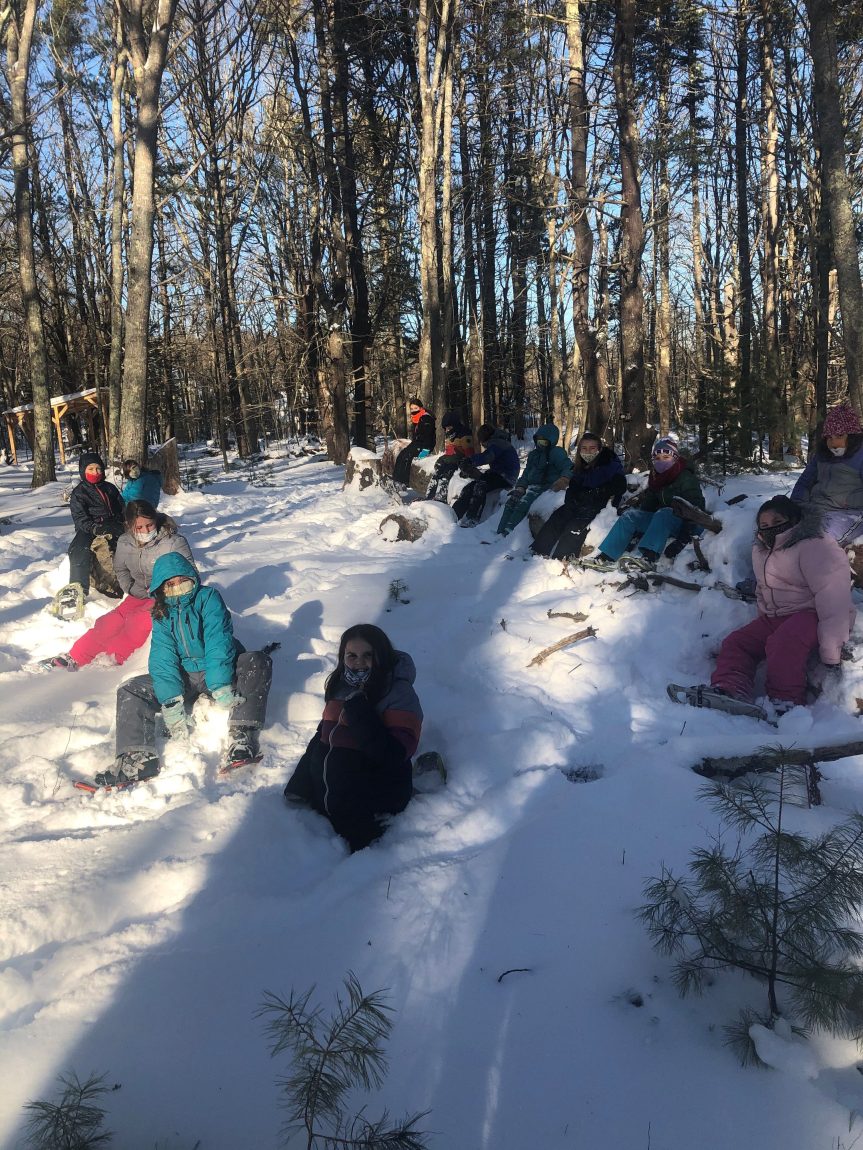

 Maine DOE Newsroom