Media Release: Maine DOE Provides Schools with Additional $2 Million to Expand Summer Learning and Enrichment

The Maine Department of Education (DOE) provided an additional $2 million to 17 school units to expand engaging and meaningful summer learning programs across the state for nearly 1,000 students. The programs focus on helping students recover from the impacts of the pandemic through additional math and literacy instruction, tutoring, hands-on outdoor learning experiences, and family engagement activities. Students have access to meals and get to spend the summer building skills and knowledge and engaging in fun activities with their classmates.  

“These are meaningful summer learning programs that provide students with the academic support they need to recover from the pandemic while also allowing them to explore the outdoor world around them, be creative, engage in project-based learning, build social skills and connections, and have reliable meals,” said Maine Education Commissioner Pender Makin. 

The summer learning opportunities are paid for using federal emergency relief funding and are in addition to the $2.1 million granted to 63 school administrative units (SAUs) to support summer enrichment programming through the Title I Summer Reallocation Grant. 

Expanded Summer Learning and Enrichment Programs 

East Millinocket School Department
East Millinocket School Department’s extended school year program provides students with high-quality tutoring and intensive reading instruction to support learning growth. Students also participate in immersive outdoor learning opportunities at Baxter State Park and other area destinations.   

East Range II CSD 
East Range II School’s summer day program provides students with learning opportunities that will engage them physically, mentally, and creatively. Programming focuses on instruction as well as providing access to mental health, occupational therapy, and speech therapy services that many students do not have access to over the summer. Students also have access to breakfast, snacks, and lunch during the summer program and monthly access to the school’s food pantry program. 

Students also attend Down East Lakes children’s program once a week to provide hands on experience with natural science and will visit Twin Ponds Nature and Discovery Center to learn about aquatic and land species in their area and in Maine. Student use drawings and writings to document their experiences. Families will come together at a nearby lake for a final family engagement day.  

Fiddlehead School of Arts and Sciences Charter School 
Fiddlehead offers students six weeks of camp activities to continue their learning in literacy and math through hands-on, minds-on enrichment activities. Camp activities include art, theater, musical theater, 3D art, young inventors, paper arts, and clay sculpting. All camps end with a showcase for families and there is extended reading time built into all camp schedules to strengthen literacy skills.  

Hancock Public Schools 
Hancock Grammar School offers students a four-week summer program for literacy using evidence-backed practices. Students will also participate in math programming each day.  

Hope Public Schools 
Hope Public Schools offers students summer programming focused on academic enrichment and the opportunity to grow socially and emotionally. The program provides students an immersive learning opportunity in the school garden, where students measure, predict, write, experiment, and read in the garden. Parents and community members join by reading to children in the garden and distributing food to families.  

Madawaska 
Madawaska Elementary School’s extended educational opportunities provide students with additional targeted learning experiences and instruction, exposure to project-based learning and real-world application, critical thinking skills, and social emotional benefits that emerge from confident learners. The program also includes student visits to the Acadian Village to explore history and language, Four Seasons Outdoor Center to explore natural science concepts and apply math concepts to real life examples, and the University of Maine Fort Kent junior learner’s programs and activities. Families also have access to family math night, early learners open house and information night, reading night in the library, and other family and community events.  

Maine Connections Academy 
Maine Connections Academy’s summer program focuses on students who are credit deficient and lack the class completion needed to graduate on time. The program focuses on re-engaging these students and providing supplemental targeted intensive instruction to complete courses required for promotion/graduation. A parent or adult is designated as each student’s Learning Coach and responsible for documenting attendance for the students throughout the summer school period and coordinators work closely with parents and guardians throughout the summer program to ensure parent engagement. 

Otis Public Schools 
Otis Public School’s four-week summer program provides focused literacy and math interventions to students who are furthest from meeting benchmarks. Student also participate in team-building challenges, STEAM opportunities, and physical activities that engage and motivate students in experiential learning. Students take part in experiential learning opportunities at Lamoine State Park and Bangor Children’s Museum. 

Portland Public Schools 
Portland Public Schools offers students a daily summer program focused on students in need of reading and math recovery instruction. The program also prioritizes students who are experiencing homelessness. Reading and math instruction is combined with hands-on enrichment activities and STEAM instruction.  

MSAD 11 (Gardiner) 
In partnership with The Boys & Girls Clubs of Kennebec Valley in Gardiner, MSAD 11 provides students with academic and enrichment programming to support learning recovery and meet the social and emotional needs of students. Students most in need of academic support, students from low-income households, and students who could greatly benefit from extra social interaction and extra-curricular activity during the summer months are prioritized for the six themed weeks of programming. Summer programming features engaging, hands-on activities that promote learning, have real-world applications, and build on students’ sense of exploration, engagement, and belonging. MSAD 11’s summer program provides academic support in math and reading, project-based learning, health and wellness programs, STEM projects including include visits from Chewonki, a robot coding class, and a field trip to The Maine Wildlife Park, visual and performing arts programs, multicultural education, youth leadership and service learning, and parent engagement throughout, including STEM night, Olympian Week, and the Gardiner Public Library Summer Reading Program. On Tuesdays, parents can come with a bag and take a variety of foods home for free that were all donated by Hannaford and the local food bank.   

RSU 14 (Windham) 
RSU 14’s summer program supports students who need additional early literacy and math instruction. Students attend this summer programing 4 days a week for 4 hours a day and get the support they need to he will program prepare students to smoothly transition to the next grade level by strength knowledge of early literacy and numeracy concepts. Staff also engage with families by providing materials and instructions to support their child at home, including make and take activities for parents in both math and literacy and a parent afternoon tea.  

MSAD 15 (Gray) 
The Patriot Arts and Learning Summer Institute uses an arts and STEM integrated approach to address COVID learning gaps in literacy and numeracy in grades K-4. Students in the program receive daily instruction in literacy, numeracy, arts, and STEM. Students are also be provided breakfast, lunch, and outdoor movement time daily. The Patriot Arts and Learning Institute utilizes a “push-in” field trip model to bring unique and fun opportunities to students aligned with learning. Push-in field trips focus on arts and STEM integration including traveling planetarium, Portland Stage, Portland Ballet, animal rescue outreach, and team building activities. MSAD 15 has also partnered with the local recreation departments to provide before and after care for students in the Patriot Arts and Learning Summer Institute. 

MSAD 17 (Oxford Hills) 
RSU 17’s “Camp Achieves” focuses on engage students in learning through fun, active, hands-on math and science lessons and projects. Additionally, language and literacy will be incorporated into the daily activities. Students will hear from and interact with local beekeepers, farmers, and wildlife specialists and engaging in experiential learning at a community garden and Roberts Farm. Tier II interventions will be provided in both literacy and math. At the close of the program, an ‘open house’ will be held for the purpose of students’ sharing projects with their parents.  

RSU 34 (Old Town) 
RSU 34 offers students and families a variety of summer programming to meet their individual needs, including in-person learning opportunities for students in a four-week model, one-on-one and small group high-dosage tutoring for students spanning the entire summer, an engaging virtual asynchronous option for students to engage in weekly learning objectives with on-call support, and ongoing programming for students delivered through school libraries and school garden. 

MSAD 70 (Hodgdon) 
RSU 70’s summer school focuses on helping students fill learning gaps caused by the pandemic and maintain current learning as well as gain proficiency in student specific learning identified. The summer school also provides exploratory experiences to apply learning in engaging ways through field trips and real-life experiences that encourage reading, science, and math. 

RSU 82/MSAD 12 (Forest Hills/Jackman) 
RSU 82/MSAD 12’s summer learning and enrichment program focuses on the academic and wellbeing needs of students and family engagement through academic instruction and projects, family literacy night, family math night, and a showcase event allowing students to present their summer portfolios to their families.   

Veazie Public Schools 
Veazie Public Schools provides students with targeted instruction over the summer in areas where they may have fallen behind due to the pandemic. Programs include small group instruction, one-on-one support, and targeted interventions to help students catch up on missed content and develop the skills they need to ensure future success. School library services are available to students all summer and families have access to at least two free family movie nights at the school. By actively engaging families in the summer school program, the school hopes to promote a sense of community, support student learning, and foster a positive learning environment for all students. 
Maine DOE Update – July 14, 2023

From the Maine Department of Education


Reporting Items

Staff Certification Report Opens on 8/1

All staff in the Maine Department of Education’s NEO Staff reporting module for all school administrative units (SAUs) have been rolled over to the new school year in Pending Status. All staff will need to be reviewed, updated, or deleted in NEO Staff for the current school year. Update email addresses and phone numbers for district personnel, this information is used by the DOE to contact proper individuals for various purposes. Years of experience increment automatically for individuals with previous experience in a position. |  More

Reminder: Special Education Exit Report Due 7/30

The Special Education Exit Report is in regard to students who have exited special education during the 2022-2023 school year and are no longer receiving services with a district. This includes students who are moving and known to be continuing services in a different school administrative unit (SAU). |  More

| Visit the DC&R Reporting Calendar |


News & Updates

Media Release: College and Career Success Coordinators Provide Academic and Career Supports and Help Students Transition to College

The Maine Department of Education (DOE) and the Maine Community College System announced that current and prospective community college students across the state now have access to College and Career Success Coordinators to provide them with academic and career supports and assist them with the transition to college. Through Maine Jobs and Recovery Plan (MJRP) funding, the Success Coordinators have already served more than 1,000 students and helped nearly 400 students develop career and academic plans. |  More

Commissioner Makin Joins Students Participating in Maine Outdoor Learning Initiative Program in Port Clyde

Maine Education Commissioner Pender Makin joined high school students as they dug clams and took part in hands-on coastal ecology learning opportunities at Herring Gut Coastal Science Center in Port Clyde. |  More

You’re Invited! Maine DOE and UMaine to Host 2nd Annual Computer Science Education Showcase Event!

Join us for an afternoon of computer science(CS) fun and learn more about computer science education in the Maine Department of Education’s (DOE) 2nd annual CS Ed Showcase! The showcase highlights educators, students, community organizations, and other partners who are teaching, learning, and expanding access to and participation in computer science education. |  More

Invitation to a Conceptual Conversation Regarding Adult Education Rule Chapters 221, 225, 229

Since 1979, Rule Chapters 221, 225, and 229 have outlined the processes by which high school equivalency credentials are conferred to Adult Education students. Much has changed since 1979, therefore, the Maine Department of Education (DOE) is working on updating Rule Chapters 221, 225, and 229. |  More

School Renovation Funding Available

The Maine Department of Education is accepting applications to receive funding for school renovation projects through the School Revolving Renovation Fund (SRRF). The application deadline is October 31, 2023. |  More

Seeking Submissions for Maine DOE Educator Talent Pool

The Maine Department of Education (DOE) believes that a great way to ensure a robust educator workforce is to develop and engage a network of outstanding educators as leaders and models for our state.  By highlighting the excellence that exists in classrooms and schools across Maine, we will increase the trust and respect given to educators, as well as promote the profession and attract others interested in teaching in Maine. |  More

Maine DOE’s Emily Poland Honored with Outstanding School Nurse Consultant Achievement AwardS

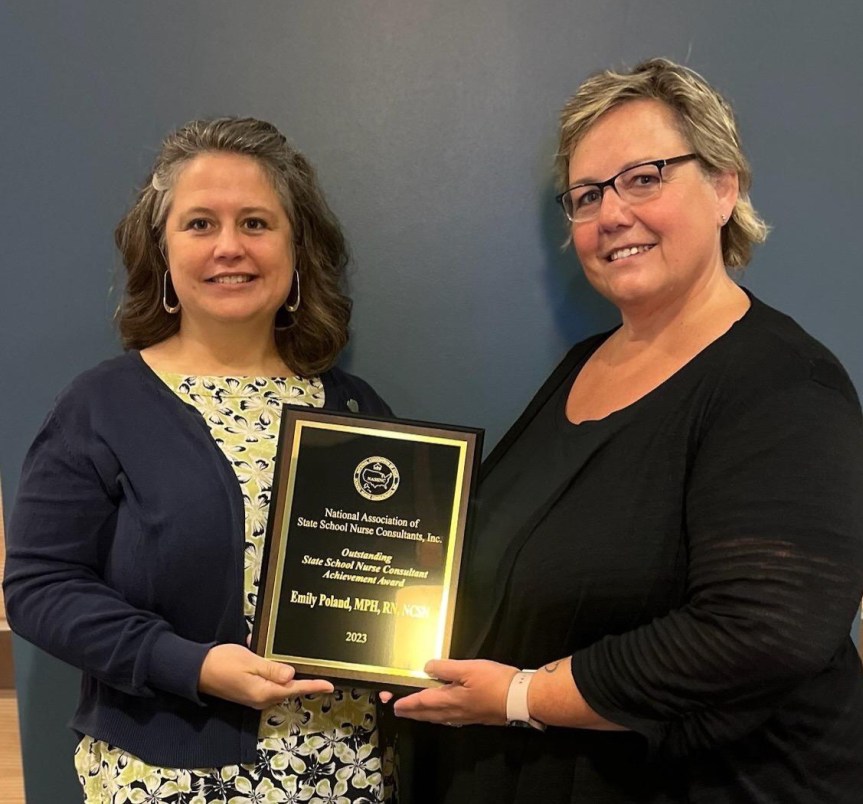
Emily Poland from the Maine Department of Education (DOE) was recently awarded the Outstanding State School Nurse Consultant Achievement Award. This award is given by the National Association of State School Nurse Consultants (NASSNC) to recognize individuals making incredible contributions to the organization and to their profession. |  More


Maine Schools Sharing Success Stories

Career Navigator, Strengthening Maine Workforce Program Help New Mainers get Jobs at Maine General

Kennebec County Career Navigator Karen Morin supports job seekers getting hired at Maine General Hospital in Augusta. Three people have had job offers thus far while the rest are in the process of getting hired. |  More

Yarmouth High School ELO Coordinator Supporting and Empowering Students to Explore Career Paths

At Yarmouth High School, Extended Learning Opportunities (ELO) Coordinator Brittany Brockelbank is supporting students in exploring their career interests. From finding internships and work studies to connecting students with mentors in the community, Brockelbank is helping students engage with their learning while also preparing them for their future careers. |  More

| Submit your Maine School Success Story |


Professional Development, Training, and Events

Register NOW for Maine DOE’s 2023 Educator Summit 

The Maine Department of Education’s (DOE) 2023 Educator Summit is being held August 7-10 at the Augusta Civic Center. This year’s theme is Inspiration, Innovation, and Inclusion and participants will have access to more than 140 sessions and professional learning opportunities. |  Learn More and Register here

| Visit the Professional Development Calendar |


Latest DOE Career/Project Opportunities:

We’re Hiring! AmeriCorps Program Manager with the Maine Department of Education

Are you seeking an opportunity to utilize your education and leadership experience to support future educators and students simultaneously? This opportunity to join the Maine Department of Education (DOE) will allow you to expand your impact in education through management with two different cohorts of AmeriCorps members focused on supporting Child Development Services (CDS) preschool classrooms (CDS AmeriCorps) and incoming high school students in two rural schools (Maine AmeriCorps Mentors for Success). |  More

View current Maine Department of Education employment opportunities here


School Renovation Funding Available

The Maine Department of Education is accepting applications to receive funding for school renovation projects through the School Revolving Renovation Fund (SRRF). The application deadline is October 31, 2023.

A portion of each SRRF loan will be considered a grant and will be forgiven. The remaining portion will be paid back over either five or ten years with no interest. The maximum loan amount is limited to $2 million per school building per priority in any five-year period.

Applications for Priority One projects will be accepted.  Priority One projects include indoor air quality improvement, structural roof repair, hazardous material abatement or removal, ADA compliance upgrades, and other health, safety and compliance renovations.

The SRRF application and additional information are available on the Maine DOE’s SRRF website. For more information or technical assistance, contact Ann Pinnette at 207-215-3809 or email ann.pinnette@maine.gov.

Staff Certification Report Opens on 8/1

All staff in the Maine Department of Education’s NEO Staff reporting module for all school administrative units (SAUs) have been rolled over to the new school year in Pending Status. All staff will need to be reviewed, updated, or deleted in NEO Staff for the current school year. Update email addresses and phone numbers for district personnel, this information is used by the DOE to contact proper individuals for various purposes. Years of experience increment automatically for individuals with previous experience in a position.

A webinar about this year’s report will be hosted on Tuesday, October 3rd at 10:00 am. Please join the webinar at the specified time using this link: EPS – Staff Certification Webinar.

Reporting Resources:

For training in the completion of these reports please contact Data Quality Trainer Alexandra.Cookson@maine.gov or call 207-446-3897

For issues with reports in Synergy and/or NEO please contact MEDMS.Helpdesk@maine.gov or call 207-624-6896

Reminder: Special Education Exit Report Due 7/30

The Special Education Exit Report is in regard to students who have exited special education during the 2022-2023 school year and are no longer receiving services with a district. This includes students who are moving and known to be continuing services in a different school administrative unit (SAU).

Reporting Resources:

For training in the completion of these reports, please contact Maine Department of Education (DOE) Data Quality Trainer at Alexandra.Cookson@maine.gov or call 207-446-3897.

For issues with reports in Synergy and/or NEO please contact MEDMS.Helpdesk@maine.gov or call 207-624-6896

Maine DOE’s Emily Poland Honored with Outstanding School Nurse Consultant Achievement Award

Emily Poland from the Maine Department of Education (DOE) was recently awarded the Outstanding State School Nurse Consultant Achievement Award. This award is given by the National Association of State School Nurse Consultants (NASSNC) to recognize individuals making incredible contributions to the organization and to their profession.

The NASSNC presents this award to State School Nurse Consultants based on their involvement in research impacting the delivery of quality healthcare service in schools and their involvement in the development and passage of important legislation, policies, standards, or regulations relevant to school nursing. The awardee also serves as a resource expert and catalyst from the state level for the development and implementation of policies and school health programs that promote and maintain the well-being of students.

Emily has received this award for her outstanding accomplishments and contributions to the NASSNC organization and her dedication to the school nursing practice and programs. She has proudly served as a member of the NASSNC including serving on the Advisory Board and as the current Past-President along with chairing the Bylaws Subcommittee. She consistently provides leadership and guidance at the state and national levels, elevating school nursing practice and positively impacting thousands of staff, students, and families every year. She serves with grace and dedication as an expert in school health and works to expand infrastructure that supports school administrative units’ health services programs.

One example of Emily’s work is her collaboration with the Governor’s Opioid Task Force to pass legislation for the supply and use of Naloxone in a school setting. She has also helped improve the quality of school health screening programs by securing funding to support national certification for vision screening. She worked on upscaling supports to meet the needs of schools during the COVID-19 pandemic. This included the expansion of access to school nursing services through telehealth in areas with limited school healthcare resources.

Emily continues to advocate for policies and programs to improve the delivery of health services in Maine schools while also providing individual support to school nurses throughout the state.

Emily was presented with her award on June 29th at the Summer NASSNC Membership meeting in Orlando, Florida. The Maine DOE is extremely proud of Emily and excited that her incredible work is being recognized and awarded.

Career Navigator, Strengthening Maine Workforce Program Help New Mainers get Jobs at Maine General

Kennebec County Career Navigator Karen Morin supports job seekers getting hired at Maine General Hospital in Augusta. Three people have had job offers thus far while the rest are in the process of getting hired.

Career Navigators are part of the Maine Jobs and Recovery Plan (MJRP) which has committed $6 million dollars to address the workforce development needs of those disproportionately impacted by COVID-19. Maine’s Department of Education, Adult Education team is using these funds to help eligible adults and employment sectors recover from the stresses of the pandemic through a variety of academic and job training supports including Career Advancement Navigators and College and Career Success Coordinators.

Augusta Adult and Community Education is partnering with Maine General Health to provide English as a Second Language classes to Maine General Health multilingual employees as well as the addition of a new pre-health class. The program will reduce barriers that may affect their employees from participating in programming by funding transportation, childcare, and technology costs for employees in environmental services and grounds keeping for career advancement and life skills.

To learn more about Career Navigators and Maine Strengthening workforce please click here.

Media Release: College and Career Success Coordinators Provide Academic and Career Supports and Help Students Transition to College

The Maine Department of Education (DOE) and the Maine Community College System announced that current and prospective community college students across the state now have access to College and Career Success Coordinators to provide them with academic and career supports and assist them with the transition to college. Through Maine Jobs and Recovery Plan (MJRP) funding, the Success Coordinators have already served more than 1,000 students and helped nearly 400 students develop career and academic plans.

College and Career Success Coordinators work alongside existing community college staff to provide students with:

  • Academic support, including navigating learning platforms, goal setting, creating academic plans, and time management strategies.
  • Transition support for students entering community college.
  • Advising, including success coaching, course collection, troubleshooting, promoting self-agency, career planning, and getting to college completion.
  • Resource referrals on and off campus, including tutoring, financial aid, Adult Education services, housing services, scholarships, workforce opportunities, and community supports.

“The transition to college can be daunting, but now Maine students have access to College and Career Success Coordinators to help them manage that transition with ease and get the help they need to succeed at school and beyond. Success Coordinators are there to help students problem solve and assist them with everything from academic planning to housing and job opportunities,” said Maine Education Commissioner Pender Makin.  

Maine Adult Education awarded more than 1,000 high school credentials to adult learners last year, and many of these learners continued their education at Maine’s community colleges. Students earning their high school credentials in 2020-25 qualify for up to two years of free community college, paying nothing in tuition or mandatory fees. Success Coordinators refer students to resources on campus, the state’s Adult Education programs, or partner agencies in the community to help them succeed in their college studies.

Prospective and current students can find the dedicated College and Career Success Coordinator in their county here

“The College and Career Success Coordinator was a huge help to me,” said Jessica Piela, a student in the Respiratory Therapy Program at Kennebec Valley Community College. “She helped me navigate college without making me feel ashamed or judged. I may not have continued my career path if it wasn’t for her and her support.”

“I’ve worked in adult education and college academic support for over 15 years, and I am so happy to continue to serve these students as they take the next steps on their educational journey,” said Audrey Kimball, the Success Coordinator for York County Community College.

Since the Maine Jobs and Recovery Plan took effect in October 2021, the Mills Administration has delivered direct economic relief to nearly 1,000 Maine small businesses, supported more than 100 infrastructure projects around the state to create jobs and revitalize communities, and invested in workforce programs estimated to offer apprenticeship, career and education advancement, and job training opportunities to 22,000 Maine people.

For more about Maine Jobs & Recovery Plan, visit maine.gov/jobsplan.

To read the bios of Maine’s Career Navigators and College and Career Success Coordinators, and learn more about the programs, click here. 

Yarmouth High School ELO Coordinator Supporting and Empowering Students to Explore Career Paths

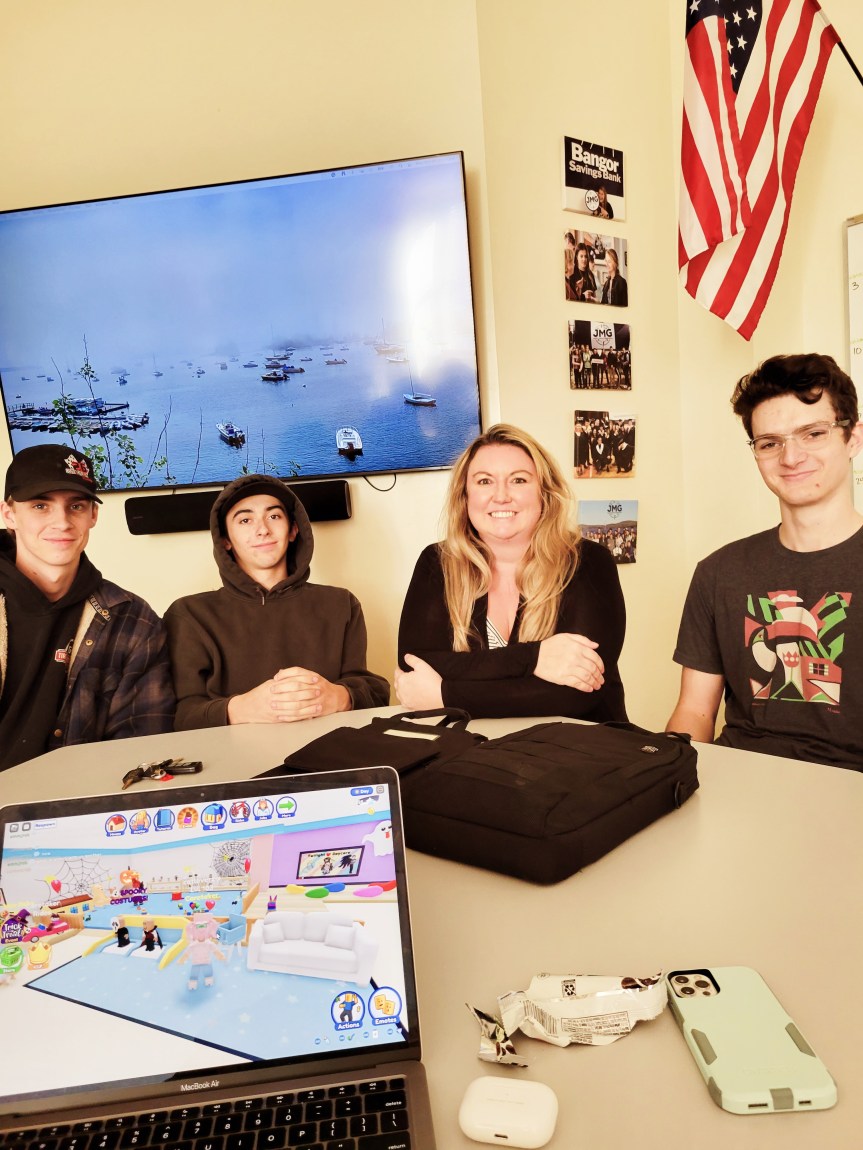
At Yarmouth High School, Extended Learning Opportunities (ELO) Coordinator Brittany Brockelbank is supporting students in exploring their career interests. From finding internships and work studies to connecting students with mentors in the community, Brockelbank is helping students engage with their learning while also preparing them for their future careers.  


Working with other faculty and staff at Yarmouth, Brockelbank has been able to expand the school’s ELO program, now offering it to all students from freshmen to seniors.  


“All too often there are barriers or structures that contain students and point them in one direction,” said Brockelbank. “ELOs are an opportunity to empower students to go in any direction they’d like!” 


The school’s ELO program has allowed students to earn academic credit, pursue passion projects, and gain professional experience. Brockelbank says one of her favorites parts of the program is its power to transform students’ educational experiences. Students who were once less interested or engaged with their education have found immense success and enthusiasm for their learning through their ELOs.  


Brockelbank says the best part of her job is the ability to say yes so often when students come to her asking about ELOs they are interested in. This means saying yes to them earning credit, participating in a work study, working as a group, and much more. When discussing her position as ELO Coordinator, she said, “It is refreshing to be in education in a role where the answer is almost always yes, and where I get to learn alongside brilliant students every day.”  


Brockelbank would like to thank the following individuals and organizations for their contributions to Yarmouth’s ELO program: Rebecca Spear from Partners in Education, JMG Specialist Madalyn Shircliff, the Yarmouth Education Fund, the Yarmouth Alumni Association, Allegiance Trucks, HB Fleming, and Autowerks.  


Extended Learning Opportunities (ELOs) are hands-on, credit-bearing courses outside of the traditional classroom with an emphasis on community-based career exploration. These opportunities are personalized for students and help them explore options for their professional lives. They help students engage in learning through instruction, assignments, and experiential learning. The Maine Department of Education (DOE), along with state-wide partner Jobs for Maine Graduates (JMG), have made a concerted effort to provide working models, support, and funding opportunities for Maine schools to set up ELO programs within their school communities. To learn more about Maine’s initiatives with extended learning opportunities, visit: https://www.maine.gov/doe/index.php/learning/elo or reach out to Maine DOE ELO Coordinator Rick Wilson at rick.wilson@maine.gov. 

Invitation to a Conceptual Conversation Regarding Adult Education Rule Chapters 221, 225, 229

Since 1979, Rule Chapters 221, 225, and 229 have outlined the processes by which high school equivalency credentials are conferred to Adult Education students. Much has changed since 1979, therefore, the Maine Department of Education (DOE) is working on updating Rule Chapters 221, 225, and 229. 

The Department intends to take the following steps with respect to review of these rules:  

  • Rule Chapter 221 – Adult Education Administrative Cost Reimbursement 
  • Rule Chapter 225 – Adult High School Completion Programs 
  • Rule Chapter 229 – Adult Education Fees 

We will hold three regional meetings focused on ideas and goals relating to Adult Education regulations in a general sense. These meetings will be held across the state and will have Zoom links available for regional folks who are unable to attend in person. Stakeholders are invited to attend and provide input. These conversations will be facilitated by Maine DOE Director for Adult Education Megan Dichter, along with the Maine DOE rulemaking liaison Laura Cyr. Other Maine DOE members may join the conversations as their schedules allow. These conversations will be guided by the following discussion prompts. 

  1. What does high-quality Adult Education look like? 
  2. What aspects of Chapter 225 present barriers to delivering high-quality Adult Education programs leading to high school completion? 
  3. What aspects of Chapter 225 support the delivery of high-quality Adult Education programs leading to high school completion? 
  4. As Adult Education continues to expand collaboration with high schools, post-secondary institutions and industry partners, does Chapter 225 support or hinder these collaborations?
  5. How does Chapter 225 align with current instructional practices related to high school completion? 
  6. Does your Adult Ed Program accept external credit? If so, does Chapter 225 reflect your experience? 
  7. Are there challenges with Chapter 225 that impact program delivery leading to high school completion?  
  8. Do the categories in Chapter 221 adequately cover administrative costs for adult education programming?  
  9. Does Chapter 229 adequately describe the ways in which your program collects and utilizes fees? 

Dates and locations for these conversations are as follows:  

  • Monday, July 24th (3pm-5pm) Presque Isle Adult Education, 79 Blake Street, Suite 2, Presque Isle; Zoom Link 
  • Wednesday, August 16th (3pm,-5pm) Kennebec Valley Community College, 92 Western Avenue, King Hall, Lower Campus Center, Fairfield; Zoom Link  
  • Tuesday, August 22nd (3pm-5pm) Biddeford High School Library, 10-20 Maplewood Ave , Biddeford; Zoom Link 

Taking into consideration the insights gained from these discussions, the DOE will propose updates to Rule Chapters 221, 225, and 229 and begin the Maine Administrative Procedures Act (A.P.A.) routine technical rule process pursuant to Title 5 MRS §8052 (public notice of filing, public hearing, open public comment period). Once the proposed rules have been filed, the public will be notified of the scheduled public hearing and comment period.  This will be an opportunity to provide written and oral comments regarding the proposed rules. The DOE will review all comments and respond accordingly.  Updates to the rules will then be submitted for review as to form and legality before final adoption.    

For more information about the conceptual conversations for Rule Chapters 221, 225, or 229, contact Laura Cyr at laura.cyr@maine.gov.