Students Compete in Marketing & Hospitality Skills at Annual Maine DECA Conference

Maine DECA (formerly Distributive Education Clubs of America) held its annual Career and Development Conference in Auburn at the Hilton Garden Hotel on February 28th. DECA is an association of marketing, hospitality, finance, and entrepreneur students.

During the Conference, 30 students from Oxford Hills Regional Technical Center competed in marketing and hospitality categories and FOCUS training conducted leadership activities and team-building exercises.

Maine Department of Education Maine School Safety Center’s Wendy Robichaud was one of five judges that helped out at the conference.

“Even though it was a snow day, these students still showed up,” said Robichaud. “Congratulations, to these amazing students!”

Get to Know the Maine DOE Team: Meet Wendy Robichaud

Maine DOE team member Wendy Robichaud is being highlighted this week as part of the Get to Know the Maine DOE Campaign. Learn a little more about Wendy in the question and answer below.

What are your roles with DOE?

I head the School Safety Specialist program as part of the Maine School Safety Center. I organize school cohorts to take part in the program as well as maintain coursework and liaison with Eastern Maine Community College. I also assist my colleagues with tracking training and maintaining data.

What do you like best about your job?

I love the team I work with. Everyone is highly motivated and we accomplish a great deal. I also like making a difference and helping schools learn more about safety.

How or why did you decide on this career?

I worked with the Maine School Safety Center while I was employed with EMCC. I really enjoyed the people and the work, so decided to make it full-time

What do you like to do outside of work for fun?

I enjoy hiking, traveling, and spending time with my family. My husband and I have hiked New England’s 67 highest peaks. We also converted a van into a camper to travel the US and hike in other regions. Of course, I adore spending time with my new granddaughter, as well.

Seizure Management & Resource Guide

School nurses and staff can be prepared to recognize and treat seizures in the school setting. Seizures may occur for many reasons, including infection, fever, traumatic brain injury, neurological disorder, or related to a drug or medication. The Centers for Disease Control and Prevention (CDC) reports that 0.6% of children aged 0 to 17 are estimated to have seizure conditions. One of the most prevalent neurological illnesses affecting children and young people is epilepsy, a condition characterized by recurrent seizures with no other identifiable cause.  An epilepsy diagnosis extends beyond having seizures; it can impact many areas of a child’s life, including education. It is approximated that about half of the children with epilepsy struggle academically. The purpose of this resource guide is to assist school nurses and school staff in providing a safe and supportive environment for individuals with seizures and epilepsies to maximize educational and developmental opportunities.

The Department is happy to release the Maine Guide to School Health Services: Seizure and Epilepsy Resource Guide for school nurses to utilize within their schools. The purpose of this resource guide is to assist school nurses, educators, and all school staff members to help students with a seizure disorder participate fully and meet goals pertaining to academics, physical education, and extracurricular activities. This can be accomplished through clinical assessments, monitoring, nutrition, exercise, staff/student education and risk reduction measures. This document provides relevant, up-to-date information collected after review and collation of the most current content available from several national organizations. The Office of School and Students Supports Coordinated School Health team is pleased to provide this resource in order to support the evidence-based best practices for students with seizures in Maine schools.

The full Guide and other resources can be downloaded here. You may contact DOESchoolandStudentSupports@Maine.gov with any questions.

Reminder – Interactive Workshop of Bias and Belonging on 3/2/23 in Brewer

The Maine Department of Education (DOE), Office of Student Supports will be hosting author Hedreich Nichols on March 2, 2023, in Brewer.  Nichols is an author and educational consultant helping teachers and districts amplify the voices of all students. With her Solution Tree title, Finding Your Blind Spots: 8 Guiding Principles to Overcome Implicit Bias in Teaching, Hedreich combines her experience as a “One Black Friend” and educator with academic research and pedagogical strategies to ensure that educators have the skills and knowledge they need to create more equitable classrooms and campuses.

Hedreich will be hosting a conference on behalf of the Maine DOE titled Bias and Belonging.  This will be an interactive workshop.  Check-in on March 2nd is from 8:15-8:30, and we will depart at 3:30 pm.  There will be time for Q and A with Nichols and collaboration with participants. We invite you to our day with the author, Bias and Belonging.

Participation in the March 2nd event will include light refreshments and lunch provided at no additional cost.  Those attending on behalf of school administrative units (SAUs) are eligible for a $125 reimbursement (payable to the SAU) for employee time/travel.8 CEUs will be awarded for participation on March 2nd.

For more information about this event, contact Melanie Junkins at melanie.junkins@maine.gov

How East Grand School is Helping to Prepare the Next Generation of Maine’s Workforce

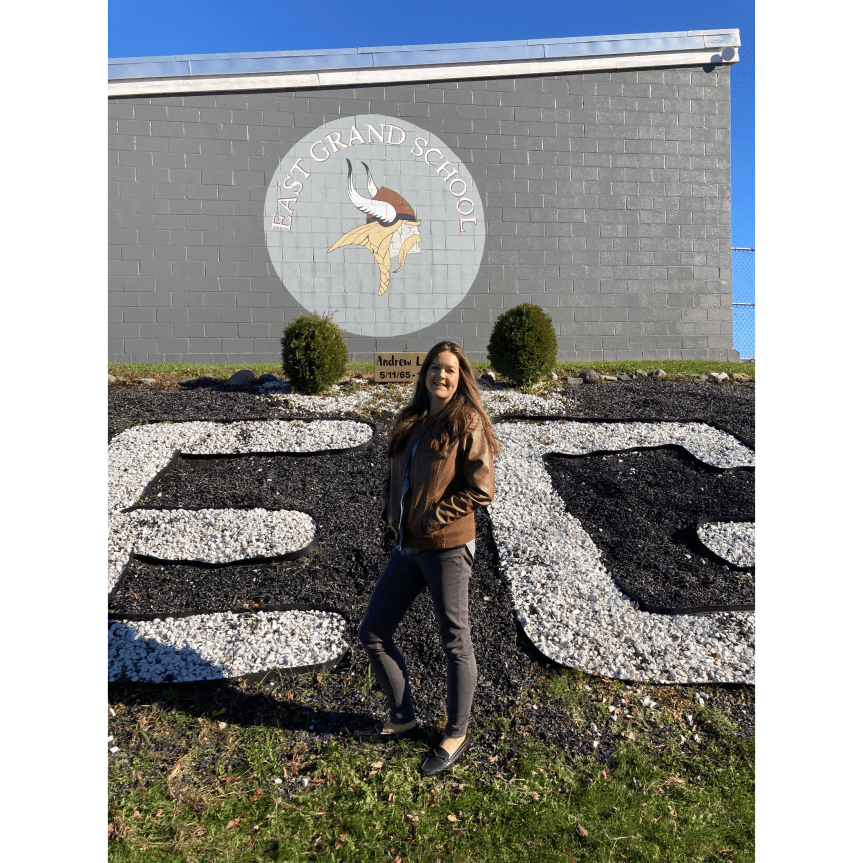
As the Extended Learning Opportunities (ELO) Coordinator for East Grand School (RSU 84), Angela Cowger works with students to create meaningful experiences for students that build a long-lasting framework for the school’s ELO program.

“We are bringing awareness to students, parents, teachers, businesses, and community leaders about what ELOs are as well as working with them to provide varied, high-quality ELOs to students,” said Cowger. “Our goal is to develop an integrated, sustainable, and effective ELO program with a focus on career exploration, meaningful paid work experience, and work readiness skills that prepare students to be the next generation of innovators and small business leaders.”

Cowger says the best part of her day-to-day work is definitely the time she spends with the students. “It is rewarding to see students’ sense of pride and accomplishment when contributing to a community project, work placement, or other hands-on learning,” she said. “The growth and learning students gain from these ELO experiences are exceptional.”

Some recent successes include the experience of East Grand senior Phoebe Foss who is working on an ELO with the local town office on the Danforth Livable Community Program project. She is helping get the program off the ground, by coordinating and providing technology, social, nutrition, and other services. Phoebe is helping to facilitate these services as well as bring awareness about the program to social media and other local communication sources so the community can benefit from the much-needed opportunities and resources for its aging population.

Another student, Alan Emery is gaining hands-on experience and a more in-depth understanding of what it means to become a registered Maine guide, which he aspires to become after high school graduation. Alan recently participated in a week-long trip at a remote northern Maine wall tent moose hunting camp where his chores included working with two camp cooks with meal preparation, serving, and cleanup, fetching water daily from a stream for washing dishes and for hot showers, collecting and cutting firewood to use in the camp wood stoves in the dining and sleeping tents. He also assisted with breaking down camp and packing it away.

“Having Alan involved with our remote Maine moose camp not only provided great exposure and training but also opened the door to future possible employment for him,” said local businessman and registered Maine Guide Dave Conley of Canoe The Wild, who mentored Alan during the experience. “This training was invaluable and something that can’t be learned in a classroom.”

East Grand School is currently in the process of designing and implementing a k-12 Small Business Pathway, connecting Career and Life Readiness, Economics, and Guiding Principle standards at each grade level. The ELO program helps them launch the grades 9-12 work readiness portion of the Small Business Pathway.

“We are looking forward to working with local businesses to further students’ work readiness and entrepreneurial skills, as well as helping students collaborate with community leaders to solve community challenges,” said Cowger.

Cowger also says they already have several business leaders and community partners to thank, including Kiley Henderson at County Physical Therapy, Dave Conley at Canoe The Wild Maine Guide Service, Ardis Brown at the Danforth town office, David Apgar at the Snow Farm, and Sam Henderson and Greg Miller at Northern Maine Realty.

“These businesses and their leaders have been fantastic to work with and we are so thankful for them,” added Cowger. “We have received several optimistic responses as well as offers to connect with students in the future from local businesses. The support has been very positive! We are looking forward to many successful partnerships in the future.”

Extended Learning Opportunities (ELOs) are hands-on, credit-bearing courses outside of the traditional classroom with an emphasis on community-based career exploration. These opportunities are personalized for students and help them explore options for their professional lives. They help students engage in learning through instruction, assignments, and experiential learning. The Maine Department of Education (DOE), along with state-wide partner Jobs for Maine Graduates (JMG), have made a concerted effort to provide working models, support, and funding opportunities for Maine schools to set up ELO programs within their school communities. To learn more about Maine’s initiatives with extended learning opportunities, visit: https://www.maine.gov/doe/index.php/learning/elo or reach out to Maine DOE ELO Coordinator Rick Wilson at rick.wilson@maine.gov

Education Leaders Get Unique, First-Hand Experience Participating in Maine’s Legislative Process

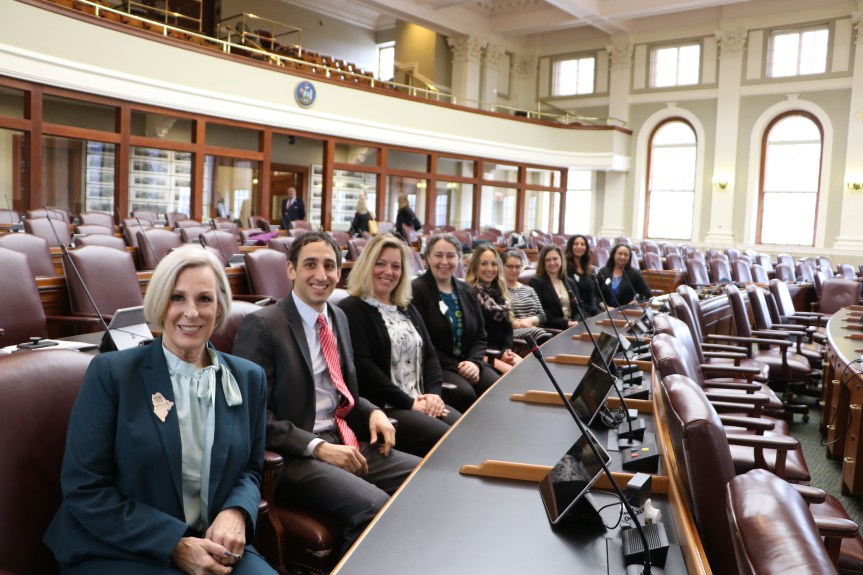
(Pictured: 2022 Maine County Teachers of the Year sit in Maine’s House of Representatives for Mock Legislature Day.)

For many, the legislative process, at both the state and federal level, can feel like an unwieldy space where the further you dig in, the harder it can be to understand or even attempt to navigate the first steps to participating and creating change.

Some of Maine’s educators got the chance to experience Maine’s legislative process first-hand recently in a mock legislature day hosted by Educate Maine, Unum, the Maine Principals Association, UNE Online, and other Maine organizations interested in amplifying voices from Maine’s education workforce.

The opportunity is provided as part of a professional development program called Education Leaders Experience (ELE) that was developed by Unum and administered by Educate Maine.  This is the eleventh year of ELE. Joining this year’s ELE cohort were the 2022 County Teachers of the Year, a group of teacher leaders from every county in Maine whose goal is to represent and raise the voices of educators from their region. Also present were partners from the Maine Department of Education and former and current legislators who served as mentors throughout the day.

“I’m tremendously grateful to everyone who helped make this experience possible,” said Matt Bernstein a Social Studies Teacher at Casco Bay High school and the 2023 Maine Teacher of the Year.

Leading up to Mock Legislature Day educators participating were assigned “roles” to prepare for and play in a day filled with regular proceedings that happen at the height of Maine’s legislative session1. The day focused on two education-related pieces of legislation from the last legislative session: LD 1939 – An Act To Protect School Administration Officials From Harassment And Abuse, and LD 1373 – An Act to Keep All Maine Students Safe by Restricting the Use of Seclusion and Restraint in Schools. Each participant played either a legislator: those serving on a legislative committee2, voting, the bill sponsor3, and some with a specific status like committee chair, or they played a stakeholder either in favor of the bill or against it.

“I went into policy day feeling out of my element despite great preparation,” said Ashley Bryant a 4th-grade teacher at Sacopee Valley Middle School and the 2022 Oxford County Teacher of the Year.

Educators spent the first part of the day gathered in the very seats of the Maine House of Representatives learning about Maine’s budgeting process, going over the steps of the day, and hearing from current and former legislators who took part in the Mock Legislature Day as mentors. The group also got the chance to hear Maine Senate President Troy Jackson talk about his story of becoming a Maine legislator, his process for decision-making, and his priorities as a policymaker.

“I appreciated the exposure to the experience of our representatives working on policy and the respected decorum involved among our Maine policymakers as they work to craft laws,” said Emily Albee, a high school social studies teacher at Hampton Academy and the 2022 Penobscot County Teacher of the Year.

The second part of the day is where the real action took place as educators played their assigned roles in committee hearings4 as each of the bills was introduced, testimony5 was read, and clarifying questions were asked. Following the committee hearing were work sessions6 where the day’s mock legislators continued to dig into the bill, going through additional questions they had and proposing and voting on possible amendments to the original bill. During both sessions, participants walked through the formal steps, stopping every so often for questions and for the legislative mentors to make sure everyone knew what to do next.

“I enjoyed being involved with ed policy at the committee level and witnessing how vital public participation is with the policy-making process,” added Albee.

The day ended with everyone back in the Maine House of Representatives where the mock legislators got the chance to speak on each of the bills and then cast their individual votes on each of the bills they worked on that day.

“Being able to participate in this process, from providing testimony to debating the pros and cons of a bill on the House floor, has truly shown me how much our voices matter,” said Heather Anderson a social studies teacher at Caribou Community School and the 2022 Aroostook County Teacher of the Year.

The day ended with participants making connections with colleagues state-wide having gone through an experience together and, for a day, they got to meet with experiencing the lives of policymakers which gave them a glimpse into how Maine’s Legislative process works but more importantly how vital their experiences and perspectives are in the process.

“Just like we strive to do with our students, we all learned and benefited from doing,” said Bryant. “Being part of a mock legislative day made me understand the process by participating in the process. I now know the steps it takes for a bill to become a law, but most importantly, I know how to make my voice matter and get involved in the process.”

“I left the day feeling motivated and inspired,” added Bernstein. “I’m eager to continue learning and growing and to share my experiences with my students in an effort to amplify their powerful and important voices and to support their ongoing efforts to positively impact our communities and our State.”

____

  • Maine’s Legislative Season: Maine’s Legislature meets annually in “regular session” (first Wednesday in December after the general election – through June), and there is a “second regular session” which convenes in January of the subsequent even-numbered year – through April).  The First Regular Session of the 131st Maine Legislature (the current session) convened Wednesday, December 7, 2022, and is set to adjourn on June 21, 2023.
  • Committee: see a listing of Maine’s legislative committees
  • Bill Sponsor: A legislator decides to sponsor a bill, sometimes at the suggestion of a constituent, interest group, public official, or the Governor.
  • Committee Hearing: Where proposed bills are introduced to legislative committees by bill sponsors and the public gets the chance to provide comments (a.k.a. testimony). Most education-related bills are introduced to the Education and Cultural Affairs Committee. See a schedule of upcoming committee meetings here.
  • Testimony: Anyone can provide public comment either for, against, or neither for nor against a bill during Maine legislative committee hearings, either in person, virtually via video live stream, or in writing:
  • Learn more about testifying in person here.
  • Learn more about submitting testimony in writing or participating via video here.
  • Work Session: Less formal committee meetings than public hearings, held primarily for committee deliberation and voting on bills and other committee matters.

Governor Mills Announces $15 Million in Maine Jobs & Recovery Grant Funding to Expand Career and Technical Education in Maine

Governor Janet Mills today announced that four Career and Technical Education (CTEs) schools in Maine will receive $15 million in grant funding through her Maine Jobs & Recovery plan for program, equipment, and facility upgrades.

The grant funding will allow the CTEs to build new facilities or add to existing facilities to expand hands on, real-world programs for Maine students in plumbing, electrical, building construction, culinary and hospitality, EMT, welding, and more.

The Governor announced the funding alongside educators and students at Oxford Hills Technical School in Norway, which will receive more than $2 million for a new free-standing building to expand their plumbing, electrician, and building construction tech programs.

Under Governor Mills, CTE enrollment has grown by nearly 11 percent, with an almost 300 percent increase in exploratory program enrollment that allows freshman and sophomores to sample multiple programs to follow their interests.

“I have always been a strong believer in the power of CTEs because they equip students with the skills and hands-on experience needed to take good-paying jobs and have rewarding, lifelong careers in the trades,” said Governor Janet Mills. “That is why I am also so proud of this announcement. We all know that Maine desperately needs more electricians, plumbers, welders, and other skilled workers, and investments like this one through my Jobs Plan will help deliver them. I look forward to watching these CTEs grow and having more students benefit from them.”

“At Maine’s CTEs, students use their hands and their minds to immerse themselves in programs ranging from plumbing and building construction to culinary arts and healthcare,” said Education Commissioner Pender Makin. “CTE students learn real-world skills, gain industry accreditation, take college courses, and build connections with local employers. These grants will allow several of our CTEs to expand to serve growing student interest in the engaging, hands-on programs that Maine’s CTEs offer.”

“This will be a gamechanger for our students. The grant funds will be used to construct a 6000 square foot, free-standing building on campus that will have three classrooms and shop space for our plumbing program and the new electrical technology program. Our building construction program will also use the new building for some aspects of their classes, making this new building a hub for the building trades here at Oxford Hills Technical School,” said Oxford Hills Technical School Director Randy Crockett.

In addition to Oxford Hills Technical School, the following CTEs also received grant awards:

  • Biddeford Regional Center of Technology in Biddeford: More than $7 million to build a two-story addition to the existing high school to create a culinary arts and hospitality program as well as an athletic training program and to expand existing plumbing and emergency medical technician programs.
  • Northern Penobscot Tech Region III in Lincoln: Nearly $570,000 to expand the welding program by building an addition to the existing school that will add five welding booth ventilators, ten welding booths, and ten welders.
  • Region 9 School of Applied Technology in Mexico: Nearly $5.5 million to expand and enhance CTE facilities for four programs, including establishing a four-season outdoor education center, creating new classroom and lab space for the welding program, and expanding the culinary arts program to include an outdoor education space with a greenhouse, store, outdoor kitchen, and classroom.

“In Biddeford, we will finally be able to offer three new programs: culinary arts, travel, tourism and hospitality program, and athletic training/sports medicine. Additionally, we are adding expanded space for our plumbing, heating, and EMT program. Through these grants, we’re able to offer more workforce training programs and give students more choice and opportunity,” said Biddeford Center of Technology Director Paulette Bonneau.

“Region 9 is a small rural CTE school located in the foothills of Western Maine. Our grant-funded projects will expand and enhance instructional opportunities for our students leading to further skill development and chances to earn industry credentials. These skills and credentials will support our students in being successful in obtaining good-paying jobs or participating in post-secondary training and educational opportunities. Our voters, in all sixteen communities, overwhelmingly supported our school receiving these funds during a recent referendum vote. We are excited to move forward in this process and can’t wait to see the amazing impact this opportunity will have on our school and the surrounding area,” said Region 9 School of Applied Technology Director Brenda Gammon.

“The grant will provide a much-needed expansion to Northern Penobscot Tech Region III’s welding shop. Our welding program provides our students opportunities to receive several certifications, up to and including pipe welding. Many graduates of the Region III welding program leave high school and go right to work building the critical infrastructure Maine needs for now and into our future. This is money well spent,” said Northern Penobscot Tech Region III Director Curt Ring.

This $15 million grant funding is part of a larger $20 million investment from the Governor’s Jobs Plan to expand CTEs in Maine, including following $4.5 million in awards to 23 CTE programs to purchase and upgrade equipment to enhance student learning experiences and career preparation for high-skilled, in-demand industries.

In addition to the Jobs Plan funding, the Governor and the Legislature have increased funding for CTEs by nearly $10 million over the past four years, including a $1.6 million to assist in the increased costs of supplies and $100,000 to expand CTE early childhood education programs. The Governor’s biennial budget also proposes $500,000 to expand middle school CTE programs.
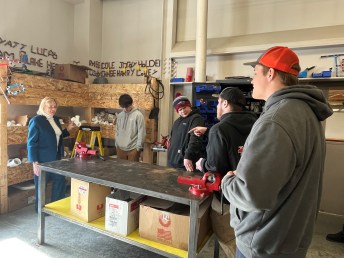
Gov Mills and CTE studentsAs then-Attorney General, Governor Mills also used funds she obtained through a settlement with Bath Fitter to create plumbing programs at four CTEs in Maine, including Oxford Hills Technical School in Norway, Foster Career and Technical Education Center in Farmington, Lewiston Regional Technical Center in Lewiston, and Biddeford Regional Center of Technology in Biddeford.

Maine’s 27 Career and Technical Education regions and centers enroll more than 9,800 students in 85 programs. Students learn skills and gain real-world experiences in programs ranging from plumbing and welding to culinary arts and early childhood education while completing high school. Many students are able to receive industry accreditation, earn college credits through dual-enrollment opportunities, and they graduate with the skills and knowledge they need to succeed in the job market and higher education.

The Maine Jobs & Recovery Plan is the Governor’s plan, approved by the Legislature, to invest nearly $1 billion in Federal American Rescue Plan funds to improve the lives of Maine people and families, help businesses, create good-paying jobs, and build an economy poised for future prosperity.

Since the Jobs Plan took effect in October 2021, the Mills Administration has delivered direct economic relief to nearly 1,000 Maine small businesses, supported more than 100 infrastructure projects around the state to create jobs and revitalize communities, and invested in workforce programs estimated to offer apprenticeship, career and education advancement, and job training opportunities to 22,000 Maine people.

For more about Maine Jobs & Recovery Plan, visit maine.gov/jobsplan.

Earlier in the day, Governor Mills also read to second grade students at Guy E. Rowe Elementary School in Norway as part of the Maine Department of Education’s Read to ME Challenge. The annual challenge promotes literacy by encouraging adults to read aloud to children for at least 15 minutes.
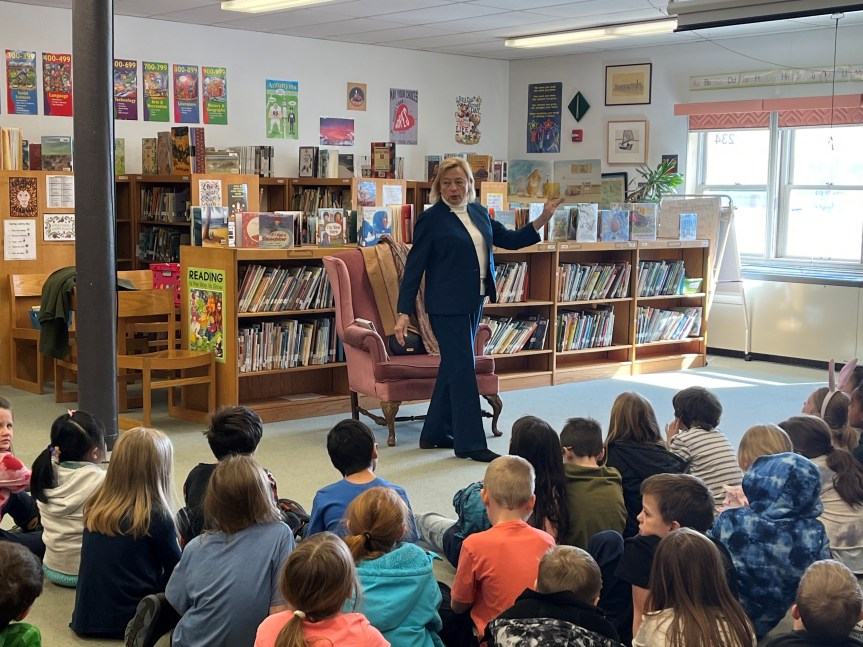
Gov Mills reads to students

Math4ME: Engage Families in Mathematics

Is your school hoping to engage families in mathematics? Math4ME is for YOU!!

Math4ME is a free, three-year, K-5, whole-school project designed to support all educators (classroom teachers, special educators, ed techs, and interventionists) to strengthen math proficiency for all learners with a specific focus on increased math proficiency for students with math IEP goals.

Math4ME Application Form

Register for the Math4ME Info Session March 8, 2023 at 3:30-4:30 PM

“I liked the breakout groups and providing different ways to solve the problems. It helped close the gap in my way of thinking.” – Math4ME Participant

“It gave me ideas of what to think about in regards to delving more deeply into NWEA scores and how to use some of this information to inform both my instruction and the writing of IEP goals.” – Math4ME Participant

For more information contact: Susan Hogan, susan.hogan@maine.gov


Pre-K for ME, K for ME, and 1st Grade for ME Program Overviews and Summer Training Opportunities

Since 2018, the Maine Department of Education (DOE) has adapted and piloted open-source Pre-k and Kindergarten instructional programs based on the Boston Public School’s evidence-based Focus on K1 and Focus on K2 curricula.  Pre-K for ME was launched in 2019.  K for ME was launched in 2021.  1st Grade for ME is being piloted in Maine classrooms this year and will be made available for the 2023-2024 school year. These programs focus on the whole child, are interdisciplinary, and are developmentally appropriate.  They are also aligned to Maine’s learning standards.  While Maine schools are responsible for the purchase of the materials that support use of the programs, the programs can be accessed at no cost via the Maine DOE’s website. 

Informational overviews of each of program will be provided in the coming weeks.  The overview sessions will be recorded and posted for anyone unable to attend the live sessions. The overview sessions will share the basic program structure and review the materials needed to implement the program.  If unfamiliar with the programs, attending the overview (or watching the recording) is highly recommended. 

Overview Session Registration Links: 

Educators/schools/programs interested in utilizing Pre-K for ME, K for ME and/or 1st Grade for ME in the coming year may take advantage of 2-day initial trainings scheduled for this summer.  These trainings are provided at no cost to promote understanding of program design and to support successful program implementation.  School administrators are strongly encouraged to attend the trainings with their Pre-K, Kindergarten and/or first grade teachers.  Special educators, education technicians, and instructional coaches/curriculum leaders who work with pre-k, kindergarten and first grade teachers are also encouraged to attend. 

This year’s training opportunities will be held in person from 8:30 a.m. to 3:30 p.m. during the week of July 31st-August 4th. The locations and break down of dates for the specific programs are being finalized and will be available soon. For teachers learning the K for ME and 1st Grade for ME programs, an additional training day will occur on June 28 from 8:30-3:30 (location TBD).  Registration for these trainings should be completed by principals/educators with one registration on behalf of their school/program.  Details about how to prepare for the trainings and the training locations will be provided via email after registrations are received. Registrations for the 2-day training for each instructional program should be received by May 26, 2023. 

Summer Training Registration Links: 

For additional information about Pre-K for ME, contact Nicole.Madore@maine.gov, and for K for ME and 1st Grade for ME, contact Leeann.Larsen@maine.gov. 


April 1 Enrollment Reporting Webinar

The Maine Department of Education (DOE) Data Team will be hosting a webinar on Tuesday, March 14th from 10:00 am – 11:00 am. This webinar will review April 1 Enrollment which collects data used to calculate tuition rates.

Required to Report: RSUs, CSDs, MSADs, Municipal School Units, and Maine Indian Education units that operate schools.

Registration is NOT required for this webinar. Use the link below to join.

April 1 Enrollment Webinar

For questions about this webinar or April 1 Enrollment reporting please contact MEDMS.Helpdesk@maine.gov or call 207-624-6896