Mt. Blue High School Eases the Ninth Grade Transition with BARR

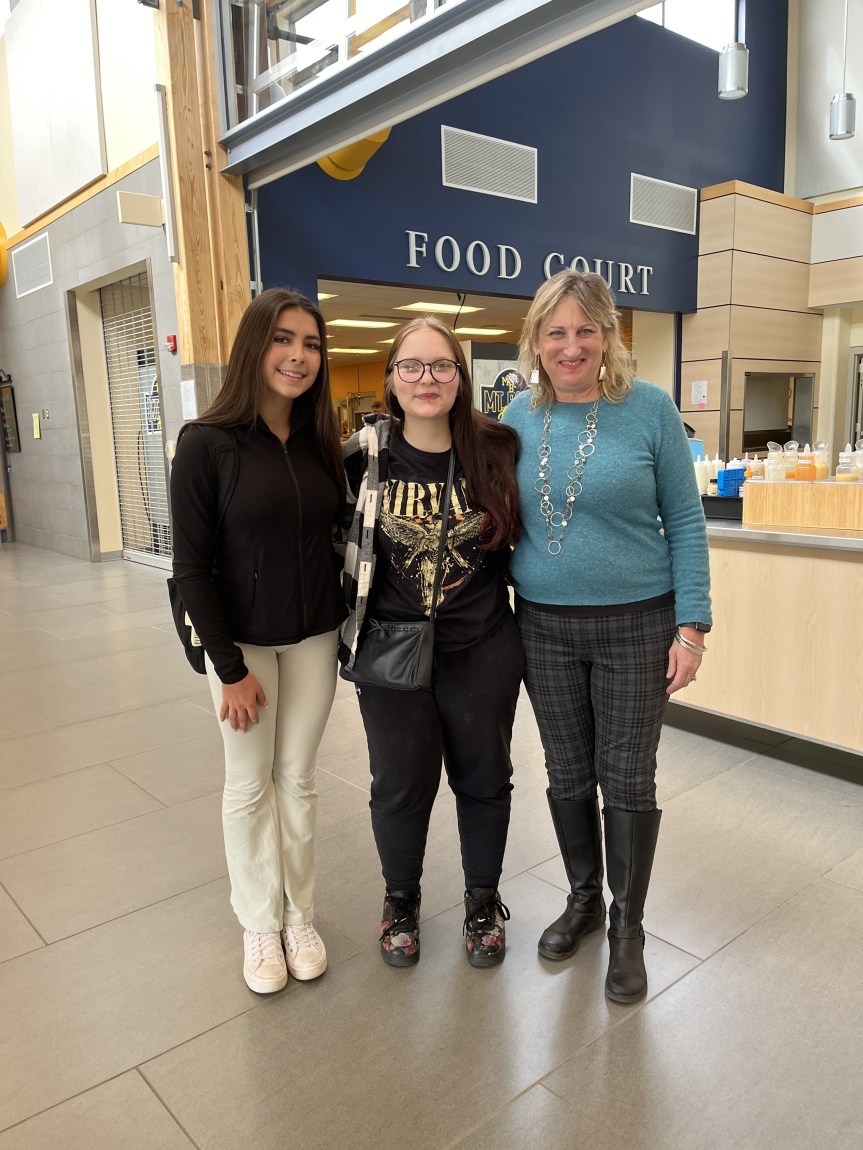
(Through BARR, Mt. Blue High School students McKylee and Kenzee developed a strong bond with their ninth-grade counselor and BARR Coordinator, Anna Peterson, that continued into their sophomore year.)

For five years, Mt. Blue High School in Farmington has used the BARR (Building Assets Reducing Risks) model to ease ninth graders into high school. As a result, they have seen increased attendance, lower failure rates, and stronger bonds between educators and students and among educators.

“Freshmen have always been a demographic of students who have struggled,” said ninth-grade Earth Science teacher Kerry Schlosser, “I think BARR leads to just an additional level of support. Especially when you go from middle school to high school, it’s such a vulnerable year, a vulnerable time.”

The ninth-grade educator team at Mt. Blue know their students deeply. They greet them by name in the hall, know who their best friends are, and their dreams for the future. BARR helps facilitate those strong relationships.

Mt. Blue High School is one of more than 70 schools across Maine implementing BARR. Last summer, the Maine Department of Education (DOE) provided an opportunity for any school in the state to become a BARR school and join schools like Mt. Blue that have been experiencing incredible success through BARR.

BARR is a model that combines relationship building (staff to staff, staff to student, and student to student) and real-time data to enable schools to strengthen academic outcomes and wellbeing for all students. By building strong relationships with students and fellow educators, teachers can work together to support the whole student.

Educator teams meet in Block Meetings, where they discuss each student individually, focus on their strengths and connections to school, share personal knowledge and observations (e.g., a student’s mental health, family life, goals, etc.) and analyze benchmark data (e.g., grades, attendance, behavior, etc.).

Schlosser explains how Block Meetings work at Mt. Blue.
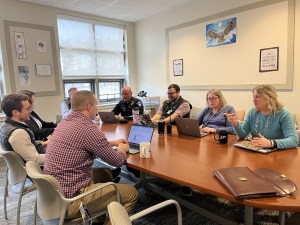
Mt. Blue's Community Connect meeting is where educators and school community members meet to discuss at-risk students. Mt. Blue educators and school community members sit around a conference table talking about BARR with laptops in front of them.
Mt. Blue’s Community Connect meeting is where school community members meet to discuss at-risk students.

“We have a Big Block at the end of the week where we discuss students as a big team with the administrator, school counselor, and social worker. Then, at the beginning of the week, we have our Small Block meeting, where we as teacher teams and then discuss students and small interventions there,” she said.

Students whom educators identify as at risk are discussed in Community Connect meetings, which involve greater school community members including school resource officers and administrators. At Mt. Blue, they hold weekly Community Connect Meetings, which include Peterson, the ninth-grade Assistant Principal Greg Henderson, school social workers Angelica Levy and Jack Turner, school nurse Vicky Gerstenberger, special education building coordinator Mike Hanson, and school resource officer Matt Brann. During their meetings, the Community Connect team develops strategies to intervene and limit poor behaviors before they result in a suspension.

Makylee, a sophomore, feels that the support she got through BARR in ninth grade set her up to have better relationships with her sophomore teachers.

“Teachers talk and have meetings. They let each other know how you are as a student, so you don’t have to go in as a fresh start,” she shared. “Then, your bond just increases to grow.”

These positive relationships with educators are built during I-Time. Much like Block and Community Connect Meetings, I-Times can vary from school to school. At Mt. Blue, each ninth-grade teacher has twenty freshmen they see during multiple I-Times. I-Times involve everything from relationship building activities to life skills development. Most importantly, these I-Times allow students to meet and bond with peers and teachers, and students are able to bond on a deeper level.

“Not only did your teachers get to know you, you got to know them, and you bonded as a class and a community,” Makylee said.

Before investing in BARR, Mt. Blue saw consistently high suspensions and low attendance rates.

“The year before BARR, suspensions were through the roof, and there were a lot of different behaviors,” remembers Joel Smith, the Mt. Blue Principal. “Hearing that BARR had an impact on academics, attendance, and behavior, that was appealing…especially the behavioral component, and we’ve seen a difference since then.”

Since starting BARR, Mt. Blue’s suspension rates have gone down, their attendance is up, and the failure rate was below five percent in the first semester of the 2023-2024 school year.

“Our failure rate, since implementing BARR, has gone down each and every year,” said Smith.
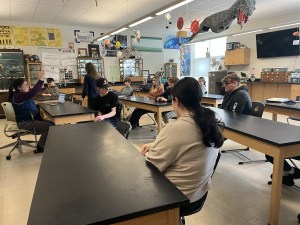
Mt. Blue BARR Students sit in a science classroom at long black lab desks, facing the front of the room where a teacher sits in front of a laptop talking to them.
Dr. Patricia Millette teaches her ninth-grade I-Time students about using critical thinking to decipher manipulative advertisements.

Outside of the data and inside the classroom, educators are experiencing those positive trends firsthand and they are sustained past freshman year. Sophomore English teacher Meadow Sheldon, who has been teaching at Mt. Blue since before BARR was implemented, sees a real difference in her post-BARR sophomores.

“They work hard, and they can advocate for themselves,” Sheldon conveyed. “They have an understanding of what [their grades]  mean and ask for help more than students have in the past.”

What’s more, students feel better about being at school. Quinn, a freshman, found school unappealing up until this year. Now, he is an honor student who is close to his teachers.

“It feels like the school actually treats me like a person instead of like a kid,” he said.

Peterson is immensely proud of the ninth-grade team’s work with BARR.

“I love the way that we take care of every ninth-grade student. We notice if their grades are slipping if they’re absent, or if there is a problem,” he said.

Smith and Peterson hope to see the BARR model extended to the entire high school someday.

“We are looking at opportunities whenever possible to implement the BARR model,” said Smith.

Interested in becoming a BARR school? Attend this BARR webinar coming up:

Applications are now open to all willing and qualified public schools that would like to become a BARR (Building Assets, Reducing Risks) school. Click here to apply. Applications are due by March 22, 2024 by 5:00pm EST.

The Maine DOE will cover all costs of implementing the program for schools new to BARR for the 2024-2025 school year. (Note: if you are already a BARR school with an existing contract, your costs will be covered for the 2024-2025 school year as well and you do not need to reapply.)

The Maine DOE used American Rescue Plan funding to create a competitive BARR grant to help schools invest in the model.

Belfast Alternative Ed Program Partners with Local Paper for Student Mentorship Experience

(Pictured: Emma Witham, a student at BCOPE, RSU 71’s alternative high school program)

Belfast Community Outreach Program in Education is RSU 71’s alternative high school program, which was funded by a grant from the Office of Substance in 1990.

The program began in a small rental space down the street from Belfast Area High School. In 2002, the district built the program their own building, which was designed by students. The campus includes a 4000 square foot building equipped with four classrooms, a full kitchen, a band room, an organic garden and a greenhouse. The program currently serves 33 students 16 of which have a parent or sibling who has attended there.

“Over the years, we have worked with many community partners,” said Helen M. Scipione, BCOPE Teaching Principal. “One of our most recent partnerships is with Village Soup, The Republican Journal, which is our local weekly newspaper. The editor, Jim Leonard, did an article on BCOPE last year and he was so impressed with what he experienced, he offered to mentor a student reporter. We quickly took him up on his offer.”

Emma Witham, one of BCOPE’s current students is a gifted writer and she accepted the challenge. Emma’s mother, Krystal, and her sister, Abby both graduated from BCOPE. Her twin sister, Ava, also attends BCOPE now.

Emma recently had her first article published and it is not only the history of BCOPE, it is her experiences with alternative learning.

“We are extremely proud of Emma and BCOPE and we’d like to share it with you,” said Scipione.

In Emma’s words, “I have been honored for who I am at BCOPE and it’s an experience I’ve never had before. I am extremely grateful for BCOPE.”

Read the full article here in the Village Soup.

“I can honestly say that we are eternally grateful for our community of learners that spans 34 years,” added Scipione.

This article was submitted by BCOPE. To submit a good news story to the Maine DOE, use our Good News Submission Form.


Maine DOE Update – March 8, 2024

From the Maine Department of Education


Reporting Items

| Visit the DC&R Reporting Calendar |


News & Updates

Maine DOE Seeks Participants for Climate Education Action Plan Task Force

The Maine Department of Education (DOE) wants your help designing the future of climate education in Maine. If you are a teacher, student or young adult (under 30), school administrator, or education partner, consider filling out the interest form below to be a part of the Maine DOE Climate Education Action Plan Task Force. |  More

Reminder: Regional School Calendar Coordination Between SAUs and CTEs

As a reminder, Regional School Calendars are due by June 1, 2024 for school administrative units (SAU) and private schools, approved for tuition purposes, in coordination with their local secondary career and technical education (CTE) school. This requirement is part of Public Law 2011, Chapter 686 to promote collaboration among local school administrative units that may benefit from inter-administrative unit collaboration beyond CTE. |  More

Celebrating School Social Work Week March 3-9, 2024

The Maine DOE and its staff would like to send our heartfelt appreciation to all school social workers for the immeasurable positive impact you have on our students, communities, and school climate. |  More

Madawaska Shows the Power of Summer Learning Opportunities, Apply for 2024 Funding Today

Last summer, elementary school students throughout Madawaska were provided project-based extended educational learning opportunities with a focus on celebrating the region’s French-Acadian heritage. The 2024 ARP Summer Programming and Enrichment grant application deadline is March 29, 2024 |  More

Worthington Scholarship Foundation 2024 Scholarship Application is Open for Public High School Seniors in Maine

The Worthington Scholarship Foundation is offering scholarships of up to $20,000 to high school seniors from any of Maine’s 134 public high schools, who will attend a Worthington-eligible 4-year college or a community college in Fall 2024. |  More


Maine Schools Sharing Success Stories

Windsor Elementary School Explores Maine Seaweeds with a Little ‘Kelp’ From Their Friends

Windsor Elementary School educators Kristel Anuszewski and Jana Diket recently collaborated with Maine Sea Grant, Chef Andrew Wilkinson from North Coast Seafoods, and other Maine businesses to bring seaweed to the classroom and cafeteria. |  More

Photography and Poetry Gallery at Lyseth Elementary School

Walking into the bright atrium of Lyseth Elementary School in Portland, you are met by giant black-and-white photographs of the 20 students in Leigh Quigley’s 4th-grade class. Hanging from the skylight are even more pictures, pictures that students took after learning photography elements like composition, light, and focal point from professional photographer Liz Bieber. Proud adults gather around, taking pictures of student work. |  More

Five Maine Education Programs Highlighted in National Webinar on Educational Innovation

In December, five Maine educators leading school innovations and working towards systemic change to create powerful outcomes for Maine students were featured in a webinar hosted by The Regional Education Laboratory (REL) Northeast & Islands with nearly 100 educators from across the country present. |  More

| Submit your Maine School Success Story |


Professional Development, Training, and Events

Webinar: Gamifying Your Classroom

In this discussion-based webinar, Maine Department of Education (DOE) Maine Humanities Teacher Leader Fellows Jim St. Pierre and Dorie Tripp host an exchange among teachers who are gamifying their curriculums or who want to learn more about gamification to improve student engagement. |  More

Pre-K Partnership Pilot Grant Informational Session

Is your school administrative unit (SAU) interested in starting or expanding public Pre-K with a community partner for the upcoming 2024-25 school year? If so, the Maine DOE’s Early Learning Team invites you to attend an informational session regarding a Pre-K Partnership Pilot Grant opportunity we anticipate releasing this Spring. |  More

Two Inclusive Education Webinar Series Available: Inclusion for Students with IDD and Complex Needs & Assistive Technology (AT)

The Maine Department of Education (DOE) Office of Special Services & Inclusive Education has two upcoming Inclusive Education Webinar Series planned: Inclusive Education Webinar Series: High Leverage Practice to Promote Inclusion for Students with IDD and Complex Needs and Inclusive Education Webinar Series: Dispelling Myths about Assistive Technology (AT) Devices and Services |  More

| Visit the Professional Development Calendar |


Latest DOE Career/Project Opportunities:

View current Maine Department of Education employment opportunities here


Five Maine Education Programs Highlighted in National Webinar on Educational Innovation

In December, five Maine educators leading school innovations and working towards systemic change to create powerful outcomes for Maine students were featured in a webinar hosted by The Regional Education Laboratory (REL) Northeast & Islands with nearly 100 educators from across the country present.

The goal of the webinar was to deepen understanding of different types and purposes of educational assessment within the context of implementing an educational innovation. These educators shared a variety of data sources they used to establish evidence of efficacy as they worked toward systemic change.

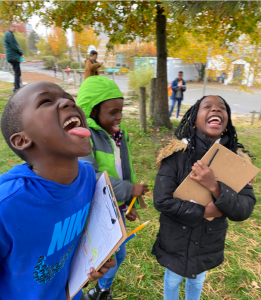
Students Laughing - outdoor learning
Students from Portland Public Schools

Portland Public Schools

The first team of educators to present in the webinar were Brooke Teller and Katie West of Portland Public Schools. They shared assessment tools to measure the desired outcomes of increased exposure and engagement for all students, teacher joy, knowledge and commitment to outdoor and experiential learning, and a greater awareness and understanding of Environmental Literacy Practices and Indigenous Worldview. They have a district-wide innovation for 3,200 K-5 students. By examining student field journals, conducting interviews, and surveys, these innovators were able to begin to capture the impact of their innovation on not just students but the larger community. 

“We’ve been doing interviews and collecting anecdotes and stories because we know how powerful a story can be,” said Brooke Teller of Portland Public Schools.

Falmouth Middle School

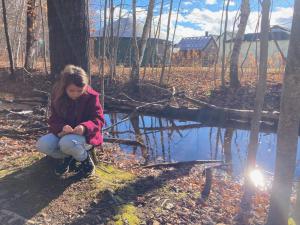
Katie Coppens of Falmouth Middle School shared their Rethinking Responsive Education Ventures (RREV) Pilot: The Navigator Program. The goal of this innovation is to foster empathy and responsibility for the community by immersing students in the natural, cultural, and historical elements of the community and to use these as a foundation for the study of science, social studies, and other subjects across the curriculum. The People & Places of the Presumpscot unit was the first step in creating district-wide place-based programming. Katie shared creative pre and post unit assessments that demonstrated student growth. 

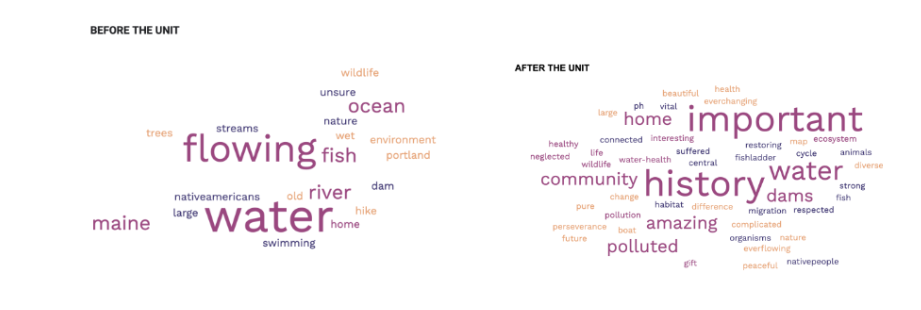
“When you think of the Presumpscot River what word comes to mind?”

word cloud comparison

“This simple snapshot is a measurement that shows the impact this place based unit has on student understanding and connection to the Presumpscot River,” Katie Coppens, Falmouth Public Schools.

Agnes Gray Elementary School

MSAD 17Outdoor Learning in the Oxford Hills was the focus of Sarah Timm’s presentation. As a result of capturing outcomes of increased engagement and motivation, improved student behavior, and academic achievement, the program began the second year of implementation by moving from one elementary school in the district to all 8 elementary schools in the district. The success of the innovation with the elementary schools has informed their decision to provide outdoor learning opportunities to preK-12 students. 

“We are collecting data about how student behavior in the woods compares to student behavior on metal and  plastic playground equipment.”  Sarah Timm, Outdoor Learning Coach describes one data measure at Agnes Gray Elementary school a school with a forest playground for students. 

Maine Indian Education Schools

Gen Doughty, the RREV Leader for the Maine Indian Education Schools, has been supporting the implementation of Extended Learning Opportunities, Place-Based and Project-based learning in order to increase meaningful student participation and to strengthen connection to the community. It only makes sense that as their innovative pilot focuses on a shared way of life, culture, customs, and traditions, that they assess educational outcomes in a way that aligns with Wabanaki Culture. Gen shared that while they originally tried to measure connection to community and culture through surveys but it wasn’t meaningful information. That led Gen and her team of educators to the challenge of examining how the Wakanaki culture would go about a quest for knowledge. That led to the use of storytelling through small and large talking circles which provided a much deeper understanding of how to respond to student needs.

“The school is a place where many gather , not just a place for our students, our families are involved and we have community meetings and different sorts of activities that happen for our entire families to join in with our students.” Gen Doughty.

The Maine Demartment of Education (DOE) encourages all schools and districts across the State of Maine to learn more about RREV innovative educators and their pilot programs through the RREV website and the online RREV collaborative platform known as EnGiNE. It is through EnGiNE that we hope to continue the momentum to change students’ lives through innovative and responsive educational programs.

Worthington Scholarship Foundation 2024 Scholarship Application is Open for Public High School Seniors in Maine

The Worthington Scholarship Foundation is offering scholarships of up to $20,000 to high school seniors from any of Maine’s 134 public high schools, who will attend a Worthington-eligible 4-year college or a community college in Fall 2024.

Applicants must also:

  • Be a legal Maine resident
  • Have a B- or higher GPA if planning to attend a 4-year college
  • Have a C- or higher GPA if planning to attend a community college
  • Have a Student Aid Index (SAI) of $20,000 or less as determined by the FAFSA

Scholarships are awarded based on merit and financial need and are renewable for up to eight (8) semesters. Award amounts are up to $20,000 to attend a 4-year college and up to $16,000 to attend a Maine community college with the option of continuing to a 4-year partnering college.

The foundation also provides student support services to its scholars throughout their college careers and works closely with each partner college to help students attain their education goals.

Applications are due April 15, 2024.

For more information and to complete an online application, please visit worthingtonscholars.org. For additional information, email info@worthingtonscholars.org or call 207-596-5800.

Webinar: Gamifying Your Classroom

In this discussion-based webinar, Maine Department of Education (DOE) Maine Humanities Teacher Leader Fellows Jim St. Pierre and Dorie Tripp host an exchange among teachers who are gamifying their curriculums or who want to learn more about gamification to improve student engagement.

This relatively new approach to teaching is gaining momentum but there are few resources available for anyone seeking to understand more about it. This webinar hopes to address these shortcomings by bringing together interested practitioners to exchange ideas and methods. We hope you join us and we look forward to exchanging ideas.

Continuing Education credits will be offered.

Webinar: Gamifying Your Classroom

For further information, reach our to Maine DOE Humanities Teacher Fellowship Team – James St. Pierre and Dorie Tripp at James.St.Pierre.@maine.gov and Dorie.Tripp@maine.gov

Madawaska Shows the Power of Summer Learning Opportunities, Apply for 2024 Funding Today

Last summer, elementary school students throughout Madawaska were provided project-based extended educational learning opportunities with a focus on celebrating the region’s French-Acadian heritage.  

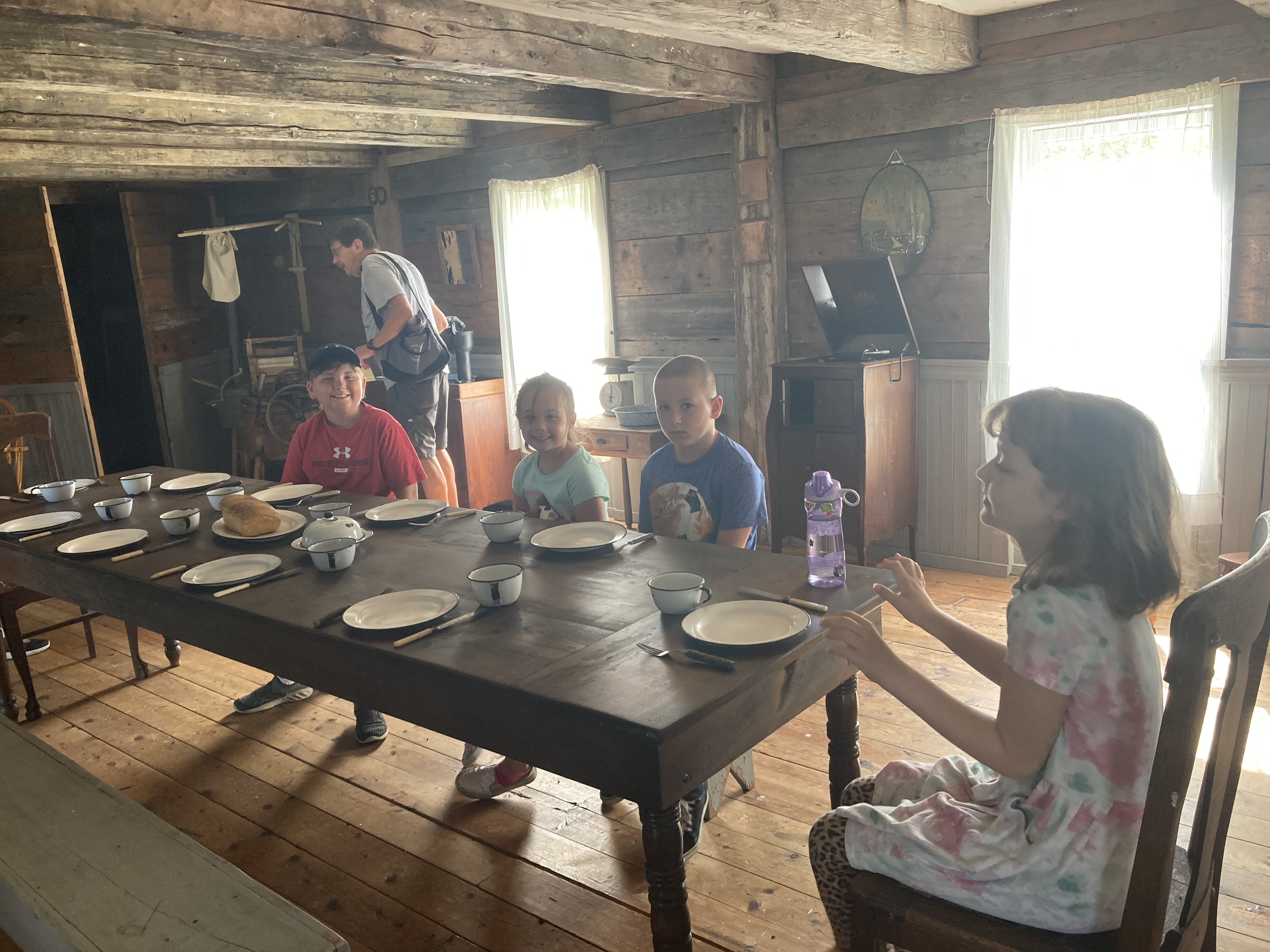
After the 2022-2023 school year, Principal Christian Arnold began working with her team to collaboratively develop thoughtful interdisciplinary lessons and exposure to project-based learning and real-world application, critical thinking skills, and social emotional benefits that emerge from confident learners. During a visit by the Maine Department of Education (DOE), staff observed an engaging lesson focused on preparing students for a field trip later in the week to Maine’s Acadian Village.

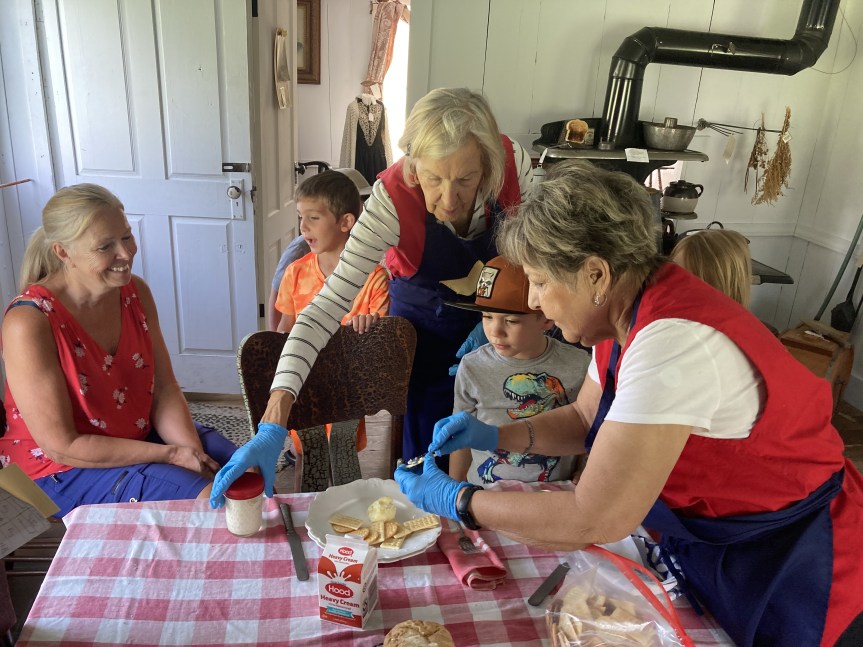
Throughout the read aloud, students made text to real life connections, shared personal anecdotes, and leaned in to learn more about their region’s rich cultural history. Directly following the read aloud, students and educators enjoyed ployes while listening to local French-Acadian fiddle music. Throughout their family style meal where butter and local maple syrup was plentiful, students and educators eagerly shared stories from their own personal experiences which illustrated how this delicious French-Acadian staple has connected their families and greater community for generations. Woven throughout the discussion were brief vocabulary lessons in English and French.

Madawaska’s four-week American Rescue Plan (ARP) funded summer and enrichment programming supported three certified teachers with three Ed Techs and a dedicated Family Engagement assistant.  Attendance was a key focus and was a successful effort with about 20 students participating on a daily basis. Each student had a learning objectives/goals folder used to share with parents and track their progress. 89 percent of students met their growth goals as determined in STAR, and all students showed growth or maintained end of year scores as determined by DIBELS. Madawaska determined that their numbers were comparatively small, but the program was dynamic! 

In her end of summer newsletter, Principal Arnold shared “the kids came in as timid students and left as motivated scholars.” 

Funding is available to bring summer programming to your school community!

The 2024 ARP Summer Programming and Enrichment grant application deadline is March 29, 2024, at 5 PM EST. Please reach out to ARP Summer Programming Coordinator Jackie Godbout jackie.godbout@maine.gov with questions. 

Celebrating School Social Work Week March 3-9, 2024

The Maine Department of Education (DOE) is proud to celebrate National School Social Work Week, from March 3rd to March 9th, 2024.

School social workers have supported students in the United States since the early 1900s. This support has become increasingly important as the mental health needs of students have increased in recent years. The dedication of the first full week of March as National School Social Work Week celebrates the commitment of school social workers to our students, staff, schools, and communities.

In recognition of school social work week, Dr. Terrilyn Rivers-Cannon, Board President for the School Social Work Association of America reflected on the impact of school social workers:  “In the tapestry of education, school social workers are the threads of compassion, weaving empathy, support, and understanding into the fabric of students’ lives. National School Social Work Week is a canvas to celebrate their profound impact a masterpiece of care, advocacy, and transformative influence.”

Many schools will be hosting special events and activities to highlight the immeasurable benefits school social workers bring to our schools. Please consider joining these schools in honoring and celebrating the work of school social workers in your school.  In addition, we invite you to send testimonials and examples of how school social workers have impacted your school communities. Submissions may be sent to kenneth.a.rautiola@maine.gov. These submissions may be used by Maine DOE and/or the National Association of Social Workers to recognize the incredible work school social workers are providing in Maine schools.

To find other ideas for activities and social media posts, the School Social Work Association of America has shared some suggestions (JPG)

The Maine DOE and its staff would like to send our heartfelt appreciation to all school social workers for the immeasurable positive impact you have on our students, communities, and school climate.

For more information and to submit testimonials of school social workers, please contact Ken Rautiola, Mental Health Distinguished Educator, Maine DOE at kenneth.a.rautiola@maine.gov – office hours 8:00 am – 5:00 pm M-F.

Pre-K Partnership Pilot Grant Informational Session

Is your school administrative unit (SAU) interested in starting or expanding public Pre-K with a community partner for the upcoming 2024-25 school year?  If so, the Maine DOE’s Early Learning Team invites you to attend an informational session regarding a Pre-K Partnership Pilot Grant opportunity we anticipate releasing this Spring.

Pre-K Partnership Pilot Grant Informational Session

  • Date: March 13, 2024
  • Time: 2:00 pm – 3:00 pm
  • Description: To review the grant and pilot opportunity and anticipated requirements.
  • Register here

Through funding provided by Maine’s Preschool Development Renewal Grant, the Maine Department of Education intends to conduct a pilot to provide grant funding to School Administrative Units (SAUs) to increase the number of eligible 4-year-olds attending high-quality public Pre-Kindergarten (Pre-K) programming in licensed community partner settings (center-based and family child care). To realize its goal of reaching universal access to public Pre-K, the state will need to increase the number of partnerships with licensed community-based providers (e.g., center-based and family child care) to ensure equitable access to high-quality early care and education, especially for our most vulnerable children.

Applicant SAUs awarded these grant funds will be required to partner with licensed community-based providers (e.g., center-based and family child care) to provide either full-day/full week or half-day/full week Pre-K programming. For this pilot, Head Start partnerships will not be considered.  A partnership is characterized by meaningful involvement in the planning, developing, and delivering of the proposed program for students and families.

The informational session will be recorded in case an interested entity isn’t able to attend. Following the informational session, interested SAUs/community partners should monitor the DOE Newsroom and the Division of Procurement Services site for the release of the RFA.

Questions may be directed to Michelle Belanger, Pre-K Partnership Specialist at michelle.belanger@maine.gov.

Windsor Elementary School Explores Maine Seaweeds with a Little ‘Kelp’ From Their Friends

Windsor Elementary School educators Kristel Anuszewski and Jana Diket recently collaborated with Maine Sea Grant, Chef Andrew Wilkinson from North Coast Seafoods, and other Maine businesses to bring seaweed to the classroom and cafeteria.

Since the fall of 2023, both educators have been engaged in professional learning and other efforts to bring the sea inland to their community. Why seaweed? Seaweed farming and harvesting is considered to be “regenerative” and “sustainable” as it requires zero input for growth, no chemicals, fertilizers, or pesticides are needed–only providing benefits for the ecosystem and human health. It plays an important role in combating climate change by dampening wave energy and protecting coastal shorelines, absorbing carbon dioxide from the atmosphere, reducing the effects of ocean acidification by raising the PH, and supplying oxygen to ocean waters. Seaweed is also locally sourced, delicious, and one of the most nutrient-dense foods on the planet.

Seaweed farming and wild harvest also help diversify Maine’s marine economy. It’s a great opportunity and source of income for fishermen and others during the winter season, enabling year-round employment opportunities.

On January 16th, 2024, Windsor Elementary students explored and identified a variety of seaweeds that grow in the Gulf of Maine, and engaged in pressing and other art-related activities. These activities were followed by culinary arts on January 18th with Chef Andrew and his delicious “Seaweed-ish Meat(less)balls,” containing sugar kelp from Maine’s waters. Students also explored a variety of products like seaweed salad and kelp burgers, donated by Atlantic Sea Farms (Biddeford, Maine), as well as a variety of “wild” harvested seaweed products like kelp crunch, seaweed tea, seasonings, generously donated by Maine Coast Sea Vegetables (Hancock, Maine).

Soon after trying the meatballs with Chef Andrew in the morning, Isaiah, an initially skeptical 6th-grader, raised his hand and shared “I didn’t think I would like them, but I really do; may I change my choice for lunch?!”

Although this event primarily engaged 6th, 7th, and 8th graders, all students were offered this option for lunch on January 18th. Windsor School Chefs Missy Parsons and Kara Bailey served up Seaweed-ish Meatballs with pasta and marinara. Chef Ron Adams of Maine Farm and Sea Cooperative, and Chef Mike Flynn, the Director of Student Nutrition Services, Somerville, Maine, stopped in with some Maine marinara with tomatoes sourced from Maine growers– delicious! There was also a special meal option, a kelp burger, served to faculty.

Prior to this collaboration, Anuskewski and Diket introduced their students to seaweed curriculum and activities, and kindergarten through 8th grade students all helped decorate the hallway in preparation for the events. Fish and seaweed adorned the walls, fabric hung from the ceiling with silhouettes of sea-life, creating a magical “seaprise” and experience for all. An intertidal ocean mural with seaweed and other creatures was also on display, built by the 7th and 8th grade students.

Diket plans to continue this work by installing a saltwater tank in her classroom, and both teachers plan on taking students on a field trip to the sea in the spring.

Keri Kaczor, Maine Sea Grant, shared, “It is wonderful to see educators and food service staff at Windsor Elementary collaborate to provide high-quality, hands-on science, art, and nutritional experiences for their students. It’s also a gift to have Maine’s seaweed industry and Chef Andrew generously commit their time, expertise, and products to this effort.”

For more information, please reach out to Kristel (kanuszewski@svrsu.org) or Jana (jdiket@svrsu.org).

This story was submitted by Windsor Elementary School through our Maine DOE Good News Submission form. To submit a story, please fill out the form here.