Maine DOE Update – June 30, 2023

From the Maine Department of Education


Reporting Items

Reminder: Daily Attendance Certification Due 7/15

Daily attendance report certifications for the 2022-2023 school year are due on Saturday, July 15th. All reports must be reviewed and certified in NEO by superintendents in all LEAs. |  More

| Visit the DC&R Reporting Calendar |


News & Updates

Administrative Letter: Legal Requirements to Provide English Language Acquisition Services to Students who are Multilingual Learners* (Revised 6.21.23)

SUBJECT: The legal requirements for providing English for Speakers of Other Languages (ESOL) services to students who are Multilingual Learners. |  More

ESEA Annual Comprehensive Needs Assessments (CNA) Updates

Another annual process for SAUs is meeting with a variety of stakeholders to update their district and school Comprehensive Needs Assessments (CNA) based on new data. As part of the ESEA application, districts are asked to document the high-needs areas of their districts and schools, as well as the data sources they used to make those determinations, the names of the stakeholders involved, and the dates the updates were conducted. |  More

County Teachers of the Year Share Positive Stories and Advocate for Educators, Students in Meeting with Senator King’s Office

The teacher leaders from the Maine Teacher of the Year program including 2023 Maine Teacher of the Year Matt Bernstein and the 2023 Maine County Teachers of the year got the opportunity to meet with representatives from Senator Angus King’s office. Deputy Legislative Director Sanjay Kane and Legislative Aid Kate Durost of Senator King’s office joined the teachers via a Zoom video call to give them the chance to speak about important topics and issues in Maine schools and the teaching profession. |  More


Maine Schools Sharing Success Stories

Caribou 8th Graders Collaborate with Local Historical Society on Student-Created Podcasts

The Caribou Historical Society hosted Caribou Community School (CCS) 8th-grade podcasters recently, to celebrate the unveiling of student-created podcasts with a listening party and ribbon-cutting ceremony. This event was the culmination of a year-long collaborative project between the two groups. |  More

Career Advancement and Navigation Specialists Attend Employer Summit

Three out of the four Adult Education-based Career Navigators attended the Employer Summit in Augusta in late May. The Navigators are part of the Maine Jobs and Recovery Plan (MJRP) which has committed $6 million dollars to address the workforce development needs of those disproportionately impacted by COVID-19. Maine’s Department of Education, Adult Education team is using these funds to help eligible adults and employment sectors recover from the stresses of the pandemic through a variety of academic and job training supports including Career Advancement Navigators and College and Career Success Coordinators.|  More

| Submit your Maine School Success Story |


Professional Development, Training, and Events

New School Nurse Orientation Registration Now Open!

If you have hired or will be hiring a new nurse for your school over the summer? Be sure to include this workshop in their new hire work plan. The Maine Department of Education’s New School Nurse Orientation is a specialized program, designed to help nurses transition into the unique specialty of school nursing. |  More

Register NOW for Maine DOE’s 2023 Educator Summit 

The countdown is on for the start of the Maine Department of Education’s (DOE) 2023 Educator Summit, which is being held August 7-10 at the Augusta Civic Center. Last year’s inaugural Summit attracted more than 600 educators from across the state. This year’s theme is Inspiration, Innovation, and Inclusion and participants will have access to more than 140 sessions and professional learning opportunities. |  More

| Visit the Professional Development Calendar |


Latest DOE Career/Project Opportunities:

View current Maine Department of Education employment opportunities here


County Teachers of the Year Share Positive Stories and Advocate for Educators, Students in Meeting with Senator King’s Office

 The teacher leaders from the Maine Teacher of the Year program including 2023 Maine Teacher of the Year Matt Bernstein and the 2023 Maine County Teachers of the year got the opportunity to meet with representatives from Senator Angus King’s office. Deputy Legislative Director Sanjay Kane and Legislative Aid Kate Durost of Senator King’s office joined the teachers via a Zoom video call to give them the chance to speak about important topics and issues in Maine schools and the teaching profession.

The meeting began with introductions and a welcome from Maine Teacher of the Year Matt Bernstein who led the hour-long conversation.

A point of pride that the teachers shared at the meeting was the tremendous sense of support and comradery they felt through the Maine Teacher of the Year Program. The newly formed 2023 County Teacher of the Year cohort gave them a much-needed network with educators across Maine and a sense of purpose in representing fellow educators and their own school communities. One suggestion made by 2023 Penobscot County Teacher of the Year Jessica Archer, was to create a state-wide hub for educators to connect with and support each other.

One of the first topics of discussion was teacher retention, which became a recurring theme of the meeting. Many of the educators on the call expressed the need to recruit and inspire people to become educators, especially in Maine but also felt that it is important to note that teachers do not always feel supported in the ways they need most.

“We’re doing more with less at the moment,” said 2023 Aroostook County Teacher of the Year Emily Rosser when speaking on the burnout and lack of resources faced by teachers. Rosser went on to say that while she wants to bring more people into teaching, those currently teaching are very tired—a sentiment echoed by many others throughout the call.

Proposed solutions for attracting new teachers while also supporting current ones included increasing funding for education, in addition to emotional and mental health support services. Teachers also advocated for more professional development opportunities with 2023 Franklin County Teacher of the Year Maryam Emami saying, “we need to start treating teachers as professionals.”

Other topics of conversation ranged from issues with school funding to the impact of homelessness and immigration policy on the well-being and education of students. Universal pre-K and quality civics education were also advocated for during the meeting. “Everything that impacts kids is education policy,” said Bernstein about the variety of topics covered.

As the end of the meeting approached, Kane assured the teachers that Senator King and his office want to help and support them. After recognizing their hard work and leadership, Kane closed his remarks by telling the teachers, “We have your back,” a message he shared from Senator King.

As part of their year of service in the Teacher of the Year Program, Maine’s State and County Teachers of the Year serve as advocates for teachers, students, and public education in Maine. They also receive ongoing professional learning and participate in many state and county leadership opportunities. 

In partnership with the Maine Department of Education, the Maine Teacher of the Year program is administered by Educate Maine. Funding is provided by Bangor Savings Bank, Dead River Co., Geiger, Hannaford, the Maine Lottery, the Silvernail Family, Unum, and Pratt and Whitney with support from the State Board of Education and the Maine State and County Teacher of the Year Association. For more information about the Maine Teacher of the Year program, visit the Maine Teacher of the Year website

Administrative Letter: Legal Requirements to Provide English Language Acquisition Services to Students who are Multilingual Learners* (Revised 6.21.23)

Updated Administrative Letter #1: June 21, 2023 

Administrative Letter: Legal Requirements to Provide English Language Acquisition Services to Students who are Multilingual Learners* (Revised 6.21.23) 

Administrative Letter: #27
Policy Code: IHBEA
TO: Public School Administrators
FROM: Pender Makin, Commissioner
DATE: August 22, 2019, Revised September 15, 2021, Revised June 21, 2023 

SUBJECT: The legal requirements for providing English for Speakers of Other Languages (ESOL) services to students who are Multilingual Learners.  

Topics included in this letter: 

  • Identification of students who are Multilingual Learners 
  • Exit criteria from ESOL services 
  • Delivery of ESOL services 
  • Administration of ACCESS for ELLs® 
  • Enrollment of students who are immigrants and international students 
  • Rights of students who are Multilingual Learners to education 
  • Students who are Multilingual Learners and Special Education 


Identification of Students Who are Multilingual Learners (ML) 

It is a federal requirement that all students who are multilingual learners be identified within 30 days of enrollment from the beginning of the school year. For students enrolling at the start of the school year, parents/guardians must be notified of their child’s English learner status within the same 30-day period. After the start of the school year, SAUs must notify parents/guardians within two weeks of their child’s identification. 

Each School Administrative Unit (SAU) must administer the Maine Department of Education’s Language Use Survey to the parent/guardian of every student, pre-kindergarten through 12th grade, enrolling in the SAU for the first time. The Language Use Survey must be included in the SAU’s enrollment packet or online enrollment system. If a student changes schools within a SAU, a new Language Use Survey is not required. 

The Language Use Survey is available for download in English and 25 of Maine’s most spoken languages. Parents/guardians are entitled to complete the Language Use Survey in their preferred language. SAUs must provide translation/interpretation services upon request. 

The purpose of the Language Use Survey is to identify potential students who are multilingual learners. The Language Use Survey decision tree provides guidance on its use. If any question is answered with a language other than English, the student should be administered an English language proficiency screener. (Note that Sign Language is not a qualifying language for English learner status. However, if a student uses Sign Language and an additional language other than English, the student may be eligible for English learner status.) See Multilingual Learner Identification, for information about the required screeners and identification thresholds, by grade level. 

Students who were screened for ML status but did not initially qualify may be rescreened at any time if a potential need for ESOL support becomes apparent. 

Exit Criteria from ESOL Services 

To exit from ESOL services, a student must demonstrate English language proficiency. The Maine Department of Education defines English language proficiency as an overall composite proficiency level of 4.5 on ACCESS for ELLs®. No other measure qualifies a student who is a multilingual learner for exit. While a SAU may choose to continue to provide language support services to students who have demonstrated English language proficiency, such students are no longer classified as multilingual learners and are no longer administered ACCESS for ELLs® (or Alternate ACCESS, if applicable). 

Students who are multilingual learners with an IEP exemption from a domain or domains on ACCESS for ELLs/Alternate ACCESS are eligible to exit based on their performance on the non-exempt domains. The Maine Department of Education calculates an overall composite proficiency level for such students, utilizing a score of 4.5 on the exempt domain(s) and weighting domains according to WIDA’s overall composite score weighted formula. 

Monitoring and Reentry into ML Status 

Per federal guidance, SAUs are to monitor the performance of formerly identified students who are multilingual learners for at least two years after exiting. If, during the two years of monitoring, or at any time thereafter, a former student who is a multilingual learner shows a potential need for continued ESOL support, the student must be rescreened with the WIDA Screener Online to determine English learner status. If a student scores below the state-defined identification threshold, they must be reentered into ML status, must receive ESOL services, and must take ACCESS for ELLs (or Alternate ACCESS, if applicable) until exiting. 

Delivery of ESOL Services 

A SAU is required to determine the components of an effective English language acquisition program tailored to the needs of each student, which may include, but is not limited to, tutoring, additional classroom support, materials, sheltered instruction, professional development for content area teachers, or other strategies (Office for Civil Rights December 1985 Title VI policy memorandum, Title VI Language Minority Compliance Procedures). 

The Maine Department of Education requires the English language support program for a student who is a multilingual learner to be provided or overseen by a Maine ESOL-endorsed teacher (endorsement 660). (See 34 Code of Federal Regulations C.F.R. Section 100.3 (b)(ii)). All students who are multilingual learners must be provided with English language support services that enable them to meaningfully access the curriculum to meet grade-level standards. English language development and content area knowledge are to be acquired simultaneously, rather than consecutively. In other words, English language proficiency is not a prerequisite to participate in mainstream classes. If students who are multilingual learners receive services that remove them from content area classes (such as a newcomer program or pull-out services), any academic deficits that result must be remedied so the student remains on track with his/her non-ML peers academically. 

English language support services are to be provided in a way that minimizes the isolation of students who are multilingual learners from the general student population and encourages students who are multilingual learners to participate in all aspects of the school program, including advanced coursework, career, and technical education, gifted and talented programs, and extracurricular activities. Students who are multilingual learners are entitled to ESOL services until exiting by demonstrating English language proficiency on ACCESS for ELLs® (or Alternate ACCESS, if applicable). 

Administration of ACCESS for ELLs® or Alternate ACCESS 

Federal and State laws require that the English language proficiency of all students who are multilingual learners be measured annually as a component of accountability under the Elementary and Secondary Education Act (ESEA). If a student is identified as a multilingual learner, that student must be administered ACCESS for ELLs (or Alternate ACCESS, if applicable) annually until the student demonstrates English language proficiency. The Maine Department of Education defines English language proficiency as a composite proficiency level of 4.5 on ACCESS for ELLs or level P2 on Alternate ACCESS. Failure to have all students who are multilingual learners participate in the annual administration of ACCESS for ELLs/Alternate ACCESS may affect ESEA Title IA funding. 

State law requires that ACCESS for ELLs/Alternate ACCESS be administered only by an individual trained it its administration. It is not required that this individual be an ESOL-endorsed teacher. However, only an ESOL-endorsed teacher is qualified to design, oversee, and implement an English language support program, which includes the interpretation of ACCESS for ELLs/Alternate ACCESS results. 

Enrollment of Immigrants and International Students 

Title VI of the Civil Rights Act of 1964 prohibits discrimination based on race, color, or national origin, among other factors, by public schools. SAUs are required under federal law to enroll children regardless of citizenship or immigration status (Plyler vs. Doe). This applies equally to students who are immigrants and international students attending a Maine public school as an exchange student or tuition-paying student. All students, including those who are immigrants and international students, must be screened for multilingual learner status. Any student who is identified as a multilingual learner, regardless of citizenship or immigration status, is entitled to ESOL services and must be administered ACCESS for ELLs (or Alternate ACCESS, if applicable) annually. International/exchange students are not exempt from state academic assessments required by Title I. In Maine, recently arrived multilingual learners who have been enrolled in a U.S. school for less than 12 months are exempt from one administration of the state’s English language arts assessment only. See Maine Comprehensive Assessment System site for further questions and information. 

SAUs are not permitted to discourage the enrollment of children who are undocumented immigrants by asking about their immigration status, denying enrollment to those with international birth certificates, or denying enrollment to children whose parents decline to provide their social security numbers or race and ethnicity information. Federal regulations allow schools to ask for children’s social security numbers to be used as student identifiers. However, they should inform parents of the purpose and that disclosure of such numbers is voluntary. Schools may not deny enrollment if parents refuse to provide a child’s social security number. SAUs may require proof that a child lives within SAU boundaries, which may include lease agreements, utility bills, or other documents. However, schools may not ask parents about a child’s immigration status to establish residency. SAUs may require proof of a child’s age, but they may not bar enrollment because a child has an international birth certificate or no birth certificate. See this fact sheet from the Departments of Justice and Education for more details about acceptable documentation requests. 

Rights of Students who are Multilingual Learners to Education 

The Civil Rights Act of 1964 remains the foundation of the legal rights of aa student who is a Multilingual Learner. Lau v. Nichols confirms that all students who are multilingual learners are entitled to meaningful access to the curriculum. If a parent refuses ESOL services this must be documented, but parental refusal does not release the school or SAU from its responsibility to provide meaningful education to students who are multilingual learners. If a student who is a multilingual learner cannot make academic progress without ESOL services, the student has a right to ESOL services, even if a parent refuses. Parental consent is not required to administer an English language proficiency screener or ACCESS for ELLs/Alternate ACCESS. Under State law SAUs are responsible for administering ACCESS for ELLs® to all students who are multilingual learners, regardless of parental consent (20-A M.R.S. §6209(1-A)). 

Students who are Multilingual Learners and identified to receive Special Education funding 

Students may qualify for, and have legal entitlement to, both ESOL and special education services. Appropriate screening is required to determine students’ eligibility for each type of service. Depending on a student’s learning disability an Individual Education Plan (IEP), universal testing tools or accommodations may be needed to measure English language proficiency. When evaluating a student who is a multilingual learner for learning disabilities, screening must be linguistically and culturally appropriate. It is advisable to measure a student’s skills in the student’s primary language to clarify whether challenges are due to a learning disability or English language development. 

Students who are multilingual learners should not be placed in a special education program unless their exceptionality is well-documented, and appropriate procedures for special education services have been followed. Multilingual learner status is not a disability and is not covered by the Individuals with Disabilities Education Act (IDEA) or Maine Unified Special Education Regulations (MUSER). The Maine DOE ESOL and Special Services teams have collaborated to develop a guidance manual on Identifying and Serving Multilingual Learners with Disabilities. We are hopeful that it will serve as a useful resource as school teams work together to make determinations about a student’s status and program of services. 

For students who are multilingual learners with IEPss, the United States Department of Education has provided the following guidance: 

“It is important that IEP Teams for MLs with disabilities include persons with expertise in second language acquisition and other professionals, such as speech-language pathologists, who understand how to differentiate between limited English proficiency and a disability. The participation of these individuals on the IEP Team is essential to develop appropriate academic and functional goals for the child and provide specially designed instruction and the necessary related services to meet these goals.” 

Students who are multilingual learners with learning disabilities are eligible for exit from ESOL services when they demonstrate English language proficiency by achieving an overall composite proficiency level of 4.5 on ACCESS for ELLs (or level P2 on Alternate ACCESS, if applicable). 

If you have questions or would like further information about serving students who are multilingual learners, please contact Jane Armstrong, Maine DOE ESOL Specialist, at jane.armstrong@maine.gov.

*Formerly referred to as English Learners. Please note that the federal language still uses English Learners to refer to Multilingual Learners. 

Reminder: Daily Attendance Certification Due 7/15

Daily attendance report certifications for the 2022-2023 school year are due on Saturday, July 15th. All reports must be reviewed and certified in NEO by superintendents in all LEAs.

This report is looking at individual days of attendance entered into Synergy for each student including Present, Unexcused, and Excused days of attendance.

Reporting Resources:

For training in the completion of these reports please contact Data Quality Trainer Alexandra.Cookson@maine.gov or call 207-446-3897

For issues with reports in Synergy and/or NEO please contact MEDMS.Helpdesk@maine.gov or call 207-624-6896

Caribou 8th Graders Collaborate with Local Historical Society on Student-Created Podcasts

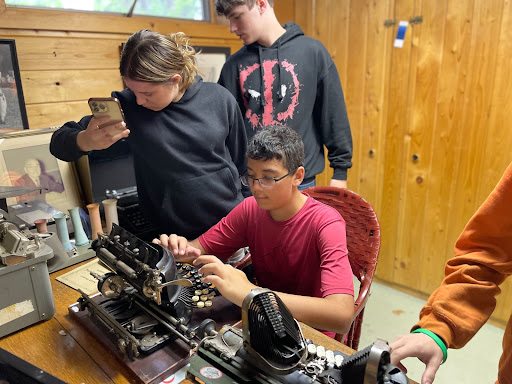
The Caribou Historical Society hosted Caribou Community School (CCS) 8th-grade podcasters recently, to celebrate the unveiling of student-created podcasts with a listening party and ribbon-cutting ceremony. This event was the culmination of a year-long collaborative project between the two groups.

8th graders began this project when MLTI Ambassadors from the Maine Department of Education visited Caribou Community School to teach students how to use WeVideo to create podcasts. From this learning experience, 8th grade teachers Kim Barnes, Heather Anderson, Troy Barnes, Holly Rhinebolt, and Special Education teacher Twyla Learnard met with Christina Kane-Gibson, director of the Caribou Historical Society to see how 8th grade students might be able to help digitize exhibits at the Caribou Historical Society Museum. 

Gibson loaned local school history artifacts for students to examine in their ELA classes. Artifacts included yearbooks, photographs, lesson plan books, report cards, graduation certificates, and even old PA speakers.  As they worked, students generated questions they had about the history of education in Aroostook County in order to interview retired teachers to really learn what school was like thirty to fifty years ago.  Twyla Learnard, Special Education teacher commented on the impact of the inclusion of all students in this project. Learnard said, “I was astonished to see students who typically struggle academically, delve into the podcast project with such enthusiasm. It allowed them to script, write, story tell, and converse adding a whole new dimension to their learning. The project produced incredible educational dividends!” 

Retired Aroostook Teachers assembled at CCS in March to be interviewed. Diane Fitzpatrick, Ellen Cleaves, Phil Caverhill, Margaret Cyr, Ron Willey, Lou Willey, Denise Levesque, John Hedman, and Dwight Hunter served on an interview panel and they answered question students created from their research. Students enjoyed learning about how different school days were from today, how world events, like the Challenger Explosion and 9/11 impacted students in the classroom, but also came to understand that teachers never really retire. The retired teacher panel was definitely a highlight of the year. Teacher Troy Barnes said about the event, “The beauty of the entire event was how the panel was able to encapsulate a wealth of educational experiences and share these in a way that had the students on the edge of their seats with extreme interest. These educators had been out the classroom for some time, but it was evident that they were still teachers at heart.”

From their research and interviews, twenty-five podcasts about various topics from Snow Days in the Ige Age and Lunch and Recess in the Old Days to Title IX: Sports for Girls and World Events in the Classroom were created. Kane-Gibson said this about the project, “It’s so innovative. The students have been working since February to research, write, and record these listener experiences. The podcasts will be accessible by a QR code that visitors can scan with their smartphones.”

These podcasts will continue to be on display for patrons of the museum to enjoy.


New School Nurse Orientation Registration Now Open! 

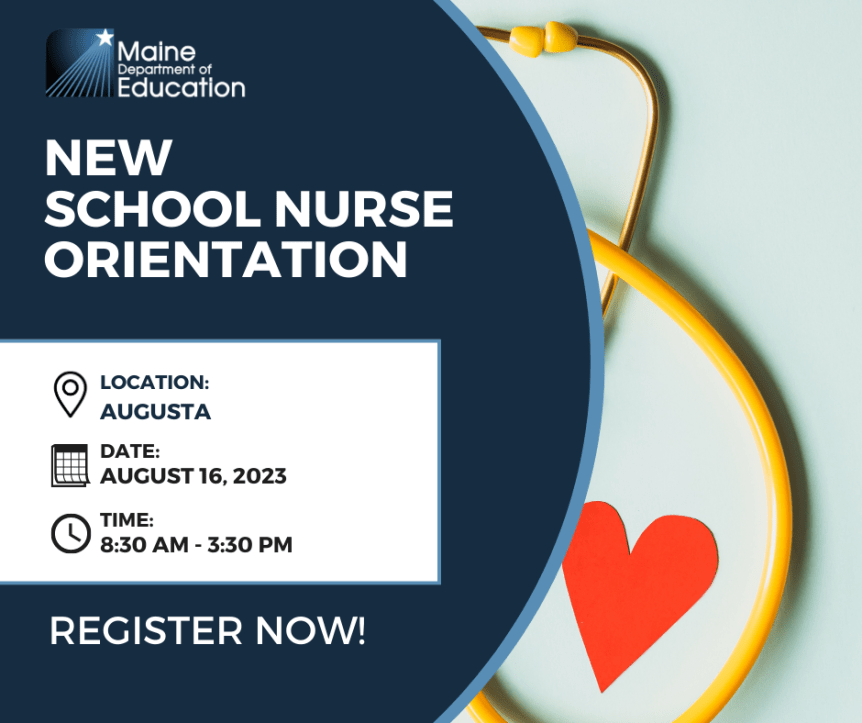
If you have hired or will be hiring a new nurse for your school over the summer? Be sure to include this workshop in their new hire work plan. The Maine Department of Education’s New School Nurse Orientation is a specialized program, designed to help nurses transition into the unique specialty of school nursing. 

This one-day event will be followed up with a monthly virtual Community of Practice for continued learning, connection, and support.  

For more information reach out to Emily Poland at emily.poland@maine.gov

ESEA Annual Comprehensive Needs Assessments (CNA) Updates

Another annual process for SAUs is meeting with a variety of stakeholders to update their district and school Comprehensive Needs Assessments (CNA) based on new data. As part of the ESEA application, districts are asked to document the high-needs areas of their districts and schools, as well as the data sources they used to make those determinations, the names of the stakeholders involved, and the dates the updates were conducted.

Members of the ESEA team recently held a joint session with the assessment team to discuss with school administrative units (SAUs) how the change to the Maine Through-Year Assessment will affect the CNA process.

Watch a recording of ESEA & Assessment Teams Joint Information Session:

SAUs must update as much of their CNA as possible before the initial submission of the FY24 ESEA Application (due August 1st) to determine high areas of need and to generate goals—particularly the required non-academic goal(s).

SAUs without alternative assessment data will need to further update their CNA and generate academic goals when state assessment results become available.

For Substantial Approval, math and literacy goal requirements at both the school and district levels will be temporarily waived; non-academic goals will still be required.

SAUs may put placeholder information into the required fields of the application when applicable.

For Final Approval, all district and school goal requirements must be met.

For more information reach out to Maine DOE ESEA Federal Programs Director Cheryl L. Lang at Cheryl.Lang@maine.gov.

Career Advancement and Navigation Specialists Attend Employer Summit

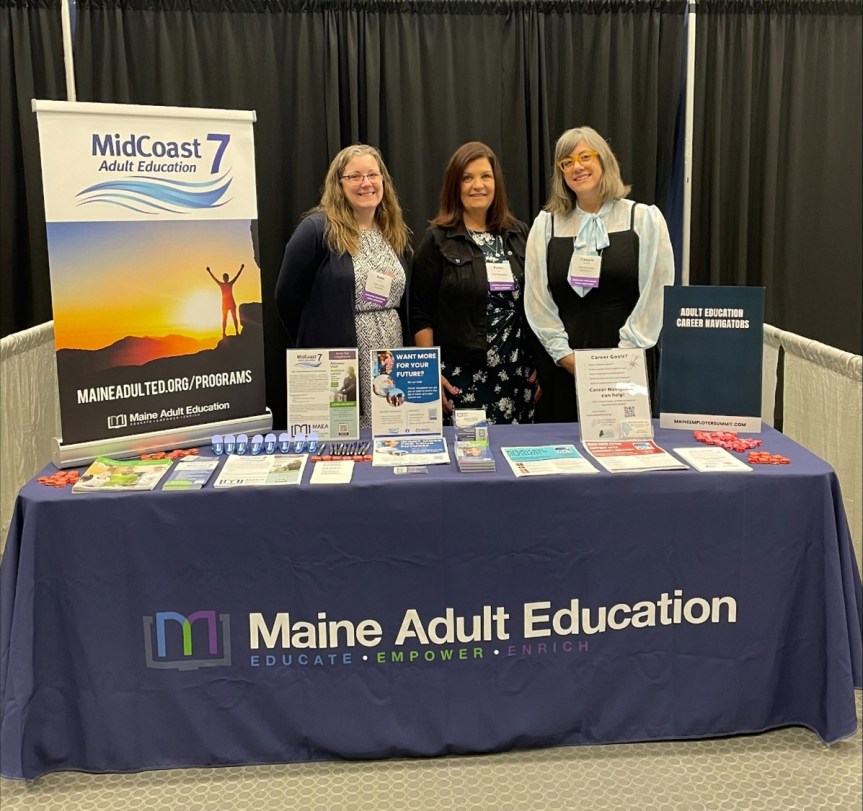
Three out of the four Adult Education-based Career Navigators attended the Employer Summit in Augusta in late May.

The Navigators are part of the Maine Jobs and Recovery Plan (MJRP) which has committed $6 million dollars to address the workforce development needs of those disproportionately impacted by COVID-19. Maine’s Department of Education, Adult Education team is using these funds to help eligible adults and employment sectors recover from the stresses of the pandemic through a variety of academic and job training supports including Career Advancement Navigators and College and Career Success Coordinators.

Kate Points and Karen Morin shared their expertise in connecting with and supporting the re-entry community with employment with employers.  Cassie Robichaux shared her expertise in how to create appealing entry-level jobs with flexibility and opportunities to advance.

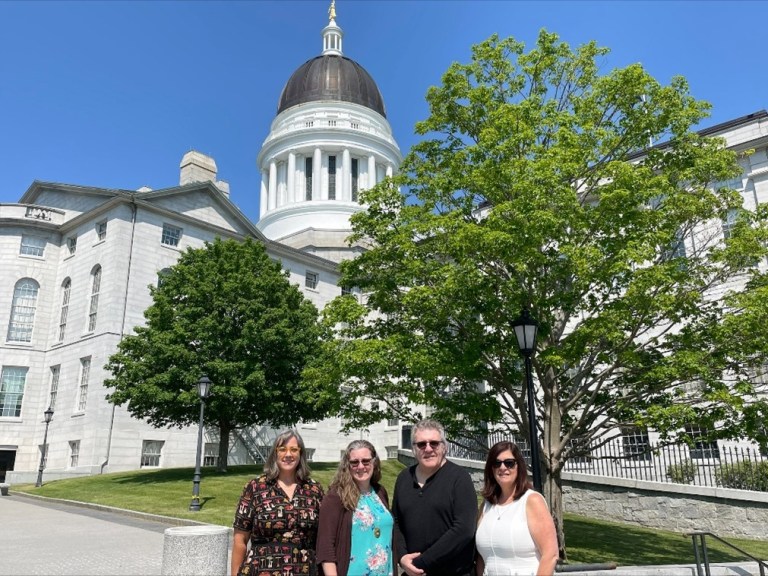
Here are the four Career Navigators at a meeting in front of the State House in Augusta.

Adult education-based Career Navigators serve primarily in geographic areas of the state with less access to post-secondary and other educational opportunities as well as support services. These areas include the counties of York, Kennebec, Androscoggin, Oxford, Lincoln, Waldo, Knox, and Sagadahoc. Navigators help people in their communities to take the next step in their careers.

To learn more about the Career Navigators and how to contact them click here.


Maine DOE Update – June 23, 2023

From the Maine Department of Education


Reporting Items

Exiting Student Enrollments Reminder

All students MUST be exited from State Synergy with an exit date on or before 6/30/2023. This includes students attending year-round programs. |  More

| Visit the DC&R Reporting Calendar |


News & Updates

Requests for Applications (RFA) for the Maine Transition Regional Interagency Collaborative (MeTRIC) Grants

The Office of Special Services and Inclusive Education at the Maine Department of Education is now accepting applications from school administrative units for the Maine Transition Regional Interagency Collaborative (MeTRIC) grants. The purpose of these grants is to provide students with disabilities the necessary support and resources to seamlessly transition to post-secondary education or employment. |  More

Seeking School Leadership Coaches for 2023-2024 School Year

The Maine Department of Education (DOE) is looking for experienced school leaders to join the ESEA Federal Programs Team as a part-time contracted School Leadership Coach for the 2023-2024 school year. A School Leadership Coach serves as a thought partner to school leadership teams, is a broker of information and resources, builds capacity with school leaders and school leadership teams, and supports school leaders and school leadership teams on their continuous school improvement journey. |  More


Maine Schools Sharing Success Stories

Six Maine Students Awarded Martin Mackey Memorial Scholarship

The Alternative Education Association of Maine has selected six students to receive this year’s Martin Mackey Memorial Scholarship. As they graduate from their respective programs, these six individuals have each been awarded $500. With many trials and triumphs throughout their school experiences, each graduate has an inspirational story and passion for their education that makes them a perfect recipient of this award. |  More

| Submit your Maine School Success Story |


Professional Development, Training, and Events

Register NOW for Maine DOE’s 2023 Educator Summit 

The countdown is on for the start of the Maine Department of Education’s (DOE) 2023 Educator Summit, which is being held August 7-10 at the Augusta Civic Center. Last year’s inaugural Summit attracted more than 600 educators from across the state. This year’s theme is Inspiration, Innovation, and Inclusion and participants will have access to more than 140 sessions and professional learning opportunities. |  More

| Visit the Professional Development Calendar |


Latest DOE Career/Project Opportunities:

View current Maine Department of Education employment opportunities here


Exiting Student Enrollments Reminder

All students MUST be exited from State Synergy with an exit date on or before 6/30/2023. This includes students attending year-round programs.

Finding students who need to be exited can be done in the Attending Student Details Report in NEO Student Data, Student Reports. This report can be filtered using the “Exit Date” column, student with blanks in this column need to be exited.

Exit codes for students who are returning, graduating, moving, etc., can be found on the Synergy Instructions tile of the Helpdesk page. The Student Exit Data Dictionary contains exit codes for varying situations. Proper exit codes will help ensure that graduation and dropout data are accurate in the fall.

Students who have concurrent enrollments will need to be exited from their concurrent enrollment before primary enrollments can be exited.

Synergy ’22-’23 will only be open until Tuesday, August 15th and then will be rolled over to the ’23-’24 school year. This will lock all ’22-’23 data.

If you have any issues exiting your students, please contact MEDMS.Helpdesk@maine.gov or call 207-624-6896.

For training in how to exit students please contact our Data Quality Trainer – Alexandra.Cookson@maine.gov or call 207-446-3897