PRIORITY NOTICE: Seeking Proposals for Afterschool and Summer Learning Programs

The Maine Department of Education is pleased to announce the release of a request for proposals (RFP) seeking bids from interested parties to implement comprehensive 21st Century Community Learning Centers (21st CCLC) programming in 2022-2023.  It is anticipated that roughly $2M will be available to issue grant awards later this year.

Authorized under Title IV, Part B of the Elementary and Secondary Education Act, as amended by the Every Student Succeeds Act (ESSA) Act of 2015, the 21st CCLC program provides competitive grant funding to support before school, after school, and summer learning programs that focus on improving the academic performance of students in Pre-Kindergarten through grade 12.

The primary purpose of Maine’s 21st CCLC program is to provide funding for school and community partnerships to establish or expand community learning center programs.  These programs provide students in high-need, economically-disadvantaged communities with academic tutoring and enrichment opportunities designed to complement their school-day academic program.  In addition, these programs can provide a broad array of additional support services related to overall student health and well-being.

Local 21st CCLC programs – which can be located in elementary schools, secondary schools or similarly accessible community facilities – provide high quality support services to students during non-school hours.  As such, these programs also support working parents and families by providing safe, supportive learning environments for students at times when school is not in session.

The request for proposal (RFP), which includes information regarding eligibility, program requirements, and more, is available here. An informational webinar for this RFP will be posted to the Department’s application website on January 25, 2022.  It is strongly recommended that interested parties view this presentation, in its entirety, prior to submitting a proposal for 21st CCLC program funding.

Below is the anticipated timeline for the Department’s current 21st CCLC grant competition:

Date Task
January 5, 2022 RFP Released to Public
January 25, 2022 Informational Webinar Posted Online
February 15, 2022 Deadline for Submission of Questions in Response to RFP
March 1, 2022 Interested Parties Submit Letter of Intent to Apply
April 14, 2022 Proposal Deadline
April 2022 Formal Peer Review of Proposals
May 2022 Grant Award Notifications
July 1, 2022 Grant Award Start Date

Please be advised that the dates above are subject to change.  Interested parties must consult the RFP document for the most accurate dates and deadlines regarding this opportunity.

For more information on the 21st Century Community Learning Centers (21st CCLC) Program, contact State Coordinator, Travis Doughty, at travis.w.doughty@maine.gov.
U.S. DOE Announces Joint Temporary Action with U.S. DOT to Help Address School Bus Driver Labor Shortage

The U.S. Department of Transportation in coordination with the U.S. Department of Education has announced that the Federal Motor Carrier Safety Administration (FMCSA) is giving states the option of waiving the portion of the commercial driver’s license (CDL) skills test that requires applicants to identify the “under the hood” engine components. All other components of the written and road test will remain.

This announcement aims to alleviate some of the labor shortage challenges schools are facing and is one of many resources the U.S. Department of Education continues to provide to safely keep schools open for full-time, in-person learning.

“This Administration is listening to the needs of school communities and remains committed to making sure schools are open safely for in-person learning full time,” said U.S. Secretary of Education Miguel Cardona. “We’ve heard from educators and parents that labor shortages, particularly of bus drivers, are a roadblock to keeping kids in schools. Today’s announcement will give states the flexibility they need to help increase the pool of drivers, who are a key part of the school community, and get kids to school safely each day where students learn best. And American Rescue Plan funds can be used to hire these critical staff, including offering increased compensation or other incentives to recruit and retain staff.”

“This federal waiver will help states that are short on bus drivers,” said U.S. Transportation Secretary Pete Buttigieg. “By allowing states to focus on the testing requirements that are critical to safety, we will get additional, qualified drivers behind the wheel to get kids to school safely.”

Drivers receiving a CDL under this temporary waiver are permitted to operate intrastate school buses only; they are not authorized to operate trucks, motorcoaches, or any other type of commercial motor vehicle requiring a CDL.

The FMCSA waiver, which became effective Jan. 3, 2022, expires March 31, 2022. Read the full release from the U.S. Department of Education here.

Prepare to Become a School Bus Driver in Maine:

  1. Contact your local school district, Career and Technical Sites/Center, Adult Education Programs, or all to ask when the next School Bus Driver class begins. Some local classes are free.
  2. Study Section 10, School Buses, of the Maine Commercial Driver License Manual: https://www.maine.gov/sos/bmv/licenses/cdlmanual.pdf
  3. Call Maine Bureau of Motor Vehicles about commercial driver license (CDL) requirements, application, exam schedules, or extent of the Federal waiver. The direct contact for Maine BMV’s CDL Examination Section is 207-624-9000 ext, 52122. Between January 3, 2022 and March 31, 2022, the Federal waiver impacts a portion, not all, of the overall pre-trip inspection exam requirement.

Beginning February 7, 2022, Maine residents can search the U.S. Department of Transportation Federal Motor Carrier Safety Administration Training Provider Registry to find local CDL school bus trainers in Maine and your community.

Information Regarding Federal Requirements for Entry-Level Driver Training (ELDT)

The following information from Maine’s Bureau of Motor Vehicles (BMV) may be useful information for Maine school transportation teams, Career and Technical Education Sites/Centers, and Adult Education Programs.

The Federal Requirement for Commercial Driver’s License (CDL) applicants to complete Entry Level Driver Training (ELDT) before taking a road or skills exam takes effect on February 7, 2022.

The good news is drivers who have successfully completed a written exam and hold a CDL permit before February 7, 2022 are exempted from having to complete ELDT prior to a skills or road test.

Maine BMV wants to help!

BMV schedules written exams two weeks in advance, to ensure enough time to provide applicants written scheduling notification via the mail.

To increase the likelihood of scheduling a CDL or endorsement written exam before February 7, submit your completed application with payment to BMV no later than Jan 10, 2022

For questions, call Maine BMV’s CDL Examination Section at (207) 624-9000 ext. 52122

For more info on ELDT, go to: https://tpr.fmcsa.dot.gov/

Maine CDC & DOE Update Standard Operating Procedure (SOP) for Schools; Plan to Engage with School Administrators to Consider Additional Changes

For Immediate Release
Media Contact: Robert Long at Maine CDC

AUGUSTA – The Maine Center for Disease Control and Prevention (Maine CDC) and the Maine Department of Education (DOE) announced today further revisions to the Maine CDC’s public health guidance for responding to a positive case of COVID-19 in schools.

These revisions come in advance of students returning from winter break and, among other changes, reflect recently updated guidance from the U.S. CDC on quarantine and isolation periods. The revisions are intended to help keep students in-classroom while protecting their health and safety and that of staff.

Additionally, the Maine Department of Education, along with the Maine CDC, will continue to engage with school administrators from across the state to gather operational input on further potential changes to the guidance in light of the Omicron variant. These potential changes would continue to prioritize in-person learning and help keep children safely in the classroom.

Today’s changes to the School Standard Operating Procedures (SOP) are as follows:

  • Isolation and quarantine periods for students and staff are shortened consistent with recently updated guidance from the U.S. CDC,
  • The Maine CDC is aligning its definition of what constitutes a COVID-19 outbreak in schools with the State’s longstanding definition of an outbreak of other infectious diseases in schools. Effective immediately, the Maine CDC will open an outbreak investigation if a school reports that more than 15 percent of a school population is absent, which is the standard currently utilized to define an outbreak from other infectious diseases, such as influenza.
  • The Maine CDC will no longer consider exposure to COVID-19 in an outdoor setting or on a school bus, where the Federal government requires masks be worn, as a “close contact.”
  • The Maine CDC is updating its “test to stay” pooled testing program to enable more students to stay in the classroom. Previously, students and staff participating in pooled testing who were exposed to COVID-19 outside of a school setting were required to quarantine and not attend school. If they were exposed to COVID-19 in a school setting and participating in pooled testing, then they were not required to quarantine from school. Now, regardless of where the exposure occurs, if a student or staff member is participating in pooled testing, then they will not be required to quarantine from school.

Consistent with U.S. CDC guidance, the Maine CDC continues to recommend universal indoor masking by students, staff members, faculty, and visitors in K–12 schools, regardless of vaccination status. Local school boards are charged with the responsibility of implementing masking requirements for their school systems.

The Mills Administration has prioritized in-classroom learning and has provided school administrative units will several options to ensure that students can remain in school, including vaccination, universal masking, and pooled testing.

Maine has become a leader in pooled testing in schools. Pooled testing involves combining samples from individuals in a common group setting, such as a school, and has emerged as one of the most important tools in keeping preK-12 schools open and ensuring that Maine children can learn in person. Pooled testing allows schools to perform wide-scale testing of school communities efficiently and to easily identify positive cases in individuals who may be asymptomatic, notify close contacts, and reduce the number of children and staff who need to quarantine.

As of the week of December 20, 416 K-12 schools with 61,879 staff and students were participating in pooled testing statewide. This represents nearly 30 percent of all Maine staff and students. The Department of Health and Human Services’ pooled-testing contractor, Concentric, has reported that Maine’s participation rate for schools enrolling in the program is one of the highest they’ve observed across the country. Concentric works with Maine and eight other states to provide pooled testing in schools. Additional schools, students, and staff are encouraged to participate in this program, which the Department of Health and Human Services provides at no cost.

According to Maine’s Vaccination Dashboard, as of December 29, 2021, 49.3 percent of children ages 5 to 19 were fully vaccinated for COVID-19. Data from the U.S. CDC tracker show that Maine ranks fourth highest among states in the percent of 5 to 17 year olds fully vaccinated. As of the end of October, 83 percent of school staff were fully vaccinated. More than 500 vaccine clinics have been held at or coordinated with schools this fall, with more scheduled for the new year.

Since the fall of 2020, all Maine pre-K-12 schools have been providing in-person instruction to students.

The updated public health guidance for responding to a positive case of COVID-19 in schools can be viewed HERE.

###

Maine DOE Update – December 23, 2021


From the Maine Department of Education


Reporting Items

| Visit the DC&R Reporting Calendar |


News & Updates

Vaccination Promotion Materials for Maine Schools

The Mills Administration is distributing printable 4×6 cards and 8.5×11 posters encouraging Maine people to get vaccinated this season in order to protect their health and the health of their communities. Maine Schools are important partners in this effort, which is why we wanted to provide you with these materials to post in your spaces to help spread the word about the importance of getting vaccinated. Helping reinforce the importance of vaccinations is even more important right now during this sustained surge of COVID-19. | More

Ed Techs Featured in New Promo Video from Greater Sebago Education Alliance

Maine Department of Education (DOE) Director of Innovative Teaching and Learning Beth Lambert, was invited to present at the 2021 National Edtech & Innovation Conference and Expo in Las Vegas, NV, this fall. The presentation showcased Maine’s MLTI (Maine Learning Through Technology Initiative) and its recent evolution from the nation’s first statewide 1:1 technology initiative in 2002 to its current iteration, MLTI 2.0. | More

Input Sought for Teacher Shortage Areas

As part of a federal requirement, the Maine Department of Education submits to the U.S. Department of Education teacher shortage areas for designation, based on collected data and public input.  The U.S. DOE annually designates teacher shortage areas for purposes of deferment of loan repayments or reductions of teaching obligation. | More

Maine DOE Certification Team Celebrates Successful 2021

The Maine Department of Education (DOE) is encouraged by the volume of educator credentials the Certification Team has processed this year through pandemic working conditions for Maine’s education workforce and Maine DOE Employees. | More

Get to Know the Maine DOE Team: Meet Emma-Marie Banks

Maine DOE Team member Emma-Marie Banks is being highlighted this week as part of the Get to Know the Maine DOE Team Campaign. Learn a little more about Emma in the question and answer below. | More


Maine Schools Sharing Success Stories

| Submit your Maine School Success Story |


Professional Development & Training Opportunities

WEBINAR: Averting Targeted School Violence – January 12, 2022

Due to an increase in requests for training, the U.S. Secret Service National Threat Assessment Center (NTAC) will host an encore presentation of their latest study, Averting Targeted School Violence: A U.S. Secret Service Analysis of Plots Against Schools. | More

| Visit the Professional Development Calendar |


Latest DOE Career/Project Opportunities

View current Maine Department of Education employment opportunities here


Maine FIRST Lego League Championship Event Highlights Maine Students’ STEM Skills

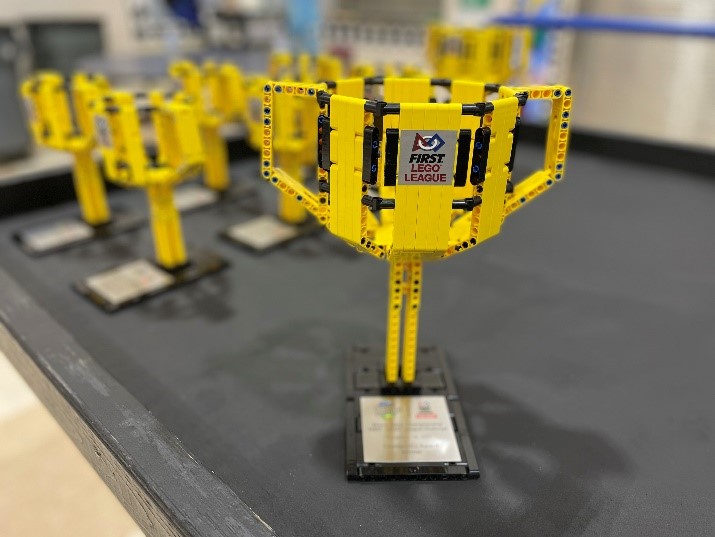
The 22nd annual Maine FIRST Lego League Championship on December 18th was a hybrid event that offered teams from across the state an opportunity to compete in-person or remotely.  Messalonskee High School in Oakland hosted the in-person part of the event with a half dozen teams in attendance.  The virtual part of the event included another seven teams that connected over Zoom.  This also allowed judges to connect from as far away as California and Israel.  The streamlined day ended with a fifteen minute Awards Ceremony over Zoom.

The Champion’s Award went to the “Smart Fun Engineers” for the fourth consecutive year with a high score of 335 points, of the possible 670, for their robot’s performance.  The team from Farmington was certainly ecstatic to learn about their win this year.

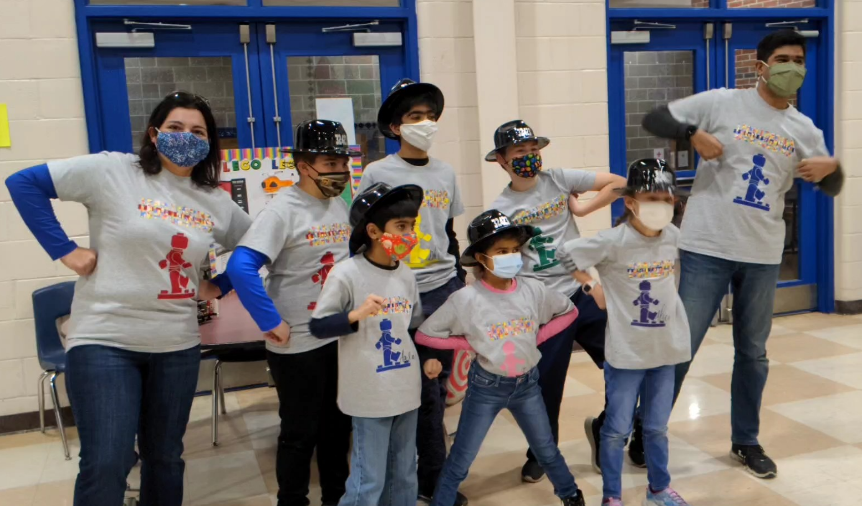
The Champion’s Finalist Award went to the Lego Legends from the Brewer Community School.  This diverse team with members ranging from eight to thirteen even includes a member from nearby Orrington (who does not have a Lego Robotics team) who showed up with personalized team t-shirts and matching hats.  Their coach, Joarly Arnold, received the Mentor Award.  Joarly, who works for General Electric and is part of their corporate team of GE Girls, said she is passionate about getting children engaged with STEM, including robotics.  She has been working with the team for four years, and due to her background in information engineering, she believes kids “should have an early introduction to STEM, as it teaches them not only science and mathematics, but increases their critical thinking, problem solving, and decision making skills; skills that they will use regardless of their future career path.”

FIRST LEGO League Team 32423 from Brewer Community School.

The Robot Design Award went to the Fort Fairfield RoboTigers, which had to overcome many challenges around team members quarantining throughout the season.  They were among the teams connecting virtually, and found the experience of interacting with the judges to be highly beneficial.

The Innovation Project Award went to the Veazie Viking Robotics team who proposed carbon fiber shipping containers.  The team researched the material and its potential for making shipping of goods more fuel efficient due to the lighter weight, and more cost effective due to improving manufacturing processes.  Other teams designed ways of transporting goods and medication to rural parts of the state.  The team from Fort Fairfield focused on a way to prevent the region’s favorite product, the potato, from bouncing out of trucks as they travel down the road.

The Core Values Award went to the Lego Coop Kids from the Berwick area.  This group of seven included five sixth graders and two fourth graders who were competing in the FIRST Lego League for the first time, after recently forming.  The judges were highly impressed by their ability to work together and have fun, which are key aspects of the Core Values.

RSU #52 teacher Geoff Cyr, who has been involved in the FIRST Lego League for eight years in numerous capacities, received an Outstanding Volunteer Award.  Geoff, who serves as the Volunteer Coordinator, is always looking for individuals to get involved in the FIRST Lego League in Maine.  While experienced referees and judges are always needed, there is always a need for more.

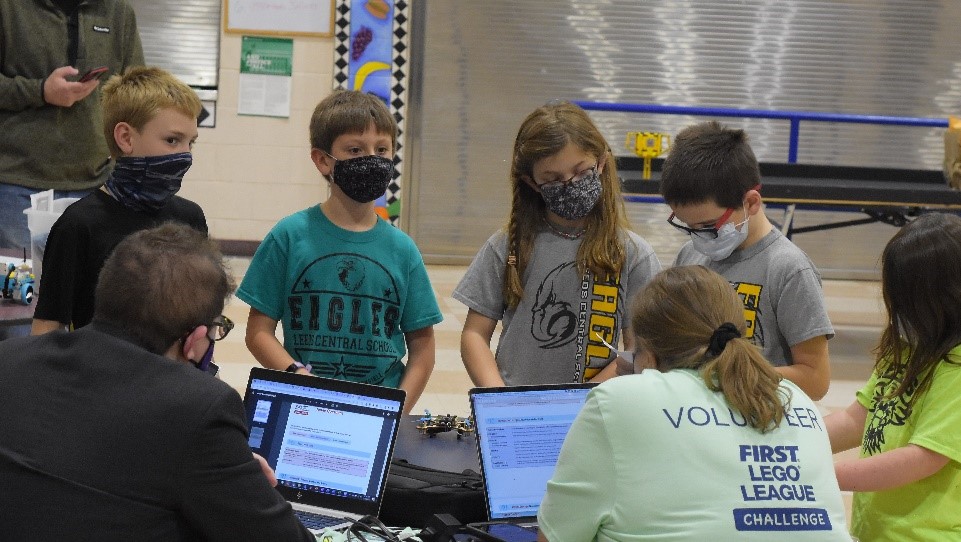
Members of the Leeds Central School team present their projects to judges Jon Graham (Maine Department of Education) and Dr. Laura Gurney (Husson University).

The Maine FIRST Lego League did have a different look and feel than previous events held at the Augusta Civic Center, but dedicated volunteers, judges, coaches and teams have been able to keep the spirit alive through a difficult and unpredictable period.  The opportunities for students to come together as a team, work through multiple challenges and present their projects is vitally important to their success in school and beyond.  Hopefully the success of this season will encourage others to form or revive robotics teams at their school.

Real Estate Internship Trending Hot With Portland High School Students

The Portland High School internship program is going strong, and a real estate internship has become its most popular offering this year. PHS students are partnering with an experienced realtor to learn about the local real estate market and why it’s burgeoning during the COVID-19 pandemic.

One student in the internship said, “The real estate agent internship is a great way for me to learn about a new and fascinating career choice. I like learning about everything that goes into being an agent and the process of buying houses.”

Despite the ongoing challenges in keeping schools open due to the pandemic, the PHS internship is thriving. Dozens of students each year participate in the program, which was founded more than a decade ago. The program is open to all students and serves all types of students, as evidenced by demographic data on class rank, GPA, race, special education status and multilingual status.

Each year, one career pathway emerges as the most popular among students. Past popular internships have included veterinary medicine, nursing, and photography.

This year, many students are interested in real estate. Seven PHS students meet weekly with Heidi Nottonson, a seasoned realtor with Keller Williams Realty. Students learn about buying and selling homes, covering topics such as property disclosures, financing, inspections, and finding the right property. Nottonson has also arranged for field trips to properties to give students a hands-on feel of what it is like to work in real estate.

Nottonson offered this internship last year to one student and enjoyed it so much, she is now offering it to a group. Given the students’ interest, Nottonson hopes to expand her offering again next year. She wants to help students understand a way to create income for themselves.

Nottonson says, “The dedication of each student to learn at a fast and intense pace is astounding.  They inspire me to teach them!”

Other current student internship sites include the Portland Jetport, Baird Financial, Avesta Housing, Boys and Girls Club, Food Fuels Learning, Portland Public Library art gallery, Mechanics Hall library, Rwanda Bean, Taylor Stitch, the Portland Chamber of Commerce, Tandem Bakery, The Cedars, and the University of Southern Maine engineering department.

To learn more about internships and extended learning opportunities, contact Maine Department of Education’s Extended Learning Coordinator Rick Wilson at rick.wilson@maine.gov.

For more information about Portland’s Program and to connect with Portland students, contact Andrea Levinsky, PHS Extended Learning Opportunities Coordinator, at levina@portlandschools.org.

Get to Know the Maine DOE Team: Meet Emma-Marie Banks

Maine DOE Team member Emma-Marie Banks is being highlighted this week as part of the Get to Know the Maine DOE Team Campaign. Learn a little more about Emma in the question and answer below.

What are your roles with DOE?

As the Secondary Digital Learning Specialist and the Computer Science Specialist, I support computer science education and all things digital learning.

What do you like best about your job?

While there are many things that I love about this role, working with the field to expand access to and participation in computer science education is one of the things that I like best. I also really love supporting the field in their remote and digital learning efforts, as well as collaborating on different tasks with the absolutely fantastic members of my team here at DOE.

How or why did you decide on this career?

I’ve always known that I wanted to work in education, particularly at a statewide level. Combining my love for education with my appreciation for technology made this career path a very easy decision. 😊

What do you like to do outside of work for fun?

When I am not working, I enjoy hiking, bicycling, camping, and other outdoor activities, as well as cooking and baking, spending time with my family, and exploring emerging technology trends and advancements.

Input Sought for Teacher Shortage Areas

As part of a federal requirement, the Maine Department of Education submits to the U.S. Department of Education teacher shortage areas for designation, based on collected data and public input.  The U.S. DOE annually designates teacher shortage areas for purposes of deferment of loan repayments or reductions of teaching obligation.

The Department intends to propose the following as K-12 teacher shortage areas during the 2022-2023 school year:

  • General Elementary (K-9)
  • Early Childhood (Pre-K)
  • English/Language Arts (7-12)
  • Teacher of Students with Disabilities (all grade levels)
  • Mathematics (7-12)

The Maine Department of Education is committed to working with our schools to represent the needs and shortage areas most accurately across our state. We recognize the diverse geographic regions and varying conditions that comprise our public education system and strive for equitable and accurate representation.

To provide input regarding a specific shortage area, or to propose additional shortage areas, please submit correspondence to Stephanie Fyfe at stephanie.fyfe@maine.gov by January 7.

Madison Memorial High School STEM Geometry, STEM Lab & Sustainable Agriculture Project Recognized by Samsung

Madison Memorial High School (MSAD/RSU 59) STEM Geometry, STEM Lab & Sustainable Agriculture project has been named Samsung’s Solve For Tomorrow 2021-22 Maine State Winner.

As part of Maine’s state-wide career exploration program, Madison High School’s project helped kick off the Franklin and Somerset Counties’ STEM Pilot Project which aims to fund vocational and innovative programs in science, technology, engineering, and math. The project also helps connect students in Franklin and Somerset Counties with career exploration programming, paid internships and scholarships for Maine Community Colleges serving students from these counties.

The Madison Memorial High School STEM Geometry, STEM Lab & Sustainable Agriculture Project was highlighted by Samsung for their hard work to develop a STEM solution to an issue that impacts their local community.

“The innovative practices of fostering the Engineering Design mindset, using 3D technology as well as sustaining and regenerating natural systems will help address local food insecurity and contribute to the overall reduction of Madison’s global footprint,” said Kathy Bertini, MASD/RSU 59 Curriculum Coordinator, STEAM Person, and 2019 Somerset County Teacher of the Year.

“In order to give MSAD 59 students the best opportunities moving forward, it is critical that we connect innovation with technology,” said Madison High School Principal Chris LeBlanc. “Our students will have a skillset that allows them to use the area’s natural resources in a way that ensures sustainability while enhancing the local community.”