Deadline Extended: Seeking Applicants for Contracted 21st CCLC Program Specialist (30 Hours/Week)

The deadline to submit an application for this position has been extended to Friday, October 28th.

The Maine Department of Education (DOE) is seeking applicants for a Contracted 21st CCLC Program Specialist (30 Hours/Week). The purpose of this position is to provide the Maine DOE with 21st CCLC program management support in the areas of data collection, program monitoring, and professional development.  This position will also provide implementation support to local 21st CCLC program providers through ongoing professional learning communities (PLCs), trainings, and targeted technical assistance.  The work of this position will be largely independent.  However, the position will be part of a team that oversees the successful implementation of 21st CCLC program across the State of Maine.

The 21st Century Community Learning Center (21st CCLC) program provides competitive grant funding to support before, after, and summer school programming for underserved students and communities.

To learn more about position including responsibilities, knowledge and abilities, minimum qualifications, and salary –  click here for the full position description.

The application window has been extended to Friday, October 28th. To be considered for this contracted position, please submit a cover letter resume to Travis Doughty at travis.w.doughty@maine.gov by October 14, 2022 Friday, October 28th.

Seeking Applicants for Contracted 21st CCLC Program Specialist (30 Hours/Week)

The Maine Department of Education (DOE) is seeking applicants for a Contracted 21st CCLC Program Specialist (30 Hours/Week). The purpose of this position is to provide the Maine DOE with 21st CCLC program management support in the areas of data collection, program monitoring, and professional development.  This position will also provide implementation support to local 21st CCLC program providers through ongoing professional learning communities (PLCs), trainings, and targeted technical assistance.  The work of this position will be largely independent.  However, the position will be part of a team that oversees the successful implementation of 21st CCLC program across the State of Maine.

The 21st Century Community Learning Center (21st CCLC) program provides competitive grant funding to support before, after, and summer school programming for underserved students and communities.

To learn more about position including responsibilities, knowledge and abilities, minimum qualifications, and salary –  click here for the full position description.

The application window is September 30, 2022 through October 14, 2022. To be considered for this contracted position, please submit a cover letter resume to Travis Doughty at travis.w.doughty@maine.gov by October 14, 2022.

An Amazing Summer at Portland LearningWorks Afterschool, a 21st Century Community Learning Center

The Portland LearningWorks Afterschool (LWAS) team had an amazing summer session, supporting students in their growth, learning, and community building. LWAS is a 21st Century Community Learning Center grant-funded program, and works in partnership with Portland Public Schools to operate school year and summer programming at six of the district’s elementary students: Ocean Avenue Elementary School, Presumpscot Elementary School, Reiche Community School, Amanda C. Rowe Elementary, Gerald E. Talbot Community School, and East End Elementary School.

LWAS’ summer camp ran from July 6th – August 11th. Kids participated in a “Bubble Bonanza” STEM unit (developed by the Maine Math and Science Academy), where they used the engineering design process to engineer bubble wands, utilizing a range of various materials (from twine to paper cups and toilet paper rolls). Site staff were responsive to their students’ interests and curiosity, such as exploring the possibility of putting a human inside a bubble, and facilitating a “Bubble Shark Tank”, where students presented their final bubble wands to a panel of their peers, fielding questions from the panel and selling their inventions.

Students also engaged in a number of enrichment clubs, including Lego builds, animal habitats, science, art, and improv. Portland’s LWAS program partnered with a range of community organizations to offer field trips to Maine Audubon’s Gilsland Farm and Portland Museum of Art. The program also welcomed the crew at 317 Main who joined LWAS sites for a musical “petting zoo”, giving student’s hands-on mini-lessons in ukulele, drumming, fiddle and violin. Students loved playing water games during LWAS’ Waterworks Day, and reveled the opportunity to splash their favorite teachers in the dunk tank!

The summer program came to an end with a culminating celebration of learning. Families, building leaders, and LWAS staff were invited to see their children present their final art projects and bubble wands. Each site put their unique spin on the celebration, such as creating a red carpet event, where students strut down the runway modeling their bubble creations, while others sang favorite songs and created an art gallery of their artwork and bubble wands.

LWAS was thrilled to send students away for the summer with robust home kits to further help reduce summer learning losses. These kits included hands-on materials and activities that encompassed all of the 21st Century Learning Center’s goals for STEAM, multicultural education, literacy, social and emotional learning, and health and wellness.

It was a truly incredible summer, and the Portland LWAS team thanks all of the summer staff, partners, district and building leaders, students, and families for working alongside LWAS in pursuit of a common mission.

Funded through the U.S. Department of Education’s Nita M. Lowey 21st Century Community Learning Centers (CCLC) program, Maine currently has 35 CCLC grants and 61 CCLC sites across Maine that provide academic enrichment opportunities during non-school hours for children, particularly for students who face economic and/or academic challenges. With strong community partnerships at the core of every one of its programs, Maine’s 21st Century Learning Centers help students meet academic goals and offer a broad array of enrichment activities, in addition to other educational and engagement opportunities for communities and families. Learn more about Maine’s CCLC grant opportunities at https://www.maine.gov/doe/learning/esea or reach out to Travis Doughty at travis.w.doughty@maine.gov.

The Power of Puppets: Sharing Summer Success in the 21stCCLC Program

Lights, Camera, Action! Campers at Dirigo Elementary School, a 21st Century Community Learning Centers CCLC program site, have been perfecting their puppeteer skills through music. James Hamalainen, music teacher at Dirigo Middle School, worked with each group to create their own music, write lyrics and produce the final show.  Improvising, writing songs, practicing lines, character development and dancing are some of the areas students explored while building their self esteem in a fun, supportive environment.

Puppets are a powerful educational tool that can help students overcome anxiety, and foster self confidence. When combined with music it can help improve language skills, as well as social and emotional development. Research shows that the isolation over the last few years has caused a significant number of elementary students to fall far behind in language, communication and social development. Learning experiences like this can begin to address these concerns to help students progress academically.

RSU 56, in partnership with Oxford County Mental Health Services (OCMHS), is a 21st Century Community Learning Center (21stCCLC) program based at Dirigo Elementary School in Peru, Maine.

Funded through the U.S. Department of Education’s Nita M. Lowey 21st Century Community Learning Centers (CCLC) program, Maine currently has 35 CCLC grants and 61 CCLC sites across Maine that provide academic enrichment opportunities during non-school hours for children, particularly for students who face economic and/or academic challenges. With strong community partnerships at the core of every one of its programs, Maine’s 21st Century Learning Centers help students meet academic goals and offer a broad array of enrichment activities, in addition to other educational and engagement opportunities for communities and families. Learn more about Maine’s CCLC grant opportunities at https://www.maine.gov/doe/learning/esea or reach out to Travis Doughty at travis.w.doughty@maine.gov.

Southern Maine 21st Century Learning Center Experience the Outdoors Through Community Connections

From the trails to the sea, the youth participating in the Boys and Girls Club of Southern Maine, one of Maine’s 21st Century Learning Centers, have been busy exploring outdoor destinations in the Portland area this summer thanks to their strong community connections.

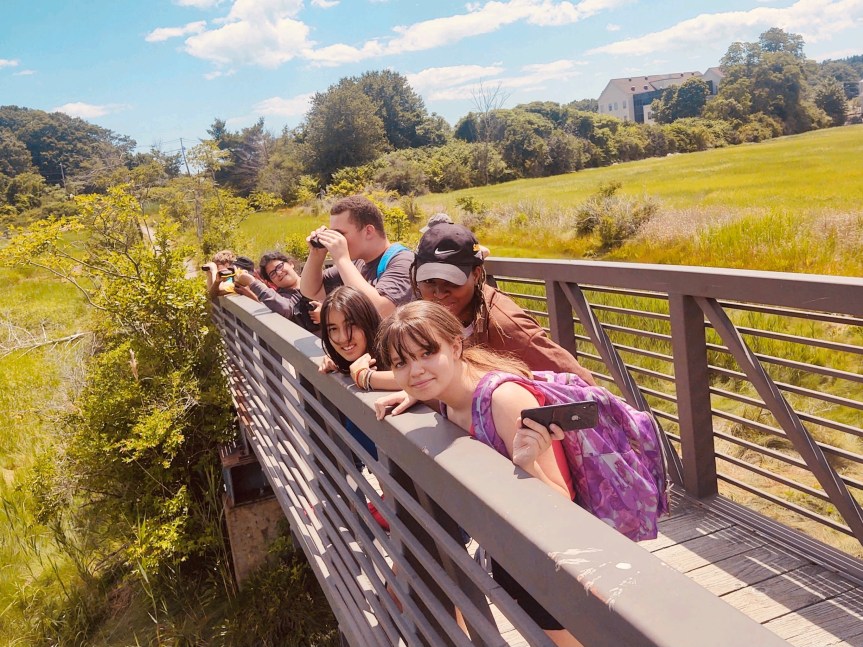
Starting with the Portland Trails, a nonprofit urban land trust that aims to transform the Greater Portland area into a healthier and better-connected community, the center has utilized this amazing community resource to get kids outdoors to go on walks and explore part of the 70+ mile trail network that Portland Trails has to offer. (pictured above)

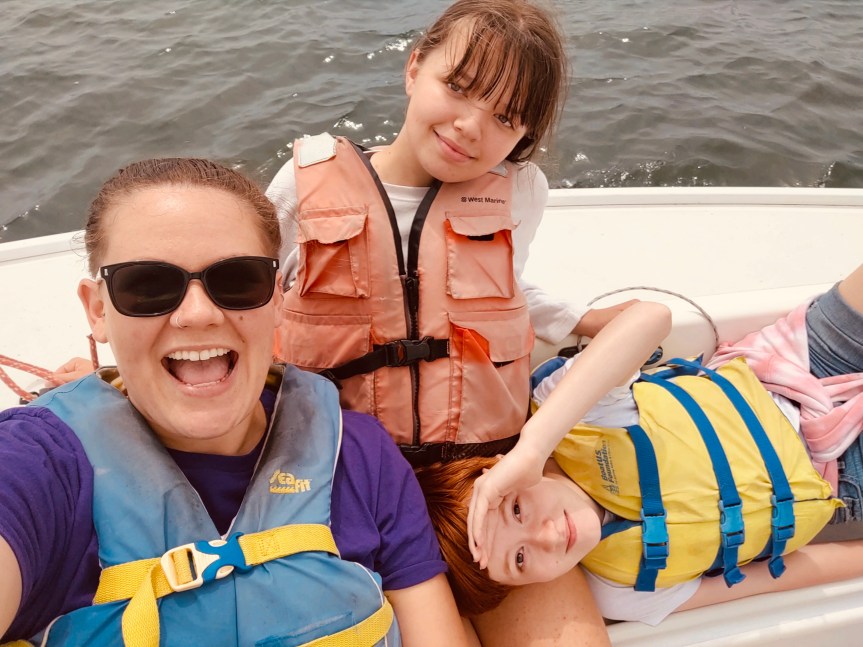
The kids have also been out to sea this summer thanks to SailMaine, a nonprofit organization that provides affordable access to the water through community sailing and education. Thanks to this community connection, every Tuesday for the next several weeks, the Center’s middle schoolers will be learning about sailing on Casco Bay.

Portland Maine Parks, Recreation & Facilities Department has also been a generous partner this summer by letting the Boys and Girls Club of Southern Maine utilize the outdoor pool. Thanks to this community partnership, the kids have been enjoying swimming three afternoons a week!

Funded through the U.S. Department of Education’s Nita M. Lowey 21st Century Community Learning Centers (CCLC) program, Maine currently has 35 CCLC grants and 61 CCLC sites across Maine that provide academic enrichment opportunities during non-school hours for children, particularly for students who face economic and/or academic challenges. With strong community partnerships at the core of every one of its programs, Maine’s 21st Century Learning Centers help students meet academic goals and offer a broad array of enrichment activities, in addition to other educational and engagement opportunities for communities and families. Learn more about Maine’s CCLC grant opportunities at https://www.maine.gov/doe/learning/esea or reach out to Travis Doughty at travis.w.doughty@maine.gov.

Students Learn About Camping and the Outdoors at LearningWorks’ 21st Century Program in Saco

This summer, LearningWorks’ 21st Century Learning Center in Saco is hosting students entering grades K-2 for a summer program focused on camping and the outdoors.

Students practice math, literacy, and STEAM (science, technology, engineering, arts and mathematics) skills while learning practical skills for spending time outside. Students learned to pitch tents, made a solar oven for cooking without fire, and collected leaves and sticks for art projects.

Each student is keeping a nature journal to document their observations and findings. In the next few weeks, students will learn to identify leaf shapes, recognize animal tracks, and use a compass. The program is also planning on visiting a fire station to learn about outdoor fire safety and taking a nature walk to apply some of the skills they have learned in a real-world situation.

“Students have loved spending time outdoors and have been able to put into practice what they are learning when going outside with their families this summer,” said Colby Senior, Saco and Biddeford Site Director for LearningWorks Afterschool and 21st Century Community Learning Centers.

Funded through the U.S. Department of Education’s Nita M. Lowey 21st Century Community Learning Centers (CCLC) program, Maine currently has 35 CCLC grants and 61 CCLC sites across Maine that provide academic enrichment opportunities during non-school hours for children, particularly for students who face economic and/or academic challenges. With strong community partnerships at the core of every one of its programs, Maine’s 21st Century Learning Centers help students meet academic goals and offer a broad array of enrichment activities, in addition to other educational and engagement opportunities for communities and families. Learn more about Maine’s CCLC grant opportunities at https://www.maine.gov/doe/learning/esea or reach out to Travis Doughty at travis.w.doughty@maine.gov.


Paid Professional Learning Opportunity Provided by Maine DOE

The Maine Department of Education (DOE) is accepting applications from individuals interested in learning more about the competitive grant process. Selected applicants will be trained to serve as peer reviewers who assist the DOE in reviewing, assessing, and scoring competitive grant proposals for the 21st Century Community Learning Centers (21st CCLC) Program. The 21st CCLC program is a federally funded education program that helps schools and communities develop before-school, after-school, and summer educational programs that support students and their families.

This year’s Request for Proposals (RFP) for the 21st CCLC program was released to the public on January 5, 2022 and is available online at https://www.maine.gov/dafs/bbm/procurementservices/vendors/rfps. The DOE anticipates receiving proposals from local education agencies, community-based organizations, and other eligible entities seeking awards under this RFP.

Qualifications:
Peer Review applicants will be selected based on their experience in providing effective academic support, enrichment, youth development, and related support services for children and youth. The most qualified candidates will be individuals who have experience in the administration of high-quality youth development programs within schools and communities. Examples of the experienced individuals sought include, but are not limited to:

  • 21st CCLC program directors and site coordinators
  • Teachers and principals
  • College and university staff
  • Youth development workers
  • Community resource providers

Required Tasks:
Selected applicants must be able to participate in an online training and review grant proposals through a web-based system. Applicants will work individually to read each assigned proposal and create detailed, objective, constructive, and well-written comments on approximately 10 proposals based on the criteria established in the RFP.  These comments will be submitted to the DOE prior to participating in the scheduled consensus scoring sessions. It is anticipated that peer reviewers will have a three week window in which to complete their individual review of assigned proposals. Following the individual review of proposals, each successful applicant will be required to participate in a series of two online/virtual consensus scoring sessions hosted by the DOE. It is during these consensus scoring sessions that the peer review team will score each application.

Selected applicants must complete the following tasks during the following date(s):

Task Date(s) Time(s)
Participate in an online training webinar March 31, 2022 1:00 PM – 2:30 PM
Review grant applications through a web-based system and provide individual, written comments on each application (which must be submitted to the DOE) April 18, 2022 – May 6, 2022 Any Time
Participate in online/virtual consensus scoring sessions with other members of the peer review team (applicants MUST be available on all four scoring days, but will only be selected to participate for two days) May 10, 2022 – May 11, 2022; or
May 12, 2022 – May 13, 2022
9:00 AM – 4:00 PM

Compensation for Services:
Selected reviewers who complete the required tasks will be provided an honorarium of $85 per assigned application.

Previous participants have also found that serving as a member of the peer review team is an excellent opportunity for professional development and growth. It is likely that, if selected, applicants will be exposed to new program models, strategies, and practices. These new concepts may provide ideas and support for ongoing work as well as future grant writing efforts. Most importantly, the time given to this effort will help ensure the funding of quality education programs for the children and families of Maine.

How to Apply:
Interested parties should contact Travis Doughty at travis.w.doughty@maine.gov to obtain a copy of the 2022 peer reviewer application and then return the completed application along with a current resume or CV.

Pursuant to Title IV, Part B of the Elementary and Secondary Education Act, as amended by the Every Student Succeeds Act of 2015, peer reviewers may not include any applicant, or representative of an applicant, who has or will submit a proposal in response to the current grant competition.

Deadline:
The Maine Department of Education will continue accepting peer reviewer applications through March 17, 2022, or until the needed positions are filled. Interested parties are encouraged to apply as soon as possible.

Contact:
For more information, contact State Coordinator Travis Doughty at travis.w.doughty@maine.gov or 624-6709.

PRIORITY NOTICE: Seeking Proposals for Afterschool and Summer Learning Programs

The Maine Department of Education is pleased to announce the release of a request for proposals (RFP) seeking bids from interested parties to implement comprehensive 21st Century Community Learning Centers (21st CCLC) programming in 2022-2023.  It is anticipated that roughly $2M will be available to issue grant awards later this year.

Authorized under Title IV, Part B of the Elementary and Secondary Education Act, as amended by the Every Student Succeeds Act (ESSA) Act of 2015, the 21st CCLC program provides competitive grant funding to support before school, after school, and summer learning programs that focus on improving the academic performance of students in Pre-Kindergarten through grade 12.

The primary purpose of Maine’s 21st CCLC program is to provide funding for school and community partnerships to establish or expand community learning center programs.  These programs provide students in high-need, economically-disadvantaged communities with academic tutoring and enrichment opportunities designed to complement their school-day academic program.  In addition, these programs can provide a broad array of additional support services related to overall student health and well-being.

Local 21st CCLC programs – which can be located in elementary schools, secondary schools or similarly accessible community facilities – provide high quality support services to students during non-school hours.  As such, these programs also support working parents and families by providing safe, supportive learning environments for students at times when school is not in session.

The request for proposal (RFP), which includes information regarding eligibility, program requirements, and more, is available here. An informational webinar for this RFP will be posted to the Department’s application website on January 25, 2022.  It is strongly recommended that interested parties view this presentation, in its entirety, prior to submitting a proposal for 21st CCLC program funding.

Below is the anticipated timeline for the Department’s current 21st CCLC grant competition:

Date Task
January 5, 2022 RFP Released to Public
January 25, 2022 Informational Webinar Posted Online
February 15, 2022 Deadline for Submission of Questions in Response to RFP
March 1, 2022 Interested Parties Submit Letter of Intent to Apply
April 14, 2022 Proposal Deadline
April 2022 Formal Peer Review of Proposals
May 2022 Grant Award Notifications
July 1, 2022 Grant Award Start Date

Please be advised that the dates above are subject to change.  Interested parties must consult the RFP document for the most accurate dates and deadlines regarding this opportunity.

For more information on the 21st Century Community Learning Centers (21st CCLC) Program, contact State Coordinator, Travis Doughty, at travis.w.doughty@maine.gov.

MEDIA RELEASE: Maine Declares March a Celebration of Arts Education in Our Schools

The list of observances that happen in the month of March is long and varied – the first day of Spring, Women’s History Month, National Foreign Language Week, Deaf History Month – and included in that list is the opportunity to celebrate arts education in our schools for the entire month!  In Maine and across the nation we take time throughout the coming month to recognize the value of the arts in the education of the whole child.

Recently, at a celebration of and for arts education advocacy throughout Maine, Governor Janet T. Mills delivered remarks celebrating the rich traditions and history that arts, artists, and arts education continue to play in the social fabric of Maine’s citizenry.

She, as well as the Maine Department of Education, encourage you to safely celebrate the role that the arts and arts education play in your local communities by encouraging and supporting the efforts of students at all levels.  Without their dedication and determination to explore their artistic selves, many of Maine’s youth would miss out on opportunities to build a strong foundation of 21st-Century skills with which to be successful in a post-secondary school world.  We, at the Maine Department of Education, are proud of our steadfast arts educators for their perseverance during this difficult time, and applaud their attitudes toward innovation and adaptation so that students have opportunities to continue exploring the artist within each one of them.

Due to the ongoing pandemic, Maine will be celebrating “Arts Education in Our Schools Month” a bit differently than in past years.  But rest assured that celebrations are happening in the form of virtual art shows, concerts, and performances of all kinds.  Contact your local school to see how you can support the students and arts educators throughout the month of March – and how you can see, hear, feel, and experience the amazing works of art that come in all forms from students of all ages.

For more information on “Arts Education in Our Schools Month”, and how you can celebrate with your local community, contact Jason Anderson, Visual and Performing Arts Content Specialist at the Maine Department of Education (jason.anderson@maine.gov; 207-592-3524).

Learning for the 21st Century- a Professional Development Opportunity for Educators

Join the Maine Department of Education as we explore knowledge, skills, and dispositions necessary for 21st century careers as well as the intentional actions of educators that support students’ skill and will to fuel their learning. During these day-long workshops, participants will delve into the principles of formative assessment as they examine strategies for building units of instruction that integrate multiple content areas. Sessions will be led by teams of the Department’s content specialists. Units will integrate combinations of world language, social studies, visual and performing arts, science, English language arts, health education and physical education, and mathematics. Units will also incorporate strategies for technology integration and family engagement.

Structure of the Day:

School districts are strongly encouraged to attend as teams of three or more people. Teams will gather at the beginning of the day for a panel presentation and discussion. Then, team members will attend breakout sessions where they will experience integrated lessons and units incorporating the principles of formative assessment drawn from Hattie, Fisher and Frey’s (2018) Developing Assessment Capable Learners text. Finally, at the end of the day, teams will reconvene to share, process, and apply what they experienced in the breakout sessions, as well as have opportunity to connect with other teams to gather additional ideas.

Team Configuration:

Teams may include PK-12 educators, administrators, instructional coaches, and special education instructors.  Schools are encouraged to include representation from multiple grade levels and all content areas when forming teams and to divide up team members across breakout sessions.  The time at the end of the day will be more productive if participants attend as part of a team, but if an educator attends without a team, accommodations will be made to group single participants for sharing and planning. When registering participants, be sure to gather information about which breakout session each will attend.  Session descriptions are included below.

Registration Dates/Locations/Links:

Elementary (Pk-5):

July 9th at the Ramada in Lewiston, 8:30-3:30

July 24th at Jeff’s Catering in Brewer, 8:30-3:30

Secondary (6-12):

July 10th at the Ramada in Lewiston, 8:30-3:30

July 25th at Jeff’s Catering in Brewer, 8:30-3:30

Registration Cost:

$75/team of 3 or $30/ person.  Individual registrations are accepted but teams are strongly encouraged.  Register by June 28, 2019.  Credit or debit cards are necessary for registration.  Cancellations must be made at least a week prior to the event to be eligible for a refund.  A morning snack and lunch will be provided. Participants will earn 6 contact hours.

For more information please contact Lee Anne Larsen, leeann.larsen@maine.gov or Beth Lambert, beth.lambert@maine.gov.


PK-5 Breakout Session Selections

Session 1: Laying a Foundation for Future Learning

Wendy L. Ostroff describes curiosity as being aware and open, checking things out, experimenting and interacting within one’s surroundings. Come explore with us ways to create the conditions for curiosity in the PK-5 classrooms. Together, specialists in Career and Education Development, Early Childhood Learning, Physical Education, and World Languages have designed learning experiences to pique curiosity about inventors, inventions and innovations and how they change daily life.  Presented by Maine DOE Specialists Jean Zimmerman (Physical Education), Lavinia Rogers (World Languages), Nicole Madore (Early Childhood), and Diana Doiron (Career and Education Development).

Session 2: Mimicking Animals

Humans have imitated and mimicked animal characteristics for as long as man has walked the earth. In this strand we will explore how humans use strategies inspired by nature to solve health and safety problems, then to communicate those out while embracing strategies that are proven to advance student learning and develop assessment capable learners.  Presented by Maine DOE Specialists Danielle Saucier (English Language Arts), Susan Berry (Health Education), and Shari Templeton (Science).

Session 3: Putting the You in Comm_nity

It takes a community to raise a child and this includes making sure that students understand that they are part of a bigger world. Take a look at what it means to be part of a community through the eyes of early childhood, visual and performing arts, and social studies as we explore an integrated approach to instruction that focuses on helping students take ownership in their own learning. Presented by Maine DOE Specialists Joe Schmidt (Social Studies), Nate Menifield (Visual and Performing Arts), and Sue Reed (Early Childhood).

6-12 Breakout Session Selections

Session 1:  To Tell the Truth: Using Decision-Making to Your Advantage

As the rate of change in the world increases faster than ever imagined, students need to be able to think on their feet, process new information, and make good decisions. Come explore with us ways to support students to think critically about the world around them by examining how Career and Education Development, Health Education, and Social Studies could use problem solving to develop decision-making skills that are necessary for success both in and out of the classroom.  Presented by Maine DOE Specialists Susan Berry (Health Education), Joe Schmidt (Social Studies), and Diana Doiron (Career and Education Development).

Session 2:  Graphical Literacy, S’il Vous Plait

World Languages, Mathematics and Science all build upon knowing how to read and interpret data found in a variety of graphical formats. We will utilize graphs to tell a story and to explore the intersections between content areas while practicing proven strategies that move the needle on student learning. Presented by Maine DOE Specialists Lavinia Rogers (World Languages), Michele Mailhot (Math), and Shari Templeton (Science). 

Session 3:  STRENGTH AND STAMINA: SUPPORTING ASSESSMENT CAPABLE LEARNERS

In Visual & Performing Arts, Health & Physical Education, and English Language Arts

Building learning strength requires a growth mindset to set goals that are challenging and reachable. Building leaning stamina involves persistence, problem solving, planning, and practice. VPA, HPE, and ELA specialists will provide support for evaluating learning to set growth goals and model strategies for building stamina while focusing on the student’s overall experience throughout the school day, the school year, or the education pathway. Presented by Maine DOE Specialists Jean Zimmerman (Physical Education), Morgan Dunton (English Language Arts), and Nate Menifield (Visual and Performing Arts).