South Portland Adult Education Offers ‘Survival English’ to New Mainers on Site

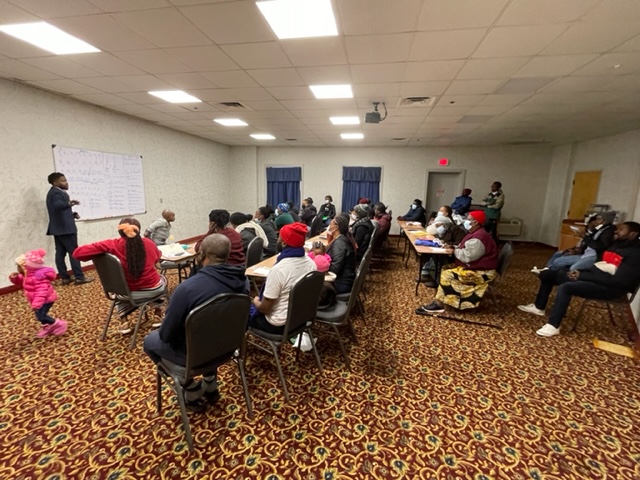
Pictured: Simon Mayingi, teaching a group of “New Mainers” in the conference room at the South Portland Howard Johnson Hotel last month.

Prior to the pandemic, South Portland (SoPo) Adult Education had been offering English learning classes for several years in a donated space in the West End of South Portland for new Mainers living in that area who needed to learn English. This was in addition to evening classes offered at South Portland High School.

More recently, with the influx of new Mainers arriving here to live, SoPo Adult Ed has been trying something new to help break down barriers for some who may not be able to make it to South Portland High School for evening classes.

Like many people who are seeking to extend their education or even take on full or part-time work, transportation and childcare can be an enormous barrier. Knowing this is the case for many of the new Mainers living in temporary housing in South Portland, the SoPo Adult Education Program collaborated with the Howard Johnson, a location providing temporary housing, to arrange a space to offer basic English to residents on a weekly basis.

“Maybe the best description of the English being offered is, “Survival English,” said South Portland Adult Education Director David Morrill. “Greetings and introduction, recognizing signs and the English word associated with it,” he added.

“Opportunities to gain some basic English skills are an important part of supporting Maine’s newest residents to thrive here,” said April Perkins, Maine Department of Education World Languages & ESOL/Bilingual Programs Specialist. “Removing potential barriers, like transportation and childcare, shows a true commitment to solutions-oriented thinking and responding to the in-the-moment needs of these valued community members. The work South Portland Adult Education is doing is planting the seeds necessary for successful transition to life in Maine – including future employment, academic pursuits, and civic engagement.”

In addition to SoPo Adult Ed’s efforts to provide flexibility in educational offerings for Maine’s new residents, the community of South Portland is providing many other services, community health, social services, in addition to South Portland School Department and surrounding school districts who have been busy transitioning younger new Mainers into the schools.

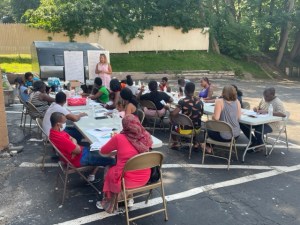
Marissa, SoPo Adult Ed. Instructor teaching English, July of 2021

Read more about this effort in the local news:

https://www.pressherald.com/2022/01/24/portland-officials-ask-for-help-as-number-of-asylum-seekers-continues-to-grow/

https://www.pressherald.com/2021/12/24/room-at-the-inn-a-south-portland-hotel-goes-all-out-to-help-asylum-seekers/?rel=related


Riverside Adult Education Recognized for its Innovative Day Reporting Program

Riverside Adult Education serves the communities of Regional School Units (RSUs) 26, 22, and 34 in Penobscot County. Like all of Maine’s high-quality adult education programs, Riverside works with adults in their region looking for personal, professional, and academic growth.

Riverside was recognized recently by the Maine Sheriff’s Association and the Penobscot County Jail for their unique PACE Day Reporting Program. PACE stands for Purpose, Awareness, Connection, and Education, and invites a niche audience of participants to go at their own pace, or to simply enjoy a change of pace when it comes to personal and professional betterment.

Intended for individuals in Penobscot County who have been sentenced to two days in jail for a minor offense, the PACE Day Reporting program gives folks the opportunity to spend that time doing something a bit different.

PACE program coordinator Rebecca Cross, who helped get the program up and running, recalls her initial conversations about the creation of PACE with Penobscot County Sheriff Troy Morton: “He wanted me to create something where the people would leave enriched in some way, instead of sitting in the cellblock for two days.”  Their shared vision helped create PACE – a program that provides the opportunity for participants to get involved in educational programs they never knew how to access.

“The Penobscot County Sheriff’s Office is blessed to have a tremendous partnership with Rebecca Cross and Riverside Adult Education,” said Sheriff Morton. “This community-based correctional program focuses on a therapeutic approach to incarceration through an educational experience.” 

People who opt to participate in PACE spend each day of their jail sentence embarking on a tailored educational experience. While some may choose to practice for the High School Equivalency Test (HiSET) or take the Comprehensive Adult Student Assessment System (CASAS) math and reading assessment for adults, others choose to get help in filling out the Free Application for Federal Student Aid (FAFSA®) form and learning about possible higher education options available to them. 

Another option of PACE presents a whole other set of professional learning opportunities. These learning options are one of the things about PACE that really sets it apart – by the way it draws participants, who may be feeling turned out by their own community, back into society through investing in them valuable time, knowledge, and training. The program offers classes like, “How to Stretch Your Food Dollar,” and “Trauma Informed Yoga,” as well as, “How to Breathe Your Way Through Mental Health Struggles,” among other topics. 

“It’s a balance between profoundly sobering conversations around addiction and light hearted remembering of the joys of life,” said Cross.

In addition, a new option in the PACE program called, “Life Ready” includes reflective workshops using podcasts. These workshops are linked to mic-credentialing, a system developed by Eastern Maine Community College. The micro-credentialing curriculum through Life Ready encourages students to consider their own story and how it affects their life choices. The podcasts include useful topics like, business startup, home buying, credit scores, budgeting with very little income, and financial literacy, which according to Cross, is a very popular one.

“People who do not have very much, or no money at all, often think that financial literacy doesn’t apply to them,” she explained. By making budgeting and financial literacy accessible and easy to use for anyone, it has become one of the most well utilized options in the program.

PACE classes and workshops are offered on a Friday and a Saturday to make them more convenient and accessible for people who are working or already taking classes during the week. This means that the community organizations who partner with PACE are willing to send instructors to volunteer on a Saturday, which sends a very positive message to participants, says Cross.

“They [PACE program participants] are astounded at the fact that people from the community want to come in and spend time with them, even on the weekend,” said Cross. “The fact that people are willing to do that means a lot.”

Cross also explains that their community partnerships are one of the most impactful aspects of the program. These partnering organizations, such as Health Equity Alliance and the BARN (Bangor Area Recovery Network), send people to conduct the classes or workshops. One recent workshop was hosted by Eastern Maine Development Corporation (EMDC) on “How to Develop an Elevator Speech,” and “How to Interview for a Job.” They have also hosted faculty from University of Maine at Orono who have provided reflective writing workshops. In addition, they have hosted local artists who offer their time teaching classes on how to paint.

“It’s so profound for people,” said Cross. “It can be healing, to just sit down and tap into your creativity and just laugh with people, and at themselves.”

So far, PACE has served 139 people in Penobscot County since its creation in January of 2020. Cross says that although it does cost participants money to enter into PACE, they have worked hard to keep that cost as low as possible, which ends up being a small fraction of what other, similar programs charge in other states. 

Encouraged at the fact that all 139 of the people who have participated in PACE have not been charged with another sentence, they are eager to keep working on making the program accessible to even more people and bring in more community partnerships to match the need.

“Rebecca’s passion for education and wonderful ability to bring in supporting resources makes this program a success” said Sheriff Morton. “This educational approach allows individuals the opportunity to connect with resources available throughout our state.” 

“It’s a great community effort and I just get to put the pieces together,” said Cross, adding that they are always so happy to see people who have participated in the program go on to continue their education, opening up a world of possibilities for what their next step might be.

For more information about PACE, contact Rebecca Cross at rcross@rsu26.org.

MEDIA RELEASE: Maine DOE and MCCS Partner to Offer Free College Courses for Adult Education Students

MCCS_FMCC_logo_legMaine adults seeking to pursue college have a new option to jumpstart their education, with support from their local Maine adult education program. A new partnership between the Maine Community College System (MCCS) and the Maine Department of Education (DOE) will offer tuition-free college courses to Maine’s adult education students.

Maine adult education programs have supported adult students in their transition to college and career through the Maine College and Career Access program for almost twenty years. This new opportunity expands upon that idea by allowing adult education students to take a college course with the full support of their adult education program mentors so they can develop the habits, skills, and confidence to succeed in college.

“Maine’s adult education programs have assisted thousands of Maine adults in making a successful transition to college,” said Maine Education Commissioner Pender Makin. “This new partnership with the Maine community college system takes it to the next level by giving students the chance to try a college course with the support they need. We are excited to see the impact it makes for our adult education students.”

Adult education programs will work with adult students to select a course at the community college that is appropriate for their college and career goals, and then support the student as they complete the course. The goal is that they will continue their education once the course is completed.

“This is an opportunity for us to encourage and connect with adult students throughout Maine,” said MCCS President Dave Daigler. “The hope is that students can choose courses that align with their individual career goals and that we can help provide that motivation and support to continue on once they complete their adult education program.”

Tuition and fees for the courses are being generously provided by the Maine Community College System while the Maine Department of Education’s Office of Adult Education will provide textbooks and course materials for students.

Adult students interested in this program will need to be enrolled in a Maine Adult Education program to take advantage of the opportunity. Adults (with or without a high school diploma) who would like help achieving their educational and career goals can contact their local adult education program for next steps.

Information Regarding Federal Requirements for Entry-Level Driver Training (ELDT)

The following information from Maine’s Bureau of Motor Vehicles (BMV) may be useful information for Maine school transportation teams, Career and Technical Education Sites/Centers, and Adult Education Programs.

The Federal Requirement for Commercial Driver’s License (CDL) applicants to complete Entry Level Driver Training (ELDT) before taking a road or skills exam takes effect on February 7, 2022.

The good news is drivers who have successfully completed a written exam and hold a CDL permit before February 7, 2022 are exempted from having to complete ELDT prior to a skills or road test.

Maine BMV wants to help!

BMV schedules written exams two weeks in advance, to ensure enough time to provide applicants written scheduling notification via the mail.

To increase the likelihood of scheduling a CDL or endorsement written exam before February 7, submit your completed application with payment to BMV no later than Jan 10, 2022

For questions, call Maine BMV’s CDL Examination Section at (207) 624-9000 ext. 52122

For more info on ELDT, go to: https://tpr.fmcsa.dot.gov/

From Merrymeeting Adult Education to Yale University – How One Maine Student Found Her Own Path

“In middle and high school, I bounced around school-to-school missing many classes from being sick,” said Alyssa Diver, a former student of Merrymeeting Adult Education Program. When Alyssa’s senior year arrived, she realized that she would not be able to graduate with the credits she had accrued in high school. Eventually she went to Merrymeeting Adult Education Program in Topsham to try and find an alternative path.

After talking with Merrymeeting staff member Paul Elisha and doing some testing, Alyssa decided her best course was to get a GED (General Educational Development).  After achieving her goal, Alyssa applied to the University of Maine at Augusta (UMA) for a degree in Biology.

“I wanted to go into the medical field but was unsure of exactly what profession,” said Alyssa. During the end of her freshman year at UMA, Alyssa decided to become a Physician’s Assistant (PA). She got thoroughly involved in UMA’s biology club, and aging forward initiative, and diligently worked toward a Bachelor of Arts in Biology, which she achieved in 2018.

“During the spring of 2018 I learned of a new Physician Assistant(PA) program, Yale Online PA Program and applied,” said Alyssa. “I thought applying, and interviewing there would be great practice for my future PA school interviews.”  As Alyssa began applying to other PA programs, not thinking she would have a chance at getting into such a prestigious school, she got a phone a call that brought it all to a halt. She was accepted to the Yale Program.

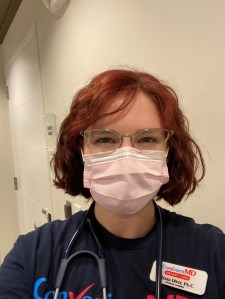
Alyssa Diver“In January 2019, I began the most rigorous and intense two and a half years I had ever experienced,” said Alyssa. She has since graduated and taken her exam to officially become a PA. This summer Alyssa’s dream of becoming a PA became a reality when she started working in urgent care right here in Maine.

“Fall of 2013, I was an anxious young girl who did not think I would even be able to get a GED,” recalls Alyssa. “Fast forward 8 years. Through help, determination, and never giving up, I am now a Physician Assistant who loves to help my patients and make an impact in my community.”

Governor Mills Visits Portland Adult Education To Promote Its Work

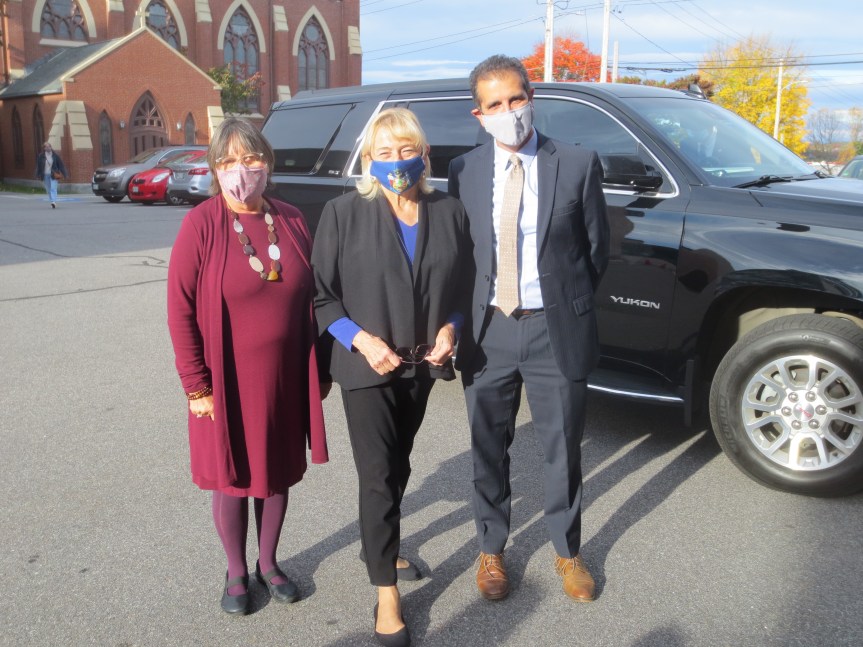
Governor Janet Mills visited Portland Adult Education (PAE) this week to promote its work in providing job and workforce training opportunities for Maine people. As part of her tour, Governor Mills visited with students in English learning classrooms, joined a virtual classroom, and participated in a discussion with former students who have graduated from PAE programs and are now in the workforce.

During the Governor’s Oct. 19 visit, immigrant students in a beginning English class took turns explaining to her why they’re learning English – reasons such as being able to get better jobs and to understand more about the culture in which their children are growing up. One student said she was thrilled that Mills had shaken her hand as they both were entering the building. “I’m so happy,” she said to the Governor.

“Maine welcomes you with all our heart,” Governor Mills told the students.

PAE is one of more than 70 adult education programs across Maine that provide job and workforce training, English learning classes, and other instructional courses that lead to better employment opportunities. Governor Mills, with the support of the Legislature, has increased funding for adult education in Maine by approximately 14 percent since taking office in January 2019, including a $1.2 million increase specifically in adult education workforce development funding.

“Maine has been grappling with a workforce shortage for decades now, and the pandemic has only made it worse,” continued Governor Mills. “Adult education is a critical component in our efforts to address that serious problem and strengthen our workforce. Not only does adult education equip more people with the skills needed to get a good-paying job, but it also allows them to put down roots, raise families, and live a rewarding life while contributing to the overall growth of our economy. It was a pleasure to visit Portland Adult Education, meet with its incredible students and staff, and see firsthand the important work they are doing every day to make Maine a better place.”

The Maine adult education system also partners with the Maine CareerCenters, local employers, higher education, and community agencies to maximize the education and training opportunities for adult learners.

PAE serves more than 2,000 racially and linguistically diverse students in its academic and workforce programs each year. Working with strong employer and community partnerships, PAE designs and implements customized workforce training opportunities for students to enter or advance in a range of professional fields, including health care, education, financial services, early childhood education and transportation. PAE offers 10-12 week intensive programs that integrate targeted language and skills training, as well as career advising and job search support in partnership with PAE’s New Mainers Resource Center.

“It was great to have the Governor acknowledge the incredible work of our staff and students,” said PAE Executive Director Anita St. Onge. “Adult education programs throughout the state are working to provide education for students seeking a high school diploma, preparing students for college, and  providing training to strengthen Maine’s workforce. We are also working with foreign-trained professionals to provide education and advice with workforce issues and licensing, enabling them to reach their highest potential.”

“We were happy to welcome Governor Janet Mills to Portland Adult Education,” said Portland Public Schools Superintendent Xavier Botana. “PAE is a wonderful resource to Portland and a major source of economic development. I always say that every dollar we invest in adult education is not just a dollar invested in PAE students. It is a dollar invested in their children, in their families, and in the whole community. I appreciate Governor Mills’ recognition of this and look forward to working with her and the adult education community to maximize the value of PAE and direct the appropriate resources to support their growth and development.”

Maranacook & Bangor Adult Ed. Programs Partner to Offer FREE School Bus Driver Training

Regional School Unit (RSU) 38 and Bangor Adult Education Programs are offering commercial driver license (CDL) classes this September, November, and January free of charge for eligible students. The project aims to help fill a critical workforce need across Maine for school bus drivers. While there are 10 free spots available per month, September is almost full and they are actively recruiting for November 2021 and January 2022.

The project was initiated by Bangor Adult Education director Greg Leavitt and grew into a partnership with RSU 38 Adult Education Program Director Steve Vose. They are able to offer the free classes using funds from a workforce innovation grant through the Maine Department of Education’s Adult Education Team.

“This is an ‘innovative’ workforce grant so let’s innovate,” said Vose who has spent a lot of time over the past couple months recruiting, getting participants ready to start the class this month, while also planning and recruiting for November and January, and adapting the program to be responsive to the needs of prospective participants. He is setting up reading tutors, if needed, to help students have success both during and after course completion. They are also exploring ways to pay students a working wage while they take the class – this would enable students to sign on without worrying about taking a month off work.

“If we continue to do the same old things, we are going to continue to get the same old results,” added Vose.

The CDL (Class B) class prepares students to meet the Maine BMV Class B school bus driving requirements and consists of 42 hours of classroom instruction to prepare students for the state written and skills exam and 30 hours of driving instruction to prepare students for the state road test.

The classes will take place at 75 North Road in Readfield, with driving time arranged individually with students. Tentative November class dates are, Nov. 4 – Dec. 18 on Thursdays from 6:00pm – 9:00pm and Saturdays 8:00am – 2:30pm. January dates are yet to be determined.

For more information or if students are interested, contact Steve Vose at steve_vose@maranacook.com or call 207-242-8795.

This story is part of the Maine Schools Sharing Success Campaign. To submit a story or share good news, email Rachel at rachel.paling@maine.gov.


Remote Instruction Observation Tool

This spring, Maine Department of Education (DOE) Adult Education Professional Development Coordinator Amy Poland worked with the EdTech Center at World Education to develop an observation tool for remote instruction (specific for adult learners).

As a member of the Innovating Distance Education in Adult Learning (IDEAL) IDEAL Consortium, Maine is part of a consortium of states dedicated to increasing access to high-quality distance and blended education opportunities for adult learners, and this work was an extension of our work with IDEAL.

Here is a blog post about the remote instruction observation tool, why the Maine Department of Education wanted to engage in this important work.

For further information, reach out to Maine DOE Adult Education Professional Development Coordinator Amy Poland at amy.poland@maine.gov.

Lewiston Adult Education and Auburn Adult & Community Education Welcome New Director

A veteran educator has become the new director of Lewiston Adult Education and Auburn Adult & Community Education.

Photo (curtesy of Lewiston Adult Education): Jennifer Tiner, left, stands with Certified Nursing Assistant graduate Angel Monk in this 2018 photo. Tiner has become the new director of Lewiston Adult Education and Auburn Adult & Community Education.

The Lewiston School Board approved hiring Jennifer Tiner on Aug. 16. She replaces William Grant, who has served as director for the Lewiston and Auburn programs since 2016. He became the executive director of operations for Lewiston Public Schools earlier this summer.

Tiner is a Lewiston High School and Bates College graduate who has had a 23-year career in education. She worked as an English teacher, parenting instructor and teen parenting center coordinator at Lewiston High School. Tiner has served as assistant director for Lewiston Adult Education for the past eight years.

She has led job training programs at Lewiston Adult Education that included partnerships with local businesses. Students became certified nursing assistants to construction workers thanks to the classes. This fall, Lewiston Adult Education will offer classes in health care and computer support.

“Adult education provides many opportunities for continued, life-long learning. I am excited to serve both Lewiston and Auburn and look forward to building partnerships throughout our communities,” said Tiner.

Tiner has a master’s of arts degree in educational policy and leadership from Wheelock College in Boston.

This article is part of the Maine Schools Sharing Success Campaign. To submit a story or an idea email it to Rachel at rachel.paling@maine.gov.

Water Treatment Provides Opportunity for Adult Education Program

Maine Adult Education Hub 9 staff, Biddeford Adult Education students and some of their college aged children attended a professional Water Treatment forum at Southern Maine Community College recently.

Across the county, a growing need is present for trained water treatment professionals. As such, Southern Maine Community College has partnered with Northern Maine Community College to create a training program for the profession at the South Portland campus. Their lectures can be accessed remotely, however, hands-on laboratory exercises guided by trained faculty members are taking place on campus.

The Hub 9 group learned about scholarship and apprenticeship opportunities, and toured the learning lab. Industry professionals were available to discuss the great need for new water professionals and how dynamic and exciting this important work is, an exciting experience that the group intends to bring back to their learning community in Biddeford.

Visit Maine Rural Water Association and Maine Water to see current job postings. Anyone interested in discussing this as a potential pathway into the field, can contact their local adult education student advisor.

This article was written by Marci Dionne, student advisor at Biddeford Adult Education, in collaboration with Maine DOE Intern Clio Bersani as part of the Maine Schools Sharing Success Campaign. To submit a story or an idea email it to Rachel at rachel.paling@maine.gov.