The Success of Together for ME at the Brunswick School Department

In the fall of 2019, the Brunswick School Department enthusiastically launched its initial public pre-K classroom. The first matter of business after hiring an amazing early intervention teacher was the decision about curriculum. Founding pre-K teacher Brigitta Valente recalled, “We feel strongly about how play offers authentic opportunities for learning for all children but especially young children. There are so many layers to the skills that are developed in play. From curiosity to social and emotional development, problem-solving to critical thinking, play builds and extends countless foundational aspects of learning. This is why pre-K for ME appealed to us so much. Play is central and prioritized.”

That first year of pre-K for ME set the stage in Brunswick for years to come. As the pre-K program expanded from that one classroom, tucked into a cute mobile unit in the school’s front yard, to four pre-K classrooms and then two more community partner classrooms, the school department continued to use the pre-K for ME program. Community partners Family Focus and Midcoast Maine Community Action Head Start were already using pre-K for ME at their agencies, so it was a smooth transition for Brunswick to do so. Soon, the success of Brunswick’s pre-K program started getting the attention of other staff in the school.

Kindergarten teacher Erin Lemont shared, “We quickly learned that K for ME is designed to offer young learners a flexible, interactive, and engaging way to explore foundational concepts. K for ME allows children to experience learning through exploration, hands-on activities, and social interaction, which helps them make deeper connections to what they’re discovering.”

Another Kindergarten teacher Charity Kaiser explained, “When I heard about K for ME, it was the first program I had encountered that truly embraced the importance of play, student choice, and the development of interpersonal skills. Having a comprehensive academic curriculum built around these foundational elements aligned perfectly with what I had come to value as essential for meaningful learning.”

So began the growth of K for ME in at the Brunswick School Department.

The first year of the pandemic was especially strange for Brunswick. Amidst social distancing and contact tracing, staff and students moved into the brand-new Kate Furbish Elementary School building, absorbed an additional grade level, and grew student population by more than 200. Principal Annie Young said she and her staff quickly realized that they needed a new approach with a school of more than 600 four- to eight-year-olds – especially after so many disruptions to students’ early years because of Covid-19.

“We noticed so many changes in our students as they came to our school – their deficits in social, emotional, communication, fine, and gross motor skills were drastic,” Young explained.

Fortunately, there were a number of highly-qualified early childhood educators working at the large pre-K through grade 2 school.

“Our staff is well-experienced in the pedagogy of working with young students. Not only are they highly-skilled; they are also passionate about the diverse needs of this age group,” Young shared.

Together, the staff of Kate Furbish began to build a “portrait of a graduate.” Qualities like intentional social-skill instruction and practice, emotional regulation work, play-based instruction, and communication rose to the top of their priority list. Finding a way to embed this work into the daily life of the school was already happening in their pre-K and K for ME classrooms. This thriving success inspired Principal Young to make the big leap of adopting both 1st and 2nd for ME programs. Coining it “Together for ME” this school year, Kate Furbish became the first school in the state to adopt pre-K, K, 1st, and 2nd for ME across the entire school – all 34 general education and six special education classrooms.

“I felt confident about this bold move,”  Young said. “Our pre-K and kindergarten classrooms and staff were already seeing the positive impact of this program, so it was a clear path to adopt it school-wide.”

Besides being student-centered, this program is engaging and includes lots of intentional play and social-emotional skill building. Through Together for ME, staff and students see the powerful connections between classrooms, across grade levels, and throughout the school. There’s increased accessibility and reinforcement of Brunswick’s focus on belonging in this school-wide program. Students, including those in special education and English Speakers of Other Languages (ESOL) programs, are finding more ways to access their general education settings than before. Together, Kate Furbish staff members are committed to continuing to grow in their understanding and use of this work.

The Brunswick School Department provided this article. To submit good news to the Maine DOE, fill out the Good News Submission form.

Please visit the Maine DOE website to learn more about the state’s instructional programs, such as pre-K for ME, K for ME, 1st for ME, and 2nd for ME.

Maine Department of Education Expands Kindergarten Entry Inventory Project

During the 2024-2025 school year, more than 30 Maine kindergarten teachers participated in the first phase of the Kindergarten Entry Inventory (KEI) project, funded through Maine’s Preschool Development Grant and designed to help teachers gather valuable insights into children’s development across multiple domains. Since then, these teachers have tested various KEI instruments in their classrooms, using information collected to better support individual learning needs.

Now, the Maine Department of Education (DOE) is preparing for the launch of the next phase of KEI during the 2025-2026 school year. The expansion of this project will pilot KEI instruments in approximately 100 kindergarten classrooms throughout the state. Ultimately, aggregated KEI data will help to strengthen Maine’s early care and education system by identifying trends in growth and areas of continuous improvement.

The Maine DOE is inviting kindergarten teachers to participate in this exciting initiative by applying for a Kindergarten Entry Implementation Specialist position! Kindergarten Entry Implementation Specialists will pilot a KEI tool in their kindergarten classroom during the fall of 2025. Selected participants will receive a stipend for their work. Responsibilities include, but are not limited to, participating in training in the KEI tool administration protocol, piloting KEI with students, offering timely feedback, and attending periodic in-person and virtual meetings.

Your expertise and perspective are needed. All interested kindergarten teachers are welcome to complete this application. Applications are being accepted through May 9.

An informational meeting will be held on Tuesday, April 1, from 3:45-4:45 p.m. Please use this link to join.

If you have questions or need additional information about the KEI project, please contact Karen Mathieu, Maine DOE Kindergarten Entry Inventory Specialist, at karen.mathieu@maine.gov.

Nominations Open for Outstanding Early Childhood Professional Spotlight

Do you know an outstanding early childhood professional who works with children from birth to age 8 in a childcare program, public school, private school, or home-visiting setting? If so, consider nominating them for the 2025 Week of the Young Child (WOYC) Outstanding Early Childhood Professional Spotlight! The deadline to nominate is March 21, 2025.

This annual recognition program, presented in collaboration with the Maine Department of Education’s (DOE) Early Learning Team and the Maine Department of Health and Human Services’ Office of Child and Family Services Early Care and Education Division, honors dedicated professionals who make a meaningful impact on young children and families.

Established in 1971 by the National Association for the Education of Young Children (NAEYC), the Week of the Young Child® highlights the importance of early childhood education and the foundational role it plays in a child’s success. This week also serves as an opportunity to celebrate the early care and education professionals who nurture and support children and families during this critical stage of growth and development.

Recognize an outstanding early childhood professional by submitting a nomination through the 2025 WOYC Spotlight nomination form. The submission deadline is Friday, March 21, at 11:59 p.m.

Nominees will be contacted prior to the Week of the Young Child, which takes place April 5-11, 2025. All nominees will receive a certificate of recognition and will be featured on the Maine DOE Newsroom and social media platforms. They will also be entered into a raffle for a gift basket.

For more information, please contact Michelle Belanger, Maine DOE Pre-K Partnership Specialist, at michelle.belanger@maine.gov or Meg Swanson, Community and Partnership Manager, at megan.swanson@maine.gov.

First 10 Community Schools: Round Two Grantees Make a Difference in Their Local Communities

Since 2023, seven school administrative units (SAUs) across Maine have been awarded grants through the First 10 Community School Pilot, a project funded by Maine’s Preschool Development Grant. The First 10 model is a specialized community school approach that unites elementary schools, early childhood programs, businesses, community organizations, and social service agencies to support the well-being and academic success of children from birth through age 10.

Each First 10 participating school has established a dedicated First 10 team, comprised of school and community-based early childhood staff, community organizations, businesses, and family members. Three pilot sites launched their initiatives in the summer of 2023 and are actively building systems to ensure children and families benefit from a more coordinated early childhood network. You can learn more about the first round of grantees here.

A second cohort of SAUs was awarded grants in 2024. These SAUs began their First 10 journeys last July and have collaborated closely with those involved with the Education Development Center’s First 10 project to deepen their understanding of the model and develop detailed strategic plans tailored to their communities’ strengths and needs. These SAUs are now forging connections and actively working to strengthen the early childhood system within their regions.

pile of clothingCape Cod Hill Community School, RSU 9 (New Sharon)
Serving pre-K through fifth grade, Cape Cod Hill Community School had already implemented a community school model and has since expanded its focus to include children from birth to age five through the First 10 program. Recognizing transportation as the most significant barrier for local families, the school’s First 10 team, led by First 10 School Outreach Coordinator Anita Stevens, took decisive action. Stevens convened a county-wide group of collaborators to explore solutions. The team has since connected with the Neighbors Driving Neighbors program, while working to establish a similar initiative in Franklin County. In addition to finalizing the team’s strategic plan, Stevens has actively engaged with community organizations and businesses and hosted activities at local events, such as the area Children’s Festival. A partnership with the local Masonic lodge and Eastern Star chapter resulted in the Angel Project, which provides winter clothing for children in need at the Cape Cod Hill Community School.

women standing in front of a group of people sitting and listeningRiver Hawkes, Skowhegan (MSAD 54)

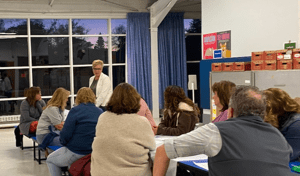
The River Hawkes First 10 team brings together the North and Bloomfield Elementary Schools in a strong partnership with the Kennebec Valley Community Action Corporation (KVCAP). Next year, these schools will merge into the new Margaret Chase Smith School, a facility that will consolidate three elementary schools and the KVCAP Head Start program, serving children from infancy through grade 5, along with their families. Preparing for this transition and fostering a cohesive early childhood landscape have been key priorities. This past fall, the team hosted a dinner with community childcare providers to share their First 10 goals and explore strategies for establishing a robust communication system between schools and community providers. First 10 Parent Outreach Coordinator Kasey Purington is also collaborating with MSAD 54 and KVCAP leadership to create opportunities for staff from both organizations to build relationships and develop a shared vision for the new school’s culture.

flyerWiscasset Elementary School, Wiscasset Public Schools
Wiscasset Elementary School, serving pre-K through fifth grade, boasts a First 10 team that includes staff from the local recreation department and Midcoast Community Action Corporation, working in close partnership with the Wiscasset parent-teacher organization and Partners in Education (PIE). Current efforts focus on family engagement events, caregiver education, and supporting transitions into pre-K and Kindergarten. First 10 Community School Outreach Coordinator Kim Watson, who is passionate about outdoor learning, has partnered with the Midcoast Forest Playgroup to launch “Wednesdays in the Woods” for the Wiscasset community. This initiative offers children and their caregivers a valuable opportunity to learn and play together in nature, with sessions designed to empower caregivers to eventually lead future nature-based playgroups.

school hallwayDeer Isle-Stonington & Sedgwick Elementary Schools, Union 76 (Deer Isle)

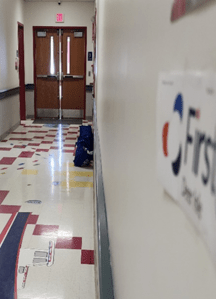
Serving coastal communities from pre-K to grade 8, Deer Isle-Stonington and Sedgwick Elementary Schools have brought together school staff, adult education, Downeast Community Partners Head Start, Healthy Peninsula, and local community members to support their First 10 initiatives. This fall, the team focused on building relationships and ensuring access to essential resources. First 10 Community School Outreach Coordinator Melissa Jones-Bayley worked with Vanessa Hatch of Healthy Peninsula to expand the food backpack program through the Healthy Island Project. They are also finalizing plans for a partnership with Big Brothers Big Sisters that will engage high school students as mentors for elementary school students. Additionally, the team is planning family engagement initiatives and transition to pre-K and Kindergarten activities, with several events and strategies set to launch this winter.

The Maine DOE plans to continue to share good news about the important work being accomplished by Maine’s First 10 Community Schools. To learn more about the First 10 model and ongoing efforts in Maine, please visit the First 10 Community Schools website, or contact Sue Gallant, Maine DOE First 10 Community Schools Specialist, at Sue.Gallant@maine.gov.

Webinar Series: Promoting Positive Childhood Experiences and Resilience

Maine Youth Thriving is hosting a series of free, virtual (via Zoom) professional development sessions throughout the next ten months in partnership with the Maine Department of Education (DOE) and the Maine Department of Health and Human Service’s Office of Child and Family Services.

These sessions will focus on:

  • How adverse and positive childhood experiences impact children’s development.
  • Ideas for how to support a stronger focus on positive experiences and for building resilience for young children.
  • Strategies for how educators can address compassion fatigue and build their own resilience.

Rotating Session Descriptions

  • Addressing Compassion Fatigue and Resilience Strategies in Educators and Caregivers – Join this training to explore stress impact and address compassion fatigue by developing strategies that promote resilience and reconnect you with the “why ” of your work.
  • The Impact of Experience: How Adverse Childhood Experiences and Positive Childhood Experiences Impact Healthy Child Development – Join this training to gain a comprehensive understanding of how both adverse and positive childhood experiences sculpt the foundation of individual development and uncover the transformative potential of PCEs in nurturing the children you work with.

Schedule

Two contact hours are available per session. Registration is required, and links to each session are provided in the table below. There is no cost to attend sessions.

You may find more information here.

Date/Time Webinar Topic Registration Link
Monday, March 10, 6-8 p.m. Addressing Compassion Fatigue and Resilience Strategies in Educators and Caregivers https://maineresilience.org/event-6048679
Wednesday, May 7, 6-8 p.m. The Impact of Experience: How Adverse Childhood Experiences and Positive Childhood Experiences Impact Healthy Child Development https://maineresilience.org/event-6048519
Wednesday, May 28, 6-8 p.m. Addressing Compassion Fatigue and Resilience Strategies in Educators and Caregivers https://maineresilience.org/event-6051093
Tuesday, October 7, 6-8 p.m. The Impact of Experience: How Adverse Childhood Experiences and Positive Childhood Experiences Impact Healthy Child Development https://maineresilience.org/event-6051085
Tuesday, October 21, 6-8 p.m. Addressing Compassion Fatigue and Resilience Strategies in Educators and Caregivers https://maineresilience.org/event-6051095

If you have any questions, please contact Nicole Madore, Maine DOE Early Childhood Specialist, nicole.madore@maine.gov.

Applications Open for Transition to Kindergarten Planning Assistance and Mini-Grant Opportunity; Informational Session on February 25

The Maine Department of Education (DOE) Early Learning Team, in partnership with the Maine Department of Health and Human Services (DHHS) Office of Child and Family Services, is pleased to announce that applications are open for a second round of Transition to Kindergarten planning assistance with mini-grant funding to support the development of high-quality kindergarten transition teams and plans. The deadline to apply is March 7, 2025.

This opportunity is designed for school administrative units (SAUs) seeking to strengthen partnerships among children, families, community providers, and schools to ensure successful transitions into public kindergarten classrooms. The focus is on fostering family and community engagement and equitable access to transition supports.

The transition to kindergarten is an exciting yet often overwhelming time for young learners and their families. Thoughtful transition plans that include strong community partnerships help schools and educators to meet children and families where they are. This opportunity will support SAUs and community partners in building Kindergarten Transition Teams and Kindergarten Transition Plans through a structured technical assistance program that guides the strengthening of community partnerships, promotes equitable practices for families, establishes a shared understanding of kindergarten readiness, encourages consistent school attendance, and creates a sustainable support system.

Participants will:

  • Engage in monthly technical assistance sessions.
  • Receive individual support, as needed.
  • Form a Kindergarten Transition Team.
  • Develop a year-long transition plan to support children and families before, during, and after the transition to kindergarten.
  • (SAUs will) become eligible for mini-grants to support their implementation through the 2025-2026 school year upon finalizing transition plans in spring of 2025.
  • Participate in follow-up technical assistance sessions in September of 2025 and October of 2025.

All interested representatives from SAUs and community early childhood programs are invited to join an informational/Q&A session to learn more about this opportunity on Tuesday, February 25, 2025, from 4-5 p.m. Please use this Zoom link.

Participants interested in the opportunity must complete the registration form by March 7, 2025. The registration form should be completed by an SAU representative and requires identification of preliminary team members (at a minimum, representation of one SAU or school leader, one school educator/staff member, and one potential community early childhood provider) and assurances for building community partnerships and engaging in the technical assistance meetings.

If you need assistance locating childcare providers in your area, please visit Child Care Choices.

Technical assistance meetings will be held on the following dates:

  • March 18, 2025, from 4-5:30 p.m.
  • April 15, 2025, from 4-5:30 p.m.
  • May 27, 2025, from 4-5:30 p.m.

The Early Learning Team is part of the Maine DOE Office of Teaching and Learning. For further questions, please reach out to Marcy Whitcomb, Maine DOE Public Pre-K Consultant, at marcy.r.whitcomb@maine.gov.

Maine DOE Launches New Pre-K Professional Learning Series for Dual Language Learners

The Maine Department of Education (DOE) Office of Teaching and Learning is proud to introduce an exciting new professional learning series, designed to support educators working with Dual Language Learners (DLLs) in pre-K settings. This five-part interactive series will provide educators with tools and strategies to create inclusive, language-rich classrooms that celebrate student voice, engage families meaningfully, and embrace culturally-responsive practices.

Series Overview

Participants will engage in collaborative activities, watch expert-led presentations, and gain actionable resources, including Individualized Language Acquisition Plans (ILAPs) and Student Profiles designed specifically for pre-K learners.

This series is ideal for pre-K and Early Childhood educators, English for Speakers of Other Languages (ESOL) teachers, and administrators supporting pre-K and early learning programs. It will empower educators to:

  • Develop child-centered, language-focused programming using asset-based student portraits.
  • Foster meaningful communication and authentic partnerships with families.
  • Build language-rich environments that integrate language development into daily routines.
  • Co-create culturally-responsive programming that reflects and celebrates student diversity.
  • Use data and assessments effectively to support growth and smooth transitions for DLLs.

Participants will receive Unlocking Multilingual Learner Potential, Second Edition by Diane Staehr Fenner and Sydney Snyder, provided free of charge. Enrollment is capped at 30 participants to ensure a collaborative and impactful experience. Educators and administrators are encouraged to commit to all sessions and will receive 30 contact hours.

Series Details

Dates:

  • Session 1: February 27, 2025
  • Session 2: March 27, 2025
  • Session 3: April 17, 2025
  • Session 4: May 29, 2025
  • Session 5: June 26, 2025

Time: 3:30 – 5:00 p.m.

Format: virtual and interactive

The application deadline is Friday, February 7, 2025. Please use this link to apply. Participants will be notified of acceptance by February 13.

About the Facilitator

Rebecca Carey, a 2024-2025 Teacher Leader Fellow with the Maine DOE, will lead this professional learning series. Carey is a dedicated educator passionate about supporting multilingual learners and fostering joyful, play-based learning environments.

Carey has developed an asynchronous resource, Dual Language Learners, Pre-K and Early Learning, which includes a short video addressing frequently-asked questions about identifying and supporting multilingual learners in pre-K programs. Accompanying slides and a one-pager offer additional resources to build culturally-responsive, child-centered classrooms.

For questions, contact Melanie Junkins, Maine DOE Multilingual and Bilingual Education Specialist, at melanie.junkins@maine.gov.

The Maine DOE Office of Teaching and Learning is committed to unlocking the potential of every learner by creating classrooms where every child thrives. Don’t miss this opportunity to enhance your impact and make a lasting difference!

‘For ME’ Instructional Program Overview and Summer Training Opportunities

Since 2018, the Maine Department of Education (DOE) has adapted and piloted open-source instructional programs for early elementary grades based on the Boston Public School’s evidence-based Focus Curricula. These programs were designed to be developmentally-appropriate, interdisciplinary, and aligned with Maine’s learning standards.

  • Pre-K for ME was launched in 2019.
  • K for ME was launched in 2021.
  • 1st Grade for ME was launched in 2023.
  • 2nd Grade for ME is being piloted in Maine classrooms currently and will be available for the 2025-2026 school year.

While Maine schools are responsible for the purchase of materials that support the use of these programs, lesson plans and other supporting documents are available at no cost via the Maine DOE’s website, and the Maine DOE provides initial training to support program implementation.

Informational Overview

An informational overview of the programs will be held on January 23, 2025, from 3:00-4:30 p.m. via Zoom. The session will share the basic program structures and review materials needed for implementation. The overview will be recorded and posted for those unable to attend live. Educators unfamiliar with the programs are strongly encouraged to attend or view the recording.

Overview Session on January 23, 3:00-4:30 p.m.Register here.

Summer Training

Educators, schools, and programs planning to implement the For ME programs in the 2025-2026 school year (pre-K to grade 2) are invited to participate in initial implementation trainings scheduled for summer 2025. These in-person trainings are designed to build understanding of program design and support successful implementation.

  • Who Should Attend:
    • School administrators (strongly encouraged)
    • Pre-K, Kindergarten, 1st grade, and 2nd grade teachers
    • Special educators, education technicians, and instructional coaches/curriculum leaders working with pre-K to grade 2 teachers
  • Training Details:
    • Time: Approximately 8:30 a.m. to 3:30 p.m. each day
    • Cost: Free
    • Schedule:
      • Pre-K for ME Initial Training: Week of July 28-August 1 (exact dates and location TBD)
      • K for ME Initial Training: July 28 and 29 in the Augusta/Waterville area (exact location TBD)
      • 1st Grade for ME Initial Training: July 30 and 31 in the Augusta/Waterville area (exact location TBD)
      • 2nd Grade for ME Initial Training: July 30 and 31 in the Augusta/Waterville area (exact location TBD)
      • Additional Training Day for K, 1st, and 2nd Grades: June 25, 8:30 a.m. – 3:30 p.m. in the Augusta/Waterville area (exact location TBD)
      • Refresher Training for Pre-K Teachers:
        1-day refresher trainings will be offered in mid-August (between August 11-22) for teachers who have previously completed the initial Pre-K for ME training.

Registration for Summer Training

Schools interested in sending educators to these trainings should have a principal or instructional leader complete the Summer Training Interest Link by May 16, 2025.

In mid-May, schools that have expressed interest will be contacted to confirm participation and gather the names and email addresses of all attendees. Additional details about the training locations and preparation will be shared at that time.

For additional information about Pre-K for ME, please contact Marcy.R.Whitcomb@maine.gov. For K for ME, 1st Grade for ME, and 2nd Grade for ME, please contact Leeann.Larsen@maine.gov or Nicole.Madore@maine.gov.

Maine Schools Implement First 10 Community Schools Model Using Maine Preschool Development Grant

The Maine Department of Education (DOE) Early Learning Team is supporting a First 10 Community Schools pilot through Maine’s Preschool Development Grant. It is designed to bring together school administrative units (SAUs), families, early childhood programs, and community organizations to create a system that helps young children to learn and thrive during the first 10 years of their lives.

The First 10 Community Schools model is a specialized community school approach that involves children and their families even before they reach public school age. Providing resources during this critical period of development for kids has proven to support learning and wellbeing into adulthood. First 10 was developed by the Education Development Center (EDC) under the leadership of Dr. David Jacobson. Participating teams in Maine benefit from EDC coaching, which helps communities to tailor strategies to meet their own unique and individual needs.

Over the past two years, seven SAUs in Maine have been awarded grants to establish teams, hire outreach coordinators, and implement strategies to increase access to quality programming, comprehensive supports, parent education, and coordinated transitions for children and families into public school. The initial cohort of grantees began its work in the summer of 2023 and is now in the second year of implementation.

In July of 2024, a second cohort of schools and communities in Maine was also awarded funding to implement the First 10 Community Schools model. These participants, which include Cape Cod Hill School (RSU 9), Wiscasset Elementary School, North and Bloomfield Elementary Schools (MSAD 54), and Deer Isle-Stonington and Sedgwick Elementary Schools (RSU 76), are currently mapping assets, identifying needs, and building relationships with community partners.

The Maine DOE is excited to share some highlights from the first cohort’s progress:

Sanford Pride Elementary School – Sanford Pride Elementary School (pre-K-grade 4) has implemented multiple strategies to support school transitions for children and families and build family partnerships. One key initiative involves the public school’s collaboration with community-based early childhood educators.

In October, educators from local child care centers, Head Start, and home-based programs joined Sanford School Department educators for a day of joint professional learning. During the event, First 10 Community Schools Outreach Coordinator Shana Palmer provided an overview of Sanford’s efforts to implement the First 10 Community Schools model, and Louisa Anastasopoulos from EDC led a session on the social-emotional and literacy learning domains in the Maine DOE’s Early Learning and Development Standards.

Educators are now participating in cross-site visits to continue fostering collaboration and enhance cohesiveness across the early childhood landscape.

East Belfast and Kermit Nickerson Elementary Schools (RSU 71) – RSU 71 works closely with Waldo Community Action Partnership (CAP) around preschool programming, and that partnership has expanded to include the First 10 pilot at East Belfast Elementary School.

Last year, they launched the First 10 Community School initiative with a Wicked Winter Family Fair, featuring a lasagna dinner, an introduction to The Basics parenting framework, and fun crafts and games for families. This partnership has continued through “play-and-learn” events for children from birth to age three and their families.

This year, RSU 71 and Waldo CAP have strengthened their collaboration by securing funding for a First 10 Community Schools Outreach Coordinator position. The RSU 71 Leadership Team is excited to welcome Kristie Hamlin from Waldo CAP as the new coordinator.

Limestone Community School and Dawn F. Barnes Elementary School (Caswell, ME) – These rural pre-K through grade 8 schools share a superintendent and regularly collaborate to maximize resources for student learning and enrichment. Their role as community hubs was celebrated in August during a Community Fair and Open House on the Limestone campus. The event, featuring a barbecue, touch-a-truck activities, and a fair, drew in more than 350 attendees. It also served as a warm welcome for Cody Closson, the new First 10 Community Schools Outreach Coordinator for the region.

Closson has since built relationships with students, families, and staff members, while creating a Family Resource Space on the Limestone campus. This space includes resources for students and families, as well as the First 10 team’s top ten books for pre-K and Kindergarten.

The Early Learning Team at the Maine DOE is a part of the Office of Teaching and Learning. For more information about the First 10 Schools and Communities pilot, please contact Sue Gallant, Maine DOE First 10 Community Schools Specialist, at Sue.Gallant@maine.gov.

Maine DOE Invites Learners, Educators, and Community Members to Participate in the 10th Annual Read to ME Challenge

For the 10th consecutive year, the Maine Department of Education (DOE) is partnering with schools and community organizations across the state to promote the Read to ME Challenge. This month-long public awareness campaign, held every February, encourages reading and literacy development among Maine children.

The Read to ME Challenge inspires adults to read to or with children for at least 15 minutes during February, fostering a love for reading and supporting literacy growth. Participants are encouraged to capture these moments in photos or videos and share them on social media platforms like Facebook, Instagram, and Twitter/X with the hashtag #ReadtoME. They can also challenge their social media connections to join in as well, amplifying the initiative’s reach across Maine.

This campaign is open to everyone and provides an excellent opportunity for schools, child care programs, libraries, and community organizations to plan creative ways to participate. Past participants have included college and high school sports teams, civic organizations, library programs, recreation departments, and educational groups, many of which have hosted inspiring events to engage children in reading.

The 10th Annual Read to ME Challenge will officially launch on Monday, February 3, 2025 and will run through Read Across America Day on March 2, 2025.

To learn more about the Read to ME Challenge, please visit the Maine DOE website. Stay tuned for details about special opportunities to celebrate the 10th anniversary, as well as information about the campaign’s kick-off event.

For questions, please contact Maine DOE Director of Early Learning Lee Anne Larsen at Leeann.Larsen@maine.gov.

To share photos/videos of your Read to ME Challenge participation, please contact Maine DOE Communications Outreach Manager, Rachel Paling, at Rachel.Paling@maine.gov. You may also do so on social media, using the tags @MaineDepartmentofEducation1! on Facebook and @mainedepted on Instagram.