Bridging Education and Career: East Grand School’s Extended Learning Opportunities Program Defies Rural Barriers

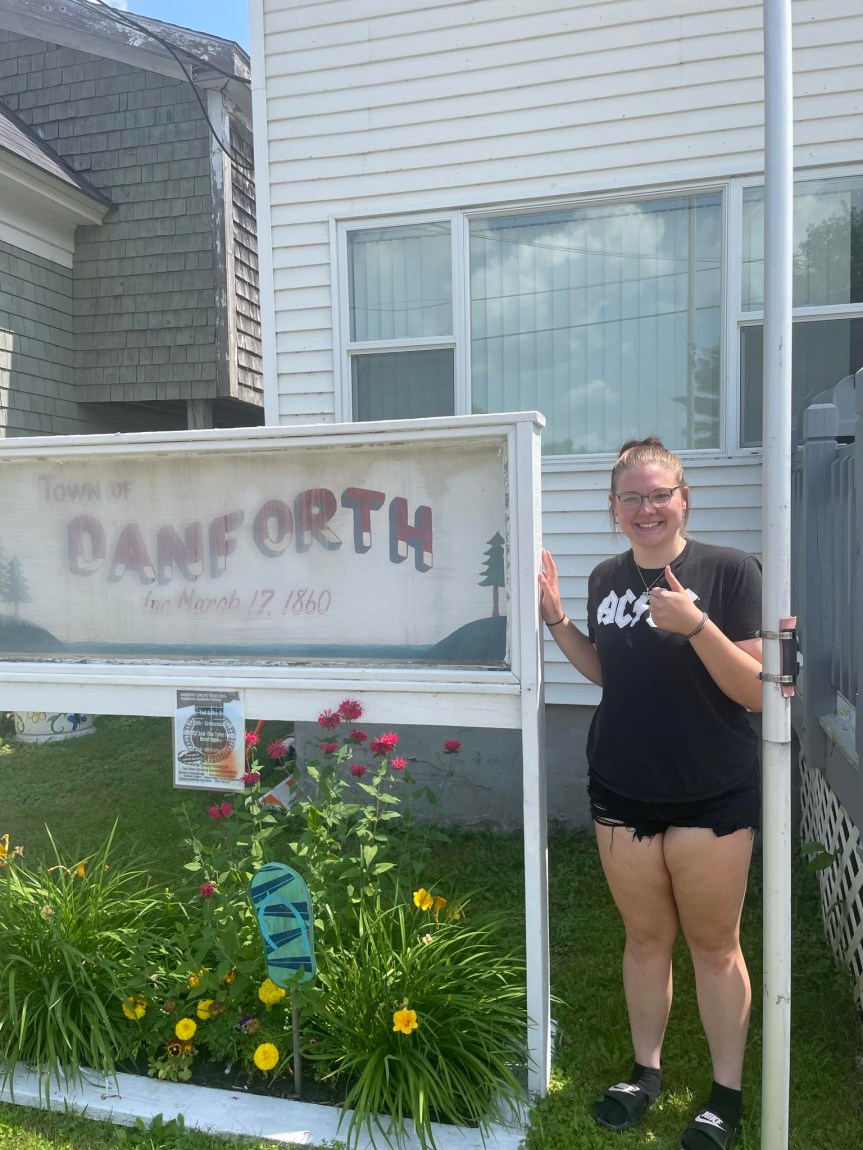
(Pictured: East Grand School Student Emily Pride at the Danforth Town Hall, where she interned and completed an eight-hour new clerk training, certifying her to handle registrations and essential paperwork for the town)

The East Grand School’s Extended Learning Opportunities (ELO) program is cultivating diverse business partnerships, enhancing students’ career development, and community engagement in the Danforth area.

“It’s hard to put into words the growth that is observed in students throughout the ELO process. The confidence gained as these students navigate the working world is huge!” Angela Cowger, East Grand School ELO Coordinator, said.

Many of the East Grand School students participating in the ELO program have displayed growth in several different areas. Cowger said she has observed improvement in their personal responsibility and work skills, such as students showing up for work on time, taking ownership of their schedules, and communicating with their ELO employer/mentor. She said she also sees growth in students’ social skills, including improvement in interpersonal skills and increased confidence. Additionally, students have gained hands-on, real-world knowledge about their chosen, specific career pathway, as well as an increased understanding of how businesses operate in general.

Collaborations have included local organizations in and around Danforth, and as far as Houlton and Calais, such as East Grand School’s maintenance and after-school programs, Maple Lane Family Child Care, Knight’s Yankee Grocer, CCA Auto, Canoe the Wild, the Snow Farm, and Modern Beauty. Students have also been placed in ELOs with Stair Welding RL Inc. in Hodgdon, the Aroostook County Action Program, Houlton Regional Hospital, and Serendipity Embroidery & Design. East Grand collaborates with Washington County Community College, too, to expand internship and apprenticeship opportunities.

ELO and career prep students have broadened their professional perspectives through field trips, including to Washington County Community College, Louisiana-Pacific Building Solutions, and a job fair at Northern Maine Community College, which featured more than 70 employers in Presque Isle. The program has hosted several guest speakers and local business leaders from institutions and sectors, such as the Maine Guide Service, health care, and outdoor recreation.

While the Danforth program has successfully established these partnerships, geographic challenges remain. The nearest automotive service center is 34 miles away in Houlton, posing a transportation barrier for students without a driver’s license. East Grand Schools, however, has used some of the funding received through a Maine Department of Education (DOE) ELO Expansion grant to address these transportation barriers. Through that effort, five students have since completed driver’s education and obtained their permits and are now working toward their licenses.

Cowger has also been instrumental in removing barriers for her students. The East Grand School ELO program has a van, which allows her to transport students. Additionally, the Region Two School of Applied Technology program has generously provided a few East Grand-region students the opportunity to be dropped off at work sites near their bus routes, which has allowed for a few of these ELO students to be placed in Houlton. The geographic remoteness will continue to be a challenge, as jobs and resources are limited in the East Grand area, but the school continues to adapt and think outside of the box.

One notable success story is that of Emily Pride, who moved to East Grand School during the final months of her sophomore year. She was unsure of what she wanted to do after high school, so she enrolled in a Career Exploration ELO. She completed coursework and job shadows in real estate, the Maine Department of Health and Human Services (DHHS), and a local daycare. Her exploration led to an internship at the Danforth Livable Community Center, where she assisted with organization, scheduling, meal preparation, and administrative duties at the town office. Pride also completed an eight-hour new clerk training, certifying her to handle registrations and essential paperwork for the town.

Pride’s dedication led to a summer job offer from the town office, an opportunity she said she viewed as a valuable learning experience that gave her insight into local governance and inspired her to consider pursuing a career in this field.

“With the knowledge I have gained from all these opportunities, I am able to apply them to my future!” Pride said.

This spring marks an exciting advancement for the East Grand School ELO program with the completion of a new business innovation center at the school. Funded by a Maine DOE Rethinking Responsive Education Ventures (RREV) grant, the center features a business learning lab designed for ELO and career preparation classes. This initiative supports the school’s decade-long effort to promote a small business pathway. Students have utilized the space for career preparation classes and ELO projects. The goal is for students to develop and execute business plans and use the lab as a launchpad for entrepreneurial endeavors.

Recently, an ELO student, with the help of a mentor graphic design artist, used the lab to create an art studio. 

The business innovation center is now a hub for East Grand School’s small business pathway, which includes four dual-credit college courses and 8th- and 10th-grade career preparation classes. These classes include components such as personal finance, cooking and other life skills, entrepreneurial guest speakers, career exploration, and other curricula. These developments represent significant strides in preparing East Grand students for their future careers and fostering individual growth and community engagement.

Eighth-grade students participate in a career preparation class.

East Grand School was a 2022 awardee of the Maine Jobs and Recovery Plan (MJRP) ELO grants, which supported 26 programs across Maine, covering 13 counties. This year, East Grand received a Maine DOE grant to further ELO expansion by establishing a “Missing Jobs Pathway.” This new pathway helps students to identify in-demand jobs/businesses that are missing in their community and supports them in developing the skills to meet the demand and remain in their home community.

Report on Maine Career Exploration Program Features Extended Learning Opportunities Student Stories

Since its launch in the fall of 2022, the Maine Career Exploration Program (MCEP) has connected more than 6,000 participants with paid work experiences. With funding from the Maine Jobs and Recovery Plan, this program offers opportunities for Maine’s youth, ages 16-24.

To learn more about the MCEP and Extended Learning Opportunities (ELO) in Maine, check out the Maine Career Exploration Program Final Evaluation Report.

These are a couple of student highlights from the report.

Ryan | From feeling uncertain and worried to confident and clear

Oceanside High School, Knox County – Work Experience Placement: Blake Vets

When the principal offered Ryan, then a rising senior at Oceanside High School, the choice of a fourth-period study hall or an internship class, Ryan picked the class.

“I asked him about it,” Ryan recalled, “And he told me a little bit about it, and I was like, ‘I want to do this. This sounds really cool.’ I was worried, because it was my senior year, and I had no idea what I was going to do.”

Now, he knows.

The class led Ryan to Blake Vets in Northport, where he found that his natural affinity for animals was a key asset.

“I have a big connection to animals,” he explained. “I always have. I love all types of animals. I just feel like a strength that I brought is my compassion and care when it comes to pets and people, as well. People are very happy seeing their pets warm up to me.”

Ryan’s love of pets also created challenges. It made him care — a lot — about doing things right during his internship at the practice. That created pressure when things went wrong.

“A skill that I learned was how to manage high-stress scenarios,” Ryan said when explaining why one picture he took showed a dog upside down on a table. The dog in the photo had woken up before surgery began and had to be anesthetized again. “There are so many things that can go wrong during the preparation for surgery.”

Ryan recalled when he witnessed a pet reacting with fear during a necessary procedure.

“I had to remind myself that this is helping the animal, even if they’re scared and they’re angry. Reminding myself, and the people that were around me, helped me get through this.”

The professionals at the practice encouraged him, as he learned about the realities of healing pets.

“Having a doctor who has been a veterinarian for years and years tell you that she sees that you can also become one — it meant a lot to me,” he said.

Ryan has been accepted into the University of Maine at Augusta veterinary technician program. The vets he interned with assured him that, if he applies for a job after he graduates, they’ll give him preferential consideration. He has also lined up work for the summer at an animal shelter.

“With the internship and with Molly [my ELO Coordinator] and with all the connections that I’ve made, it has just further cemented the fact that I want to be this, even after seeing the good and the bad,” Ryan said.

His confidence blossomed, too. When asked to identify the most important lesson he took from his ELO placement, Ryan replied, “How to speak for myself.”

He explained that before this experience, “I was just kind of like, ‘I’m fine. I’m doing good. I’m okay with everything,’ even if I wasn’t entirely sure I was. I’m a lot more independent, and I say what I want and how I feel a lot more now.”

Ryan added: “There are so many things that I also want to talk about on top of this – like how I’ve truly opened up and become a more social person during this period of this year. At the beginning of the year, I was very reserved. I didn’t say much about me; I didn’t talk that much. I’ve really started to open up and show who I am as a person, and those are a couple things that I’ve just learned throughout the year.”

The internship and the class, he said, helped him find his way.

“When it comes to normal classes, it’s like, you learn something, you remember it, you do a test on it. It’s just a linear path,” Ryan said. “When it comes to ELO, it’s like, some days … if you’re not feeling it, you don’t have to do something, and if you want and you’re willing to, you can grow so much in the span of just a little bit.”

Ryan also explained: “You have to put in energy to get as much out of this as you want to. This ELO and everything, it’s a lot more oriented toward you, and the path of growth is dependent on what you decide it to be.”

“Something that I connected with and that helped me, like a resource, was just seeing the help that … these people have done to animals like this. This is a rescue cat that was found on the side of the road with a broken leg. They give her all the support and love that she needed, and she’s very happy right now. This is her reaching — I was rubbing her as much as I could through the bars. This is me starting to walk away and she tries to get more. Just seeing how lives are impacted, not just animals but people’s lives … with this really helped.” – Ryan

“This is Dr. McGill, one of the doctors who was at Blake Vets for the four or five times that I visited. She and I really connected. She told me that I have the skill that I was born with, like, to connect with animals. … She supported me as soon as she met me. She was excited to hear all about me, what I planned to do, what I wanted to do there. She listened to that, and she gave me help in doing what I wanted to do.” – Ryan


Natalie | A river of connection, communication, and growth

Yarmouth High School, Cumberland County – Work Experience Placements: Wabanaki First Nations, Royal River Conservation Trust

“The reason you start your ELO does not define your ELO,” noted Natalie. “I started this for fun to learn a language because I was bored with the Romance languages in school. Then it turned into something so much more.”

Natalie’s first ELO placement led to a river of experiences that connected the Yarmouth High School student with her heritage, transformed her into a passionate communicator, and introduced her to a bevy of community organizations that welcomed her into their work.

“I’m more naturally quiet, so it’s kind of weird to be, like, this leader, this big public figure that apparently people like to consider me now,” she said.

Recently selected by the Portland Press Herald as one of the top ten graduates to watch in the state of Maine, Natalie has been accepted at Dartmouth College.

“I know, realistically, I probably wouldn’t have gotten in without all of the stuff I’ve done, but also … It shifted my life goals,” she said of the ELO program.

“I’m a Maliseet Native American from Tobique First Nation, but I’ve lived here my whole life,” Natalie explained. “I started my ELO as a thing investigating my language and my culture with Imelda Perley, who is my mentor. … She’s an amazing person. She basically started the whole language conservation program at the University of New Brunswick [and is] just a really inspiring person.”

Perley, a Maliseet elder, met with Natalie every week.

“Having that personal connection to so many people on the reservation up in New Brunswick and having the opportunity to meet with Perley every single week is something I wouldn’t have gotten to do if I was a different person,” Natalie said. “My grandmother grew up on the reservation, but none of the rest of my family really did. Since she went to residential school, she didn’t want her oldest children to have to go to it as well, so she moved to New York. So, it’s not something that my part of the family has been really connected to in a while.”

Impressed with Natalie’s work, her ELO Coordinator talked about her during a meeting of an equity task force that included some members from YCARE, the Yarmouth Community Alliance for Racial Equity. Some of its members attended Natalie’s ELO presentation and invited her and her parents to join them. The meetings were held at the headquarters of the Royal River Conservation Trust, which eventually offered Natalie a paid internship, her second ELO.

While her first ELO connected Natalie with her Native American heritage and extended members of her own family, her second taught her how to share that indigenous knowledge and history back out, leading hikes along the Royal River with new mentors the trust introduced her to — experts in ethnobotany — and working with kids and nature.

“Luckily, it’s a situation where everyone is interested in learning,” Natalie said of the hikes she and her mentors led. “It’s not like they’re forced to be there. So, it was a very welcoming community, but it was still talking in front of people that I didn’t know, or at least, didn’t know very well. [It was] pretty much unlike anything I’ve ever done before. It was definitely a learning curve.”

Natalie already was working on one Royal River project through YCARE. That group’s effort to formally give a Penobscot name to what is locally called First Falls brought Natalie’s linguistic knowledge into play and taught her some hard lessons about bureaucracy. Although the waterfall didn’t have a legal name, applying one required buy-in from the U.S. Geological Survey, the Penobscot Nation, and the town, and the project raised historical language issues that led Natalie to seek guidance from Perley.

“The fact that simple things can be such a pain anyway — even if they don’t necessarily need to be, they find a way to be,” Natalie said with a smile. “I guess messing with bureaucracy is something I’ve had to do. That’s more of a challenge than a skill at this point. [I’m] still working on that.”

Through her work with the Royal River Conservation Trust, Natalie learned of the Royal River Alliance and got involved with its dam removal effort. She spoke about their progress at the alliance’s World Fish Migration Day at Royal River Park in May. Other activities have included being on a panel for Youth and Climate Action and participating in monthly Wabanaki youth group meetings in Freeport.

Natalie said that her Native American heritage was the most important thing she brought to the ELO program. It provided unique opportunities for growth and connection that, in turn, fostered a desire to share what she was learning.

“Having that inspiration and that history I guess makes me much more passionate about the project and the kind of stuff that I’m doing. … I think it gives me more interest in doing it than a lot of other people — more reason to, more motivation.”

Her heritage also influenced how she learned.

“I’d say I used a couple of random Google searches and a couple of books that were my grandmother’s or that people have recommended to me, but for the most part it has just been talking with people,” Natalie explained. “We have a very strong oral tradition in general, so those are kind of the biggest ways in which I’ve actually learned anything.”

When asked whether her ELO experiences have affected her future path, Natalie said, “I think this is probably the most influential thing I’ve ever done. … I would say it’s hard for me to picture what my life would be like right now if I hadn’t done it because it has been so integral to what I’ve been doing. It has changed both what I’ve been able to do in the future and what I want to do in the future because linguistics and Native American stuff is so much more important than I expected it to be. … It’s something that I really want to make a part of my future no matter what I end up doing.”

To learn more about the Maine Career Exploration Program, please reach out to Karen Morin at karen.morin@maine.gov. For more information about Extended Learning Opportunities, please reach out to Lana Sawyer at lana.sawyer@maine.gov.

Portland High School Hosts After-School CNA Class for Students, Thanks to Community Partnerships

(Pictured: Scarborough High School students participated in the Portland High School Extended Learning Opportunities CNA program.)

A new after-school program has given Portland-area students the opportunity to become Certified Nursing Assistants (CNAs), thanks to a partnership between Portland High School Extended Learning Opportunities, Fallbrook Commons (formerly Saint Joseph’s Rehabilitation and Residence), and the Boys and Girls Club of Southern Maine.

At age 16, Portland High School students can earn their CNA certificate through Portland Arts and Technology High School (PATHS), the local Career and Technical Education (CTE) center. For years, however, these students have expressed interest in having that same opportunity through a class that takes place after school. This is the first program to meet that request.

Many high school students already work part-time, after-school jobs – often not in fields related to the career they hope to pursue. This program changes that trajectory, helping to strengthen the current healthcare workforce and allowing high school students to jump-start their healthcare careers and gain valuable experience.

Between the 2024 spring and summer sessions, this program graduated 25 fully-licensed CNAs, directly addressing the healthcare workforce shortage in Maine. Saytun Abdullahi, a junior who took the classes, says she has been interested in becoming a CNA since her freshman year.

“I liked how informative our teacher is,” Abdullahi said of the program. “She would go over something in class several times just to prepare us for the test.”

Abdullahi currently works as a CNA at Maine Medical Center.

“The class gave me a lot of understanding on how the healthcare field works, what CNAs do, and how they are helpful to the healthcare field,” Abdullahi expressed.

The after-school program also welcomes students from the surrounding area. Joel Rogers, a Portland High School alum and administrator at Fallbrook Commons, designed the class based on previous success he had working with adult multilingual learners in CNA programs. In addition to funding the teachers and materials, Fallbrook Commons paid the students to participate in this class and is committed to making the program as accessible as possible. The Boys and Girls Club of Southern Maine hosted the class.

“This program could be a model for other similar programs throughout the state and has the potential to make a great impact,” Andrea Levinsky, Extended Learning Opportunities Coordinator at Portland High School, said.

This program took students 170 hours to complete, and Levinsky and her colleagues are currently in the process of planning the next class.

To learn more about this program, or if you are a provider interested in supporting the next session, please reach out to Andrea Levinsky at levina@portlandschools.org. For more information about Extended Learning Opportunities, please reach out to Lana Sawyer at lana.sawyer@maine.gov.

Scarborough High School students participated in the Portland High School Extended Learning Opportunities CNA program.

Registration Open for 2025 Extended Learning Opportunity (ELO) Winter Workshop

Maine educators are invited to register for the 2025 Extended Learning Opportunity (ELO) Winter Workshop, hosted by Jobs for Maine Graduates (JMG). This event will take place on February 25 at the Hilton Garden Inn in Bangor and is appropriate for a range of backgrounds – from experienced ELO facilitators who are seeking to refine their approach to educators new to this innovative curriculum delivery method who are interested in learning more.

ELOs are recognized in Maine statute as an educational pathway offering students personalized and hands-on learning experiences that connect academic standards with real-world opportunities. The Winter Workshop is designed to equip participants with the knowledge and tools needed to create or enhance ELOs to better support student success.

Highlights of this workshop include:

  • Interactive Sessions: Dive into microlearning, application activities, and guided work sessions tailored to specific needs.
  • Peer Collaboration: Connect with fellow educators and ELO experts to share best practices and strategies.
  • Practical Takeaways: Learn how to align ELOs with state learning standards, integrate group-based approaches, and leverage the ELO Learning Management System on Canvas.
  • Student Voices: Hear firsthand from Maine students about the transformative impact of ELOs on their learning journeys.

Thanks to funding provided by the Maine Department of Economic and Community Development’s Maine Career Exploration Program, registration and food costs for participants are fully covered by JMG. Attendees will also receive a certificate for five contact hours, applicable toward educator recertification.

With spaces filling quickly, now is the time for educators to secure a spot. Please register here.

For more information, check out the official event flyer. Please contact JMG’s ELO Coach Shayna Webber at swebber@jmg.org with any questions.

The Success of the Maine Out of School Time Career Exploration Grant Program

Between June and September of 2024, 267 students in fourth through sixth grade participated in the Maine Out of School Time (MOST) Career Exploration grant program. Through this program, these students engaged in activities that allowed them to explore diverse career paths in their communities in a hands-on and intentional way. This happened through more than 60 visits to different employers and businesses, as well as visits from several guest speakers, including a clinical psychologist, a Maine guide, and a cartoonist. Students were introduced to fields ranging from health care and technology to trades and the arts, giving them a broad understanding at an early age of careers they might explore in the future.

Eight groups across Maine participated in the MOST grant program:

  • Alan Day Community Garden in Norway provided career exploration opportunities to participants through gardening, local tours, guest speakers, and community immersion.
  • The Boys & Girls Club of Bangor developed and incorporated a Virtual Reality Career Exploration component into its program in addition to community-based career exploration.
  • The Boys & Girls Club of Kennebec Valley held themed weeks, and high school mentors helped to guide youth in their career exploration.
  • The Boys & Girls Club of Southern Maine incorporated career exploration into its Bridge to Success program to help youth successfully transition to careers and college.
  • The Intercultural Community Center in Westbrook hosted a “Power Summer” with field trips, diverse guest speakers, and project-based learning.
  • MCD Global Health Baileyville Community Connections Center held community-immersed trips for participants to explore businesses in Washington County and neighboring counties.
  • North Haven Community School explored green businesses and provided opportunities for youth to learn about careers focused on environmental sustainability.
  • Tree Street Youth in Lewiston integrated career exploration into its WILLOW workforce program, providing participants with soft skills and career exploration, ranging from guest speakers to employer visits to “on the job” opportunities.

The MOST grant program was funded by the Maine Department of Education (DOE) through Elementary and Secondary School Emergency Relief (ESSER) funding, provided by the American Rescue Plan Act. The Maine After School Network supported this work. Building on the success of the career exploration experiences of high school students in Extended Learning Opportunities (ELO), this grant program provided career exploration opportunities specifically for younger students.

By exposing young learners to potential careers early on, the MOST grant program aimed to build a foundation for students to gain confidence, develop aspirations, and make informed educational and career choices. Participants reported an increased understanding of themselves and what they might like to pursue professionally. They also said they learned something new about careers and/or career pathways and that they felt better prepared for career exploration.

While visiting the Passamaquoddy Tribal Warden Services, a ten-year-old participant in the MCD Global Health program in Baileyville said, “This is so neat! I want to work here when I’m 17!”

At Tree Street Youth, one of the participating students was interested in news, reporting, and videography. They were able to help create, produce, and direct a video public service announcement encouraging people to stop vaping. This student interviewed community members, utilized large filming equipment, and practiced interviewing skills. Tree Street Youth won the Healthy Community Coalition award for this video project.

Students at the Intercultural Community Center visited WisMaine Farm in Westbrook weekly, developing a better understanding of and appreciation for local food systems around their community. They created themed career exploration topics, like “Future Foodies”.

At Alan Day Community Garden, students were prompted on the first day of the program to write down or draw a picture of what careers they wanted to pursue. At first, several students said they wanted to become YouTube content creators, but by the end of the program, these students had identified other career options, including a chef, a teacher, and a job in the military. One student said he was interested in becoming a musician and shared lyrics for a song he recently wrote. Parents frequently pulled staff aside to express their gratitude for what the MOST grant program provided, as students who were once chronically identified as disruptive in a classroom setting thrived in this community-based and hands-on environment.

When the Boys & Girls Club of Southern Maine visited the Portland Fire Department, firefighters there presented career exploration talks. One child enjoyed the experience so much that he didn’t want to take off a fire helmet and insisted he hopes to wear it again someday when he becomes a firefighter.

The success of the MOST grant program highlights the importance of not only introducing children to career possibilities but also the power of fostering curiosity and helping young people to connect to their communities. This program served students from all parts of the state with different backgrounds and experiences. Of the 267 students served, 88% were identified as economically disadvantaged, 62% were BIPOC (Black, Indigenous, People of Color), 42% were multi-lingual learners, and 17% of the students were experiencing homelessness.

The Extended Learning team at the Maine DOE worked with Black Fly Media to produce a short video, showing how the Maine Out of School Time Career Exploration grant program engaged students this summer!


Portland High School Students Watch World-Famous Cellist Yo-Yo Ma Rehearse at Merrill Auditorium

On Thursday, Oct. 10, world-famous and Grammy Award-winning cellist Yo-Yo Ma visited Merrill Auditorium for a performance with the Portland Symphony Orchestra, celebrating its 100th anniversary season. Thanks to some enterprising educators, Portland Public Schools (PPS) high school orchestra students had a unique opportunity to watch Ma rehearse earlier in the day before the concert.

Ashley Terison, an orchestra educator at Lyman Moore Middle School and various elementary schools, spearheaded this unique effort.

“Tickets for the actual concert sold out within minutes, so it is extremely unlikely that students would have had the opportunity to see this performer otherwise,” Terison said.

Other teachers in the PPS orchestra department—Kim Robison, who teaches at King and Lincoln Middle Schools and various elementary schools, and high school orchestra teachers Audrey Cabral and Abby Hutchins—worked with Terison to ask Portland Symphony Education Coordinator McKenzie Blanchard for permission for students to attend the rehearsal. Attendance was approved for all PPS high school orchestra students and their teachers.

“We are extremely grateful to Mr. Ma and the Portland Symphony Orchestra for this extraordinary opportunity for our students,” Cabral said.

Cabral and a PPS music student were interviewed about this opportunity for a story by the Portland Press Herald. You can read more here.

This article was provided by Portland Public Schools. To submit good news from your school, fill out the Maine Department of Education’s (DOE) good news submission form.

Applications Due November 15 for Extended Learning Opportunities Expansion 2.0

The Maine Department of Education (DOE) is seeking applications from Maine school administrative units (SAUs) and community-based organizations partnering with SAUs for the Extended Learning Opportunities Expansion 2.0. The purpose of this funding is to develop new Extended Learning Opportunities (ELO) programs or to expand current ELO programs.

To be eligible, applicants must be an SAU, Career and Technical Education school, Adult Education diploma program, or a community-based organization partnering with a local SAU.

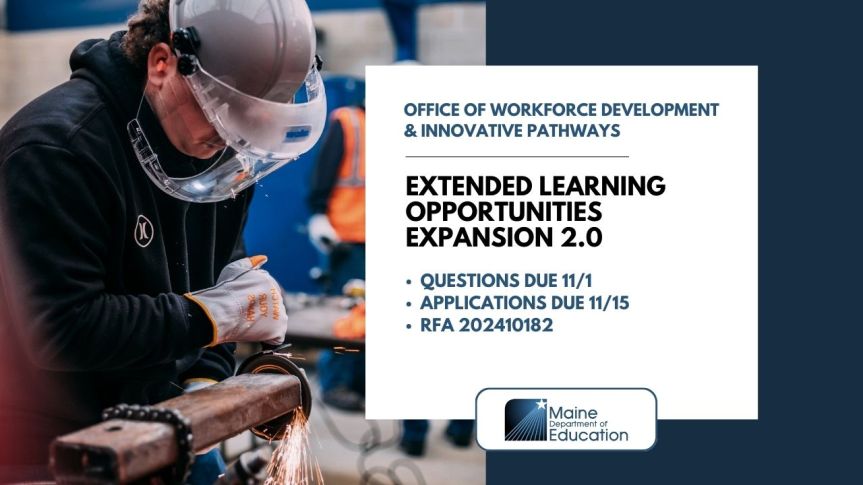
The 2024 ELO Expansion 2.0 Request for Applications (RFA), also known as grants or grant RFA, is available here. (See RFA 202410182.) Applications are due Friday, November 15, 2024.

The Extended Learning Opportunities team at the Maine DOE recently partnered with Black Fly Media to produce a short video that shows the impact of ELOs throughout the state. Watch the video below to hear from ELO coordinators, students, school leaders, and employers as they share about ELOs in their communities!

Celebrate Success, Foster Sustainability at the 2024 Maine ELO Summit!

Calling all Maine educators! Join your colleagues for the 2024 Maine ELO Summit, taking place on August 13th at the Brunswick Hotel. This year’s theme, “Celebrating Success, Fostering Sustainability,” promises an inspiring day filled with valuable insights and discussions on Extended Learning Opportunities (ELOs). The summit is open to all Maine school personnel and supporting partners. Registration and meals are fully covered by JMG with support from the Maine Department of Education (DOE).

What are ELOs?

ELOs are a form of micro-credentialing that allow students to earn academic credit through diverse, hands-on experiences outside the conventional classroom. They emphasize community-based career exploration and are highly personalized opportunities for students to:

  • Engage in learning in ways that resonate with them.
  • Connect their learning to everyday life in meaningful ways.

ELOs combine elements of academic instruction (projects, papers, presentations) with experiential learning (project-based learning, internships, job shadows).

The Value of ELOs:

  • Flexible: ELO experiences can be designed for in-person, remote, or hybrid settings, allowing schools to utilize their resources effectively.
  • Personalized: ELOs offer the chance to customize courses for students who need additional support, specific motivation, or excel in a certain area. They cater to individual learning styles.
  • Relevant: Every ELO connects real-life experiences with learning standards. This format translates to highly relevant and engaging content, often incorporating valuable career exploration.

2024 ELO Summit Highlights Not to Miss –

  • Student Stories: Be inspired by students sharing their firsthand ELO experiences!
  • Dynamic Workshops: Interactive sessions will feature microlearning opportunities followed by facilitated workshops to translate insights into actionable plans.
  • Engaging Discussions and Networking: Connect with your peers through panel discussions, networking receptions, and collaborative planning sessions.

Don’t Miss Out – Registration is Free!

Register today and be part of the exciting future of ELOs in Maine! For more information, including a full agenda for the day, please see the event flyer.


Maine Employer Summit Engages Youth to Tackle Workforce Challenges

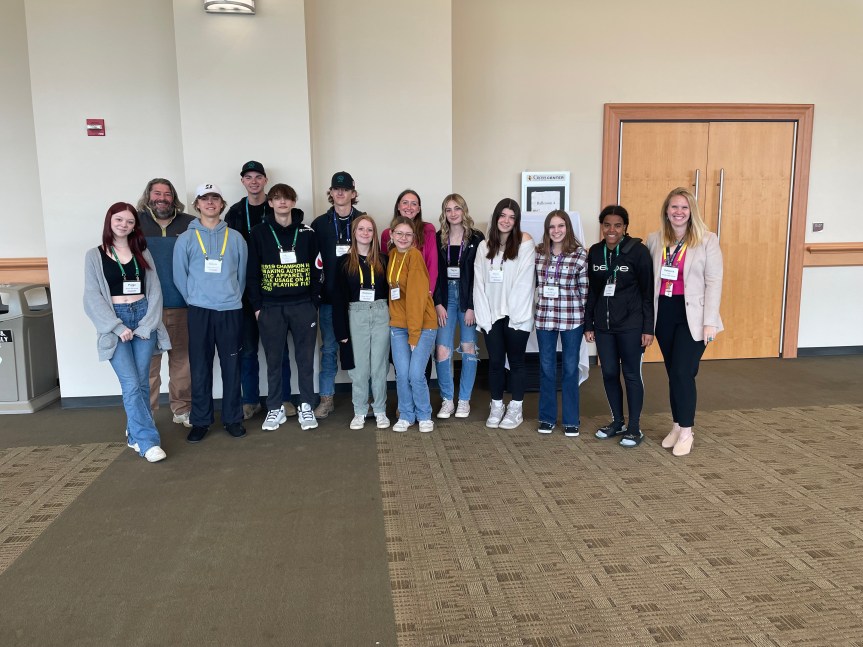
(Pictured: ELO Coordinator Kevin Napilillo and JMG Teacher and Career Counselor Becky Kash brought several Brewer High School students to the Summit. Three of the ELO students were featured as guest speakers on panels; two in construction ELOs and one in a teaching ELO.)

More than 500 employers and young people recently gathered at Bangor’s Cross Insurance Arena for the Maine Employer Summit. Hosted by the Maine Department of Labor and the Maine Department of Economic Development, the event provided a vital platform for employers seeking resources and solutions to pressing workforce challenges. Participants also had the opportunity to connect with young professionals, government agencies, State of Maine resources, and fellow business leaders to explore workforce opportunities.

During the event, there were several opportunities in which participants could engage in discussions on breaking down barriers to attracting, hiring, and retaining employees from diverse communities, sharing best practices, and fostering innovative solutions to create a more inclusive and sustainable workforce.

The Maine Department of Education (DOE) organized a panel on engaging local youth through work-based learning. This panel highlighted multiple forms of work-based learning, including extended learning opportunities, pre-apprenticeship to apprenticeship, and adult education, which includes integrated education and training. As an interactive component of the panel, JMG partnered with Maine DOE to facilitate a conversation with employers on implementing work-based learning into their place of business.

The event featured an Innovation Hall with companies offering job opportunities, virtual reality or live demonstrations, mock interviews, and resume help staffed by Adult Education Career Navigator Kate Points and College and Career Success Coordinator Audrey Kimball, among others with career expertise.

Breakout sessions also delved into strategies for creating more inclusive and sustainable workplaces. These discussions highlighted the importance of understanding and addressing the unique challenges faced by different demographic groups, including New Mainers, young and aging populations, people of color, individuals with disabilities, those seeking re-entry into the workforce and the LGBTQ+ community.

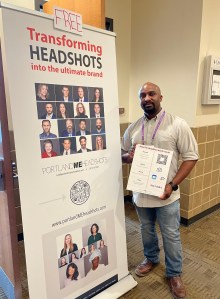
No cost headshots were offered to attendees during the sessions and the Innovative Hall.
No-cost headshots were offered to attendees during the sessions and at the Innovative Hall.

Several presentations and workshops showcased the latest innovations in workforce development. The emphasis was on practical solutions employers could implement to improve workforce dynamics.

Through the many interactive sessions, attendees shared their experiences, challenges, and successes, helping to identify effective practices that could be adopted by other organizations facing similar challenges.

The Maine Employer Summit emphasized the critical role that collaboration and innovation play in addressing workforce challenges. The event not only provided valuable resources and insights but also inspired attendees to think creatively about how to build a more inclusive and resilient workforce. The success of the 2024 Maine Employer Summit sets a positive precedent for future gatherings, ensuring that Maine remains at the forefront of innovative workforce solutions.

Mt. Ararat ELO Coordinator Partners with Local Credit Unions to Empower Tomorrow’s Financially Savvy Generation

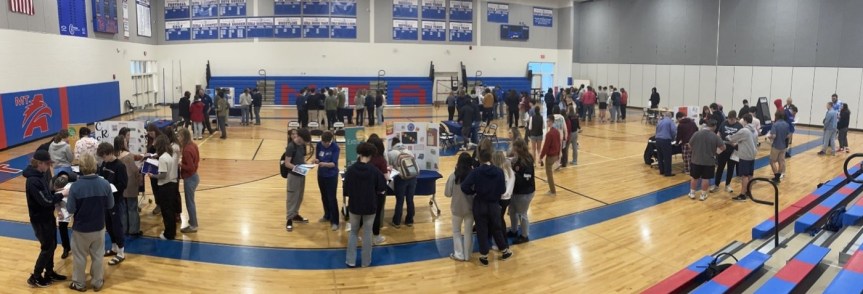
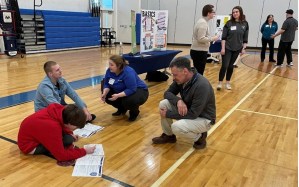
During financial literacy month in April, Doug Ware, the Extended Learning Opportunities (ELO) Coordinator at Mount Ararat High School, hosted a Financial Fitness Fair for the junior class.

Doug Ware, ELO Coordinator at Mt. Ararat engages with a student working on their financial fitness packet. Around them credit union representatives talk with students about financial literacy.

The school gymnasium buzzed with energy as students navigated through booths and interactive activities. Each station provided a hands-on learning experience related to finances. Students experienced a simulation of their future monthly budget based on their career of interest and gained valuable insight into possible financial challenges they may face in adulthood. The goal for the students was to pay for all of their monthly expenses but without paying more than they earn each month.

“Students have really enjoyed the Financial Fitness Fair events,” said Ware. “They report to have learned much about building credit, managing budgets, prioritizing expenses, and planning for the long term.  We are working to ensure that all Mt. Ararat high school students graduate with at least basic financial literacy.”

“This is one of the most enjoyable aspects of working for a credit union,” said Jennifer Anderson, Senior Vice-President of Retail Services at Five County Credit Union and President of the Jeannette G Morin Credit Union Chapter. “I love the fact that multiple credit unions from around the state work together regularly to volunteer at our local high schools and talk to students about budgeting while also sharing our industry knowledge and advice with them. Even though we are each other’s business competition, we believe so strongly in the philosophy of people helping people and financial well-being for all that we bind together as Maine’s credit union industry to bring these events to our communities.”

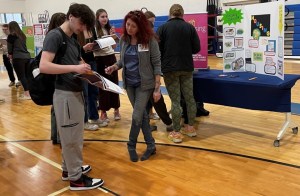
Credit union volunteers discuss housing options with students based on their income.

Incorporating financial literacy into secondary education is crucial in equipping youth with the skills and knowledge needed to navigate the complex world of personal finance. This is an opportunity to instill confidence and empower students to take control of their financial futures.

Credit union volunteers host Financial Fitness Fairs at no cost to schools. Jake Holmes, Director of Outreach and Financial Education at the Maine Credit Union League, shared how, collectively, credit union volunteers have hosted Financial Fitness Fairs for nearly 73,000 Maine students since the program’s inception in 2004. Credit unions that serve the same geographic regions work together to host these money management events.

One of the most popular stations was the “Life Happens” booth, where students could spin a wheel, and the arrow would land on an unexpected life event, ranging from dental work to a car accident. This exercise highlighted the importance of living within one’s means and prioritizing financial goals.

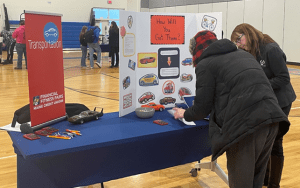
Credit Union Volunteers help students assess the transportation options based on their budgets.

By participating in these fairs, students gain a deeper understanding of the importance of financial responsibility and the long-term implications of their financial decisions. They learn to make informed choices about future savings, avoid debt pitfalls, and plan for major life expenses like college or homeownership.

Financial fitness fairs empower high schoolers to build a solid foundation for their financial well-being and can help set them on a path toward a more secure future.

ELO Coordinators like Doug Ware provide broad connections to the community and hands-on learning experiences for their schools. This event is one example of the immersive educational events that ELO Coordinators across the state help to provide.

Students take a break from the interactive booths to assess their budgets.

“I have worked to support credit-bearing ELO experiences such as internships, independent studies, and work-based studies,” explained Ware. “I have also made an effort to connect students to unique learning opportunities that enhance the great work that is already happening in our classrooms. Many such opportunities arise from relationships that we have developed with members of our business and non-profit communities. The Financial Fitness Fair is one such example. We feel very fortunate to have incredible partners like Jennifer Andersen, Jake Holmes, and their team of generous volunteers from Maine Credit Unions. Their engagement with students has such an important impact. I also credit the Mt. Ararat staff and administrative team. Our school community places value on these enriching experiences, and many are willing to pitch in when needed to make things happen!”

This month, at Nokomis High School, ELO Coordinator Kristine Eisenhour has arranged a Financial Fitness Fair for their students and others are in the planning stages. Mount Ararat High School and Nokomis High School were both awardees of Maine Job and Recovery Plan grants totaling more than $5.6 million, supporting 26 programs across Maine covering 13 counties. In a world where financial literacy is more important than ever, ELO Coordinators and their communities are helping to pave the way for a brighter tomorrow.

Learn more about Financial Fitness Fairs.

Learn more about the Maine Jobs Recovery Plan.

Learn more about ELOs in Maine or reach out to Lana Sawyer at lana.sawyer@maine.gov.