Lewiston Public Schools Expands Access to Music for All Students Through Title IV, Part A Funding

Lewiston Public Schools (LPS) is striking a new chord in terms of student engagement and equity. Through a strategic Title IV, Part A investment, the district has transformed its instrumental music program, ensuring that every student—regardless of financial circumstances—has access to the joy and opportunity of music education.

Title IV, Part A of the federal Elementary and Secondary Education Act (ESEA) provides funding through the Student Support and Academic Enrichment Program to help schools boost student success by expanding access to quality educational tools, enriching learning experiences, and supportive conditions—especially for vulnerable learners.

LPS has long recognized the power of music to inspire, connect, and engage students. Music education offers more than just technical skill; it provides a creative outlet for self-expression, supports emotional well-being, and fosters a sense of community through collaboration and shared performance. These benefits have made music a key part of Lewiston’s broader effort to foster student engagement and belonging across all grade levels.

For many years, however, access to instruments stood in the way. Even as interest in band and orchestra grew among students, limited resources for purchasing, repairing, and maintaining instruments meant that many students simply couldn’t participate. The COVID-19 pandemic further strained participation, creating inequities that risked shrinking music programs across the district.

To meet this challenge, LPS launched a districtwide initiative, supported with federal Title IV, Part A funding administered through the Maine Department of Education (DOE), to expand and enhance instrumental music opportunities. The $131,000 investment provided new instruments and supplies, effectively eliminating waitlists and making it possible for every interested student to participate. The result has been a dramatic and joyful increase in participation.

Zach Lampron, LPS elementary band program director, shared the impact: “I always knew that Lewiston students were hungry for music, and at the same time, I understood that access to instruments has become increasingly challenging each passing year. After just one year with the new instruments, our middle school band has grown from fewer than 20 players to just over 50 players! Our elementary band has just over 150 students involved, using every last instrument I’m able to loan out. The elementary strings program has about 300 students signed up this fall! It’s absolutely amazing to see so many of our students, who once thought this activity out of reach, making music this year.”
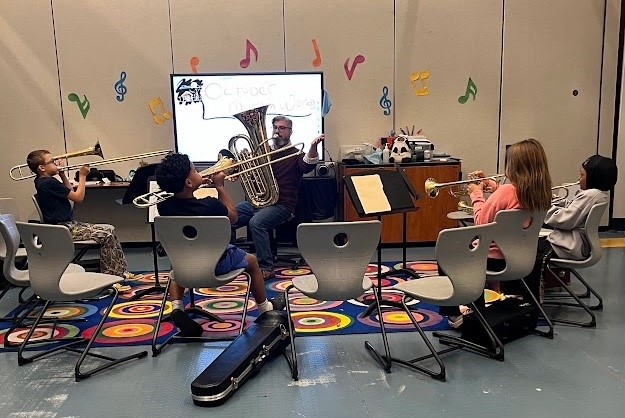
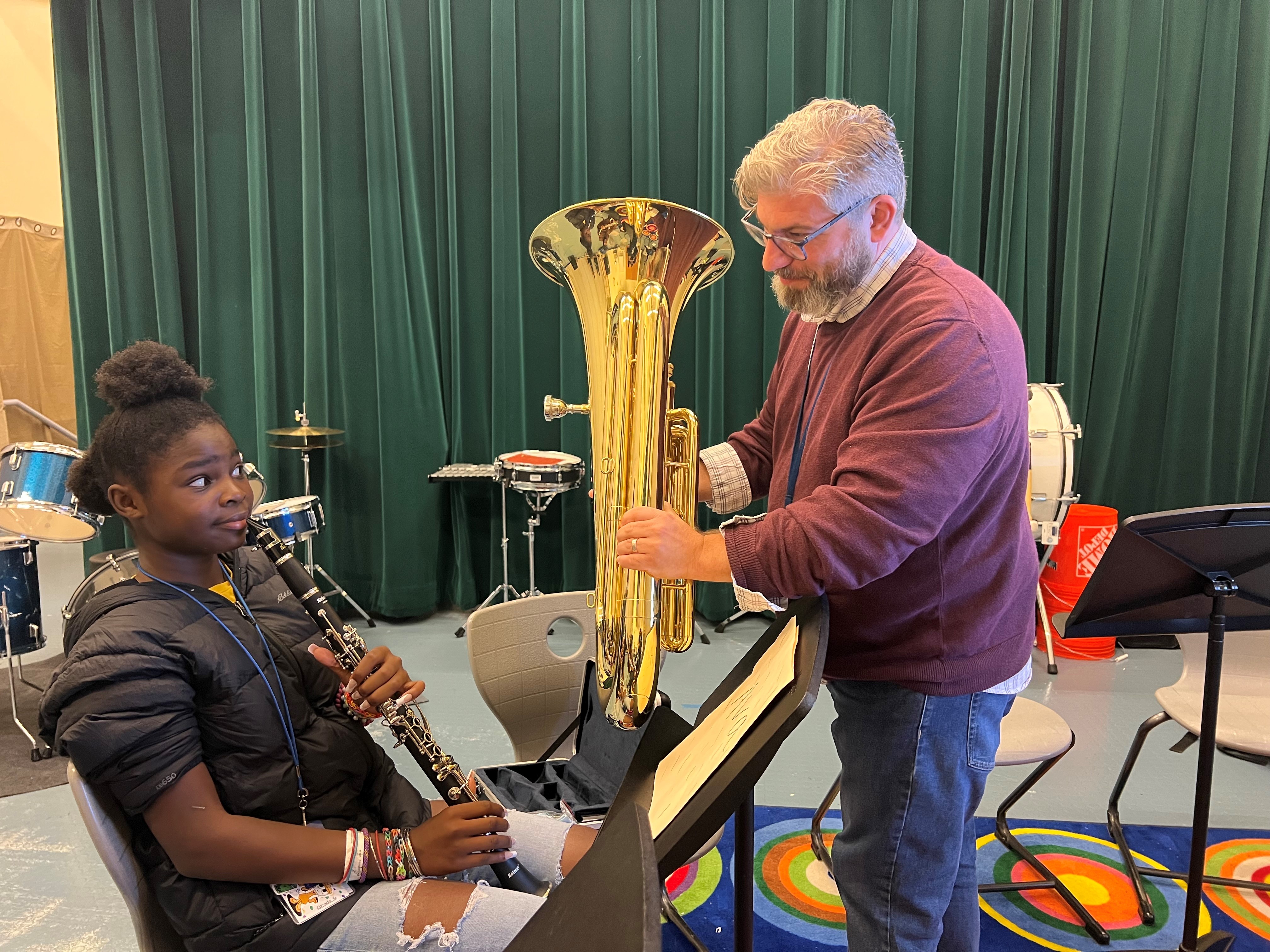
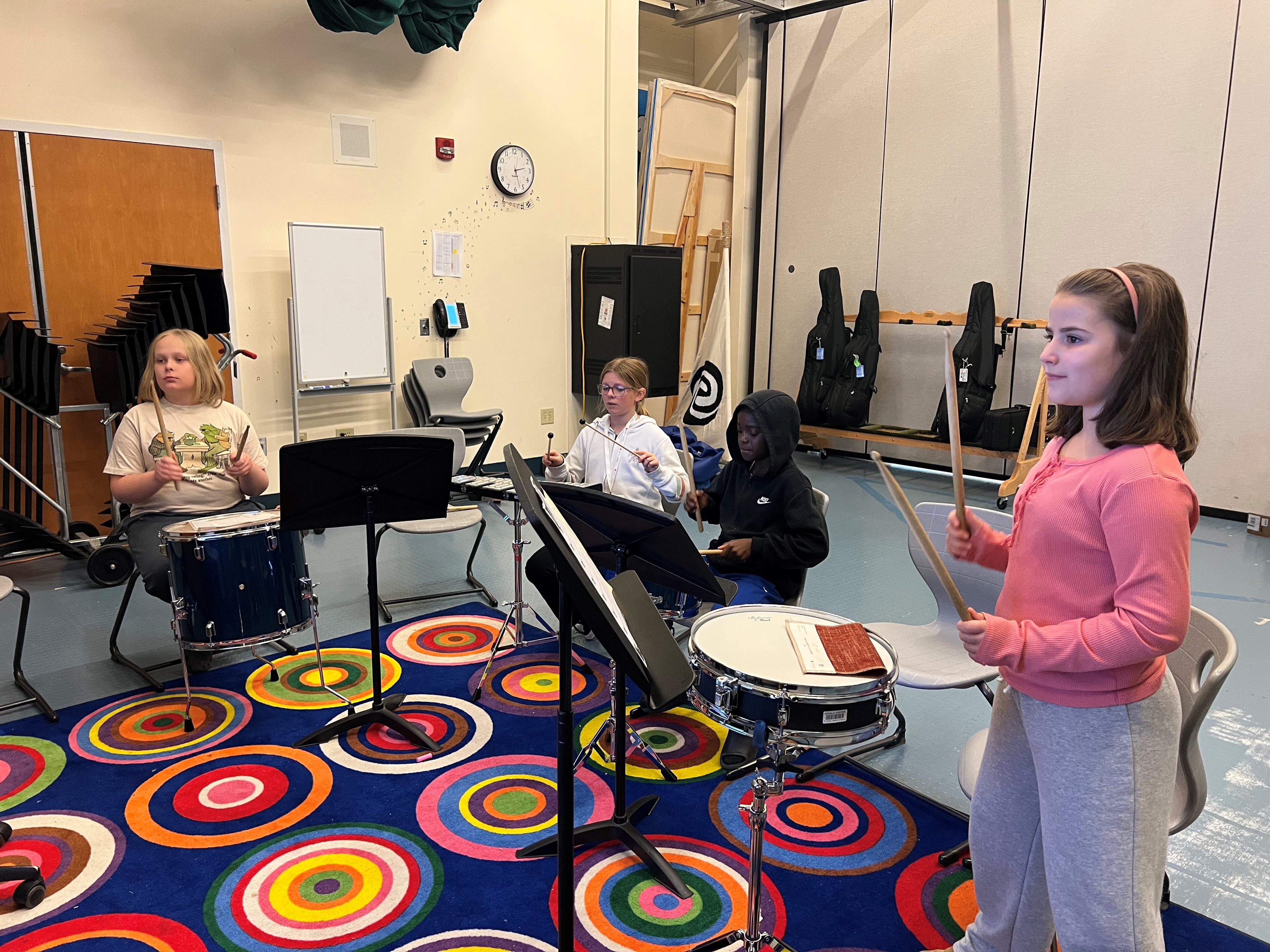
The numbers tell a powerful story. Band participation has more than doubled—rising from 65 students to 135, while string participation has increased from 90 to 161 students. Parent and family engagement has also grown significantly, with record attendance at concerts and performances, creating a stronger sense of community pride.

Through this initiative, LPS has removed longstanding barriers to participation and opened new pathways for students to discover their talents and build confidence. By investing in equitable access to music, the district is investing in the whole child—supporting creativity, connection, and lifelong learning.

Every student deserves the chance to make music—and in Lewiston, that dream is now a reality.

This story was submitted by Lewiston Public Schools. To submit a good news story to the Maine DOE, please fill out the good news submission form.

Maine DOE Seeking Public Comment for a Tydings Amendment Waiver of FY24 ESEA Funds and FY25 Carryover of Excess Title I, Part A Funds

Pursuant to the authority granted under Section 8401(b) of the Elementary and Secondary Education Act (ESEA), the Maine Department of Education (DOE) intends to apply for a Tydings Amendment waiver and a Title I Carryover of Excess waiver from the U.S. Department of Education (USED). As required, the Maine DOE is seeking public comment from February 24 to March 14, 2025, on the request to waive the period of availability for ESEA funds and Title I, Part A carryover limitations. This public comment period has been extended for longer than 15 days, acknowledging the return from February break.

Maine will be seeking:

  • A Tydings Amendment waiver from Section 421(b) of the General Provisions Act to the USED. The Tydings Amendment waiver seeks an extension to the availability of Federal Fiscal Year 2023/State Fiscal Year 2024 ESEA funds. Programs affected by this waiver include:
    • Title I, Part A of the ESEA (Improving Basic Programs Operated by Local Education Agencies [LEAs]), including the portions of the state education agency’s (SEA) Title I, Part A award used to carry out Section 1003 school improvement, Section 1003A direct student services, if applicable, and Title I, Part D, Subpart 2.
    • Title I, Part B of the ESEA (State Assessment Formula Grants).
    • Title I, Part C of the ESEA (Education of Migratory Children).
    • Title I, Part D, Subpart 1 of the ESEA (Prevention and Intervention Programs for Children and Youth Who Are Neglected, Delinquent, or At-Risk).
    • Title II, Part A of the ESEA (Supporting Effective Instruction).
    • Title III, Part A of the ESEA (English Language Acquisition, Language Enhancement, and Academic Achievement).
    • Title IV, Part A of the ESEA (Student Support and Academic Enrichment Grants).
    • Title IV, Part B of the ESEA (21st Century Community Learning Centers).
    • Title V, Part B, Subpart 2 of the ESEA (Rural and Low-Income School Program).
    • McKinney-Vento Education for Homeless Children and Youth Program.
  • A carryover limitation waiver from Section 1127(a) of the Elementary and Secondary Education Act of 1965, as amended for Federal Fiscal Year 2024/State Fiscal Year 2025 Title I, Part A funds. The carryover limitation waiver seeks to waive the requirement that limits the Maine DOE’s ability to grant to its LEAs a waiver of the 15-percent Title I, Part A carryover limitation of more than once every three years.

The Maine DOE must solicit and respond to public comments on its waiver request, as well as provide evidence of the available comment period. As the Maine DOE moves forward to provide as much flexibility as possible, and continued support for expending ESEA federal funds, comments may be submitted to Shelly Chasse-Johndro at shelly.chassejohndro@maine.gov.

Bucksport Eighth Graders Unplug and Help Out During Camping Trip at Birch Point Beach State Park

(Bucksport eighth graders had the opportunity to watch the aurora borealis over the ocean.)

This May, eighth graders from Bucksport Middle School left the screens behind for a weekend of learning and service at Birch Point Beach State Park in Owls Head. Miles Bisher, Bucksport Middle School’s social studies teacher and outdoor club advisor, brought his students out as part of the Teens to Trails’ Life Happens Outside® Challenge, one of the Maine Outdoor Learning Initiative’s 2024 programs.

The Maine Outdoor Learning Initiative is a state-wide effort to increase access to engaging, hands-on outdoor experiences and career exploration for middle and high school students throughout the state. Since its creation in 2022, the program has brought thousands of students on outdoor adventures inspired by educators like Bisher.

“When I was in high school, my outing club advisor took our club on extended camping trips, and those experiences had a profound impact on my life by exposing me to new experiences outside with peers, in settings that would challenge me physically and mentally, and allow me to grow as a person and develop some resiliency and adaptability in the face of adversity. I wanted to offer a similar experience to my 8th graders,” explained Bisher. “Additionally, the prevalence of screen time and phone/social media usage for teens has skyrocketed, while teen time spent outside and synchronous, in-person time with friends has plummeted, and I wanted to show students the innumerable benefits of flipping those two trends.

Teens to Trails Program Manager Samantha Andrews accompanied the group from Bucksport on their trip. Teens to Trails is a nonprofit organization whose mission is “connecting Maine teens to life-changing experiences.” Their Life Happens Outside® Challenge is a weeklong competition for middle school communities. To compete in the challenge, students track every minute spent outside – whether on a dedicated trip like Bisher planned or doing everyday actions like walking the dog or taking out the trash. The challenge takes place May 10-17, and at the end of the week, the eight schools with the most outside minutes logged win $1,000 to apply to future outdoor activities.

“Teens to Trails hears from healthcare experts, parents, and teachers that teenagers feel better on the inside when they spend time outside,” said Executive Director Alicia Heyburn in a recent press release. “We heard so many amazing stories from students and faculty about the positive impact spending a week outdoors can have.”

Bucksport students were a testament to this effort: “I felt like I didn’t need my phone even after we left and felt better and more in the present,” said one student. It made me feel so much better. I felt more energized and like I had time to do things again,” said another. I had some of the best nights of sleep I’ve had in a long time.”

This is Teens to Trails’ first year working with the Maine Outdoor Learning Initiative, and the Challenge is just one of four free programs they are offering students. The initiative, created by the Maine Department of Education, was born from a promise made during Governor Mill’s 2022 State of the State Address to provide children with more opportunities to learn about and explore Maine’s natural beauty and resources after two years of the pandemic.

“Teens to Trails and Bucksport Middle School are grateful to Maine Outdoor Learning Initiative for supporting a student opportunity to enjoy a weekend of coastal camping. The experience also marked the first overnight trip for this great group of middle schoolers,” said Jennifer Hazard


During their trip, Bucksport Middle School students worked together to complete many important projects, such as cleaning up debris on Birch Point Beach State Park’s trails, replacing picnic tables, and burning branches off fallen trees. There were also opportunities for fun, such as exploring Owls Head Lighthouse and hiking Mt. Megunticook. Students were even lucky enough to watch the colors of the Northern Lights reflect over the water. Experts from the Maine Bureau of Parks & Land visited on Saturday evening to teach students about the solar system and constellations and allowed them to see the moon through a high-power telescope.

When asked about their favorite parts of the trip, students most noted their appreciation for being away from technology and, of course, the best part of any camping trip: s’mores.

“The air in the morning with the ocean a bit away and the smores and the energy that came along with it,” one student told Bisher about their favorite part of the trip.

Another noted, “It was probably one of the best camping experiences that someone could experience. I felt like I always had something fun going on, and it was nice talking to people I usually wouldn’t.”

Bucksport middle schoolers can identify the importance of engaging with nature. “Outdoor experiences like this are important for teenagers because they don’t realize how fun or relaxing it is to do these things until they actually do it,” explained one student, “we are constantly on our phones and so disconnected from the real world. Most kids don’t get to have that experience.”

Bisher agrees with the sentiment: “Outdoor education and experiences are not just important but absolutely critical for the holistic development of children and adolescents. Kids need to take risks, be challenged, face and overcome adversity, learn to be adaptable and flexible, disconnect from screens and the online world, and reconnect with the physical world of nature with their friends. Everything is more real and authentic outside, and students need that, now more than ever.”

There are still dozens of free Maine Outdoor Learning programs happening this summer. If you or a student you know is looking for a fun way to spend the summer outside, please visit our searchable program table by tapping or clicking here.

The Maine Outdoor Learning Initiative was created with Federal Emergency Relief Funding and is a part of Maine’s Whole Student Pandemic Response. Please visit the Maine DOE Website to learn more about Whole Student Pandemic Response and the many other programs that make it up.

Media Release: Maine DOE and Live and Work in Maine Launch New Phase of Nationwide “Live and Teach in Maine” Campaign

Second Year of Multifaceted Campaign Utilizes the Voices of Maine Teachers and Includes Targeted Advertising and Events to Recruit and Support a Vibrant Educator Workforce in Maine

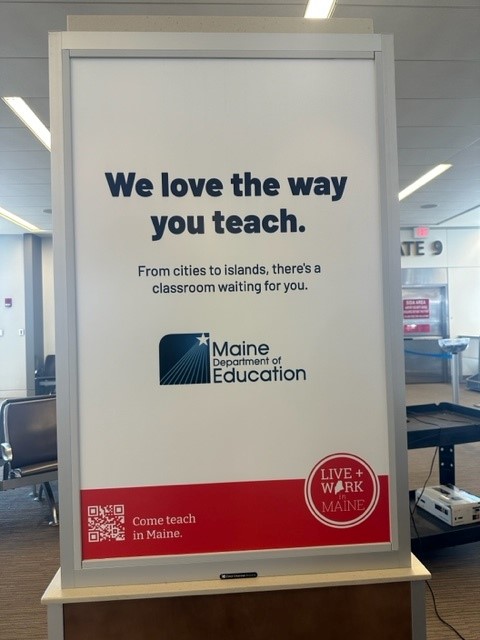
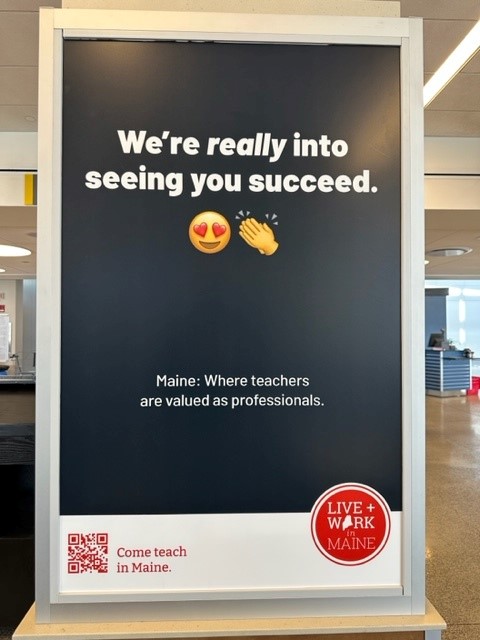
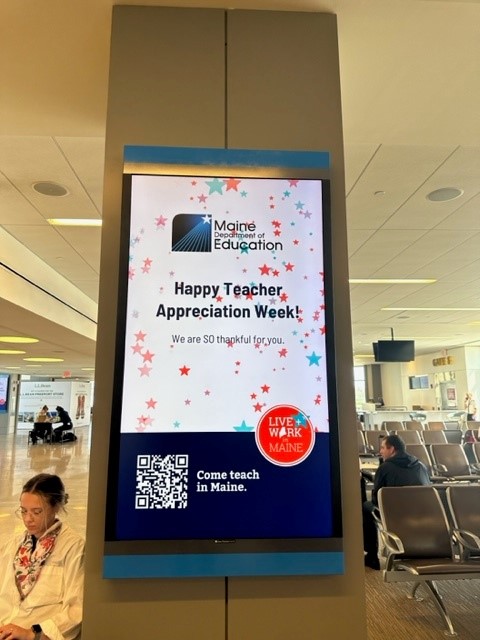
To kick off Teacher Appreciation Week, the Maine Department of Education (DOE) and Live and Work in Maine joined teachers and education supporters to launch the second year of their Live and Teach in Maine campaign. At an event at Portland International Jetport, Live and Work and the Maine DOE unveiled new Jetport ads that highlight the unique benefits of teaching and schools in Maine.

The Jetport ads are part of a multifaceted campaign to attract educators and strengthen the education profession. The Live and Teach in Maine campaign includes a highly targeted advertising effort, videos highlighting Maine teachers, access to the Live and Work job board for all schools, and events across Maine to highlight education as a rewarding profession and connect and celebrate educators. The partnership between Live and Work in Maine and Maine DOE seeks to attract new educators to Maine’s public education system and elevate and celebrate the many outstanding teachers in our classrooms right now.

“Maine is an amazing place to live and an extraordinary place to teach, and we’re proud to partner with Live and Work in Maine to reach new audiences, highlight Maine educators talking about why they love teaching in Maine, and connect people with opportunities to join the teaching profession,” said Maine Education Commissioner Pender Makin. “If you’ve ever thought of teaching in Maine schools, now is the time. We’re a state that deeply values and respects the creativity, autonomy, and professional judgment of our educators and school leaders.”

“Maine has long been celebrated for the quality of our public schools. This campaign aims to amplify the incredible work of educators who are already making a difference here and to use their success to encourage others to bring their careers and passion to Maine,” said Live and Work in Maine Executive Director Nate Wildes. “We are particularly excited about this project because of the wealth of positive marketing material at our disposal—from the exceptional quality of our public schools to the relatively low cost of living compared to regional urban centers, there are abundant reasons for skilled educators to consider upgrading to Maine.”

“Maine isn’t just a place to work—it’s a place to live, thrive, and make a difference. With its outstanding education system, breathtaking natural beauty, tight-knit communities, and high quality of life, Maine offers educators the perfect blend of professional fulfillment and recreational fulfillment,” said Maine 2024 Teacher of the Year Joshua Chard. “So why wait? There are amazing teaching positions waiting for you. Join us in Maine, where every day is an opportunity to inspire, educate, and explore.”

“As an educator, I feel blessed to be at a school that honors my autonomy and voice, and provides me with an opportunity to try new things and have fun with my students,” said 2023 York County Teacher of the Year Lisa Tripp. “As Maine educators, we also have the most incredible resource to share with our students—our beautiful nature.”

“The Maine Department of Education is proud to partner with Live and Work in Maine for a second year of our Live and Teach in Maine campaign,” said Maine Department of Education Deputy Commissioner Dan Chuhta. “As we begin Teacher Appreciation Week, I want to extend our sincere thanks and deep appreciation to all of the teachers in our state for the extraordinary work you do to help children thrive. And to anyone thinking about becoming a teacher, whether you are in college right now or considering a change in career, now is a great time to join our profession.”

Maine, like most of the nation, continues to experience an educator shortage that was exacerbated by the pandemic. This partnership builds on the Maine DOE’s wide-ranging efforts to recruit, retain, and support a vibrant educator workforce and leverages Live and Work in Maine’s knowledge and expertise as the state’s premier organization devoted to attracting and retaining Maine’s workforce.

During the first year of the Live and Teach in Maine campaign, there were more than 22 million impressions of the digital ads featuring teachers talking about how great it is to live and teach in Maine, nearly 2 million people engaged with the Live and Teach in Maine website, nearly 64,000 people viewed education jobs, and nearly 2,000 applied for teaching jobs. The campaign also featured physical advertising on subways in major cities, mobile billboards, and teacher-specific ads on college campuses. The Maine DOE also reported that more individuals sought teacher certifications last year than before the pandemic.

The campaign is funded through federal emergency relief funds to build and sustain Maine’s educator workforce following the pandemic.

Maine Department of Education Launches Maine’s Whole Student Pandemic Response Page

The page showcases programs created with Federal Emergency Relief Funding and elevates the voices of the educators and students they support.

The Maine Department of Education (DOE) has launched a new webpage to showcase how the Maine DOE used federal emergency relief funding to invest in Maine’s Whole Student Pandemic Response. The effort highlights the initiatives the DOE created with federal funding and the impact on students, educators, schools, and communities. View the new webpage here.

A circle with a thick navy outline and a picture of students hands on top of one another over snow.The Maine Department of Education (DOE) prioritized a Whole Student Approach using federal emergency relief funding to help students, educators, and schools respond and recover from the COVID-19 pandemic. The DOE’s Whole Student Approach was developed in partnership with educators, administrators, parents, students, and educational organizations. It seeks to create vibrant school environments where all students are safe, healthy, supported, engaged, challenged, and prepared. Together, these six tenets form the foundation for students’ success in school, life, careers, and as citizens of our great state.

The DOE has invested federal emergency relief funding in efforts to bolster literacy, provide hands-on outdoor learning opportunities, expand engaging project-based learning, bring interdisciplinary computer science education to every Maine school and grade level, expand pre-k, support student and educator wellbeing, ensure safe and healthy schools, and so much more.

The new landing page on the Maine DOE website features descriptions of the programs the Maine DOE created with federal emergency relief funding and stories from educators, students, and schools showcasing the impact of the programs and the continued efforts to support schools with the lingering impacts of the pandemic. The webpage includes details on the total federal emergency relief fundingA large circle with a thick navy line around it, and a picture of students working at their desks wearing masks . received by the Maine DOE and links to a federal relief funding dashboard featuring reimbursements made to school administrative units (SAUs) for their pandemic-related investments.
 

The Maine DOE will continue to update Maine’s Whole Student Pandemic Response page to feature how emergency relief funding continues to be used to support students, schools, and educators in Maine. We will also feature how schools and SAUs have used the funding they received.

Click Here to Visit Maine’s Whole Student Response Page

If you have a story of how your school or SAU used Federal Emergency Relief Funding, please share it here. We’d love to feature your efforts.

American Rescue Plan Act (ARP) funding supports Maine’s Whole Student Pandemic Response efforts.


Maine DOE Seeks Public Comment for a Tydings Amendment Waiver of FY23 ESEA funds and FY24 Carryover of Excess Title I, Part A Funds

Pursuant to the authority granted under section 8401(b) of the Elementary and Secondary Education Act (ESEA), the Maine Department of Education (DOE) intends to apply for a Tydings Amendment waiver and a Title I Carryover of Excess waiver from the U.S. Department of Education (USDOE).  As required, the Maine DOE is seeking 15 days of public comment from March 22, 2024 – April 6, 2024, on the request to waive the period of availability for Elementary & Secondary Education Act funds. and Title I, Part A carryover limitations.

Requirements from which Maine will be seeking a waiver include:

  • A Tydings amendment waiver from Section 421(b) of the General Provisions Act to the U.S. Department of Education (USDOE). The Tydings amendment waiver seeks an extension to the availability of Federal Fiscal Year 2022/State Fiscal Year 2023 Elementary and Secondary Education funds. Programs affected by this waiver:
    • Title I, Part A of the ESEA (Improving Basic Programs Operated by LEAs), including the portions of the SEA’s Title I, Part A award used to carry out section 1003 school improvement, section 1003A direct student services, if applicable, and Title I, Part D, Subpart 2
    • Title I, Part B of the ESEA (State Assessment Formula Grants)
    • Title I, Part C of the ESEA (Education of Migratory Children)
    • Title I, Part D, Subpart 1 of the ESEA (Prevention and Intervention Programs for Children and Youth Who Are Neglected, Delinquent, or At Risk)
    • Title II, Part A of the ESEA (Supporting Effective Instruction)
    • Title III, Part A of the ESEA (English Language Acquisition, Language Enhancement, and Academic Achievement)
    • Title IV, Part A of the ESEA (Student Support and Academic Enrichment Grants)
    • Title IV, Part B of the ESEA (21st Century Community Learning Centers)
    • Title V, Part B, Subpart 2 of the ESEA (Rural and Low-Income School Program)
    • McKinney-Vento Education for Homeless Children and Youth Program
  • A carryover limitation waiver from Section 1127(a) of the Elementary & Secondary Education Act of 1965, as amended for Federal Fiscal Year 2023/State Fiscal Year 2024 Title I, Part A funds. The carryover limitation waiver seeks to waive the requirement that limits the Maine DOE’s ability to grant to its local educational agencies (LEAs) a waiver of the 15 percent Title I, Part A carryover limitation of more than once every three years.

The Maine DOE must solicit and respond to public comment on its waiver request as well as provide evidence of the available comment period.  As the Maine DOE moves forward to provide as much flexibility as possible and continued support for expending ESEA federal funds, comments can be submitted to:  Janette.Kirk@maine.gov

Mt. Blue High School Eases the Ninth Grade Transition with BARR

(Through BARR, Mt. Blue High School students McKylee and Kenzee developed a strong bond with their ninth-grade counselor and BARR Coordinator, Anna Peterson, that continued into their sophomore year.)

For five years, Mt. Blue High School in Farmington has used the BARR (Building Assets Reducing Risks) model to ease ninth graders into high school. As a result, they have seen increased attendance, lower failure rates, and stronger bonds between educators and students and among educators.

“Freshmen have always been a demographic of students who have struggled,” said ninth-grade Earth Science teacher Kerry Schlosser, “I think BARR leads to just an additional level of support. Especially when you go from middle school to high school, it’s such a vulnerable year, a vulnerable time.”

The ninth-grade educator team at Mt. Blue know their students deeply. They greet them by name in the hall, know who their best friends are, and their dreams for the future. BARR helps facilitate those strong relationships.

Mt. Blue High School is one of more than 70 schools across Maine implementing BARR. Last summer, the Maine Department of Education (DOE) provided an opportunity for any school in the state to become a BARR school and join schools like Mt. Blue that have been experiencing incredible success through BARR.

BARR is a model that combines relationship building (staff to staff, staff to student, and student to student) and real-time data to enable schools to strengthen academic outcomes and wellbeing for all students. By building strong relationships with students and fellow educators, teachers can work together to support the whole student.

Educator teams meet in Block Meetings, where they discuss each student individually, focus on their strengths and connections to school, share personal knowledge and observations (e.g., a student’s mental health, family life, goals, etc.) and analyze benchmark data (e.g., grades, attendance, behavior, etc.).

Schlosser explains how Block Meetings work at Mt. Blue.

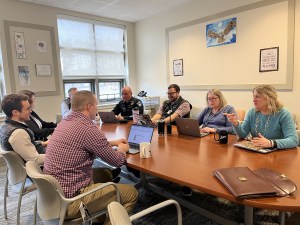
Mt. Blue's Community Connect meeting is where educators and school community members meet to discuss at-risk students. Mt. Blue educators and school community members sit around a conference table talking about BARR with laptops in front of them.
Mt. Blue’s Community Connect meeting is where school community members meet to discuss at-risk students.

“We have a Big Block at the end of the week where we discuss students as a big team with the administrator, school counselor, and social worker. Then, at the beginning of the week, we have our Small Block meeting, where we as teacher teams and then discuss students and small interventions there,” she said.

Students whom educators identify as at risk are discussed in Community Connect meetings, which involve greater school community members including school resource officers and administrators. At Mt. Blue, they hold weekly Community Connect Meetings, which include Peterson, the ninth-grade Assistant Principal Greg Henderson, school social workers Angelica Levy and Jack Turner, school nurse Vicky Gerstenberger, special education building coordinator Mike Hanson, and school resource officer Matt Brann. During their meetings, the Community Connect team develops strategies to intervene and limit poor behaviors before they result in a suspension.

Makylee, a sophomore, feels that the support she got through BARR in ninth grade set her up to have better relationships with her sophomore teachers.

“Teachers talk and have meetings. They let each other know how you are as a student, so you don’t have to go in as a fresh start,” she shared. “Then, your bond just increases to grow.”

These positive relationships with educators are built during I-Time. Much like Block and Community Connect Meetings, I-Times can vary from school to school. At Mt. Blue, each ninth-grade teacher has twenty freshmen they see during multiple I-Times. I-Times involve everything from relationship building activities to life skills development. Most importantly, these I-Times allow students to meet and bond with peers and teachers, and students are able to bond on a deeper level.

“Not only did your teachers get to know you, you got to know them, and you bonded as a class and a community,” Makylee said.

Before investing in BARR, Mt. Blue saw consistently high suspensions and low attendance rates.

“The year before BARR, suspensions were through the roof, and there were a lot of different behaviors,” remembers Joel Smith, the Mt. Blue Principal. “Hearing that BARR had an impact on academics, attendance, and behavior, that was appealing…especially the behavioral component, and we’ve seen a difference since then.”

Since starting BARR, Mt. Blue’s suspension rates have gone down, their attendance is up, and the failure rate was below five percent in the first semester of the 2023-2024 school year.

“Our failure rate, since implementing BARR, has gone down each and every year,” said Smith.

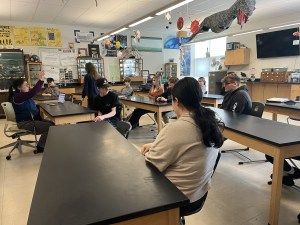
Mt. Blue BARR Students sit in a science classroom at long black lab desks, facing the front of the room where a teacher sits in front of a laptop talking to them.
Dr. Patricia Millette teaches her ninth-grade I-Time students about using critical thinking to decipher manipulative advertisements.

Outside of the data and inside the classroom, educators are experiencing those positive trends firsthand and they are sustained past freshman year. Sophomore English teacher Meadow Sheldon, who has been teaching at Mt. Blue since before BARR was implemented, sees a real difference in her post-BARR sophomores.

“They work hard, and they can advocate for themselves,” Sheldon conveyed. “They have an understanding of what [their grades]  mean and ask for help more than students have in the past.”

What’s more, students feel better about being at school. Quinn, a freshman, found school unappealing up until this year. Now, he is an honor student who is close to his teachers.

“It feels like the school actually treats me like a person instead of like a kid,” he said.

Peterson is immensely proud of the ninth-grade team’s work with BARR.

“I love the way that we take care of every ninth-grade student. We notice if their grades are slipping if they’re absent, or if there is a problem,” he said.

Smith and Peterson hope to see the BARR model extended to the entire high school someday.

“We are looking at opportunities whenever possible to implement the BARR model,” said Smith.

Interested in becoming a BARR school? Attend this BARR webinar coming up:

Applications are now open to all willing and qualified public schools that would like to become a BARR (Building Assets, Reducing Risks) school. Click here to apply. Applications are due by March 22, 2024 by 5:00pm EST.

The Maine DOE will cover all costs of implementing the program for schools new to BARR for the 2024-2025 school year. (Note: if you are already a BARR school with an existing contract, your costs will be covered for the 2024-2025 school year as well and you do not need to reapply.)

The Maine DOE used American Rescue Plan funding to create a competitive BARR grant to help schools invest in the model.

Maine Outdoor Learning Initiative: Maine Students’ Forestry and Recreation Careers Blossom Thanks to Friends of Katahdin Woods and Waters Summer Program 

Friends of Katahdin Woods and Waters, in partnership with the Katahdin Learning Project and numerous local outdoors-oriented organizations, facilitated multiple summer experiences for 217 youth grades 6-12 from the Katahdin Region and beyond this summer as part of the Maine Outdoor Learning Initiative. 

The Maine Outdoor Learning Initiative was launched by the Maine Department of Education in 2022 at the request of Governor Mills with the goal of expanding student access to hands-on, immersive experiences allowing them to explore while learning in Maine’s beautiful bounty of natural resources. Summer 2022 focused on coastal education and career exploration opportunities; this year the Initiative was expanded to include inland forestry opportunities. More than 1,000 middle and high school students participated in programs across Maine this past summer.  

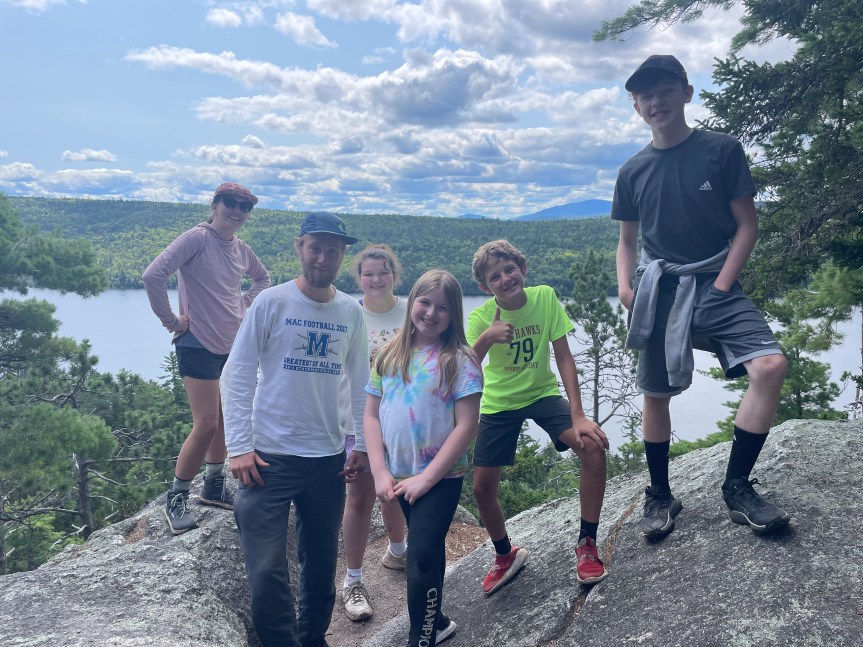
Through the programs offered by the Katahdin Learning Project, a program of the Friends of Katahdin Woods and Waters, career development conversations took place during hiking, camping, paddling, and mountain biking trips across the region. During their excursions, students got to experience hiking, biking, fishing, camping, outdoor cooking, canoeing, wading, stargazing, team building, plant identification, career discussions, fire-starting, and more!   

After spending time outdoors engaged in these activities, one student remarked, “I make better decisions, my brain feels much more clear. I’ve started to ride my bike. And you get to appreciate nature and see beautiful views.” 

Pictures from a day hike this summer:

During their summer programs, students also engaged in career-related conversations with Maine professionals from logging and outdoor recreation businesses and nonprofits, exposing them to multiple support networks, and enabling them to understand possible next steps in their forestry or recreation careers. 

“I truly have learned a lot, and I’ve been able to reflect on my abilities, passions, hobbies, and think about exactly what career would fit me best,” said one high school participant. “I have never thought about a future career path in that sense before.” 

“Students have formed lifelong connections to their place and the people in it,” said Kala Rush, Education Director for Friends of Katahdin Woods and Waters. Rush explains that some youth arrived at their summer programs unaware of how to explore their interests or were hesitant to initiate career-related conversations. Many arrived knowing little about Maine’s vast and varied woods and backwoods. Through career discussions along a hiking trail or on a paddling trip, they strengthened bonds with not only the lands and waters of Maine but importantly, the people whose careers are based on forest stewardship and outdoor recreation. 

Pictures from an overnight paddle this summer:

A key tenet of The Katahdin Learning Project is the support of students along varied developmental pathways.  It is hoped that by combining outdoor adventures with career discussion and mentorship, students develop a love for the outdoors and a desire to grow and thrive as individuals. Katahdin Learning Project students are able to begin their next school year with knowledge, experiences, support, and connections critical for making decisions about their next steps in life. 

“I want to go to college to work just like you guys,” said one of the elementary students who participated. 

“We now have multiple young adults who want to continue with additional training and head into a career in the outdoor industry,” said Rush. “They know who to reach out to in their community and feel well-supported.” The summer 2023 programming provided participants with a great breadth of new experiences, connections, and resources for their personal, academic, and career futures.” 

Looking ahead, The Katahdin Learning Project hopes that students who participated in the summer career exploration program return to their schools comfortable and ready to share their experiences while staying connected to summer leaders and co-participants.  

Community organizations collaborating with Friends of Katahdin Woods and Waters included The Katahdin Gear Library, Katahdin Area Trails, The Outdoor Sports Institute, Skowhegan Outdoors, and Syntiro, a Maine-based nonprofit that provides professional development and services, focusing on career exploration, and promoting equity and social justice. 

Pictures from an overnight hike this summer:

 A project of the Maine Department of Education, The Maine Outdoor Learning Initiative, was offered to middle and high school students during the summers of 2022 and 2023. The summer programs provided opportunities for students across Maine to participate in either marine and coastal ecology or inland forestry experiences allowing and encouraging them to learn about and interact with nature through hands-on, interactive projects and experiences.  Career exploration opportunities that connect them to Maine-based industries were a key component of all programming.   

Governor Mills’s Emergency Education Relief (GEER) Program funds received from the US Department of Education supported the implementation of this project.  The $1.3 million dollar project was fully funded with GEER funds to support The Maine Outdoor Learning Initiative. The contents are those of the author(s) and do not necessarily represent the official views of, nor an endorsement, by the USDOE or the U.S. Government. 

Read more about the Maine Outdoor Learning Initiative and see a listing of summer programs. To learn about more outdoor education initiatives and opportunities provided by the Maine DOE  visit our website. 

Approval of Tydings Amendment Waiver of FY22 ESEA funds and FY23 Carryover of Excess Title I, Part A Funds

The Maine Department of Education (DOE) is pleased to announce that we have been granted a Tydings Amendment Waiver of FY22 ESEA funds and FY23 Carryover of Excess Title I, Part A Funds. Pursuant to the authority granted under section 8401(b) of the Elementary and Secondary Education Act (ESEA), the Maine Department of Education (DOE) received approval for these waivers from the U.S. Department of Education (USDOE).  As a reminder, state FY21 ESEA funds, subject to last year’s Tydings Waiver, are expiring and should be obligated by September 30, 2023.

The requirements from which Maine will be waived include:

  • A Tydings amendment waiver from Section 421(b) of the General Provisions Act to the U.S. Department of Education (USDOE). The Tydings amendment waiver extends the availability of Federal Fiscal Year 2021/State Fiscal Year 2022 Elementary and Secondary Education funds. Programs affected by this waiver:
    • Title I, Part A of the ESEA (Improving Basic Programs Operated by LEAs), including the portions of the SEA’s Title I, Part A, award used to carry out section 1003 school improvement, section 1003A direct student services, if applicable, and Title I, Part D, Subpart 2
    • Title I, Part B of the ESEA (State Assessment Formula Grants)
    • Title I, Part C of the ESEA (Education of Migratory Children)
    • Title I, Part D, Subpart 1 of the ESEA (Prevention and Intervention Programs for Children and Youth Who Are Neglected, Delinquent, or At Risk)
    • Title II, Part A of the ESEA (Supporting Effective Instruction)
    • Title III, Part A of the ESEA (English Language Acquisition, Language Enhancement, and Academic Achievement)
    • Title IV, Part A of the ESEA (Student Support and Academic Enrichment Grants)
    • Title IV, Part B of the ESEA (21st Century Community Learning Centers)
    • Title V, Part B, Subpart 2 of the ESEA (Rural and Low-Income School Program)
  • A carryover limitation waiver from Section 1127(a) of the Elementary & Secondary Education Act of 1965, as amended for Federal Fiscal Year 2022/State Fiscal Year 2023 Title I, Part A funds s (i.e., the Title I, Part A funds that will become carryover funds on October 1, 2023). The carryover limitation waiver waives the requirement that limits the Maine DOE’s ability to grant to its local educational agencies (LEAs) a waiver of the 15 percent Title I, Part A carryover limitation of more than once every three years.

We are pleased to share this news and deeply appreciate the work you and your staff are doing to help support students and schools in Maine. If you have any questions about this waiver, please contact your ESEA Regional Program Manager:  ESEA Federal Programs | Department of Education (maine.gov)


Final SAU ESEA Allocations Released and Now Available

The Maine Department of Education’s (DOE) ESEA Federal Programs team is pleased to share that all ESEA Federal Program final allocations are now available. Final allocations can be viewed on the ESEA allocations webpage and have been uploaded into the Grant Award Notification (GAN) within the School Administrative Unit (SAU) ESEA Consolidated Application. Applications can be accessed through the Grants4ME platform.  SAUs can complete and submit their ESEA consolidated application to assign Title I, II, III, IV-A and V funding, if applicable, to SAU and school projects.

It should be noted that due to a letter received from the US Department of Education (USDOE) on February 24, 2023, indicating the USDOE’s intent to place DOE’s Title I, Part A grant on high-risk status and withhold 25 percent of DOE’s fiscal 2022 (school year 2022-23) administrative funds, the withheld funds per federal statute, were redistributed to SAU Title I allocations, providing an additional $117,422 to Maine schools. The Maine DOE has communicated our objections to the USDOE’s actions. In the meantime, the inclusion of the $117,422 in addition to funds received in Maine’s preliminary Title I award, for federal fiscal year 2023 (school year 2023-2024) has resulted in either slight increases or lesser loss to final SAU Title I allocations as compared to preliminary Title I allocations. This is primarily due to adjustments in the hold harmless provision of funding directly related to the concentration stream resulting in additional loss of funds for some SAUs being subsequently minimized by the addition of the reallocation of withheld state administrative funds.

In the preliminary FY24 Title I equitable services allocations, the figures were abnormally low. After a deeper review, a formula error was found and subsequently amended. Please note the substantial increases for final FY24 Title I equitable services allocations.

Interested in understanding how Title I allocations are derived? A Title I allocation webinar is available for viewing.

Questions related to Title I allocations should be directed to Jessica Caron, Title I Specialist. Specific SAU-related ESEA allocation questions can be directed to the ESEA Regional Program Managers.