PRIORITY NOTICE: Spotting Signs of Child Abuse and Neglect During the COVID-19 Emergency: An Updated Guide for Educational Professionals and Others who Care for Maine Children

The Department of Health and Human Service (DHHS) issued the following updated guidance for education professionals and others who care for Maine children.

Spotting Signs of Child Abuse and Neglect During the COVID-19 Emergency: An Updated Guide for Educational Professionals and Others who Care for Maine Children

Download this notice as a PDF »
Download an infographic of this information »

SUPPORT FOR MAINE’S CHILDREN AND FAMILIES:

In our great state of Maine, we are fortunate to have many talented professionals who positively impact the lives of children on a regular basis, and who continue to do so during this time of intense challenge. Teachers, principals, social workers, mental health providers, and countless other professionals have quickly transitioned to supporting youth and families virtually via phone, video, text, email, and other online resources. Maintaining contact with children and their caregivers is critical to supporting our communities during the COVID-19 pandemic.

The Maine Department of Health and Human Services (DHHS), Office of Child and Family Services (OCFS), relies on professionals, community and family members, and others to recognize and report child abuse and neglect concerns. OCFS recognizes that the current pandemic may increase stress, fear, isolation, financial instability, potentially creating higher risk for both child abuse and domestic violence within families. Professionals, community and family members, and others must continue networking with families to provide needed support, guidance and outreach, so that any observed concerns of suspected abuse or neglect can be reported.

HOW TO IDENTIFY SIGNS OF CHILD ABUSE AND NEGLECT WHILE WORKING WITH FAMILIES:

First, take a deep breath and know that we are all in this together. As “helpers” who work with children and families you may experience added strain and worry for the families you work with, which takes an additional toll on each of you. Don’t forget to take care of you and your family, while also being there for those you support – be it in a classroom, therapy session, or other environment.

Even from a distance, there are ways to help to connect with children and families during this time:

Regularly engage with children and their caregivers and make it clear how you can be contacted and when you plan to meet, even if virtually. Children thrive on knowing what to expect, and this is particularly important now as children are surrounded by uncertainty and stress in our world and homes.

Acknowledge when working with children and families that virtual contact and communication will look different and is a change for all of us. Explain how video chats, online forums, and phone calls will work and point out what you hope can be familiar for children in these interactions. *See additional resources below regarding how to stay virtually connected to families.

Ensure the ability to have conversations in private when talking to children and families.

Talk to children and their caregivers and listen to their stories. It is important that each person can share their experiences and frustrations, and understand that feeling “upside down” right now is normal and to be expected. Pay attention to the environment during video chats, changes in child or adult behaviors, and to families with whom you are unable to engage or make contact.

Be curious and ask questions of children and caregivers about how they are doing, what is going well, and what concerns them about their current environment. For example, ask children: How are you feeling? What was the best/hardest part of your day? What did you have for breakfast? What do you like best about being home? What do you miss about being at school? What worries you?

Recognize as educators and professionals that you can’t do this alone. It is the responsibility of each of us to collaborate and provide a network of support and resources for families. Suggest resources and refer families to additional support as needed. *See additional resources below.

CHILD ABUSE AND NEGLECT: TYPES AND REPORTING

There are four main types of abuse: PHYSICAL, EMOTIONAL, SEXUAL, and NEGLECT. Below are some potential signs of abuse and neglect that could indicate a child may not be safe:

PHYSICAL abuse:

  • Child has bruising, welts, burns, bite marks, broken bones or other injuries that are not explained,
  • appear to be inflicted, or are suspicious.
  • Child may report having pain caused by parental behavior, though have no obvious signs of injury.
  • Child has been directly present in a room where domestic violence incidents have occurred.
  • Behaviorally, child may appear to be afraid of caregiver(s) and flinch when around them.

EMOTIONAL abuse:

  • Child may appear withdrawn, sad, or emotionally unattached to caregivers.
  • Caregiver is known or heard to repeatedly blame, belittle, or berate the child.
  • Child is aware of and exposed to domestic violence incidents between caregivers.

SEXUAL abuse:

  • Child may describe being sexually touched by a parent, caregiver, or other person in the home.
  • Child may demonstrate unusual sexual knowledge or behavior for their age.

NEGLECT:

  • Child is witnessing illegal substance use by caregivers, and/or has access to unsafe items in the home.
  • Child is not being supervised adequately for their age and developmental ability.
  • Child’s primary needs for food, education or, medical, dental, or mental health care are not being met

IMPORTANT: Please obtain as much detail as possible regarding any concerns, such as WHEN/WHERE an incident occurred, HOW something made the child feel, or WHAT injuries look like (size, shape, location). Ask open ended follow up questions to clarify information.

Additional information regarding law which defines Maine abuse and neglect can be found here: http://mainelegislature.org/legis/statutes/22/title22sec4002.html

ANY person can report abuse/neglect. Persons who work professionally with children are required by law to report suspicions of abuse or neglect. It is NOT necessary for a reporter to first verify that the abuse or neglect has occurred. Click here for Maine’s Mandated Reporter Law

The Maine Office of Child and Family Services (OCFS) operates the statewide hotline for child abuse and neglect. Trained staff are available 24 hours a day, 7 days a week to take reports and answer questions.

To Report Child Abuse and Neglect call: 
1-800-452-1999

Deaf/Heard of Hearing Call Maine Relay 711

ADDITIONAL RESOURCES FOR RECOGNIZING AND REPORTING CHILD ABUSE/NEGLECT:

RESOURCES FOR EDUCATORS AND PROVIDERS TO STAY VIRTUALLY CONNECTED WITH FAMILIES:

OTHER STATEWIDE RESOURCES IN MAINE:

  • Department of Health and Human Services, Office of Child and Family Services 1-877-452-1999 https://www.maine.gov/dhhs/ocfs/
  • 2-1-1 Maine, Inc. (Free information & Referral): Dial 211 or 1-877-463-6207 (Out of State) https://211maine.org/
  • Office of Financial Independence (OFI) Support and Services: OFI Main Telephone Line 1-(800)-442-6003
  • Maine Unemployment Hotline: 1-(800)-593-8660 https://www.maine.gov/unemployment/
  • Elder/Dependent Adult Abuse: 1-800-624-8404 (Voice) or 711 (Maine Relay)
  • Poison Control Center: 1-800-222-1222 (Voice) 1-877-299-4447 (TTY) Northern New England Poison Center
  • Maine Statewide Crisis Hotline 1-888-568-1112 (Voice/TTY) (Crisis Hotline)
  • Suicide Prevention: 1-800-273-TALK (8255) Maine Youth Suicide Prevention Program
  • Domestic Violence Hotline 1-866-834-HELP (4357) www.mcedv.org

ON BEHALF OF THE MAINE DEPARTMENT OF HEALTH AND HUMAN SERVICES, OFFICE OF CHILD AND FAMILY SERVICES, WE APPRECIATE THE ONGOING WORK OF EDUCATION, HEALTH CARE AND MENTAL HEALTH PROVIDERS AND OTHER PROFESSIONALS AND COMMUNITY MEMBERS IN JOINING WITH US TO KEEP MAINE’S CHILDREN AND FAMILIES SAFE AND HEALTHY.

March 27th is International SEL Day

Urban Assembly and SEL4US encourage educators around the World to recognize the importance of Social Emotional Learning (SEL) on this International SEL Day.

Kellie D. Bailey MA CCC-SLP, MMT/SELI began her work here at the Maine DOE on Feburary 6, 2020 to support Commissioner Makin’s educational platform for putting the social emotional learning needs first for all Maine students. Commissioner Makin knows first hand that when we teach from the heart we are truly seeing each child and paying attention on purpose to the unique being that he or she is.

SEL is the most effective way of building strong and meaningful connections which ultimately leads to optimal learning.  Until the outbreak of COVID 19, Kellie worked in the field providing SEL supports across the State of Maine. Today she continues to do so remotely providing Brain Based SEL supports with her colleague Bear Shea first thing in the morning and the last thing in the afternoon. “SEL is for all human beings.  Our educators and school support staff are facing unprecedented times and they are feeling the effects of not being able to connect with their students and colleagues. There is an overwhelming sense of urgency for the well being of our students, staff and community. Now more than ever it is critically important to check in with ourselves and ask the question, How Am I Doing Right This Minute? Staying tuned into our own anxiety and taking the important steps to center and ground ourselves is the most effective way to stay resilient for our students who are counting on us to send the message that they are safe.

Kellie reminds everyone involved with education to take moments to self reflect and check in with the self. Recognition of how one feels and where that feeling lives in the body, heart and mind is the first step in development of our own social intelligence. Kellie adds that “Moving away from the automaticity of our lives and becoming present for small moments will make a tremendous difference in how we cope with the stressors related to COVID 19 and life in general. Practicing being present and noticing basic needs and taking care to provide ourselves with those needs allows us to continue to be present for others with a deeper connection. On this first International SEL Day, may we each feel safe, connected, safe and loved and take a few small moments to Breathe on Purpose.”

Open Invitation for Maine School Staff: Brain Centered Emotional Support Sessions Available Twice Daily

All Maine school staff (admins, educators, bus drivers, nutrition staff, nurses, ed techs, and support staff) invited to join Maine Department of Education Social Emotional Learning (SEL) Specialist Kellie D. Bailey and Mental Health/School Counselor Specialist Bear Shea for virtual mental wellness sessions bookending the beginning and end of each day.

The sessions will be 15 minutes each providing a time to bolster resilience and a chance to connect and share space with school professionals around the state in response to the care and wellbeing of YOU during the COVID-19 crisis.

One session will be available at the beginning of the day and one at the end of the day, occurring Monday through Friday for as long as needed. Each session will hold a maximum of 500 people and be available at the same zoom link each time: https://zoom.us/j/689251005

Brain Centered Emotional Support Sessions:

  • 8:30am, M-F, Kellie Bailey, SEL Specialist
  • 3:30pm, M-F, Bear Shea, Mental Health Specialist

Department also continues to offer daily, content specific virtual sessions for Maine Educators during the COVID-19 emergency. The sessions provide support and guidance regarding distance learning and school supports and help facilitate networking and resource sharing between Maine educators. An updated schedule of virtual sessions is available here.

Suicide Prevention Trainings Posted for School Staff this Spring

The Maine Suicide Prevention Program (MSSP) and NAMI Maine are offering a series of training opportunities for the school community over the next two months. If you have not developed or revised your suicide prevention and management protocols for your district, this may be the last chance to train a team from your school district before the deadline of June 2020. These trainings are all funded through the MSSP and offered at no or little costs.

The trainings offered during March and April include:

Suicide Prevention Gatekeeper Training: Multiple Dates and Locations

This day-long training prepares school personnel for their role as a suicide prevention resource for their school community. Though a non-clinical training, it provides the basic information and resources to identify risk and engage in an intervention to connect a student to appropriate help. Each district is required to maintain a minimum number of Gatekeepers based on the size of their student body. The requirement is at least 2 Gatekeepers, and for districts with more than 1,000 students, an additional person for every 500 students. It is recommended to have a Gatekeeper in each school building.

Advanced Suicide Prevention Gatekeeper Training for School Personnel: Multiple Dates and Locations

The Suicide Prevention Gatekeepers must renew their training at least every 5 years. Those who were trained in the foundational Gatekeeper Training 5+ years ago are due for renewal. This session offers an opportunity to deepen your knowledge and skills in suicide prevention for school personnel renewing their training.

Suicide Prevention Protocol Development Training: Multiple Dates and Locations

The process of developing a school or district protocol managing suicide prevention, intervention and postvention requires several conversations with personnel across a district. This 5-hour workshop offers an opportunity for a small team from the district to get started on the process. Training includes templates, model forms and added resources to support your efforts.

Non-Suicidal Self Injury management in a school setting: March 10, 2020

Non-suicidal self-injury is the direct, deliberate destruction of body tissue in the absence of suicidal intent. It has been on the rise over the past decade There is significant connection between self-injury and suicide risk that must be understood and addressed. This training will review demographics, risk factors and warning signs of self-injury as well as recommendations for assessment, intervention and management of self-injury in a school setting.

Collaborative Safety Planning in a school setting: March 24, 2020

Best practice recommendations for addressing and managing suicide risk include use of a good assessment tool for determining risk and guiding intervention. A vital next step is the collaborative development and use of a Safety Plan to help an individual to manage themselves during and following periods of crisis. A Safety Plan is a tool and a process for working with a student and family to identify and increase the use of coping skills, social and family support and professional resources. It is an excellent tool for use with anyone at risk for escalating crisis. This session will provide the tools and process for implementing safety planning for supporting students at risk in Maine schools

Suicide Prevention Training of Trainers (to learn to present the required suicide prevention staff training):

All school staff across the district are required to attend a 1-2 hour Suicide Prevention Awareness Session. The TOT session is for school staff who are Gatekeepers and offers them the support and access to the materials to support their delivery of the staff awareness sessions for their school or district. Plan to send at least 2 staff!

The full range of training dates and registration links are available through the suicide prevention Training Calendar at NAMI Maine.

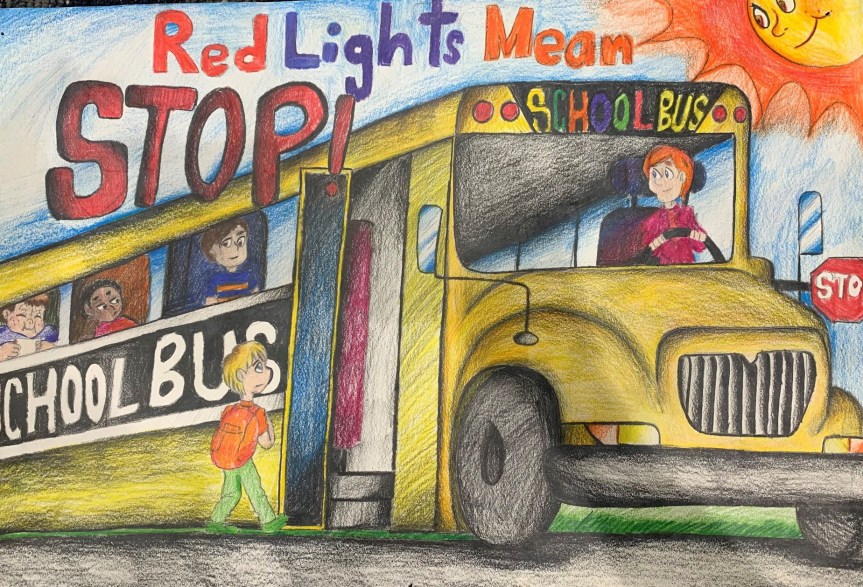
Maine Students Encouraged to Participate in 2020 School Bus Safety Poster Contest

Pictured: 2019 National Association for Pupil Transportation Poster Contest Overall Winner, Bryan Torres-Tavarez, Stars Academy, Paterson, NJ. Source: NAPT Facebook Page.

The national 2020 School Bus Safety Poster Contest is underway and Maine is encouraging students to participate again this year.  The theme is Be Safe – Know the Danger Zone! Please share the contest information below with transportation staff and educators state-wide that are interested in helping students participate in this exciting opportunity to show off their visual arts skills and their knowledge of school bus safety!

National School Bus Safety Poster Contest Rules Please note: It is very important that the posters meet the established rules in regards to size, theme, materials, and placement of student information to be considered at the national level. The last page of the rules provides for a student information sheet to be attached to the back of each poster.

Collect posters throughout the school year and send them to Terry Balduff at the contact information below and/or bring them to the Maine Association for Pupil Transportation (MAPT) Safety Conference in July.

Terry Balduff
terry.balduff@msad60.org
(207) 676-2856
C/O MSAD No. 60
150 Noble Way
North Berwick, Maine 03906

Posters will be displayed at the MAPT Safety Conference in July and voted on by those in attendance at the conference. The winners from each category will be submitted to the NAPT for the National Competition representing Maine in October 2020.

Categories that artists may be entered into (Maine will host all categories except for CAD (Computer Aided Drawing) drawings.

  • Division #1- Grades K-2
  • Division #2- Grades 3-5
  • Division #3- Grades 6-8
  • Division #4- Special Education (Grades K-12)

2020 AWARDS: (State Level)

  • First Place Winners: $75.00 each plus Trophy and Certificate of Appreciation
  • Second Place Winners: $50.00 each plus Trophy and Certificate of Appreciation
  • Third Place Winners: $25.00 each plus Trophy and Certificate of Appreciation

Savings Bonds in lieu of cash may be awarded. 

MSAD1 School Nurses Among 1st to Complete Vision Certification Course

The Prevent Blindness Children’s Vision Screening Certification Course provides participants with a 3-year, nationally recognized certificate based on current national guidelines and best practices on evidence-based vision screening tools and procedures for school- and preschool-aged children.

The MSAD 1 school nurses are among the first cohort in the State of Maine to participate. The Maine Department of Education is providing access to this course for 125 nurses in 2019-20 school year and will do the same in 2020-21 with the goal of ensuring high quality vision screening for our children in Maine.


Save the Date: Training Opportunity on Serving Highly Mobile Students (Homeless, Foster, Migrant, Military)

Join us for an interactive session on the educational provisions designed to promote the educational stability of highly mobile students. Please complete this survey to register and share with us what you would like to get out of the training. Thank you!

Intended Audience: McKinney Vento Homeless Liaisons and Foster Care Points of Contact (Please be sure your information is updated in NEO if you are the SAU contact).

Hosted by Maine Department of Education’s  Office of School and Student Support Team members, Gayle Erdheim gayle.erdheim@maine.gov and Amelia Lyons amelia.lyons@maine.gov.

Portland: March 9, 2020, at the Italian Heritage Center

Bangor: March 10, 2020, at United Technologies Center

Houlton: March 13, 2020, location TBD

Trauma Informed Readiness and Response Planning Workshop

As the most requested support topic from the field,  we at the Department of Education hear of the extensive impact that trauma, mental health and the opioid crisis are having on our schools. We are taking action to support educators in addressing the increased needs of our students through the use of trauma informed practices. To begin this partnership and support, we will be hosting an interactive conference on Trauma Informed Readiness and Response Planning.

When: Friday, January 24th, 2020

Time: 8:00 AM – 4:00 PM (Lunch is provided)

Location: University of Maine, Wells Conference Center, Orono.

This is a grant funded opportunity for schools to receive guided support in the development of their individualized emergency plans for a trauma free and trauma responsive environment. Funding for this opportunity is available for up to 65 teams, and can include covering the costs of travel and substitutes for the day. An application and commitment to attend are required; these will be accepted until December 20th, 2019.

Application for Individual School Participation 

A preview of questions in the application is below:
Name of School:
School District:
Primary Contact (person with whom all communication and arrangements go through):
Contact Phone/Email/Address:
3 Team Members and their roles at the school (3 people are required for the activities planned):
Describe the top three areas of need for your school around this topic, and why work on a responsive plan will help you overcome these. 

A final agenda and confirmation for teams will be forthcoming after the closing of the application window. For questions, contact Jessica Nixon at Jessica.Nixon@maine.gov.


Mid-winter Boost:  2020 Maine School Winter Wellness Summit, Life is Good, Wellness Makes It Better!

Taking care of the health and well-being of staff and students has become more and more critical given the many stresses of the world in which we all live. Register today for the Maine School Winter Wellness Summit, Life is Good, Wellness Makes It Better! being held January 30 & 31, 2020 at The Samoset Resort, Rockport, to bolster your school wellness program. Attendees will learn strategies and be exposed to tools and resources available from state and national sources that address the six dimensions of wellness: mental, emotional, physical, social, spiritual and​ occupational health. However, this year there will be a special emphasis on Mental Wellness for all! The Summit will include inspiring, interactive keynote presentations each day, engaging workshops on personal wellness practices, creating positive school environments, healthy school culture and climate for staff and students, leadership skills, emerging health issues and action planning for wellness!

January 30th OPENING KEYNOTE:

grey haired man, laughingMurray Banks is a motivational speaker and world champion athlete with roots in teaching school. He lives life with a passion for health and well-being every day. This year he will focus his message on the importance of positivity on one’s overall health using hilarious images, imaginative videos, and poignant classroom and personal stories that will inspire all of us.


Salt and pepper haired man with moustache and glasses, smilingJanuary 31st OPENING KEYNOTE:  George Manning returns to the Wellness Summit with more tools, resources and insights focused on life, work and the pursuit of balance. He will engage the audience with his enchanting personality and stories that come from more than 40 years of experience teaching psychology at the collegiate level and traveling the country helping organizations and businesses develop healthy and productive work environments.

The goal of the Summit is to prepare and empower participants to create healthy, positive and safe schools for all school personnel and students by promoting policies and environmental practices that support healthier schools, improve personal health and well-being, and enhance academic achievement.  Click here for up-to-date details, draft agenda and session information on the 2020 Maine School Winter Wellness Summit and follow The Samoset Resort link to reserve rooms at the special group rate.

Individuals and teams interested in Schoolsite Health Promotion and wellness are encourage to attend. One low cost for two-days, meals included. Early registration is open through December 27 for $125/person and regular registration after December 28 is $145/person.

Join us for the first fully engaging and educational Winter Wellness Summit, a component of the Maine Department of Education’s Schoolsite Health Promotion Program.

Educator Forum: Building Trauma-Sensitive Schools

Thursday, December 5, 2019, 4:30-6:00 pm
301 Bailey Hall, University of Southern Maine
16 University Way, Gorham, ME

Explore the impact of trauma on the social, emotional, and academic growth of students in this interactive workshop. Topics to be covered include Adverse Childhood Experiences (ACEs), trauma-sensitive schools, restorative practices, and the importance of establishing a culture of self-care. Attendees will be grouped by grade level and engage in dialogue geared towards making their own classrooms and schools more trauma sensitive. The intended audience for this Forum is all school employees who work with students in grades pre-K through 8.

Registration: Register here (https://forms.gle/UkE2Ft1f3qPzpjdW9) OR Download a PDF registration form (PDF)

Cost for attendance is $15 per person, and includes certificate for 1.5 contact hours. Light refreshments will be provided.

NOTE: If you do not end up attending, payment is still due, as your registration holds a spot for you and is figured into the head count for refreshments. If you cancel your registration by November 27, your fee will be waived/refunded.

Facilitators:

  • Jeanna Carver, Pre-K Teacher, 2019 Washington County Teacher of the Year, Jonesport Elementary School
  • Heather Whitaker, Alternative Education Teacher, 2019 Cumberland County Teacher of the Year, 2020 Maine State Teacher of the Year, Gorham Middle School
  • Jen Baker, Licensed Clinical Professional Counselor, Village Elementary School, Gorham
  • Meghan O’Neil, Grade 4 Teacher, Village Elementary School, Gorham

Educator Forums are professional development events for educators of similar positions or responsibilities to explore new or best practices in their field. Forums provide an opportunity for educators to engage with peers, build new understandings from prior knowledge, and reflect on past practices.

Contact the PDC with any questions:

Julie Marsh, Program Coordinator
Professional Development Center
University of Southern Maine
pdc@maine.edu
207-780-5400