December 2nd, 2020, 3:00 – 4:15pm: Join the Nature Based Education Consortium and other Maine co-hosts to hear from Maine schools about their experience of Outdoor Learning this fall and beyond, and share about your own challenges and solutions. Learn from the Maine Department of Education about the new $17 million ‘Rethinking Remote Education Ventures’ (RREV) grant program. Connect with other schools and organizations who are building support for life-changing outdoor learning opportunities in Maine. Build your network, gain new resources, and be inspired!
Co-hosted by Maine Science Teachers Association, Maine Environmental Education Association, University of Maine at Farmington, Maine Department of Education, Inside/Outside Network – Antioch University, Cathance River Education Alliance, Center for an Ecology Based Economy, Chewonki, Environmental Living and Learning for Maine Students, Juniper Hill School, Kennebunkport Climate Initiative, Maine Audubon, Maine Mathematics and Science Alliance, Maine Outdoor Coalition, Maine Outdoor School, Teens to Trails, The Ecology School, The Nature Conservancy, White Pine Programs, WinterKids
In order to be responsive to critical staff shortages in Maine schools as a result of the pandemic, Governor Mills created additional flexibilities and opportunities for educators in Executive Order #7. Based on the Executive Order, the Maine Department of Education, in collaboration with Maine Community College System and Eastern Maine Community College, has developed the Learning Facilitator Program, a fast-track training program for paraprofessional level educators to expand, strengthen and support a high quality educator workforce.
The program, which is offered at no cost to the participants, is completed in two phases in one academic year with the ongoing support of Eastern Maine Community College faculty.
A week-long 3-credit course “boot camp” with foundational elements of classroom management and school culture. Additionally, the core boot camp curriculum includes training in COVID readiness, bloodborne pathogens, suicide awareness and prevention, mandated reporter training, and fingerprint clearance in order to address both substitute teacher and long-term support staff preparedness.
The second phase of the program consists of a combination of online work, professional learning community meetings, and a structured teaching apprenticeship (315 hours).
Upon completion of the 3-credit course “boot camp,” participants will have the foundational skills necessary to fill short- and long-term substitute educator roles, as well as all paraprofessional positions. They can support instruction and provide guidance to learners in the classroom under the supervision of a mentor teacher or teaching team. Mentor teachers or teaching teams may be working remotely or in-person. Special coding for Learning Facilitators has been created within NEO for schools, so that subsidy will not be impacted.
Educators who complete all elements of the Learning Facilitator Program, as outlined above, will qualify for an Educational Technician III certification.
For more information related to the program, please visit the EMMC website, here.
In response to the unprecedented obstacles schools, teachers, students, and their families are facing amid the COVID-19 pandemic, the U.S. Department of Education (USDOE) has offered an additional waiver to state education agencies, pursuant to section 4201(b)(1)(A) of the Elementary and Secondary Education Act of 1965 (ESEA). Under Title IV, Part B of the ESEA, section 4201(b)(1)(A) requiring that 21st Century Community Learning Centers (21st CCLC) programs operate only during non-school hours or periods when school is not in session. If granted, this waiver would allow 21st CCLC program providers in Maine to temporarily operate with greater flexibilities to better meet the needs to students and families during the 2020-2021 school year.
This waiver would grant the Maine Department of Education (DOE) temporary authority to permit its 21st CCLC programs to provide supplemental services when school is in session, but students are not receiving in-person instruction. For example, it would be permitted that a teacher provides additional 21st CCLC-funded academic supports for a group of students during a remote learning day when those students are not otherwise engaged in facilitated instruction with their classroom teacher.
The Maine DOE continues to work diligently to support Maine’s schools and educational communities as the 2020-2021 school year begins. Given the hybrid instructional approaches many schools have adopted this year, students may benefit from dedicated staff and enhanced resources to help with remote lessons, independent work, and other enrichment opportunities during the portion of the week when remote lessons learning is occurring. It is for reasons such as these that the Maine DOE has chosen to pursue this waiver.
As part of the statutory requirements for seeking this waiver, the Maine DOE must solicit and respond to public comment on its waiver request as well as provide evidence of the available comment period. This 15-day public comment period shall begin on September 29, 2020 and conclude on October 14, 2020.
The College Board has released the new AP® Exam (Advanced Placement) schedule, which includes optional free, online AP classes and take-at-home AP Exams to support the challenges that students and families are facing because of the coronavirus pandemic. In addition, the Collage Board is also offering the opportunity for families to apply for help securing an internet connection and a device in order to take the exams.
Advanced Placement (AP), a program implemented by the College Board, allows high schoolers to take high school courses that can earn them college credit and/or qualify them for more advanced classes when they begin college. Many of Maine’s high schoolers were amid AP classes when they transitioned to remote learning. In a response to this drastic change in learning, the College Board has released additional resources for families and educators.
It is recommended by the College Board that parents and teachers whose students are planning on taking any of the AP exams take the weeks of April 13 and April 20th to help students work through the remaining course content and/or encourage them to participate in the live online classes and review sessions. Find them here: FREE AP Online Classes and Review Sessions
In addition, the College Board has also asked parents to let students know about the technology they’ll need to take the AP tests and to contact the College Board by April 24 if they need devices or connectivity. Here is where you can find information about getting internet connection and devices for AP exams: Information about getting Internet or a Device for AP Classes and Exams
You can find more information about the AP exams and the College Board’s response to the coronavirus on their website. In addition to the parent resources, College Board is also offering a listing of webinars among other resources for AP educators to help answer questions about the upcoming tests.
During these cold winter days of cabin fever in the classroom, we want to support educators with resources to keep kids moving and engaged. Evidence suggests a positive impact of physical activity on academic achievement and in reducing behavioral challenges. Active recess time, physical education classes, and utilizing action-based learning strategies in the classroom can all be part of the regular school day.
We share the following as a resource.
Programs to explore
Healthy Kids Healthy Futures: Staff can learn about the benefits and best practices of physical activity in child care and early education (including pre-school) settings. Physical activity habits learned in early childhood can last a lifetime.
Comprehensive School Physical Activity Program: This guide is for schools and school districts to develop, implement, and evaluate comprehensive physical activity programs. School-age youth should participate in at least 60 minutes of physical activity every day, and schools have a significant role to play in helping students achieve this recommendation. This guide will help schools identify how to establish more active school environments.
Let’s Go: Let’s Go! is a childhood obesity prevention program found across Maine and in Mt. Washington Valley, New Hampshire. These programs use evidence-based strategies to increase healthy eating and physical activity among children from birth to 18. The foundation for change is the 5-2-1-0 healthy habits message, developed in Maine and recognized nationally.
I Can Do It (ICDI): The “I Can Do It” program is a strategic physical activity program for students with disabilities in the K-12 school setting designed to provide access, equity, and facilitate and encourage opportunities for students with disabilities to be physically active for 60 minutes a day.
Reading: Literacy and movement suggestions to engage middle school students in acquiring knowledge. The suggestions require minimal materials and teacher preparation.
Scholastic Teachers: Suggestions for combining both exercise and movement in early childhood classrooms across the content areas.
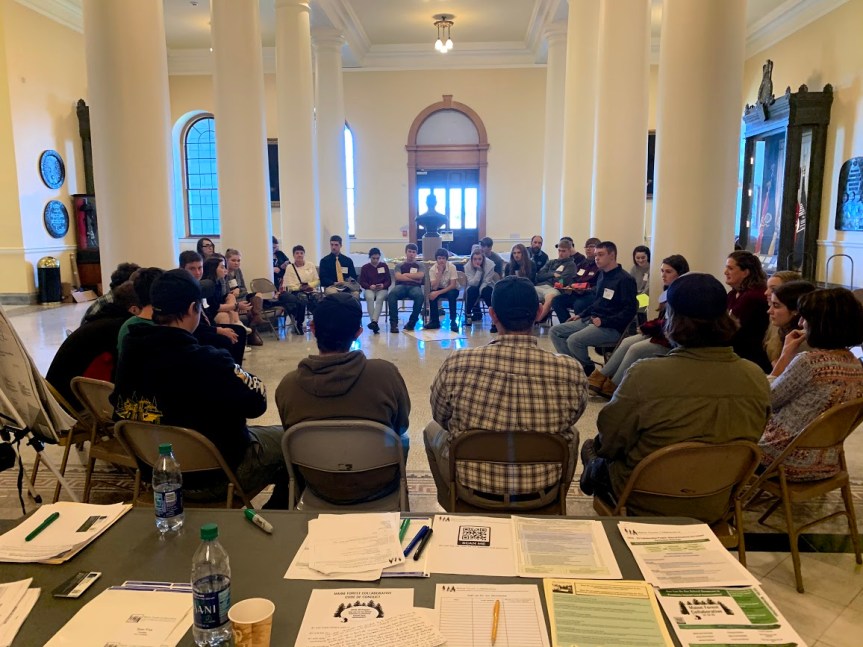
Maine students from rural communities came to the Maine State Capitol last week as part of a unique learning opportunity offered by The Maine Forest Collaborative. The collaborative, created and administered by the Rural Aspirations Project, is a cooperative of rural schools embedded in forest industry communities in rural Maine, which aims to give students in rural communities the opportunity to develop deeper connections to their community through participating and contributing in ways that make it stronger.
In its first cohort, with around 30 students participating last week, there were students from Buckfield, Forest Hills, Jackman, and Greenville, and more on deck to start in the next semester. The learning opportunity provides students with a three-unit curriculum: Identifying Challenges, Rapid Prototyping Solutions, and Investigating Solutions. Grounded on the question, “How can we use natural resources to positively impact local communities,” the lesson invites students to work together to identify challenges that their community is facing, and then find solutions to those challenges by using resources available within the community.
The second unit, Rapid Prototyping Solutions, is what students were working on last week at the Maine State Capitol’s Fall of Flags. The location was chosen as a way to raise awareness about the project, but also to show participating students the impact they have on decision making at the State level, as they work among lawmakers and politicians who grapple with many of the same challenges and problem solving, whether they are rural and community-based or State level.
Students started the day by presenting the story of their community, with posters they made ahead of time. Their presentations included information about the geography of their community, the natural resources present, who they are, what is amazing about their community, their hopes and dreams, and questions they still have. After the presentations, they began working in groups to identify challenges, pick a challenge to work on, and brainstorm a solution to that challenge. Maine forest industry professionals were also present to help facilitate the group work and lend a helping-hand. lending their years of work experience in Maine’s forest industry with Maine’s many natural resources.
Students left the State House last week with a deep appreciation for not only their own community, but for their rural neighbors was well. They also got to participate in an interdisciplinary, project-based learning experience that strengthens their connection to their own community and the State as a whole, and aims to tackle a community challenge that they care deeply about.
Following last week’s lesson, students will embark on unit three, which will identify the economic, environmental, and social impacts of the solution they came up with, and they will also make a plan to communicate the solution to the public.
For more information about the Maine Forest Collaborative, the curriculum, or how to participate in this unique learning opportunity, please contact the Rural Aspirations Project.
As part of the scheduled periodic review of the Maine Learning Results, the Maine Department of Education is seeking public comments regarding the current health education and physical education, visual and performing arts, and world languages standards. Find links to each of the current standards below along with details for submitting comments.
The standards review process opens with a public comment period and a public hearing, prior to the convening of steering committees who are charged with reviewing all submitted comments and with developing blueprints for the revision of the state standards in their assigned content area. Once the blueprints are created, writing teams, consisting of pk-12 teachers who represent Maine’s cultural and geographical diversity, will assemble to draft the standards revisions.
Anyone may speak at the public hearings, which will be live-streamed. People wishing to speak will be asked to sign in, and it will be helpful, but not mandatory, to provide a written copy of comments.
Public hearings will occur on October 23rd in room 103 at the Cross Building, 111 Sewell Street, Augusta, from 1-4pm. A link to the live-streamed hearings will be available prior to the public hearing.
Anyone unable to attend the public hearing may send written comments by 5 pm on November 8th, 2019. Written comments may be sent to Standards Review at sis.doe@maine.gov, or mailed to Beth Lambert, 23 SHS Station, Augusta, ME 04333.
In an effort to increase high quality CTE programs, Maine needs your input. The Maine Department of Education-Career and Technical Education Team has posted the proposed performance indicators for public comment as part of the Strengthening Career and Technical Education for the 21st Century Act(Perkins V). The performance indicators, referenced as Perkins V Accountability Measures, can be found on the DOE-CTE web site as well as a survey to allow for feedback. These will be posted for 60 days to allow for public comment, after which recommendations will be reviewed by the CTE Team. For more information, contact Dwight Littlefield at dwight.littlefield@maine.gov.
The Maine Department of Education (DOE) recently launched a new leadership program called Maine’s Leadership Development Program (Maine LDP). The initiative aims to build and strengthen instructional leadership skills among Maine’s educational leaders at schools, districts, and across the state.
A group of 18 education leaders in Maine, including superintendents, assistant superintendents, curriculum and instructional leaders, regional education leaders, Maine DOE staff, and other school and district level staff are among the first cohort of candidates on track to become certified trainers and facilitators of future cohorts. The names, pictures, and biographies of the group of Fellows in the 1st cohort of the Maine LPD can be found here.
The Maine LDP is a partnership among the Maine DOE and its successful Transformation Leaders’ Network, along with the National Institute for School Leaders (NISL) and their nationally recognized Executive Development Program (EDP). NISL experts are delivering the Maine LDP curriculum and will provide additional training for Maine LDP facilitators. The cohort has already begun its trainings with a session about strategic thinking within systems, and high quality aligned instructional systems in classrooms, schools, and at the state level. The program is a full year commitment.
LDP Fellow Al Pfeiffer, Superintendent of Vassalboro School Department, had this to say about the training so far, “ Some of the richest, most robust and rewarding professional learning that I have experienced in recent memory. Powerful readings, case studies reinforced with video snapshots, and engaging conversations have left me eager for the next session and future sessions over the coming year.”
Paul Knowles,an educational leadership lecturer at the University of Maine and the UMaine Liaison to the Maine DOE for this initiative added that, “The University of Maine and the Educational Leadership Department are pleased to partner with the Department of Education for this important work. Personally, I am impressed with the caliber, diversity, passion, and commitment of the leaders participating in Maine’s Leadership Development Program.”
Maine’s LDP is delivered through a blended learning model and includes study, inquiry, and hands-on activities with practical applications that meet the rigorous expectations for today’s educational leaders. Some graduates from this cohort will deliver the Maine LDP curriculum to future cohorts regionally. The Department will be releasing an application for those interested in applying to be in the 2nd cohort of the LDP in March of 2020.
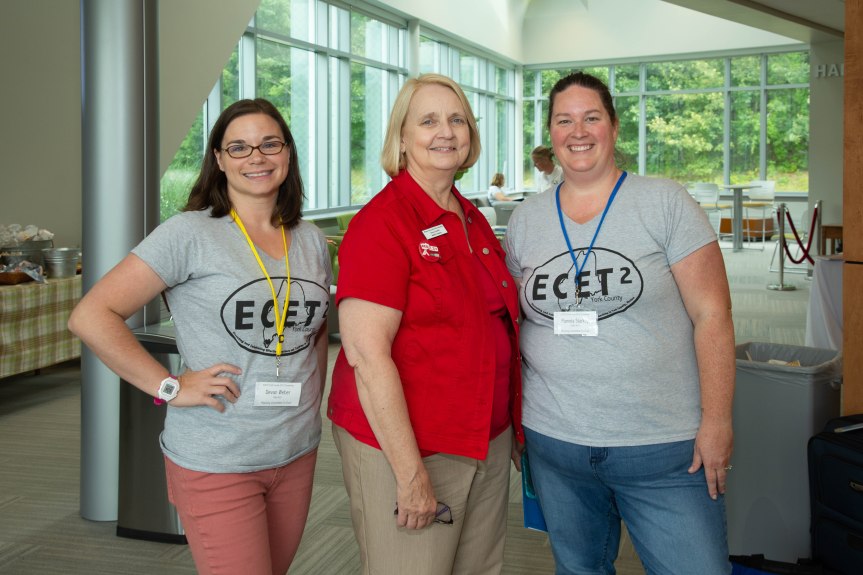
In her opening remarks to the York and Downeast convenings of Elevating and Celebrating Effective Teachers and Teaching (ECET2), Maine Education Association (MEA) president Grace Leavitt told those assembled, “teaching is not a profession you leave at the door when the bell rings, it is always on your mind.” For the teachers packed into the Pratt & Whitney Building at York County Community College on August 7, and the Science Building at the University of Maine at Machias on August 15, summertime professional learning was certainly alive and well!
This summer marked the fifth anniversary of ECET2 in Maine and the first summer of regional MaineECET2 convenings. Karen MacDonald and Jennifer Dorman (2014 & 2015 Maine Teachers of the Year) hosted the first ECET2 for 150 teachers at Colby College in August of 2015.
Karen MacDonald and Jennifer Dorman
MacDonald and Dorman wrote grants, sought sponsors, and spent countless hours (!!) handling the numerous logistics involved in planning and hosting a free, overnight conference for 150 Maine teachers. Why? They wanted to share the professional learning, leadership, and respect they experienced during their national Teacher of the Year travels with teachers here in Maine. They also wanted to highlight the role teacher leaders can play in our state. Dorman and MacDonald’s efforts were enthusiastically embraced by Maine teachers not only during that first summer, but in each subsequent year. As rave reviews of ECET2 spread, more teachers joined the planning process, including Diana Allen (Sanford Schools) as another co-chair, and the conference became so popular there was not only a waitlist for attendees, but the number of presentation proposals exceeded the available session slots! These factors led to ECET2 branching out to the regional convenings that took place this summer.
Why is ECET2 so popular? Let’s start with the title—this conference is all about celebrating effective teaching and teachers—and it is, from start to finish, put on by teachers for teachers. It was born out of a desire to provide a forum for exceptional teachers to learn from one another and to celebrate the teaching profession, and seeks to realize a teacher’s potential by ensuring each convening includes these six elements:
Nurtures trust among teachers
Focuses on each teacher’s potential for growth
Inspires both the intellect and the passion that drives teachers in their work
Provides time for collaboration and learning
Puts teachers in the lead
Recognizes teachers as talented professionals
Inspired from their own experiences at ECET2, Pamela Starkey (Marshwood Great Works School, 2016 Oxford County Teacher of the Year), and Devan Weber (Eliot Elementary School) co-chaired ECET2 York, and Marielle Edgecomb (Peninsula School, 2017 Hancock County Teacher of the Year) chaired ECET2 Downeast. Both convenings featured breakout sessions on best teaching practices in content areas, as well as sessions on social-emotional learning and mindfulness in the classroom. Teacher leadership and innovation were embedded throughout the gatherings. Keeping in mind the importance of collaboration, inspiration, and celebration, the convenings also included these components:
Cultivating the Calling:
These inspirational talks are given by teachers on why they chose to teach, or what inspires them to continue teaching. In York, Katie Toothaker, 2018 Androscoggin Teacher of the Year, told the audience, “each school year is a new beginning for you and your students.” Toothaker shared how her teachers demonstrated the ability of public educators to nurture self-worth in their students and the difference that made for her and how she pays that forward with her own students. Teresa Gaetjens, National Board Certified Teacher, shared the importance of growth mindset, contextualizing her topic around the passing of her young daughter. This heart-wrenching story underscored the importance of perseverance both in and out of the classroom. At ECET2 Downeast, Marielle Edgecomb shared the importance of professional learning –teacher to teacher—being brave enough to open our classroom doors and teaching practices for others to see, learn from, and celebrate. Marielle challenged educators to see their students and colleagues through “eyes of appreciation.”
Colleague Circles:
This is a dedicated time for teachers to collaborate on “problems of practice” and generate possible solutions. Topics this year included: teacher shortages, school improvement, mental and physical wellness, school safety, diversity, and culturally responsive teaching. In York, teachers recorded goals or action steps on a post card and gave them to the ECET2 organizers, with the understanding that they will receive them in the mail sometime this fall as a reminder/check-in on their summer work and goals.
Educator Shark Tank—a fabulous idea that was shared from another state’s ECET2!
Just like on TV—except the prize money, $1000 generously donated by the Maine Education Association, was awarded to two innovative education projects that will positively impact student learning. Educators at ECET2 Downeast submitted many compelling proposals to the Sharks, four of which made the final round. The four finalists had three minutes each to present their best “pitch” to the Sharks. After a lively round of presentations and lots of laugher, followed by clarifying questions from the Sharks, the two $500 cash awards went to the Rose Gaffney School for their proposal to use technology to increase community and collaboration, and the Brooklin School for their work on diversity and literacy. Congratulations to all who submitted proposals—the Sharks had a tough task choosing just two!
The verdict is in on the first summer of regional ECET2 convenings: resounding success! As with their central Maine ECET2 predecessors, the regional convenings provided a platform for optimistic and personal professional learning—and a true celebration of teachers and the teaching profession! As teachers were preparing to leave, many of their comments echoed Paula Bourque’s (Instructional Coach, NBCT, Augusta Schools) reflection of her ECET2 experience:
“Each of us left the conference feeling inspired, empowered, and connected. We are charged with going out and sharing what we experienced and learned with our colleagues and cultivating the calling of teacher leadership. We left with a stronger network to lean on and collaborate with as we navigate the challenges of teaching. We are dedicated to promoting teacher leadership, positive school culture, and the advocacy for what is best for our students.”
ECET2: A perfect way for educators to recharge in preparation for a new school year!






 Maine DOE Newsroom