Weekly Office Hours: Exploring Numeracy Across the Curriculum

The Maine Department of Education (DOE) Interdisciplinary Instruction Team invites educators to join a new series of weekly virtual office hours, focused on exploring numeracy across content areas. Sessions will take place every Wednesday from 3:30 to 4:30 p.m., beginning April 16, 2025, and running through June 4, 2025.

Each session will highlight a different topic that illustrates how numeracy and mathematical thinking can deepen learning across the curriculum (full schedule below). Whether you’re a classroom teacher, instructional coach, or curriculum leader, these office hours are designed to offer practical insights and spark interdisciplinary connections.

Session Topics:

  • April 16 – Data Visualization
  • April 30 – Climate Change
  • May 7 – Fast Fashion
  • May 14 – Food Waste
  • May 21 – Plastic Pollution
  • May 28 – Water Quality
  • June 4 – Numeracy Resources

To participate in these office hours, please register here.

The Interdisciplinary Instruction Team is part of the Maine DOE Office of Teaching and Learning. For further questions, please contact Maine DOE Interdisciplinary Instruction Specialist Michele Mailhot at Michele.R.Mailhot@maine.gov.

RSU 11 Celebrates Literacy Innovation at Grades 6-12 Interdisciplinary Showcase

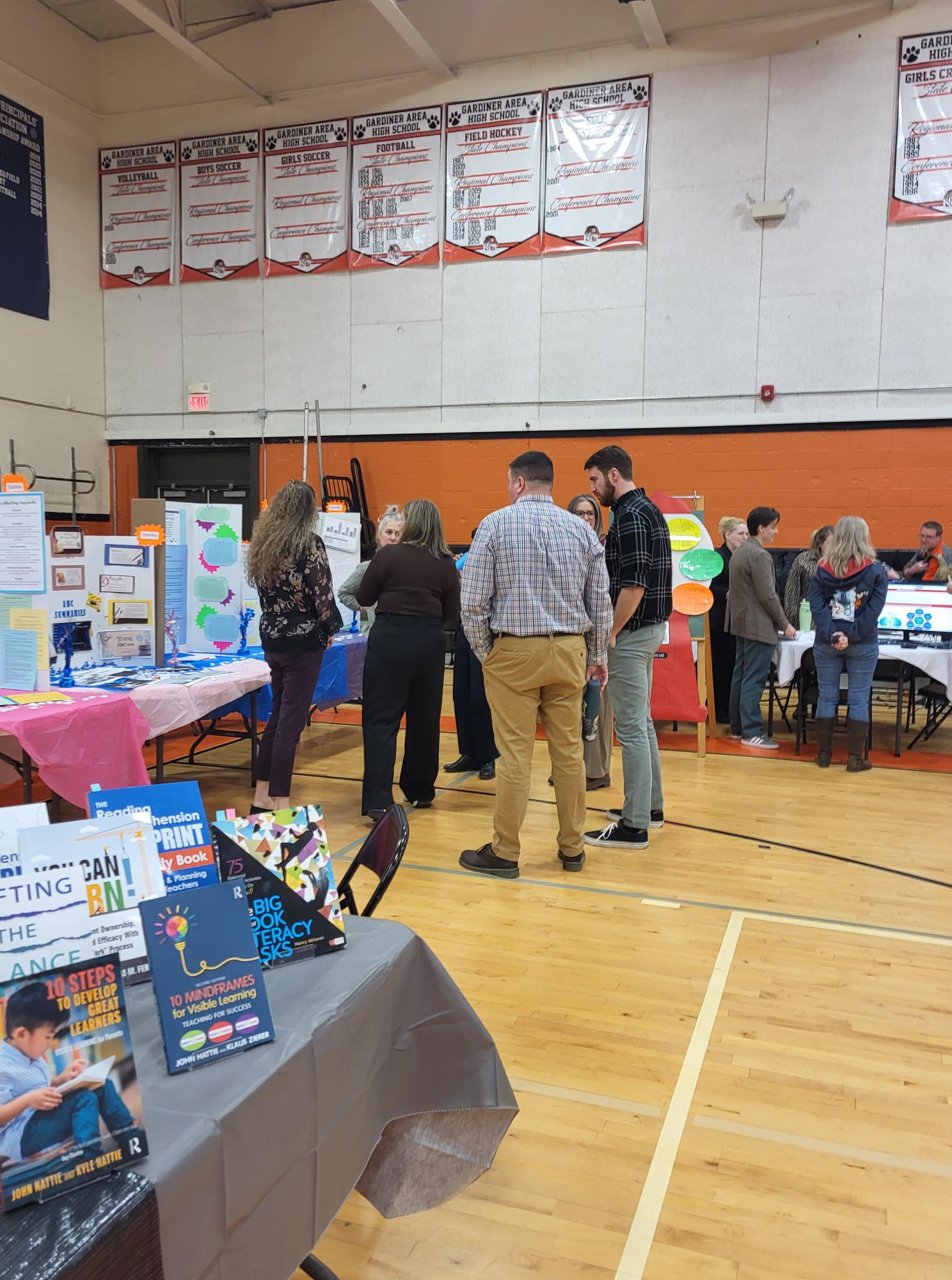
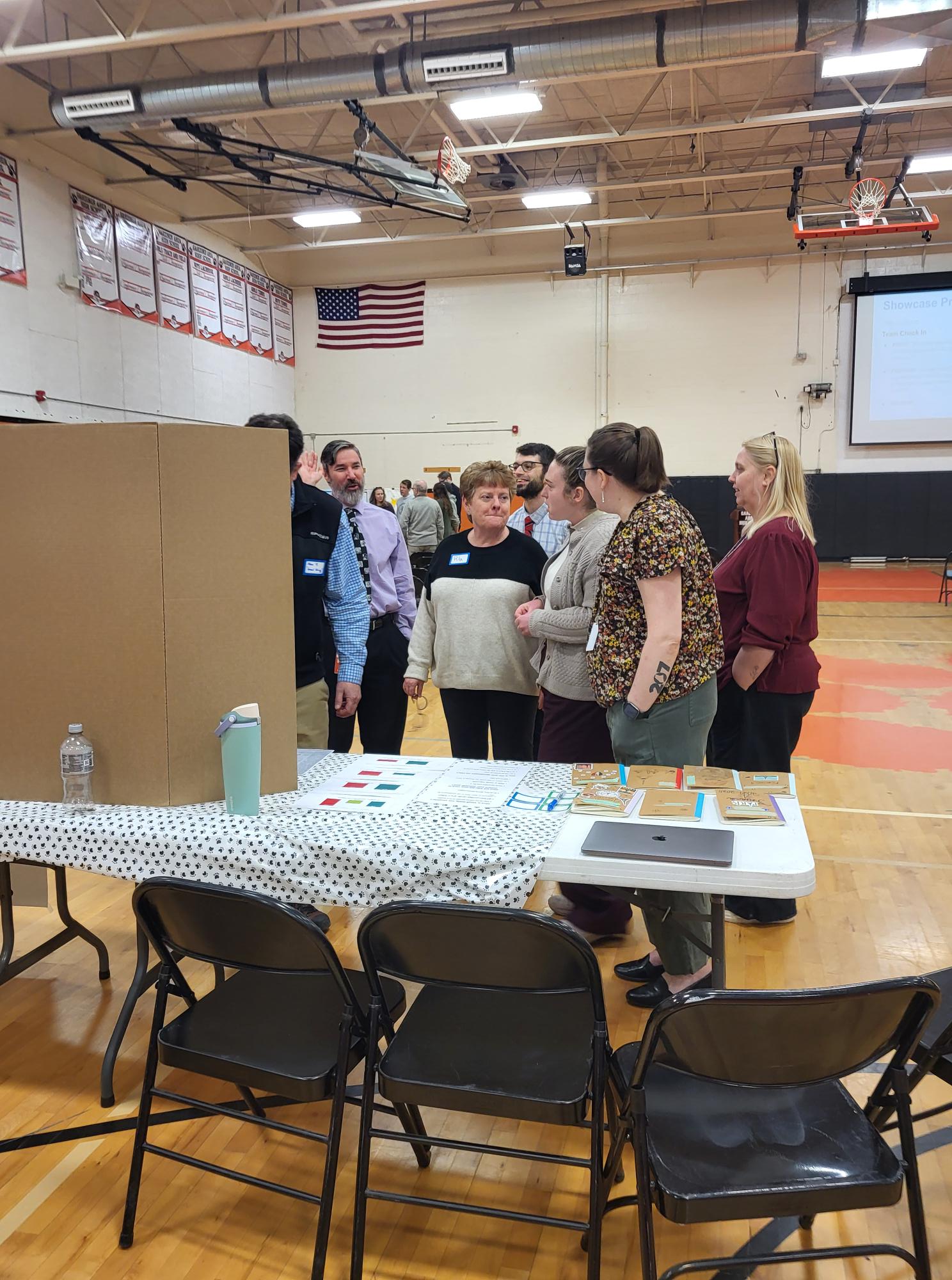
On March 13, there was an unmistakable buzz of energy and pride in RSU 11, as educators gathered for the Grades 6-12 Interdisciplinary Literacy Showcase. The event, held at Gardiner Area High School, marked the culmination of a year-long collaborative effort among middle and high school teachers to explore innovative strategies aimed at increasing student motivation, enhancing content literacy, and improving reading comprehension.

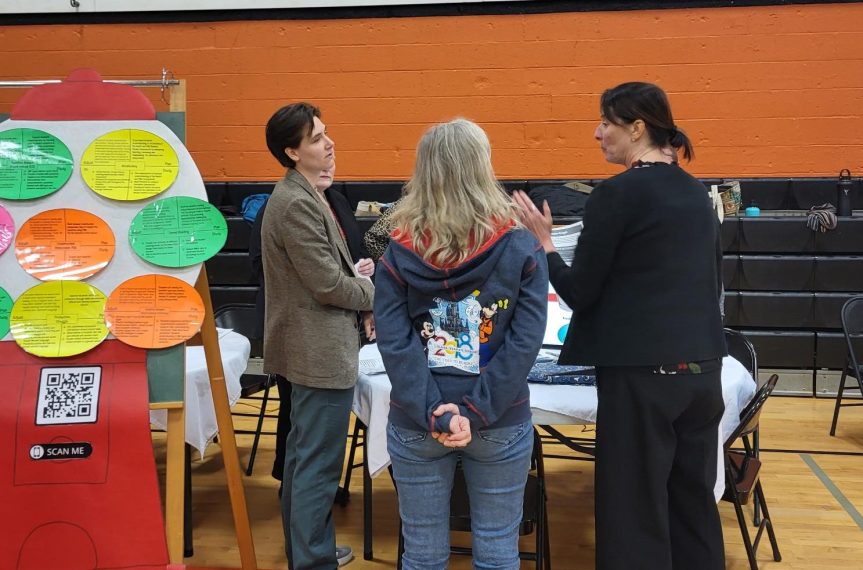
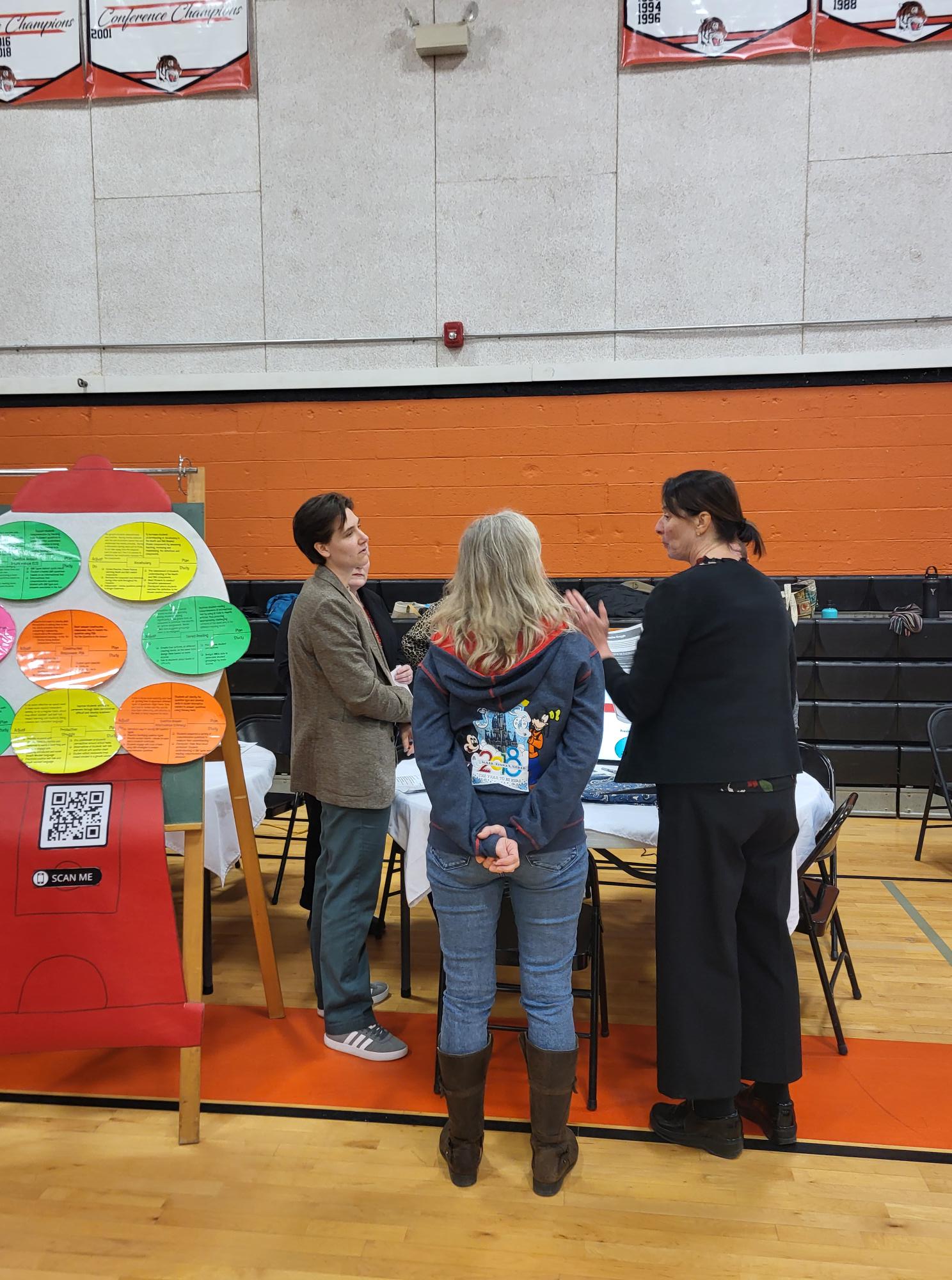
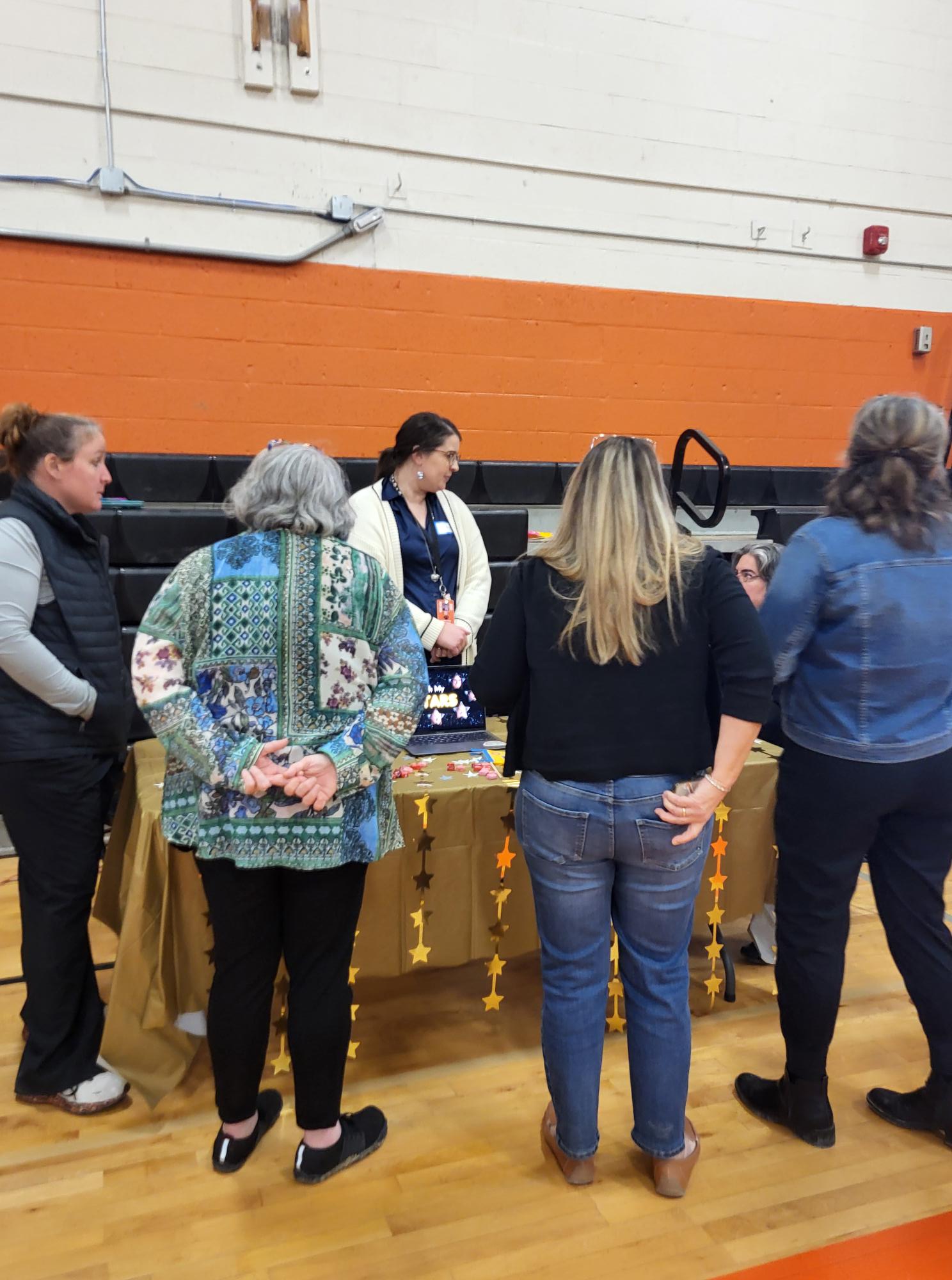
The event began with a warm welcome and an opening message that recognized the dedication and innovative spirit of the staff. Afterwards, attendees participated in a vibrant gallery walk, as dducators shared their team’s journeys at presentation tables. They highlighted creative approaches to building literacy skills in subjects ranging from science and social studies to mathematics, the arts, and beyond. Some teams also discussed topics like student motivation and engagement, question/answer relationships, productive struggle, note-taking strategies, and summarizing complex texts. Each presentation offered valuable insights and practical takeaways, showcasing the collective power of educators working toward a common goal.

This showcase represented how an initiative first supported by a Maine Department of Education (DOE) Literacy Grant has evolved into a sustainable and impactful movement in RSU 11. Even after that grant funding had ended, educators remained deeply committed to continuing this work. Fueled by a shared belief in its impact, they voluntarily pushed forward, driven by their dedication to improving student learning.

“Our teachers stepped up in incredible ways,” Angela Hardy, RSU 11 Curriculum Coordinator and Literacy Organizer, said. “They worked across disciplines, studied literacy research, tried new approaches in their classrooms, and thoughtfully examined the results. This showcase was about celebrating that commitment and the difference it’s making for our students.”

A staff survey conducted early in the year showed that teachers wanted more opportunities to collaborate, engage in ongoing professional learning, and receive support from colleagues as they strengthened their practice. As a result, RSU 11’s grade 6-12 educators began coming together as interdisciplinary teams to develop skills and strategies for literacy instruction across all content areas.  Monthly planning and training sessions took place, allowing educators to work within multidisciplinary groups through Cycles of Action. At times, they collaborated closely with their team; and at other points, they worked independently to test strategies in their classrooms. Each cycle lasted between two and six weeks, encouraged teachers to design a research-based plan, implement it, study the results, and refine their approach or try something new.

For many educators, the initiative has marked a turning point in their professional practice. Shaunessy Laclair, a middle school Social Studies teacher and Literacy Facilitator, worked closely with an interdisciplinary team to explore the connections between productive struggle and a growth mindset. Her team’s work highlighted how literacy strategies can empower students to persevere through challenges and develop resilience as learners.

Laurie Tranten, a seventh-grade English Language Arts teacher and RSU 11 Literacy Facilitator at Gardiner Middle School, called the experience “the greatest initiative that our school has ever taken on.” She added, “It was exciting to see specific content vocabulary being showcased and different literacy strategies used in all content areas. Overall, the school has become more literacy-rich, with students engaging in literacy, based on contextual needs.”

Katy Jones, Librarian and RSU 11 Literacy Facilitator, reflected on how the interdisciplinary nature of the work has deepened collaboration.

“This professional learning experience allowed for different perspectives, increased professional engagement, and strengthened collaboration,” Jones said. “It was a great opportunity to be excited about teaching again—and students were excited about learning.”

Throughout these cycles, teachers used pre-assessments to determine students’ starting points, explored new instructional strategies, implemented changes in their teaching, and reassessed students to measure the impact. The showcase highlighted this important work, with presentations demonstrating the strategies used and the results educators witnessed in student learning.

Kirsten Perry, Secondary Literacy Coach for RSU 11, emphasized the collective effort that made this work so powerful.

“This showcase was an accumulative event that highlighted the power of collective efficacy in action,” Perry said. “The power of educators learning from each other provided one of the most impactful professional learning experiences I have participated in.” The event closed with a sense of celebration and renewed purpose, led by Delvina Miremadi-Baldino, the Executive Director of Maine Youth Thriving. She gave a beautiful closing speech to RSU 11 staff about youth mattering, the role staff plays in that goal, and the intersection of intentional and collaborative work to help students achieve and grow.

RSU 11’s Grades 6-12 Interdisciplinary Literacy Showcase was a testament to the power of teamwork, perseverance, and a shared belief that all students can succeed. RSU 11 remains committed to supporting educators and ensuring that every student has access to high-quality, engaging literacy instruction—no matter the subject area.

Maine Educators Gather in Portland for Solutionary Literacy Workshop

On March 4, 2025, educators from across Maine gathered in Portland for the Solutionary Literacy Workshop, a full-day professional learning experience co-facilitated by authors Cris Tovani and Julie Meltzer. The workshop focused on equipping teachers with effective strategies to support student engagement, critical thinking, and literacy development through inquiry-based learning.

The day began with an overview of the workshop’s objectives, emphasizing the importance of fostering curiosity and engagement by encouraging students to explore meaningful issues. Educators examined how to build background knowledge using diverse texts and model strategies that support students in researching, reading, writing, discussing, and presenting their ideas.

In the first session, participants explored ways to spark curiosity and establish a “need to know” mindset in students. Educators learned high-impact practices to help students recognize the relevance of the topics they explore, ensuring deeper engagement with their learning.

The second session focused on modeling proficient reading strategies aligned with high-impact Science of Reading (SOR) practices. Teachers explored techniques to support students in reading and interpreting various types of texts – factual, argumentative, or narrative – enhancing their ability to engage with complex materials.

“This literacy learning workshop provided an opportunity to network with others and discuss engaging literacy practices to help close the reading achievement gap,” Nicole Smith, a fifth-grade educator from Madison, shared about the event.

After lunch, the workshop shifted to strategies for facilitating meaningful, text-based discussions. Educators learned how to guide students using texts as evidence to support their thinking and engage in structured, purposeful conversations.

The use of innovative literacy-based knowledge placements allows students to engage in productive conversation at their readiness level,” Renee Lloyd, a sixth-grade English Language Arts teacher, reflected. “I appreciate that this workshop provided me with useful literacy strategies I can use the next day.”

In the afternoon, educators explored vocabulary strategies designed to support students in making sense of discipline-specific texts. The session highlighted the role of vocabulary in comprehension, particularly when engaging with subject-specific material that may be unfamiliar to students.

The final session of the day encouraged educators to reflect on their students’ literacy needs and develop plans for integrating the strategies learned throughout the day. Participants assessed their available resources and discussed how to apply these new approaches to better support their students.

The workshop concluded with reflection on key takeaways and next steps for continued professional growth. Educators left with practical strategies for creating more engaging, inquiry-driven literacy experiences in their classrooms.

If you are interested in participating in similar professional learning opportunities, spaces are available in the Maine Solutionaries Project numeracy cohort, starting March 27. To learn more or to join, visit this link or contact Kathy Bertini, Maine Department of Education (DOE) Interdisciplinary Instruction Coordinator, at Kathy.Bertini@maine.gov.

Meet Lyseth Elementary Environmental Literacy Teacher and School Garden Coordinator Leigh Quigley

Throughout the years, Portland Public Schools (PPS) has implemented an Outdoor and Experiential Learning program in all of its 10 elementary schools. Over time, this program has evolved from focusing solely on school gardens, to including the habitat of the living schoolyard, to now, incorporating a deeper, systematic implementation of Environmental Literacy that aligns with students’ learning standards and grade-level curriculum.

Now, a  few of the PPS elementary schools have an Environmental Literacy Teacher, whose role is unique to itself and the school where the teacher is based. At Lyseth Elementary School, the Environmental Literacy Teacher and School Garden Coordinator is Leigh Quigley,  a passionate gardener who brings much personal experience and excitement to her role. She assists with the school garden program, established with support from parent volunteers and the local non-profit Cultivating Community, which helped to build and implement an elementary garden curriculum.

“My role as Environmental Literacy Teacher/School Garden Coordinator is to help teachers build capacity toward integrating the natural world into PPS Wabanaki and Life Science units, as well as other areas of the curriculum in which it benefits students to incorporate the schoolyard into their studies,” Quigley explained.

To do so, Quigley incorporates environmental and science education, socio- and eco-justice, Indigenous knowledge, biodiversity, natural resources, climate change, sustainability, and more into all that she does with students.

Additionally, the collaborative teaching model of the Outdoor and Experiential Learning program offers embedded professional development designed to uplift and support classroom teachers as they work to provide equitable access to the natural world for all children through the PPS curriculum. The Environmental Literacy Teachers also help to run year-round Wabanaki fieldwork for k-5 students.

“I directly teach specific Science and Wabanaki units/lessons,” Quigley said. “I also support teachers with their English Language Literacy curriculum by creating avenues for students to bridge the topics they are learning about in class through added exposure to the topics (or related topics) via an environmental/ecological/scientific/Indigenous lens.”

This fall, Quigley held a schoolwide garden celebration with students, teachers, families, and community members. Students harvested fall produce from the garden, planted overwintering crops like garlic, weeded and redesigned outdoor learning spaces, and helped tuck the garden in for the winter.

Leigh brings a lot of love to her work and encourages students to grow and cultivate a lasting relationship with nature.

“In this role, I have the utmost pleasure of seeing struggling students take on leadership roles and experience success in activities and tasks that are completely new to them,” Quigley said. “It is extremely gratifying. The real reason behind my position is fostering academic, social, and emotional growth and success in students, while helping them build a (hopefully) positive, lifelong relationship with the natural world.” This experience-based, hands-on learning approach helps students to build relationships, reciprocity, respect, and responsibility for the Earth’s ecosystem and for each other. It also offers a level playing field that welcomes and supports every student, no matter their background, experience, or abilities.

Some of Quigley’s favorite student reactions thus far include:

  • “Look at this! This is OUR garden.” (This comment came after a weeks-long student clean-up project in the fall.)
  • “I love Tuesdays. That’s when I have Garden class.”
  • “Do we get to go outside today?!”
  • “Did we really harvest over 100 lbs. of carrots?!”
  • “Working in the garden makes me feel good.”
  • “Do we have to go back inside already?” (This comment came after a 45-minute class outdoors.)
  • “Look what I found!” (Quigley mentioned that this is a common remark among students when they find things like worms, roly-polys, grubs, millipedes, animal tracks in the snow, and animal nests.)

Part B of Celebrating Rural Maine Project to Focus on Wabanaki Perspectives

The Maine Department of Education (DOE) Interdisciplinary Instruction Team is pleased to announce the distinguished speakers for Part B of the Celebrating Rural Maine project! This three-part professional learning series engages rural educators in a deep exploration of Maine’s history. All teachers are welcome to participate in Part B, regardless of prior participation in other sessions.

Event Details

The series consists of three Saturday colloquiums on March 8, April 12, and May 17, each scheduled from 9 a.m. to 2:30 p.m. and centered on this year’s theme: “Geography of the Place We Now Call Maine”. These sessions provide a unique opportunity to engage with content experts, master teachers, and colleagues in discussions about Wabanaki studies, outdoor learning, innovative teaching models, and climate education.

Featured Content Experts

March 8 | Dawnland

This session explores the geography of Maine from a Wabanaki perspective, as well as Wabanaki storytelling.

  • Chris Sockalexis (Panawahpskek Citizen/Tribal Historic Preservation Officer)
    • Session Topic: Cultural Landscape of Maine through a Penobscot Lens
  • Natalie “Kasq” Dana Lolar (Passamaquoddy-Penobscot Tribal Member/Department of Anthology, University of Maine)
    • Session Topic: Wabanaki Storytelling

April 12 | Transitioning Landscapes

This session examines how European settlement impacted and intersected with Wabanaki communities.

  • Chris Sockalexis (Panawahpskek Citizen/Tribal Historic Preservation Officer)
  • Matt McCourt (Associate Professor of Geography, University of Maine Farmington)

Additional session topics to be announced.

May 17 | Present Day

This session focuses on contemporary Wabanaki perspectives on Maine’s geography and place-based geographical explorations of rural areas.

  • Darren Ranco (Panawahpskek Citizen/Professor of Anthropology and Coordinator of Native American Research, University of Maine)
  • Matt McCourt (Associate Professor of Geography, University of Maine Farmington)

Additional session topics to be announced.

Ongoing Engagement with Educational Strategies

Throughout the series, Dr. Mark Hofer (College of William & Mary) and Jessica Fries-Gaither (Albert Einstein Distinguished Fellow, Library of Congress) will demonstrate strategies for integrating primary sources to deepen connections with content.

Why Participate?

These colloquiums offer an engaging, interdisciplinary approach to understanding Maine’s history through geographical, cultural, and historical lenses. Educators will receive five contact hours per session.

Click here to learn more and register.

For more information, please contact Regina Holland, National Council for History Education Program Manager, at regina@ncheteach.org.

The Interdisciplinary Instruction Team is a part of the Maine DOE’s Office of Teaching and Learning.

This opportunity is funded through the Library of Congress’ Teaching with Primary Sources program and presented in partnership with the National Council for History Education.

Mt. Ararat Middle School Teacher Brings Real-World Problem Solving into the Classroom

The Maine Department of Education’s (DOE) Interdisciplinary Instruction Team is proud to highlight a transformative shift taking place at Mt. Ararat Middle School, where student-centered learning is redefining how students engage with their education.

Mt. Ararat Middle School educator Gretchen Feiss has brought real-world problem solving into her classroom through the Maine Solutionaries Project, empowering students to tackle complex global and local challenges. This approach shifts students from being passive learners to active changemakers, equipping them with the skills and mindset to make a meaningful impact.

For Feiss, the transition to Solutionary learning stemmed from a belief that students learn best when their education connects to real-world issues they care about. Traditional instruction often leaves little room for students to explore their own questions, and Feiss wanted to change that. By allowing students to identify problems, research solutions, and take meaningful action, she has transformed the classroom into a space where learning has a direct, real-world relevance.

Feiss said at times, guiding students through inquiry to action comes with challenges.

“They struggle with identifying good questions to ask but also with imagining solutions and strategies,” Feiss explained. As a mentor, Feiss helps students to sharpen their research skills, ask deeper questions, and think critically about the information they find. For seventh graders with limited experience in research and problem-solving, this support is essential.

As students pursue diverse projects, keeping up with their progress and providing guidance can be challenging. One innovative solution Feiss has used is introducing artificial intelligence tools, like ChatGPT, to help students identify key contributors working on their chosen topics. Many middle schoolers are unfamiliar with the organizations and individuals addressing social and environmental challenges, and AI provides an entry point to discovering these connections.

Beyond academic skills, Feiss has witnessed a shift in how students perceive learning itself.

“I think they see it less as something that is done to them and more as something driven by their choices,” she said. By giving students the independence to explore their interests, they have developed a sense of ownership over their education, leading to deeper engagement and more meaningful learning experiences.

One of the most exciting aspects of Solutionary learning is its connection to the real world. Feiss encourages students to reach out to experts, helping them craft professional emails and messages. These efforts have had a powerful impact. One student group received a response from the head of a wildlife protection organization in Uganda, making their research feel far more relevant. These experiences help students see that real people are working on the issues they care about — and that they, too, can be part of the solution.

Despite any challenges her classroom has experienced, one thing is clear: Student-centered learning is making a difference. By equipping students with the tools to research, communicate, and take action on issues they care about, Feiss is helping to shape a generation of informed, engaged citizens. As the classroom continues to evolve into a space where students don’t just acquire knowledge but use it to create change, the possibilities for their futures are limitless.

To learn more about the Maine Solutionaries Project’s upcoming cohorts, including a literacy-focused cohort and a numeracy-focused cohort, please visit the Maine Solutionaries Project webpage or contact Kathy Bertini, Maine DOE Interdisciplinary Instruction Coordinator, at kathy.bertini@maine.gov, or Erik Wade, Maine DOE Interdisciplinary Instruction Specialist, at erik.wade@maine.gov.

The Interdisciplinary Instruction Team is a part of the Maine DOE’s Office of Teaching and Learning.

The Maine Solutionaries Project funds received from the U.S. Department of Education (USED) support the implementation of this project. The project has an award totaling $1.34 million, of which 100% is federally-funded and directly attributed to project implementation. The contents are those of the Maine Solutionaries Project and do not necessarily represent the official views of, nor an endorsement, by the USED or the U.S. Government.


Maine Department of Education Releases Interactive AI Guidance Toolkit for Schools and Educators

The Maine Department of Education’s (DOE) Office of Teaching and Learning is excited to announce the release of an AI Guidance Toolkit. This dynamic resource goes beyond traditional policies, pairing guidance with learning by offering practical tools, real-world scenarios, and ongoing learning opportunities that support ethical, responsible, and effective AI use. Grounded in digital citizenship and computer science foundations, this toolkit is designed to enhance the understanding and application of artificial intelligence in education.

To ensure this resource remains relevant, responsive, and tailored to Maine’s unique education needs, this toolkit was developed in collaboration with Maine educators and stakeholders and features a framework to help shape district policies, promote ethical AI use, and develop a deeper understanding of how to work with AI.

Whether you’re just getting started, want to know more about what’s happening across the state, or looking to dive right into integrating AI in education (or maybe already are!) – this resource has something for everyone.

The Maine DOE is excited to offer learning sessions to share a walkthrough of the AI Guidance Toolkit and answer questions. Below are the dates and a link to register and receive the Zoom link. These sessions will be hosted by the Maine DOE’s Learning Through Technology (LTT) Team, featuring Nicole Davis, the LTT Team’s Emerging Technology Specialist.

Can’t make it but want to know more? At least one session will be recorded for later viewing and will be made available on the Maine DOE’s YouTube channel.

Check out the Maine AI Guidance Toolkit here.

If you have any questions, please reach out to Nicole Davis at nicole.davis@maine.gov.

Webinar: Innovative Journalism – Educational Resources with Retro Report

Join Maine Department of Education (DOE) Civics Teacher Leader Fellow Breanna Bellefontaine-Krupski as she hosts David Olson, Director of Education at Retro Report, for an informative session exploring the organization’s rich educational resources.

Retro Report is an educational journalism organization that connects historical events with current issues through compelling storytelling and investigative reporting.

Attendees will gain insights into:

  • How Retro Report supports social studies educators.
  • Engaging, ready-to-use content and lesson plans for civics instruction.
  • Professional development opportunities for teachers.

Join this webinar via Zoom on Thursday, February 13, at 3:30 p.m. EST. Registration is not required. You may access the webinar here.

The Teacher Leader Fellow program is part of the Maine DOE Office of Teaching and Learning. For questions, contact Breanna Bellefontaine-Krupski at Breanna.Krupski@maine.gov.


Solutionary Learning Transforms Classrooms at Oxford Hills Middle School

The Maine Department of Education (DOE) Office of Teaching and Learning is proud to highlight a transformative shift taking place at Oxford Hills Middle School. Through inquiry- and project-based learning, the school is fundamentally changing how students engage with their education.

Oxford Hills Middle School teachers Liz Coen and Courtney McLellan recently participated in the Maine Solutionaries Project, an inquiry-to-action instructional design framework developed by the Institute for Humane Education in collaboration with the Maine DOE. Motivated by a desire to increase student engagement, these educators focused on how to encourage students to ask their own questions, seek answers, and solve real-world problems.

“We wanted them to feel empowered and motivated to make change,” Coen and McLellan explained.

This innovative model has redefined the role of teachers. Rather than simply delivering content, Coen and McLellan now act as facilitators, dedicating significant time to preparation before each project they conduct.

“Beyond typical planning, we spend time connecting with community partners to understand the topic better and explore what’s possible for students,” the duo shared.

Building a network of experts willing to collaborate with students has become a crucial component of their planning process. Once projects begin, Coen and McLellan lead their students by asking guiding questions, providing constructive feedback, and supporting collaboration and group dynamics.

The current project these students are working on, centered around the theme of waste, allows them to select a topic within the broader subject. Many of them have chosen to conduct surveys or interview community partners, creating meaningful connections between their work and the world beyond the classroom. This element of choice and real-world interaction has provided more meaning and authenticity to their learning.

“Having that contact with people outside of school makes their learning more impactful,” Coen and McLellan added.

The shift to Solutionary learning has led to a noticeable improvement in student engagement at Oxford Hills Middle School. Students are now posing thoughtful questions and taking ownership of their learning. For example, during a visit with a guest speaker from EcoMaine, students actively participated, asking insightful questions that demonstrated their curiosity and comprehension.

One particularly-memorable example involved a student who became deeply invested in finding alternatives to Styrofoam after learning about its inability to decompose. One weekend, he tested an alternative material and returned to school eager to share his findings, including his setbacks and plans for improvement. His enthusiasm even inspired a previously-disengaged classmate to join the effort.

“Now, he’s revisiting the process to better understand the problem, creating surveys, interviewing community partners, and diving deeper into research,” Coen and McLellan shared.

This experience highlights a core strength of the Solutionary approach: encouraging students to revisit problems and identify root causes, rather than jumping to solutions prematurely. This iterative process fosters critical thinking, resilience, and a deeper understanding of the issues being explored.

The transformation at Oxford Hills Middle School demonstrates the power of Solutionary learning. By empowering students to lead their education, educators like Coen and McLellan are cultivating a generation of engaged, motivated, and solution-oriented learners.

To learn more about the Maine Solutionary Project’s upcoming cohorts, including a literacy-focused cohort and a numeracy-focused cohort, please visit the Maine Solutionaries Project webpage or contact Kathy Bertini, Maine DOE Interdisciplinary Instruction Coordinator, at kathy.bertini@maine.gov or Erik Wade, Maine DOE Interdisciplinary Instruction Specialist, at erik.wade@maine.gov.

The Maine Solutionaries Project funds received from the US Department of Education(USDOE) support the implementation of this project. The project has an award totaling 1,344.000.00 of which 100% is federally funded and directly attributed to project implementation. The contents are those of the Maine Solutionaries Project and do not necessarily represent the official views of, nor an endorsement, by the USDOE or the U.S. Government.

WEBINAR: Lights, Stage, Learn – The Transformative Power of Theater in Education

Join Maine Department of Education (DOE) Arts Integration Teacher Leader Fellow Joshua Chard and special guests Reba Askari, Emily Dixon, and Allison McCall from the Children’s Museum & Theatre of Maine for an engaging and interactive webinar that explores how theater can enrich classroom learning and foster creativity, empathy, and critical thinking in students.

Educators will gain practical strategies for integrating theatrical techniques into lessons to make subjects more dynamic and relatable. Additionally, the session will highlight the lasting impact of exposing students to live theater performances, from sparking curiosity to deepening cultural awareness.

The Children’s Theatre of Maine was established in 1924 and continues to offer professional theater for young audiences at Maddy’s Theater, located at the Children’s Museum & Theatre of Maine at Thompson’s Point in Portland. Join us to inspire your students through the magic of storytelling and performance!

The webinar will take place on Wednesday, February 5, from 3:15- 4:15 p.m. via Zoom.

Join the webinar here. (There is no need to register in advance).

The Maine DOE Teacher Leader Fellow program is part of the Maine DOE Office of Teaching and Learning. For additional information, please contact Joshua Chard at joshua.chard@maine.gov.