Earn Contact Hours from Internationally Recognized, Innovative Educators

The Maine Department of Education is thrilled to offer a limited-time, self-directed course that includes three keynotes and three workshops from John Spencer, Katie Novak, and Lynn Cuccaro, world-class leaders in innovative education!  
The rich professional learning opportunities were recorded at the InnovatED: Igniting Innovation in Education Day held by the Maine DOE MOOSE and Interdisciplinary Instruction Teams. All sessions provided actionable elements that can be applied immediately in your classroom to boost innovative learning (and decrease stress in the process). Topics included Universal Design for Learning, Designing for Equity, Cultivating Curiosity, Pedagogical Documentation, Design Thinking, and Project-Based Learning.

Check out the InnovatED: Igniting Innovation in Education webpage on the Maine DOE website for more information on enrolling and receiving contact hours before the course expires on June 30th.  

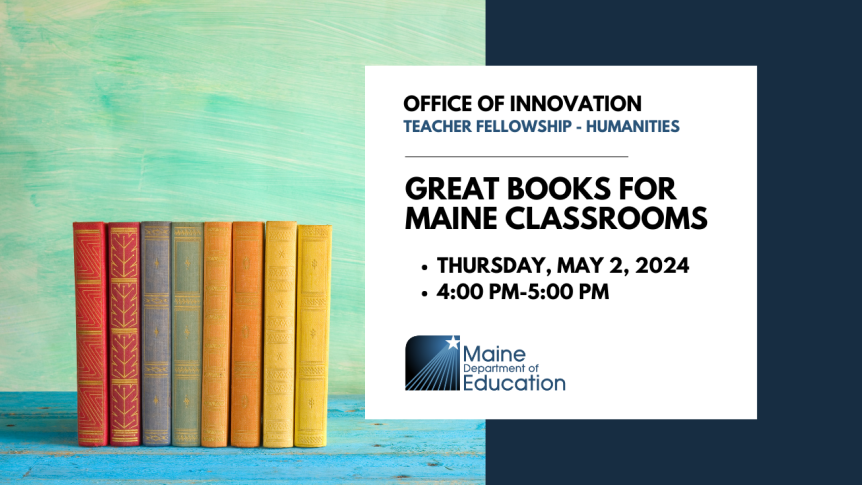
Webinar: Great Books for Maine Classrooms

Teachers love books and this webinar is designed to highlight books found to have great value in Maine classrooms.

Hosted by Maine DOE Maine DOE Humanities Teacher Fellowship Team – James St. Pierre and Dorie Tripp, this webinar will offer book suggestions for a variety of content covering all grade levels. Topics will include elementary books and authors, middle-grade series, high-interest writers from Maine, books written by women with female protagonists, books by black and brown authors, graphic novels, nonfiction titles, and many more.

We encourage you to bring your own suggestions and hope you can join us!

For further information, reach our to Maine DOE Humanities Teacher Fellowship Team – James St. Pierre and Dorie Tripp at James.St.Pierre.@maine.gov and Dorie.Tripp@maine.gov

How Williams Elementary School is Teaching and Preparing Students for the Solar Eclipse

Two weeks before the solar eclipse on April 8th, Williams Elementary School in RSU 18 principal Melanie Smith visited all classrooms to read aloud the book A Few Beautiful Minutes Experiencing a Solar Eclipse, written by Kate Allen Fox. During her visits, Principal Smith also shared a video with students that explained the difference between solar eclipses and lunar eclipses.

A Few Beautiful Minutes Experiencing a Solar Eclipse, written by Kate Allen Fox

Maps of the path of totality across the United States and our state of Maine were also shown and discussed with students.

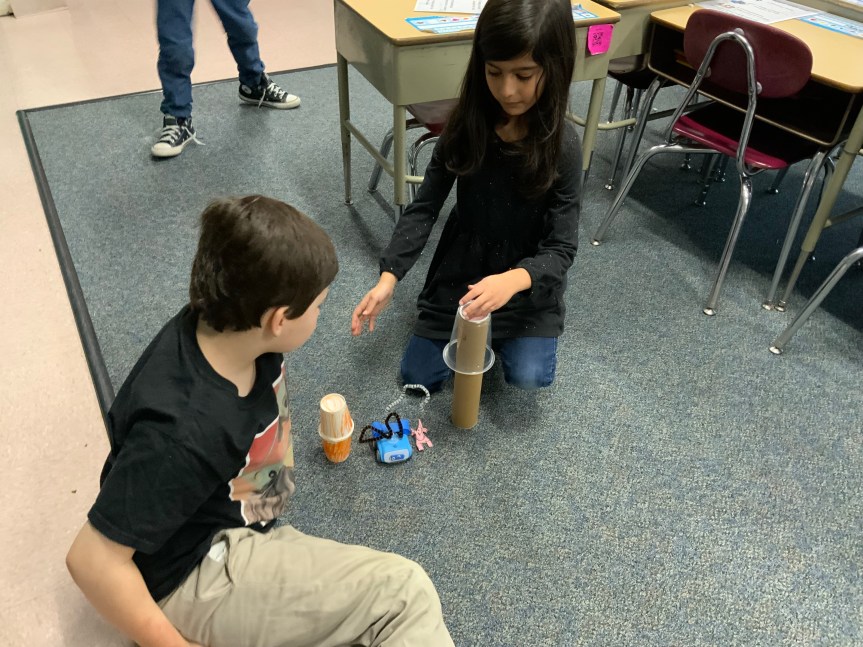
In addition to the academic presentations and discussions happening at school, the Williams Elementary School community collected cardboard tubes during the month of March in preparation for a special solar eclipse project. The week before the solar eclipse, art teacher David Clark and 3rd-grade teacher Brynn Charest helped students create their own eclipse viewers out of the collected recycled materials. The self-created handheld eclipse viewers will allow students to view the solar eclipse indirectly. All students in RSU 18 were also provided solar glasses to be distributed to students on Monday, April 8th.

Students working on their solar eclipse viewers:

In addition, Williams Elementary teachers used eclipse resources provided by the Maine Department of Education to educate students about the upcoming solar eclipse.

“We wanted to ensure that our children had background knowledge about a total solar eclipse so that they would understand what was happening on April 8th and know how to view the solar eclipse safely,” said Principal Smith.

For more information, resources, and safety advice for schools regarding the 2024 Social Eclipse, please visit the Maine DOE Eclipse Resource page.

This story was submitted to the Maine DOE by Williams Elementary School. To submit a story about your school, please fill out our Good News Submission form.

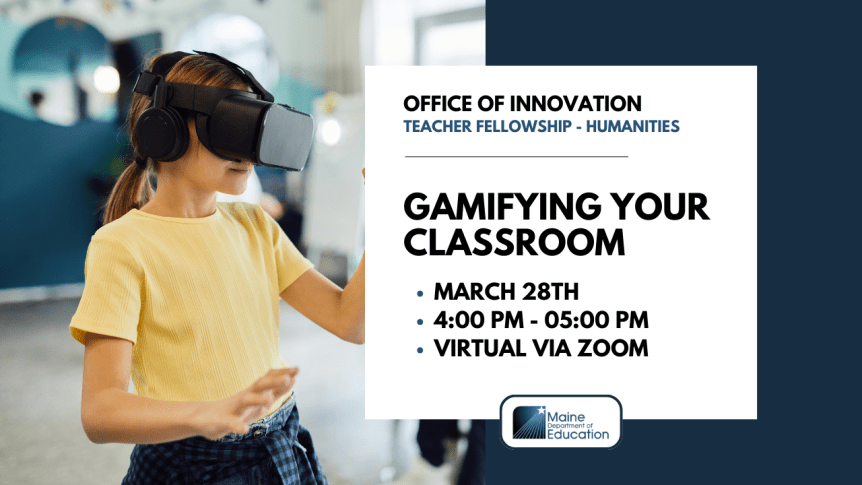
Webinar: Gamifying Your Classroom

In this discussion-based webinar, Maine Department of Education (DOE) Maine Humanities Teacher Leader Fellows Jim St. Pierre and Dorie Tripp host an exchange among teachers who are gamifying their curriculums or who want to learn more about gamification to improve student engagement.

This relatively new approach to teaching is gaining momentum but there are few resources available for anyone seeking to understand more about it. This webinar hopes to address these shortcomings by bringing together interested practitioners to exchange ideas and methods. We hope you join us and we look forward to exchanging ideas.

Continuing Education credits will be offered.

Webinar: Gamifying Your Classroom

For further information, reach our to Maine DOE Humanities Teacher Fellowship Team – James St. Pierre and Dorie Tripp at James.St.Pierre.@maine.gov and Dorie.Tripp@maine.gov

Windsor Elementary School Explores Maine Seaweeds with a Little ‘Kelp’ From Their Friends

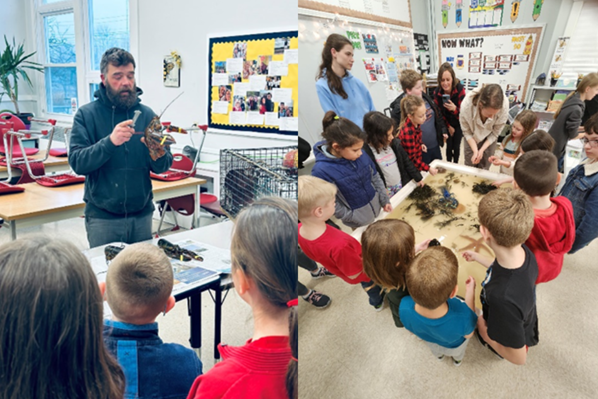
Windsor Elementary School educators Kristel Anuszewski and Jana Diket recently collaborated with Maine Sea Grant, Chef Andrew Wilkinson from North Coast Seafoods, and other Maine businesses to bring seaweed to the classroom and cafeteria.

Since the fall of 2023, both educators have been engaged in professional learning and other efforts to bring the sea inland to their community. Why seaweed? Seaweed farming and harvesting is considered to be “regenerative” and “sustainable” as it requires zero input for growth, no chemicals, fertilizers, or pesticides are needed–only providing benefits for the ecosystem and human health. It plays an important role in combating climate change by dampening wave energy and protecting coastal shorelines, absorbing carbon dioxide from the atmosphere, reducing the effects of ocean acidification by raising the PH, and supplying oxygen to ocean waters. Seaweed is also locally sourced, delicious, and one of the most nutrient-dense foods on the planet.

Seaweed farming and wild harvest also help diversify Maine’s marine economy. It’s a great opportunity and source of income for fishermen and others during the winter season, enabling year-round employment opportunities.

On January 16th, 2024, Windsor Elementary students explored and identified a variety of seaweeds that grow in the Gulf of Maine, and engaged in pressing and other art-related activities. These activities were followed by culinary arts on January 18th with Chef Andrew and his delicious “Seaweed-ish Meat(less)balls,” containing sugar kelp from Maine’s waters. Students also explored a variety of products like seaweed salad and kelp burgers, donated by Atlantic Sea Farms (Biddeford, Maine), as well as a variety of “wild” harvested seaweed products like kelp crunch, seaweed tea, seasonings, generously donated by Maine Coast Sea Vegetables (Hancock, Maine).

Soon after trying the meatballs with Chef Andrew in the morning, Isaiah, an initially skeptical 6th-grader, raised his hand and shared “I didn’t think I would like them, but I really do; may I change my choice for lunch?!”

Although this event primarily engaged 6th, 7th, and 8th graders, all students were offered this option for lunch on January 18th. Windsor School Chefs Missy Parsons and Kara Bailey served up Seaweed-ish Meatballs with pasta and marinara. Chef Ron Adams of Maine Farm and Sea Cooperative, and Chef Mike Flynn, the Director of Student Nutrition Services, Somerville, Maine, stopped in with some Maine marinara with tomatoes sourced from Maine growers– delicious! There was also a special meal option, a kelp burger, served to faculty.

Prior to this collaboration, Anuskewski and Diket introduced their students to seaweed curriculum and activities, and kindergarten through 8th grade students all helped decorate the hallway in preparation for the events. Fish and seaweed adorned the walls, fabric hung from the ceiling with silhouettes of sea-life, creating a magical “seaprise” and experience for all. An intertidal ocean mural with seaweed and other creatures was also on display, built by the 7th and 8th grade students.

Diket plans to continue this work by installing a saltwater tank in her classroom, and both teachers plan on taking students on a field trip to the sea in the spring.

Keri Kaczor, Maine Sea Grant, shared, “It is wonderful to see educators and food service staff at Windsor Elementary collaborate to provide high-quality, hands-on science, art, and nutritional experiences for their students. It’s also a gift to have Maine’s seaweed industry and Chef Andrew generously commit their time, expertise, and products to this effort.”

For more information, please reach out to Kristel (kanuszewski@svrsu.org) or Jana (jdiket@svrsu.org).

This story was submitted by Windsor Elementary School through our Maine DOE Good News Submission form. To submit a story, please fill out the form here.

Photography and Poetry Gallery at Lyseth Elementary School

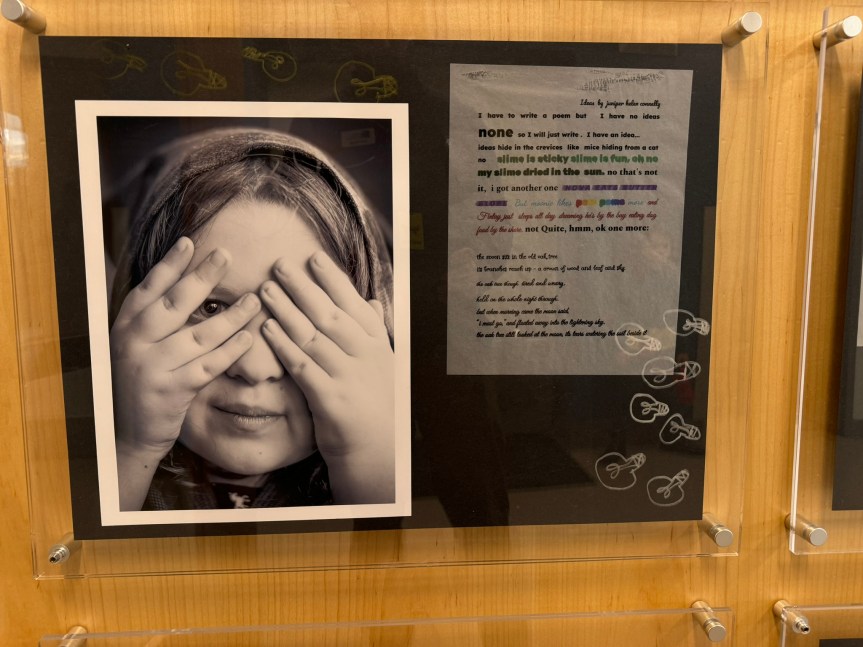
Walking into the bright atrium of Lyseth Elementary School in Portland, you are met by giant black-and-white photographs of the 20 students in Leigh Quigley’s 4th-grade class. Hanging from the skylight are even more pictures, pictures that students took after learning photography elements like composition, light, and focal point from professional photographer Liz Bieber. Proud adults gather around, taking pictures of student work. As you walk to the end of the atrium, framed images of students and the poetry they wrote, the conclusion to a poetry unit designed to build empathy, understanding, and community within the classroom, hang on the wall in neat rows.

The unit began as a single-focus poetry unit where students were exposed to classic and modern poets and forms and then transferred their learning to create original poetry that captured their voices. After a visit to the Bowdoin Museum of Art, student’s curiosity and excitement transformed the single focus into a multidisciplinary unit that included original photography. Students added knowledge and skills around photography to their poetry knowledge and applied those skills by taking candid and studio pictures of their peers that would accompany their poetry. Once photos were taken and poetry was written, students created frames, chose pictures, and typed their poems, which included different fonts and effects that emphasized certain words and phrases.

4th-grade student Patrick explained his choice of purposely using lowercase letters to “make it different than the others.”

The final products were mounted in the atrium, where they would be a prominent addition and visible to every member of the school community.

“I really like taking pictures and writing poetry,” 4th grade student Grace shared. “The hardest part was figuring out what to write, but I used a poem we read before for inspiration.”

Mrs. Quigley noticed an increase in student engagement but also grew professionally herself. “Working with them every day opened my eyes to new ways of thinking. They provided a fresh take on the subject matter through their unique interpretations.”

This project gave students an opportunity to share their voices, but it also has had ripple effects throughout the school. Lyseth principal Sara Goodall shared that “kids, families, and staff are asking and excited to learn more” and that “less than a week after it opened, Lyseth is exploring a photography club.”

The student voice in their poetry, the choice of which photos to use to illustrate their poetry, the community gathering to celebrate,  and the ripple effects it has caused throughout the school are concrete examples of the school’s core value of “we all belong here at Lyseth.”

This story was a collaboration between the Maine Department of Education’s Interdisciplinary Instruction (II) Team and Lyseth Elementary School. If you are interested in collaborating with the Maine DOE’s II Team to showcase your school’s interdisciplinary instructional work, reach out to Kathy Bertini at kathy.bertini@maine.gov. You can also submit Maine school highlights to Maine DOE’s Good News Submission Form.

Solar Eclipse Resources for Educators

On April 8th, a scientific phenomenon that hasn’t occurred since 1963 will darken the skies.  A total solar eclipse will pass over central and northern Maine! To support educators across the state, the Maine Department of Education (DOE) has created a website with solar eclipse resources for the classroom. Don’t be left in the dark; check out these engaging Maine DOE resources for this exciting celestial event.

For more information or support, please get in touch with Erik Wade at erik.wade@maine.gov or Nicole Karod at Nicole.karod@maine.gov.

Register for InnovatED: Igniting Innovation in Education

The Maine Department of Education DOE’s MOOSE and Interdisciplinary Instruction teams are hosting a FREE virtual workshop day with John SpencerKatie Novak, and Lynn Cuccaro on March 28th. This day-long workshop features morning keynotes from all three speakers and your choice of a two-hour afternoon breakout session with either John, Katie, or Lynn.

Limited spots are available for in-person workshops at the Senator Inn in Augusta. The Maine DOE will pay for mileage for in-person participants and, if you live more than 50 miles from Augusta, lodging for the night of March 27th. In-person attendees will be notified on March 7th. Anyone registering after the 7th will fill open in-person spaces on a first-come, first-serve basis.

Sign up here to be part of the virtual workshop and indicate whether you would be interested in participating in person in Augusta if the opportunity were available. Descriptions of keynotes and workshops are available on the workshop web page.

This opportunity is a collaboration between the Maine Online Open-Source Education (MOOSE) project and the Interdisciplinary Instruction Team. The MOOSE project is funded entirely (100%) through Federal money under the Coronavirus Response and Relief Supplemental Appropriations Act (CRRSA) and American Rescue Plan (ARP), totaling $4,598,000 for the current 2023-2024 funding cycle.

Interdisciplinary Resource Highlight for African American Studies: Mathematics, Science, and Technology

The Interdisciplinary Instruction team has curated resources of content and instructional approaches to help educators include and highlight the important contributions of Black and African American Mainers in authentic ways. These project-based strategies include finding local historical figures and guest speakers, researching local history, and bridging content areas.

Incorporating a mathematical and scientific lens into the teaching of African American Studies of Maine can provide an authentic learning experience for all students, highlighting the contributions that African Americans have made in the fields of mathematics, science, and technology.

A 5E inquiry model allows students to construct their own understandings of concepts and skills and then apply them to a new situation. In the example below, students develop background knowledge about an African American scientist or mathematician and apply that knowledge to answer a challenging question.

Engage: Engage students with a video, prompt, or image to capture their attention and develop questions.

  1. If you use the Questions Formulation Technique to support student questioning, an example of a Q focus statement could be: A world without African American scientists and mathematicians. (Use this link to learn more about the Question Formulation Technique and upcoming PD.
  2. You could also use a video or image that illustrates the contributions of African American scientists and mathematicians.
  3. From there, you can use student questions to drive the unit or prompt students with your own guiding/assessment question. A potential guiding/assessment question could be: How would the world be different if the contributions of African American mathematicians and scientists were overlooked?

Explore: Students explore the contributions of African American scientists and mathematicians to develop the needed background knowledge to answer the guiding/assessment question.

Explain: This phase is for formative assessment and clearing up misconceptions through direct instruction, feedback, and reflection.

Elaborate: Students communicate their new knowledge by answering the guiding/assessment question. Elaborate is also the student assessment, which could include a rubric and expectations.

  • The modality of this is very flexible. For example, students could contribute their information to a whole class website to share what they learned with the world, present to an authentic audience of community members, develop a podcast that can be shared, create videos that are shared through YouTube or Social Media, or a documentary that discusses the contributions of the scientist or mathematician and what the world be like without those contributions.

Evaluate: Students and teachers collaborate to evaluate and score student learning through feedback and reflection. This process can look very different depending on the age of students.

For more information about interdisciplinary instruction, please contact Kathy Bertini, Interdisciplinary Instruction Coordinator at kathy.bertini@maine.gov


Interdisciplinary Resource Highlight for Black History Month: Side x Side

The Maine Department of Education (DOE) Interdisciplinary Instruction team has curated resources of content and instructional approaches to help educators include and highlight the important contributions of Black and African-American Mainers in authentic ways.  These project-based strategies include finding local historical figures and guest speakers, researching local history, and bridging content areas.

Incorporating artistic approaches into the teaching of African American Studies of Maine can provide an authentic learning experience for all students. Here are specific instructional strategies using art integration practices:

  1. Visual Storytelling through Artifacts
    1. Strategy: Invite students to explore artifacts and primary sources related to African American history in Maine. Ask students to select or create visual representations of these artifacts, accompanied by short narratives or stories highlighting their historical significance.
    2. Implementation: Students can use a variety of artistic mediums such as drawings, paintings, 3D printing, or digital media to create visuals/artifacts. This approach helps students connect emotionally and intellectually with authentic African American historical artifacts.
  2. Historical Timeline Murals
    1. Strategy: Have students create a collaborative historical timeline mural that illustrates key events, figures, and milestones in African American history in Maine. Each student or group can contribute a section to the mural, incorporating visual elements and brief descriptions.
    2. Implementation: Students can use a large wall space or poster boards to construct the timeline mural. This hands-on project allows students to synthesize information and visually represent the chronological progression of African American history in Maine.
  3. Story Quilts
    1. Strategy: Students can explore the tradition of quilting in African American culture by having students create story quilts that represent different aspects of African American history of Maine. Each quilt square can depict a specific event or theme.
    2. Implementation: Combine the individual quilt squares to form a larger quilt that tells a comprehensive narrative. This tactile and collaborative approach allows students to express their creativity while delving into historical content.
  4. Digital Exhibitions
    1. Strategy: Task students with researching and curating a digital exhibition that showcases images related to African American artwork and exhibits in Maine. Students can provide an interactive tour that highlights African American art images and artist backgrounds.
    2. Implementation: Display the digital artifacts in your classroom or school. Encourage students to write reflections on their interactions with the digital experience.
  5. Interactive Digital Maps
    1. Strategy: Have students create interactive digital maps that highlight the important locations, events, and communities in the history of African Americans of Maine. Utilize multimedia elements such as images, audio recordings, interviews, or personal narratives at each map point.
    2. Implementation: Students can use digital platforms or physical maps to create an interactive project. This strategy encourages geographical awareness and helps students understand the spatial context of Maine’s historical events.
  6. Community Art Installations
    1. Strategy: Have students organize art installations that represent African American history in Maine. Collaborate with local artists and students to create public art pieces that reflect the diversity and contributions of the Maine African American community.
    2. Implementation: Students can participate in the planning, designing, and execution of the art installations that serve as public educational displays.

Side x Side is a Portland-based organization that ignites academic excellence in education through comprehensive integrated arts-based programs, bringing critical thinking, creativity, and innovation into the classroom. Through community partnerships with the University of Southern Maine, local school districts, organizations, artists, professionals, and colleges, Side x Side integrates science, technology, literacy, and the humanities with the arts to enhance the school curriculum.

Side x Side provides free monthly webinars for educators on the first Wednesday of the month from 7-8 pm.  These webinars offer innovative approaches to engage students in diverse modalities of expression, such as visual storytelling to interactive projects, after gaining insights into learned information.

For more resources on an interdisciplinary approach to teaching Black History click on this link.

For more information about interdisciplinary instruction, please contact Kathy Bertini, Interdisciplinary Instruction Coordinator at kathy.bertini@maine.gov