Hannaford Donates $1M to Support “Fuel Kids at School” Hunger Relief Efforts

Hannaford Supermarkets announced a $1 million donation as part of its new “Fuel Kids at School” initiative that is designed to directly address food insecurity and improve access to fresh and healthy food for children.

“Children can’t be at their best if they’re hungry—or thinking about where their next meal will come from. It is our hope that Fuel Kids at School will take us one step further in nourishing our communities, one child at a time,” said Mike Vail, President of Hannaford. “We want access to food to be easy for kids. Locating food pantries where they are—at their schools should make a lasting and deep impact on child nutrition across our five states.”

Hannaford, in partnership with area hunger relief organizations, will establish over two years, 90 school food pantries across Maine and other northeast states. In Maine, Good Shepherd Food Bank received nearly $300,000 to establish school-based food pantries in 30 Head Start preschools throughout the state.

“The correlation between access to nutritious food and early childhood development and learning makes Head Start locations the ideal match for our next phase of school-based pantries,” said Kristen Maile, President of Good Shepherd Food Bank. “We know that expanding our pantry sites to serve pre-school-aged children and their families will play an important role in ensuring a bright future for Maine’s youngest citizens.”

Designed to serve as a vital and convenient resource to students and families in need while also increasing access to healthy and nutritious food, the in-school pantries are dedicated spaces where students can select food they enjoy according to preference and cooking abilities to provide nourishment both during the day and after the school day.

“The Fuel Kids at School funding, with its focus on Head Start programs, will enable us to make nutritious food readily available to more families at risk of hunger in the critical years before their children enter the public schools,” said Kathryn Sargent, Executive Director of the Locker Project.

The announcement took place in conjunction with a donation of $1,000 in school food pantry staples to the East End Children’s Workshop along with chef-prepared food for the parents and students at the local pre-school.

Hannaford Supermarkets has a longstanding commitment to supporting hunger relief in its communities. In 2018, Hannaford donated nearly 26 million pounds of food throughout the Northeast, including 5.3 million pounds in New York; and raised $1.1 million in partnership with its shoppers to feed individuals in need through the annual Hannaford Helps Fight Hunger program. Earlier this month, Hannaford announced that it has donated more than $1 million to non-profits throughout New York and New England as a result of its reusable bag program, a portion of which is dedicated to hunger relief organizations and has funded more than 1.8 million meals to date.

Manchester School of RSU 14 in Windham Celebrates National Farm to School Movement

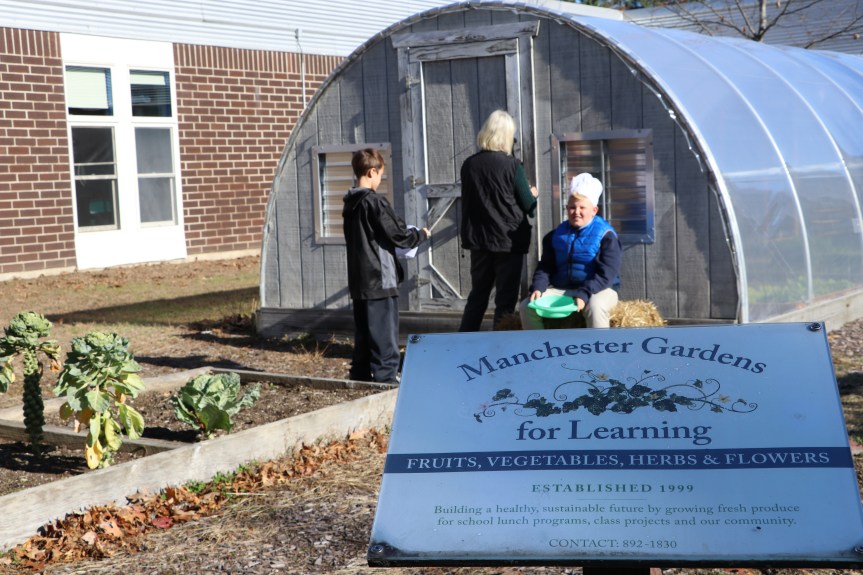
Students, teachers, school garden coordinators, and school nutrition staff from Manchester School in RUS 14 along with representatives from The Maine Department of Agriculture, Conservation & Forestry and the Maine Department of Education participated in a day of activities to celebrate growing, harvesting and eating local food on Monday November 4th.

The event included education about the importance of local food and the relationship schools are developing with local farmers to provide fresh, quality fruits, vegetables, and produce to Maine schools. Students worked with recently harvested carrots from their school garden to prep, cook, and sample fresh carrot curry soup and carrot muffins.

A fixture at the Manchester School for the past 20 years, the School Garden has become a big part of the community providing fresh produce for the school nutrition program, local shelters, as well as students, staff, and community members who provide a helping hand in keeping the garden going.

IMG_2841.JPG

To optimizing the growing season, the Garden features a hoop house and raised beds that allow students and school staff to grow fresh produce for almost the entire year-round. The Garden is also rooted in the curriculum, providing a bases for many lessons from science to English, and community development. “The learning continues even though we’re not out in the soil,” said Stacy Sanborn, 4th Grade Teacher and School Garden Coordinator. Staff members from the Manchester School wrote grants and utilized local volunteers, and local experts to put the hoop house in place, and it has been a huge success for them.

It was an exciting day of activities drawing TV cameras and photographers to capture students happily engaged in chopping, cooking, and learning for the very purpose of celebrating a moment that is quickly moving across Maine. The Manchester School in Windham is one of the more than 400 Maine schools that participate in a farm-to-school program.

The collaboration between the Department of Education and The Maine Department of Agriculture, Conservation & Forestry continues this fall. The two departments are producing a series of public service announcements to showcase how more Maine farms can establish relationships and sell their produce to Maine schools.

For more information about the Farm-to-School Program, please visit this website.


Maine DOE Hosts First School Vegetable Prep-Culinary Training in Culinary Classroom

Last week, the Maine Department of Education’s Child Nutrition Team hosted its very first hands-on training in the newly built Child Nutrition Culinary Classroom.

Maine Schools in attendance had the opportunity to learn from Child Nutrition Chef Michele Bisbee about different steps they could take to prep vegetables more efficiently. During the class, participants learned how to use small equipment that can help speed up kitchen preparation.

The class also worked on developing skills that will help save time in the kitchen, enabling them to focus on providing more meals that have been cooked from scratch.

Maine Officially Launches Harvest of the Month Program

The Maine Department of Education’s Child Nutrition Program is excited to announce the official launch of Maine’s Harvest of the Month (HOM) Program. The program was piloted in schools in Spring 2019 with participation from over 165 schools state-wide. The full roll out of the program begins this fall for School Year 2020.

PROGRAM BACKGROUND

Harvest of the Month (HOM) is a nationwide marketing campaign promoting the use of seasonally available, local products in schools, institutions, and communities. Each month, a different local product is highlighted and participating entities pledge to serve the product and promote it through educational materials and activities. The program launched in California and has been replicated by dozens of other states across the country. With Maine’s participation, all New England states now have Harvest of the Month programs.

FARMERS AND LOCAL PRODUCERS

One of the major goals of the Maine HOM program is to support Maine farmers and producers, and therefore Maine’s local economy. To help School Food Service Directors successfully source each month’s product, a list of participating producers has been created to help them connect with local farmers, providers, and distributors. Farmers and producers who provide HOM products to schools have the chance to be highlighted on the DOE website, HOM social media, etc. We would like to add more producers to the list for School Year 2020!

SCHOOL FOOD SERVICE

Participating School Food Service Directors are asked to take a pledge to serve the monthly HOM product at least two times per month in their cafeterias. In addition to this, they pledge to display HOM promotional materials, such as posters, fun facts, and stickers for students who have tried the HOM product. Featured recipes are also provided each month. They also agree to participate in evaluations so that local produce procurement can be tracked and to analyze the success of the program. Local products may be sourced directly from farms, farmer cooperatives, and distributors. When buying produce directly from a farm or farmer cooperative, School Food Service Directors may take advantage of the Local Produce Fund, which reimburses $1 for every $3 spent on local produce.

Agriculture and Education in Partnership

The Maine Department of Education and Maine Department of Agriculture, Conservation and Forestry have been exploring more ways to connect farmers and food producers with their local school districts. “School food service programs and local farms can go hand and hand, which is why the Maine Bureau of Agriculture, Conservation and Forestry is pleased to collaborate with DOE’s Harvest of the Month program,” according to Nancy McBrady, Director of the Bureau of Agriculture, Food, and Rural Resources.  “This program allows participating schools to purchase local, nutritious foods which helps boost farm incomes while educating students about local agriculture.  The program directly links School Food Service Directors with participating farmers and producers in their community and the Bureau is thrilled that the Local Produce Fund can assist School Food Service Directors in ordering even more local produce.  The Bureau encourages local producers to sign up to be a Harvest of the Month source for schools today!”

IF YOU ARE INTERESTED IN BEING A HOM SOURCE FOR SCHOOLS,

CONTACT:

Robin Kerber
Farm and Sea to School Coordinator
robin.kerber@maine.gov

OR SIGN UP HERE ( www.maine.gov/doe/harvestofthemonth/producers)

BackPack Team at Gorham School District Receives $25,000 Neighborhood Assist Grant

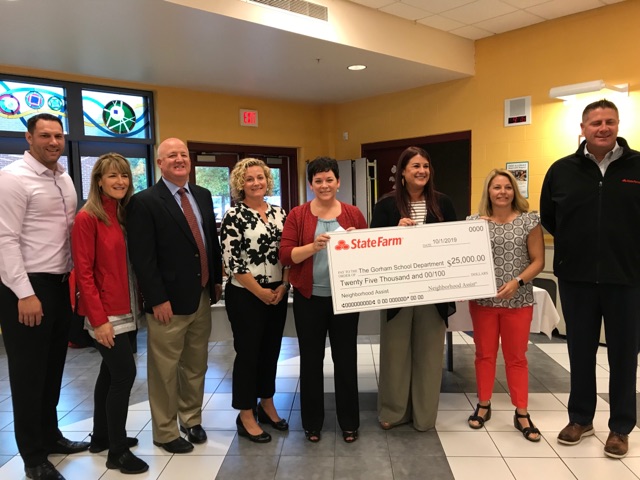
Gorham School District was one of 40 recipients nationwide to receive a $25,000 Neighborhood Assist Grant. They received the award for the efforts with their BackPack Program and School Garden, an initiative that provides food for students and families experiencing food insecurity in the community.

This past June, State Farm accepted 2,000 applications for their Neighborhood Assist grant program.  Submissions represented causes from throughout the country which focused on education, safety, and community development initiatives.  A review committee narrowed down the submissions to the top 200 finalists which were posted online and voted on by the public.  The 40 causes with the most votes each won a $25,000 grant.

Gorham’s BackPack Team Administers weekend food and snack bags to students, offering a school food pantry at the high school, and by growing a school garden which provides fresh produce to the local food pantry during the growing season. The BackPack Program sends food home every weekend with students who would otherwise not have enough food to last through the weekend. Learn more here.

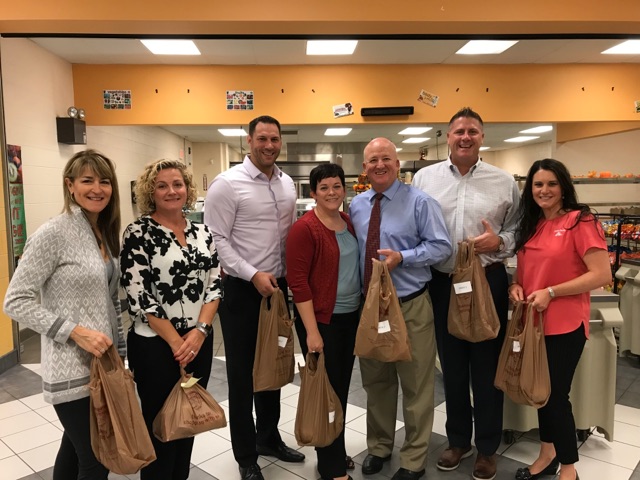
School Administrators holding shopping bags of food.

LD 577- An Act To Increase Access to Nutritious Foods in Schools by Implementing an After-school Food Program for At-risk Students

LD 577, Public Law 2019, Chapter 428 An Act To Increase Access to Nutritious Foods in Schools by Implementing an After-school Food Program for At-risk Students, will become law on September 19, 2019. We have received questions from district leaders, asking for clarification.

The law states that, beginning in the 2019-20 school year, a school administrative unit with at least one public school in which at least 50% of students qualified for a free or reduced-price lunch during the preceding school year, shall participate in the federal Child and Adult Care Food Program (CACFP). A report listing all districts/schools that meet that 50% or more criteria can be found here.  We have also provided a link for those who wish to read LD 577 in its entirety.  Please note that a school administrative unit that is required to operate a federal Child and Adult Care Food Program may choose not to operate such a program if it determines, by a vote of the governing body of the school administrative unit, and after notice and a public hearing, that operating such a program would be financially or logistically impracticable.  A program, or the public hearing and vote to not host a program, can occur at any point in a school year.

TO ASSIST OUR SCHOOL DISTRICT AND NUTRITION LEADERS

  • Child Nutrition has created a “Frequently Asked Questions” document regarding LD 577, and it is posted on our webpage.
  • A FREE Webinar on the basics of the requirements and program is being offered. Register NOW!

CACFP At Risk 101 Webinar
September 18, 2019 at 1:30-2:30pm
Topics:

    • Briefly discuss LD 577 and requirements
    • CACFP meal pattern
    • Record keeping requirements
    • Filing claims
    • CACFP review process
    • CNPweb agreement

If you have any questions regarding the CACFP At Risk Afterschool Program, please contact the Child Nutrition Office at 624-6843.


Maine Farm to School Network, in Conjunction with the Maine Department of Education, Child Nutrition, Offers Engaging Local Foods Trainings in October  

We are excited to announce that the Maine Farm to School Network has received a $25,000 USDA Farm to School Training Grant to build local food procurement capacity in Maine schools. Designed to increase the availability of local foods in schools, USDA Farm to School grants can help farm to school programs get started or expand existing efforts. “This award will develop the capacity of Maine school food directors to purchase from and support Maine farmers,” comments Stephanie Cesario, Maine Farm to School Network Coordinator. “The funds will support local foods procurement training for food service directors across the state as well as network building,” she added.

The Maine Farm to School Network, in collaboration with other state farm to school advocates, will offer local procurement and network building trainings at the 2019 Maine Farm to School Conference being held at the Kennebec Valley Community College, Alfond Campus in Clinton, ME on October 3-4, 2019. The combined trainings count towards 7.25 contact hours for school nutrition professionals.

Maine schools are ramping up their local food purchasing to support local farms and the local economy, while making school meals fresher and more appealing! The pre-conference local procurement training on October 3rd will join Martine Cherry, USDA Team Lead and Procurement Specialist, and Abbie Nelson, Farm to School Program Director from Vermont Food Education Every Day (VT FEED) and NOFA-VT for a fun, interactive afternoon of digging into local food procurement rules and guidelines so schools can get the local foods they want! This hands-on workshop is designed for school nutrition directors, kitchen managers, business managers, and others responsible for school food purchasing.

This free, 3-hour training will explore topics such as micro purchasing, informal bid process, Buy American provision, purchasing thresholds, values-based buying, and the importance of relationship building with food producers. Participants will learn how to apply strategies to make the most of marketing tools like Maine Harvest of the Month, and reimbursement opportunities like the Local Produce Fund, to either start a local purchasing strategy or take it to the next level.

To register for the training and to learn more about the 2019 Maine Farm to School Conference and Maine’s Farm to School initiatives visit www.mainefarmtoschool.org/conference. A limited number of scholarships are available to support costs associated with attending the local procurement training.

Maine DOE Launches Culinary Classroom to Support School Meal Programs; EUT to Share Office Space

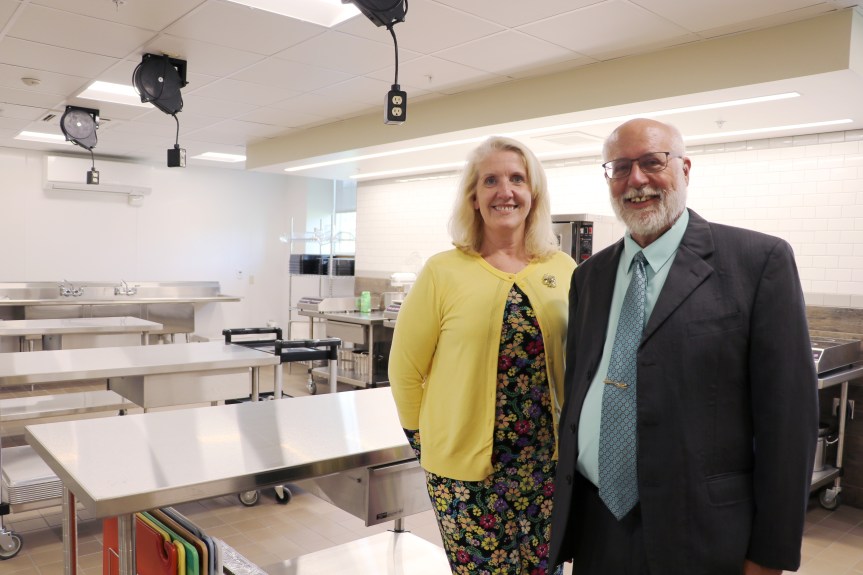
The Maine Department of Education (DOE) recently held an open house to showcase a new culinary classroom based in its Augusta offices. Located just across the river from the Capitol complex, the new space also houses offices for the Child Nutrition Team and the Education in Unorganized Territories (EUT) team as well.

The new kitchen is supplied with industrial stoves, appliances, sinks, counter space, ventilation, and tools that will allow the child nutrition team to host professional learning opportunities for school nutrition staff that are working in schools throughout the state. Pending the final touches on some cameras and tv monitors, the DOE will be planning some upcoming webinars, with tips and information about how to utilize and cook with USDA approved foods in school kitchens, including cooking from scratch, with vegan options, and keeping up with trends in the food service industry, among other topics.

Just down the hall from the kitchen there is ample office space for the staff who work on the Child Nutrition teams including two chefs and several other nutrition specialists. Maine DOE’s Child Nutrition team is a federally funded function of the Department that works to support federal programs that help fight hunger and obesity, by reimbursing organizations such as schools, child care centers, and after-school programs for providing healthy meals to children. They also help run the Summer Food Service Program and oversee several United States Department of Agriculture (USDA) Food and Nutrition Services programs and initiatives that provide healthy food to children.

Child Nutrition Chefs, April Taylor and Michele Bisbee.

While the Child Nutrition Team is working hard to ensure Maine kids have healthy meals, their neighbors, the EUT team, are next door providing State-run administrative services for Maine schools that enroll students from unorganized territories throughout the State, ensuring students who do not have a school near their home have access to elementary and secondary education. The EUT places and supports 900 students from unorganized territories all over the state with tuition, special education services, transportation, and advocacy. They also help run EUT schools, Connor Consolidated School in Connor Township; Edmunds Consolidated School in Edmunds Township; and Kingman Elementary School in Kingman. Maine has 421 (and growing) unorganized territories with students from north to south, inland and islands, mountain areas in the west, and farms areas in the northeast.

In addition to the day-to-day flow of files that pass through the EUT offices during regular business, they also house some unique historical documents with a rich history dating back before the 1920s. Some of which are now on display for visitors to see in their new space, including black and white pictures, hand-drawn floor plans from old school houses, and even some old tuition bills.

The open house drew colleagues and news stations alike and ended with an announcement that the new kitchen space will be dedicated to Child Nutrition Director Walter Beesley who was instrumental in launching the culinary classroom in hopes of providing more hands-on, advanced support to Maine school kitchen staff.

For more information about Maine DOE’s Child Nutrition Team, please visit their website or contact their offices, and for more information about Education in Unorganized Territories, please visit this webpage for contact information.

MAINE HARVEST OF THE MONTH

ABOUT

The Maine Department of Education Child Nutrition Program is excited to announce the official launch of Maine’s Harvest of the Month (HOM) Program. The program was piloted in schools in Spring 2019, with participation from over 165 schools state-wide. The full roll out of the program begins this fall for School Year 2020.

PROGRAM BACKGROUND

Harvest of the Month (HOM) is a nationwide marketing campaign, promoting the use of seasonally available, local products in schools, institutions, and communities. Each month a different local product is highlighted, and participating entities pledge to serve the product and promote it through educational materials and activities. The program launched in California, and has been replicated by dozens of other states across the country. With Maine’s participation, all New England states now have Harvest of the Month programs.

MAINE HARVEST OF THE MONTH

Participating School Food Service Directors are asked to take a pledge to serve the monthly HOM product at least two times per month in their cafeterias. In addition to this, they pledge to display HOM promotional materials, such as posters, fun facts, and stickers for students who have tried the HOM product. Featured recipes are also provided each month. In taking the pledge, schools agree to participate in evaluations so that local food procurement can be tracked and to analyze the success of the program. Local products may be sourced directly from farms, farmer cooperatives, and distributors. When buying produce directly from a farm or farmer cooperative, School Food Service Directors may take advantage of the Local Produce Fund, which reimburses $1 for every $3 spent on local produce (up to $1,000 per district for SY 2020).

To sign up for the Harvest of the Month Program, please sign the pledge at https://forms.gle/M3av147TXBHBjGPh9. Interested school districts have until October 1, 2019 to sign up.

FOR MORE INFORMATION, CONTACT: Stephanie Stambach, Child Nutrition Consultant at Stephanie.stambach@maine.gov or 207-624-6732, or visit www.maine.gov/doe/harvestofthemonth/

CDC Releases New Resources: Talking to Youth About the Risks of E-Cigarettes

The Office on Smoking and Health, CDC released a new feature for a new school year, aimed at helping people who work with youth to open a discussion about the risks of e-cigarettes.

E-cigarettes are now the most common type of tobacco product used by youth in the United States. More and more youth report trying and regularly using e-cigarettes. The rising numbers threaten decades of progress in controlling youth tobacco product use.

Nicotine in e-cigarettes can harm developing brains, and may make it more likely that young people will start using regular cigarettes. This feature gives important facts about the risks of e-cigarettes, plus tips for talking to young people and resources for both adults and youth.

Everyone—teachers, coaches, health care providers, and parents—has a part to play in educating youth about the risks of e-cigarettes.

Be sure to follow CDC Tobacco Free on Facebook and Twitter for social media posts to share with partners, friends, and family.

For more information and resources in Maine go to Prevention for ME.