
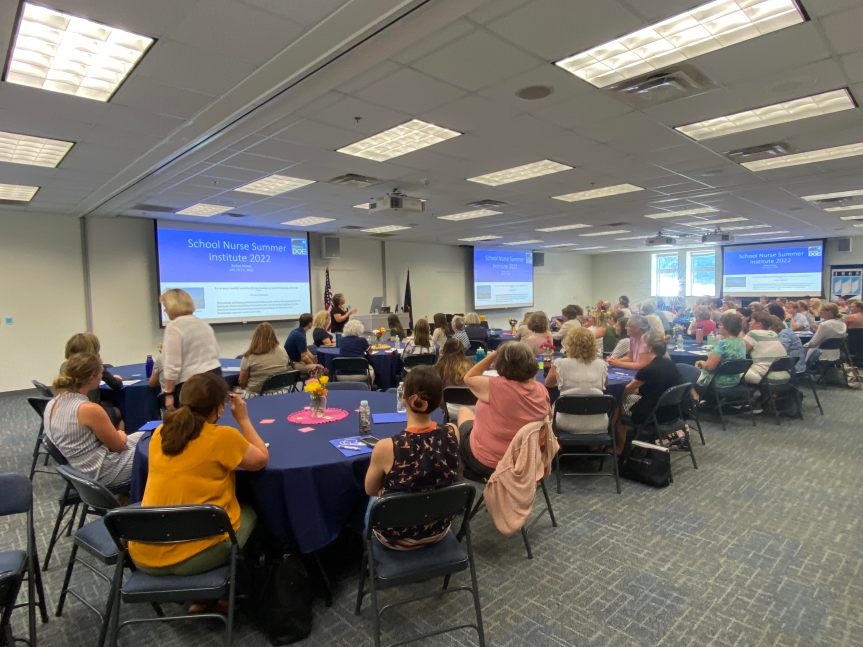
Nearly 150 school nurses from across Maine gathered this week in Belfast for the Maine School Nurse Summer Institute. This was the first in person Summer Institute in four years and allowed school nurses to come together to build community and connection, participate in professional learning opportunities, identify strategies to care for themselves in the same way they care for so many others, and share challenges and opportunities for themselves and the school nursing field following several years on the frontlines of combating COVID and keeping their schools safe.
Nurses at the Summer Institute were guided by Florence Nightingale’s words to “let us never consider ourselves finished nurses; we must be learning all of our lives.”
Maine Education Commissioner delivered a keynote address during the Summer Institute and told the school nurses in attendance: “You take care of everyone else…please take care of yourselves.”
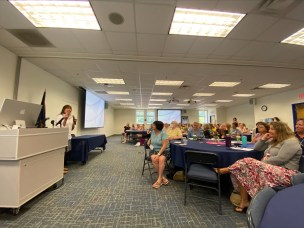 “I am in awe of the work you have done. You are singlehandedly running an ER in your schools and facing a revolving door of kids who need you and search your face for assurance that everything will be alright,” said Makin. “The work you do in general is so huge, and during COVID-19 it was over the top. It is so appreciated.”
Makin honored the work done by school nurses during the pandemic and talked about the toll it takes on people to be in that constant state of being on alert and dealing with trauma. She urged the nurses to pay close attention to their wellbeing.
Maine Department of Health and Human Services Chief Child Health Officer Amy Belisle also spoke, detailing the many heroic efforts of school nurses during the pandemic to keep students safe and schools safe and open.
Nearly 9 million items of PPE were delivered to schools between July of 2020 and December of 2021, with school nurses at the center of managing those incoming deliveries, teaching staff and students on using PPE, developing usage policies, and troubleshooting. There were 242,000 COVID-19 antigen tests provided to schools since 2020, 1 million at home test kids provided to schools for student, staff, and family use, and school nurses helped facilitate more than 150,000 polled tests during the pandemic. And school nurses managed implementing the frequent updates and shifts of the COVID-19 Standard Operating Procedure (SOP) for schools.
School nurses also participated in the school health advisory group, that started out meeting weekly in the summer of 2020 to meet with state health and education leaders on COVID-19 mitigation strategies, and nurses who were part of the state’s School Public Health Response Team responded to 3,700 calls and 12,000 emails related to COVID-19, handled 34,000 cases, and ran 540 vaccine clinics.
Nurses had an opportunity to process and discuss the stress and strain caused by the pandemic, strategies to address their wellbeing, and how to move forward in this new phase of the pandemic. The Summer Institute featured a wide variety of workshops and professional learning opportunities around adjusting to the wake of the pandemic, social emotional learning, interprofessional collaboration & nursing, the school nurse role in a crisis, and children’s health related topics including handling common school injuries, managing diabetes, seizures, and oral health.
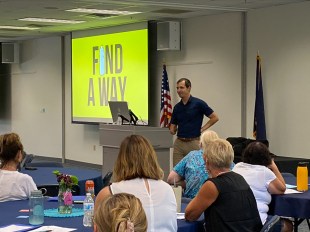 Brad Hurtig delivered a keynote address, sharing with the audience his personal story of courage and resilience after losing both hands as a teenager after an accident involving a 500 ton power press.
“We all face challenges,” said Hurtig. “How you handle adversity will define your life and being able to handle it will set you apart.”
Hurtig shared feeling like everything had been taken away from him in those first few months after his accident and how he was laying on the couch thinking “why me?”. But step by step he found a way forward, often through the help of his football coach. He was able to return to the football field and went on to be first team all-state his senior year. And his prosthetics enabled him to do things with hands once again.
“When you want something, lean in and relentlessly go after it. Find a way,” Hurtig said, sharing the message he delivers at schools across the country. “If you are willing to have the right mindset, to adapt, to have perseverance, then you will find a way.”
Hurtig connected his experience to what school nurses have faced over the past few years and their power to help students find a way.
“You’ve had a rough few years and you know all about how to adapt and do things differently,” said Hurtig. “There is no better reward than helping another human being. I know your moments with students can be brief but find ways to show that they matter and that their life counts. It goes a long way for a struggling child.”

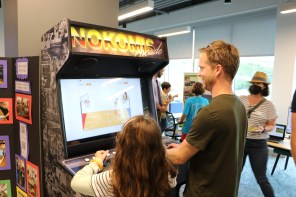 Maine has long been a leader in integrating technology and learning, and that holds true with computer science education. Instead of computer science being a separate course only some students take or an “add on”, Maine provides the support and resources to encourage all schools to provide interdisciplinary, project-based computer science learning experiences that incorporate computational and critical thinking, innovation and design processes, and applied learning at all grade levels and across all subject areas.
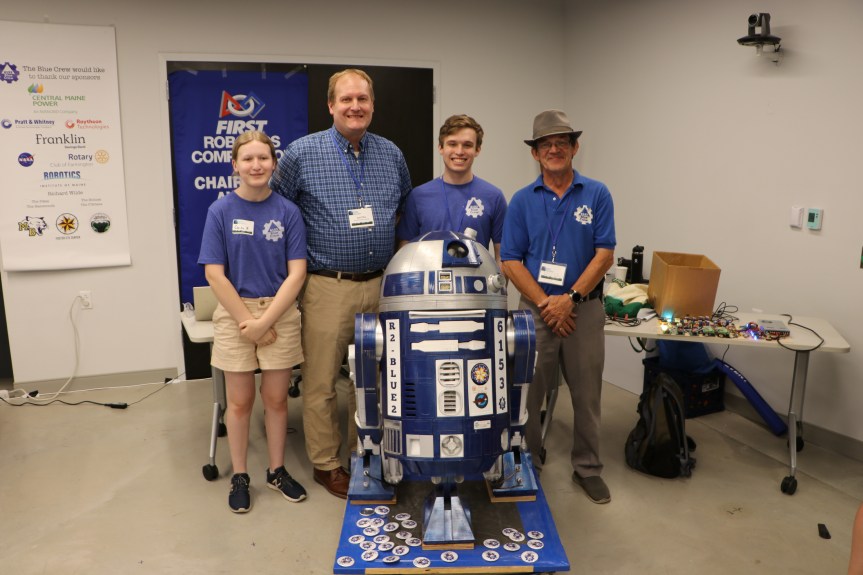
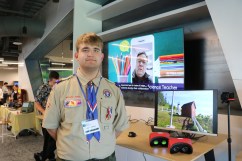
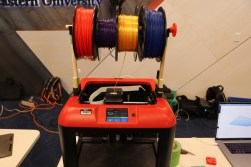
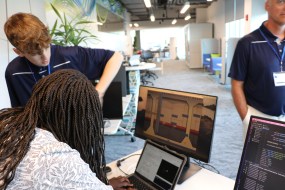 The Computer Science Education Showcase illustrated the state’s approach, with VR headsets transporting users to Maine State Parks which a student developed over the course of last summer, 3D printing demonstrations, a full-size arcade game developed by students, 6th graders demonstrating their block coding skills, a wide array of apps and websites around difference content areas created by students, and a robotics room with world champion level robotics teams. All Pre-K through 12 grade levels were represented, with educators highlighting how they were incorporating computer science education at younger grade levels, including having 5th grade students partner with kindergarten students to teach them basic coding skills and a new mobile makerspace that will rotate between elementary schools offering computer science education for Pre-K through fifth grade students.
 Maine Department of Education Commissioner Pender Makin, University of Maine President Joan Ferrini-Mundy, 2022 Presidential Scholar Sirohi Kumar, Bethel second grade teacher Alice Lee, Jackson Labs Vice President for Education Charlie Wray, and the Roux Institute’s Chief Administrative Officer Chris Mallett participated in a panel discussion on how Maine is paving the way for students and teachers to be successful in the world of computer science. The discussion focused on reaching more students, making computer science more accessible to all, taking an interdisciplinary approach to computer science education, and how the critical and computational thinking, collaboration, and creative design skills developed through computer science education are critical to success in nearly every career and 21st century life.
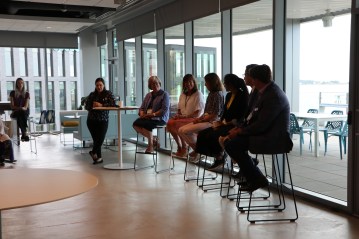 “Computer science is about approaching a problem with optimism, logic, critical thinking, design thinking, creativity and vision. We need to make computer science accessible for every educator and every student and continue this tradition that we’ve started in Maine of interdisciplinary, project-based computer science education across all grades that is really contextualized in a way that is meaningful for kids,” said Education Commissioner Pender Makin.
 “We now live in a world that is immersed in big data and the amount of data being generated is so tremendous that this next generation has this great opportunity to enter so many career fields where computer science has a touchpoint. It’s not just being a software engineer or computer scientist, but all of us can learn and solve problems with big data and the amount of careers that can come out of good computer science education is endless,” said Jackson Labs Vice President for Education Charlie Wray.
 Maine DOE Newsroom