Stepping Forward: How the Transition of CDS Services to School Districts is Changing Families’ Lives

RSU 35 students (photo credit: RSU 35)

Ask South Berwick parent Mary Hayes about this past year, and she would tell you that it has been “life-changing”—particularly for her adopted four-year-old, Matthew. Hayes took Matthew in through foster care when he was two years old and says he experienced some trauma early in life. When Matthew started attending daycare last year, he struggled behaviorally and did not do as well as her older son.

“My biggest concern was that he was becoming the ‘bad’ kid,” Hayes said. “[Matthew] was the only one getting kicked out of class. … I was like, ‘Oh no; great start to life.’”

Matthew was placed on a waiting list with Child Development Services (CDS) to receive one-on-one support, and Hayes admits that the wait her family experienced was frustrating. She said it was unclear how long it would be until Matthew got the services, which were essential before starting kindergarten. Hayes had to cut back on hours at her job to dedicate more time to caring for Matthew, taking a toll on her family financially and mentally. 

The “life-changing” moment that Hayes described came with a call one day from Scott Reuning, Director of Special Services at RSU 35. The school district had implemented universal pre-K for 50 years and made the decision to opt into Cohort 1 of the transition of Early Childhood Special Education services for children ages three through five from CDS to school administrative units (SAUs). As a result of this participation, Matthew could enroll in RSU 35.

“I’m not exaggerating when I say it was like a miracle,” Hayes said. “I cried. It was amazing.”

“I wasn’t aware of the pay-off I was going to get until it came,” Reuning said of the CDS transition.

Reuning explained that RSU 35 joined Cohort 1 just three weeks before the start of the 2024-2025 school year. While that tight turnaround was initially somewhat daunting, he said the district was able to get itself in place to begin welcoming children by the time school started. Reuning credited school leadership for being “all in” as a reason for that success.

Throughout the past year, RSU 35 has even been able to accept some children from neighboring districts, as well. Reuning said the feedback from parents about the services that their kids are receiving has been positive.

“Parents are extremely happy,” Reuning said.

RSU 35 students (photo credit: RSU 35)

The long-term benefits of providing these services to children at an early age was another reason that RSU 35 made the choice to join Cohort 1. RSU 35 IEP Coordinator Andrea Biniszkiewicz said that she has seen amazing progress in students so far and believes that will translate to when they are school-aged.

“As they get older, I think we’re going to see students have more skills because in the past, they weren’t always getting the services that they needed,” Biniszkiewicz said. 

RSU 35 teacher Laurie DuBois said she is grateful for the obvious benefits of the CDS transition in the moment, too—like having an opportunity to connect more closely with families.

“Enrichment, inclusivity, relationship, familiarity, consistency, community, and comfort are among many words that I describe as positive impacts,” DuBois said, later adding, “I am incredibly proud that RSU 35 became a Cohort 1 district to meet the critical needs for families within our community.”

Going into this coming school year, Matthew will be in the pre-K class at RSU 35. Hayes said that she is no longer worried about how he might do—and neither are his teachers.

“He feels good about himself. He thinks he’s smart; he wants to go to school. That’s a different kid,” Hayes said.

Hayes said ultimately, she is grateful for the immense support she has received from RSU 35 and hopes that her parent friends in other districts can receive similar help.

“Having all of these professionals who I felt like were on my team was a total game-changer,” Hayes said. “I felt like we were all a team looking out for Matty.”

RSU 35 and the Maine DOE Office of Special Services and Inclusive Education contributed to this article, written as part of a series highlighting the ongoing efforts of CDS and public schools in providing comprehensive educational services to Maine’s children with special needs. To submit a good news story to the Maine DOE, please fill out the good news submission form.

St. George Opens Nation’s First Pre-K–8 Career and Technical Education/Makerspace Building

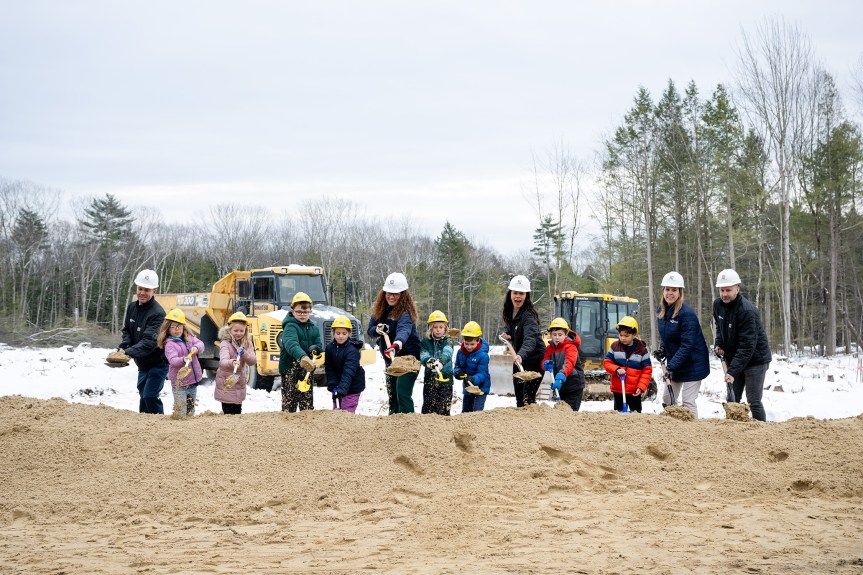
In 2020, a small but determined team of educators at St. George Municipal School Unit embarked on a bold innovation journey—one that culminated in a major milestone over the summer. Guided by district leadership and a committee of teachers, families, school board members, and business owners, the team grounded its vision of a new, innovative facility in the community’s past, present, and future.

St. George Municipal School Unit was one of the first recipients of the Maine Department of Education’s (DOE) Rethinking Responsive Education Ventures (RREV) grant, a $16.9 million federal grant awarded to Maine in 2020. The state was one of only 11 to receive the funding, with more than $10 million eventually distributed to 42 school districts. St. George received $350,000 to kick-start its building design process, curriculum development, and capital campaign.

St. George Municipal School Unit’s ambitious goal was to use the RREV grant to help create the nation’s first pre-K—8 Career and Technical Education (CTE)/Makerspace building. This innovative space—the GRACE Innovation Center—would honor the rich heritage of the St. George community, while preparing students for the challenges of today and tomorrow. A key inspiration for the project was the Lillius Gilchrest Grace Institute, a nonprofit founded in 1936 by the Grace family in memory of Lillius Grace, a St. George native.  The Grace Institute offered classes to St. George students in home economics and manual arts for more than 70 years, laying the groundwork for the modern CTE/Makerspace vision.

“Many have been with us since we began this journey more than three years ago,” Mike Felton, former St. George Municipal School Unit superintendent and new GRACE Innovation Center executive director, said of the team members who helped to guide this project. “[They had] a vision for re-engaging students in learning and reimagining public education by returning to our roots—hands-on, minds-on learning connected to career and community.”

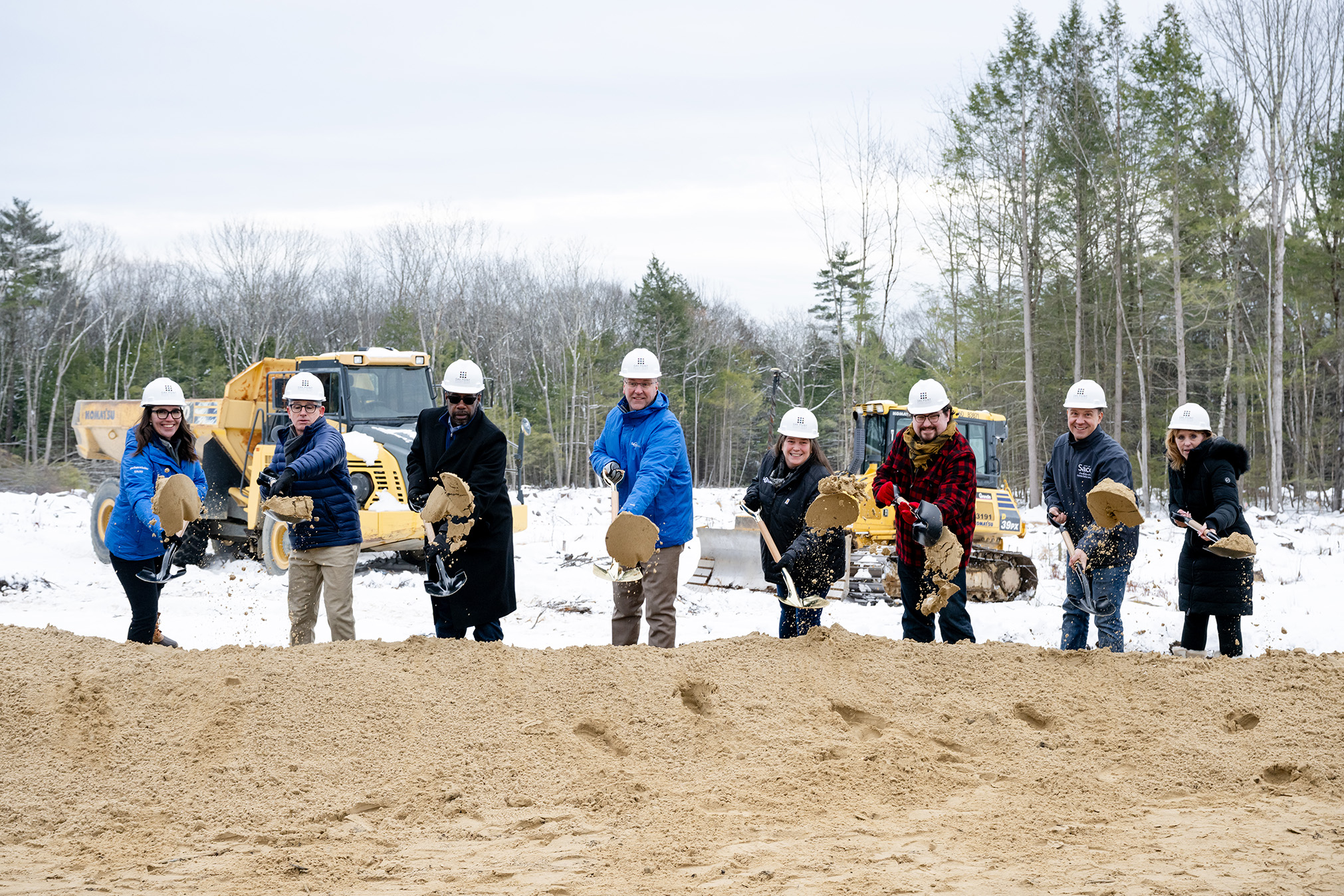
On August 14, this dream became a reality with the grand opening of the GRACE Innovation Center in St. George. The celebration drew in hundreds of community members and special guests, including U.S. Representative Chellie Pingree, St. George school board members, St. George students, and Steel-Pro CEO and president Steve Ladd. Maine DOE Office of Innovation staff who partnered with St. George Municipal School Unit and supported this project were honored to also attend and celebrate the hard work of so many passionate educators and community members.


“Congratulations to the entire St. George team for your vision, dedication, and relentless pursuit of innovation in utilizing this RREV grant to create meaningful opportunities for your students,” Maine Education Commissioner Pender Makin said. “Your work is a shining example of all that is possible when community, history, and forward-thinking education collide.” “This building, this project, this school, this community—it’s about building and creating our future together. Our imaginations will not be limited by what others say is possible. When someone says, ‘Isn’t that a big vision for a small community?’—we know the answer,”  Felton said during the event. “We can give our kids a better today and tomorrow. We can lead the nation in returning to hands-on, minds-on learning and valuing the trades. We can do all that as a small fishing community on a peninsula in Maine. We can do this because we’re a small fishing community on a peninsula in Maine that never forgot our roots and created a new building with an old soul.”

While many additional fundraising efforts helped St. George Municipal School Unit to reach its $4.5 million goal, the RREV grant played a crucial role. It funded educator stipends for work to develop a pre-K—8 CTE curriculum and helped to support architectural designs, site planning efforts, and construction. At the August 14 event, the RREV Mobile Learning Van was present to showcase all of the innovative pilots that RREV supported.

“I’m pretty sure this is the best million dollars that Washington has ever spent,” U.S. Representative Chellie Pingree remarked during the event. “You are truly creating a role model for communities all over the country.”

This story was written in collaboration with St. George Municipal School Unit. To submit a good news story to the Maine DOE, please fill out the good news submission form.

Maine DOE to Host ‘For ME’ (Pre-K through Grade 2) Professional Learning Communities During 2025-2026 School Year

The Maine Department of Education (DOE), in collaboration with teacher leaders from across the state, is once again offering professional learning communities (PLCs) for educators and caregivers implementing the For ME programs, which include Pre-K for ME, K for ME, 1st Grade for ME, and 2nd Grade for ME.

These monthly virtual PLCs are designed to deepen understanding of program design and implementation. Participants will explore units and components in greater depth through real-world examples, shared practices, open discussion, and student work. Whether you are new to a program or have been using it for several years, these PLCs offer valuable support for teachers, ed techs, instructional coaches, and other staff.

Pre-K for ME PLCs
Sessions will be held virtually from 3:30-4:30 p.m. on the first Monday of each month:

  • October 6, 2025
  • November 3, 2025
  • December 1, 2025
  • January 5, 2026
  • February 2, 2026
  • March 2, 2026
  • April 6, 2026

K for ME, 1st Grade for ME, and 2nd Grade for ME PLCs
Sessions will be held virtually from 3:30-4:30 p.m. on the second Tuesday of the month:

  • October 14, 2025
  • December 9, 2025
  • February 10, 2026
  • April 14, 2026

Registration

While regular attendance is encouraged, participants do not need to commit to every session. Access details will be provided upon completion of registration. 

Please register by Friday, September 26, 2025. You may do so using the following links:

Questions?

Stepping Forward: The Importance of Partnerships in RSU 13’s Transition of Early Childhood Special Education Services

Pre-K students at RSU 13’s Thomaston Grammar School (photo credit: RSU 13)

When John McDonald took on his role as superintendent of RSU 13 more than a decade ago, a goal of his was to establish a pre-K program to serve young children in the community. A grant of about a million dollars and a partnership with Penquis kickstarted that work, but the process was not seamless. McDonald noted that over the years, classroom numbers fluctuated, and budget woes resulted in some cutting back of services. There was, however, a very positive outcome of this effort.

“Ultimately, I ended up with a school board who really understood the benefit of having universal pre-K,” McDonald said.

That mindset presented an ample opportunity for RSU 13 when McDonald learned of the planned transition in Maine of Early Childhood Special Education services for children ages three through five from Child Development Services (CDS) to school administrative units (SAUs) by July 1, 2028. He said he “jumped” at the chance to become a part of Cohort 1 in the 2024-2025 school year, recognizing that this effort would ultimately help his overall student population and special education referrals.

“I just felt like it was a good fit for us and fit right in with our philosophy and our goals,” McDonald said.

A supportive school board invested money in RSU 13’s local budget to support the CDS transition. Now, McDonald is proud to say that RSU 13 offers universal pre-K, with a pre-K classroom available to every school in the district. He said he recognizes that this progress would not have been possible without the strong partnerships that RSU 13 had already established with CDS, Penquis, and the local YMCA.

“On our own, we all have limited resources, and—let’s face it—budgets are tight,” McDonald said. “But we want to provide the best possible educational community that we can for these kids. These partnerships are really all-important, in terms of being able to share resources, share information, share expertise.”

Pre-K students at RSU 13’s South School (photo credit: RSU 13)

“We all went into this with our eyes open, recognizing what the needs are,” Gail Page, Site Director of CDS Midcoast, said. “We knew what we needed to do in order to meet the needs of children. We were all very clear about what our mission was.”

Page said that prior to this transition, there was not enough programming available to meet the needs of local children. Over the past year, however, Page said huge steps of progress have occurred. For example, local children who were receiving tele-speech services are now receiving in-person speech services. Page works closely with Janet Corcoran, RSU 13 Special Education Director, and they do their best to address the needs of every child.

“Our work has really proved that this can be done, and it can be done well,” Page said.

“We’re trying to build something new, and whenever you’re trying to build something new, there are always going to be hitches and things that didn’t go the way you planned—but I think it has gone really well,” Corcoran said.

Corcoran noted that in her close work with Page, she is able to provide honest feedback—and the two work together to determine the questions that they want to ask leaders at the state level, as they continue to improve operations. Despite any hurdles, Corcoran said the universal pre-K model is essential, as it allows students who are receiving Early Childhood Special Education services to interact with and learn from their general education peers.

Corcoran said ultimately, the goal is to graduate students out of special education services, leading to better educational outcomes overall.

“Early intervention is the key,” Corcoran said. “The earlier you can get to students and provide those services, the less likely they’re going to need them long term.”

Pre-K students at RSU 13’s Ash Point Community School (photo credit: RSU 13)

Corcoran also highlighted that what public school offers—social workers, school psychologists, speech and occupational therapists, etc. on-site—is hard to meet elsewhere. Perhaps one of the best outcomes of the transition in RSU 13 thus far has been the reaction from local families.

“I get feedback all the time from families about how appreciative they are that we offer classes and services for these really little kids,” McDonald said. “There are lots of working families where both [parents] work. Child care is very expensive, if it’s even available in this area. They are just so, so appreciative of this.”

RSU 13, CDS Midcoast, and the Maine DOE Office of Special Services and Inclusive Education contributed to this article, written as part of a series highlighting the ongoing efforts of CDS and public schools in providing comprehensive educational services to Maine’s children with special needs. To submit a good news story to the Maine DOE, please fill out the good news submission form.
2025-2026 Maine DOE Back-to-School Backpack Resource Available Online

The Maine Department of Education (DOE) would like to wish all students, educators, administrators, and school staff a wonderful back-to-school season! As the 2025-2026 school year begins, please consider perusing the virtual Maine DOE Back-to-School Backpack, which contains information and resources that may be useful to school and district leaders.

The Back-to-School Backpack covers everything from School & Student Supports (e.g., attendance resources, suicide prevention guidance, special education information) to Health & Safety (e.g., immunization requirements, Maine School Safety Center resources) to School Nutrition (e.g., guidance on administrative reviews and student eligibility) to School Administration and Operations (e.g., McKinney-Vento resources, enrollment information) to Teaching & Learning Supports (e.g., 2025-2026 assessment calendar, details about Extended Learning Opportunities, literacy resources) to Strengthening the Educator Workforce (e.g., certification resources, school job postings).

Good luck in the 2025-2026 school year! Thank you for all that you do for Maine students, schools, and communities.

Beyond the Cohort: Supporting Maine High Schools in Building a Culture of Constructive Dialogue

The Can We? Project, based at Waynflete School, has announced Beyond the Cohort—a yearlong professional learning initiative designed for Maine high schools interested in embedding constructive dialogue as a core part of school culture.

Since 2018, the Can We? Project has supported cohorts of high school students across the state in learning how to engage with differences with respect and empathy. Beyond the Cohort expands this mission by focusing on educators, empowering them with the tools, mindsets, and practices needed to bring constructive dialogue into classrooms and school communities at large.

This new offering provides structured opportunities for teachers to develop and practice the skills of facilitating dialogue across a range of learning environments. The goal is to help schools create environments where students can talk openly and thoughtfully about complex issues that matter to them and their communities.

Beyond the Cohort will be led by veteran educators Derek Pierce and Lowell Libby, both deeply experienced in designing inclusive and responsive school cultures:

  • Derek Pierce is the founding principal of Casco Bay High School in Portland and a former English teacher who helped launch Poland Regional High School.
  • Lowell Libby served as Upper School Director at Waynflete School from 1991-2021 and co-founded the Can We? Project in 2018. His career began with the Upward Bound program at the University of Maine at Farmington.

This program will be hosted by Mt. Ararat High School, a long-time public school partner of the Can We? Project, and will include collaboration with other participating schools across Maine.

Schools and educators interested in joining this statewide movement toward dialogue-rich education are encouraged to reach out and learn more.

For more information, or to express interest in Beyond the Cohort, please contact
John Holdridge, Director of the Can We? Project, at jholdridge@waynflete.org.

Maine DOE Launches Multilingual Resource Kit to Grow Seal of Biliteracy Recognition Across Schools and Communities

The Maine Department of Education (DOE) is proud to launch the Seal of Biliteracy Resource Kit,a comprehensive, multilingual outreach package designed to promote biliteracy, expand participation, and celebrate language diversity across Maine’s schools and communities. Let’s celebrate Maine’s multilingual future, one student, one language, and one Seal at a time!

The Maine Seal of Biliteracy honors graduating high school students who demonstrate proficiency in English and at least one additional language, including American Sign Language, affirming that multilingualism is both a personal strength and a statewide asset for college, career, and civic readiness.

Why the Seal Matters

Fred Ravan, Spanish teacher and president of Educators for a Multilingual Maine, recognizes the value of this earned distinction and shared why it is so meaningful: “It is important to me because it enables my students to showcase their linguistic ability.”

Record Growth in 2024-2025

The previous academic year marked a milestone for the Seal of Biliteracy in Maine:

  • 518 students earned the Seal (the highest number since the program’s launch in 2018).
  • This represents a 32% increase over the previous year.
  • 198 multilingual learners earned the Seal (33% of recipients).

The Maine Seal of Biliteracy Dashboard will be up to date soon, reflecting the 2024-2025 school year.

Success Story: From Student to Educator

Behind every number is a story. Erik Blacksmith, now the Multilingual Learner (ML) Coordinator of RSU 26, earned the Seal as a student: “The Seal of Biliteracy opened up doors for me so that I could pursue the language I wanted at a higher level in college, without having to start over.” Stories like Erik’s show the Seal’s life-changing potential.

A Compass for Implementation: Updated Seal Coordinator Guide

The updated Coordinator Guide provides step-by-step tools for districts to:

  • Identify and support eligible students
  • Administer approved language proficiency assessments
  • Award and record the Seal
  • Celebrate student achievements
  • Submit data securely to the Maine DOE

Using the guide helps to ensure equitable access for all eligible students, no matter where or how they acquired their language proficiency.

Partnership in Action

To expand awareness and access, the Maine DOE has developed a Resource Kit available in 18 languages.

This kit was made possible through the work of Bowdoin Public Service Intern Bobin Park, whose efforts transformed local needs into statewide impact, demonstrating how service learning can advance both equity and engagement.

(Bobin Park at the Maine Education Association Conference, July 2025)

Wendy Van Damme, Bowdoin College Associate Director for Public Service, shared:

“The Bowdoin Public Service Initiative provides opportunities for students to participate in the work of government offices. Interns learn from their supervisors and their experiences at host offices, and they also make unique and creative contributions to the work, drawing on their specific life and academic perspectives.”

The ongoing partnership between the Bowdoin Public Service Initiative and the Maine DOE shows how thoughtfully matched internships can amplify both student growth and state priorities, especially in exciting areas like biliteracy.

Inside the Resource Kit: Multilingual Tools for Schools and Communities

The Resource Kit includes outreach materials in 18 languages, ideal for use at:

  • Schools
  • Libraries
  • Family engagement nights
  • Community events

What’s included:

  • Testing and assessment considerations
  • Multilingual flyers, brochures, and family-friendly overview materials
  • Sample social media templates and promotion tips

This inclusive approach ensures that heritage speakers, multilingual learners, and students who speak less commonly taught languages are seen, valued, and encouraged to participate.

Maine Employers Endorse the Seal: From Classroom to Career

An increasing number of Maine employers now recognize the Seal as a meaningful credential, signaling graduates’ ability to communicate across cultures, which provides a competitive edge in today’s global workforce.

Employers value the Seal because it:

  • Signals a diverse and globally ready workforce
  • Strengthens community and customer connections
  • Promotes equity and inclusion in hiring
  • Validates adaptability, problem-solving, and cross-cultural skills

“We value candidates who demonstrate proficiency in multiple languages and view multilingualism as a powerful asset in today’s workforce,” Amelia Lyons Rukema, CEO of the Maine Mobile Health Program, said.

Sector Spotlights:

  • Tourism and Hospitality: With more than 14 million visitors who came to Maine in 2024, multilingual staff enhance guest experiences and cultural connections.
  • Education: With more than 8,000 multilingual learners in Maine schools, bilingual educators are essential.
  • Skilled Trades: 4.6% of Maine’s workforce is immigrant-based. Language supports safety, retention, and productivity.
  • Healthcare: Multilingual professionals improve communication and patient outcomes.

Join the Conversation: Seal of Biliteracy Virtual Office Hours

Whether you’re confirming eligibility, exploring assessment options, or planning a celebration, you’re not alone. The Maine DOE will host monthly virtual office hours for:

  • School and school administrative unit (SAU) coordinators
  • Educators and administrators
  • Students and families
  • Community and cultural liaisons

Details:

  • Fourth Wednesday of each month from September 24, 2025-June 24, 2026
  • Virtual format (all are welcome!)
  • Registration required: Please register here.

For further information or with questions, please contact Melanie Junkins, Maine DOE Multilingual and Bilingual Education Specialist, at melanie.junkins@maine.gov.

Literacy Learning Opportunity: Science of Reading Overview and Demystifying Dyslexia Modules Open to Maine School Teams

In the summer of 2024, the Maine Department of Education (DOE) offered educators free access to professional literacy learning through Steps to Literacy modules from the Access and Inclusion Model (AIM) Institute for Learning & Research. Nearly 650 educators completed more than 20,000 hours of professional learning in the science of reading, phonological awareness, phonics, decoding, spelling, language expression, writing, emerging literacy, vocabulary, dyslexia, and English language learning. In the following spring, school teams completed AIM modules and participated in monthly communities of practice.

In response to overwhelmingly positive feedback from summer participants, as well as teams that participated in the spring AIM module community of practice project—and because of the Maine DOE’s continued dedication to supporting high-quality, evidence-based literacy instruction in Maine schools—the Maine DOE is pleased to offer a third option for school teams to engage in the Science of Reading and Demystifying Dyslexia professional development and community discussions.

This opportunity will include a grant, up to $4,000 per school, to cover the cost of:

  • School reimbursement for access to AIM Module 1 – Overview of the Science of Reading and AIM Module 6 – Demystifying Dyslexia
  • Time and effort reimbursement stipends of $25 per hour for time spent outside of contractual hours to complete modules and attend four community of practice sessions (either pre-K—grade 3 or grades 4-8)
  • Reimbursement for purchases of items for implementation from a menu of options (e.g., decodable texts, professional texts, literacy materials, etc.)

To be eligible for this grant, please register a minimum of three staff members, including at least one general education teacher, one special education teacher, and one literacy leader (a specialist, administrator, or lead teacher). School teams must not have previously participated in the spring module community of practice project.

Interested applicants from schools with fewer than three school staff members should please contact Maine DOE Special Projects and Educator Supports staff member Dee Saucier at danielle.m.saucier@maine.gov to discuss options. Applications are due Friday, September 12, 2025.

AIM Pathways™ is a unique, interactive digital teacher training platform designed to deliver research and evidence-based content in the science of reading. Each Steps to Literacy module provides teachers with engaging learning opportunities organized in a “learn, practice, apply” introductory cycle and contains teaching techniques, videos, and printable resources from the comprehensive AIM Pathways courses to develop participants’ understanding and application of new techniques into classroom practice.

The modules offered as a part of this grant project include:

  • Module 1: Overview of the Science of Reading (9 hours)
  • Module 6: Demystifying Dyslexia (3 hours)

To register a team for this project, please complete the application form at this link.

For additional information, please contact danielle.m.saucier@maine.gov.

Celebrating Excellence in Education: Honoring Maine’s Outstanding Teachers

(Pictured: Commissioner Makin poses with all of the awardees during the ceremony)

The 2025 Maine Department of Education (DOE) Annual Summit on August 5 and 6 featured a moving celebration of teacher excellence, honoring educators who embody the very best of teaching and leadership. Colleagues, leaders, and supporters from across the state gathered to recognize and celebrate recipients of the Maine History Teacher of the Year, the Milken Educator Award, and the Presidential Awards for Excellence in Mathematics and Science Teaching (PAEMST).

2025 Maine History Teacher of the Year


Sarah Campbell, a social studies teacher at Brunswick High School, was named the 2025 Maine History Teacher of the Year in a heartfelt presentation by her former student, Jacquelyn Taylor. Campbell was recognized for her exceptional ability to bring history to life, sparking curiosity, critical thinking, and civic engagement in her students. Her dedication to historical inquiry has left a lasting impact not only on her students but also on the broader educational community.

2025 Milken Educator Award Recipient


Micah Depper, a seventh-grade science teacher at Bath Middle School, was honored with the prestigious 2025 Milken Educator obelisk presented by RSU 1 Assistant Superintendent Katie Joseph. Known as the “Oscars of Teaching,” the Milken Educator Award highlights early- to mid-career educators who are making extraordinary contributions to the field. Depper’s innovative teaching, leadership in curriculum development, and unwavering commitment to student success set him apart as an educator of distinction and a role model for peers statewide.

PAEMST Finalists and Awardees

The Presidential Awards for Excellence in Mathematics and Science Teaching (PAEMST) are the nation’s highest honors for K-12 STEM educators. This year’s ceremony celebrated both state finalists and past awardees whose expertise continues to shape the future of mathematics and science education in Maine.

2025 PAEMST State Finalists – Secondary Science:

Samantha Poll, science teacher at Samuel L. Wagner Middle School, presented by Amanda Grove

Elizabeth (Betsy) Trenckmann, science teacher at Hermon High School, presented by Beth ByersSmall

PAEMST State Awardees:

2021 Secondary Mathematics: Lora Levenseler, Camden Hills Regional High School, presented by Ken Vencil

2022 Elementary Science: Katherine (Katie) Coppens, Falmouth Middle School, presented by Jenn Page

2022 Elementary Mathematics: Katelyinne (Kate) Green, formerly of Ella Lewis School (unable to attend)

2023 Secondary Science: Diana Allen, Sanford Middle School, presented by Tonya Prentice

2023 Secondary Mathematics: Elizabeth (Beth) Hayden, Bonny Eagle High School (unable to attend)

Each honoree was recognized for their excellence in STEM teaching and for their dedication to equity, student empowerment, and lifelong learning.

This ceremony was a powerful reminder of the profound impact that educators have on students, communities, and the future of Maine. Through heartfelt tributes and well-deserved recognition, the event reaffirmed the Maine DOE’s commitment to honoring teachers who go above and beyond every day.

Congratulations to this year’s honorees—your passion and dedication continue to inspire Maine’s next generation of learners.

Future Frontliners: High School Students Train to Earn CNA Certification in Groundbreaking Summer Program

This summer, 20 ambitious students from Portland, Deering, and Westbrook High Schools did something extraordinary: They started training to become Certified Nursing Assistants (CNAs) before even entering their junior or senior years.

As part of a new summer program hosted at Portland High School, through the Extended Learning Opportunities program run by Andrea Levinsky, students dove headfirst into the world of healthcare, balancing rigorous academics with hands-on clinical experience to earn their CNA certification. This program, which came out of a pilot last year with Fallbrook Commons (formerly Saint Joseph’s Rehabilitation and Residence), offers students a head start on a meaningful, high-demand career path while they’re still in high school—and it’s already changing lives.

This unique initiative opens real-world opportunities to students, simultaneously fostering a deep sense of purpose and professional direction. Twenty students took part in this cohort, but not all of them will go on to become CNAs immediately. Eleven are participating in the clinical state exam on September 3 to become certified. Others want to take the class again to gain a greater understanding before doing the clinical. This program allows for that flexibility.

None of this would be possible without an incredible network of community supporters:

  • Portland Adult Education generously provided access to their medical lab, giving students a real-world training environment, and also provided guidance about how to set up a CNA program.
  • Maine Veterans’ Homes served as the clinical site, offering students invaluable hands-on experience with patients.
  • MEMIC, Maine C3, Martin’s Point, and the Maine Community Foundation helped to fund this program, ensuring accessibility for all participants.
  • MaineHealth Maine Medical Center donated essential equipment—including stethoscopes and blood pressure cuffs—to outfit the next generation of healthcare professionals.
  • The “Make It Happen” staff at Deering and Portland High Schools helped to identify students who would be a good fit for the program.

At a time when healthcare systems are facing critical workforce shortages, programs like this not only empower students; they strengthen entire communities. By jump-starting healthcare careers early, students gain confidence, skills, and a head start toward roles in nursing, medicine, and beyond.

With its first summer class a resounding success, this pioneering CNA program is expected to grow. Community members and educators alike have already set up funding for next year to continue to provide early access to healthcare careers, diverse representation in medicine, and tangible pathways to success for Maine students.

To the new CNAs from Portland, Deering, and Westbrook: Your journey has just begun—and Maine’s future is brighter because of you.

This story was written in collaboration with Portland Public Schools. To submit a good news story to the Maine DOE, please fill out the good news submission form.