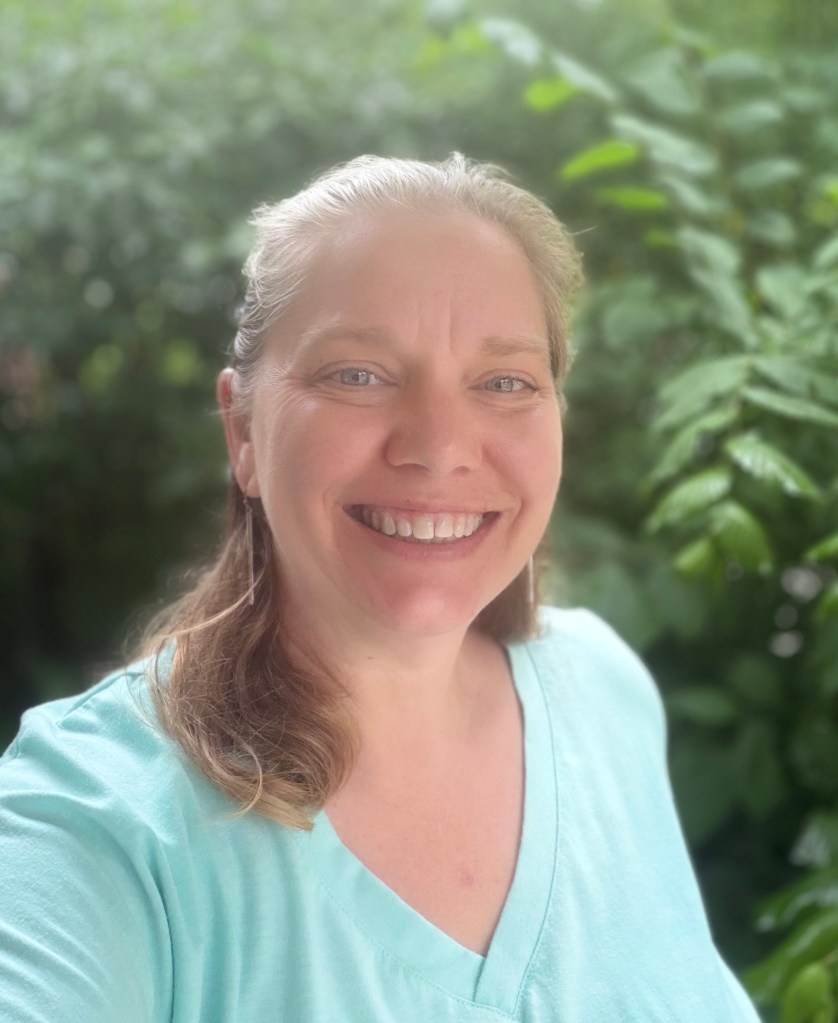
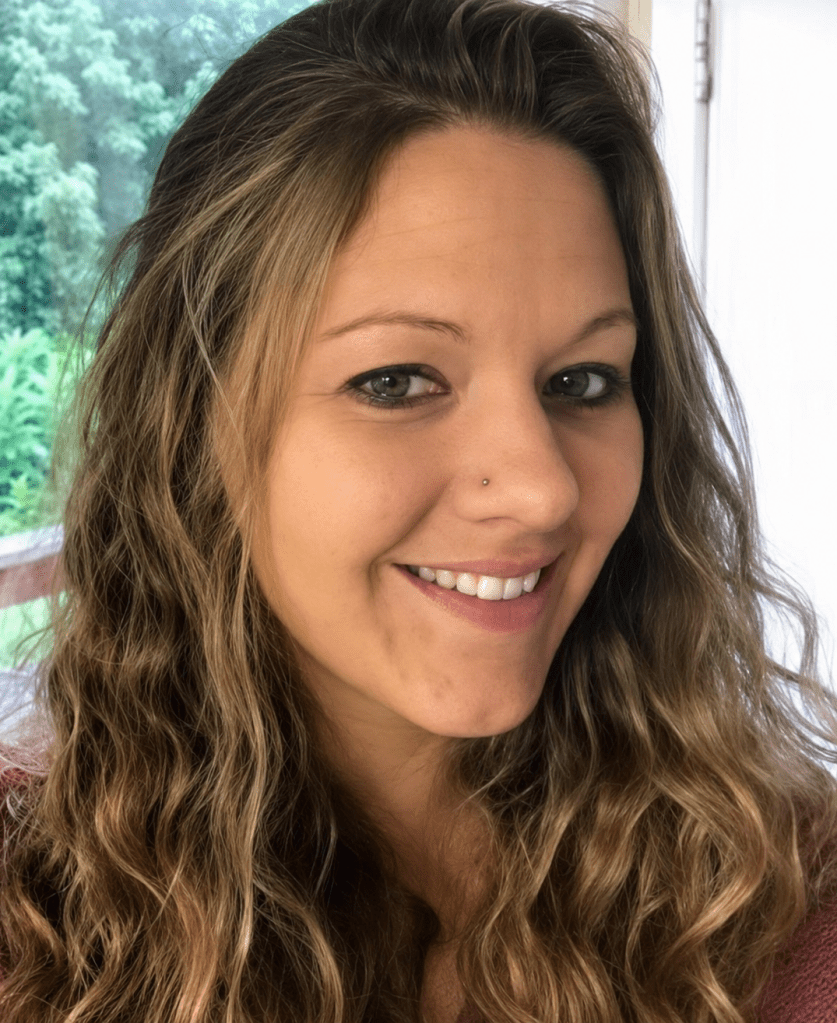
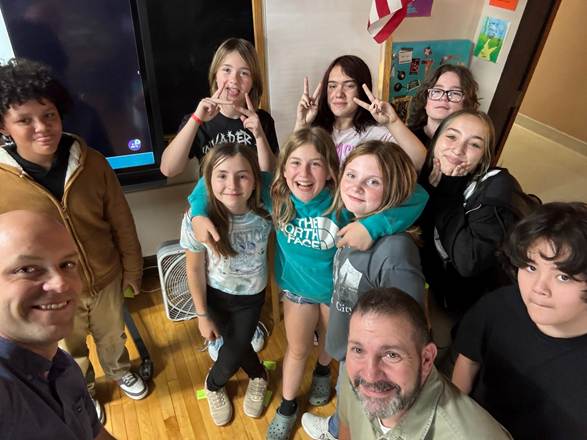
Freeport High School seniors, Class of 2026, receive their 2026 Maine Seals of Climate Literacy.
A new generation of Maine students is demonstrating a commitment to understanding and addressing environmental challenges through the Maine Department of Education’s (DOE) newest diploma endorsement, the Maine Seal of Climate Literacy.
The Seal of Climate Literacy is awarded to students who complete two high school courses focused on climate and environmental literacy concepts and standards, as well as an experiential project that demonstrates and publicly communicates their understanding of environmental literacy, green career exploration, and/or place-based climate action. In its pilot phase in the spring of 2026, the Seal was awarded to 57 students from nine schools across the state, recognizing their knowledge, skills, and dedication to creating a more sustainable future. The program will officially launch statewide in September for the 2026-2027 school year.
Students working to earn the Seal took a wide range of classes to apply to it, including AP Human Geography, Earth Science, and Early College U.S. History. Students completed projects, allowing them to explore their interests and delve deeper into community-based solutions.
For example, at Mount Desert Island High School, a senior earned the Seal by taking Biology and Honors Environmental Science. She was also the Student Representative of the Bar Harbor Climate Task Force. The mission of her project was to reduce Bar Harbor’s carbon footprint and make the town more sustainable.
Geoffrey Beane (left) and Annabel Curry (right), seniors at Mount Desert Island High School, receive their 2026 Maine Seal of Climate Literacy certificates and medals from their Science Educator Ruth Poland (middle) at an awards ceremony.
“Having the Seal has given me a chance to show my community that I am well educated around environmental topics and that it is super important to me,” the student said.
Another student from Orono High School found the most accurate way to predict basal area, enabling foresters to make accurate tree-harvesting plans. A few students from Bangor High School evaluated the effects of fast fashion, spread awareness of the environmental impact, and encouraged sustainable clothing habits through a research poster.
“The Seal of Climate Literacy allowed students to be honored for participating in something that I hold to be of the most critical importance in education: authentic learning that benefits our community and our planet,” a science educator from Poland Regional High School shared.
Pheober Kibler, senior at Cheverus High School, receives the 2026 Maine Seal of Climate Literacy certificate and medal.
This summer, the Maine DOE will launch a website to provide resources to guide students and teachers in implementing the Seal and determining classes and project guidelines. Included in these resources will be example projects, the Maine Learning Results that schools use to award the Seal, and a database of community-based organizations and partners for student projects.
If your school administrative unit (SAU) is interested in getting involved with the Maine Seal of Climate Literacy, please complete this form.
With questions about the Maine Seal of Climate Literacy, please contact Maine DOE Climate Education Specialist Teddy Lyman at Theodore.Lyman@maine.gov.
Zenith Alternative Education Program students carve pumpkins.
At Camden Hills Regional High School, part of Five Town Community School District (CSD), an off-site alternative education learning community is redefining what high school can look like for students seeking a more personalized, project-based path.
Located at Rose Hall in Camden, the Zenith Alternative Education Program serves students in grades 10-12 through a model rooted in flexibility, relationships, and experiential learning. While the setting differs from a traditional high school, students at Zenith earn the same diploma and meet the same graduation requirements as their peers at Camden Hills Regional High School.
What differs is the approach.
“Traditional high school experiences can feel like conveyor belts in many ways,” Zenith teacher and coordinator Mae Applegate said. “It’s already mapped out, and it’s your job as a student to stay on it. Alternative education is responsive. It’s flexible. It’s built around the students who are actually in front of you.”
Applegate joined public alternative education during the 2025-2026 school year after years of approaching education through a nontraditional lens.
“One of the first questions in my interview was, ‘What brings you to alternative education?’” Applegate said. “My answer was that I’ve always been alternative. It’s the way I approach education and learning.”
Zenith currently serves approximately 20 students, with enrollment fluctuating throughout the year as students transition in and out of the program. Students attend by choice and complete a multi-step application process that includes shadow days, reflective activities, and interviews with staff and family members.
The intentional admissions process reflects the program’s philosophy: Students are active participants in shaping their own educational experience.
Learning Through Experience
At the Zenith Alternative Education Program, courses are organized into interdisciplinary nine-week units that combine academic standards with hands-on learning and real-world experiences.
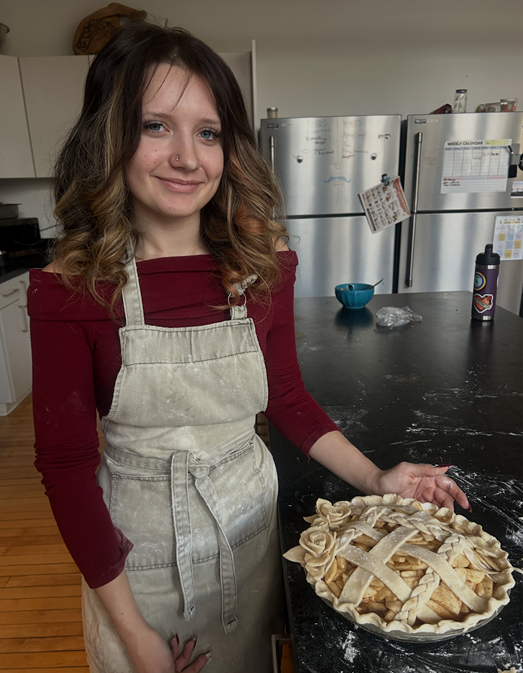
A senior in the Zenith Alternative Education Program shows off her latticed apple pie.
In a recent history course exploring the cultural and historical significance of food, students brainstormed topics of interest, voted on areas to study, and helped shape the direction of the class. One particular unit in this class included apple dissections, pie baking for community donations during Thanksgiving, and learning about apple preservation methods.
“We’re always asking how we can connect learning to authentic experiences,” Applegate said. “Students are meeting graduation standards, but they’re doing it through projects and collaboration.”
Cross-curricular learning is also central to the program’s design. During one interdisciplinary unit, students explored the physics of sound in science and math classes, led by Zenith’s science and math teacher John Van Dis, by designing and building their own speakers and instruments. At the same time, students participated in an English songwriting course that blended scientific inquiry with creative expression. At the end of their coursework, students visited the local elementary school to share their instruments and creative processes with younger students while demonstrating the science behind sound and vibration.
Zenith Alternative Education Program students visit Camden Rockport Elementary School.
“The elementary students loved having the high schoolers come in,” Applegate said. “It became a meaningful experience where our students were seen as leaders and mentors.”
Another recent course, “Star Wars: Physics Strikes Back,” expanded upon student interest to explore scientific concepts. As part of this class, students visited the planetarium at the University of Maine, combining academic content with exposure to a college campus and future pathways.
“It was both a science experience and a life experience,” Applegate said. “For some students, it was also an opportunity to imagine themselves in a four-year college environment.”
Building Community Through Leadership
Relationships are a foundational part of the Zenith Alternative Education Program, and students are encouraged to contribute actively to the community around them. Every day starts and ends with a community circle, including gratitude and reflective exercises. On Wednesdays, students participate in a dedicated “Community Day” focused on leadership, collaboration, and culinary programming. Students help plan and prepare meals, manage grocery budgets, lead lunch preparation, and support cleanup responsibilities.
This year, students have also spent time revisiting and redefining the program’s community agreements—the shared values that guide how students and staff interact.
“When I arrived, there were 10 community agreements,” Applegate said. “Some students could explain some of them clearly, and others couldn’t name more than three. We realized we needed to better define who we are as a community.”
Through discussions, writing exercises, debates, and collaborative activities, students distilled the program’s values into a single guiding acronym: GROWTH.
“We knew that if students are coming to Zenith, they’re committing to growth,” Applegate said.
Students are now collaboratively determining what each letter in GROWTH represents through structured discussions and community voting. Two values that quickly emerged were “gratitude” and “welcoming.”
“When students come for shadow days, we want to clearly articulate what being here is all about,” Applegate said. “How do we, as students and staff, live our collective values every day?”
A Different Path, the Same Diploma
Students in the Zenith Alternative Education Program can participate in hybrid schedules, attending classes at Camden Hills Regional High School or programs through the Mid-Coast School of Technology, while remaining enrolled in Zenith.
Some students attend Zenith full-time, while others begin on alternating-day schedules. The flexibility allows staff to individualize supports, while helping students maintain connections to broader school opportunities.
Weekly social work services, close collaboration with counselors, and strong staff relationships also help students navigate challenges both inside and outside the classroom.
“Relationship is really the core pillar of this work,” Applegate said.
The program, funded through Five Town CSD, has existed for more than two decades. Staff members continue working to increase awareness about and understanding of the program among families, faculty, and the broader school community through newsletters, outreach, and presentations.
“There are more than 700 students at the high school, and many stakeholders do not fully understand what happens here,” Applegate said. “We want people to know that what we do here is highly engaged learning. Our students are doing important academic and character work.”
For staff and students alike, Zenith represents more than an alternative education setting. The community is like an extended family, with its own quirks and inside jokes.
“It’s a different way of doing things,” Applegate said. “It’s cool; it’s interesting; and I love it.”
This story was written in collaboration with Camden Hills Regional High School (Five Town CSD) as part of an ongoing series to highlight alternative education programs across Maine. For more information about alternative education, please visit the Maine DOE Alternative Education webpage. To submit a good news story to the Maine DOE, please fill out the good news submission form.
The Transformational Leaders’ Network (TLN) is a practical, relationship-centered professional learning opportunity for principals to enhance their leadership practice and strengthen outcomes for schools and communities. The TLN occurs through a series of in-person and remote/regional meetings offered across the state during the school year. All principals, from the novice to the veteran, from large suburban schools to small rural schools, are invited to participate.
The 2026-2027 TLN theme is “The Principal Effect and the Power of Mattering.” This opportunity will reflect current research regarding principal effectiveness, professional learning, leadership sustainability, emotional intelligence, systems thinking, and school climate, while honoring the realities of increasingly complex school leadership.
Principals who participate can expect:
Continuous job-embedded professional development for an increasingly complex role.
A collaborative learning community, as participants tackle authentic leadership challenges together.
To learn about what emotional intelligence, mattering, and leadership presence look like in practice.
Strategies for strengthening school climate and culture by building trust, establishing stronger connections, communicating openly, and supporting and engaging staff more effectively.
To learn about creating steadier school environments during periods of challenge and change through sustainable and systems-oriented leadership.
To learn about navigating conflict, pressure, and complexity.
To learn about staff ownership, increasing collective efficacy, supporting leadership succession, and strengthening the workforce.
The 2026-2027 TLN schedule is as follows (specific locations to be determined):
A virtual extension session will also be offered the week after each in-person meeting as an opportunity for a deeper dive into discussion topics or for those unable to attend the in-person session.
Former TLN participants have shared the following testimonials:
“It (TLN) really changed how I support teachers, how I build a more positive school culture.” – TLN Principal, 2024-2025
“It’s easier to stay and fight the daily battles, but leaving for this (TLN) makes me better when I come back.” – TLN Principal, 2025-2026
“I see it (TLN) as kind of a ‘boots on the ground’ experience that you don’t get until you’re in it. … It’s about recognizing the leader as a whole person, understanding that emotional well-being is a key component of strong leadership.” – TLN Principal, 2024-2025
“Every time I leave, I have something I can use right away.” – TLN Principal, 2025-2026
“We dream together about what education can be and walk out the door refreshed and ready to take on the next day.” – TLN Principal, 2023-2024
The cost of the TLN remains at $295 per participant for the full year of professional learning. This includes all TLN content, materials, and meals for in-person meetings. Participants will be responsible for covering their own travel. Please note that if you are the leader of an identified school under Maine’s Model of School Supports (MMSS) (TSI-Targeted School Improvement, ATSI-Additional Targeted School Improvement, CSI-Comprehensive School Improvement), you are eligible to have registration fees covered.
The Maine Department of Education (DOE) will share information about registration and further details in July.
With questions, please contact Christina O’Neal, Maine DOE Educator Excellence Coordinator, at christina.l.oneal@maine.gov.
ESEA Title IIA funds received from the U.S. Department of Education (ED) support the implementation of this project. The project has an award totaling $136,809.40, of which 80% is federally funded and directly attributed to project implementation. The contents are those of the author(s) and do not necessarily represent the official views of, nor an endorsement by, ED or the U.S. government.
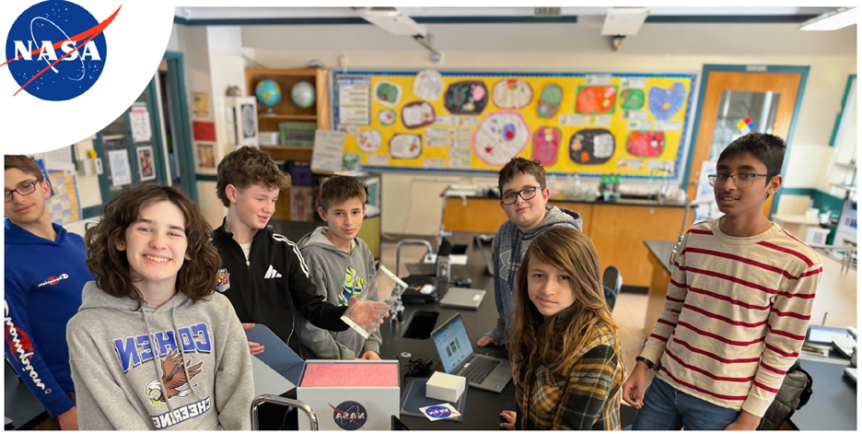
A team of students from the William S. Cohen School in Bangor submitted a winning experiment during the 2025-2026 NASA TechRise Challenge.
The national education platform Future Engineers has invited Maine middle and high school students to join the 2026-2027 NASA TechRise Student Challenge.
This nationwide contest invites students in grades 6 through 12 to team up with their classmates to design an experiment under the guidance of an educator. Teams submit ideas for experiments to fly on a NASA-sponsored suborbital commercial flight test. No experience is necessary to join the Challenge, which is expected to open in September. Entries will be due later this fall.
In the 2025-2026 NASA TechRise Student Challenge, a team of students from Bangor’s William S. Cohen School submitted a winning experiment to test how the stratosphere affects yeast. Read more about their experiment here, and watch a video of students describing the experiment below:
The Challenge includes information sessions for participants (upon request), free educational resources to support classroom learning, and an exciting virtual student field trip in the fall. Sixty winning teams will receive $1,500 to build their experiment, a spot to test it on a NASA-sponsored flight, and technical support from NASA TechRise advisors.
The Challenge is a great way for students to get hands-on learning with a NASA project. Updated challenge resources (including videos, slide decks, and educator pacing guides) will be available on the Challenge website when the Challenge opens in September.
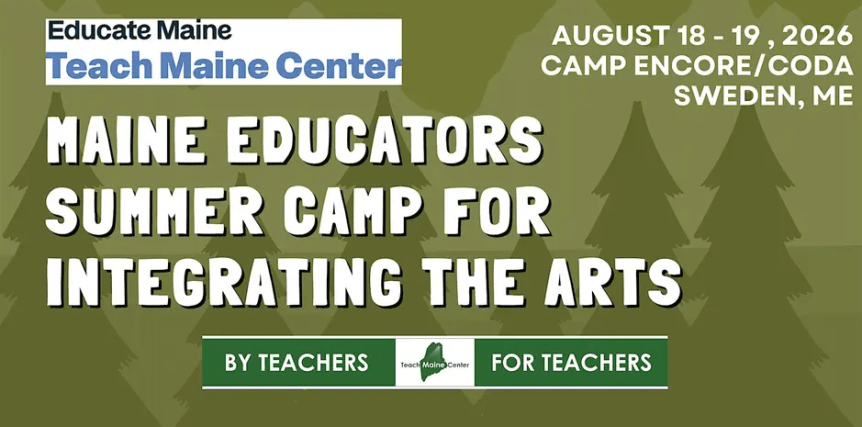
The Teach Maine Center is hosting the first annual Maine Educators Summer Camp for Integrating the Arts on Tuesday, August 18, through Wednesday, August 19, 2026, at Camp Encore/Coda in the town of Sweden. This two-day visual and performance arts summer conference will bring educators together to explore the power of arts integration and its impact on teaching and learning.
Set in the beautiful surroundings of Camp Encore/Coda, the conference will provide educators with opportunities to learn, connect, reflect, and imagine new possibilities for integrating the arts into their classrooms. Participants will explore the foundations of arts integration, including why it matters, what it is versus what it is not, and the research on how arts-based learning can support student engagement and success.
The experience is designed for educators who are interested in:
Expanding the use of arts integration in classroom instruction;
Connecting with other Maine educators who share a passion for the arts; and
Discovering new ways to engage students through meaningful and creative learning experiences.
Throughout the conference, participants will attend three high-quality workshop sessions led by expert guest presenters focused on arts integration in music, visual art, and theater. The conference will also feature a keynote presentation, a campfire gathering, networking opportunities, and time to enjoy the outdoors.
Registration includes lodging, dinner on the first evening, and breakfast and lunch on the second day. Educators will leave with new ideas, resources, and connections to support arts integration in their schools and classrooms.
Register here for the Maine Educators Summer Camp for Integrating the Arts.
For more information or with questions, please contact Jon Delorme, Educate Maine Program Manager, at jon@educatemaine.org.
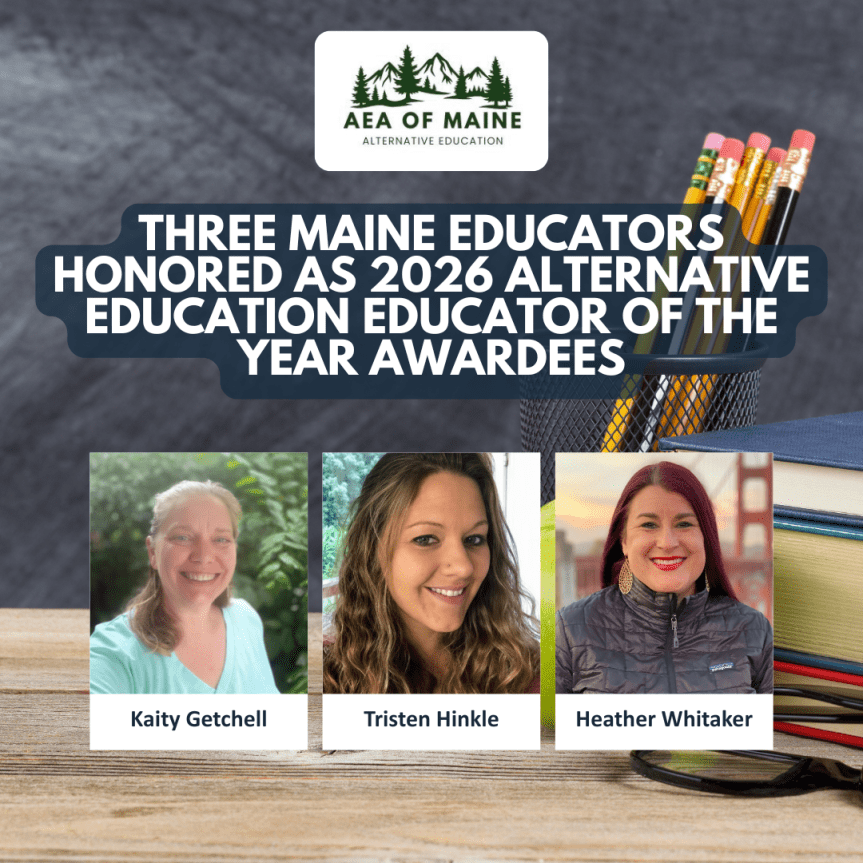
The Maine Department of Education (DOE) is pleased to join the Alternative Education Association of Maine (AEA) in celebrating three outstanding educators as the recipients of the 2026 Alternative Education Educator of the Year Award. This annual award honors alternative educators who make a meaningful and lasting impact on students, create innovative learning opportunities, and demonstrate a strong commitment to advocating for students and the field of alternative education.
The 2026 Alternative Education Educator of the Year awardees are:
Kathleen (Kaity) Getchell The Learning Center at Frank Jewett – Bonny Eagle High School, MSAD 6
For 16 years, Kathleen “Kaity” Getchell has dedicated herself to supporting students through The Learning Center at Frank Jewett. She is recognized for meeting students where they are, developing specialized learning opportunities, and helping each student reach their full potential.
Getchell creates meaningful experiences for students through hands-on activities, trips, school-wide opportunities, and partnerships with school personnel to support postsecondary pathways. Her commitment extends beyond the classroom as she serves as a trusted family liaison, connecting students and families with resources, support, and encouragement when they need it most.
She has organized countless student experiences that provide opportunities for teamwork, personal growth, and the development of life skills. She also works closely with students to help them complete academic requirements, plan for graduation, and remain connected to their larger school community through events and milestones such as prom, yearbook, senior celebrations, and school activities.
Through her compassion, advocacy, and unwavering support, Getchell ensures students in alternative education feel valued, connected, and prepared for their futures.
Tristen Hinkle Marti Stevens Learning Center, MSAD 54
Tristen Hinkle has played an integral role in shaping and strengthening the alternative education program at the Marti Stevens Learning Center. She is celebrated for her deep commitment to student success and her ability to build strong relationships with students who need additional support and connection.
Hinkle creates engaging learning experiences by connecting students with community partners, guest speakers, field trips, and opportunities outside the classroom. She uses trauma-informed practices and approaches challenges with patience, compassion, and a solutions-focused mindset.
Beyond her work with students, Hinkle is a strong advocate for alternative education educators and actively supports her colleagues by sharing ideas, resources, and professional learning opportunities. Her dedication to continued growth and collaboration helps strengthen alternative education across Maine.
Heather Whitaker Gorham Middle School, Gorham School Department
Heather Whitaker exemplifies the dedication, compassion, and creativity that define outstanding alternative education. She approaches her work with joy and a deep commitment to helping students find success through meaningful relationships and innovative learning opportunities.
Whitaker connects students with local resources and community experiences, creating pathways for engagement and achievement. Her work serves as an example of how alternative education can empower students through personalized support and opportunities that meet their individual needs.
In addition to her work with students, Whitaker has contributed to education across Maine through her involvement with various organizations, including Educate Maine, where she has helped design and implement professional learning opportunities for educators statewide through the Teach Maine Center. She also supports and elevates educators through her role as the 2020 Maine Teacher of the Year and her ongoing work with the Maine County and State Teachers of the Year Association (MCSTOYA).
Through her leadership, advocacy, and commitment to students and educators, Whitaker demonstrates the impact one dedicated educator can have on an entire learning community.
The Maine DOE congratulates Kathleen Getchell, Tristen Hinkle, and Heather Whitaker on this well-deserved recognition and thanks them for their continued dedication to Maine students and the field of alternative education.
Content for this article was provided by the Alternative Education Association of Maine (AEA). To submit a good news story to the Maine DOE, please fill out the good news submission form.
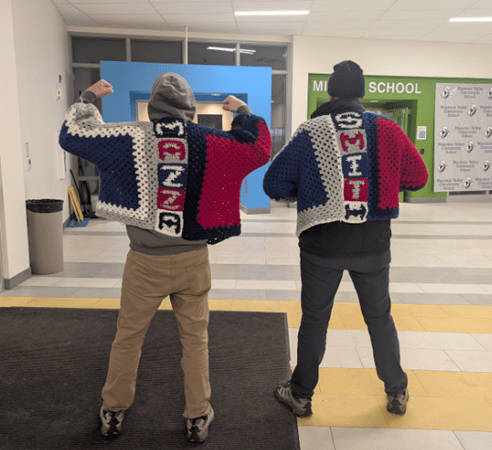
Mountain Valley Middle School alternative education students and teachers Shane Smith and Anthony Mazza gather for a group selfie.
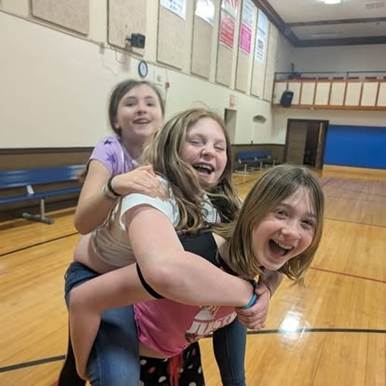
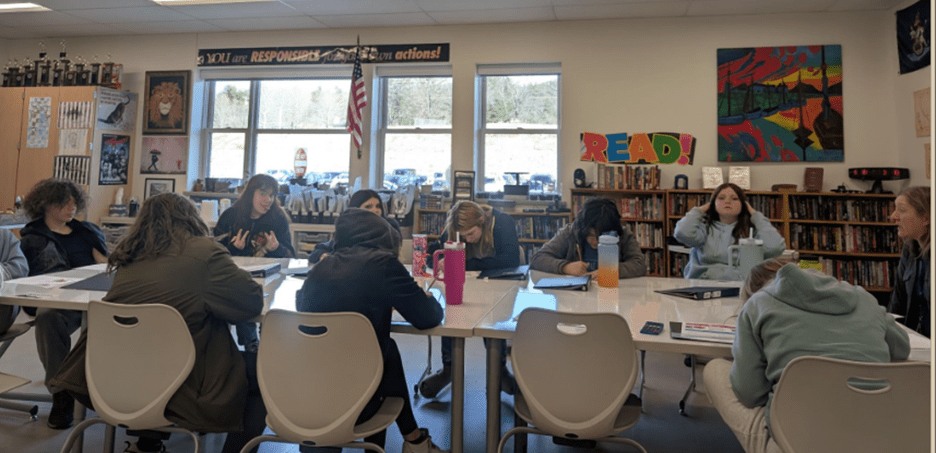
At Mountain Valley Middle School, students in the alternative education program begin each day with breakfast before heading to the gym to reset, move, and prepare for learning. They then gather in a morning circle to review schedules, discuss upcoming activities, reflect on current events, and practice strategies for managing stress and conflict. Co-alternative education teachers Shane Smith and Anthony Mazza use these routines to create consistency, strengthen relationships, and set a positive tone for the day.
Each day of the alternative education program at Mountain Valley Middle School begins with breakfast, a movement break, and a morning circle.
For many students, the program offers a learning environment built around connection, structure, and support. Launched during the 2023-2024 school year for grades 6-8, the program was designed to provide a flexible, relationship-centered approach for students who benefit from a different path to success than a traditional classroom setting may provide.
“We built the ship as we were sailing it,” Smith said.
What began as a new and evolving program quickly developed through reflection, collaboration, and responsiveness to student needs. During the program’s early stages, students and staff temporarily worked out of a recreation center while school buildings underwent mold remediation. This required creativity and adaptability from everyone involved.
“At the time, we were figuring everything out in real time,” Smith said. “We had difficult days, but we kept reflecting, adjusting, and learning from what students needed.”
The program now operates within the main school building. It’s a transition staff say has strengthened students’ sense of inclusion and connection to the larger school community.
“We’re visible now,” Smith said. “Our students are part of the school community. They aren’t separated or hidden away.”
Building Learning Around Relationships, Engagement, and Community
From the beginning, Smith and Mazza designed the alternative education program as an environment where students feel engaged in their learning.
“It’s important that this isn’t a dumping ground,” Smith said. “We want students to feel supported, challenged, and connected.”
The program serves approximately 14 students with a student-to-staff ratio of about seven to one. Students follow a full-day schedule that blends academics, structured supports, and experiential learning opportunities designed to make coursework accessible and meaningful. Core instruction is adapted to meet a range of academic needs. Smith and Mazza use shorter instructional segments, guided practice, and frequent feedback to help students build confidence and remain engaged.
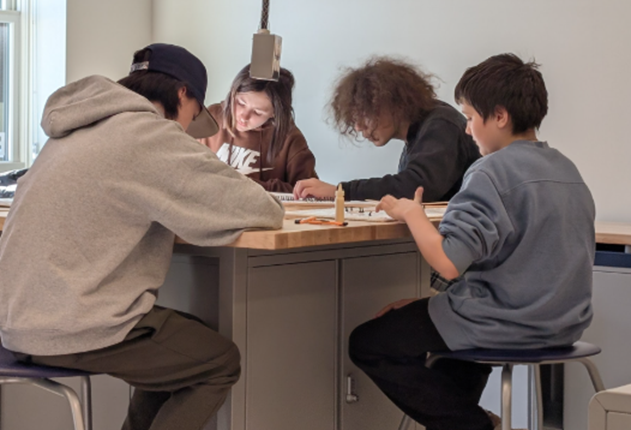
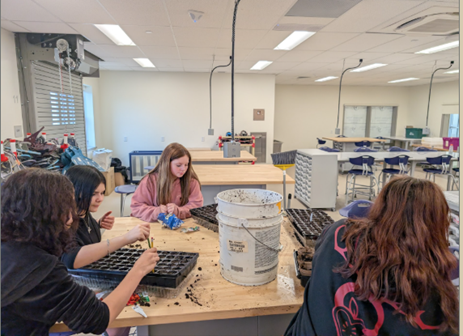
Project-based and place-based learning are also central to the program. Students participate in activities such as designing aquaponics systems, bridge-building challenges, 3D printing, and explorations of local Rumford history that connect classroom concepts to real-world experiences. Collaborative writing, journaling, and creative projects are also implemented regularly to encourage self-expression and communication.
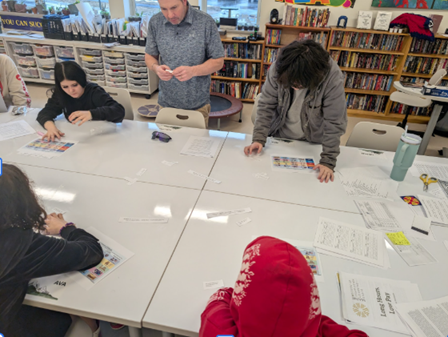
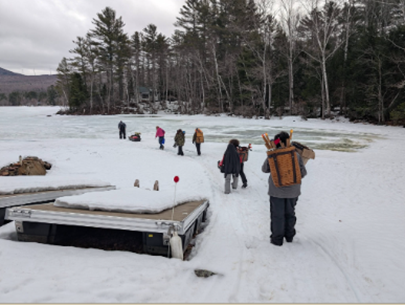
Mountain Valley Middle School alternative education students engage in hands-on, real-world learning experiences—planting seedlings, sorting historical events into patterns of change, and building bridges—applying high-interest activities to strengthen the acquisition and application of knowledge.
“We want learning to feel connected to something real,” Smith said. “Not just something happening on paper.”
Students regularly participate in field trips, outdoor learning opportunities, guest speaker visits, and service-learning projects that extend learning beyond the classroom. They also contribute through volunteering, food pantry support, and local clean-up efforts, while activities such as hiking and trail walks provide opportunities for reflection, teamwork, and personal growth.
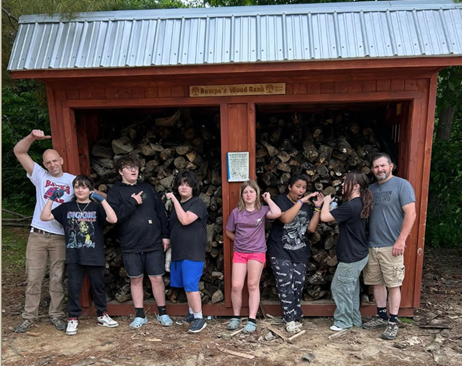
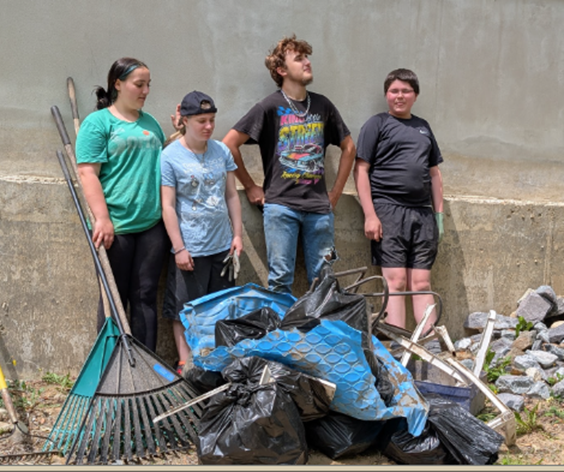
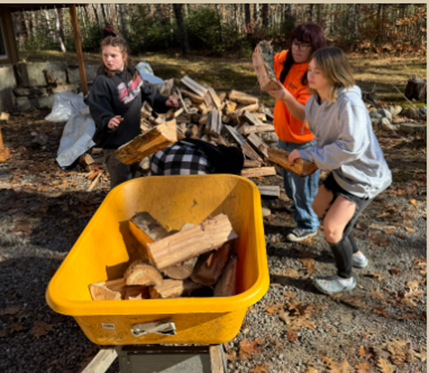
Mountain Valley Middle School alternative education students and teachers Shane Smith and Anthony Mazza fill the community wood-bank and conduct clean-up efforts. These measures help students feel connected to their local community.
“A lot of our students are confined to a small part of town,” Smith said. “Getting outside, exploring, volunteering, and connecting learning to the community makes a huge difference.”
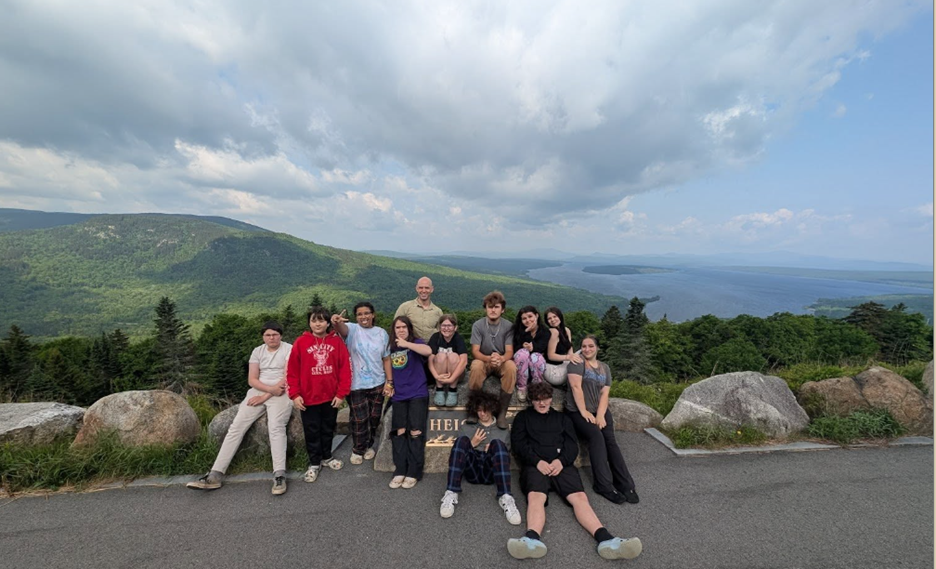
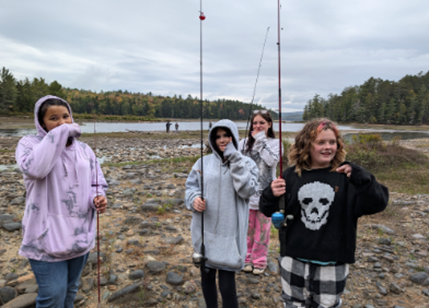
Mountain Valley Middle School alternative education students explore both their local and broader community through experiential, outdoor learning opportunities. Smith shared that, “Being outside lowers stress and cortisol and increases serotonin and happiness levels. Time spent outside improves focus and invites exploration, questioning, and discovery. It’s ever-changing, multi-sensory, and novel. Our trips are challenging and require persistence. Nature is the antidote to heavy screen time and the quick dopamine it provides.”
Across subjects, the focus extends beyond academic completion to helping students develop persistence, confidence, and a stronger sense of belonging in school.
Supporting the Whole Student
Alongside academics, the alternative education program prioritizes emotional regulation, relationship building, and student wellness. Structured morning meetings help students prepare for the day while creating routines that foster stability and predictability.
When students become overwhelmed, Smith and Mazza focus on helping them regulate and re-engage. Students may take a walk or use breathing strategies before returning to instruction. Movement and physical activity are intentionally built into the schedule, giving students opportunities to reset and return to learning more focused and ready to engage.
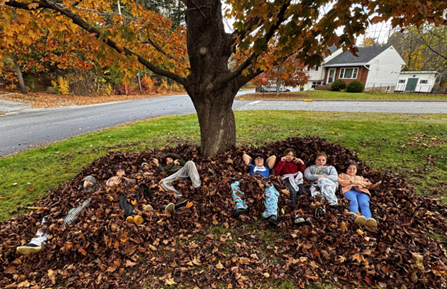
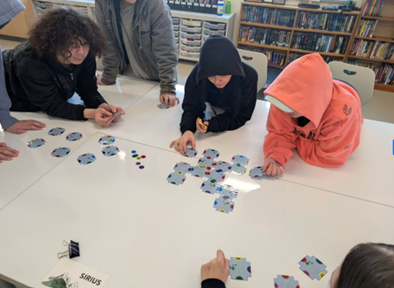
Mountain Valley Middle School alternative education students take quick breaks outdoors (jumping into a pile of fall leaves) and indoors (engaging in “A Gentle Rain,” a silent, collaborative tile-laying game designed to help ground and regulate students before their next class).
The program also incorporates counseling support provided by the school’s counseling and social work teams, helping students build practical coping and communication skills. Smith and Mazza work closely with families and outside providers when needed, recognizing that strong support systems play an important role in student success.
Mountain Valley Middle School alternative education students participate in a daily wellness class twice a week when Sydney Rowe, middle school counselor, helps them to build emotional intelligence skills.
“One thing we’ve learned is that we can’t do this work alone,” Smith said. “Students need systems of support around them.”
As schools across Maine continue exploring ways to support students with diverse strengths and needs, alternative education programs like the one at Mountain Valley Middle School highlight how alternative education can provide innovative, student-centered environments where relationships, flexibility, and meaningful engagement help students build confidence, reconnect with learning, and experience success.
Co-alternative education teachers Mazza and Smith wear matching, handmade crochet sweaters. They say they’re looking forward to the 2026-2027 school year as they continue to grow and craft their middle school alternative education program.
This story was written in collaboration with Mountain Valley Middle School (RSU 10) as part of an ongoing series to highlight alternative education programs across Maine. For more information about alternative education, please visit the Maine DOE Alternative Education webpage. To submit a good news story to the Maine DOE, please fill out the good news submission form.
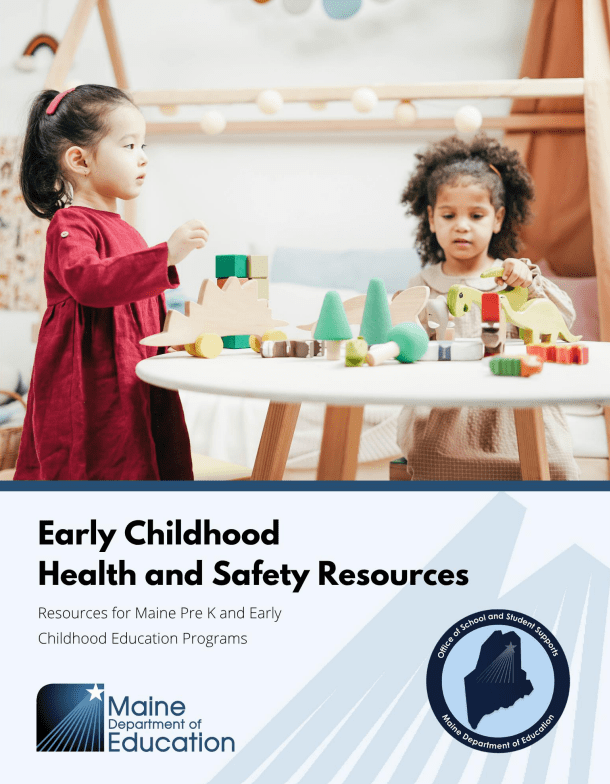
The Maine Department of Education (DOE) has released an updated set of Early Childhood Health and Safety Resources for preschool and early childhood programs. These resources outline approval standards and other official guidance and up-to-date information for school administrative units (SAUs) and early childhood programs across Maine.
These resources may be useful across a range of early childhood education settings. Topics include immunizations, infection control, toileting, nutrition, environmental health, screenings, mental and behavioral health, emergency preparedness, and injury prevention.
The resources, designed for easy digital access in a PDF document, are drawn from state and federal agencies and professional organizations to support safe, healthy, and developmentally appropriate learning environments.
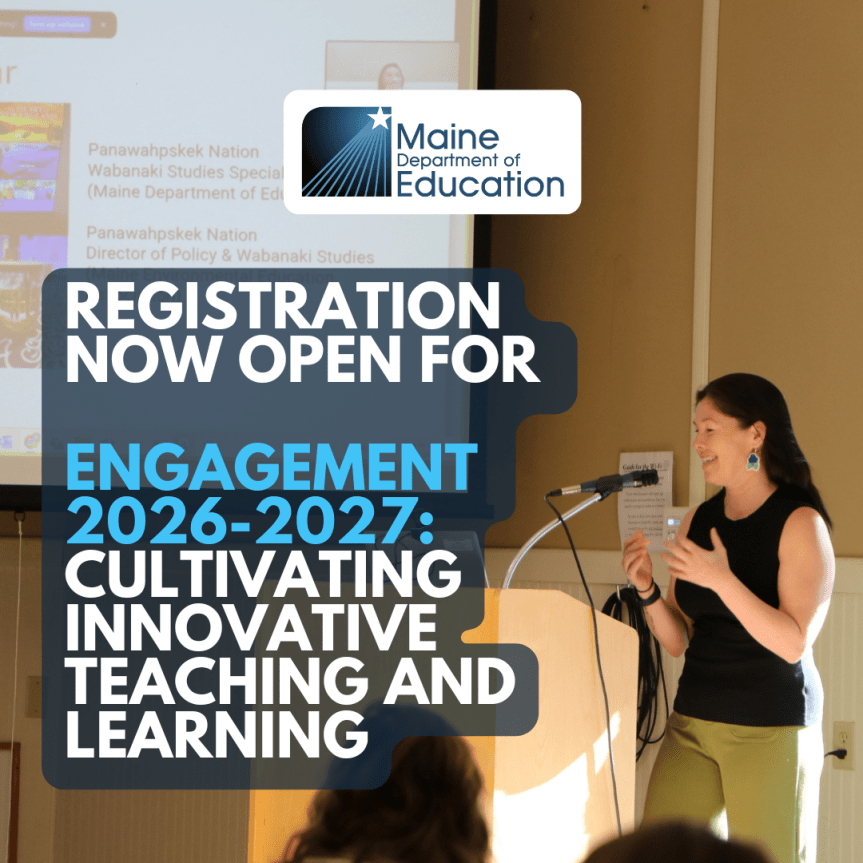
The Maine Department of Education (DOE) Offices of Teaching and Learning and Innovation are pleased to announce that registration is now open for EngageMEnt 2026-2027, a statewide professional learning opportunity designed to support educators in exploring innovative, engaging, and impactful practices for teaching and learning.
Offered in partnership with the University of Maine and University of Southern Maine, EngageMEnt creates opportunities for educators from across the state to learn, collaborate, reflect, and apply new ideas in their classrooms, schools, and communities. The initiative also provides opportunities for practicing educators and pre-service educators to learn alongside one another while exploring current educational priorities and practices.
Building on the success of last year’s implementation and participant feedback, EngageMEnt 2026-2027 has been designed as a year-long learning experience that supports both professional growth and implementation. Rather than attending a single workshop, participants will join a cohort of educators who will continue learning together throughout the school year. The Maine DOE is hopeful that this model will support meaningful changes in practice that ultimately benefit Maine students.
What’s New for 2026-2027?
This year’s model includes:
An in-person fall session on October 9, 2026
A virtual winter follow-up experience
An in-person spring session on March 19, 2027
On both the fall and spring dates:
Morning cohorts meet from 9-11:30 a.m.
Afternoon cohorts meet from 12:30-3 p.m.
This structure is designed to provide educators with opportunities to learn, implement new ideas in practice, reflect on their experiences, and reconnect with colleagues to deepen their learning.
Explore a Wide Range of Learning Opportunities
This year’s cohort offerings include topics such as:
Early literacy and numeracy
Literacy and numeracy across content areas
Outdoor and place-based learning
Climate education
Technology and learning
Multilingual learner supports
Community partnerships
Civic engagement and student advocacy
Arts integration and creative learning
Wabanaki Studies
Participants may register for one cohort or, if desired, one morning cohort and one afternoon cohort.
Cohorts will begin at either the the University of Maine at Orono or University of Southern Maine in October and continue at the partner campus in March, providing opportunities for educators to connect with colleagues from across the state while experiencing both university settings.
A complete guide to cohort offerings, facilitator information, and session descriptions is below.
Registration Information
Registration for EngageMEnt 2026-2027 is now open.
Participants registering for two cohorts should select one morning cohort and one afternoon cohort. Participants are encouraged to review the cohort descriptions carefully before registering.
Questions regarding EngageMEnt 2026-2027 may be directed to Beth Lambert, Maine DOE Chief Teaching and Learning Officer, at Beth.Lambert@maine.gov.
The following cohorts begin at the University of Southern Maine on October 9, 2026, and will continue at the University of Maine at Orono on March 19, 2027:
Morning Cohorts (9-11:30 a.m.):
Cohort
Facilitator(s)
Description
Playful Literacy Strategies for Early Learning, Preschool-Grade 2
Maine DOE Early Learning Team
Explore literacy-rich, play-based practices that support joyful and purposeful learning in early childhood settings.
Applied Learning Lab
Cee Belolan, Maine DOE Interdisciplinary Instruction Specialist
Experience practical approaches to designing engaging, student-centered learning through active application and reflection.
Numeracy Opportunities Within and Across Content Areas
Michele Mailhot, Maine DOE Interdisciplinary Instruction Specialist
Learn how to identify and intentionally incorporate numeracy opportunities across disciplines using Maine’s Numeracy Playbook resources.
Inquiry, Advocacy, Authentic Learning: Leading Students from Apathy to Activism
Geoff Wingard, Maine DOE Interdisciplinary Instruction Specialist
Support student voice, inquiry, and civic engagement through meaningful and authentic learning experiences.
Afternoon Cohorts (12:30-3 p.m.):
Cohort
Facilitator(s)
Description
The Importance of Numeracy Foundations, Preschool-Grade 2
Maine DOE Early Learning Team
Explore foundational numeracy development, learning trajectories, and play-based strategies that support mathematical thinking in young learners.
From Data to Art: Visualizing, Performing, and Creating with Information
Cee Belolan, Maine DOE Interdisciplinary Instruction Specialist
Learn creative ways to help students communicate information through the visual and performing arts.
Diving into Indigenous Literature with Book Kits
Brianne Lolar, Maine DOE Wabanaki Studies Specialist
Explore Indigenous literature resources and instructional strategies that deepen engagement and understanding.
Beyond the Classroom: Community Partnerships that Enrich Student Learning
Ayesha Hall, Maine DOE Director of Strategic Partnerships
Explore strategies to build community partnerships that enhance student learning and foster authentic connections.
The following cohorts begin at the University of Maine at Orono on October 9, 2026, and continue at the University of Southern Maine on March 19, 2027:
Morning Cohorts (9-11:30 a.m.):
Cohort
Facilitator(s)
Description
Digging Deep into Literacy
Erik Wade, Maine DOE Interdisciplinary Instruction Specialist
Explore how outdoor and authentic learning experiences can strengthen literacy development and interdisciplinary connections.
From Standards to Solutions: Engaging Students in Climate Action Through Maine’s Learning Results
Glenn Cummings, Maine DOE Director of Green Schools, and Teddy Lyman, Maine DOE Climate Education Specialist
Connect climate education, civic engagement, and standards-based learning through authentic student action.
Wonder Is a Literacy Practice
Heather Martin, Maine DOE Interdisciplinary Instruction Specialist, and Kathy Bertini, Coordinator of the Maine DOE Interdisciplinary Instruction Team
Discover literacy strategies that foster curiosity, inquiry, discussion, and meaningful student engagement.
Less Noise, More Learning: Reframing Technology Use in Schools
Maine DOE Learning Through Technology Team
Examine thoughtful approaches to technology use that support student learning, engagement, and well-being.
Afternoon Cohorts (12:30-3 p.m.):
Cohort
Facilitator(s)
Description
Digging Deep into Numeracy
Erik Wade, Maine DOE Interdisciplinary Instruction Specialist
Experience hands-on approaches to numeracy through outdoor learning, observation, measurement, and authentic problem-solving.
Trail Guides: Helping Create a Cultural Shift to Place-Based Learning
Sharon Gallant, Maine DOE RREV coach; Elaine Bartley, Maine DOE Innovative Research and Design Director; and Teddy Lyman, Maine DOE Climate Education Specialist
Explore strategies for integrating place-based and outdoor learning into everyday instructional practice.
Got Skills? Literacy in Every Direction
Heather Martin, Maine DOE Interdisciplinary Instruction Specialist, and Kathy Bertini, Coordinator of the Maine DOE Interdisciplinary Instruction Team
Explore practical literacy strategies that can be applied across content areas and learning environments.
Cultivating Brilliance: Maximizing Multilingual Assets and Accelerating Literacy Outcomes in an Integrated MTSS Framework
Jane Armstrong, ESOL State Specialist, and Bryan Lescord, MTSS State Specialist
Learn asset-based approaches that support multilingual learners within an integrated MTSS framework.
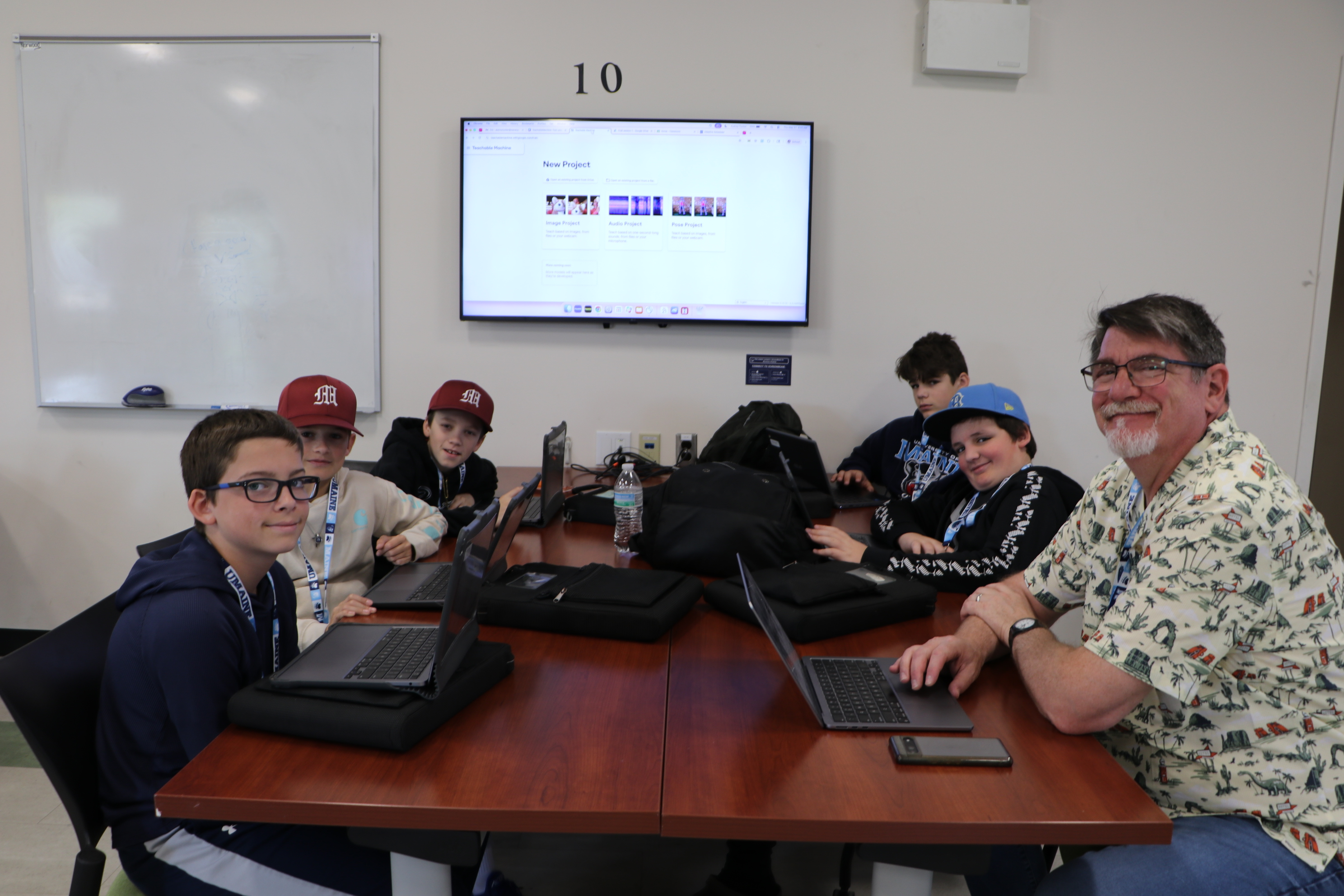
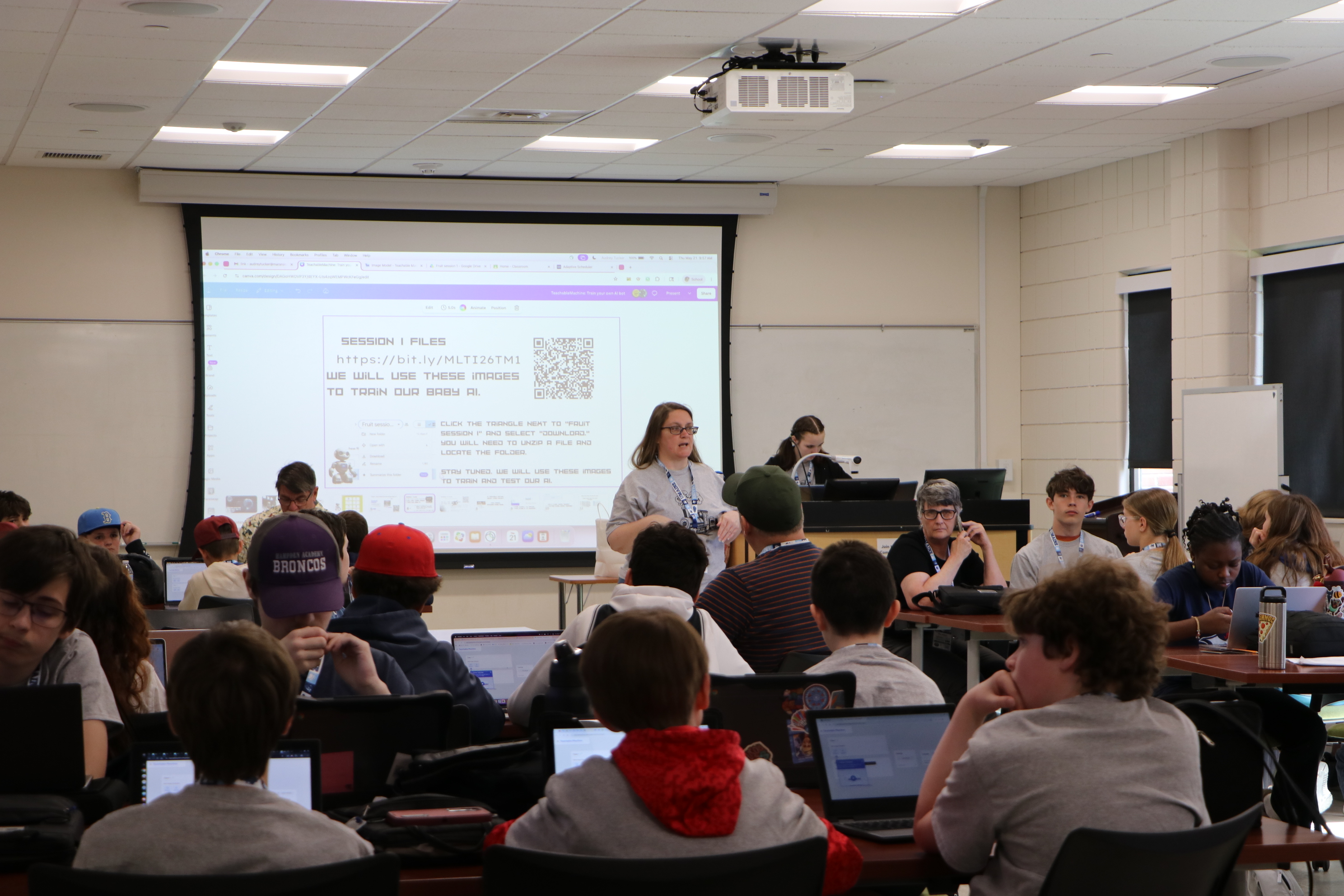
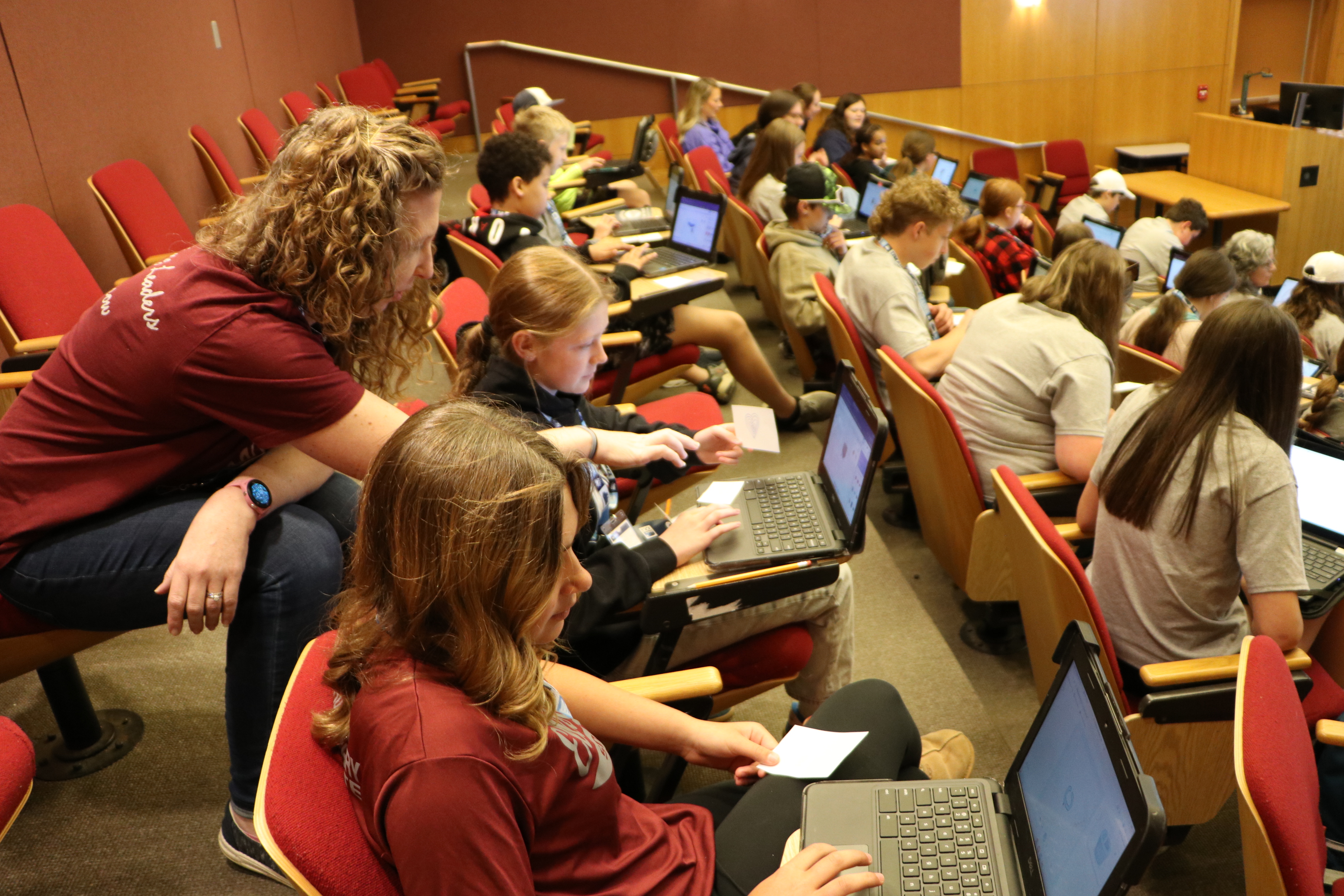
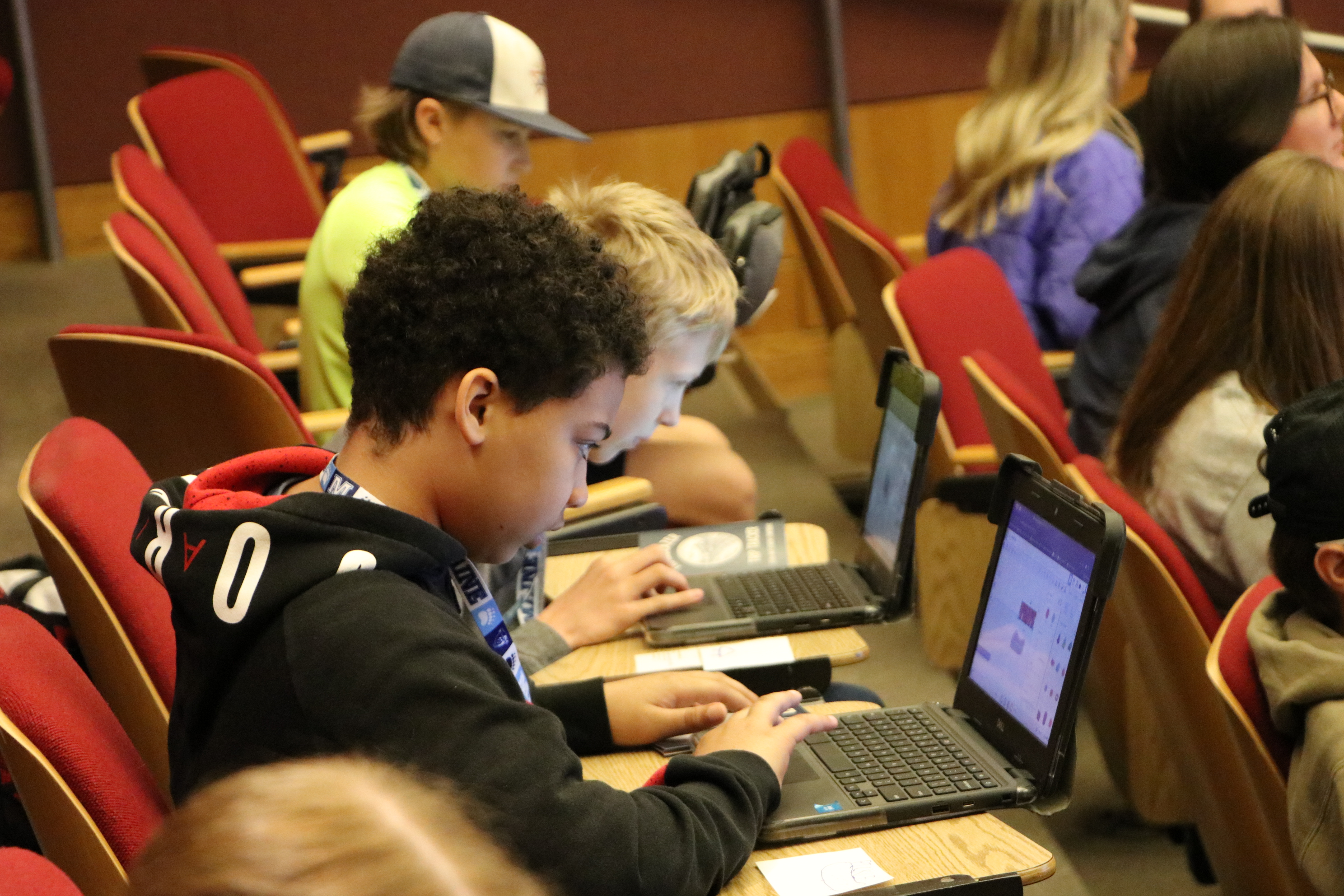
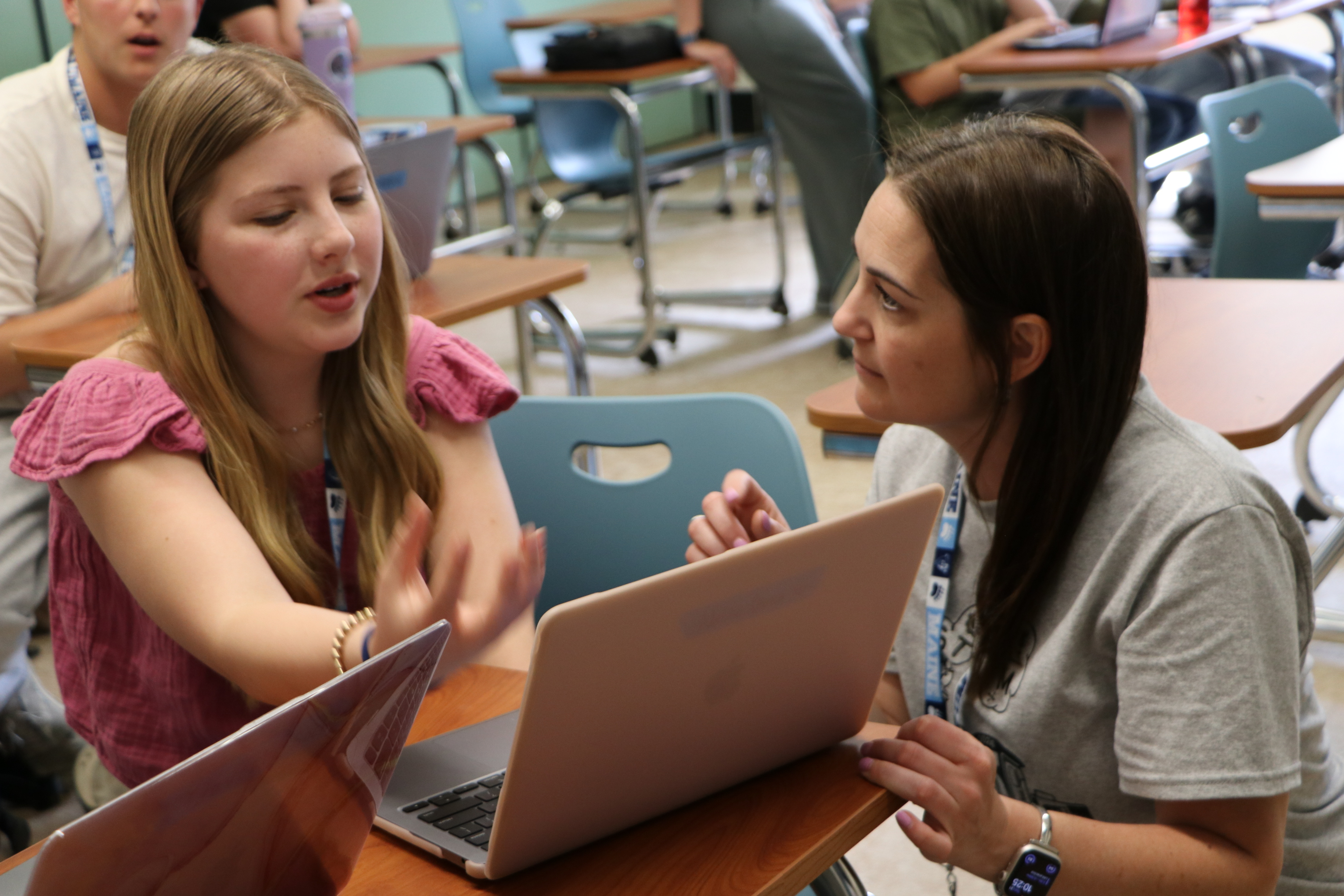
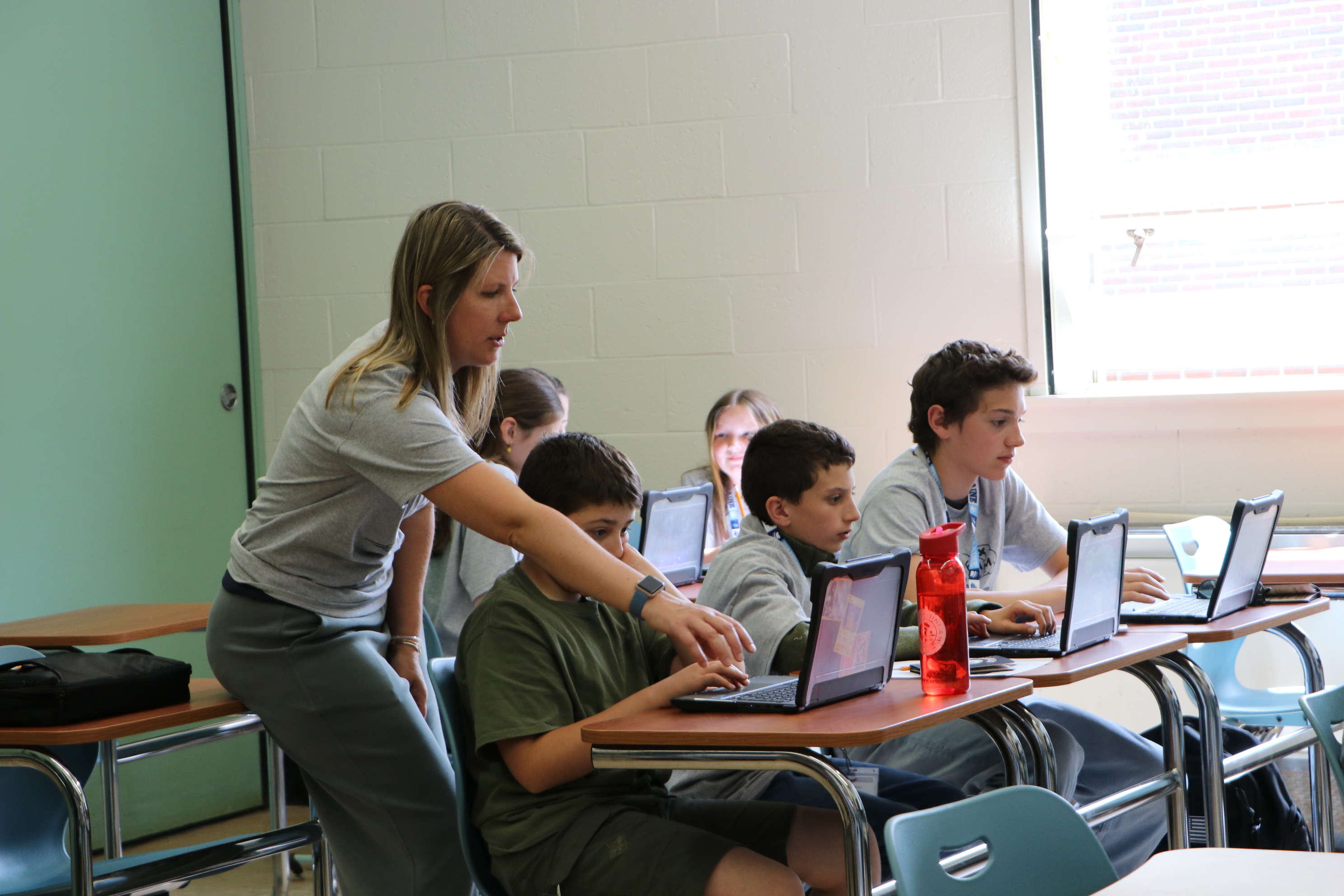
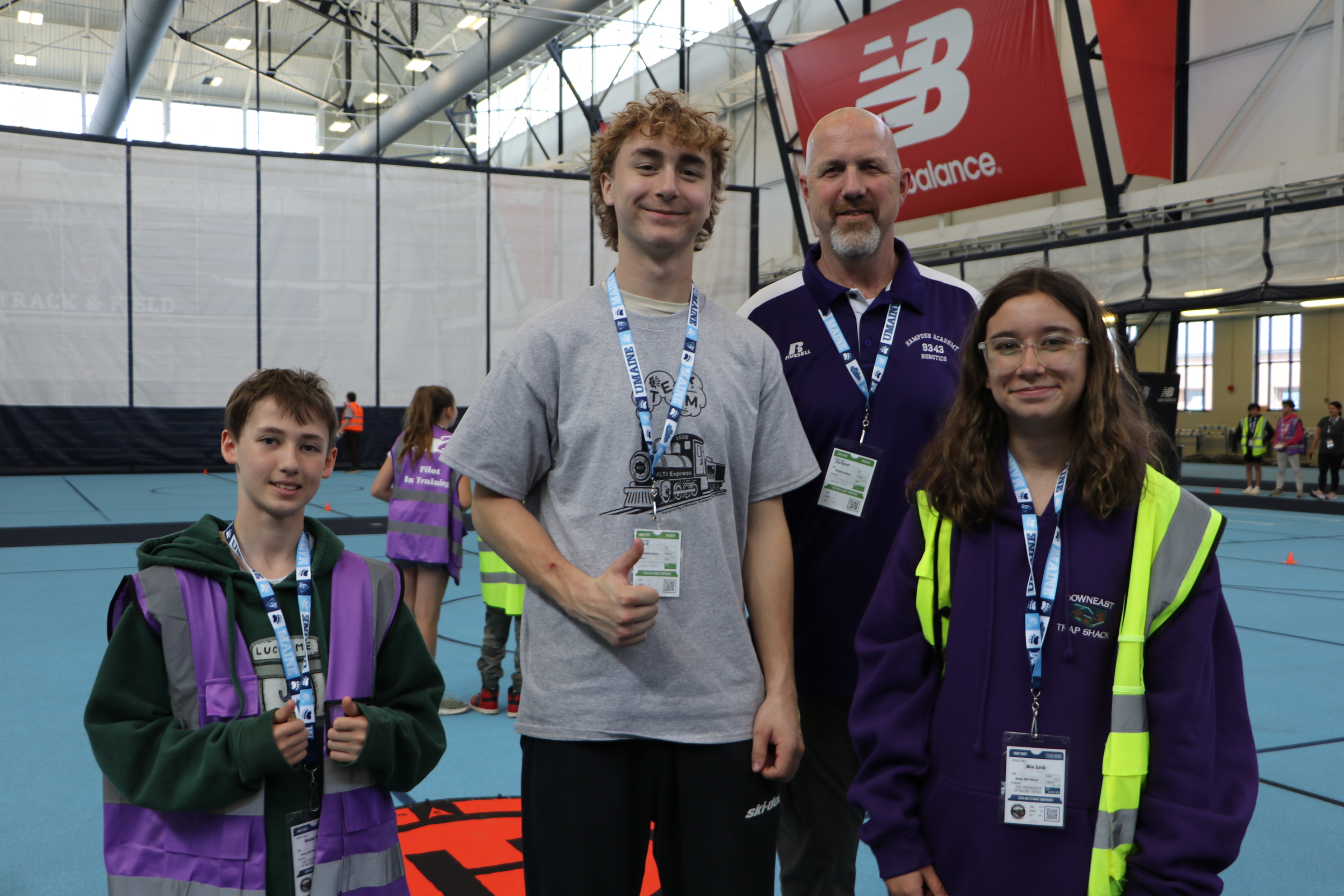
Nearly 1,000 students and educators from across Maine recently gathered at the University of Maine campus in Orono for the 2026 Maine Learning Through Technology Initiative (MLTI) Student Conference, an annual event hosted by the Maine Department of Education (DOE) Learning Through Technology Team.
Held on May 21, 2026, this year’s conference welcomed students in grades 5-10 from MLTI school administrative units (SAUs) across the state for a full day of hands-on learning, creativity, collaboration, and exploration through technology and computer science.
Centered around the theme “Full STEAM Ahead,” the conference invited participants to engage in activities and sessions connected to science, technology, engineering, the arts, and mathematics (STEAM). Sessions focused on empowering young people to become creators, innovators, and problem-solvers through technology-rich learning experiences.
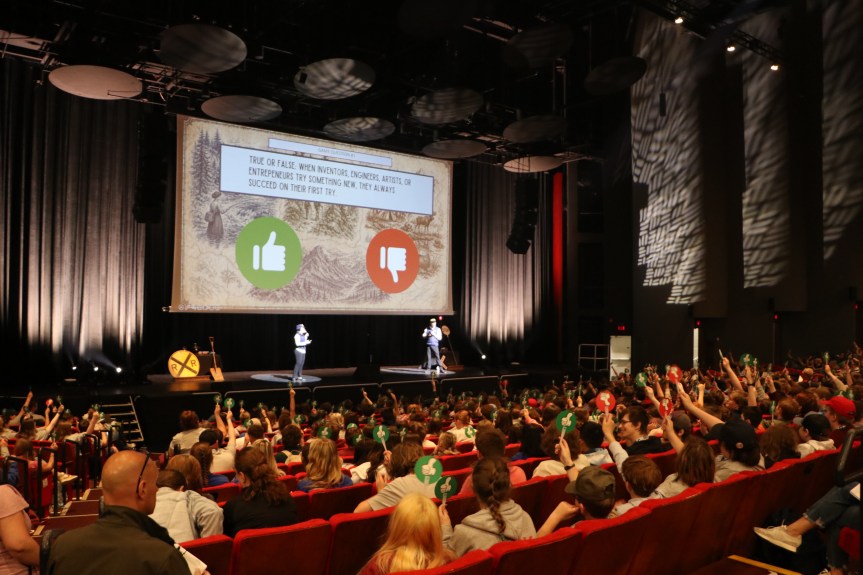
The conference opened with an introductory session that connected Maine’s long history of innovation and problem-solving to the opportunities available to students today. Participants learned about Maine inventors, entrepreneurs, and leaders whose creativity and determination helped shape industries and communities throughout the state.
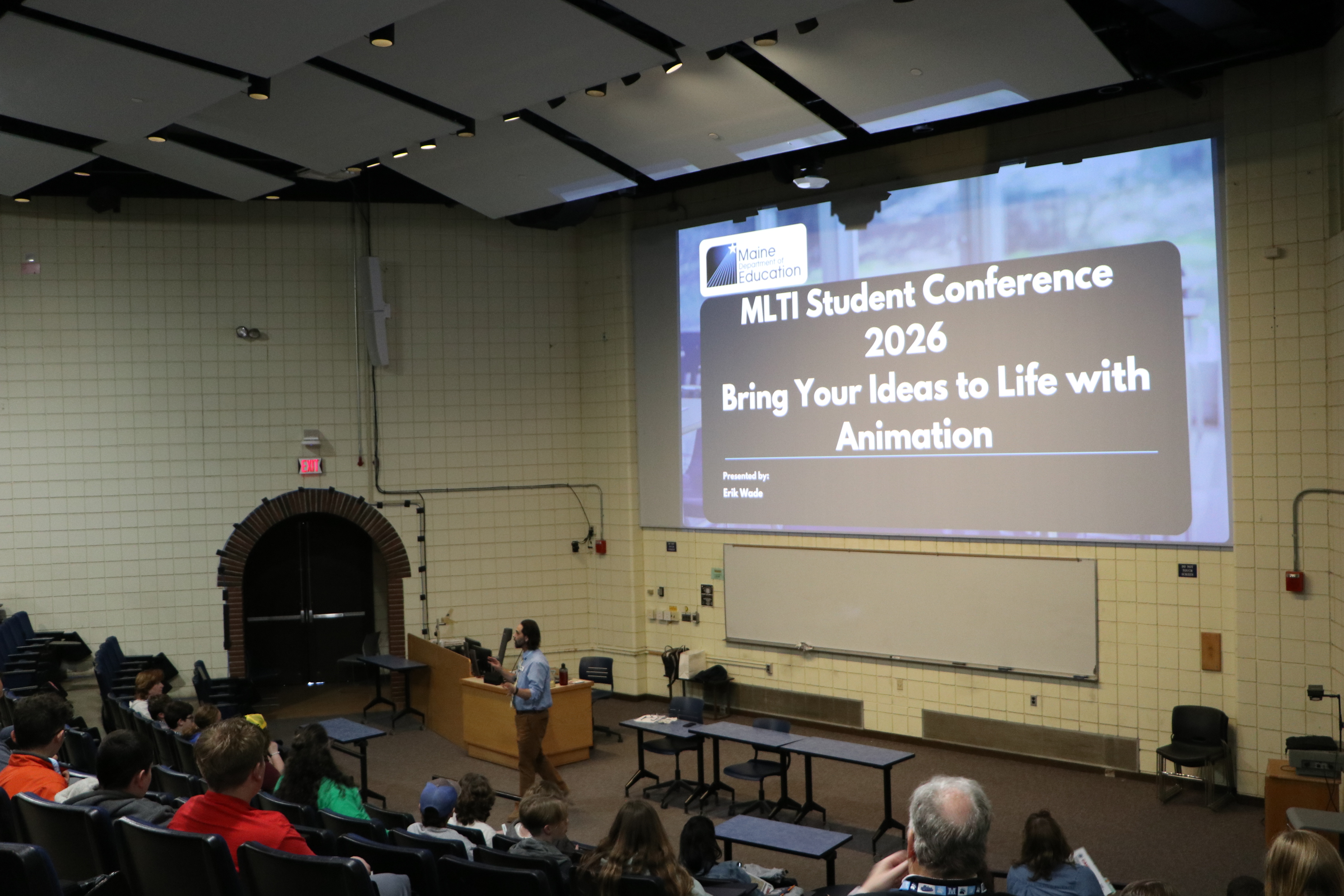
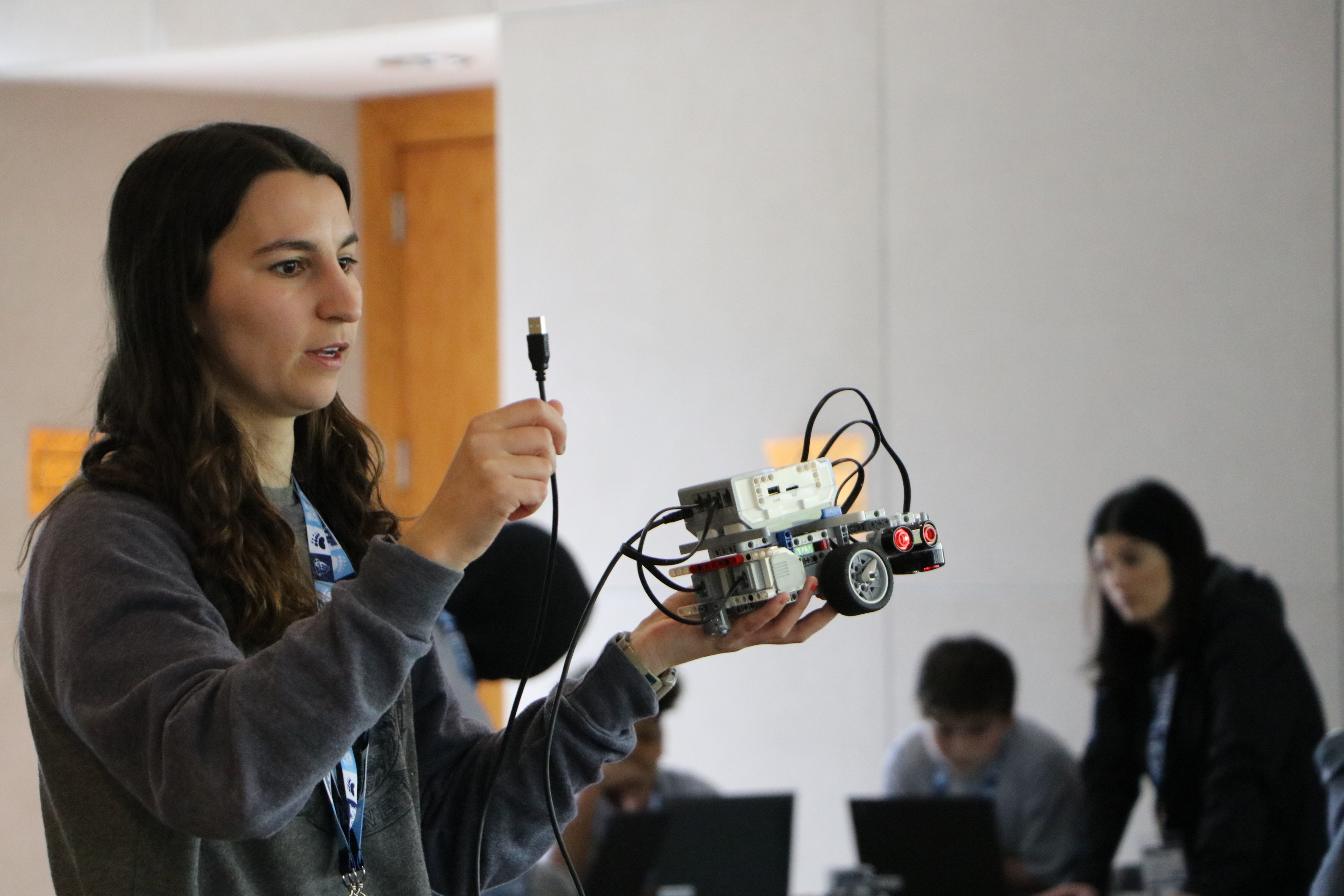
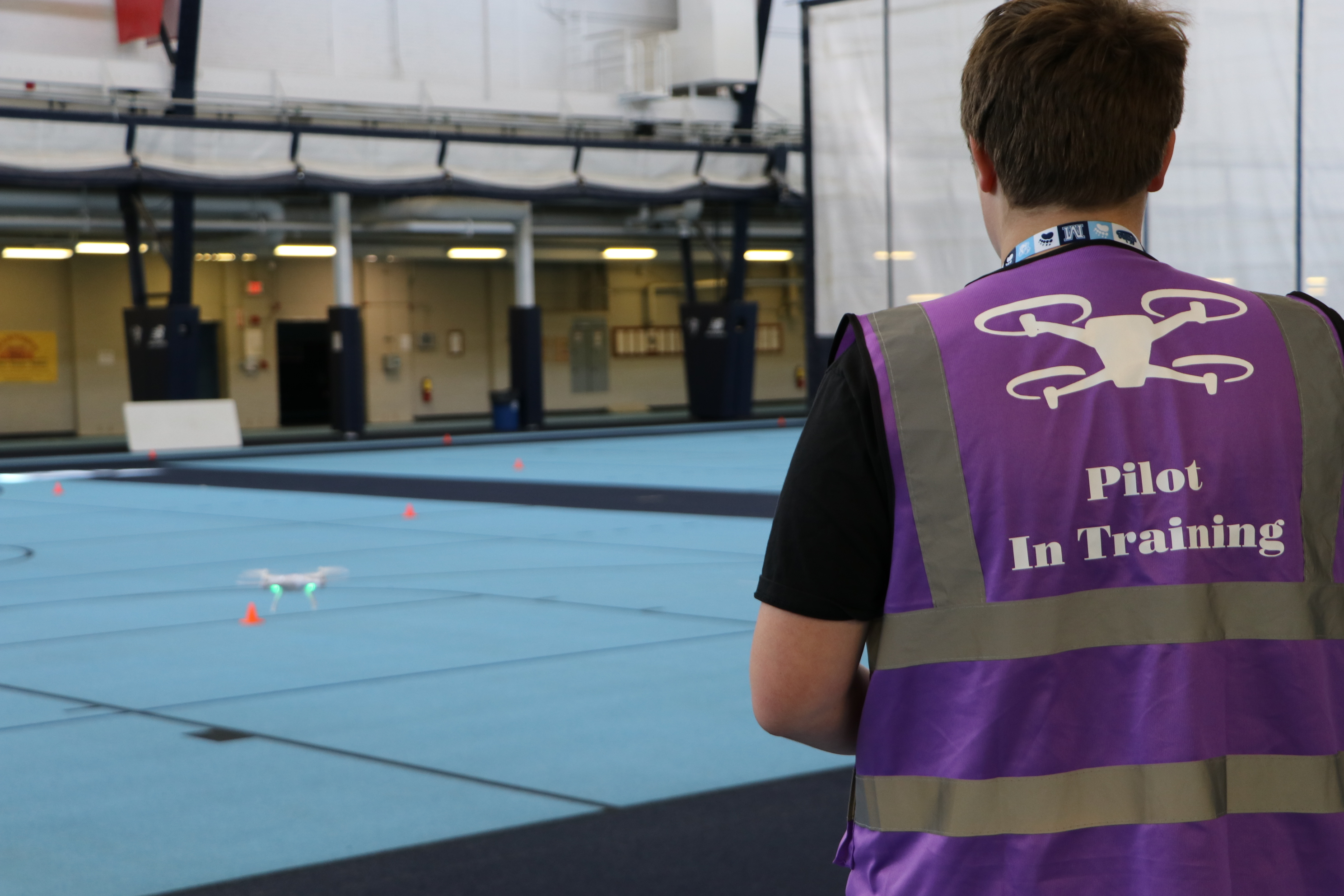
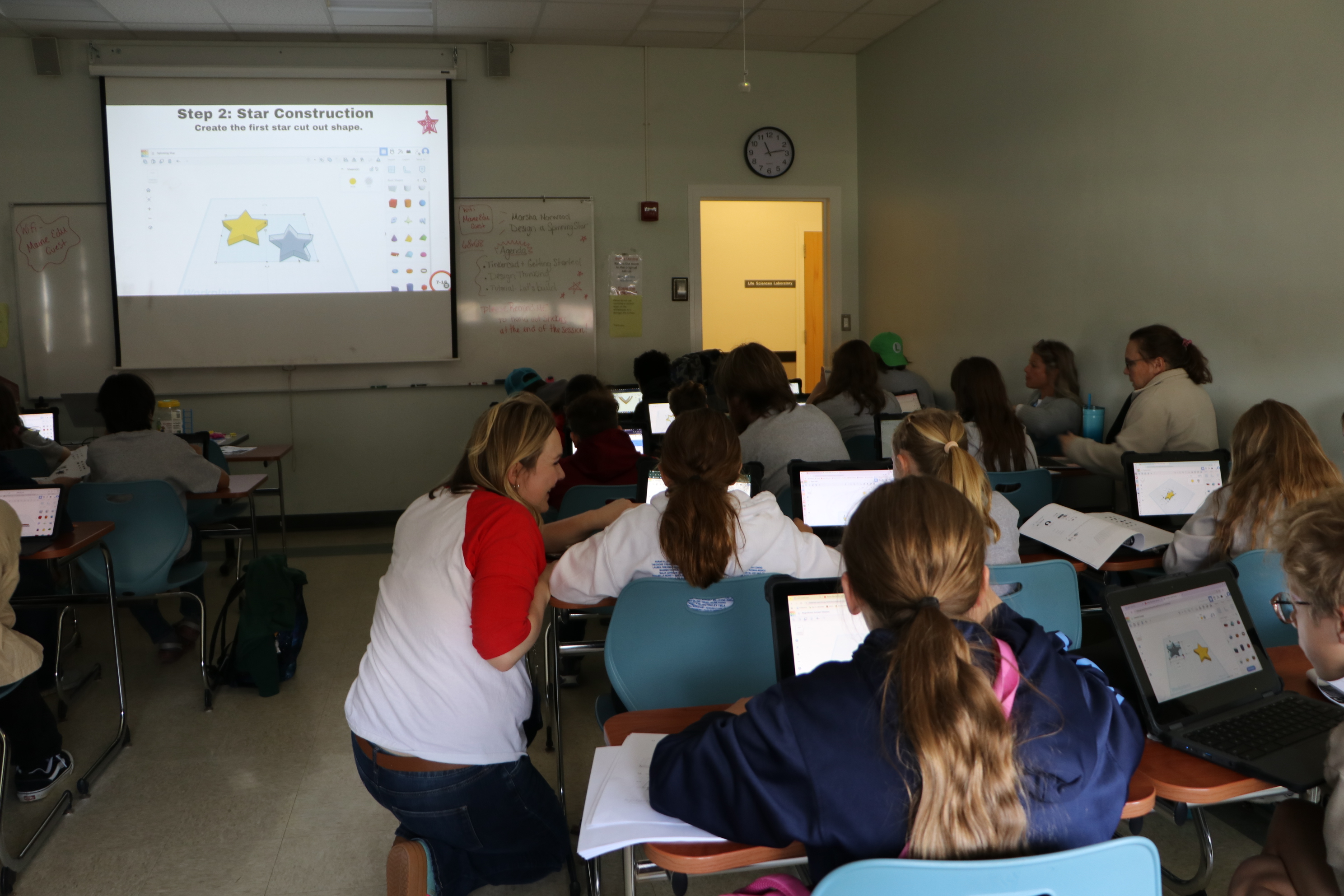
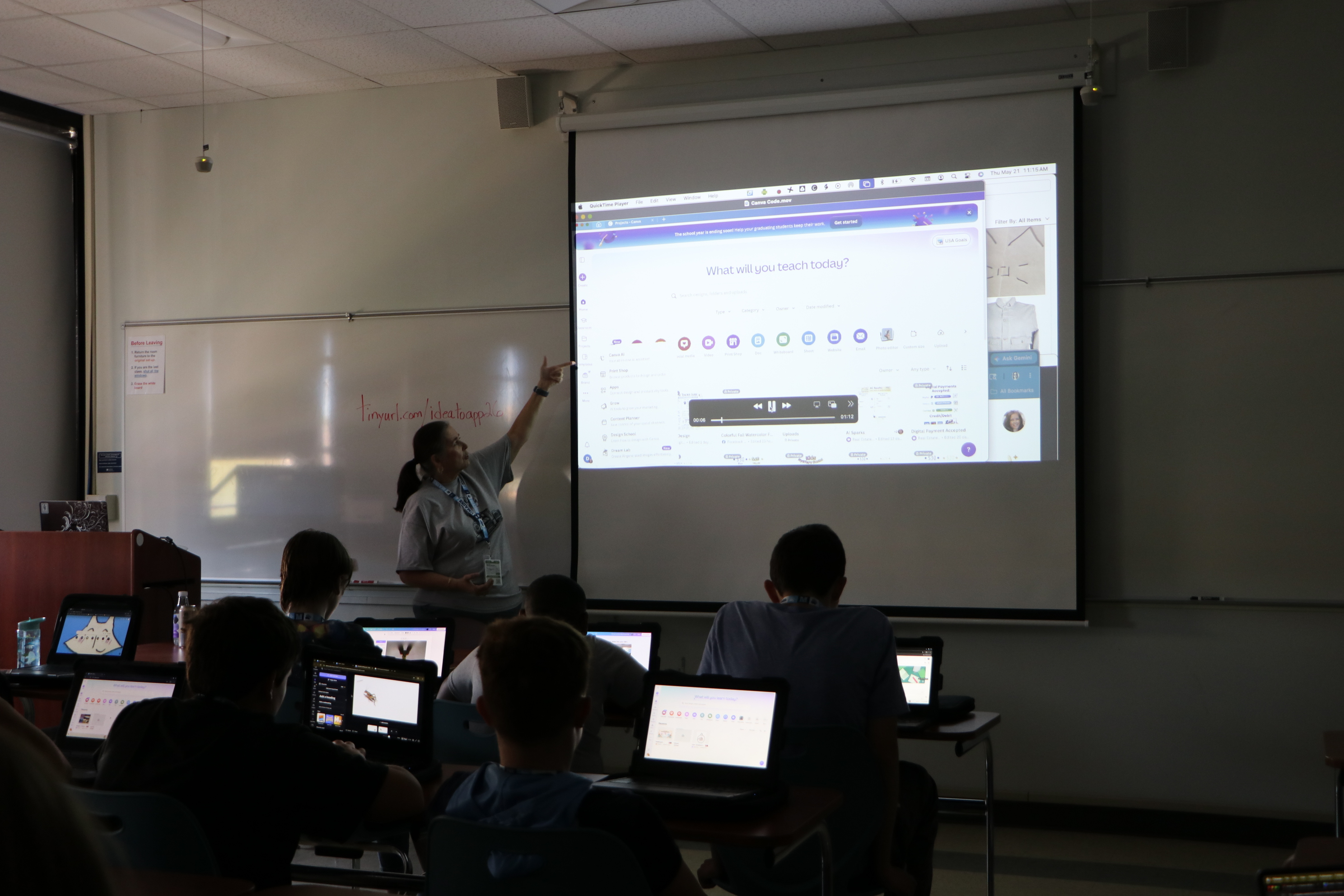
Throughout the day, attendees participated in interactive workshops and presentations covering a wide range of topics, including coding, robotics, artificial intelligence, 3D design, animation, podcasting, cybersecurity, game design, drones, and virtual reality. Sessions encouraged participants to actively explore, create, collaborate, and think critically while using technology in meaningful ways.
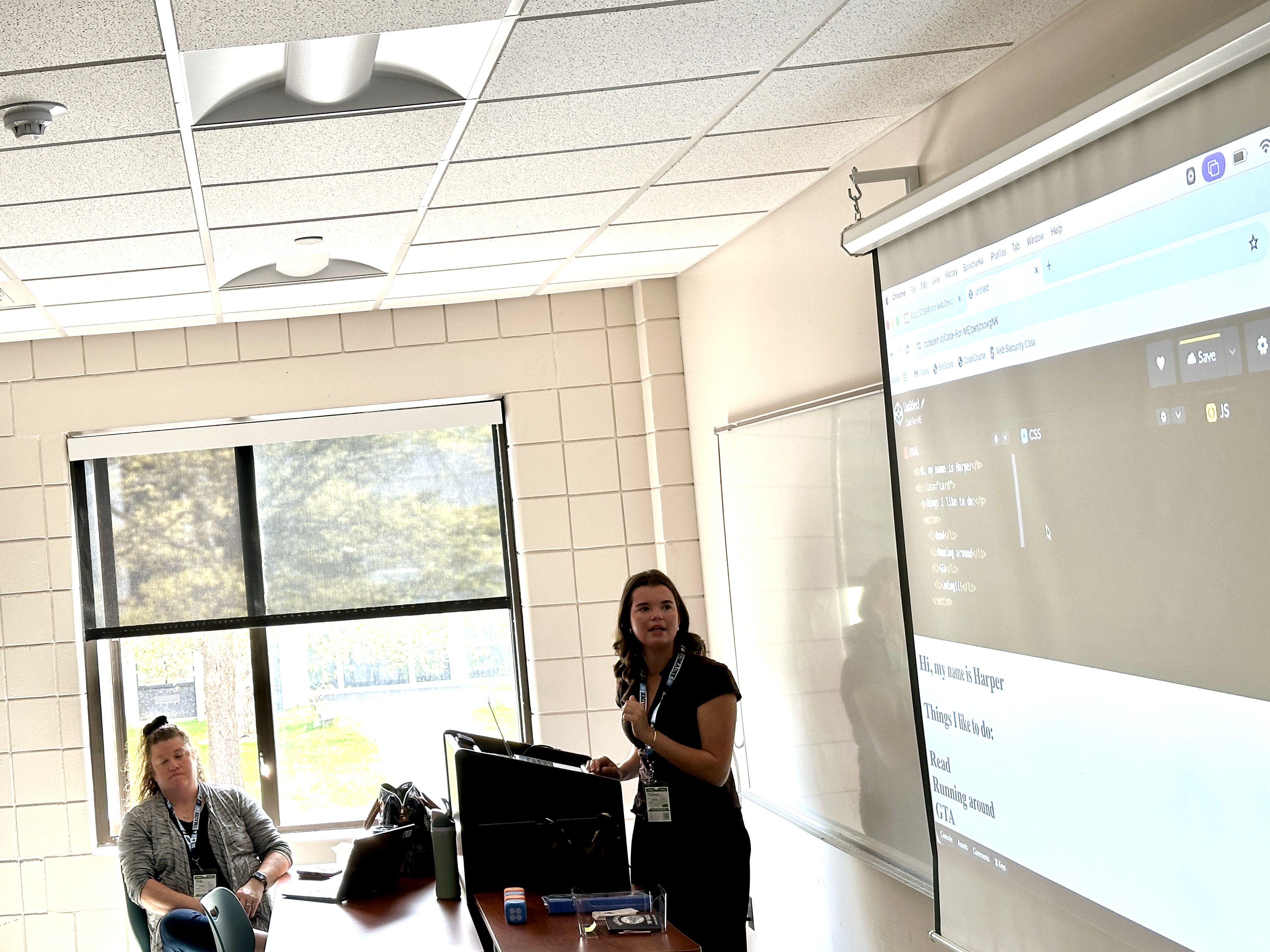
A hallmark of the conference was its emphasis on student leadership. More than 50 students joined Maine educators in leading conference sessions and sharing their expertise with peers. Morse High School sophomore Harper Steenstra, who presented a coding-focused session connected to her own “Code for ME” summer camp, was among the student presenters. Other schools, including Hampden Academy and Saco Middle School, sent teams of students to the conference who guided participants through hands-on drone activities and flight experiences.
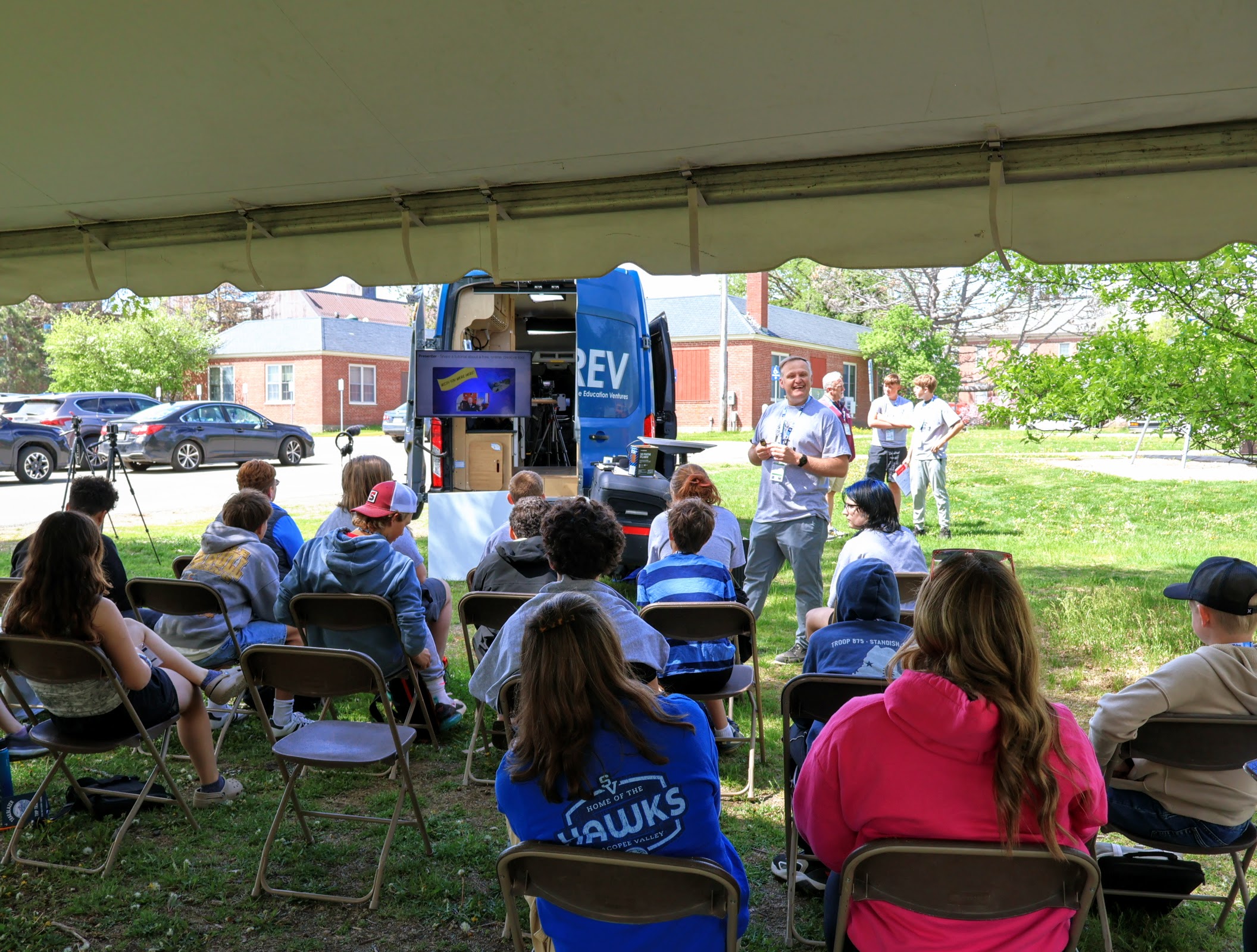
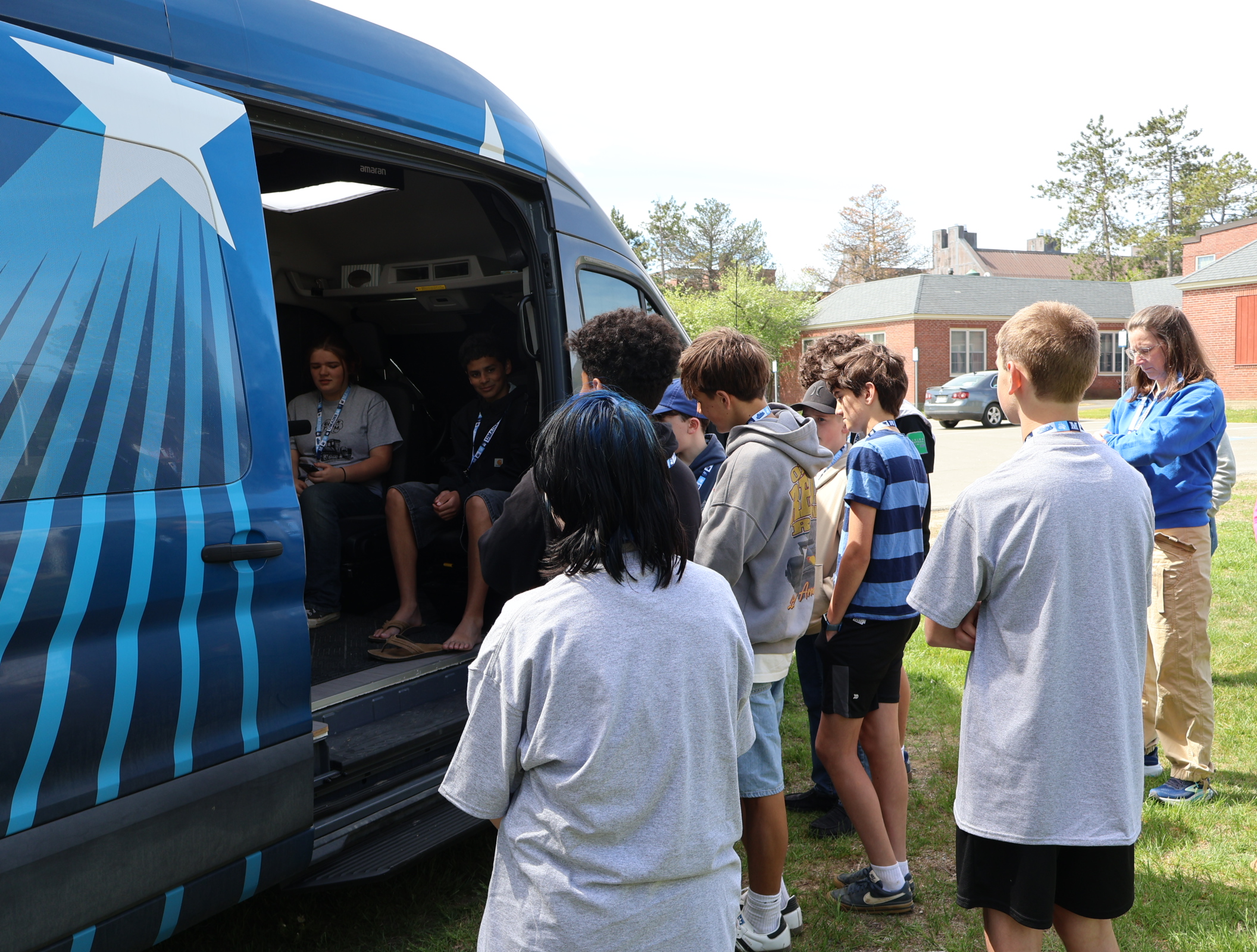
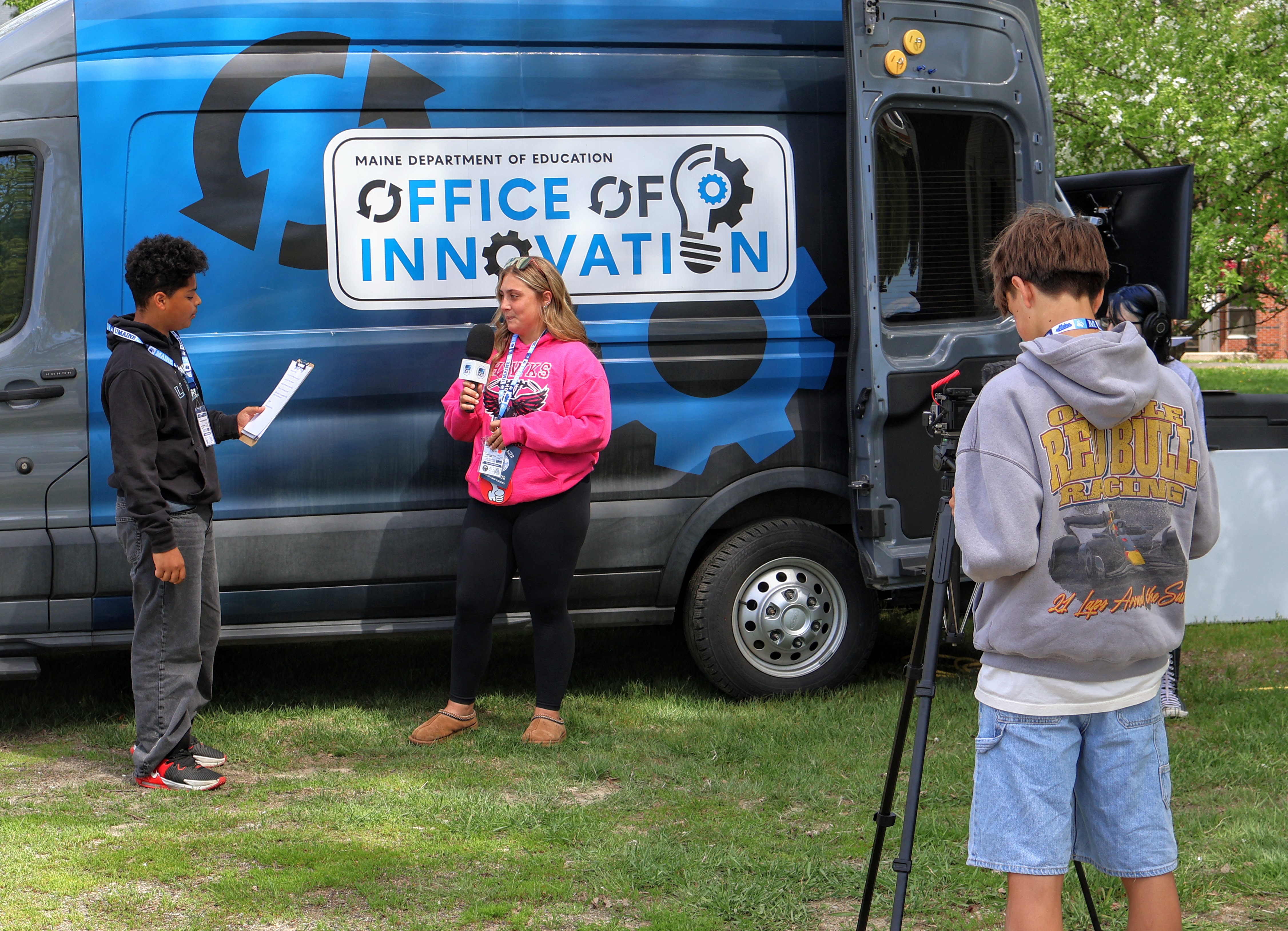
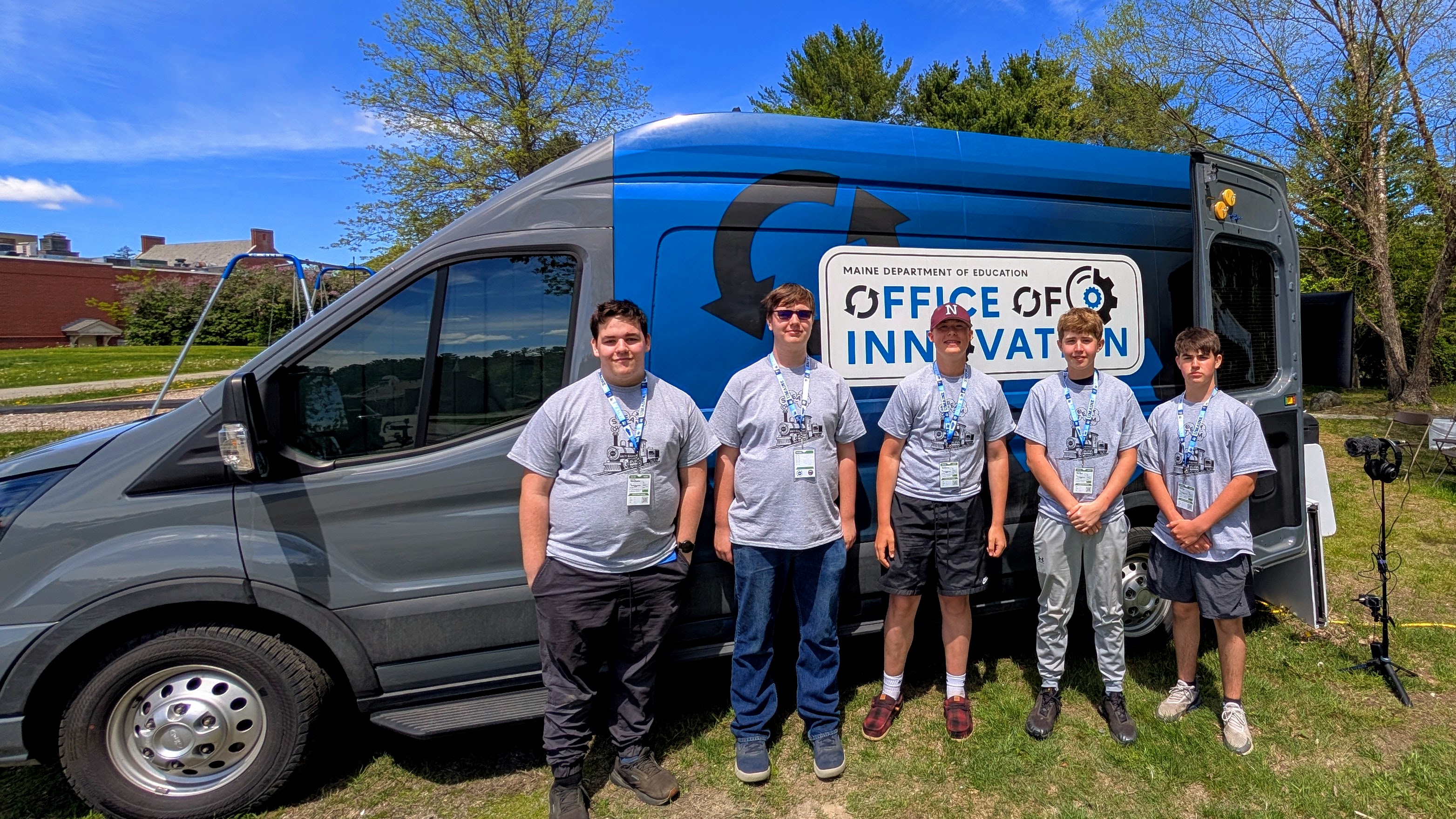
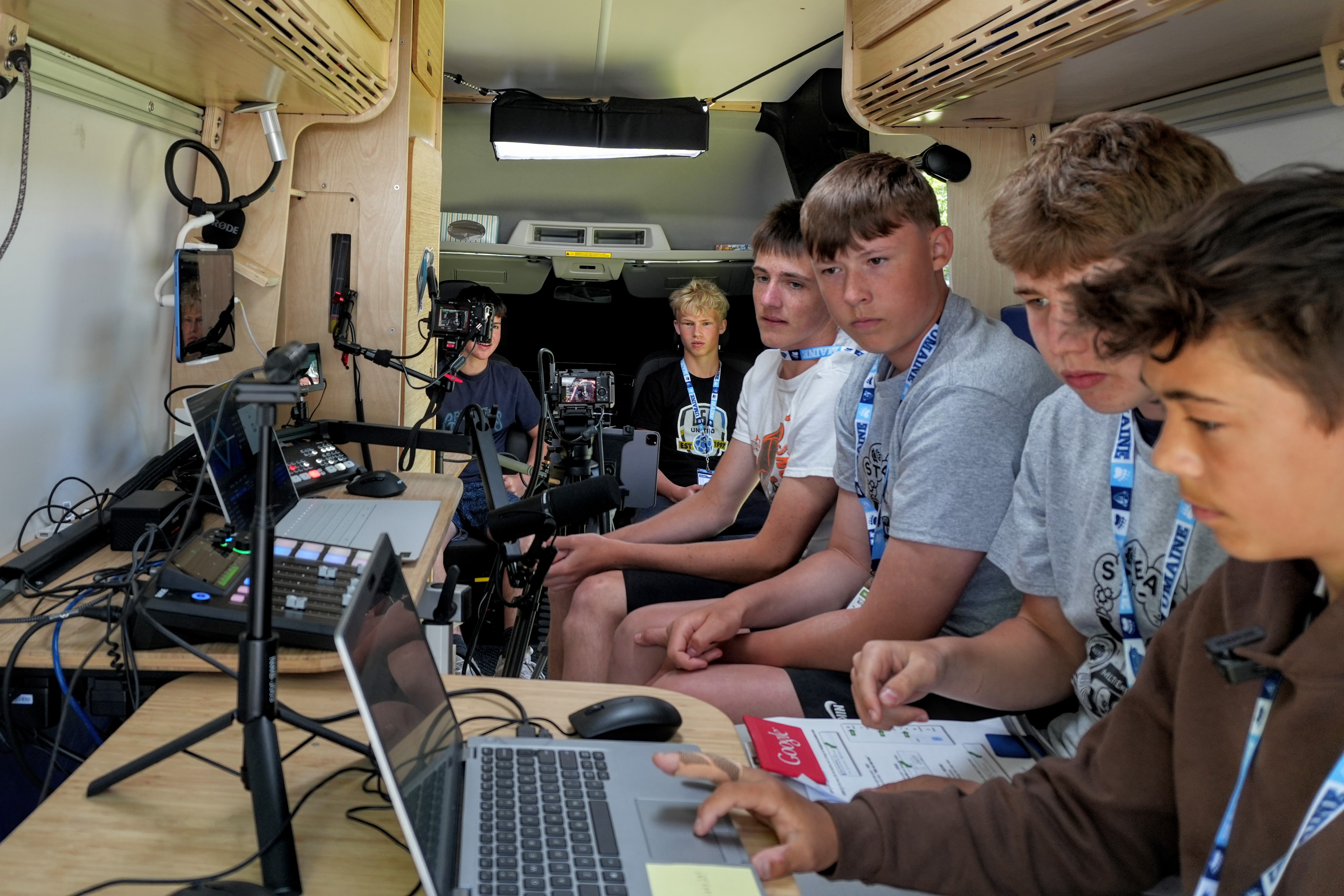
Another highlight was the Student Leadership Ambassadors of Maine (SLAM) Show, hosted by SLAM students alongside RSU 19 Technology Integrator Kern Kelley, who used the Maine DOE Mobile Learning Van as a mobile studio to film this month’s SLAM episode during the conference. The student-created show highlights technology tools and student voice in action.
See the episode filmed at the conference here:
Additional session topics at the conference included:
Build and Train a Baby AI Bot
Canva Quest: Create Your Own Adventure
Mission Robotics: Build, Code, and Complete the Challenge
Mic Drop! Turning Your Ideas Into Your Podcast
Game On: Level Up Your AI Skills
Virtual Robotics with VEXcode VR
Design for Real Life: 3D Solutions for Everyday Problems
Bring Your Ideas to Life with Animation
From Player to Creator: Escape Room Designers Wanted
Higher Vision – Sparking Creativity and Careers Through Drones
NO CAP, JUST CODE: Bringing AI Creativity to Your School
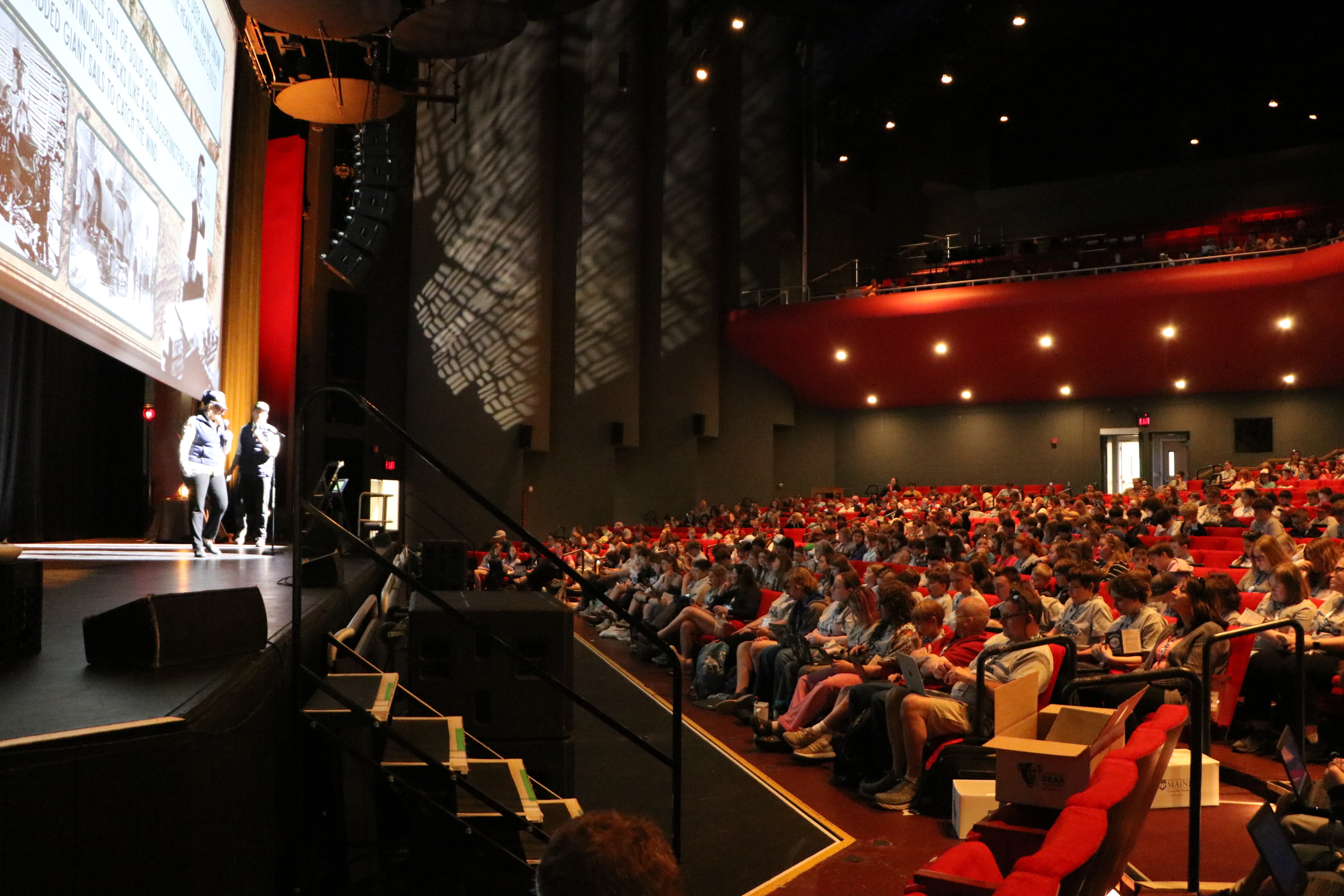
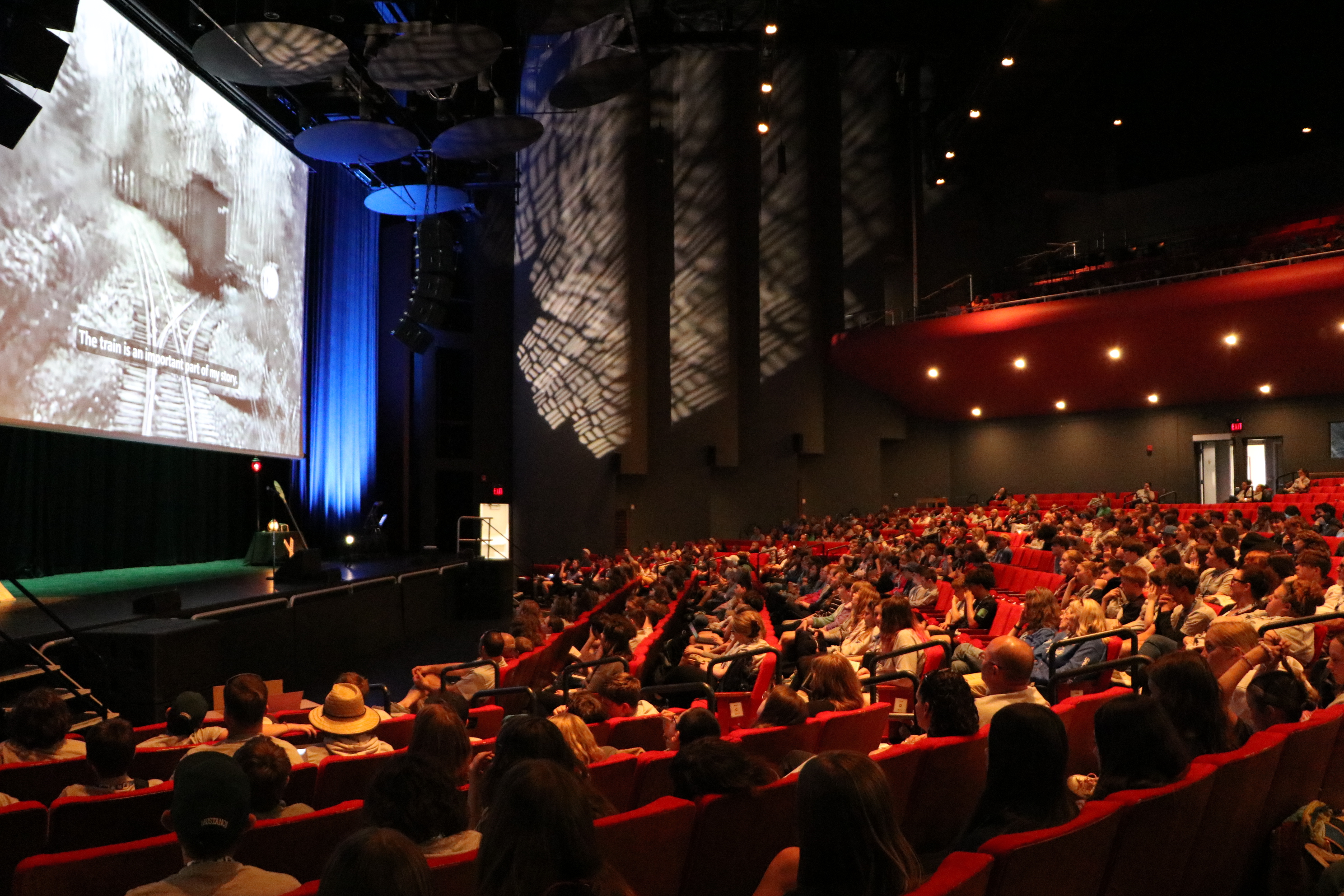
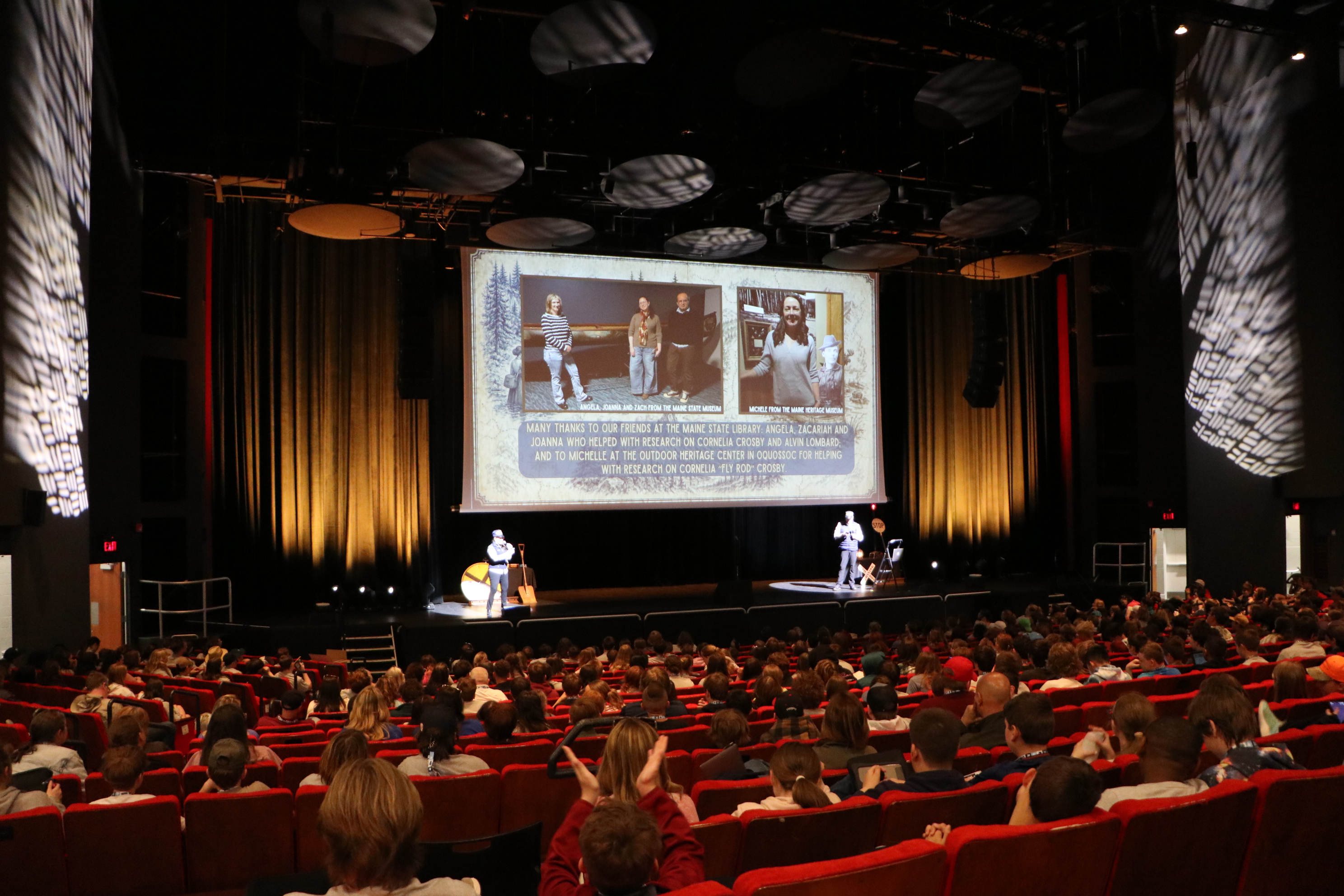
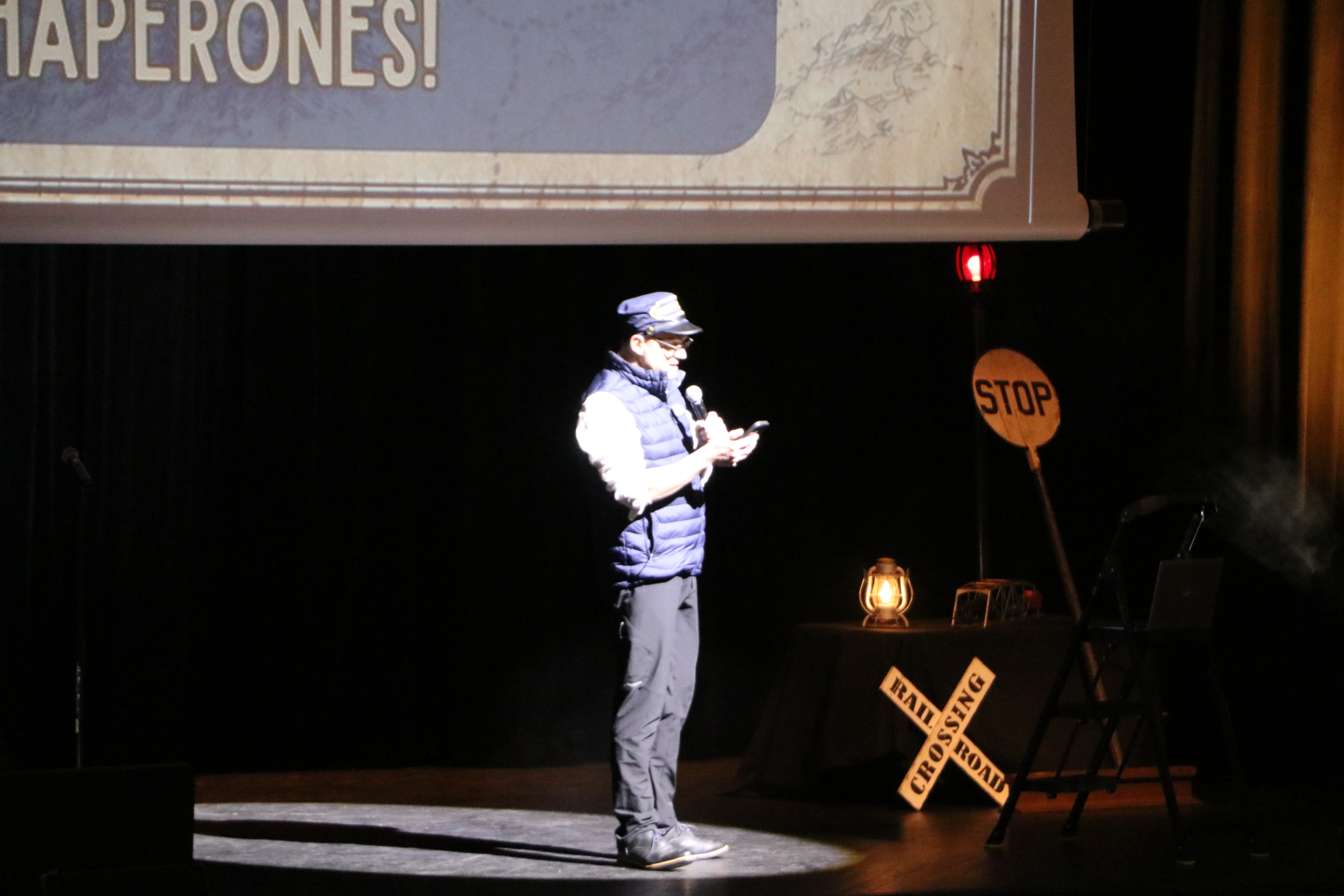
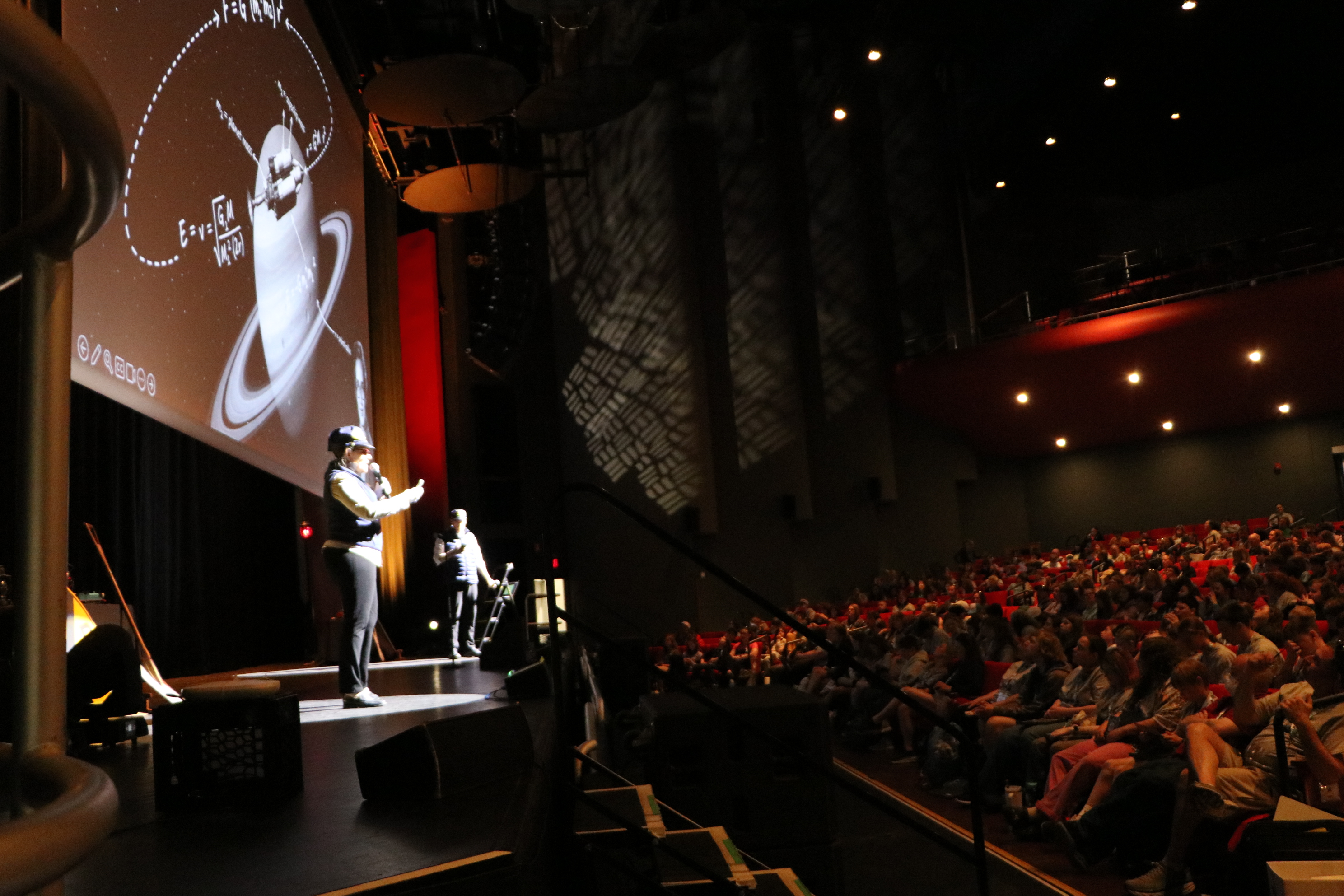
The conference concluded with a Global Session led by Maine DOE Learning Through Technology staff and MLTI Ambassadors at the Collins Center for the Arts. The interactive presentation brought together the conference’s “Full STEAM Ahead” theme by exploring the innovative thinking, creativity, and perseverance demonstrated by notable Mainers throughout history.
Students explored the stories of innovators such as Samuel Veazie, who expanding Maine’s railroads and transportation systems; Alvin Lombard, inventor of the Lombard steam log hauler and pioneer of tracked vehicle technology; Cornelia “Fly Rod” Crosby, who helped establish Maine as a premier outdoor recreation destination; and Ashley Bryan, the nationally celebrated author, illustrator, and storyteller whose work inspired generations of readers and artists.
The session encouraged students to see themselves as part of Maine’s continuing tradition of innovation and leadership while introducing them to tools and technologies that can help shape the future.
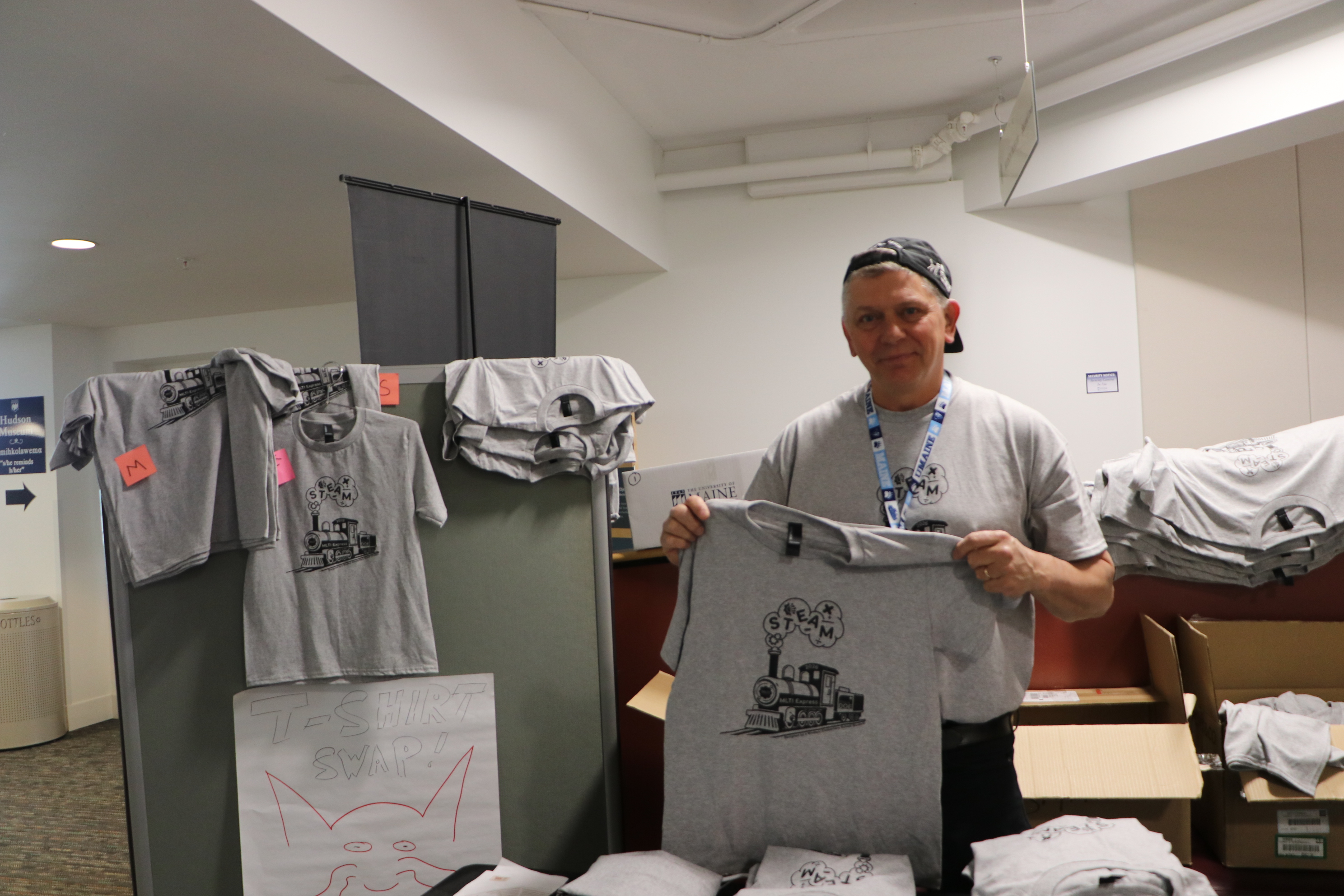
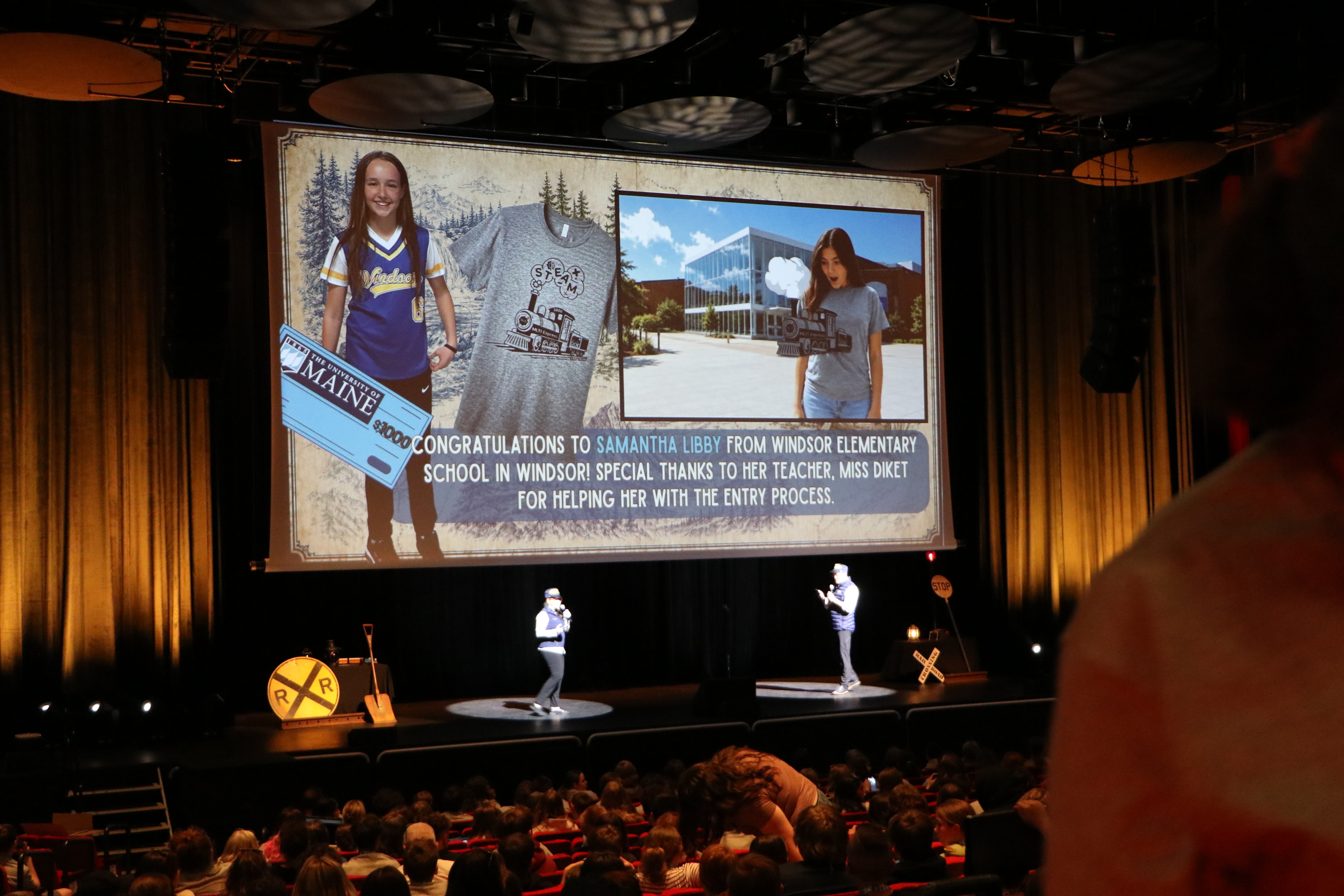
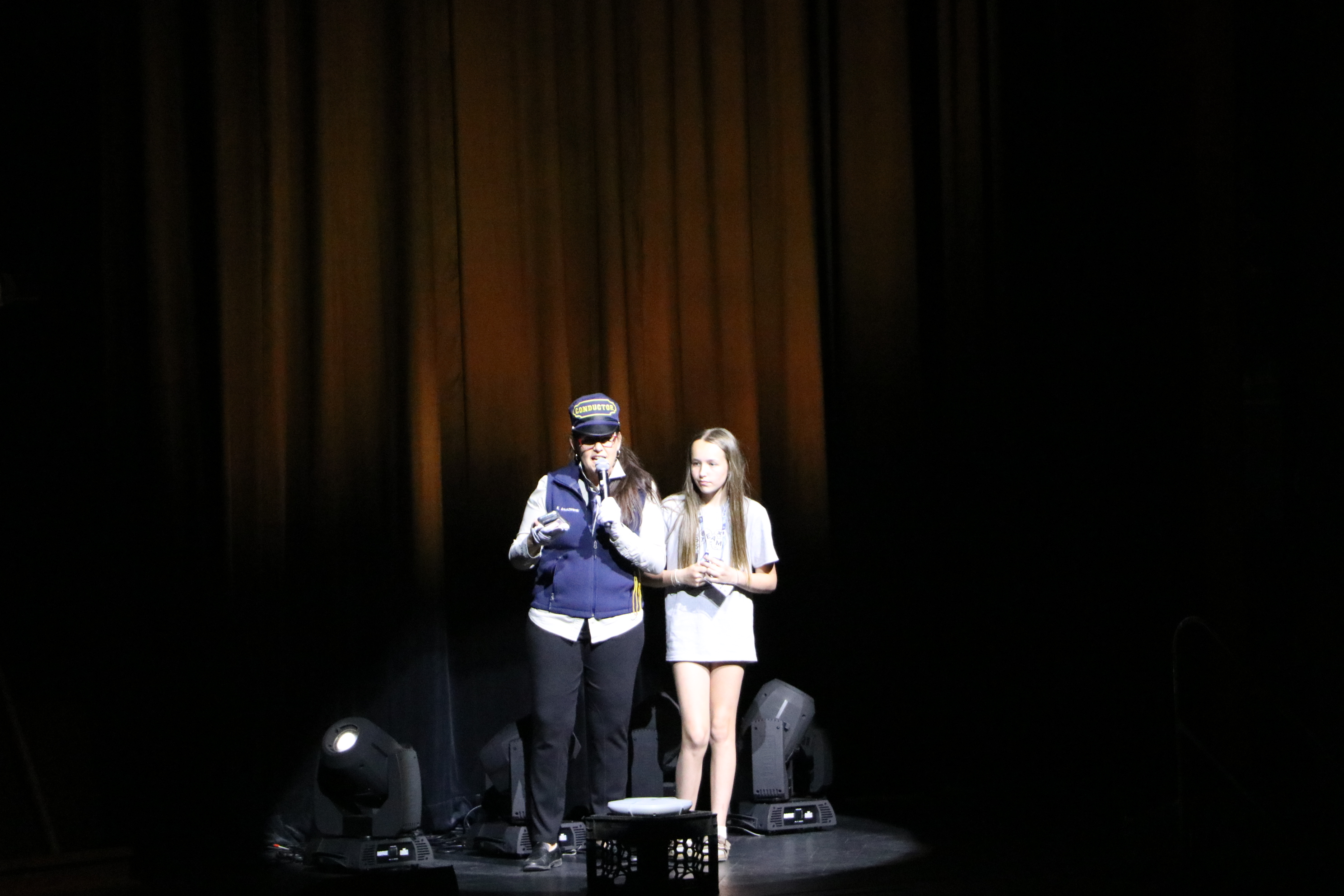
During the Global Session, the winning 2026 MLTI Student Conference T-shirt design was also recognized. The selected artwork was created by Samantha “Sam” Libby, a sixth-grade student from Windsor Elementary School.
The Maine DOE would like to extend special thanks to all presenters, educators, students, adult chaperones, bus drivers, and volunteers whose support and participation helped make the 2026 MLTI Student Conference a success.