2026 MLTI Student Conference – Full STEAM Ahead: Call for Session Proposals

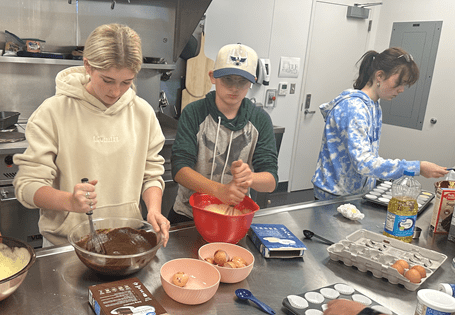
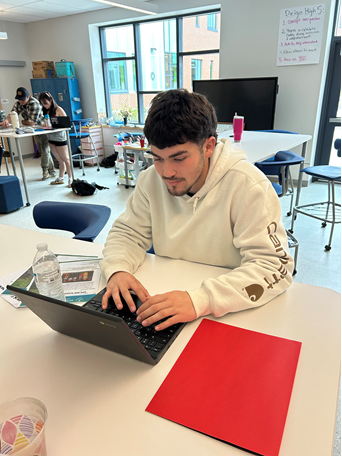
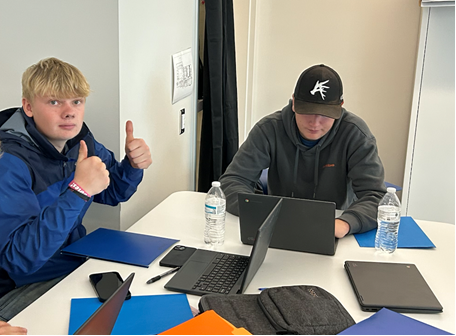
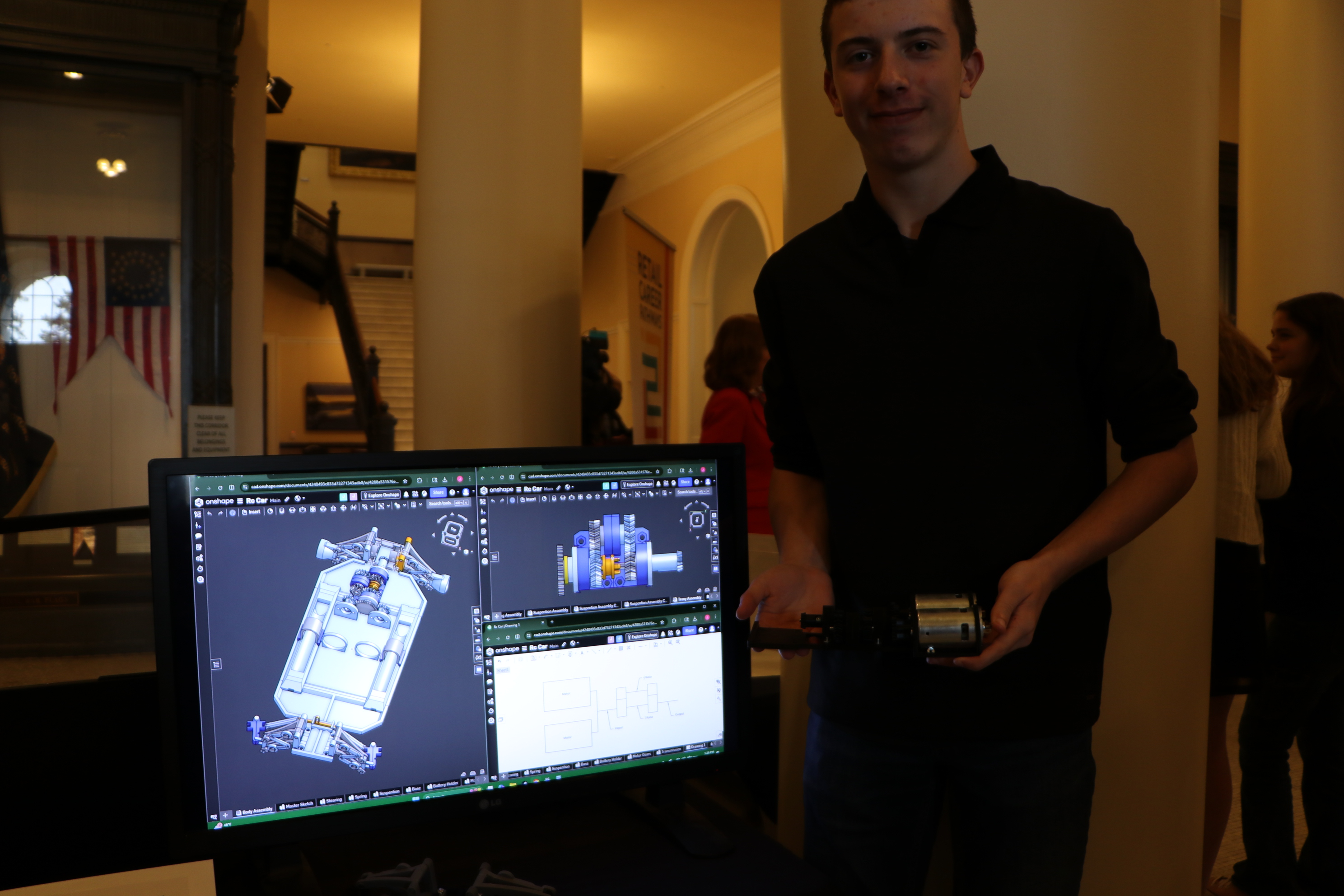
The Maine Department of Education (DOE) Office of Teaching and Learning is pleased to issue a call for session proposals for the 2026 MLTI Student Conference. This annual event is organized by the Maine DOE Learning Through Technology team as part of the Maine Learning Technology Initiative (MLTI). This year’s conference will be held in person on Thursday, May 21, 2026, at the University of Maine campus in Orono and is open to students in grades 5-10 from all MLTI school administrative units (SAUs).

The 2026 conference theme, “Full STEAM Ahead,” highlights the areas of science, technology, engineering, the arts, and mathematics (STEAM). While sessions are encouraged to align with this theme, it is not required. There are many possible session topics; however, all sessions should be technology-centered and may include traditional technology use, computer science, or unplugged activities.

Session Proposal Requirements

  • Platform Agnostic: Sessions should not be device-specific.
  • Free Tools and Apps: Sessions should use only free tools and applications that are accessible to all participants and, when possible, have a Student Data Privacy Agreement in place.
  • Age Appropriate: Sessions must be suitable for students in grades 5-10.

Sessions will be 60 minutes long. They should actively engage students in exploration, creation, and collaboration through technology and/or computer science. Presenters should plan to deliver their session twice, unless scheduling constraints prevent them from doing so.

Sessions may be led by educators or students. Last year, 40 students led or supported sessions, and the Maine DOE hopes to see a similarly strong level of student leadership this year. For inspiration, please review information from the 2025 event and 2024 event.

To submit a session proposal, please click here to complete the 2026 MLTI Student Conference Presentation Proposal Form. Individuals must register to present before March 20, 2026. The Learning Through Technology team will notify you about presenting by March 27, 2026.

2026 MLTI Student Conference Schedule:

  • 8:15-9 a.m.: Check-In (45 minutes)
  • 9-9:30 a.m.: Welcome and Opening (30 minutes)
  • 9:4510:45 a.m.: Session 1 for everyone (60 minutes)
  • 11 a.m.-noon: Lunch or Session 2A (60 minutes)
  • 12:15-1:15 p.m.: Lunch or Session 2B (60 minutes)
  • 1:30-2:30 p.m.: Global Session and Closing (60 minutes)

With questions, please contact the Maine DOE Learning Through Technology team at doe-ltt@maine.gov.

Blending Indigenous Knowledge and Modern Science: Maine DOE Releases “Maple Bytes” Interdisciplinary Instructional Program

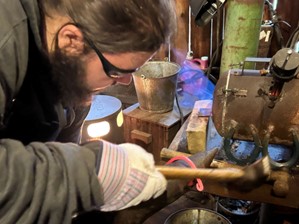
The Maine Department of Education (DOE) Office of Teaching and Learning has released a new, innovative interdisciplinary instructional program called “Maple Bytes,” which provides Maine educators with the opportunity to engage students in a unique, hands-on learning experience that blends computer science, Wabanaki studies, and earth sciences.

Developed by Maine DOE Computer Science Specialist Allison Braley, Interdisciplinary Instruction Specialist Erik Wade, and Wabanaki Studies Specialist Brianne Lolar, Maple Bytes invites students to explore the rich cultural, historical, and environmental story of maple syrup. Through this instructional program, students learn about the traditional significance of maple syrup to the Wabanaki people; examine historical methods of sap collection and processing; and apply modern computer science tools to gather and analyze Earth science data related to tree health, environmental conditions, and sap yields.

The learning experience culminates with students tapping maple trees and producing their own maple syrup, connecting classroom learning to real-world practice and deepening understanding of both Indigenous knowledge systems and scientific inquiry.

Maple Bytes offers an exciting way to integrate cultural heritage, environmental science, and computational thinking,” Braley explained. “Students don’t just learn about these subjects; they experience them, collect real data, and see the results of their efforts in a meaningful, hands-on project.”

Maple Bytes reflects the true spirit of interdisciplinary learning in Maine, offering students an authentic, community-rooted experience that weaves together tradition, science, and technology.

Educators interested in using Maple Bytes in their classroom can access it through the Maine DOE Learning Through Technology webpage: Technology & Learning: Maple Bytes.

For more information or with questions about Maple Bytes, please contact Allison Braley at allison.braley@maine.gov.

2026 For ME Instructional Programs Overview and Summer Training Opportunities

Since 2018, the Maine Department of Education (DOE) has adapted and piloted the For ME Instructional Programs for early elementary grades (pre-K to grade 2), based on the Boston Public Schools’ evidence-based Focus Curricula. These open-source, developmentally appropriate instructional programs are interdisciplinary and align with Maine’s learning standards.

While Maine schools are responsible for purchasing the materials needed to support the implementation of the For ME programs, lesson plans and other instructional resources are available at no cost through the Maine DOE website. The Maine DOE also provides initial professional learning to support effective use of the programs.

Informational Overview

An informational overview of the For ME programs was held on Monday, February 9, from 3-4:30 p.m. This session provided an introduction to the program structure and reviewed the materials required for implementation. Please find a recording below.

Summer Training

Educators, schools, and early learning programs interested in implementing the For ME programs during the 2026-2027 school year at any grade level from pre-K through grade 2 are encouraged to participate in the initial implementation trainings offered during the summer of 2026.

These trainings are designed to deepen understanding of program design and support successful implementation. School administrators are strongly encouraged to attend alongside their pre-K, kindergarten, first- and/or second-grade teachers. Special educators, education technicians, instructional coaches, and curriculum leaders who work with pre-K through grade 2 educators are also encouraged to participate.

There is no cost to attend these summer trainings.

Training Format and Schedule

All trainings will be held in person, from approximately 8:30 a.m. to 3:30 p.m.:

  • The Pre-K for ME training is a two-day training.
  • The K for ME, 1st Grade for ME, and 2nd Grade for ME trainings are three-day trainings with one day in June and two days in July.

Participants should plan to attend all required days for their respective grade-level training.

Training Dates/Locations:

Pre-K for ME:  

  • July 27 and 28 at Hampden Academy High School Library
  • July 29 and 30 at the Randall Student Center, University of Maine at Augusta (UMA) campus in Augusta

K for ME:

  • June 24, July 27, and 28 at Randall Student Center, UMA campus in Augusta

1st and 2nd Grades for ME

  • June 24 at the Randall Student Center, UMA campus in Augusta
  • July 29 and 30 at the Deering Building in Augusta, Room 101

Registration Information

Schools interested in registering educators for these trainings should have a principal or instructional leader complete the training registration on behalf of all participants by May 11, 2026. The registration form allows schools to enroll educators in the Pre-K, Kindergarten, 1st Grade, and/or 2nd Grade For ME trainings. After registration closes, all participants will receive confirmation of participation, along with training locations and preparation details.

For additional information regarding:

State Activities funds received from the U.S. Department of Education (ED) support the implementation of this project. The project has an award totaling $50,000 of which 50% is federally funded and directly attributed to project implementation. The contents are those of the author(s) and do not necessarily represent the official views of, nor an endorsement by, ED or the U.S. government.

Maine Students Invited to Contribute to National Youth Artifact for the 250th Anniversary of the Signing of the Declaration of Independence

Image courtesy of the MY AMERICA website.

The Maine Department of Education (DOE) is pleased to share a new civic learning opportunity for Maine educators and students: MY AMERICA: From Ground Zero to Common Ground, a nationwide, youth-driven art and civic engagement campaign taking place during a period of national reflection in 2026.

Through this initiative, Maine students will have the opportunity to contribute directly to a national commemorative artifact, a large-scale mosaic of an American flag composed of thousands of individual student-created tiles from across all 50 states. Each tile will feature a student’s original message, artwork, or poem reflecting their perspective on unity, democracy, and what it means to live together in the United States today. When assembled, the mosaic is expected to measure approximately 150 feet by 80 feet, creating a powerful visual representation of youth voice and collective expression.

MY AMERICA invites young people to engage thoughtfully with the nation’s past, present, and future during a moment that includes both the 250th anniversary of the signing of the Declaration of Independence and the 25th anniversary of September 11, 2001. The campaign acknowledges that while these anniversaries hold significance in the nation’s civic history, they also sit within a much longer and more complex narrative, one that encompasses the histories and cultures of Indigenous peoples whose presence on this land predates the formation of the United States.

Building on the legacy of the original United We Stand for America youth flag created after 9/11, MY AMERICA centers youth voice as a means of reflection, dialogue, and shared meaning-making. The project affirms that democracy is not static or complete but rather an ongoing practice shaped by many perspectives, experiences, and histories.

Educational Opportunities for Maine Classrooms

Participation in MY AMERICA offers rich, flexible learning opportunities across grade levels and content areas. The project is well suited for:

  • Civics and social studies, supporting inquiry into democracy, civic identity, and multiple perspectives on national history.
  • Arts and humanities, emphasizing creative expression, symbolism, and storytelling.
  • Interdisciplinary learning, integrating history, literacy, visual arts, and student voice.
  • Project-based learning, engaging students in reflection that culminates in a contribution to a national public work.

Educators may adapt participation to align with local curricular goals while inviting students to grapple with complex questions about history, belonging, responsibility, and the future they hope to shape.

Maine’s Participation

Maine is a coalition partner in the MY AMERICA campaign, and the Maine DOE encourages educators to consider participating. Through this effort, Maine students will be represented alongside peers from across the country, ensuring that Maine perspectives, experiences, and values are part of a national artifact that reflects the diversity and complexity of our shared civic life.

How to Get Involved

Educators may register their classrooms to receive a free participation kit, which includes fabric tiles, markers, and classroom guidance. Kits are scheduled to be mailed at the end of January.

Completed tiles must be returned by October 1, 2026, although educators are encouraged to submit them before the end of the school year in June, if possible.

To learn more or register, visit MyAmerica2026.org. Questions may be directed to Maine DOE Chief Teaching and Learning Officer Beth Lambert at beth.lambert@maine.gov.

By participating in MY AMERICA, Maine educators and students have the opportunity to engage in meaningful civic learning while contributing their voices to a national work that reflects on where we have been, acknowledges the histories that shape us, and looks toward a more inclusive and shared future.

Maine DOE Seeks Educators to Enhance MOOSE Module Supports

The Maine Department of Education (DOE) is seeking educators to support the iteration and improvement of existing MOOSE (Maine Online Open-Source Education) modules, including the development of accompanying educator resources.

The MOOSE platform provides free, interdisciplinary, project-based learning materials, created by Maine teachers for Maine students in pre-K through grade 12. The work being completed under this notice reflects the Maine DOE’s commitment to ensuring students have access to high-quality instructional materials that offer relevant, real-world context aligned with the Maine Learning Results.

The Maine DOE is seeking a variety of Maine educators (e.g., classroom teachers, curriculum leaders, museum educators, librarians, etc.) to serve on teams that will create educator resources for existing modules and update modules according to current publication standards.

  • Educator Resources Team: Members of the Educator Resources Team will create and curate resources for assigned modules. These resources will help teachers to make quick decisions about implementing a module and provide support throughout implementation.
  • Iteration and Improvement Team: Members of the Iteration and Improvement Team will update existing MOOSE modules to ensure an engaging and accessible learning experience for students. Participants will apply Universal Design for Learning (UDL) and Project-Based Learning (PBL) frameworks to strengthen modules and complete basic maintenance to support long-term functionality.

Applicants must be available for active participation in weekly meetings, which will be largely devoted to synchronous activities (e.g., one-on-one peer feedback and review of materials). Participants must also be able to dedicate four to six hours per week outside of meeting time to complete their assigned work in advance of meetings. The spring 2026 MOOSE improvement planning and implementation will take place from Monday, February 23, through Friday, May 22, 2026, with weekly meetings held on Monday evenings (Educator Resources: 5-6 p.m., Iteration and Improvement: 4-5 p.m.).

Please use this link to apply for this opportunity. Applications are due on Sunday, February 1, 2026. Applicants will be notified of acceptance by Wednesday, February 4, and must attend their first meeting on Monday, February 23. Compensation of up to $3,000 will be determined based on the completion of deliverables for MOOSE design improvements.

If you are interested in applying but still have questions, the Maine DOE will host an informational session on Thursday, January 22, 2026, at 4 p.m. A recording will be emailed to all registrants and posted on the Maine DOE website. Please register for that session here.

With questions or for additional information, please contact Jennifer Page, Maine DOE MOOSE Project Supervisor, at jennifer.page@maine.gov.

PBIS in Action: How Portland Public Schools Is Transforming School Culture

At Portland Public Schools, the journey to creating joyful, supportive, and safe learning environments took a major step forward when Positive Behavior Interventions and Supports (PBIS) moved from scattered, school-level efforts to a central part of the district’s Strategic Plan. Schools in Portland had been using elements of PBIS for some time, but two years ago, the district officially named PBIS under its “Whole Student, Connected Community” goal, providing clarity, purpose, and district-wide momentum.

The impact of this development within the district is already visible. Schools with strong PBIS systems are seeing reductions in office discipline referrals and increases in positive climate indicators. One middle school has experienced a significant decline in behavioral incidents following the shift to focus on culture building. In several other schools, targeted supports are reaching more students, thanks to stronger systems and use of data.

At the elementary level, one school’s focused work in the cafeteria—teaching and reinforcing routines, adding student voice, and carving out time for quiet reading—has transformed the space, while also increasing students’ time with books.

“At our school, PBIS has helped us strengthen student leadership and build connections across grade levels. Recently, some of our fifth graders—being the senior students in our building who have spent years practicing our schoolwide PBIS expectations—began reteaching those expectations to the younger grades,” Jeremy Lynch, Culture and Climate Coordinator of Amanda C. Rowe Elementary School, said. “I expected some groans when I told them they’d have the opportunity to do this after every single school break. Instead, I was met with a room full of exuberant cheers! They love taking on this leadership role, and the younger students clearly look up to them. The power of PBIS to transform a school community truly is incredible.”

PBIS has also strengthened collaboration. Staff from a range of roles are leading building-based teams, creating shared ownership, and ensuring that their work reflects the whole school community. This includes efforts to translate visuals and materials and ensure that expectations are culturally relevant.

“PBIS has helped us build a cohesive, schoolwide framework that allows us to intentionally weave together the practices most essential to supporting the students and families we serve, while keeping equity at the center. Within this structure, we are able to align restorative practices, culturally responsive teaching, trauma-informed approaches, and more,” Bobbie Thibodeau, Culture and Climate Coordinator of Lincoln Middle School, said. “The PBIS framework has supported more consistent implementation across classrooms and strengthened collaboration among teachers, families, and students. This shared approach has improved communication, created more predictable and supportive learning environments, and—most significantly from my perspective—allowed us to develop authentic, positive relationships throughout our learning community.”

This year, Portland Public Schools has adopted into use the new Tiered Fidelity Inventory (TFI 3.0) with most schools meeting the measure of fidelity to a PBIS framework. The district also has seven schools participating in the Maine Department of Education’s (DOE) Advanced Tiers Cohorts, an opportunity for networking, skill building, and technical assistance for schools who meet fidelity in Tier 1.

For those districts just getting started, Portland Public Schools offers this advice: Don’t stop at the surface. PBIS isn’t just about rewards; it’s about building systems that help every student to thrive.

PBIS is a nationally recognized, evidence-based framework designed to create positive school climates by teaching and reinforcing clear behavioral expectations. It helps schools to improve student behavior, promote academic success, and build supportive environments where all students feel safe, respected, and empowered to thrive. To learn more about PBIS in Maine, visit the Maine DOE website.

This article was developed in collaboration with Portland Public Schools and the Maine PBIS program, a partnership between the Maine DOE Office of Special Services and Inclusive Education and the University of Maine System. This article is part of a series highlighting the successes of Maine schools that are in the process of implementing, or that have implemented, PBIS in their schools. To submit a good news story to the Maine DOE, please fill out the good news submission form.

National Youth Opportunity: ‘Mott Million Dollar Challenge’ Invites Students to Share Big Ideas

Educators across Maine are encouraged to share an exciting national opportunity with their students: the Mott Million Dollar Challenge, a youth pitch competition designed to empower students in grades K-12 to turn big ideas into solutions that make life better.

Funded by the Charles Stewart Mott Foundation, the Mott Million Dollar Challenge celebrates youth voice, creativity, and entrepreneurial thinking by inviting young people to identify a problem they care about and propose a business idea or social solution. The competition is open to K-12 students across the United States, including those learning in traditional school settings, afterschool and summer programs, community-based organizations, and homeschool environments.

This initiative is supported by national leaders in youth entrepreneurship and learning, including the Network for Teaching Entrepreneurship, Young Entrepreneur Institute, VentureLab, Afterschool Alliance, and Collaborative Communications. Together, these partners are working to create accessible, engaging opportunities for young people to shine as innovators, problem-solvers, and leaders.

How Students Can Participate

Participation in the Mott Million Dollar Challenge is intentionally simple and low barrier. Students are invited to:

  • Identify a problem they care about.
  • Create a business idea or social solution.
  • Submit a 30-90-second video pitch, filmed straight to camera (with no special equipment required).

Students may participate individually or in teams of up to three; within grade bands K-4, 5-8, or 9-12; and from any learning environment, including school-day instruction, enrichment programs, or at home.

Key Dates

  • Submissions open: December 17, 2025
  • Submission deadline: February 27, 2026
  • Finalists announced: spring 2026
  • Final celebration and live-pitch event: June of 2026 (in Flint, Michigan)

The Mott Million Dollar Challenge is designed to align naturally with instructional goals and youth development priorities. This experience supports learning connected to STEM (Science, Technology, Engineering, and Mathematics), entrepreneurship, college and career readiness, and positive youth development, while affirming student voice and confidence.

Educators do not need to design a new program to participate. Instead, they are encouraged to “lift and layer” the challenge into existing classroom lessons, enrichment activities, or project-based learning experiences.

To support participation, the Mott Million Dollar Challenge website offers a suite of free, educator-friendly resources, including:

  • A plug-and-play communications toolkit
  • Classroom-ready lessons and activities
  • Pitch preparation guides and materials

Additional youth-centered resources are available through Mizzen.org.

For more information and access to resources, please visit the Mott Million Dollar Challenge website.

Schools and SAUs Invited to Host AmeriCorps Members for 2026-2027 Program Year

Schools and school administrative units (SAUs) across Maine are invited to explore an opportunity to build local capacity and deepen community impact by hosting an AmeriCorps member during the 2026-2027 program year through Goodwill Industries of Northern New England (NNE).

Now in its 18th year of operating AmeriCorps programs, Goodwill Industries of NNE is seeking mission-driven host sites, including schools, SAUs, municipalities, and nonprofit organizations, to partner in placing full-time, stipended AmeriCorps members who support local priorities such as reducing poverty, implementing public health interventions, and strengthening social and emotional development in youth.

With federal funding and support from AmeriCorps, more than 250,000 individuals nationwide serve in communities each year to address pressing challenges. AmeriCorps members gain valuable professional skills, receive benefits, and contribute meaningful service, while supporting organizations in expanding capacity and improving services. During the current program year, Goodwill NNE AmeriCorps has partnered with 60 organizations across Maine and New Hampshire, hosting more than 100 AmeriCorps members. These partnerships have supported evidence-based interventions, strengthened organizational infrastructure, and increased services to children, families, and communities.

For the 2026-2027 program year, Goodwill NNE AmeriCorps grants will be competitively awarded to approximately 80 host sites across Maine and New Hampshire. Over the coming months, Goodwill will work with interested sites to develop position descriptions, finalize partnerships, and prepare for member recruitment, with the goal of completing this process by February 2026. AmeriCorps members are expected to begin service in late summer or fall 2026, with terms running through July of 2027. Term lengths and schedules may vary and can be flexible depending on program needs.

While AmeriCorps programs are federally funded, a cost-sharing arrangement is required from host organizations to ensure local investment and support for members’ benefits packages.

Schools and SAUs interested in hosting an AmeriCorps member are encouraged to complete a brief interest survey to initiate the process. Please find that survey here. Schools and SAUs seeking innovative ways to strengthen student supports, enhance programming, and build sustainable community capacity are encouraged to consider this partnership opportunity.

Goodwill Industries of NNE will be hosting several informational webinars to provide details about program models, expectations, timelines, and next steps:

Additional information about Goodwill NNE AmeriCorps programs serving Maine and New Hampshire is available at www.goodwillnne.org/americorps.

Get Ready for the 11th Annual Read to ME Challenge in February!

For the 11th consecutive year, the Maine Department of Education (DOE) is partnering with schools and community organizations across the state to promote the Read to ME Challenge, a month-long public awareness campaign held in February.

The Read to ME Challenge is designed to foster joy in reading and support children’s literacy development by challenging adults to read to and/or with children during the month of February. Participants are invited to capture these moments through photos or short videos and share them on social media using the hashtag #ReadtoME. Readers are also encouraged to challenge their social media connections to participate, helping the impact of this initiative to ripple across Maine.

The 2026 Read to ME Challenge will kick off the first week of February 2026 and will continue through Read Across America Day on March 2, 2026. While anyone may participate, the Challenge offers a particularly meaningful opportunity for schools, childcare programs, libraries, and community organizations to plan engaging activities that highlight a shared commitment to reading with children.

In support of the Maine State Literacy Action Plan, the Maine DOE is strongly encouraging community organizations to collaborate with schools and families during the 2026 Read to Me Challenge. In past years, a wide range of partners have hosted impactful reading events, including college and high school athletic teams, civic organizations, libraries, recreation departments, and education-focused organizations. A list of suggested ideas to spark planning is included at the end of this article.

Learn more about the Read to ME Challenge on the Maine DOE website. Additional details about the kickoff session will be shared soon.

To share photos of your Read to ME Challenge participation with the Maine DOE, please contact Rachel Paling, Maine DOE Communications Outreach Manager, at Rachel.Paling@maine.gov. You may also use the following social media handles to connect with the Maine DOE, and we will share your #ReadtoME social media posts online:

  • Facebook: @MaineDepartmentofEducation1!
  • Instagram: @mainedepted

Read to ME Challenge Ideas for Community Involvement

  • Invite community members into schools as guest or “mystery” readers and consider asking them to share about their professions.
  • Partner with local fire departments, police departments, hospitals, health care providers, and businesses.
  • Collaborate with public libraries to host special events during the Challenge.
  • Engage civic organizations such as Rotary Clubs, Lions Clubs, Elks Clubs, and Freemasons as guest readers or event sponsors.
  • Include afterschool and youth programs such as Boys & Girls Clubs, YMCAs, 21st Century Learning Programs, and teen centers.
  • Work with community partners to host family literacy or reading nights.
  • Encourage participation from local school board members.
  • Create opportunities for middle and high school students to read to younger learners.
  • Foster friendly competitions among middle and high school teams or clubs to read to children.
  • Use Pine Project books to promote culturally sustaining reading experiences.
  • Explore options to expand access for multilingual families, such as QR codes to texts written in a variety of languages.
  • Incorporate the Challenge into pre-service teacher preparation courses, such as children’s literature or reading methods.
  • Partner with Foster Grandparent Programs and Aging in Place committees.
  • Seek support from literacy volunteer organizations and dyslexia centers.
  • Plan a Community Reads event in which one book is selected for shared reading and discussion across the community.

For further information and questions about the Read to ME Challenge, please contact Lee Anne Larsen, Maine DOE Director of Early Learning, at Leeann.Larsen@maine.gov.

Maine DOE Offers Variety of Literacy Learning Opportunities Aligned to Maine’s Statewide Action Plans

The Maine Department of Education (DOE) Office of Teaching and Learning invites educators from across the state to engage in literacy learning opportunities that are thoughtfully aligned to Maine’s statewide Action Plans.

The quieter winter season often offers a natural moment for reflection and growth. These literacy professional learning opportunities are designed to be supportive, practical, and inspiring—an invitation for educators to use the winter months to strengthen their practice, build shared understanding, and invest in the essential work of literacy.

Together, the below offerings form a menu of literacy learning opportunities available throughout the winter and spring of 2026. Educators are encouraged to engage in the experiences that best meet their interests, roles, and local contexts, whether that means participating in a cohort, attending a single workshop, joining virtual support hours, exploring modular professional learning, or taking part in statewide literacy initiatives.

Winter/Spring 2026 Literacy Professional Learning Opportunities:

Maine Solutionaries Project Literacy Cohort

This professional learning opportunity equips middle and high school teachers with training in four high-impact, interdisciplinary literacy practices that foster lifelong literacy and support successful Solutionary Inquiry-to-Action projects. Through engagement with complex texts, text-based discussion and writing, word study, and collaborative performance tasks, this cohort strengthens students’ reading, writing, speaking, listening, and language skills across content areas.

  • Audience: Grades 4-12 educators
  • Format:
    • In-person kickoff session on January 27, 2026, from 8:30-3:30 p.m. at Maple Hill Farm in Hallowell
    • Weekly virtual learning sessions on Tuesdays from 4-5:30 p.m. from February 3 through March 31 (four weeks focused on Solutionary Learning and four weeks focused on literacy integration)

Participants may earn up to 45 contact hours. Educators are encouraged to attend these sessions in pairs. Please use this link to register.

Spring Integrated Literacy Workshops

Please use this link to register for any of the following integrated literacy workshops:

Integrating Literacy with Mapmaking: Renee Keul will explore the connection between literacy and mapmaking by engaging educators in analyzing and creating maps. This workshop models how spatial reasoning, data visualization, and critical thinking support reading, writing, and communication across content areas, reinforcing literacy as a shared responsibility. This workshop strengthens foundational literacy skills such as decoding symbols, building vocabulary, sequencing ideas, and making meaning across texts through hands-on, interdisciplinary learning.

  • Audience: Pk-12 Educators
  • Date: March 6, 2026, from 9 a.m.-4 p.m.
  • Location: Osher Map Library in Portland (or virtually via Zoom)
  • Contact Hours: seven hours available

Integrating Literacy with Objects and Writing: Deb Johnson and Ronni Blaisdell will share strategies for using real-world artifacts and natural materials to support foundational reading and writing skills. By modeling object-based learning grounded in authentic texts and materials, this workshop demonstrates how interdisciplinary, hands-on instruction strengthens literacy development across grade levels and content areas. This workshop builds vocabulary, comprehension, and writing stamina through close observation and inquiry.

  • Audience: pre-K-12 educators
  • Date: April 10, 2026, from 9 a.m.-4 p.m.
  • Location: Maine Mineral and Gem Museum in Bethel (or virtually via Zoom)
  • Contact Hours: seven hours available    

Reaching Reluctant Readers: Cris Tovani will explore why students disengage from reading and how educators can remove barriers to learning. Grounded in research-based strategies for knowledge building and comprehension, the session equips educators with practical tools to support confident, independent readers across content areas. This workshop addresses engagement, motivation, and access as essential components of effective literacy instruction, particularly for students who are reluctant or struggling readers.

  • Audience: pre-K-12 educators
  • Date: May 15, 2026, from 9 a.m.-4 p.m.
  • Location: Camp Chamberlain in Augusta (or virtually via Zoom)
  • Contact Hours: seven hours available          

Virtual Support Hours: Virtual support will be available on Thursdays following each workshop. These sessions are open to all educators, regardless of whether they attended the corresponding workshops, and are designed to support the application of learning through collaboration, reflection, and shared problem-solving.

  • Graphic Novels for Literacy (workshop already occurred)
    January 8 through February 19, 2026, from 3:30-4:30 p.m. – Zoom registration link

    This is an open, collaborative space to explore how graphic novels support comprehension, vocabulary development, and visual literacy across grade levels and content areas. Participants are encouraged to bring questions, classroom experiences, and ideas aligned with the statewide Action Plans’ interdisciplinary vision.   
  • Integrating Literacy with Mapmaking
    February 26 through April 9, 2026, from 3:30-4:30 p.m. – Zoom registration link
    This is an informal space to explore how map analysis and creation can strengthen vocabulary, comprehension, and meaning making across content areas, reinforcing literacy as a shared responsibility. 
  • Integrating Literacy with Objects and Writing
    April 16 through May 7, 2026, from 3:30-4:30 p.m. –Zoom registration link
    This is a supportive forum to reflect on and apply hands-on strategies that build engagement, motivation, and access to literacy through object-based learning and writing.
  • Reaching Reluctant Readers
    May 14 through June 4, 2026, from 3:30-4:30 p.m. – Zoom registration link
    This is an open forum to extend learning from Cris Tovani’s strategies for engagement and comprehension. Educators can share challenges and explore ways to remove barriers to reading and support confident, independent literacy development.

Additional Literacy Learning Opportunities

  • Literacy Modules for Professional Learning: School administrative units (SAUs) may purchase licenses for AIM Steps to Literacy modules or Keys to Literacy modules at reduced costs and then seek reimbursement once educators have successfully completed the modules. Find additional details here.
  • For ME Instructional Programs: An informational session will be held on January 26, 2026, from 3:30-4:30 p.m. for schools interested in adopting the For ME Instructional Programs (Pre-K for ME, K for ME, 1st Grade for ME, and/or 2nd Grade for ME). These programs are grounded in evidence-based literacy practices, are interdisciplinary and play-based, and are aligned with Maine’s learning standards. Additional details and the Zoom link will be shared in January 2026.
  • Read to ME Challenge 2026: Get ready for this year’s Read to ME Challenge, running throughout the month of February! Details will be shared in January 2026. 

For more information about these professional learning opportunities, please contact Maine DOE Interdisciplinary Instruction Team Coordinator Kathy Bertini at Kathy.Bertini@maine.gov.

Titles II-A and IV-A funds received from the U.S. Department of Education (ED) support the implementation of these projects. These projects have an award totaling $99,569.00 of which 38% is federally funded and directly attributed to project implementation. The contents are those of the author(s) and do not necessarily represent the official views of, nor an endorsement by, ED or the U.S. government.