Bangor High School Teacher Named Maine’s 2022 State History Teacher of the Year

The Gilder Lehrman Institute recently announced the 2022 State History Teachers of the Year from elementary, middle, and high schools across the nation, including Geoffrey Wingard of Bangor High School who was named Maine’s 2022 State History Teacher of the Year.

Wingard has been teaching in public schools for 21 years – all of which have been at Bangor High School where he currently serves as the History Department Head. “Finding my role as a high school teacher was a gift,” said Wingard. “I really enjoy the content that I get to teach, and I love helping my students become better citizens and scholars.”

The History Teacher of the Year Award highlights the crucial importance of history education by honoring exceptional American history teachers from elementary school through high school. The award honors one K–12 teacher from each state, the District of Columbia, Department of Defense schools, and US Territories. In fall 2022, ten finalists for the National History Teacher of the Year will be announced.

“I think the thing I most enjoy about teaching history, and really teaching in general, is the collaboration I’m able to engage in with both colleagues and students,” said Wingard. “A story I use to illustrate the power of this approach has to do with a student who was enrolled as a ninth grader in my required World Geography class. He also took other social studies classes when he was not enrolled with me. I saw him again as a tenth grader in US History and again as a Senior in my AP Human Geography course. At the end of his high school career, he shared with me that the reason he had taken so many classes from our department was that every teacher he met, whether he was enrolled in their class or not, was willing to help him learn. He had found a community that supported him. I’m grateful to have been part of that community.”

Wingard shared that while the recognition as a Gilder Lehrman HTOY is a wonderful honor, it has also made him a more self-reflective and thorough teacher. Going through the process of articulating teaching philosophy and sharing lesson and unit plans has made him a better teacher and has created a space to become more thoughtful and a more intentional teacher of history.

“We are teaching in a particularly challenging time, a time when many of our foundational beliefs about teaching as a profession and beliefs about our history are being challenged. It is a powerful gift to be able to guide young people in their development as critical thinkers at this time and I hope teachers have a sense of pride and commitment regarding their role in shaping the next generation,” added Wingard.

In order to be considered for the History Teacher of the Year award, eligible teachers must first be nominated by a colleague, parent, or student. After receiving a nomination, teachers must submit a resume, teaching materials, and a letter of recommendation to be considered for the state award. History Teacher of the Year winners are selected by a committee of educators and education professionals in their state. For more information on the award process, visit the Gilder Lehrman Institute website.




eWorkshop: Virtual Professional Learning Community for Administrators 

The Maine Department of Education (DOE) welcomes all school and SAU-level administrators to participate in an eight-part virtual professional learning community (VPLC) this fall. The VPLC will center on the WIDA asynchronous eWorkshop “School Improvement Planning for the Equitable Education of Multilingual Learners.” This eWorkshop will introduce school leaders to leadership principles and practices to provide equitable educational opportunities for multilingual learners, based on a distributive leadership model.  

Participants will complete the eWorkshop independently and then come together with their colleagues and facilitator Robin Fleck, ESOL Consultant, to reflect and discuss what they have learned. The eWorkshop includes eight modules that take about 45 minutes each to complete. 

During the eWorkshop, participants will have an opportunity to explore effective leadership practices that aim to:  

  1. create and maintain an inclusive, school-wide learning environment focused on multilingual learners;  
  2. promote effective instructional practices for multilingual learners;  
  3. leverage multiple resources and build capacity for staff to meet the needs of multilingual learners; and  
  4. collaborate with families and the local community to enact school improvement solutions.  

Videos, readings, and opportunities for reflection, as well as suggestions and resources for team planning activities are included. At the end of the eWorkshop, participants will be introduced to the WIDA SIS, an online- school improvement assessment tool that can be utilized in the school improvement process to prioritize learning opportunities for multilingual learners. 

If you’re interested in participating in this VPLC, submit your contact information and scheduling preferences here. Recognizing the challenges of an administrator’s calendar, we will schedule the sessions between mid-September and mid-November, according to the availability of everyone who would like to participate. 

There must be a minimum of eight registrants in order for the VPLC to be held. If you have any questions, contact Robin Fleck at robin.fleck@maine.gov 


New Student Member Appointed by Governor Mills to the Maine State Board of Education

The Maine Department of Education (DOE) and the Maine State Board of Education announced the newest student member of the Board and newly elected officers.

The Board consists of nine members appointed by the Governor along with two nonvoting student members appointed by the Governor. Board members serve staggered, five-year terms and nonvoting student members serve staggered, two-year terms.

New Maine State Board of Education Student Member:

State Board Student Member

Ryan Hafener

Ryan Hafener of Hampden was appointed to the State Board of Education as a student member in May 2022.  He will fill seat 10 in the second congressional district.  Mr. Hafener is currently a Junior at Hampden Academy where he is an honors and AP student.  He is an active member of his school community and is a member of many extracurricular activities including Hampden Academy Student Council, the Tennis Team, Key Club, Spanish Club, Jazz Band and the Beekeeping Club.  Mr. Hafener is also a natural leader having been involved in organizations such as the Boy Scouts of America, Key Club International and was a volunteer at the Bangor Challenger Learning Center, which is a nonprofit organization that focuses on teaching elementary and middle school-aged children the importance of STEM, and as Ryan notes, “an endeavor he is very passionate about”.  Ryan’s excellent academic profile, civic-engagement and community leadership will lend a positive prospective to the State Board of Education.

Committee appointments: Student Voices Committee

New Officers Elected to the Maine State Board of Education

At the June 15, 2022 State Board of Education Meeting, the Board re-elected Fern M.Y. Desjardins to serve as Chair of the Board and elected Paulette Bonneau to serve as Vice Chair of the Board for a one-year term beginning July 1, 2022 to June 30, 2023.

Fern DesjardinsFern Desjardins of St. Agatha was appointed to the State Board of Education in April 2018. She has served on the School Construction Committee (currently Chair), Certification & Higher Education Committee, Legislative Action Committee, Maine Charter School Commission and a number of other committees of the State Board. She represents the State Board on the Maine Education Policy Research Institute Steering Committee and on other education committees.  Desjardins was elected to the Board of Directors of the National Association of State Boards of Education in June 2019 and has served on a number of their committees, including being chair of their Public Education Positions Committee.  She was elected secretary-treasurer of the organization in October 2021 for a two-year term.  Desjardins worked for 43 years in RSU 33/MSAD 33 as a teacher, elementary school principal, and superintendent of schools before retiring in 2017.  She has taught graduate level courses for UMaine as an adjunct faculty member, worked as a facilitator for school systems, and served on various committees and special projects of the Maine DOE where she proudly continues to serve on the Multilingual Learner Advisory Council.  She holds a Doctoral Degree in Educational Leadership and a Master’s Degree in Language Arts from UMaine, a Certificate of Advanced Studies in Educational Leadership from USM, and a Bachelor of Science in Elementary Education from UMFK.  “It is an honor and true privilege for me to continue serving as Chair of the State Board for a second year.  I am humbled by this outstanding opportunity to lead a board of very dedicated individuals committed to providing policy leadership and support for effective schools so all students are prepared to succeed in school, work, and life,” stated Desjardins.

Paulette BonneauPaulette Bonneau of Biddeford was appointed to the State Board of Education in June of 2021.  She serves seat 7 in the first congressional district.  Ms. Bonneau attended Stonehill College and received her bachelor’s degree in Psychology. Upon graduating, Ms. Bonneau became a Licensed Clinical Social Worker focusing on Mental Health and Substance abuse.  At the same time, Ms. Bonneau also worked as a School Social Worker at the John F. Kennedy School supporting students and their families from grades 3-5. In 2004, Ms. Bonneau was awarded her master’s in Social Work from the University of Michigan and in 2006 received a Graduate Certificate of Advanced Studies in Educational Leadership/Administration from the University of Southern Maine. Shortly before getting her Graduate Certificate, Ms. Bonneau transitioned into the position of Assistant Principal at the John F Kennedy School and the Biddeford Intermediate School. Once again, she transitioned in 2007 into the role of Principal at the John F Kennedy School and remained in this role until 2015. From the John F. Kennedy School, Ms. Bonneau moved to her current position as the Director of the Biddeford Regional Center of Technology. Outside of her work, Ms. Bonneau is a member of the Biddeford Workforce Development Committee, the Maine Association of Adult Education, the Coalition on Adult Education, the York County United Way Early Child Development Committee and the CTE-EPS formula work group.
Committee appointments: Career & Technical Education Committee, Board Effectiveness Ad Hoc Committee (chair), and Legislative Action Committee.

Lewiston Uses ARP ESSER III Funds to Support Students Experiencing Housing Instability

Amelia Lyons, DOE McKinney-Vento State Coordinator, had the opportunity to visit Lewiston Public Schools with their district McKinney-Vento liaison, Dan Sansoucy to support in their programming for students experiencing housing instability.

McKinney-Vento is a federal program for all students in public schools in the country, Pre-K through graduation, who might not have a stable place to live, including families who are staying with others due to a loss of housing, staying in hotels, motels, campgrounds, shelters, cars, public spaces, or substandard housing. McKinney-Vento can provide support with transportation, meals, school supplies, referrals, and other support. If you think you know a family who may qualify, connect with your school and ask for the local liaison. If you would like to learn more, call Amelia Lyons at 207-557-1787 or amelia.lyons@maine.gov

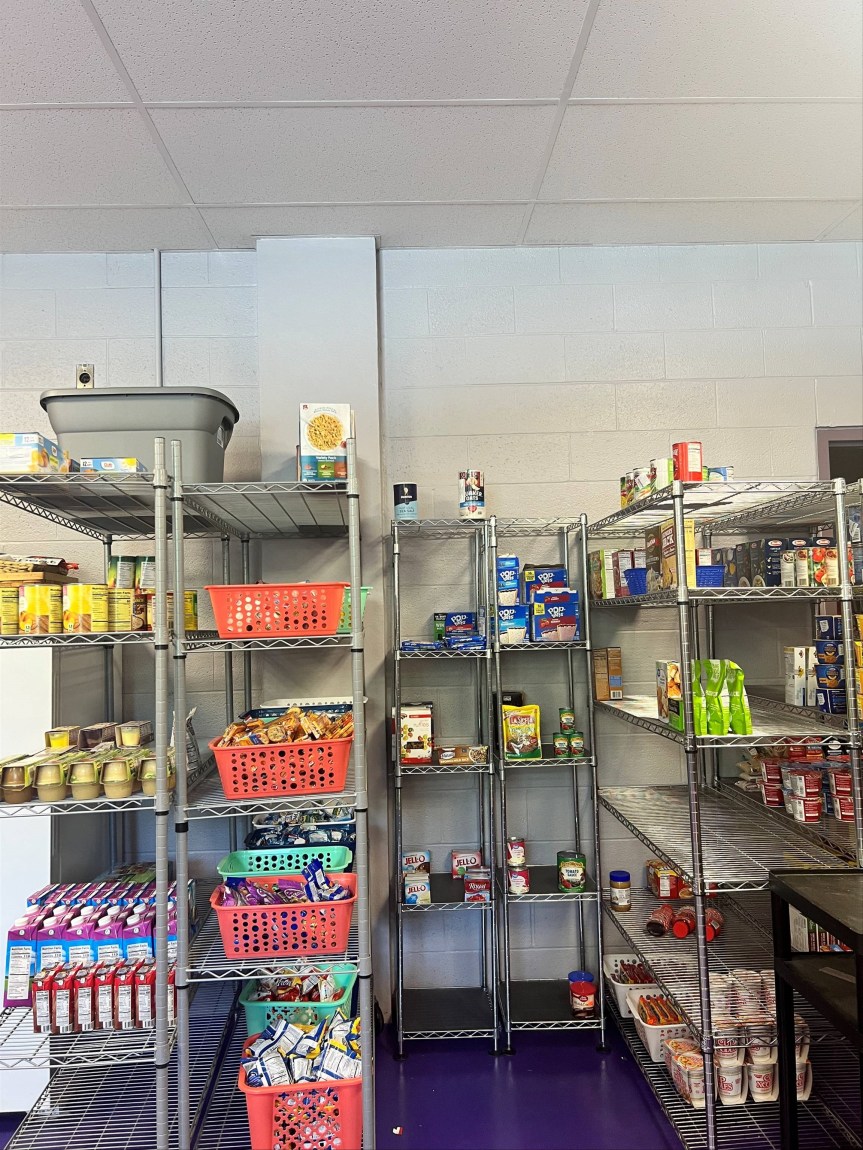
The Lewiston School Department is dedicated to providing educational equity and excellence for all students experiencing homelessness. They have a partnership with the Store Next Door, which provides supplemental services to help eliminate barriers to education for youth and families experiencing high mobility and homelessness, living within Lewiston, by addressing students’ basic needs.  The Store Next Door Project provides tangible items such as new and gently used clean clothing and footwear, winter coats and boots, backpacks and school supplies, underwear and socks, toiletries and hygiene products, household goods and cleaning supplies, laundry facilities, showers, gas cards and bus/cab vouchers, food, Lewiston High School logo items and sports team gear.  Lewiston has used ARP ESSER III funds to refurbish space at the Longley building to offer student support services- currently the home base for the Store Next Door. This space will provide a much needed opportunity for students to access resources including academic support services, counseling, food services, clothing assistance, community resource information, and more.

The Lewiston School Department also hosted outreach events to connect with families during the summer months,  using ESSER funds. Canvas and event outreach has offered opportunities for school staff to check in on and stay connected with our identified homeless youth and their families as well as promote summer student support services and academic opportunities.

Extended Learning Opportunities Conference Hosts Over 120 Attendees from Across the State

The Maine Department of Education (DOE), in partnership with JMG, recently held an Extended Learning Opportunities (ELOs) Conference at the University of Maine Orono for Maine ELO Grant recipients. Over 120 professionals from 57 different districts, community organizations, and business partners attended the conference, which took place over the course of three days. Attendees had the opportunity to attend sessions on how to develop their ELO programs, reflect on their current programs, and network with others in the field each day.

Attendees learned important skills throughout their time at the conference, attending breakout sessions, activities, and meetings that provided them with the skills necessary to build or strengthen their ELO programs. Breakout sessions covered a wide range of topics including how to market ELOs as a community wide initiative and build connections with other schools, how to build strong pillars that can lead to a sustainable, supportive program, the best strategies for supporting students in virtual ELOs, and best practices for building a network of community partners. Breakout sessions also covered concrete skills such as building ELO syllabi that retain school culture, standard achievement, and skill mastery, how to assess ELO and student success, and how to use the ELO learning management system.

Some attendees expressed the value provided to them by taking part in the conference, sharing they now feel more comfortable and confident in helping students take on ELOs. One educator shared that they look forward to bringing this opportunity back to their Special Education students, while another was grateful to feel validated in their work thus far and to have gained new perspectives on ELOs. Many attendees also shared their appreciation for the new network of people and resources they now have access to, thanks to the conference.

Virtual Workshop Series for New ESOL (English Speakers of Other Languages) Teachers

The Maine Department of Education (DOE) invites educators to participate in a series of virtual workshops on topics related to serving multilingual learners and managing an English Speakers of Other Languages (ESOL) program. While the sessions will be targeted to the needs of new ESOL teachers, all are welcome! More experienced ESOL teachers, and others whose work relates to the topics listed, will also find information of value and benefit from connecting with colleagues across Maine.

See the list of sessions below for dates and topics of focus. Sessions will be held from 3:00-4:00pm every other Thursday. Participants should plan to attend all sessions in the series, to the extent possible. Contact hours will be available for participation in the sessions. Ideally participants, as a cohort of learners, will develop and sustain a professional connection beyond the bi-weekly sessions.

The workshops will be facilitated by Rebecca Carey, Maine DOE ESOL Consultant, and will feature guest speakers during some sessions. If you have any questions, contact Rebecca at rebecca.carey@maine.gov.

Register HERE to receive the Zoom links.

Session 1 – Thursday, September 1, 2022

  1. Welcoming newcomers and families
    • Ways to support your registration process/registration staff
    • Ways to access interpreting and translating services
    • Elements of a culturally responsive school setting
    • Essential information to share with newcomers
  2. Identifying English learners
    • Language Use Survey
    • ELP screeners
    • LAC meetings
    • Entering multilingual learner data into the student data system
      • Steps and important dates
  3. Reviewing state expectations
    • Timeline for identification
    • Service provision guidance

Session 2 – Thursday, September 15, 2022

  1. How to effectively use the LAC meeting
    • Timeline
    • Members
    • Gathering information
    • Learning opportunities for the team
  2. ILAP
    • Purpose
    • Examples
    • Using the WIDA ELD Standards
  3. How to have effective parent conferences/communications
  4. Student data system revisited for October 1st student count readiness

Session 3 – Thursday, September 29, 2022

  1. Supporting Multilingualism
    • Leveraging primary languages in the classroom
    • Asset-based approach
      • Creating student profiles
      • Activities: Getting to know students
    • Uses for instruction
  2. Identifying available resources
    • Maine DOE multilingual learners webpages
    • Maine DOE ESOL & bilingual programs resources Padlet
    • Maine DOE ESOL Listserv
    • Free WIDA self-paced eWorkshops

Session 4 – Thursday, October 13, 2022

  1. Understanding acculturation and how to support students in this process
    • Strategies for culturally responsive teaching
  2. Questions/needs of the group

 Session 5 – Thursday, October 27, 2022

  1. Preparing students for ACCESS for ELLs and Alternate ACCESS for ELLs testing
  2. Preparing your colleagues, administrators, and testing space for ACCESS for ELLs and Alternate ACCESS for ELLs administration

Applications Open for MOOSE Instructional Designers

Do you want the space to create innovative curriculum? Are you looking for a community of educators who are passionate about meaningful, interdisciplinary education? Do you want to expand your impact outside your classroom/school? If this sounds like you, the Maine Department of Education (DOE) is currently looking for dynamic, creative, and collaborative educators to join the MOOSE Team!

Now in its third year, Maine’s Online Opportunities for Sustained Education (MOOSE) platform continues to grow. Last year, we added PreK-12 Learning Progressions to our already robust bank of MOOSE modules – created by Maine teachers for Maine students. These modules center on interdisciplinary, project-based learning experiences that are accessible, inclusive, and available for free online.

This year, MOOSE continues with new Learning Progression topics as well as an Iteration & Improvement Team that will cycle back through existing content, augmenting existing functionality and ensuring even greater accessibility.

Learning Progression Teams will be set up in a single creation session with two phases (Designers are committing to the year-long process due to the connected nature of the phases).

  • Phase 1 (Sept 19 – Jan 13): Training and orientation begins the week of September 19th with full learning progressions created by January 13th.
  • Phase 2 (Jan 17 – May 19): Creation of teacher materials begins the week of January 17th and completes by May 19th. During this time, Designers will create teacher materials for the modules they just created AND for two additional existing modules from the MOOSE library.

The Iteration & Improvement Team will similarly have two stipend phases but these Designers will work from an individual matrix with a set of modules they must successfully address within each phase (Sept-Jan and Jan-May).

We are looking for Maine educators including, but not limited to, teachers, curriculum leaders, and representatives from Maine educational community organizations (e.g., museums, libraries, educational centers, etc.) interested in creating content for learning progressions in Applied Ethics, Data Science, and Cyber Security. Additional learning progressions will support topics outlined in LD 1664: African-American History & Culture and Wabanaki History & Culture. These learning progressions will be developed in conjunction with members of each of those communities and will require educators to be committed to a deeply collaborative process. The final team will be made up of individuals who are willing to work on the Iteration & Improvement of existing MOOSE modules (must have prior experience working on a MOOSE team in Year 1 or 2).

You do not need to have expertise in the topic area you are interested in or a strong background in technology, just a commitment to learning. Our work benefits from having a diverse range of perspectives and experiences (e.g., grades, disciplines, training, etc.) represented on each team. We value your years of experience as Maine educators and your willingness to embrace creativity and innovation. Each topic will be supported by a full-time Team Leader and dedicated Module Coach to help Designers through the process. You can learn more about MOOSE and our plans for Year 3 on the MOOSE website.

When you are ready to apply you can access the application here. Applications close August 26th.

If you are interested in applying but still have questions, the MOOSE team will be holding a Q&A session via Zoom on Thursday, August 18th from 3-4pm.

For more information about MOOSE please contact Project Manager Jenn Page, jennifer.page@maine.gov.

Funding to Promote School Nursing Workforce Development in Maine

The increased workload for school nurses due to the COVID-19 pandemic has put an immeasurable strain on our workforce over the past two years. The Maine Department of Education (DOE) will spend the next year providing opportunities to the current workforce of school nurses to build upon their expertise and to promote evidence-based practice in all Maine schools.

As part of funding from the U.S. CDC for COVID-19 Emergency Response, Public Health Crisis Response, Maine Department of Health and Human Services (DHHS) was awarded $8,861,778 for a two-year period, starting July 1, 2021 through June 30, 2023. This grant requires at least 25% of the award to support school-based health programs, including nurses or other personnel.  Maine DHHS in partnership with Maine DOE has partnered to provide opportunities to promote continued development of the current school nurse workforce. Emphasis on school nursing workforce development strengthens quality of health services within schools. This, in turn, allows for improved equity in care, and further supports the CDC Whole School, Whole Community, Whole Child model, allowing students to reach their highest health potential.

The Maine DOE’s school health workforce development efforts began with securing four School Nurse Regional Liaisons working within the Coordinated School Health Team of the Office of School and Student Supports. They will be ensuring that school nurses across the state have equal access to the opportunities for development.  The following opportunities will be rolled out in the next school year. To ensure all school nurses receive communications, please be sure that staff information is updated in Neo. The following activities from the Maine DOE will be forthcoming.

  • With the goal of increasing the number of nationally certified school nurses in Maine (up to 50), the Maine DOE will provide scholarships to qualified school nurses for the exam fee and review course, if needed. In addition, a facilitated study group will be created and available to those approved to participate. Once the application form is created, communications will be sent to school nurses through the DOE Maine School Nurse announcement listserv.
  • With the goal of increasing the number of school nurses seeking advanced degrees (up to 25), the Maine DOE will provide scholarships to qualified school nurses to enroll in graduate-level courses (increasing the number of nurses with advanced degrees), to be paid as tuition reimbursement to the individual with successful completion of a graduate-level nursing, public health, or education-focused course. Once the application form is created, communications will be sent to school nurses through the DOE Maine School Nurse announcement listserv.
  • With the goal of increasing the number of school nurses who hold certification in Pediatric Emergency Assessment, Recognition, and Stabilization (PEARS) the Maine DOE will provide an in-person course for school nurses in at least four locations across the State of Maine at no cost (up to 100 school nurses). Once the dates are secured, qualified school nurses may register through the DOE Professional Development

To be eligible for these opportunities, school nurses must meet the eligibility requirements for each individual activity, be employed full-time in a Maine school for at least one year and hold a current 524 professional endorsement from the Maine Department of Education.

For more information contact DOESchoolandStudentSupports@Maine.gov.


Maine DOE Hosts Early Elementary Educators for Summer Instructional Program Training

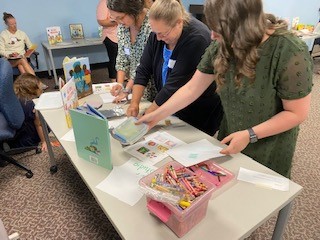
Over a four day period from August 1-4, the Maine Department of Education’s (DOE) Early Learning Team, in collaboration with seven Maine teacher leaders and a consultant from the Boston Public Schools, hosted over 130 Maine educators in two day trainings on the Maine DOE’s interdisciplinary instructional programs:  Pre-K for ME, K for ME, and 1st Grade for ME.  During the trainings, teachers learned about and explored the program components through hands-on simulations and interactive activities.

Over the past 5 years, the Maine DOE has worked with a consultant from the Boston Public Schools and Maine educators to pilot Boston’s Focus Curriculum–an interdisciplinary, developmentally appropriate, whole child focused instructional program.  The pilot process has enabled the Maine DOE to align the programs with Maine’s Early Learning and Development Standards (MELDS) and Learning Results and to make enhancements to the programs that support Maine’s context.  Pre-K for ME and K for ME are open-source and available on the Maine DOE’s website.  1st Grade for ME is being piloted in 5 schools during the 2022-23 school year during which time 14 first grade teachers will be implementing the program and providing feedback to guide adaptions.  Additionally, 2 Maine educators are writing the science portions of 1st Grade for ME.  1st Grade for ME should be available as an open-source resource in August of 2023.

For more information about Pre-K for ME, K for ME, and/or 1st Grade for ME, please reach out to Nicole Madore, Early Childhood Specialist (Nicole.Madore@maine.gov) or Lee Anne Larsen, Director of Early Learning (leeann.larsen@maine.gov).

Maine DOE Consultants and Teacher Leaders at the Pre-K for ME training

WEBINAR: The Role of School Administrators in Supporting School Safety Efforts

The U.S. Department of Education, Office of Elementary and Secondary Education, Office of Safe and Supportive Schools and its Readiness and Emergency Management for Schools (REMS) Technical Assistance (TA) Center will host a Webinar on Friday, August 26, 2022, from 12:00 p.m. to 1:00 p.m. ET. This Webinar will highlight the role of school administrators in supporting school safety efforts at the local level.

The objectives of this 60-minute Webinar are to

  • Demonstrate the importance of developing a collaborative planning team to support emergency operations plan (EOP) development, as outlined in Step 1 of the six-step planning process detailed in the Guide for Developing High-Quality School Emergency Operations Plans.
  • Discuss the role that school administrators — including principals, vice principals, and other school leaders — play in implementing the National Preparedness System mission areas before, during, and after a potential emergency.
  • Share resources to strengthen efforts around overall plan development.

Register on the REMS TA Center Website to participate in the Webinar!

Presenters:

  • Ocali Charter High School – Elizabeth Brown, Principal
  • Hudson City School District – Michael Sedlak, Unit Principal
  • REMS TA Center – Janelle Hughes, Project Director

Questions About the Event?

Contact the REMS TA Center Help Desk at 1-855-781-REMS [7367] or info@remstacenter.org from 9:00 a.m. to 5:00 p.m. ET, Monday through Friday.

Can’t make the live event? This Webinar will be archived on the REMS TA Center Website within 7 business days.