Get to Know the Maine DOE: Meet Gina Post

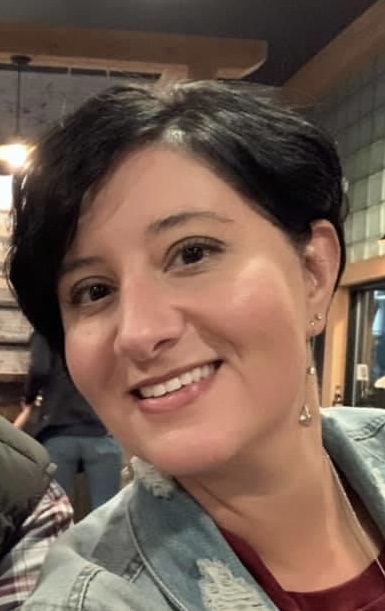
Maine DOE Team member Gina Post is being highlighted as part of our Get to Know the Maine DOE Team campaign. Learn a little more about Gina in the question and answer below.

What are your roles?

I am Interim Executive Director with the Maine Charter School Commission (MCSC). While MCSC staff aren’t technically Maine Department of Education (DOE) employees, we do work very closely with the Maine DOE.

What do you like best about your job? 

As a former teacher, I find it interesting to work with schools that have unique missions and approaches to education.

What do you like to do outside of work for fun?

Outside of work, I like to read, do crossword puzzles, and spend time outside with my family.

WEBINAR: WIDA Screener Online

The WIDA Screener Online is Maine’s statewide English language proficiency screening assessment for students in Grades 1-12. As part of the Maine Department of Education’s (DOE) multilingual learner identification policy, all students with a primary/home language other than (or in addition to) English must be screened to determine whether they quality for English for Speakers of Other Languages (ESOL) services.

In order to support schools in administering the WIDA Screener Online to multilingual students, the Maine DOE is offering a WIDA Screener Online overview webinar on August 26th from 1-2:30pm, facilitated by Lori Hanna, WIDA Professional Learning Specialist. Register by August 12th.

Agenda:

  • Describe the purpose and uses for WIDA Screener Online
  • Discuss the connection between the English Language Proficiency levels that are targeted in specific test items and Screener Scoring Scales for speaking and writing
  • Consider the format, expectations of the WIDA Speaking Scoring Scales, and how to administer the speaking test then practice evaluating student responses
  • Explore the format, expectations of the WIDA Writing Scoring Scales, and how to administer the writing test then practice evaluating student responses
  • Examine the format of the listening and reading test
  • Discuss the components of the WIDA Accessibility and Accommodations Framework, and usage of universal tools and accommodations
  • Locate WIDA AMS functions for Screener scoring and reports
  • Explore the logistics for preparing to administer in the training course on the WIDA website

If you have any questions about this training, or about multilingual learner identification, contact April Perkins at april.perkins@maine.gov.

Old Town Elementary School ‘Learning Garden’ Becomes an Extension of the Classroom

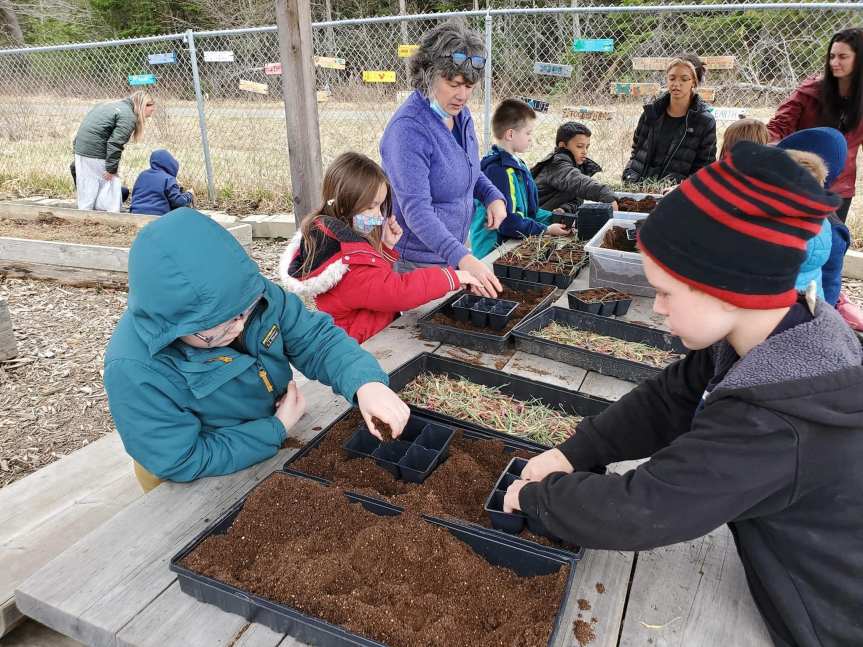
When Old Town Elementary School started a school garden many years ago, the purpose was to beautify the school grounds and give students a chance to explore and play in a more natural setting. Since then, the garden concept has literally “grown” as the school has started to use the garden as an opportunity to integrate the space into the day-to-day curriculum. In conjunction with the Cooperative Extension Staff at the University of Maine, the school has developed a Legacy Curriculum, with each grade growing and caring for different crops.

Starting in kindergarten, students grow apples and sunflowers. They plant their apple trees in the spring and watch as they blossom and grow different apple varieties, which they can taste in the fall. They also plant their sunflowers in the spring and use them for a kindness project, where they gift the flowers to people to brighten up their days.

First graders make seed tape indoors with carrots and radishes. A month before school ends, they plant their radishes and have a harvest on the last day of school. To demonstrate that different plants take different amounts of time to develop, they plant their carrots in the last week of school and harvest them when they come back to school in the fall, when they have taste tests with different dips and cooking methods.

Second graders grow pumpkins. They weigh and measure the circumference of their pumpkins and collect seeds to cook as well as to plant. They learn how to prepare pumpkin in a healthy, easy, low-cost way that they can bring home to family. On the last day of school each year, they compare their pumpkins’ growth rates.

In third grade, students grow various microgreens indoors under a grow lamp. They can taste test the different greens and vote on their favorites. After the votes are collected, they graph and analyze the results to see which one was the most popular.

Finally, when students reach fourth grade, they grow single seed potatoes. They cut them in half – planting one half in the school garden and one half in a container they bring home to care for over the summer. Once the potatoes are ready, students harvest them and prepare multiple healthy potato recipes and vote on their favorites, which they then graph.

Old Town Elementary Schools educators say they have seen a great sense of pride and joy with their students and their role in the growing their grade levels product. Since this change in the curriculum, the students and staff see the garden as an extension of the classroom. Students take pride in planting and harvesting the bounty, even creating an opportunity on Tuesday afternoons to contribute to the school’s farm stand. The farm stand, which is open to both Old Town Elementary School families and the public, has created a great opportunity for the school to impact their citizens and provide a great resource to be proud of, a resource that would be possible without their learning garden.

National Board Scholarship Application Window Now Open 

Are you a Maine public school teacher who is interested in becoming National Board Certified? Are you a school administrative unit that is eager to offer this exceptional professional learning opportunity to your teachers?  State law, 20-A MRSA Section 13013-A subsection 5 & 6; as amended by PL 2012 c. 702, established the National Board Certification Scholarship Fund to encourage teachers to apply to, and enroll in, the certification program offered by the National Board for Professional Teaching Standards, or its successor organization. 

A school administrative unit, or a publicly supported secondary school or CTE region, may request scholarship funds on behalf of its teachers who meet the requirements. 

In school year 2022-23, Maine Department of Education (DOE) will allocate $75,000 to the scholarship fund, and shall award an amount equal to the cost of the certification program, less any other funds received by the applicant to not more than 30 teachers accepted into the program annually. Priority will be given to teachers who have already begun the process and teachers employed in high needs schools.

For more information and eligibility requirements, please visit our National Board Certification Scholarship page:  https://www.maine.gov/doe/cert/nationalstandards/scholarship 

Please Note:  The application will be open from August 8, 2022 through October 15, 2022.  If you have questions about the National Board Salary Supplement Program or the National Board Scholarship Program, please contact Emily Doughty at Emily.doughty@maine.gov 


WEBINAR: Screening for Early Literacy Milestones, Dyslexia, and other Reading Disabilities

Dr. Nadine Gaab will host a webinar, “Screening for Early Literacy Milestones, Dyslexia, and other Reading Disabilities: The WHY, WHEN, WHO, HOW and WHERE on  September 28, 2022 from 3:30-4:30 pm

Audience: General & Special Educators, Administrators, Parents, Caregivers and Community Members Interested in Early Literacy, Dyslexia & Reading Disabilities

Cost: FREE please register for ZOOM Link here

This session will address:

  • Screening for literacy milestones and reading disabilities, including developmental dyslexia in early grades (pre-K-2nd)
  • The WHY behind the screening movement with a strong focus on the neurobiology of reading development and reading disabilities.
  • The ‘Dyslexia Paradox’
  • Important constructs to screen for with a developmental lens
  • Practical steps for implementing a screening protocol in various educational or clinical settings.
  • Different screening instruments and criteria for picking the right screener
  • Educational and clinical implications of screening and early identification in young children.

About the Presenter: Dr. Nadine Gaab is an Associate Professor of Education at the Harvard Graduate School of Education. Nadine’s work focuses on developmental cognitive neuroscience, particularly in language-based learning disabilities. Her research in the GaabLab examines the development of typical and atypical language and literacy skills in the pediatric brain and pre-markers of learning disabilities and the development of screening tools for screening literacy milestones and dyslexia.

She is the 2019 recipient of the LDA Award (Learning Disabilities Association America) for her work on learning disabilities. In 2018, Nadine was presented with the Allan C. Crocker Award for her advocacy on behalf of children with dyslexia and reading disabilities and efforts around the recent passage of the Massachusetts screening legislation (under the guidance of Decoding Dyslexia MA). She has also been recognized by the International Dyslexia Association in her receipt of the Norman Geschwind Memorial lecture 2020 and the Alice H. Garside Award for outstanding leadership in advancing the science and advocacy of dyslexia. She is an international speaker, frequently presenting to teachers on the brain science of typical and atypical literacy development.

If there are additional questions please email Tracy (Tracy.W.Whitlock@maine.gov), Anne-Marie Adamson (Anne-Marie.Adamson@maine.gov_) or Dee Saucier (danielle.m.saucier@maine.gov).

ARP Funds Allow RSU 13 to Provide Summer Programming for Families

RSU 13 has been prioritizing the use of federal American Rescue Plan (ARP) funds to support summer learning for students across the district.  This FREE summer programming began districtwide for students entering first through ninth grade last year and provides 16 days of engaging learning opportunities (four weeks of four days each week) through the entire month of July.  

RSU 13 recognizes how impactful the pandemic has been not only on district staff and students, but on the families as well, and this became part of the rationale for dedicating energy and effort to running FREE summer programming that allows students additional time to learn and parents some additional time to work for the past two years.  The district hopes to continue summer programming through the life of the grant funds, which will include the next two years as well.  If the success and interest continues from there, the district hopes to develop a sustainable plan for a low cost summer programming option for families.

The overarching summer programming goal is as follows: To provide students with a safe and enriching learning environment where they can take advantage of engaging hands-on learning opportunities and real-life learning experiences in order to prevent summer slide and continue to build meaningful relationships with their peers and caring adults within their school.  Skills to be elevated include skills outlined in the guiding principles that are noted in the following “4 C’s” Communication and Collaboration; Creativity and Problem-Solving; Citizenship /Community-Building; Critical Thinking

Last year when parents were asked in a family survey at the end of programming what they would tell others about the program, they shared:

Kids are learning but this is extremely beneficial for those kids that struggle with every day text book learning. I really enjoyed the hands-on part of the program but also these kiddos got to see what we have right here in our great little community.”

“The program was wonderful and just the right amount of fun and education to avoid the summer slide.”

“My son was so enthusiastic about how wonderful his teachers were and how nice they were. It redeemed the ‘fun factor’ of school for him after a challenging year. He is excited to go to school again!” 

“It was a wonderful opportunity for children to spend time engaged in creative, non-traditional learning experiences, and adventures with fellow students. It was a great way for the kids to get to know other students in different classes, an opportunity that is rare in the day to day during regular school year.”

One staff member last year stated:

“Thank you for giving our students the Summer Program…we have built more schema than I could have imagined.  The students dug for fossils and learned about chemical reactions…They discovered that the Asian Rock Crab is along our coastline…They were actual scientists…They had the opportunity to sit in the pilot’s seat of an airplane and not only learned about how important the job of a pilot is, but the mechanics, dispatch, and the mowing crew who have to keep the grass short so that wildlife do not put the aircraft in danger….Many had NEVER been to a museum before and were vocal about that…I wanted to take the time and let you know that it was an incredible experience for all of us.”  

One major highlight of the programming are the field trips and partnerships with local businesses and organizations that students get to experience.  Summer and afterschool programming have been paving the way for increasing school and community partnerships.

South School Summer Camp is supporting 40 students from South School Elementary, entering 1st-5th grade, Mon-Thurs 9am-3pm. Each week students experience art with local teaching artists Susan Beebe, smoothie making, nature walks, Build-it challenges, gardening, wacky slime making, sports, beach time, and weekly visits to The Coastal Children’s Museum with themes of geology, topography, marine life, and environmental awareness.

Thomaston Grammar School, Cushing Community School, and Ash Point Community School are supporting a total of 101 students with 12 attending Cushing, 48 attending Thomaston, and 41 attending Ash Point Mondays through Thursday from 8:30am to 12:30pm.  Students entering K through 5th grade in the coming year spend their summer mornings surrounded by peers, having opportunities to engage in a variety of activities. The programs are staffed fully by educational staff, both teachers and ed techs, and each day of programming the schools either have fun home-based activities,  a guest organization visit, or an engaging field trip. Partnerships include Herring Gut Coastal Science Center, Owl’s Head Transportation Museum, CMCA & Farnsworth Museum, Cardinal Cove Mini Golf, Flagship Cinema, Mad Science of Maine, and Mr. Drew and his Exotic Animals.

“We are grateful to have such a vast array of local organizations with a deep commitment to student learning and growth right here in the Mid-Coast. Our partnerships help us to enrich the student experience and provide pathways to explore various interests, while also strengthening local pride and community connection. The 101 students participating in the district programming across TGS, CCS, and APCS this year were also supplied free breakfast and lunch all days of programming through RSU13. It was a collaborative effort that came together so spectacularly, a truly special experience we hope to continue in the future,” says Laura LaPointe, District Coordinator.

The Flanagan Center Summer Experience Camp is supporting 30 students from Oceanside Middle School and Oceanside High School (incoming 6th through 9th graders), Mon-Thurs 11am-4pm.  Each week students engage with their community downtown and beyond, through engaging field trips to local organizations and businesses in areas of art, science, technology, cooking, outdoor exploration, and entrepreneurship.  Weekly excursions have included visits to The Apprenticeshop, CMCA, Mid-Coast School of Technology, Friends of Maine Coastal Islands, WRFR Radio, Owls Head Transportation Museum, Sail, Power & Steam Museum, Aldermere Farms, Merryspring Nature Center, Farnsworth Art Museum, Northern Vertical Rock Climbing and The Landing Place. 

It is no easy lift to coordinate food service, transportation, and staffing for this level of programming, but the district’s dedicated staff and the local partnering businesses and organizations continue to prioritize students.  Sarah Rogers, RSU 13 21st Century Grant Program Coordinator, and Laura LaPointe, RSU 13 Afterschool and Summer Program Coordinator, oversee both summer programming and afterschool programming across the district.  All programs are currently grant funded. For even more pictures, check out the RSU #13 Afterschool Programs Facebook Page.

A Year of Success and Innovation: Rethinking Responsive Education Ventures in Brewer School Department

The first round of RREV (Rethinking Responsive Education Ventures) Awardees were announced in August of 2021. RREV is an initiative of the Maine Department of Education, funded by the Education Stabilization Funds through the US Department of Education’s Rethink K-12 Education Models, that bolsters Maine educators’ innovative efforts to support their students with agile, effective, and resilient learning experiences that improve learning outcomes for all students. Now, after a year of experience and development, the Department of Education would like to thank the awardees for their dedication to innovative education and highlight their achievements that have resulted from the RREV contracts over the past year. Continue reading to learn more about the ways in which the Brewer School Department has used their RREV funding this past year.

After a year of remote, online learning, many students and educators were eager to get back inside the classroom. This desire to have in-person learning once again was understood by most people, as online classes made learning harder for many students. However, Superintendent of Brewer School Department (BSD) Gregg Palmer believes that the rush back to the traditional classroom was also a “rush back to marginalization” for those students who felt more comfortable in online classes. “Tradition is a place of safety,” he said, however, some students feel as though the tradition of brick-and-mortar school buildings is far from safe. He, along with Renita Ward-Downer, Director of Curriculum at BSD, recognized that some students need an online alternative.

Nu posterIn August 2021, after receiving their RREV funding, BSD began to offer a remote learning pathway for students in 7th through 12th grades. At first, the intention was for the pathway to be fully online education with limited spots. The students would have access to in-person opportunities for extracurricular activities to ensure students were still able to make meaningful connections with peers and educators. However, the school quickly realized that their enrollment limit was not high enough, as greater need was shown by the number of students registering in the program. The district honored their promise of flexibility, though, and simply increased the number of students able to enroll in the program.

Ward-Downer said their goal with the program was to “truly tailor a person’s education,” and they have done just that. Once students understood that they were able to help define the shape of the program, they began to communicate with the district what they wanted and needed. In the case of many students, this meant not being 100% remote, but rather a mix of in-person and online education. The district, Palmer said, was happy to make this change, as it gives an intermediate option rather than the “all or nothing” structure of classic public school.

Many of the students who have taken advantage of this online option are students who have been chronically absent in the past. Prior to the introduction of this program, the district wasn’t appropriately addressing student needs, Palmer said. Now the district has found that kids who previously had no interest in school want to learn because their needs are being met. One student was consistently truant about a third of the school year prior to COVID, mostly due to anxiety surrounding being in class at school. Since enrolling in the online pathway that BSD has to offer, however, they have not missed a single day of school, and, at the end of the school year, was sad that it was over. The student is excited for the next school year to start for the first time.

Another group of students that found great value in the program were homeschooled students. Many families who switched to homeschooling at the start of the pandemic placed their students back into the public school system because of this program. They found that the online pathway helped relieve family stress while continuing to provide a similar flexibility to homeschooling.

Getting to this level of success wasn’t easy, though. The district had to battle the stigma that comes with online education along with misconstrued perceptions of the work they were trying to do. “The one thing we couldn’t be was afraid of upsetting people or being viewed as not supporting the idea of a full public education program,” Palmer said. If they had, he said, they would’ve opened the door to questions and doubts about what they were trying to do.

Even while they were confident in their work, others found ways to doubt the district. Parents were concerned that students would take advantage of the online program, using it to slack off. Others who provide supports to students including Special Education, were understandably concerned that identified students looking to try the new program might encounter difficulty having all their educational and social/emotional needs met. However, Brewer offered in-person support for these students and monitored how the pilot went for certain students. The results were very positive, with identified students improving their attendance, and all groups are now in support of the online pathway. Ward-Downer believes that “to grow, [we all had to] problem solve together” in order to find the best solution for the kids. Parents and educators alike found that the students in the online program are leaders, taking control of their education. This form of online education, Palmer said, takes a different kind of motivation than a typical public school education, and Ward-Downer added that they ensure their students have balance so they’re not just lying in bed all day. They both agreed that you cannot fake your way through the online pathway the way you might be able to in the back corner of a classroom. The Special Education department found that some of their students have been able to be more successful in the online pathway thanks to anxiety relief and increased flexibility. Since its introduction, the online pathway has continually gained momentum and support throughout both the student body and the community to get to where it is now.

Other districts around the state are noticing BSD’s success, too. Realizing how beneficial the online pathway has been for students in Brewer and how it has lowered truancy, other districts are looking to implement the innovation in their districts as well, and the educators in BSD say they are happy to help. Their goal for the next year, Palmer said, is to work with other districts to build a network of online programs. In true RREV spirit, the district aspires to inspire innovation and collaborate with other schools to provide as many students a chance at success as possible. Once other RREV pilots based off of Brewer’s are established, like Hampden and Bucksport, which have been recently approved, Palmer said he hopes that they will all be able to tap into each other’s different online courses and resources to offer all students a well-rounded education with multiple outcomes.

Martin Mackey, the former RREV Project Director who tragically passed away in April of this year, embodied the RREV spirit: to think and act boldly to meet the needs of students. His passion was to “change lives.” As such, he challenged each and every RREV participant to do just that as they designed pilot ideas that would ultimately have a lasting systemic impact on students.  After 18 months of leading RREV, Martin’s passion had been passed on to almost 200 educators who had participated in innovation professional development. From those educators, 27 Pilot ideas were brought to fruition and have received over $5.7 million in RREV awards. Through their pilot ideas, these educators have pledged to commit themselves to innovation.

The Maine DOE encourages all schools and districts across the State of Maine to learn more about these innovative educators and their RREV pilots through the RREV website and the online RREV collaborative platform known as EnGiNE. It is through EnGiNE that we all hope to continue the Martin Momentum to change students’ lives through innovative and responsive educational programs.

Southern Maine 21st Century Learning Center Experience the Outdoors Through Community Connections

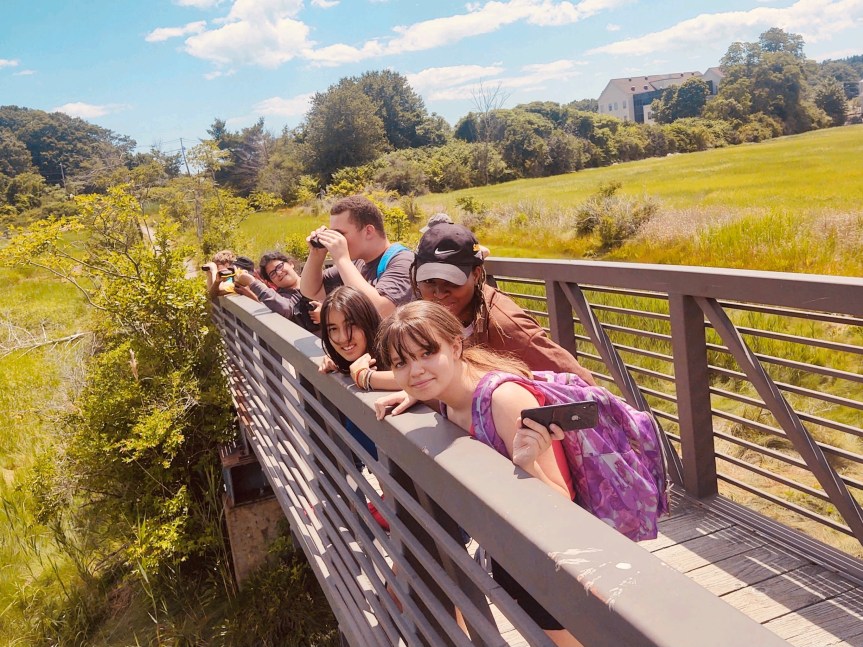
From the trails to the sea, the youth participating in the Boys and Girls Club of Southern Maine, one of Maine’s 21st Century Learning Centers, have been busy exploring outdoor destinations in the Portland area this summer thanks to their strong community connections.

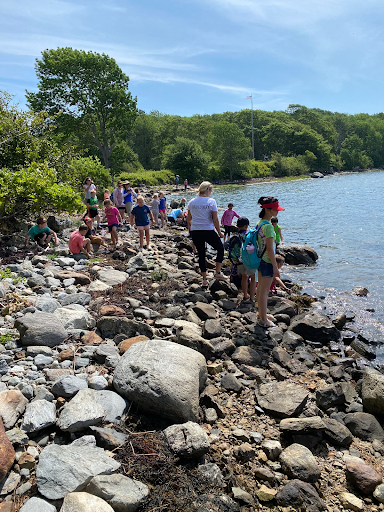
Starting with the Portland Trails, a nonprofit urban land trust that aims to transform the Greater Portland area into a healthier and better-connected community, the center has utilized this amazing community resource to get kids outdoors to go on walks and explore part of the 70+ mile trail network that Portland Trails has to offer. (pictured above)

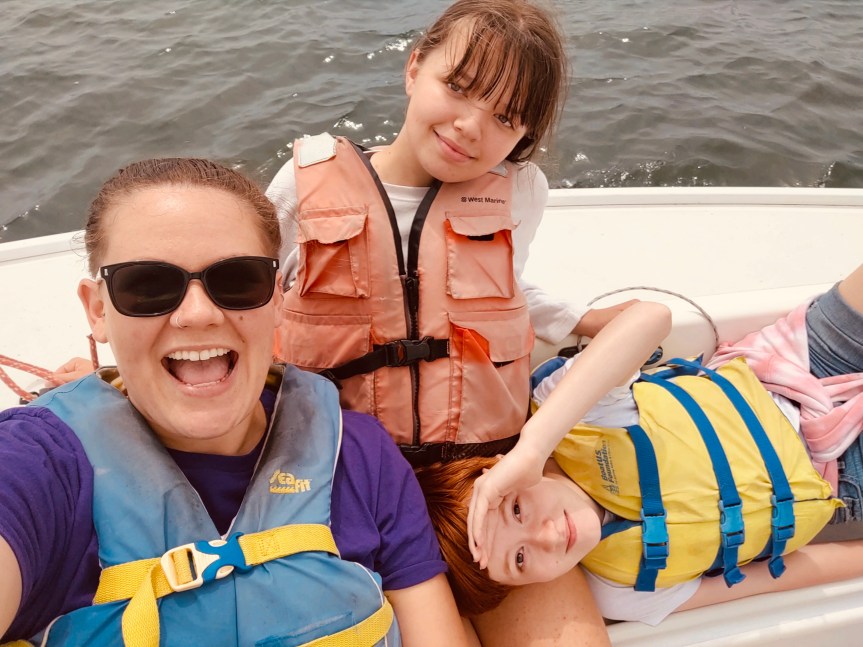
The kids have also been out to sea this summer thanks to SailMaine, a nonprofit organization that provides affordable access to the water through community sailing and education. Thanks to this community connection, every Tuesday for the next several weeks, the Center’s middle schoolers will be learning about sailing on Casco Bay.

Portland Maine Parks, Recreation & Facilities Department has also been a generous partner this summer by letting the Boys and Girls Club of Southern Maine utilize the outdoor pool. Thanks to this community partnership, the kids have been enjoying swimming three afternoons a week!

Funded through the U.S. Department of Education’s Nita M. Lowey 21st Century Community Learning Centers (CCLC) program, Maine currently has 35 CCLC grants and 61 CCLC sites across Maine that provide academic enrichment opportunities during non-school hours for children, particularly for students who face economic and/or academic challenges. With strong community partnerships at the core of every one of its programs, Maine’s 21st Century Learning Centers help students meet academic goals and offer a broad array of enrichment activities, in addition to other educational and engagement opportunities for communities and families. Learn more about Maine’s CCLC grant opportunities at https://www.maine.gov/doe/learning/esea or reach out to Travis Doughty at travis.w.doughty@maine.gov.

Seal of Biliteracy Earned by Maine High School Seniors

The Maine Department of Education congratulates 347 Maine high school seniors who are this year’s recipients of the Maine Seal of Biliteracy!

The Seal of Biliteracy recognizes student achievement in language learning. Graduating seniors who are proficient in English and at least one additional language may earn the Seal of Biliteracy by demonstrating their skills on an approved assessment (see eligibility criteria). This award elevates the study of languages and provides students an edge for their college applications and professional careers. Students who attend a University of Maine System campus may also earn college credits.

The Seal of Biliteracy distinction for graduating seniors honors students who have studied world languages in school, students who have spoken English and another language at home and in their communities, and students who have learned English at school. Learning another language is an impressive accomplishment, and the Department commends all multilingual students for their efforts.

We would also like to recognize the incredible work of World Languages and English for Speakers of Other Languages (ESOL) teachers, who support students in their multilingual journeys. Language educators empower students with linguistic and cultural understanding that will be invaluable to them throughout their personal, academic, and professional lives. Teaching students another language goes beyond grammar and vocabulary – it is truly opening a door to another world and enabling students to explore and experience that world through the power of language!

Congratulations to the Class of 2022 Seal of Biliteracy recipients and their teachers! If your school isn’t yet participating in the Seal of Biliteracy and would like further information, please reach out to April Perkins, ESOL & Bilingual Programs Specialist, at april.perkins@maine.gov.

2022 Participating Schools include:

  • Blue Hill Harbor School
  • Brewer High School
  • Brunswick High School
  • Camden Hills Regional High School
  • Cape Elizabeth High School
  • Caribou High School
  • Casco Bay High School
  • Cony High School
  • Deering High School
  • Falmouth High School
  • Gardiner Area High School
  • Gray-New Gloucester High School
  • Greely High School
  • Hampden Academy
  • Houlton High School
  • Kennebunk High School
  • Lincoln Academy
  • Maranacook Community High School
  • Morse High School
  • Blue High School
  • Noble High School
  • North Yarmouth Academy
  • Orono High School
  • Portland High School
  • Presque Isle High School
  • Scarborough High School
  • South Portland High School
  • Westbrook High School
  • Windham High School
  • Winthrop High School
  • York High School

2022 Seal recipients’ languages include English and:

  • Arabic
  • Bengali
  • Bulgarian
  • Chinese
  • Dari
  • French
  • German
  • Hindi
  • Latin
  • Lingala
  • Portuguese
  • Russian
  • Somali
  • Spanish
  • Vietnamese

A Year of Success and Innovation: Rethinking Responsive Education Ventures at St George Schools

The first round of RREV (Rethinking Responsive Education Ventures) Awardees were announced in August of 2021. RREV is an initiative of the Maine Department of Education, funded by the Education Stabilization Funds through the US Department of Education’s Rethink K-12 Education Models, that bolsters Maine educators’ innovative efforts to support their students with agile, effective, and resilient learning experiences that improve learning outcomes for all students. Now, after a year of experience and development, the Department of Education would like to thank the awardees for their dedication to innovative education and highlight their achievements that have resulted from the RREV contracts over the past year. Continue reading to learn more about the ways in which St George Public Schools has used their RREV funding this past year.

Since being named a RREV Awardee last August, St George Public Schools have been working with Mid-Coast School of Technology to create a PreK-12 Career and Technical Education Program. The program builds upon a long tradition of place-based education that grounds student learning in the history, traditions, and natural environment of St. George and provides a model for preparing students to develop the technical, creative thinking, and social-emotional skills to thrive in an innovation economy and strengthen local and regional economies by meeting existing labor force needs and creating new businesses and industries.

The program implementation and increased Makerspace use over the past year has had an “energizing effect” on the community, Superintendent Mike Felton says. “Teachers are saying thank you and getting excited,” Makerspace Director Paul Meinersmann added. It’s not just teachers that are excited, though. Students are loving the “hands-on, minds-on” learning, too. One student that was feeling disengaged at the start of the year now aspires to be an engineer after spending time using the equipment in the Makerspace.

Part of the engagement, the educators say, comes from the independence and confidence instilled in the Makerspace. Students are asked “What do you want to learn?” rather than being told what to learn, and, once they feel comfortable completing a task on their own, they are allowed to do so. Another important aspect is that students receive credit for their work. A 5th grade student who helped design and create donor plaques for the new, soon to be constructed Makerspace was both surprised and proud to find his name engraved on the back of the plaques next to Meinersmann’s.

students on toboggan
St George Students at the US National Toboggan Championships

Another group of students who were beginning to feel disinterested had the opportunity to work in Apprenticeshop in Rockland. The Apprenticeshop has hosted a Junior Boat Building program that the school has participated in for multiple years, but this year, instead of a boat, the students built a toboggan. Once their toboggan was completed, the group of three students took their toboggan to the US National Championships to compete. The construction of the toboggan reengaged the students in their learning and captivated their minds by showing them just a few of the possibilities open to them after graduation.

The district is working up to build a PreK-8 CTE/Makerspace Building at St. George School, and Felton says this past year

has been integral to making the building successful when it opens. “We need vision and heart to fill the building,” he said, and that’s exactly what they’re building through the implementation of the program this past year.

Outside of the Makerspace access and use, fundraising efforts have also helped to spread the vision and create a network of people investing in the school. The community has collectively raised over $1,450,000, which includes the $250,000 from the RREV grant. Contributions came in every shape and size, from big and little donors alike. One family sold eggs on the side of the road to pitch in, while some individuals donors made contributions up to $250,000. In addition, 13 businesses have sponsored the project.

The school hopes to break ground on the building in the fall and to provide programming to every child. Felton sees the building, and the program as a whole, as an “equity builder,” a true community resource that’s accessible to everyone, all the time, that everyone knows they can use.  The school is looking forward to having the building completed by the end of the upcoming school year and is hoping to offer summer programming for students next year.

Although RREV funding ends June 30, 2023, the vision at St George does not end next year. In the long term, Felton says he hopes for the district to act as an example and a model for other schools and districts, not only across Maine, but across the country. The goal is to spread awareness about the power of this type of learning, which he views as increased student and family engagement, and job set up. By connecting and advocating with other states, Felton says he believes that other schools can be encouraged to connect higher career and technical education with younger grades, setting students up for success.

Martin Mackey, the former RREV Project Director who tragically passed away in April of this year, embodied the RREV spirit: to think and act boldly to meet the needs of students. His passion was to “change lives.” As such, he challenged each and every RREV participant to do just that as they designed pilot ideas that would ultimately have a lasting systemic impact on students.  After 18 months of leading RREV, Martin’s passion had been passed on to almost 200 educators who had participated in innovation professional development. From those educators, 27 Pilot ideas were brought to fruition and have received over $5.7 million in RREV awards. Through their pilot ideas, these educators have pledged to commit themselves to innovation.

The Maine DOE encourages all schools and districts across the State of Maine to learn more about these innovative educators and their RREV pilots through the RREV website and the online RREV collaborative platform known as EnGiNE. It is through EnGiNE that we all hope to continue the Martin Momentum to change students’ lives through innovative and responsive educational programs.