Building a Culture of Innovation at Nokomis High School

“If there is one thing we’ve gotten out of the pandemic, it’s that students don’t want to sit at a desk anymore and have someone talk at them,” said Nokomis High School Principal Mary Nadeau.

Starting last fall, Nadeau challenged her teachers to think outside the box when it comes to their lesson planning. She asked each of the teachers at Nokomis High School to do at least one project-based learning unit per year. Embracing the challenge head-on, many of those educators have not only created and executed interdisciplinary units and project-based lessons that are both outside of the figurative box but also take place, literally, outside of the school building.

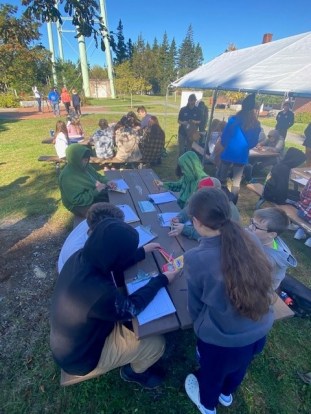
“At our principal’s encouragement to think outside the box, a group of educators began thinking more deeply about outdoor education and specifically about utilizing the incredible landscape we have here at Nokomis,” said Nokomis High School English Teacher Anne Dailey. Dailey and her teaching partner revamped their 11th grade American Literature course which has provided the opportunity for about 45 students to have their English 11 experience completely outdoors.

“We read, write, and talk perched on logs or sitting on rocks around the edge of Nokomis pond,” said Dailey. Students are provided with a lot of time for independent reflection and small group work. They are building a month-by-month Almanac that has captured their individual experience of the landscape and their work.

“Only in the depths of the Maine winter did we stay inside, and even then, we took a walk each day,” added Dailey. “I think there was one day where we stood outside the doors for exactly one minute because it was 9° Fahrenheit and there was a serious wind.”

Pictured: Students working outside as part of Dailey’s classes.

It’s not just Dailey that implemented different learning techniques. Nadeau and Nokomis Regional High Instructional Coach and RSU 19 Curriculum Coordinator Kasie Giallombardo shared that 92% of teachers at the high school implemented project-based learning in some form. In Ashley Clark’s chemistry class, she typically gives out worksheets to learn unit conversions, but this year, she changed it up.

Clark believes that “returning to ‘normal’ since COVID has been a struggle for all,” and that making learning more relatable and ‘real’ for students is one way to lessen the struggle. So, instead of lectures and paper handouts in chemistry class, students made hot sauce. “Students used a small batch hot sauce recipe and harvested [their] own peppers from our school garden to make hot sauce. Students were able to use their knowledge of unit conversion to predict the amount of hot sauce we would make in the end and make sure there was enough for all of the students to try,” she said.

For Daniel Leaver, a 9th grade social studies teacher, interdisciplinary project-based learning is nothing new. “This is what I’m passionate about. This is what Nokomis has cultivated in me and a lot of my colleagues,” he said.

Leaver has been including interdisciplinary teaching methods into his curriculum for five years. It started, he says, in 2017, when he was co-teaching with another teacher, Jenine Olson, covering both social studies and English standards with at risk students. The kids loved hands-on learning and wanted to be active, so he invited in a guest speaker who was a grant writer. Students then wrote a grant to build a little library, working with the town, architects, and other experts. This type of learning, he says, was engaging and sparked inquiry because the students knew that they would be applying what the experts were teaching them.

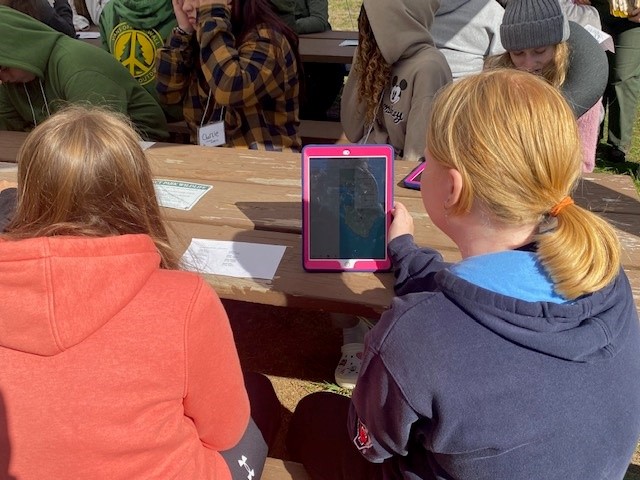
Pictured: 9th grade students in an interdisciplinary unit centered on the evolving nature of communities – students are engaging with a hands-on “tool museum” that folks brought into the school (pre-pandemic).

While each teacher has chosen to implement interdisciplinary and project-based learning differently, they can all agree on one thing: its impact is visible and profound. Leaver says he has never seen students so engaged and interested. “It gets them away from their computers, asking questions, and engaging with people,” he shared.

In response to her outdoors English class, Dailey shared that “the group of students who selected this class are largely students who have felt constricted and uninspired by the ‘typical’ classroom experience, as well as students who simply love the outdoors. Their writing is different – it’s more personal, but it’s also just stronger.” Some of her students bring up small seasonal differences in their writings, differences that would probably be imperceptible from the inside of classroom walls.

“I have been amazed by my students’ ability to apply their knowledge of chemistry to their outside world, ask intriguing and thought-provoking questions about topics in chemistry that they come across in their day to day lives, and be able to further examine how chemistry can impact them in the future,” Clark added. She has really connected with her students this year because of her new teaching style and looks forward to continuing to do so in the future.

Overall, there have been huge shifts in student success rates at Nokomis High School. A far greater percentage of students successfully complete interdisciplinary units, and students have discovered passions and career paths as a result of their work. The students are not the only ones benefitted by this innovation, though.

“As far as my personal learning and process, developing these learning opportunities has led me to better understand performance indicators in other content areas. It has changed the way I interact with my peers. We have maintained a stance that focuses on what is possible. This continues to be a boundary that we push,” Olson shared.

Even so, changing the way their curriculum is taught was not easy for the teachers at Nokomis High School. “At first, [students] struggled to see the benefits that integrated assessments provide,” Olson said. However, once they were taught about what project-based learning is and how it impacts success, the going was easier. Now, students reflect on their learning and have more confidence in their depths of knowledge.

One thing that made the process easier, though, was support. “Our school and administration provide us time and support and resources,” Leaver said. Finding time to have quick meetings and having support from administration made all the difference in the teachers’ ability to implement these innovative techniques.

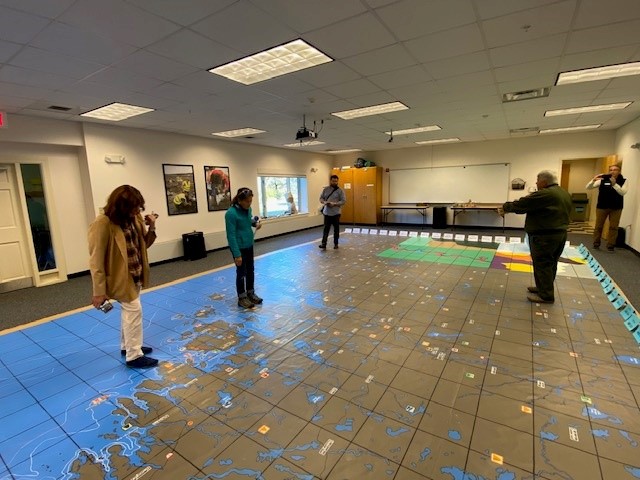
Pictured: Nokomis Middle and High School teachers doing a “Curriculum Gallery Walk” recently where they shared what teaching and learning looked like, got feedback, and worked together to make goals for next year.

Moving forward, Nokomis plans to expand the interdisciplinary courses they offer, with a whole slew of courses set to be available next year. One class will have a semester long unit called “The Good Life,” which will revolve around happiness. “It’s about being responsive to our kids, and we notice that we have all just lived through collective trauma. Just the pandemic alone, never mind all the craziness in our country,” Leaver said about the unit.

Students in the class will rotate between teachers, spending one month exploring how different cultures interpret happiness, one month exploring how artists and poets have interpreted happiness, and one month studying the biology of happiness. The course is geared toward 11th and 12th graders who are interested in learning about happiness from societal, literary, and scientific perspectives.

This isn’t the only example of a class set to be centered around interdisciplinary studies, either. Olson is working with a math teacher on a combined English/Geometry course called “The Elements of Crafting.” The class will look at different aspects of crafting, including the role of mathematics in craft and literature related to craft. There will also be an upcoming outdoor English/Chemistry class offered.

The teachers at Nokomis High School hope that this method of interdisciplinary and project-based teaching will continue to grow. “I hope that we continue to refine and revise what we have built while continuing to grow our individual and communal practice,” Olson said. Dailey says her ‘dream’ is for there to be a “multi-subject interdisciplinary track that students could select, in which they’d spend a whole day outside engaged in all core subjects, as well as any other subjects that teachers want to integrate.”

While Dailey’s ‘dream’ might sound like a long shot now, it might not be too far off, considering the support from school administration. Nadeau and Giallombardo believe that the way to get there is through a balance of giving teachers lots of support, creating opportunities to connect with other teachers, and finding something in common and creating something together, which Nokomis High School seems to be getting pretty good at.


Panelist Opportunities for Maine Science Educators 

The Maine Department of Education is currently recruiting elementary (5th grade) educators and alternate participants (grades 8 and 3rd year of high school) to participate in an upcoming standard setting for the state’s science assessment, Maine (MEA) Science.

Maine educators and the DOE play a crucial role in the development of this assessment for students. No prior experience with standard setting or standard setting methodology is required however, panelists should be a science expert that teaches students who participate in the Maine Science assessment and have a thorough understanding of the assessed Maine Learning Results (MLRs) Next Generation Science Standards (NGSS). Participants must be able to differentiate between student performances at different levels of achievement. Standard setting panels consist of 10 educators per grade band (grade 5, 8, and 3rd year of high school).  Panelists will have the opportunity to discuss and determine application thresholds for Maine.

Current needs include:

  • Grade 5 – 4 Educators
  • Grade 8 – Alternates*
  • 3rd year of High School – Alternates*

*Alternates need to indicate they would be available should a panelist be unable to participate.

The standard setting is scheduled to take place from July 26th – 28th 2022 in Augusta. Travel, accommodations and expenses will be covered with a daily stipend provided to selected panelists.

Please consider applying or sharing the upcoming opportunities with colleagues. The expertise and contributions of Maine educators are a critical element of the continued development cycle for these assessments.

Interested? Complete the panelist registration survey. 

Want more information? Please reach out to Janette Kirk, Chief of Federal Programs at Janette.Kirk@maine.gov.

White House Announces Affordable Connectivity Program

The Maine Department of Education (DOE) is happy to share the following news from the White House regarding the Affordable Connectivity Program.

The Affordable Connectivity Program provides a $30 monthly discount on internet service from participating providers for low-income households, such as those that receive federal assistance through SNAP or Medicaid. The White House recently announced they have secured commitments from 20 leading internet providers that will lower high-speed internet costs for millions of American households. The commitments from the leading service providers will lower internet costs up to $30 a month, and up to $75 a month on Tribal Lands. The providers will increase speeds or cut prices to ensure they offer ACP eligible households high-speed, high quality internet plans for no more than $30 a month. These providers include AT&T, Comcast, and Verizon, who serve many states, and smaller providers who serve rural areas such as Earthlink LLC in Maine.

The White House also announced they will be launching a comprehensive effort to ensure the eligible households can take advantage of the new program. GetInternet.Gov is a website that can be used to sign up for ACP and find a participating provider in your area. For a full list of participating providers and facts on the Affordability Connectivity Program please refer to the White House fact sheet.

For more information, visit the Get Internet website

Resources and Information for Juneteenth

Juneteenth is the oldest nationally-celebrated commemoration of the ending of slavery in the United States, honoring African American freedom and highlighting education and achievement. Last year, Congress passed a bill making Juneteenth a federal holiday. Please see below for a collection of resources for celebrating and teaching about Juneteenth.

Resources for Teaching and Learning about Juneteenth:

Three Part Documentary produced by the Texas Institute for the Preservation of History and Culture:

Maine DOE Data Management Systems Summer Training

The Maine Department of Education (DOE) Data Team is holding their annual summer training July 26th-28th and August 9th-16th. The focus of the training this year will be on tips and resources to assist districts with their state required data reporting and viewing/certifying their reports. New for this year we have condensed our sessions down to three hours. Please note that these trainings are geared towards users who have experience in the states student and/or staff data collection and reporting systems (Synergy, NEO and MEIS). For those who are brand new to state required student and/or staff data reporting we offer one-on-one onboard training.

Register for one-on-one onboard training

To register for the training, please visit Summer 2022 Training Registration.

Training Dates and Locations

  • July 26th, Houlton Middle/High School, 7 Bird St, Houlton, ME 04730
  • July 27th, Hampden Academy, 89 Western Ave, Hampden, ME 04444
  • July 28th, Ellsworth Elementary/Middle School, 20 Forrest Avenue Ellsworth, ME 04605
  • August 9th, Cony High School, 60 Pierce Drive Augusta, ME 04330
  • August 10th, Park Avenue Elementary, Park Avenue, Auburn, ME 04210
  • August 11th, Orion Performing Arts Center, 50 Republic Ave, Topsham, ME 04086
  • August 12th, Biddeford High School, 18 Maplewood Ave, Biddeford, ME 04005
  • August 16th, TEAMS Live Event, select “Join Live” at 9am or when ever you would like to join.

All sessions will begin with registration at 8:30am, with presentations beginning at 9am.  Coffee and water will also be provided throughout the training.

The following is the daily agenda for this year’s summer data trainings Please note that these times are tentative and are subject to change. Thank you.

8:30 – 9:00 – Check-in, Meet & Greet

9:00 – 9:30 – Welcome, Helpdesk Resources, Introduction of new staff & What’s New for 2023 – Ryan Cunningham

9: 30 – 10:15 – NEO Staff Module & MEIS – Drew Mitchell

10:15 – 10:45 – Graduation/Student Reports– Trevor Burns

10:45 – 11:00 – Break

11: 00 – 11:45 – Synergy – Michael Mikrut

11: 45 – 12:00 – Closing – Questions, Comments and Concerns

If you have any questions, comments, or concerns regarding these training sessions, please contact Ryan Cunningham Maine DOE Data Systems Helpdesk Manager at (207) 624-6809 or Ryan.L.Cunningham@maine.gov .

Want to Bring Local Food to Students in your Community this Summer?

Summer means fresh, local food and we are lucky to live in a state with so many wonderful farms to support in our communities! Bringing the farm to your school is easy with Harvest of the Month (HOM), and the Child Nutrition Program has FREE promotional and educational material to help make this happen! Beautiful posters, fact sheets with recipes, stickers and more will be mailed to you at no cost. Maybe your school has a garden bursting with summer squash and cucumbers (the HOM highlighted ingredients for July and August), or perhaps you have a family recipe using summer produce that you know kids in your community would love.

Sample promotional materials!

Reach out to your district’s School Nutrition Director to partner on this great opportunity to, whether it be through summer meal sites or summer school! For more information contact Robin.Kerber@maine.gov or visit https://www.maine.gov/doe/harvestofthemonth/summer.

Maine Council for English Language Arts Presents 4th Annual Brassil Award

The Maine Council for English Language Arts (MCELA) awarded its 4th annual Claudette and John Brassil Distinguished Educator Award, in honor of the contributions of the two long-time educators who have inspired students and mentored teachers for over eighty combined years in Maine public schools. MCELA is an affiliate of the National Council of Teachers of English (NCTE). The Brassil Distinguished Educator award is usually presented annually at the MCELA Conference in March (tentatively scheduled to be an in-person conference in Portland), but the award has been delayed since 2020 due to the pandemic. 

The Brassil Award recognizes exceptional English language arts and literacy teachers who have demonstrated excellence in teaching, contributed to the profession, and shown a commitment to the community. In the past, this distinguished educator award was given to one high school teacher each year (2020 Patti Forster of Camden Hills Regional High School, 2019 Stephanie Hendrix of Bangor High School, and 2018 Johnna Stanton of Morse High school). This year the Executive Board decided to award and celebrate both a middle and a high school teacher.

The finalists for the high school Claudette and John Brassil Distinguished Educator Award for 2022 include Beth Carlson of Kennebunk High School, Sara Cole of Camden Hills Regional High School, and Audrey Ennamorati of Medomak Valley High School. 

woman in glasses smiling
Audrey Ennamorati, Medomak Valley High School, 2022 Brassil Distinguished Educator Award Winner (high school)

The distinguished high school English educator award for 2022 goes to Audrey Ennamorati, a 23-year educator at MVHS who currently teaches AP English Literature & Composition, AP English Language & Composition British & American Literature, Freshman English, College Composition dual enrollment with Thomas College, Writing Center, Literary Magazine, and Creative Writing. Ennamorati also developed numerous independent study courses to meet the academic needs of both advanced and struggling students, such as Literary Masterpieces, Social Justice Through Literature, Advanced Writing and English Language and Literature.  Additionally, Ennamorati has taught writing-intensive courses part-time at the University of Southern Maine for 12 years and is currently an adjunct for the University of Maine-August (in Rockland) teaching College Writing, and occasionally Creative Writing and Creative Nonfiction. Ennamorati claims she has a special formula for inspiring students of all backgrounds and abilities: “(1) tapping into students’ needs/interests and (2) challenging them beyond their expectations.  I learned early on in my high school teaching career that part of exercising these strengths with students means being genuine and creative at the same time.” Ennamorati’s nominator, Principal Linda Pease shared respect for Ennamorati’s “thoughtful and logical contributions” and her “positive influence on the climate of the school.” 

The finalists for the middle school Claudette and John Brassil Distinguished Educator Award for 2022 include Todd McKinley of J.A. Leonard Middle School, Nicole Matthews of Windsor Elementary School, Meghan Rounds of Gorham Middle School, and Margaret “Maggie” Adams of Kingfield Elementary School. 

woman with dark hair in glasses smiling
Maggie Adams, Kingfield Elementary School, 2022 Brassil Distinguished Educator Award Winner (middle school)

The distinguished middle school English educator award for 2022 goes to Maggie Adams, an 18-year educator who currently teaches grades 5-8 English at Kingfield Elementary School. Adams coordinated and developed the Girls Talk/Teen Voices mentor program bringing community women together with female students for literary discussions and activities for Phillips and then Kingfield Elementary School. She is also a public speaking coach for the Kingfield school (2012-present) and has provided enriching extracurricular opportunities such as Poetry Slams, One Book/ One School/ One Community events, organizing visits from authors, storytellers, and illustrators, and advising various clubs. In addition, Adams served as the Mt. Abram Teacher’s Association during the pandemic. Beyond her school, Adams has been a 3-time speaker for the Holocaust and Human Rights Center (HHRC) representing the perspective of a Mi’kmaq teacher and former Maine student, explaining the integration of the Social Justice curriculum in the classroom, and describing the impact the HHRC has had on her own school district and teaching. 

The MCELA is will be accepting nominations through December 31, 2022, for the March 2023 in-person conference recognition. Nominees should be full-time English language arts or literacy teachers of students in grades 6-12 and have taught for at least five years in public or independent schools in Maine. Nominees do not have to be a member of the Maine Council for English Language Arts. ELA educators who demonstrate the same qualities as the Brassils themselves: a commitment to student-centered learning, inspiration of all students, leadership in school, district, state, and national levels, development and sharing of effective practices, and involvement in the community and school beyond the classroom. More information on nominations available here: https://www.mainecela.org/nominate-an-educator.html

Please join us in congratulating Audrey Ennamorati and Maggie Adams!

Read to Ride Summer Reading Challenge

As the school year comes to a close we are happy to announce that the Read to Ride Summer Reading Challenge is once again being supported by the Freemasons of Maine for the 7th year. All students in grades K-8 who complete a summer reading goal of at least 500 minutes are eligible for a school drawing. Each school is then able to submit 2 names of school level winners to be put into a state level drawing for a free bike and helmet. Last year 32 bikes and helmets were awarded to students across the state. If you are interested in registering your school for the challenge please complete this form. For additional resources such as a summer reading passport and parent information please visit the Read to Ride Challenge website.

If you would like additional information please contact Danielle Saucier, danielle.m.saucier@maine.gov.

Registration Now Open for Maine Educator Summit August 9th & 10th

The Maine Department of Education (DOE) is excited to announce that registration for the 2022 Maine Educator Summit is now open. This summit provides all Maine educators and school staff with opportunities for professional learning, peer networking, and resource materials to further support students impacted by the COVID-19 global pandemic. In sponsoring this event, the Maine DOE aims to further support Maine’s education workforce in the areas of resilience, responsiveness, and a renewed approach to education.

Registration for the 2022 Maine Educator Summit at the Augusta Civic Center on August 9-10, 2022 is now open and will close July 15, 2022. The summit will offer a multitude of sessions around topics like interdisciplinary learning, school safety, supporting students’ mental and physical health, special education, building the educator workforce, and more. Participants will be able to join several different learning sessions, and the Maine DOE is encouraging teams from each SAU to register. Further information regarding accommodations, transportation, and the event schedule is available on the DOE Maine Educator Summit web page.

Reimbursement of accommodations, meals, and mileage is available.

Contact hours will be provided.

For further information about the 2022 Maine Educator Summit, please reach out to
Teri Peaslee, Summit Coordinator at (207) 530-7672.

#MEEducatorSummit

MADSEC Names 2022 Honorees of the Year

MADSEC (Maine Administrators for Services for Children with Disabilities) has named their 2022 Honorees of the Year for Special Education Administrator of the Year, Special Education Professional of the Year, and Special Education Support Staff of the Year. This year’s honorees will be celebrated at MADSEC’s annual Awards Dinner at Sugarloaf Resort and Conference Center on June 22, 2022.

This year’s Special Education Administrator of the Year honoree is Gene Kucinkas, the Director of Falmouth Public Schools. MADSEC’s Administrator of the Year is considered based on outstanding contributions to education and/or success as a special education administrator, demonstration of endeavor to grow professionally by attending workshops, conferences, graduate classes, and seminars, involvement in the community, and involvement in regional/statewide efforts through MADSEC and other professional organizations.

man in glasses smiling
Gene Kucinkas, MADSEC 2022 Special Education Administrator of the Year

This year’s Special Education Professional of the Year honoree is Angela Wright-Bouffard, a teacher in MSAD #52. MADSEC’s Professional of the Year is recognized for outstanding contributions to education and/or success as a special education professional, demonstration of an awareness of current educational developments by utilizing programs which are viable, innovative and successful, demonstration of endeavor to grow professionally by attending workshops, conferences, graduate classes, and seminars, involvement in the community, involvement in writing grants and implementing new programs, involvement on school committees and demonstration of leadership role, and involvement in staff development for regular and/or special education staff.

woman in glasses smiling
Angela Wright-Bouffard, MADSEC 2022 Special Education Professional of the Year

This year’s Special Education Support Staff of the Year honoree is Jennifer Irish, a Special Education Consulting Teacher in MSAD #72. MADSEC’s Support Staff of the year is recognized for outstanding contributions to education and/or success as a special education support staff, demonstration of an awareness of current educational developments by utilizing programs which are viable, innovative and successful, demonstration of endeavor to grow professionally by attending workshops, conferences, and seminars, involvement in the community, involvement on school committees and demonstration of leadership roles, and involvement in staff development for regular and/or special education staff.

woman smiling with blue background
Jennifer Irish, MADSEC 2022 Special Education Support Staff of the Year

Please join us in congratulating MADSEC’s 2022 Honorees of the Year: Gene Kucinkas, Angela Wright-Bouffard, and Jennifer Irish!

For more information on nominating educators for these awards, please visit MADSEC’s website.