Maine DOE Joins MCLA in Honoring Top Curriculum Leaders

The Maine Department of Education (DOE) joins the Maine Curriculum Leaders Association (MCLA) in honoring Beth Clifford, Curriculum Director of Maine Indian Education, as the 2021 Curriculum Leader of The Year, and Susan O’Brien, Instructional Coach in RSU 22, as the 2021 Instructional Coach Of The Year.

Beth Clifford Maine Indian Education
Beth Clifford

Beth Clifford
Curriculum Director of Maine Indian Education
2021 Curriculum Leader of The Year

Throughout her sixteen years with MIE, Beth has put learner equity and access at the center of her work with the MIE learning communities.  She is a dedicated professional who selflessly works to ensure that every person has access to exceptional education, young learners and adult learners alike.  Beth has served on the MLCA Board longer than any other board member, and is a cherished holder of historical MLCA knowledge.  She has also given her energy and expertise to AXIOM Education and Training Center, the Cohort For Customized Learning, and to professional learning initiatives across Washington County.
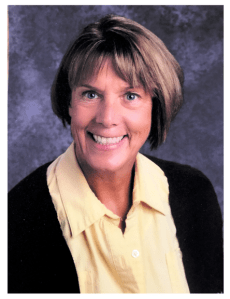
Susan O'Brien
Susan O’Brien

Susan O’Brien
Instructional Coach in RSU 22
2021 Instructional Coach Of The Year

After a distinguished career as a classroom teacher, Susan moved into Instructional Coaching in 2017.  Since then she has inspired and nurtured the professional learning of many teachers and coaches within RSU 22 and across Maine.  Susan’s coaching is rooted in relationships and respect, and supports people at all stages of their professional learning, from new teachers, to teachers working towards National Board Certification, to teachers ready to become coaches themselves.  All of her work centers around students, and how we create the most optimal learning experiences for them.  We look forward to having Susan O’Brien join us on the MCLA Board.

For more information about the awards for the MLCA, please visit their website: https://www.mainecla.org/.
Leading Early Learning—A Professional Learning Series for Elementary School Administrators

As Maine elementary schools have added preschool programming and continue to support the development of children in the Pre-K -Grade 3 span, many elementary principals have requested additional professional learning to support their work as educational leaders.  The Maine Department of Education (DOE) and several Maine educational organizations, listed below, have collaborated to design an exciting new professional learning series to address identified needs and support professional growth.  We are pleased to announce that the first cohort for this series will launch during the 2021-22 school year.

The series will not only provide participants with opportunities to deepen their knowledge of early learning pedagogy and best practices related to supporting students and teachers across Pre-K-3, but it will also provide participants with a professional learning network, opportunity to target a self-selected aspect of practice through a project-based approach, and be supported through facilitated discussions and coaching opportunities.  Participants will be engaged in a variety of modes of learning, from asynchronous learning modules to professional learning communities, to attendance at a statewide early learning conference.

If this opportunity interests you, please review the details of the series in the informational guideA link to apply for the series is included in the informational guide.  The series will be able to support up to 20 participants.  Applications will be received through June 30, but once spaces are filled, a waiting list will be generated.

An optional informational session about this professional learning opportunity will also be held on June 15 from 3:30-4:30 for anyone who is interested in learning more and who has questions about the opportunity.   Register for the informational session using this link.

For additional information, please contact Lee Anne Larsen, Early Learning Team Coordinator at Maine DOE, leeann.larsen@maine.gov.

Leading Early Learning Partner Organizations

  • Maine Department of Education
  • Maine Roads to Quality Professional Development Network
  • Maine Principals Association
  • Maine Association for the Education of Young Children
  • UMaine Center for Community Inclusion and Disability Studies

Merrymeeting Adult Education Awards 52 Diplomas on May 25th

Merrymeeting Adult Education awarded 52 diplomas on May 25 in a very special hybrid ceremony held both on Zoom and in person under a tent at Mt. Ararat Middle School. These adult learners completed either the High School Equivalency Tests (HiSET, formerly GED) or traditional high school diploma during the 2019-2020 and 2020-2021 academic years.

Director Allen Lampert led the celebration, followed by opening remarks from Bob Lucy, interim superintendent of Maine School Administrative District 75.

Faculty members Jan Crosson, Kathy Ingmundson, Bob Goddard, and RSU 1 site coordinator Dawn Wheeler welcomed Elizabeth Begin, Diego Howard, and Alyanalyn Saenz to the National Adult Education Honor Society. College Transitions student Benedita Kakahuba achieved this distinction, as well.

Commencement speeches by Sharrod Mosley, David Namwira, and Alyanalyn Saenz were followed by the inaugural presentation of Merrymeeting scholarships.

In memory of the longtime office administrator who passed away unexpectedly Feb. 2, 2020, the Carolee Tupper Memorial Scholarship was awarded to her daughter Kiley Tupper, a senior at St. Joseph’s College in Standish. Two additional scholarships were presented to David Namwira, who attends Husson University in Bangor, and Benedita Kakahuba, who attends Southern Maine Community College.

Diplomas were presented by Lampert and Wheeler to the following graduates who attended in person. Class of 2020: Joseph Bellevue, Bethany Cole, Jeff Joy, Jr., Sharrod Mosley, and Spinoza Leboundoza (RSU 1). Class of 2021: Richard Evens, Diego Howard, David Namwira (RSU 1), Alyanalyn Saenz, Duane Wilcox, and Margery Whelchel.

Douce Namwira, Class of 2020, and Nevaeh Pinkham (RSU 1), Serenity Ross and Grady Suhr, Class of 2021, attended the ceremony on a Zoom webinar hosted by Paul Elisha, academic counselor, and his wife – and HiSET proctor – Elsbeth. Forty guests joined them.

Additional diplomas were awarded to Class of 2020 graduates Heather Adams, Zachary Blair, Sarah Blake, Noelle Brown, Taylor Chubbuck, Jonas Cloukey, Robert Creamer, Alexis Deguio, Antonia DiPietro, Laelin Fischer, Elizabeth Felkey, Richard Griffin, Narcisse Isafamba, Will Kinney, Spencer Letourneau, Emily Mitchell, Robert Mitchell, William Panzino, Pirx Rhodes, Marina Tuefel, Quinn Underwood (RSU 1), Trevor Wallace, Sean Webster, and Syan Wheeler (RSU 1).

Additional Class of 2021 diplomas included Elizabeth Begin, Amanda Bisson, Devon Blodgett, Cody Caron, Alexandra Cook, Matthew Plutchak, Jr., Mark Proctor, Alyssia Russell, Miranda Vining, and Michael Pinkham (RSU 1).

Merrymeeting Adult Education provides opportunities for adult learners to complete a traditional high school diploma, earn a HiSET, prepare for college, train for careers, and develop skills and interests in a variety of personal enrichment classes, everything from canoe paddle making to private pilot ground school.

For more information about Merrymeeting’s academic and enrichment classes, visit merrymeeting.org or call 729-7323.

Information for this article was provided by Merrymeeting Adult Education Program as part of the Maine Schools Sharing Success Campaign. To submit a story or an idea, email it to Rachel at rachel.paling@maine.gov.

Wabanaki Seminar June 12, 2021 9am-12:15pm

The Maine Department of Education is delighted to invite educators statewide to our June 12 virtual recognition of the 20th Anniversary of the signing of LD 291 which requires the teaching of Wabanaki History and Culture in Maine classrooms. Please join us and a variety of educational leaders from 9-12:30 on Saturday, June 12. We will begin the morning with greetings from Governor Mills, Commissioner of Education Pender Makin and a keynote by legislation sponsor, Hon. Donna Loring. Register here

For more information about the Wabinaki Seminar, contact Joe Schmidt at joe.schmidt@maine.gov

Free Inclusive Practices Training & Technical Assistance for Public Preschool Programs

Reminder, the deadline for applying is fast approaching!

School Administrative Units (SAUs) are asked to apply by June 4, 2021 to take advantage of this exciting professional development opportunity.  Notifications of acceptance will be provided by June 10, 2021.

This offering is available to any SAU in Maine with a public preschool program. The 2021 cohort will consist of 3 classrooms of 6 participants each. Teams must include the preschool teacher, ed tech, principal, special ed director, elementary special ed teacher and a regional CDS consultant or teacher. The purpose of team participation is to ensure consistent understanding and application of the course content so that high quality inclusive practices will be supported and sustained.

More detailed information about this opportunity can be accessed here.

The complete application is available at this link.

You may access this PDF version to preview the application prior to completing.

The project requirements include: Projected timeline:
Completion of the on-demand training: Inclusive Environments in Public Pre-K. By August 18, 2021
Participation in a half-day virtual orientation session. Mid-August 2021
Completion of an 18 hour online training: Creating Inclusive Preschool Settings Classrooms. September-November 2021
Participation in 2 PLCs scheduled as follow-up support during the online training. October 2021
Participation in consultation.

*It may be necessary to align class coverage on the days of consultation for some period of time.*

  • 2 (1-2 hour) classroom based consultations (onsite or technology-based).
  • 2 (1-2 hour) administrative consultation (onsite or technology based)
October-November 2021
Participation in a wrap up meeting hosted by the DOE to evaluate the project and short district team presentations to showcase your learning. December 2021

For more information, view the FAQ  or contact:

Nicole Madore at Nicole.madore@maine.gov or

Marcy Whitcomb at Marcy.r.whitcomb@maine.gov

Huge Increase in Independent Capstones at Portland High School During Unique School Year

This year, many Portland High School seniors took on unique independent projects as their senior capstone. Projects included building an artist’s shed, building a smoker, art work, career research, building a guitar, making electronic music, and researching topics such as Buddhism, reading and mental health, preparing for the Navy, lobstering and African clothing. 

Capstone requirements include student choice and research. Most students complete their capstone through a class, but some students design their own independent projects. In a typical year, there may be two or three students who take on an independent capstone, but this year over twenty students designed their own project. Independent capstones help students to explore a particular passion.

Skye Ferris, who made a series of portraits of friends and family reflects, “My advice for next year’s students is to choose a project that you are actually excited to complete, as I found my own process very enjoyable and it was something I had wanted to do for some time.”

Elias Parker who worked with two other students to help build an artist’s shed said, “ I am most proud of the seemingly far-fetched idea we had, and our ability to follow through and not sacrifice any magnificence nor quality in our project.”  When asked about advice he would give other students, Eli shared “GO BIG, you’ll be proud of yourself”

This large increase is likely due to the fact that the pandemic allowed for more independent learning, time to explore personal interests, and flexible time in which to do the projects. Hopefully this is a start to many meaningful independent projects in the future!

Information for this article was provided by Portland Public Schools as part of the Maine Schools Sharing Success Campaign. To submit a story or an idea, email it to Rachel at rachel.paling@maine.gov.

Students Against Destructive Decisions Offers Free Programming to Maine Schools

Students Against Destructive Decisions is expanding its reach throughout the state and offering all educational institutions free access to resources on mobility safety; substance use and prevention; mental health and wellness; and leadership and engagement. SADD offers students the chance to make big changes in their communities and improve the culture and climate of their schools through peer-to-peer education. SADD”s programming is evidence based, student led, and completely free.

For more information about how to start a SADD chapter at your school, please contact Christina Schechtman at cschechtman@SADD.org. For more information about SADD, visit www.SADD.org.

Belfast Teacher Named Alternative Educator of the Year

The Alternative Education Association (AEA) of Maine has announced that Lindsey Schortz of the Belfast Community Outreach Program in Education (BCOPE) has been named the 2021 Alternative Educator of the Year. Lindsey is the Lead Science and Math teacher in the program and has become integral to the success of the students while engaging them in their learning. The Maine Department of Education joins the AEA in recognizing the hard work and determination of Lindsey and all of alternative educators across Maine for everything they do to ensure that each and every student has the opportunity to learn.

“I love alternative education because it provides opportunities for students and teachers both,” said Lindsey Schortz. “For students who have not seen success in a traditional setting for whatever reason, it shows them that there is another way for them to learn.  For teachers and students, it is an opportunity to be creative, study topics in depth and perhaps most importantly form real relationships.  I feel fortunate to work at a school with such deep roots in the community and in a district that values alternative education and how it can transform a student’s educational experience.”

Colden Golann, Assistant Principal at Belfast High School, says “what separates Lindsey is her commitment to her students. She will stop at nothing to support kids and help them overcome the obstacles they are facing. Last year during school closures, Lindsey took it upon herself to visit any student who was not participating and often taught individualized lessons in driveways, porches or on breaks from student’s jobs.

Daisy Bradney, a student in the BCOPE program described Ms. Schortz as a, “kind, caring, and very passionate about what she does….she has always been my go to person whenever something exciting happens, she is always so thrilled for our achievements…no matter how big or small.

The AEA also recognized the other finalist for this award, Linda “Cookie” Dana of Bangor High School remarking that these great educators represent the level of excellence as determined by the National Alternative Education Standards.

The AEA will recognize both honorees and their achievements at their Annual Conference on May 28th.


PRIORITY NOTICE: Adopted English Language Development Standards; Process and Support

As a critical companion to the Maine Learning Results, Maine’s officially adopted K-12 English language development (ELD) standards are the WIDA ELD Standards, which are:

  • Language for Social and Instructional Purposes;
  • Language for Language Arts;
  • Language for Mathematics;
  • Language for Science; and
  • Language for Social Studies.

In March of 2021, WIDA released the refreshed ELD Standards Framework, 2020 Edition, which serves as a foundation for systems that foster engaged interactive student learning and collaborative educator practice. The Framework is centered on equity for all students and fosters the assets, contributions, and potential of culturally and linguistically diverse children and youth. It also provides a clear and coherent structure to guide the development of curriculum, instruction, and assessment of content-driven English language learning.

Over the course of the 2021-2022 school year, districts will need to engage in planning and preparation for full implementation of the new WIDA ELD Standards Framework beginning in the 2022-2023 school year. We suggest the following three steps for effective implementation.

Step 1: Professional Learning

The implementation process begins with professional learning about the new standards framework and dedicated time for collaborative learning/planning with educators, across grade levels and content areas, across the district and within individual schools. Administrators, curriculum coordinators, teacher leaders, and others who coordinate the professional learning calendar should plan accordingly for this important work to occur. (See the end of this article for opportunities for professional learning through the Maine Department Of Education (DOE).

Step 2: Plan the Collaboration Cycle

The Collaboration Cycle consists of 4 components.

  1. Co-Reflecting-Includes WIDA Can Do Philosophy and Guiding Principles of Language Development
  2. Co-Planning-Includes WIDA ELD Standards 2020 Edition
  3. Co-Teaching-Includes WIDA Focus Bulletins and WIDA Professional Learning
  4. Co-Assessment-Includes WIDA Assessments, WIDA Rubrics, and Proficiency Level Descriptors.

The Focus Bulletin outlining this Collaboration Cycle in detail can be found here. In order for collaboration to succeed, district and school leaders must develop a culture of shared responsibility and create both curricular and administrative structures that facilitate collaboration. “Regardless of the type of educational setting and programming, a coordinated effort among all district and school levels is necessary to provide multilingual learners with meaningful learning experiences and an equitable, high quality education” p. 236 WIDA ELD Standards Framework, 2020 Edition.

Step 3: Classroom/Content Area Teachers and ESOL Teachers Engage in the Collaboration Cycle

The components of the ELD Framework will be utilized to inform language development planning across units of study or curriculum maps. An important component of this planning is English learners’ Individual Language Acquisition Plans, which should include appropriate grade-level language expectations grounded in the five ELD standards.

The Maine Department of Education is pleased to provide support to School Administrative Units (SAUs) in their implementation of these required state standards. We invite all districts to participate in the following trainings:

  • A free, self-paced, six-module eWorkshop called The WIDA 2020 ELD Standards Framework: A Collaborative Approach is available to all Maine public school educators through the WIDA Secure Portal. If you do not yet have a WIDA Secure Portal account, contact WIDA Client Services to have one set up for you. (Note that you must have a Maine public school email address.)
  • A 45-minute overview of the WIDA ELD Standards Framework, 2020 Edition, was provided on May 7th at the Maine ESOL Meeting. A recording of this overview presentation is available here.
  • The Maine DOE is hosting a series of two eWorkshops, facilitated by WIDA, on Planning with 2020 WIDA ELD Standards. The eWorkshops will take place on June 9th and June 16th from 9:30am to 11:30am. Participants must attend both sessions. The workshops are free and limited to 40 participants. Registration closes June 1st. Register here.

Additionally, the Department invites educators to participate in a virtual professional learning community, which will guide them through the self-paced eWorkshop mentioned above. If you are interested in participating or serving as a teacher leader facilitator, contact Robin Fleck, ESOL Consultant, at robin.fleck@maine.gov. Contact hours will be provided.

Subscribe to the Maine DOE ESOL Educators Listserv to receive updates on additional professional learning opportunities related to the WIDA ELD Standards and other ESOL topics.

If you have any questions about the WIDA ELD Standards or the requirements for implementation, please contact April Perkins, World Languages & ESOL/Bilingual Programs Specialist at april.perkins@maine.gov.

Notice of Concussion Workgroup (LD 104)

As directed by L.D. 104, An Act to Protect the Health of Student Athletes by Requiring the Department of Education to Report on the Incidence of Concussions which was signed into law by Governor Mills on March 17, 2021, the Department of Education’s Concussion Workgroup is expanding its work. The law requires that the Department work with the Maine Principals’ Association to use existing or new collection methods in order to report on the incidence of concussion in Maine schools. The Department, together with the Maine Principals’ Association is pleased to continue working with the Maine Association of School Nurses and Maine Concussion Management Initiative (MCMI) as the Concussion Workgroup. The recent directive from the Maine Legislature instructs the Department to report to the Education and Cultural Affairs Legislative Committee annually, beginning in January 2022, on any available data on the incidence of concussions sustained by student athletes in the state using existing or new data collection systems. The report must include recommendations on best practices for the collection of such data.

The Head Injury Tracker (HIT) was developed by MCMI 2013 with the goal of providing schools with an ability to identify high-risk activities for brain injuries by tracking patterns of concussions within their school systems. The HIT platform, available at no cost, provides schools with an easy, confidential, and secure method of collecting concussion data for their students. The HIT website serves many purposes including protecting the propriety and confidentiality of the data collected, providing a platform for reporting concussion data to the State, and potentially a tool for schools to compare their risk analysis with other schools throughout the state.

The HIT website was developed with the importance of concussion reporting in mind and can be easily implemented and utilized at all institutions throughout the state. The website allows for multiple individuals, not just the athletic trainer or school nurse, at a school to enter the data allowing for easy tracking and communication surrounding a student’s recovery. Additionally, the data collected from the HIT website can be used to detail the impact a head injury has on a student’s academic, athletic, and personal experiences. In order for us to identify the impact of concussion on students, we must collect data. As we learn more, we will work together in this ongoing effort to improve academic and social emotional outcomes for all students with head injuries.

The Concussion Workgroup looks forward to working together on this initiative with the understanding that this is a long-term effort to improve outcomes for students who experience head injury. Over the next several months you can expect to see more educational opportunities for school personnel on recognizing a head injury, documentation, and tracking with the Head Injury Tracker (HIT).   We are working to develop a cadre of 25 schools that will work toward implementation in the fall of 2021, knowing that the larger goal is for all schools to participate.

For more information on concussion management in Maine schools please visit: https://www.maine.gov/doe/schools/safeschools/healthed/concussion

If you have questions about these efforts, please contact Emily.Poland@maine.gov .