A Day with Maine Teacher of the Year Finalist Edith Berger and the Miller School Community

Miller School in Waldoboro greets people with joy from the instant you walk in. Colorful murals cover almost every hallway. Created by classes stretching back decades, these murals tell a story about generations of students and create a connection with students and educators walking the halls today on their way to lunch, recess, or the next class. Everyone greets you with a warm smile and there’s a feeling that this is a great place to learn.

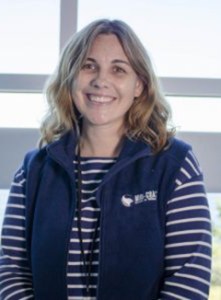
If you arrive early enough, the sound of music may draw you into Mrs. Edith Berger’s classroom. She often plays music in the morning to set a good tone for the day and share the sounds with students and staff. Her classroom is just as colorful and joyful as the rest of the school, and it’s the room everyone goes to when they have a question, need help, want to bounce an idea off someone, want a snack, or just need someone to talk to. Students and other educators know Mrs. Berger’s class is a safe, supportive, and welcoming place for all. She makes every feel seen, heard, and appreciated.

Mrs. Berger is a sixth-grade writing and social studies teacher at Miller School, the 2023 Lincoln County Teacher of the Year, and a 2024 Maine Teacher of the Year Finalist. Her colleagues, students, and community members describe her as a role model, a quiet leader, inspiring, compassionate, dedicated, creative, and professional.

In today’s writing class, where everyone is referred to as a writer, students are given various mentor texts to examine what expression and reflection look like in essays, stories, and poems. The students analyze the texts and find the spots that show why the author wrote the piece. They share their thoughts in groups and then as a class, discussing what certain passages of the writing say about the author’s purpose and making connections to their own lives. Mrs. Berger engages with the different groups and poses questions to get them to engage more deeply with the texts and make connections.

If you close your eyes, you’d think you were in a high school class.

With the school year still so fresh, the students have just started to look at personal narratives from the perspective of purpose. They’ve examined why people write and explored ways that writers get in the zone to write. These writers are blossoming.

Later in the day comes social studies, and Mrs. Berger teaches a civics lesson connected to Constitution Day. Students are provided the preamble of the Constitution, which they read together last week and identified the portions that illustrate the functions of government as viewed by the framers of the Constitution. In this class, students are given examples of American civil life, such as a federal agency providing food for children or having marshals on planes, and are asked to connect those examples to the different functions of government. The students share their reasoning in groups and then as a class. Through this, Mrs. Berger gives the Constitution life and connects it to modern examples the students can identify with.

Mrs. Berger’s colleagues say that she honors everyone’s voice, and that practice becomes a model for students. They say that she meets kids where they are while having high expectations—and that those high expectations come with a high level of support. They say she doesn’t give up on any kid—she finds a way to reach them no matter what. That’s clear with any visit to her classroom.

Her colleagues also describe her as not just a teacher of children, but also of adults, saying “I would not be the principal I am without Edie, I became a better teacher by working with Edie, she’s the room I go to if I have questions or need help, and everyone is part of her classroom.”

There are stories of Mrs. Berger responding late at night to help another teacher struggling with a lesson plan, making handmade journals for students to use to help them cope with anxiety, coming back from a conference or event full of new ideas for her class and the school, always being on the cusp of what’s new, and always finding ways to grow.

What’s also evident is just how much Mrs. Berger is a fixture of the community. Whether it’s speaking at the library about civics, bringing in guest speakers for her class, going to community events, or promoting her school, she is constantly building bridges between Miller School and the rest of the community.

Edith Berger doesn’t just teach civics; she is a true citizen. She’s also Miller School’s guiding light and helps everyone in her school community shine.

Maine DOE and Maine Association of School Psychologist to Host Presentation on Fetal Alcohol Spectrum Disorders on Oct 30

The Maine Department of Education and the Maine Association of School Psychologists (MASP) are co-hosting a presentation: Fetal Alcohol Spectrum Disorders with Christie L. M. Petrenko, Ph.D. on Monday, October 30, 2023, from 8:30 am to 4:00 pm at the Harraseeket Inn Freeport.

Christie Petrenko, Ph.D. is a clinical psychologist and researcher who has been working with people with fetal alcohol spectrum disorders (FASD) since 2003. She completed her graduate training with Edward Riley and Sarah Mattson in San Diego, CA and is currently a Research Associate Professor at Mt. Hope Family Center, University of Rochester in NY. Her research focuses on developing and evaluating interventions for people with FASD, including the use of mobile health technology to increase access to care. She has experience training teams of providers both regionally and internationally in FASD diagnosis. Dr. Petrenko also runs a multidisciplinary FASD clinic providing diagnostic, intervention, and family support services in Rochester, NY.

Fetal alcohol spectrum disorders (FASD) represent one of the most common developmental disabilities worldwide. FASD are life-long conditions and affect 2-5% of the US population. Rates of FASD are even higher in special populations such as those served within child welfare, mental health, special education, and justice systems. Yet most professionals in these systems are not provided the necessary education and training to effectively serve people with FASD. Without access to knowledgeable providers, people with FASD experience considerable inequity and lower quality of life.

This accessible and interactive training offers attendees the essential knowledge and skills to begin to implement FASD-informed care with their clients. Attendees will learn the advantages of identifying FASD in their clients and implementing FASD-informed care principles and skills in their practice. Attendees will see how key skills such as “reframing” and “accommodations” can build on successful strategies they are already using with clients, and effectively tailor them to meet the strengths and needs of people with FASD. Given the high rates of FASD in special education and mental health settings, this will allow providers to promote healthcare equity and improve quality of life in their clients.

To register for the event go to Maine Association of School Psychologists – Fetal Alcohol Spectrum Disorders (masponline.net)

For questions about the event contact maineasp@gmail.com.

October Enrollment Reporting Resources

October 1 Enrollment reporting often brings up many questions about unique situations for student enrollments and how to record the data for state reporting purposes. We often hear questions about enrolling students experiencing homelessness, State Agency Clients, enrollments in special purpose private schools, Superintendent Agreements, and many other situations that students may be experiencing.

The Maine DOE Helpdesk webpage provides guidance for most of these situations on the Student Enrollment Guides page. This resource can be very helpful when working to determine fiscal responsibilities, subsidy counts, and reporting responsibilities.

The Enrollment Guidance Document can be a particularly useful resource for October 1 Enrollment reporting, and we highly recommend having it readily available when working on this report.

If a student’s situation does not meet any of the outlined enrollment guidance or if you have questions about enrollment guidance, please contact MEDMS.Helpdesk@maine.gov or call 207-624-6896.

A Day With Maine Teacher of the Year Finalist Colleen Maker’s Class

The word of the day posted at the front of the class reads “tedium-boredom,” which could not be any more opposite of the reality in Mrs. Maker’s high school science classroom on this blustery coastal day. Despite the weather, Colleen Maker’s classroom is alive with inquisitive minds ready to glean wisdom from their favorite teacher. This 2024 Maine Teacher of the Year finalist and 2023 Washington County Teacher of the Year has a large following of students, parents, colleagues, administration, and community members who are big fans. Whether it is harvesting carrots in a post-storm mist to send off to the local food pantry or identifying the species of invasive crab in class, Colleen Maker’s students are engaged, learning, and know they are cared for by their exemplary teacher.

“I’ve never seen anything like her passion.”

“Colleen is like a refuge kids can go to.”

“She is ever present, everywhere.”

“She is very curious and that’s what she passes on to her kids.”

“She is a conduit for the community.”

While these quotes are high praise for any educator, they are especially so coming from parents. The parents of Colleen Maker’s students sing her praises from the mountaintops. While they recount many stories about how Mrs. Maker has impacted their children and families, it is easy to see the light of pride in their eyes and fervor in their words as they express their gratitude for the impact she has on a daily basis. While all of these brilliant characterizations are true in the classroom, Colleen’s impact doesn’t stop there. From attending sporting events to music recitals, Mrs. Maker can be found all over the community supporting her students throughout the entire year. This kind of dedication, parents say, is what makes her so magical.

It would be enough to hear how proud parents are to have Mrs. Maker in their children’s lives, but the accolades don’t stop there. Her colleagues were also quick to expound on her impact.

“She’s brought a level of engagement and enthusiasm that is remarkable.”

“Her excitement is infectious.”

Speaking of Colleen as a life-long learner who is quick to shine the spotlight on others, her colleagues clearly see her as an integral and inspirational part of the Washington Academy family. From highlighting her stepping in to sell popcorn last minute at a volleyball game to making sure her diverse array of students all feel seen and understood, Colleen Maker is a teacher her colleagues look up to as a mentor and friend. Words like nurturing and sunshine are mentioned often as her fellow teachers discuss not only how she makes students feel but how she makes them feel as well.

If all the praise from parents and colleagues weren’t enough, the way her students talk about her is the true icing on the cake.

“She is really amazing.”

“She genuinely cares.”

“She never makes you feel stupid for not understanding something.”

“She makes you feel important.”

Students recounted lessons in the classroom about invasive species of crab threatening Maine’s coast to working with Mrs. Maker in Sustainability Club and with Student Council as memorable and life-changing. One student wants to pursue a career in Marine Biology thanks to her, and another is seriously considering a career in education because of her passion and dedication to students. These teenagers all agreed that their time at Washington Academy is more exciting and engaging because of Mrs. Maker, and above all else they feel loved and accepted in her company.

Spending just one day with Colleen Maker made it clear that she has an incredible impact on not only her students but on her school at large and the community. While her accomplishments are many, Mrs. Maker approaches her daily life with self-deprecating humor and passion, highlighting what her administrators said about her perfectly, “I don’t think she realizes the impact she has.” There is no doubt Colleen Maker is an educator with a huge heart who makes lasting impacts in the lives of everyone she touches. She is truly “unparalleled.”

Meet Flint – A Furry Companion Offering Comfort and Purpose to Molly Ockett 2nd Graders

Flint is a trained, skilled 4-year-old Labrador retriever, Facility Dog from a local nonprofit organization called Assistance Canine Training Services (ACTS). Nationally certified through the Alliance of Therapy Dogs, Flint works at Molly Ockett School 5 days a week with 2nd-grade classroom teacher, Kelley Brown who is also his handler.

“A few years ago we had service dogs in training at Molly Ockett and we saw the magic and benefits of having a dog in the classroom,” said Brown. “Now we have our own full-time Facility Dog working at Molly Ockett School, building connections with students year after year.”

Flint spent 2 years training to be of service to people and has been on staff at Molly Ockett for the past 2 school years in Brown’s 2nd-grade classroom. Flint is trained to listen to readers, support writers, roll dice for math games, and offer fist bumps, Brown explains. He will rest a chin on a lap, pick up items, be a companion, and offer comfort and purpose in the classroom. He is able to provide a calm, supportive, comforting presence to all students and staff that he is able to work with and at this point, most of the students at Molly Ockett have seen and or met him.

Brown explains that Facility dogs are placed with professionals who work in fields that benefit from animal-assisted intervention (AAI). Within the field of education, animal-assisted education (AAE) is becoming more and more recognized by teachers, counselors, and others in the field of education as a successful way to work with and connect with students in their daily lessons and with social and emotional learning.

“Those of us fortunate enough to work with Facility dogs are better at our jobs because of these dogs, said Brown. “I have a greater capacity to help others because of him. He opens doors and changes people’s experiences for the better in a way that I as a human just can’t do.”

Brown adds, “It has been a privilege having Facility Dog Flint in the school community. I am grateful for and amazed by the connections he has built.”

Information for this story was provided by Molly Ockett School Grade 2 teacher Kelley Brown. To submit a good news story or an idea for the Maine DOE Newsroom, please email Rachel Paling at rachel.paling@maine.gov.

Woodland ELO Program Gives Back to Community and Prepares Students for Future Careers

At Woodland Junior-Senior High School, Extended Learning Opportunities (ELO) Coordinator Heidi Hicks is helping students connect with their community and realize their full potential. Through job shadows, volunteer work, and mentorships, Hicks’ students are simultaneously exploring future career paths and giving back to their local communities.

One of the primary initiatives of Woodland’s ELO program is its teacher Assistant Program in which students interested in a teaching career have the opportunity to serve as a student mentor at the local elementary school. This program allows students to gain experience working with students in a classroom, and Hicks hopes to expand the program in the coming years.

“I am very thankful for the opportunity it has given me, and it has only brightened my future as a teacher,” said one of Hicks’ students when reflecting on her ELO experience. “I really can’t wait to see where it takes me and what my future holds.”

Another one of the program’s success stories is the development of a school and community food pantry. Hicks was inspired to start the food pantry after hearing the story of a student whose family was struggling with food insecurity. Under Hicks’ leadership, the program partnered with The Good Shepherd Food Bank to create the food pantry where many students volunteer to work and give back to their community.

Hicks says the best part of her daily work is building relationships with her students and helping them see the best in themselves. “This work gives me hope,” said Hicks.

Hicks would like to thank the following community partners for their contributions to Woodland’s ELO program: Woodland IGA, Woodland Elementary School Principal Amanda Belanger, and Sarah Cote from Downeast Lakes Land Trust.

Extended Learning Opportunities (ELOs) are hands-on, credit-bearing courses outside of the traditional classroom with an emphasis on community-based career exploration. These opportunities are personalized for students and help them explore options for their professional lives. They help students engage in learning through instruction, assignments, and experiential learning. The Maine Department of Education (DOE), along with state-wide partner Jobs for Maine Graduates (JMG), have made a concerted effort to provide working models, support, and funding opportunities for Maine schools to set up ELO programs within their school communities. To learn more about Maine’s initiatives with extended learning opportunities, visit: https://www.maine.gov/doe/index.php/learning/elo or reach out to Maine DOE ELO Coordinator Rick Wilson at rick.wilson@maine.gov.


Seeking Educators to Pilot MOOSE Modules; Info Session 9/21/23

Do you want to explore and implement innovative curriculum this fall? Are you interested in expanding your impact outside your classroom/school? The Maine Department of Education (DOE) is currently looking for educators to pilot MOOSE modules and would love to have your class participate!

Now in its fourth year, Maine’s Online Opportunities for Sustained Education (MOOSE) platform continues to grow. Last year, we added additional PreK-12 Learning Progressions to our already robust bank of MOOSE modules – created by Maine teachers for Maine students. These modules center on interdisciplinary, project-based learning experiences that are accessible, inclusive, and available for free online.

Feedback on the modules themselves and their usability is vitally important as we are constantly improving existing modules and applying lessons learned to new creations. We are looking for Maine educators interested in using an existing MOOSE module in their classroom with five (5) or more students and providing feedback about the experience. You get to decide the module(s) you want to pilot based on what works best for you and your students. Stipends will be provided for up to two modules ($500 each) that you have piloted and provided feedback on. All required elements must be completed by January 12th, 2024.

If you are interested in applying but still have questions, the MOOSE team will be holding a Q&A session via Zoom on Thursday, September 21st, 2023 from 4:30-5:30 pm. Registration for the Q&A session can be found here. The session will be recorded and sent to anyone who registers even if they aren’t able to make it in person. Questions can be submitted ahead of time to be answered in the session. For more information, please contact Project Manager Jennifer Page (jennifer.page@maine.gov).

If you are ready to apply applications can be found here. Applications for the fall session are due by Sunday, October 8th, 2023.

Join the Maine Association for Improving Literacy (MAIL)

The Cambridge Dictionary simply defines literacy as the ability to read and write. The National Assessment of Adult Literacy (NAAL) defines literacy as the ability to use printed and written information to function in society, to achieve one’s goals, and to develop one’s knowledge and potential. The International Literacy Association defines literacy as the ability to identify, understand, interpret, create, compute, and communicate using visual, audible, and digital materials across disciplines and in any context. Over time, literacy has been applied to a wide range of activities and appears as computer literacy, math literacy, or dietary literacy; in such contexts, it refers to basic knowledge rather than to anything specific to reading and writing. No matter the definition, we know that high-quality access to literacy instruction is a key component of equity of access to student success and access to the world.

In the fall of 2022, the Maine Department of Education brought together the first group of individuals who were interested in the inaugural network called the Maine Association for Improving Literacy. More than 100 educators came together to discuss literacy education across the State. Through monthly meetings, text studies, and regular email communication educators started the process of connecting a collaborating to improve literacy education across the state.

The mission of this network is to support children as they learn to read and love reading, address the diverse literacy needs of all Maine students, and discover a common ground of a supportive literacy community across the state. We welcome all people with a passion to learn and take action to increase literacy access to every person in the state. We encourage the participation of classroom teachers, administrators, special services educators, school support staff, educational specialists, and all of you who have a passion for literacy.

If you are interested in joining the MAIL network to attend monthly meetings, join text and article studies, or to simply be on the MAIL email list please consider completing the 2023-2024 membership form on the link below:

Register for the 2023-2024 Maine Association for Improving Literacy (MAIL) Network

If you have additional questions about the MAIL network, please do not hesitate to contact Dee Saucier, Inclusive Education Literacy Specialist and Dyslexia Coordinator, (danielle.m.saucier@maine.gov).

A Day With Maine Teacher of the Year Finalist Joshua Chard’s Class

“We take care of everybody”

“Everyone is valued”

“People are kind”

Those are some of the things that Mr. Joshua Chard’s third-grade students want people to know about their school.

The Chardlings, as they’re affectionately called, go to school at East End Community School in Portland. East End is a diverse and welcoming school that sits on a hill overlooking the city and the water. Beyond extraordinary teachers, the school has its own garden with an outdoor classroom, a closet where students can get free clothes and other supplies, and a deep connection to the neighborhood and families as a community school.

Mr. Chard is one of four finalists for 2024 Maine Teacher of the Year and the 2023 Cumberland County Teacher of the Year. He was nominated by his principal and assistant principal. Colleagues say he builds relationships with every student, meets every student where they’re at, and finds joy in the uniqueness of each human.

It’s easy to see why people say that about him. On a recent morning visiting Mr. Chard’s class, he and his Chardlings were happily seated on a colorful carpet, passing around a stuffed bear and telling their visitors what’s great about their school.

Next, it was math time. With the learning target written on the board, Mr. Chard asked the class who could tell him the math learning target for the day. He called on people one by one until the entire class said in unison, “Let’s choose a scale for our bar graph!” The students were given a scenario to measure the different shapes found on a piece of paper in bar graph form. Instead of working alone, they joined groups to discuss the problem and give their reasoning for what scale they should use to measure the shapes. Today was not about getting the right answer but working through the problem together and defending their reasoning.


Later in the day, and after a snack, it was time for science. Mr. Chard and the students returned to their carpet to learn about Wabanaki history and rivers, using the Columbia River to compare to Maine’s Presumpscot River. Mr. Chard asked what the students had learned the day before, with almost every hand going up with excitement. The students talked about what they knew about the Wabanaki, the immigrants who arrived, and 20 million years since the Columbia River was first formed. But if we know the Columbia is 20 million years old, then how old would that make the Presumpscot? After lots of class discussion, the class collectively inferred that the Presumpscot must have been around the same age.

Then it was time for another of Mr. Chard’s “juicy” words—flora. Using cards with images of flora, Mr. Chard asked the class if they could tell us what flora meant. But why just talk about flora when you can experience flora? So, everyone took a card with an image of flora, and outside they all went to roam the perimeter of the school in search of flora that is often found near the banks of the Presumpscot River.

“That’s my flora!”

“I found it!”

“I think this is it!”

The Chardlings were enthusiastically committed to their mission to find their flora.

That’s just a bit of a glimpse into the engaging, project-based, immersive, and rigorous learning on display in Mr. Chard’s class.

When asked why he teaches, Mr. Chard said, “I teach because I stand tall on the shoulders of the teachers who lifted me up and saw my potential even when I couldn’t see it myself. I strive to be the teacher who lifts his students up in the same way, so that those students look back and say, ‘I stand tall on Mr. Chard’s shoulders.’ I can think of no better legacy than that.”

One of Mr. Chard’s fellow teachers talked about his magical formula that combines joy and fun with high expectations and his ability to meet the unique needs of every student. That was on full display on our wonderful day with the Chardlings.

Maine Department of Education Releases Climate Education Professional Development Grant to Promote Climate Education in Maine Schools

The Maine Department of Education (DOE) is excited to launch a new climate education professional development pilot grant opportunity to support the growth of climate education throughout the state and most especially in underserved communities. This grant initiative was designed out of LD 1902 which passed in the spring of 2022. This grant initiative is designed first and foremost to support teachers and schools. Climate change content and pedagogy can be challenging to approach for many different reasons. It can be a new area for teachers, a subject matter that is challenging to navigate in a school’s community, and an area of education where teachers and schools just don’t know where to get started.  

This initiative asks that schools partner with a non-profit community-based organization because these organizations are integral to communities throughout Maine. They have created, sustained, and grown an incredible framework of outdoor and environmental education opportunities and programs that are tailored to their local regions traits and needs. This initiative will expand on their work to form new connections and expand partnerships between community organizations and schools. These partnerships will support teachers and schools to bring climate education to more of Maine’s students. 

The RFA can be found here, and applications are due on November 3, 2023.

The RFA grant will be phase 1 of 2 initial phases the Maine DOE plans for this effort. Phase 1 will have an application window from early September to October 20th. Phase 1 professional development programs will be awarded for a term from mid-November through the end of August 2024. Phase 2 will build on the successes and learnings of phase one. Phase 2 will have an application window in the winter of 2024 and be designed for programs leading up to and during the school year of 2024-2025. These phases are designed for a wide variety of applicants and programs that might vary in style, content, age, duration, and breadth or depth. 

Applicants should take the time to review the application and ask questions by September 29th (full instructions in the RFA). Just like the program itself, the application can be collaborative with community partners and other local education providers if desired. Applicants that hit priorities one and/or two and cannot connect with a partner or do not know where to start are still encouraged to apply. If the timeline for phase 1 is too tight for applying or the award window does not make sense for this year, phase 2 is a great option with additional time to plan and connect with a partner. 

This program is overseen by Teddy Lyman, the Maine DOE’s new Climate Education Specialist. Teddy will coordinate this program including the application, awards, and deliverables. During the RFA application window, Teddy cannot communicate directly with anyone that might benefit from direct communication that is not publicly available.  

Questions about the RFA should be emailed to Teddy at: Theodore.Lyman@maine.gov by 11:59 pm on September 29th, 2023. Questions and answers will be posted publicly at the link below.  The Climate Education Specialist will also set and execute a wider range of climate education initiatives throughout the state. This will include working with grant recipients, stakeholders, and youth to design, encourage, and build the future of climate education around Maine. 

For more information and updates, check out the DOE climate education webpage.  

A copy of the RFA, as well as the Question & Answer Summary and all amendments related to the RFA, can be obtained at: https://www.maine.gov/dafs/bbm/procurementservices/vendors/grants.