MCI Teacher Ethan Brownell Named 2023 Maine History Teacher of the Year

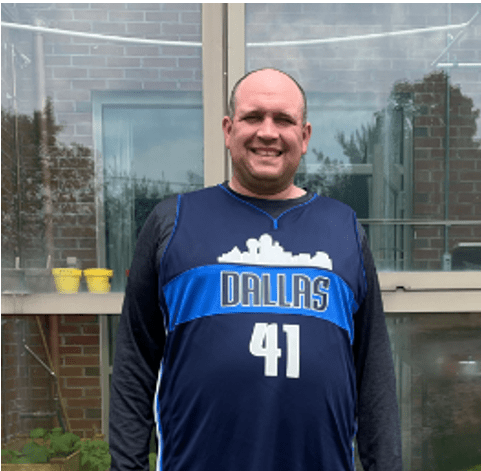
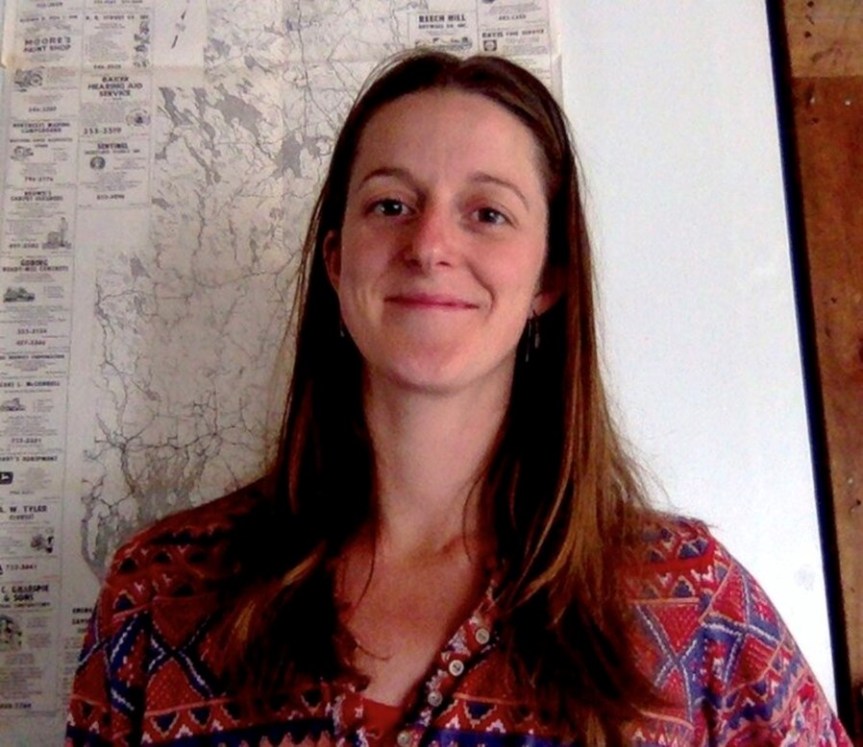
Ethan Brownell, at teacher at the Maine Central Institute (MCI), has been named the 2023 Maine History Teacher of the Year, an award presented annually by the Gilder Lehrman Institute of American History, the nation’s leading organization dedicated to K-12 American history education.

Brownell has been teaching for 12 years – 10 of which have been at MCI where he currently teaches AP US History, AP US Government and Politics, Model UN, Sociology, and 11th grade American History & Government. Additionally, he advises the Model UN and Youth & Government and co-advises the tabletop gaming club.

Inaugurated in 2004 and now celebrating its twentieth anniversary, the History Teacher of the Year Award highlights the crucial importance of history education by honoring exceptional American history teachers from elementary school through high school. The award honors one K–12 teacher from each state, the District of Columbia, Department of Defense schools, and US Territories.

In addition to a $1,000 honorarium, Brownell receives a core archive of American history books and Gilder Lehrman educational materials, recognition at a local ceremony in their honor, and becomes one of 53 finalists for the 2023 National History Teacher of the Year Award. In fall 2023, ten finalists for the National History Teacher of the Year will be announced.

Brownell believes that teaching social studies “helps us examine the human experience in all its beauty and ugliness. History, geography, and civics help us to understand the world we live in and those we share it with. We learn critical skills to help us contextualize events and communicate with each other in a hyper-connected world. Also, it’s just fun to study the past and it’s stories. The more we know about human experience, the more interesting we, the world, and each other will be – it’s a beautiful feedback loop.”

“I love to talk about things that I care and that my students care about,” Brownell shared. “I have the privilege to teach a wonderfully diverse set of students, and it’s amazing to see them sharing their own experiences across time and space. Model UN and Youth & Government are amazing vehicles for this: seeing my students engage with others from around the state on vital issues past, present, and future makes me hopeful.”

Brownell is honored to be recognized through this award. “My first experience with the Gilder Lehrman Institute was at their Reconstruction summer institute with Eric Foner and Martha S. Jones. It was an amazing week doing one of my favorite things: being a student and learning in a collaborative atmosphere. It means a lot to be recognized by an organization that helped me so much in my own practice.”

In order to be considered for the History Teacher of the Year award, eligible teachers must first be nominated by a colleague, parent, or student. After receiving a nomination, teachers must submit a resume, teaching materials, and a letter of recommendation to be considered for the state award. History Teacher of the Year winners are selected by a committee of educators and education professionals in their state. For more information on the award process, visit the Gilder Lehrman Institute website.


Resources Available for WIDA ELD Standards

On May 25, 2021 the Maine Department of Education announced through a Priority Notice its adoption of the WIDA English Language Development Standards Framework, 2020 Edition as a critical companion to the Maine Learning Results. WIDA’s ELD Standards Framework, 2020 Edition, serves as a foundation for systems that foster engaged interactive student learning and collaborative educator practice. The Framework is centered on equity for all students and fosters the assets, contributions, and potential of culturally and linguistically diverse children and youth. It also provides a clear and coherent structure to guide the development of curriculum, instruction, and assessment of content-driven English language learning.

As you continue to implement the WIDA ELD Standards Framework, 2020 Edition in your educational setting, the Maine Department of Education would like to make you aware of several resources which may support your work.

New guidance for educators and administrators implementing the WIDA ELD Standards Framework

  • WIDA recently launched two new implementation guides to support educators and administrators as they implement the WIDA ELD Standards Framework.
    •  The WIDA ELD Standards Framework Implementation Guide is designed specifically for classroom teachers and instructional leaders, as well as other professionals who work with multilingual learners. It includes guidance about planning for language development in units and lessons, sample resources, and ideas for what implementation of the Framework could look like in practice.
    • This guide is accompanied by an Administrator Supplement focusing on programmatic aspects of systemic ELD standards implementation for school and district administrators.
  • All Maine educators may access WIDA’s excellent virtual, self-paced eWorkshops through their WIDA account.
    • Click here to read about how to get started with WIDA’s eWorkshop The WIDA ELD Standards Framework: A Collaborative Approach
    • This eWorkshop explores ways to use the WIDA ELD Standards Framework, 2020 Edition to support multilingual learners’ achievement and language development It contains many wonderful examples and videos demonstrating how the implementation looks in a classroom setting. For K-12 educators. Time to complete: 4 hours
    • Contact hours are available through WIDA upon completion of all eWorkshops
  • The Maine Department of Education has the following asynchronous professional learning opportunities for deepening your knowledge about the WIDA ELD Standards:

The State ESOL Specialist is available to support you directly through technical assistance calls and in-person professional learning opportunities. 

For further information please contact Jane Armstrong, State ESOL Specialist, jane.armstrong@maine.gov.

Open Reports: Graduation Certification Report and Staff Certification Report

Graduation Certification – The Graduation Certification Report is now open in NEO and available for certification. The Maine Department of Education (DOE) Data Team hosted a webinar on Tuesday, August 1st regarding this report, and the recording is available on the Maine DOE Data Team YouTube Channel.

Due Date: August 15th

Resources:

Staff Certification – All staff in the NEO Staff module for all districts have been rolled over to the new school year in Pending Status. All staff will need to be reviewed, updated, or deleted in NEO Staff for the current school year. Update email addresses and phone numbers for district personnel, this information is used by the Maine DOE to contact proper individuals for various purposes. Years of experience increment automatically for individuals with previous experience in a position.

A webinar about this year’s report will be hosted on Tuesday, October 3rd at 10 am. Please join the webinar at the specified time using this link: EPS – Staff Certification Webinar.

Reporting Resources:

For training in the completion of these reports please contact Data Quality Trainer Alexandra.Cookson@maine.gov or call 207-446-3897

For issues with reports in Synergy and/or NEO please contact MEDMS.Helpdesk@maine.gov or call 207-624-6896

Maine Department of Education Hosts 1st Computer Science Summer Institute

Nearly 100 educators from across the state attended a multi-day institute in July, focused around computer science education. Educators spent two and a half days engaging in sessions and collaborating to integrate computer science into their classrooms and upcoming school year activities. Topics included Robotics & Programming, Coding & Hardware, Augmented & Virtual Reality, and much more!

These educators also spent some time exploring connections between the mobile computer science labs and SLAM clubs at their schools to help leverage the mobile lab technology to promote student leadership and engage students as experts with the mobile labs.

Check out this video to learn more about the CS Summer Institute.

These educators will be sharing some of the awesome computer science learning experiences they’ve been creating at the CS Ed Showcase on August 17th. For more information about the CS Ed Showcase, check out this article.

#MaineTeachesCS #CSISummerInstitute #MLTI #MLTISLAM

If you have questions or would like to know more about computer science education in Maine, contact the (Acting) Learning Through Technology Coordinator and Computer Science Specialist, Emma-Marie Banks at emma-marie.banks@maine.gov

This event was funded by the Governor’s Emergency Education Relief Funding (GEER).

Unraveling Roots: Cultivating Genealogy as an Instructive Journey

At the end of June, a group of teachers met to learn about using genealogy to teach inclusive history with Dustin Axe, the Youth Genealogy Curriculum Coordinator with the New England Historic Genealogical Society (NEHGS).  This workshop kicked off the American Ancestors pilot that supports teacher planning for inclusive historical inquiry projects using genealogy.  During the next school year, teachers in this pilot program will participate in monthly virtual meetings to deepen their understanding of this work and to collaborate with each other. Twice a year, teachers will meet with NEHGS in one-on-one meetings that are personalized to their instructional needs.  There will also be a monthly professional learning community led by the Maine Department of Education for teachers to collaborate and share their work.

As many teachers know, teaching genealogy can be challenging.  By focusing instruction on critical research and thinking skills, teachers learned how to empower students to make personal connections to history by connecting to the process of historical inquiry instead of the product.  As one teacher commented, “I loved all the resources available online for schools and the multiple levels of scaffolding that were available. [Dustin] did an excellent job at making this accessible to all learners regardless of their circumstances, but also gave us a framework for research/investigations that can be applied to any topic.” According to NEHGS, research finds that genealogy can help students’ well-being and connect them to their communities when it is done well.  The free resources from NEHGS support high-quality genealogical practices.

One strategy to make genealogy more accessible is to look at the lives of other people, particularly those who have impacted their community. NEHGS developed several case studies of key figures in American history, as well as important Mainers, like Gerald Talbot and Samantha Smith. Rooted in inquiry-based practices, the skills and processes learned by doing genealogical research can help students learn about important events for communities that place more value on the collective. In this way, many of the resources provided by NEHGS can help teachers develop inclusive lessons that can meet the requirements of state mandates regarding Wabanaki and African-American studies and the history of genocide including the Holocaust.  “I had not considered using genealogy with my students, but I now see that it can be a good way to connect to my students and for them to connect with history,” remarked a teacher after the workshop.

For more information about the American Ancestors program, check out www.AmericanAncestors.org/Family-History-Curriculum or contact Dustin Axe at dustin.axe@nehgs.org

The Maine DOE encourages all schools and districts across the State of Maine to learn more about interdisciplinary instruction on our website or by contacting the Interdisciplinary Instruction Team Coordinator at Kathy.bertini@maine.gov


Share Your Good News! Maine DOE Seeking to Highlight ESSER Federal Emergency Relief Funding Projects

The Maine Department of Education (DOE) is looking to share stories of school administrative units (SAUs) using Federal Emergency Relief Funding to positively impact their students and school communities.

The Maine DOE is administering a questionnaire to collect information about these projects in order to create stories that will be shared broadly through the Maine DOE communication efforts. Sharing good news about the use of Elementary and Secondary School Emergency Relief (ESSER) funding increases transparency and visibility, giving the public insight into the purpose and impact of these funds.

Find the questionnaire here: Federal Emergency Relief Funds Highlights

If you have any further questions or need clarification, reach out to Maine Department of Education Communications and Outreach Coordinator Rachel Paling at rachel.paling@maine.gov.


Build Academic and Social Emotional Skills with SpiritCorps Maine (Funded Through ARP Grant)

Through a partnership with Spirit Series, the Maine Department of Education is offering SpiritCorps, a three-week, project-based, narrative writing and self-discovery program designed for students from 7th to 10th grade. First-time participating schools receive 100% funding through January 1, 2024, thanks to a federal ARP grant. Openings for the fall remain available on a first-come, first-served basis!

The SpiritCorps experience–as students identify, craft, record on video and share with their classmates personal stories of Courage, Conscience or Compassion–is often profound, building self-efficacy and strengthening connection at a moment when mental health crises and alienation plague our youth.

Here are some examples of the power of the SpiritCorps experience:

Powerful data collected last year by SpiritCorps shows strong academic and social-emotional gains, as do comments like these from students who have felt the influence of this program on their lives:

“I learned that my story is important and interesting… It helped me learn that other people are struggling with the same things I am and made me feel less alone.” – Bobby, 8th Grade, ME

Doing SpiritCorps, I’ve learned what it actually means to be compassionate and courageous not just for myself, but for others as well.” – Sara, 10th Grade, ME

“This gave me the chance to really open up around my pain… It helped me let go, just a little, which means a lot to me. Thank you SpiritCorps!” – Randy, 8th Grade, ME

And partner teachers say this about the impact of SpiritCorps:

“I would absolutely recommend SpiritCorps to any educator. It was easy to use, fun and so well organized. It was great! It was so easy from an educator’s perspective to integrate this curriculum into my classroom…And it was a masterclass in self-reflection.” – Scott Arritt, Gr. 7 & 8 ELA, Durham Community School

“By providing an authentic audience and utilizing the peer feedback process, kids who do not consider themselves writers find that their voice has value and their stories are worth telling. And kids who love to write get expert advice on how to hone their craft. Time after time, our students produce their best writing of the year, hands down, during the SpiritCorps program.” – Sarah Abbott, Gr. 5-9 ELA, Noble Flex

“For those who engaged deeply in the process, writing stories about real compassion for themselves or others, this experience was truly a “gift to themselves”. I saw students forgiving a parent for hurting them and forgiving themselves for how they hurt themselves with their own thoughts. A truly powerful gift. A bonus to this experience is how it helped them see their classmates in a different light.” – Patti Forster, Gr. 10 ELA, Camden Hills Regional High School

To learn more, watch our brief video Introduction to SpiritCorps. For further information and/or to schedule an engagement at your school, email Dr. Christina O’Neal, Director of Program Partnerships for SpiritCorps, at coneal@spiritseries.org.


Students Rewrite Their Stories in Biddeford ELO Program

“Our main goal of this project is exposure and exploration,” says Extended Learning Opportunities (ELO) Coordinator Andrew Burnell. Burnell co-leads the ELO program at Biddeford High School’s Alternate Pathways Center (APC) alongside Tabatha Frawkins. Burnell and Frawkins work as a team to provide students with various career exploration opportunities including site visits, guest speeches, and the school’s ELO course. “We are a team and successful because we are such a cohesive team!” says Burnell of his work leading the program with Frawkins.

During the ELO course, students learn about five potential tracks including directly entering the workforce, military, college, trades, and service or travel opportunities. They are also taught important elements of “adulting” such as budgeting, doing taxes, and writing resumes and cover letters.

Students in the ELO program have gained volunteer experience by assisting in classrooms at Biddeford Primary School, Biddeford Intermediate School, and the John F. Kennedy Kindergarten Center. Some students have also been able to develop their leadership skills through a weekly leadership program where they work on communication, empathy, self-reflection, determination, and problem-solving.

Burnell says the best part of his day working as an ELO Coordinator is connecting with students. “Shifting students’ stories about themselves from negative to more positive, learning about students’ strengths and what their goals are, and being part of a community that believes in our students are all highlights of our days and work at APC,” said Burnell.

Co-led by Burnell and Frawkins, APC’s ELO program is helping students build strong and meaningful connections while exploring career paths and writing a positive story for themselves. Burnell says, “the ELO program is only strengthening our students’ [stories] and providing them opportunities they may not have otherwise experienced.”

Extended Learning Opportunities (ELOs) are hands-on, credit-bearing courses outside of the traditional classroom with an emphasis on community-based career exploration. These opportunities are personalized for students and help them explore options for their professional lives. They help students engage in learning through instruction, assignments, and experiential learning. The Maine Department of Education (DOE), along with state-wide partner Jobs for Maine Graduates (JMG), have made a concerted effort to provide working models, support, and funding opportunities for Maine schools to set up ELO programs within their school communities. To learn more about Maine’s initiatives with extended learning opportunities, visit: https://www.maine.gov/doe/index.php/learning/elo or reach out to Maine DOE ELO Coordinator Rick Wilson at rick.wilson@maine.gov.


Maine DOE Hosts Second Annual, “Supporting Adult Multilingual Learners Summer Institute” 

The annual “Supporting Adult Multilingual Learners with their Educational and Career Pathways Summer Institute” was held at Sugarloaf from July 10th – 12th and brought together adult multilingual educators, directors, advisors, and other interested stakeholders from across the State of Maine. This year’s theme was “Building Bridges” and encouraged participants to seek connection across programs and inside the classroom.

This is the second year Maine DOE’s Adult Education Team has hosted the Summer Institute, also affectionately known as “Camp Sugarloaf.” Leaders of the institute worked to empower adult education professionals to support their students by increasing empathy and efficiency in four areas of growth: 1) Cultural Competence and Humility; 2) Overcoming Barriers to Education and Employment; 3) Teaching Practices that Reach All Learners; and 4) Workforce Development. Over the course of three days, participants were able to increase network connections and resources and focus on implementing best practices back into their own programs and community organizations.

This year, around 80 participants attended nearly doubling in size from the previous year – and included 17 presentations, two whole group workshops, a workforce development panel, and a series of networking activities such as learning Kinyarwanda during breakfast, yoga, board game night, movie night, arts and craft night, and more.

The event was kicked off by Kelli Park, University of Southern Maine/Merrymeeting Adult Education teacher, who encouraged participants to consider best practices to increase Cultural Competence and Humility in the classroom. Other sessions included, “Integrating Technology at Every Level” by Lewiston Adult Education Instructors Melanie North and Jen Brown, “Understanding Immigration Law Challenges that Affect Multilingual Learners and Immigrants” by Michelle Gentry (Immigrant Legal Advocacy Project Senior Asylum Program), “Language and Identity Connections Across Cultures and Contexts” by Sarah Wagner (Frederick Community College Academic Advisor), “Mapping Resources in Your Community: MLL Edition” by Jeanne MacDonald-Johnson (Noble Adult & Community Education Assistant Director, Hub 9 MCCA Coordinator), and more.

Participants (or rather, Campers) were encouraged to embrace the spirit of personal growth, learning, and development during the three-day long event. Participant and Workforce Development Panel member Jennifer Tiner commented that Camp Sugarloaf helped her “make connections with other programs and staff to improve and refine [her] own practices.” “It’s an opportunity,” said Joseph Catalano, Workforce Development Panel member, “to think outside the box to solve problems.”

Presenter Jen Brown remarked that “the amount of fun stuff to process and connect, to be creative and have fun together” was one of the highlights of the institute. It allowed a structure to meet people and to ignite similar passions and, as presenter Briana Bizier later commented, understand that, as educators, “we’re all facing the same challenges. You feel like you’re alone sometimes.” Camp Sugarloaf gave educators a sense of community and a way to bring some of the most passionate educators across the state together to solve challenges creatively and collaboratively. “It feels like connecting together as people – authentically – rather than professionals” observed participant, Tekia Cox.

Back Row: Steven Airoldi, Lana Sawyer, David McDonough, Kelley Heath, Mike Emery Front Row: Cora Saddler, Amy Poland, Megan Dichter, Amy Hatch, Christy Le
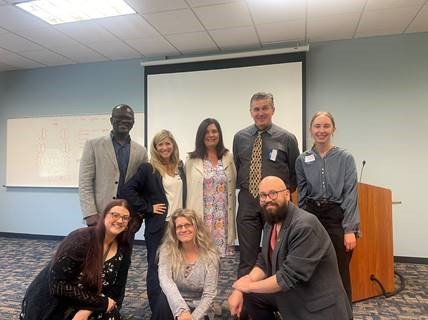
Meet the Maine DOE Adult Ed Team – Back Row: Steven Airoldi, Lana Sawyer, David McDonough, Kelley Heath, Mike Emery and Front Row: Cora Saddler, Amy Poland, Megan Dichter, Amy Hatch, Christy Le


Gardiner Area High School Improves Student Engagement in Earth Science Class Through Outdoor Learning

Gardiner Area High School is one of 45 Maine schools that have received an award through RREV, or Rethinking Responsive Education Ventures. Supported by the Office of Innovation at the Maine Department of Education, the RREV initiative is a U.S. DOE grant that provides Maine educators funds to implement innovative, cross-disciplinary learning opportunities to be incorporated into curricula. This grant has allowed schools like Gardiner Area High School to redesign instruction that leads to improved learning experiences for students.

Gardiner Area High School directed their RREV funds to their freshman Earth Science class. Prior to the start of the pilot, teachers reported that students were demonstrating increased incidences of social and emotional issues, declining grades, and significant disengagement. Spearheaded by 2023 Kennebec County Teacher of the Year, Sharon Gallant, the goal of this pilot was to reverse the disengagement by having students in the Earth Science class spend 75% of their class time outdoors. When asked about the idea behind the pilot Gallant said, “I have always known what outdoor learning can do.” Adding that as incoming freshmen, students end up spending a lot more time in the classroom than they had previously. Sharon felt that increasing the time students spent outside engaged in hands-on learning would remedy these issues. After beginning implementation, the feedback from students was resoundingly positive, with subsequent improvements in learning. Sharon described her experience with the implementation of the pilot as “amazing” adding that “it has totally changed my teaching style, and what I know to be great teaching.”

The freshman Earth Science class has navigated many challenges in implementing this pilot, from unexpected weather patterns to tracking mud through the halls after class, but with these challenges came widespread support and improved engagement from students and teachers alike.

Gallant remarked that since implementing this class structure she has been able to teach practical applications of Earth Science, incorporating knowledge that was once “taught at home,” such as what poison ivy looks like, and how to start a fire. Additionally, this class has provided students with a connection to the natural world that was not previously there for many of them, as well as offer indispensable hands-on learning and problem-solving opportunities. From rushing rivers to 10-degree snowy fields, to rock-covered hills, this freshman Earth Science class has had some unique classrooms, to say the least.

After one year of pilot implementation, the RREV team attended one of the outdoor science classes to see the implementation process in action. On this day, the science class was taking place on the Cobbosseecontee Stream and students were to catch, record, and release migrating alewives. An instructor helping to lead the alewife capture noted that their migration was slowing down as spring was progressing, and the science class had been conducting their observations for several days at this stream. The slowing migration was borne out in students’ study on the day of the RREV team’s visit, as the students only caught and recorded one alewife and one elver that day. “That’s real science” remarked Gallant, “Some days you get hundreds of alewives, some days you get one.” 

When the class came to an end, the RREV team accompanied them back to the road where their transportation was. Elaine Bartley – the RREV Project Director – recounted her conversation with a student on the walk back. Elaine asked the student whether they liked outside classes or not, to which the student responded something to the effect of “I’m more of an inside person.” Elaine followed up, “So you would rather be inside learning from a book?”

“Well, if I really want to learn it then I have to be doing it,” replied the student.  This interaction between Elaine and the student emphasizes the ways that Gardiner Area High School’s outdoor education integration pilot has reimagined the ways that students can learn, and redefined what can constitute a classroom.

It is with the help of the RREV grant that awardee schools like Gardiner are able to provide enhanced learning opportunities and experiences for students, and has allowed educators at Gardiner to address the ubiquitous student need for learning through doing in a unique and meaningful way.

RREV is an initiative of the Maine Department of Education, funded by the Education Stabilization Funds through the US Department of Education’s Rethink K-12 Education Models, that bolsters Maine educators’ innovative efforts to support their students with agile, effective, and resilient learning experiences that improve learning outcomes for all students.  

The Maine DOE encourages all schools and districts across the State of Maine to learn more about these innovative educators and their RREV pilots through the RREV website and the online RREV collaborative platform known as EnGiNE. It is through EnGiNE that we hope to continue the momentum to change students’ lives through innovative and responsive educational programs.