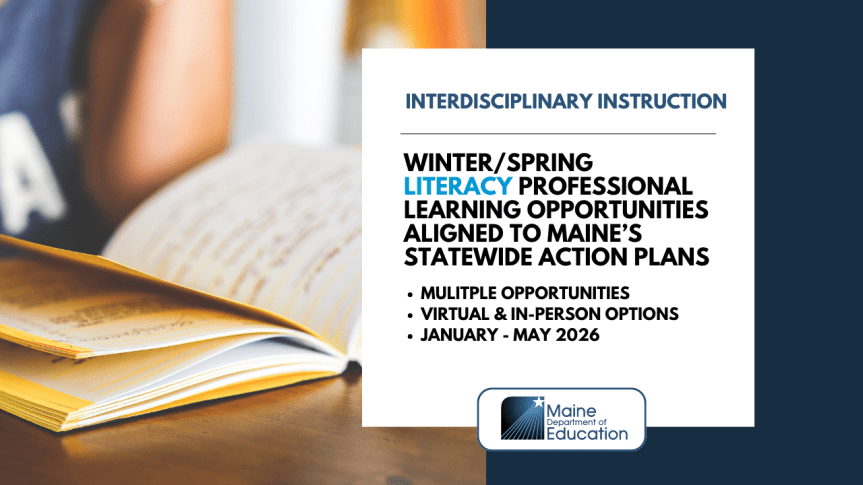
Maine Department of Education Expands Access to High-Quality Literacy Professional Development

As part of Governor Janet Mills’ recently launched Maine State Reading Action Plan, the Maine Department of Education (DOE) is excited to announce an opportunity for Maine educators to access evidence-based literacy professional learning modules at a reduced cost.

In the summer of 2024, the Maine DOE provided free access to AIM Institute for Learning & Research’s Steps to Literacy modules. Nearly 650 educators completed more than 20,000 hours of professional learning grounded in the science of reading, covering phonological awareness, phonics, decoding, spelling, language expression, writing, emerging literacy, vocabulary, dyslexia, and supports for multilingual learners.

Building on that success, in 2025, to sustain momentum, the Maine DOE has expanded access to AIM modules and launched Communities of Practice (COP) for school teams. The COPs are designed to deepen professional knowledge and build school-level capacity to implement high-quality, evidence-based literacy instruction.

Recognizing that access to affordable and user-friendly professional learning is critical, the Maine DOE invited professional learning providers offering asynchronous modules that met established criteria to extend reduced-rate access to Maine educators. The Maine DOE has established master agreements with two providers, enabling school administrative units (SAUs) to purchase quality, evidence-based literacy modules at a discounted cost. Details are available here: Maine Department of Education | Professional Literacy Modules.

Reimbursement Opportunity

While any Maine educator may purchase modules at the reduced price, Maine’s Preschool Development Grant (PDG) will reimburse SAUs for modules successfully completed by educators working, or supporting, pre-K through grade 3.

  • Who pays up front: SAUs may purchase modules directly from one of the approved vendors (below).
  • Reimbursement window: Through December 15, 2025, SAUs may submit for reimbursement.
  • What to submit: Invoices should be submitted on SAU letterhead with proof of successful completion for each module.
  • Where to send: Please email invoices and documentation to Renee Reilly, Maine DOE PDG Manager, at renee.a.reilly@maine.gov.

Professional Learning Module Options

AIM Pathways is an interactive digital training platform that delivers evidence-based content in the science of reading. Each Steps to Literacy module follows a “learn, practice, apply” cycle and includes teaching techniques, demonstration videos, and printable resources to help educators integrate new strategies into classroom practice. Learn more about accessing AIM Pathways modules here.

Keys to Literacy offers a comprehensive, research-backed approach to sustainable literacy improvement. Its courses integrate evidence-based instruction with systems, structures, and leadership practices that support equitable and effective learning environments. All modules are designed for asynchronous, on-demand access, allowing educators to engage in professional learning on their own schedules. Learn more about accessing Keys to Literacy modules here.

Through these master agreements, the Maine DOE is ensuring that Maine educators have affordable opportunities to deepen their expertise and strengthen literacy instruction for all students.

For additional information or questions related to module content, please contact Dee Saucier, Maine DOE Inclusive Education Literacy Specialist and Dyslexia Coordinator, at danielle.m.saucier@maine.gov. For inquiries regarding reimbursement, please contact Renee Reilly at renee.a.reilly@maine.gov.

Maine DOE Update – October 10, 2025

From the Maine Department of Education


Data Reporting

NEO Dropout Report Due Soon

The Maine Department of Education (DOE) Dropout Report is due to be certified by superintendents by Wednesday, October 15, 2025, in NEO. |  More


News & Updates

Maine DOE Announces Plans to Strengthen ‘Back-to-Basics’ Reading and Math Skills

For the 2025-2026 school year, the Maine DOE has launched the Maine State Reading and Math Action Plans, twin initiatives to bring more evidence-based instruction, educator training, and academic partnerships into Maine classrooms to improve student skills in these core academic areas. |  More

Maine Celebrates National School Lunch Week and Farm to CACFP Week, with Apple Crunch Day Slated for October 15

National School Lunch Week and Farm to CACFP Week will both be celebrated the week of October 13-17, 2025! This year, a special highlight to celebrate nutrition in Maine is Apple Crunch Day, slated for Wednesday, October 15, 2025. This is an engaging and fun event where children and adults across the state are invited to take big, crunchy bites out of fresh, local apples at the same time. |  More

ADMINISTRATIVE LETTER: Legal Requirements to Provide English Language Acquisition Services to Students Who Are Multilingual Learners (Revised October 9, 2025)

Administrative Letter: #2
Policy Code: IHBEA
TO: Public School Administrators
DATE: August 22, 2019, Revised September 15, 2021, Revised June 21, 2023, Revised October 9, 2025
SUBJECT: The legal requirements for providing English for Speakers of Other Languages (ESOL) services to students who are multilingual learners |  More

Public Comment Period for Proposed Rule Chapter 115 – The Credentialing of Education Personnel

In response to the 131st and 132nd Maine Legislature, the Maine State Board of Education is engaging in rulemaking to revise Chapter 115: The Credentialing of Education Personnel in alignment with its 2023 report to the Legislature. In that report, the State Board reviewed a number of credentialing topics, including pathways for specific endorsements. |  More

Deadline Extended for Attendance Messaging Campaign Logo Design Contest; Details on How Schools Can Submit

The Maine Department of Education (DOE) is pleased to announce that schools will have additional time to participate in the Maine DOE’s attendance messaging campaign. In September, MEAC invited schools across the state to host their own logo design contests based on this campaign name/slogan. Schools may determine the parameters of their contests. Their winning logo must be submitted to the Maine DOE by Friday, October 24, 2025, at 5 p.m. (extended from the original submission date of October 10). This is an excellent opportunity for potential statewide recognition, as we all consider our vital role in increasing attendance in Maine schools. |  More


Maine Schools Sharing Success Stories

Maine Student Leader Nathan Prest Honored with 2025 FosterClub Outstanding Young Leader Award

The Maine Department of Education (DOE) is proud to celebrate Nathan Prest, a student leader and advocate, for being named a 2025 FosterClub Outstanding Young Leader. This national recognition honors exceptional youth with lived experience in foster care who are creating positive change in their communities. |  More

“Civics on the Road” Launches at Main Street Middle School in Madison

The Maine Department of Education (DOE) Office of Teaching and Learning, in partnership with the Maine Department of the Secretary of State and the Maine Semiquincentennial Commission, launched its new traveling initiative “Civics on the Road” at Main Street Middle School in Madison in September. This program debuted on Constitution Day, September 17, 2025, immersing local fifth- and sixth-grade students in hands-on civic learning. |  More

Submit good news to the Maine Department of Education here.


Professional Learning/Training Opportunities

Explore Innovation in Action: Maine DOE Fall Peer-to-Peer Learning Tour Registration Now Open

The Maine Department of Education (DOE) Office of Innovation is pleased to announce that this fall, there will be several opportunities for educators to engage in peer-to-peer learning that highlights innovative educational programming! |  More

Asynchronous Professional Learning Opportunity: Exploring the Question Formulation Technique (QFT)

Starting October 21, 2025, the Maine Department of Education (DOE) Office of Teaching and Learning invites educators to explore the Question Formulation Technique (QFT), developed by the Right Question Institute. |  More

Monthly Arts Integration Office Hours Available Starting in November

Do you have questions about arts integration? Are you looking for fresh ideas to make your lessons more engaging? Join Maine Department of Education (DOE) Arts Integration Teacher Leader Fellow Joshua Chard each month for an informal drop-in, virtual office hours—an open space to explore creative connections between the visual and performing arts and your teaching. |  More

Informational Session on the Maine School Bus Purchasing Program

The Maine School Bus Purchasing Program will open on November 1, 2025, and close on November 25, 2025. Before then, please consider joining Cheryl Brackett, Maine Department of Education (DOE) Transportation Coordinator; Donna Tiner, Maine DOE School Finance Coordinator; and Kimberly Hall, Maine DOE Education Data Systems Manager, for a Maine School Bus Purchasing Program informational session on October 15, 2025, from 1-2 p.m. via Zoom. |  More

View the Maine Department of Education’s Events Calendar here.


Career/Project Opportunities:

Find education-related jobs in Maine.

Explore Innovation in Action: Maine DOE Fall Peer-to-Peer Learning Tour Registration Now Open

The Maine Department of Education (DOE) Office of Innovation is pleased to announce that this fall, there will be several opportunities for educators to engage in peer-to-peer learning that highlights innovative educational programming!

Are you an educator interested in exploring immersive learning experiences for your school and students? The Office of Innovation’s Mobile Learning Van is conducting various Learning Tours throughout the school year, and we’d love for you to join us! On each tour, we visit a school that is engaging in innovative learning programs for its students, and we invite educators across the state to see the programs in action and collaborate on all aspects of implementation.

This work stems from $16.9 million in  Rethink K-12 Education Models Funding from the U.S. Department of Education. Maine was one of 11 states to receive that funding in August of 2020 and used it to launch the Rethinking Responsive Education Ventures (RREV) project, a multi-pronged solution with a primary goal of generating innovative remote learning models to provide equitable access to high-quality remote (out-of-the-classroom) learning opportunities for all students. The Office of Innovation is continuing the momentum of this work by offering Learning Tours and fostering peer-to-peer professional learning.

The Learning Tour space is limited to 10 additional Maine educators at each location. If you are interested in joining us on any Learning Tour, please register here or contact Elaine Bartley, Maine DOE Innovative Research and Design Director, at elaine.bartley@maine.gov. You may also contact Elaine with any questions. Additionally, keep an eye on our website for future Learning Tour opportunities!

The current list of tours and events scheduled for the fall of 2025 includes:

St. George Municipal School
October 28, 2025
9 a.m.-2 p.m.

St. George Municipal School was a RREV awardee. Through its innovative pilot, it has created the first pre-K-grade 8 Career and Technical Education (CTE) curriculum in the nation. It also used part of its funding to help build the Grace Innovation Center—the first pre-K-adult CTE center! On October 28, we will get the opportunity to see its new Makerspace building, see the learning in action, and talk to teachers and students.

Kennebunk High School (Alternative Education)
December 2, 2025
9 a.m.-2 p.m.

Kennebunk High School (KHS) was a RREV awardee through its Alternative Education program. During this Learning Tour, we will discuss conducting independent projects with students; tour the Kennebunkport Conservation Trust, where KHS students have helped to create an immersive learning space; and observe an alternative education program in action.

Princeton Elementary School (Technology Education)
December 9, 2025
8:30 a.m.-1:30 p.m.

Princeton Elementary School technology educator Donna Netzer was a recent Maine DOE Maine Learning Technology Initiative (MLTI) ambassador. During this tour, we will observe and discuss technology integration in the math classroom. We will explore showcase products, experience recommended technology tools, and share numerous resources. There will also be an opportunity to stay longer and participate in an after-school tech group that will be working with the technology available in the Maine DOE Mobile Learning Van. Students will explore interviewing and broadcasting skills!

Special Outdoor Learning Day Event at MeANS
October 27, 2025

In addition to our Learning Tours, the Office of Innovation will be co-hosting the upcoming Outdoor Learning Day in collaboration with the Maine Environmental Education Association (MEEA) on October 27, 2025. This event is happening at the Maine Academy of Natural Sciences (MeANS), which was also a RREV awardee. Experienced educators will model lessons for a wide variety of grade levels and subject areas, with time for debrief and discussion after each lesson. Attendees will be able to view outdoor learning infrastructure at MeANS and participate in conversations about funding outdoor learning, safety planning, and behavior management. Use this link to register for the event. We hope to see you there!

NEO Dropout Report Due Soon

The Maine Department of Education (DOE) Dropout Report is due to be certified by superintendents by Wednesday, October 15, 2025, in NEO.

This report is based on federal reporting requirements for students who were enrolled in public education at any point from October 1, 2024, to September 30, 2025, andwho are expected to return but who are not enrolled on October 1, 2025.

“Expected to return” is determined based on the student’s last exit code from the Maine DOE’s State Synergy system. The Dropout Certification Report Instructions outline codes that indicate a student has dropped out on the NEO Dropout Report.

Report Resources

For questions about data reporting, please contact Maine Education Data Management Support (MEDMS) at MEDMS.Support@maine.gov or call 207-624-6896. Reporting guidance, instructions, and webinars about these reports can be found on the MEDMS Support webpage.

Monthly Arts Integration Office Hours Available Starting in November

Do you have questions about arts integration? Are you looking for fresh ideas to make your lessons more engaging? Join Maine Department of Education (DOE) Arts Integration Teacher Leader Fellow Joshua Chard each month for an informal drop-in, virtual office hours—an open space to explore creative connections between the visual and performing arts and your teaching.

Bring your questions, ideas, or even your curriculum to collaborate on natural, seamless ways to integrate the arts into your classroom. Whether you are just getting started or are ready to expand what you already do, this is a space to brainstorm, problem-solve, and get inspired.

Arts Integration Monthly Office Hours will be held the first Tuesday of each month from 4-5 p.m.
Join the conversation via Zoom here. (There is no need to register in advance).

Session Dates

  • November 4, 2025
  • December 2, 2025
  • January 6, 2026
  • February 3, 2026
  • March 3, 2026
  • April 7, 2026
  • May 5, 2026
  • June 2, 2026

If you can’t make office hours or have other questions, please contact Joshua at joshua.chard@maine.gov to schedule another time. He’s available by appointment, Monday through Thursday, from 2:15-5 p.m.

“Civics on the Road” Launches at Main Street Middle School in Madison

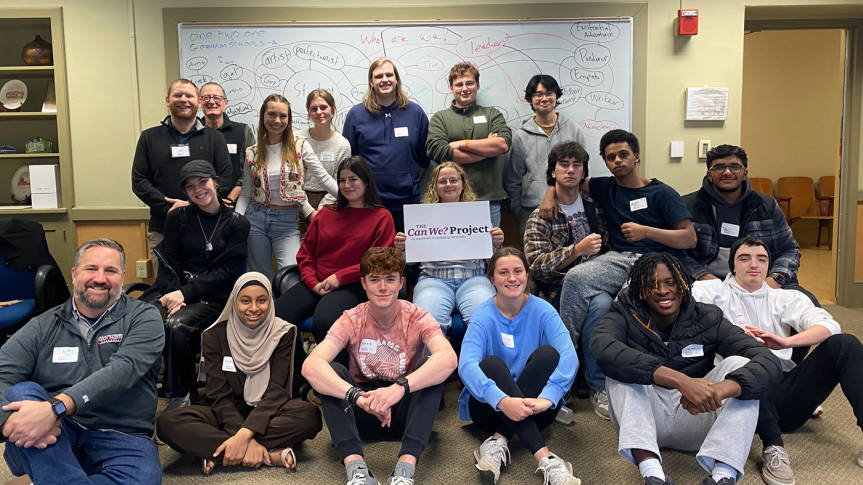
The Maine Department of Education (DOE) Office of Teaching and Learning, in partnership with the Maine Department of the Secretary of State and the Maine Semiquincentennial Commission, launched its new traveling initiative “Civics on the Road” at Main Street Middle School in Madison in September. This program debuted on Constitution Day, September 17, 2025, immersing local fifth- and sixth-grade students in hands-on civic learning.

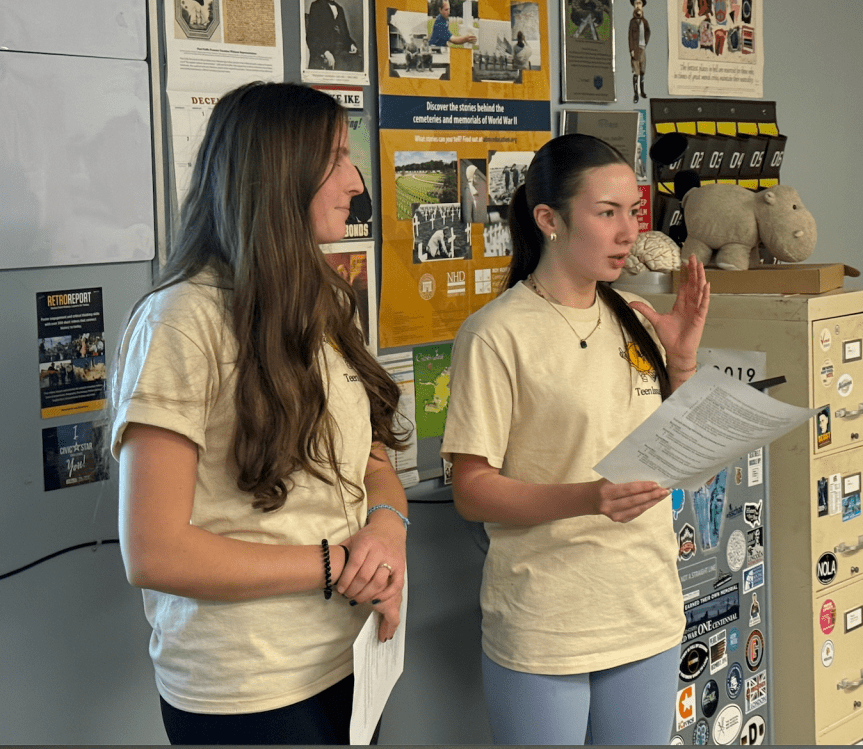
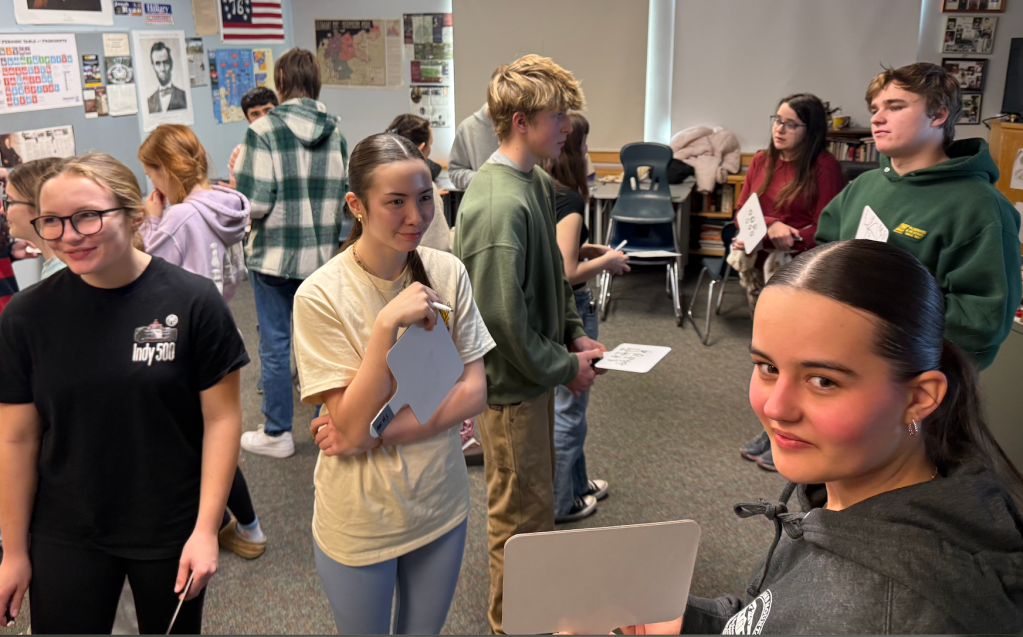
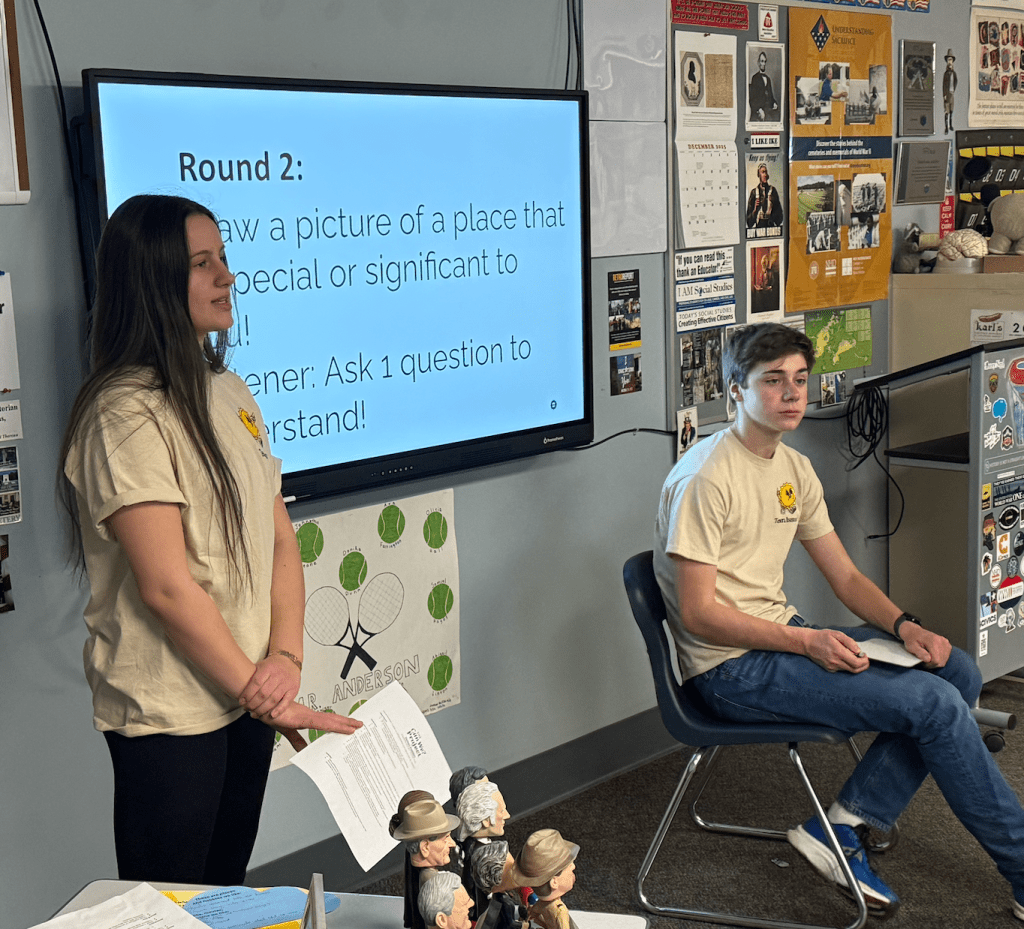
The experience began by transporting students back to 1776. They explored the origins of the nation’s founding documents and considered the roles and rights of people who were living at the time. Students then rotated through interactive stations designed to bring democracy to life:

  • Gameshow Government—This quiz-style competition challenged students on civic participation, checks and balances, and rights and responsibilities.
  • We Hold These Truths—Students examined grievances from the Declaration of Independence, viewed a full-scale replica of the document, and practiced 18th-century writing with quill pens. “They wrote the Declaration of Independence using quills! What did they do if they made a mistake?” one student asked in amazement.
  • Why and Why Not: Debate—Students engaged in structured debates about who should be allowed to participate in government decisions, weighing arguments of fairness, representation, and qualifications.
  • How Voting Works and the Role of the Free Press—Students became reporters, interviewing town officials and Maine’s Secretary of State on the responsibilities of public office and the integrity of elections.

The day culminated in a mock election. On the central ballot question: Should all people living here have the right to participate in decisions about government? With Madison Town Clerk Cheyenne Stevens and Madison Town Manager Denise Ducharme overseeing the process, students checked in, cast private ballots, and deposited them into a secure ballot box. “I Voted” stickers were displayed proudly, as students observed tabulation procedures and learned about safeguards like double counts.

“This is the best day of my life!” one student exclaimed.

Madison’s fifth- and sixth-grade election tally was 51 – yes and 28 – no. The discussion that followed highlighted the meaning of community and the importance of society continuing to function, even when votes don’t go everyone’s way.

“Civics on the Road” will visit one school per month throughout the 2025-2026 school year, with programming tailored to elementary, middle, and high school learners. Each visit includes interactive stations, a culminating town hall, and optional professional learning for educators to extend civic instruction beyond the day itself.

“This is more than a history lesson; it’s an invitation for students to see themselves as civic actors,” Geoff Wingard, Maine DOE Interdisciplinary Instruction Specialist, said. “Launching in Madison set the tone perfectly. Students embraced the day with energy, curiosity, and a genuine sense of civic responsibility.”

As the country reflects on 250 years since its establishment, the Maine DOE, the Secretary of State’s office, and the Maine Semiquincentennial Commission are inviting schools, community partners, and local leaders to participate in this statewide effort to strengthen civic education.

Schools interested in hosting “Civics on the Road” may fill out this form. For more information or with questions, please contact Maine DOE Interdisciplinary Instruction Specialist Geoffrey Wingard at Geoffrey.Wingard@maine.gov.

Maine Celebrates National School Lunch Week and Farm to CACFP Week, with Apple Crunch Day Slated for October 15

National School Lunch Week and Farm to CACFP Week will both be celebrated the week of October 13-17, 2025!

This year’s National School Lunch Week theme, “Taste the World: Your School Lunch Passport!”, invites students to explore global flavors and celebrate nutritious meals that fuel learning.

Farm to CACFP Week highlights how the Child and Adult Care Food Program (CACFP) connects participants with local food, nutrition education, and gardening experiences.

Maine is grateful to have strong programs like the National School Lunch Program (NSLP) and Farm to CACFP that help to nourish students and families across the state. These initiatives ensure that every child and adult in care settings has access to nutritious meals that fuel learning, growth, and overall well-being.

The goal of National School Lunch Week, established by the School Nutrition Association, is to highlight the importance of healthy school meals, encourage student participation in the NSLP, and share with families the many benefits of school nutrition programs. Since its creation in 1946, the NSLP has evolved to offer balanced meals that include fruits, vegetables, whole grains, lean proteins, and fat-free or low-fat milk—all within age-appropriate calorie ranges and limited in unhealthy fats and sodium.

Here in Maine, all students attending schools that participate in the NSLP receive breakfast and lunch at no cost to them, ensuring equitable access to nutritious meals. When every student chooses school lunch, the entire school community benefits.

Similarly, Farm to CACFP Week celebrates the childcare centers, Head Start programs, family childcare homes, afterschool programs, and adult care centers across Maine that foster healthy habits and support local agriculture. Throughout the week, participating programs are encouraged to:

  • Serve and incorporate local foods in CACFP meals and snacks.
  • Engage participants in taste tests, cooking demos, food-themed stories, or gardening activities.
  • Highlight Maine farms and producers through guest visits or virtual tours.

Together, these programs exemplify Maine’s commitment to feeding both bodies and minds—connecting nutrition, education, and local food systems to strengthen communities statewide.

This year, a special highlight to celebrate nutrition in Maine is Apple Crunch Day, slated for Wednesday, October 15, 2025. This is an engaging and fun event where children and adults across the state are invited to take big, crunchy bites out of fresh, local apples at the same time. This simple activity celebrates Maine’s apple harvest and sparks curiosity about where our food comes from. It also offers an excellent opportunity for students to explore the role that apples play in Maine’s agricultural heritage and the many apple varieties that thrive in Maine’s orchards. 

Several schools across Maine are planning to participate in Apple Crunch Day! For additional information about the event, please contact Maine DOE Farm and Sea to School Coordinator Katie Knowles at katie.knowles@maine.gov. Consider sharing pictures/videos of how your school celebrated Apple Crunch Day with Rachel Paling, Maine DOE Communications and Outreach Manager, at rachel.paling@maine.gov.

For more information about the National School Lunch Program or the Child and Adult Care Food Program (CACFP), please visit the Maine DOE Child Nutrition website or contact the Maine DOE Child Nutrition Team at child.nutrition@maine.gov.

ADMINISTRATIVE LETTER: Legal Requirements to Provide English Language Acquisition Services to Students Who Are Multilingual Learners (Revised October 9, 2025)

Administrative Letter: #2
Policy Code: IHBEA
TO: Public School Administrators
DATE: August 22, 2019, Revised September 15, 2021, Revised June 21, 2023, Revised October 9, 2025

SUBJECT: The legal requirements for providing English for Speakers of Other Languages (ESOL) services to students who are multilingual learners

Please note that “multilingual learners” is used with reference to students who were previously known as “English learners (ELs).” Federal language still uses “English learners (ELs)” to refer to “multilingual learners.”

Topics included in this letter:

  • Identification of Students Who Are Multilingual Learners
  • Exit Criteria from ESOL Services
  • Monitoring and Reentry into Multilingual Learner Status
  • Delivery of ESOL services
  • Administration of WIDA ACCESS and WIDA Alternate ACCESS (if applicable)
  • Enrollment of Immigrants and International Students
  • Rights of Students Who Are Multilingual Learners to Education
  • Students Who Are Multilingual Learners and Special Education

Identification of Students Who Are Multilingual Learners
It is a federal requirement that all students who are multilingual learners be identified within 30 days of enrollment from the beginning of the school year. For students enrolling at the start of the school year, parents/guardians must be notified of their child’s English learner status within the same 30-day period. After the start of the school year, school administrative units (SAUs) must notify parents/guardians within two weeks of their child’s identification.

Each SAU must provide the Maine Department of Education’s (DOE) Language Use Survey to the parent/guardian of every student, pre-kindergarten through grade 12, enrolling in the SAU for the first time. The Language Use Survey must be included in the SAU’s enrollment packet or online enrollment system. If a student changes schools within an SAU, a new Language Use Survey is not required.

The Language Use Survey is available for download in English and 29 of Maine’s most commonly spoken languages. Parents/guardians are entitled to complete the Language Use Survey in their preferred language. SAUs must provide translation/interpretation services upon request.

The purpose of the Language Use Survey is to identify students who might be multilingual learners. The Language Use Survey decision tree provides guidance on its use. If any question is answered with a language other than English, the student should be administered an English language proficiency screener. (Please note that Sign Language is not a qualifying language for multilingual learner status; however, if a student uses Sign Language and an additional language other than English, the student may be eligible for multilingual learner status.) See Multilingual Learner Identification for information about the required screeners and identification thresholds, by grade level.

Students who were screened for multilingual learner status but who did not initially qualify may be re-screened at any time if a potential need for ESOL support becomes apparent.

Exit Criteria from ESOL Services
A multilingual learner who demonstrates proficiency on the state’s annual English language proficiency assessment is eligible for exit from ESOL services. In Maine, the annual English language proficiency assessment is the WIDA ACCESS or, for multilingual learners with the most significant cognitive disabilities eligible for alternate assessments, the WIDA Alternate ACCESS. Information about both of these assessments can be found on Maine DOE’s English language proficiency assessment page, located here: English Language Proficiency Assessments | Maine Department of Education.

In Maine, an overall Composite Proficiency Level (CPL) of 4.5 on WIDA ACCESS qualifies multilingual learners for exit from ESOL services. Multilingual learners with the most significant cognitive disabilities, eligible for participation in alternate assessments, can be exited from ESOL services with an overall CPL of 4.0 on the WIDA Alternate ACCESS.

In rare instances, multilingual learners qualify for a domain exemption on the WIDA ACCESS or WIDA Alternate ACCESS based on a disability as documented in the student’s Individualized Education Plan (IEP). In these instances, the SAU must submit a Less Than Four Domains request to the Maine DOE. The Maine DOE will ensure the correct Do Not Score code is entered for the student domain(s) in WIDA Assessment Management System. The student’s state ID will also be submitted to WIDA/Data Recognition Corporation for calculation of an overall CPL and the development of an Individual Student Report. The Less Than Four Domains request can be located on the English language proficiency assessment webpage: English Language Proficiency Assessments | Maine Department of Education > Special Forms Request.

Monitoring and Reentry into Multilingual Learner Status
Per federal guidance, SAUs must monitor the performance of former students who are multilingual learners for at least two years after exiting. If, during the two years of monitoring, or at any time thereafter, a former student who is a multilingual learner shows a potential need for continued ESOL support, that student must be rescreened with the WIDA Screener Online to determine multilingual learner status. If a student scores below the state-defined identification threshold, the student must be reentered into multilingual learner status, must receive ESOL services, and must take WIDA ACCESS or WIDA Alternate ACCESS, if applicable, until exiting.

Delivery of ESOL Services
An SAU is required to determine the components of an effective English language acquisition program tailored to the needs of each student, which may include, but is not limited to, tutoring, additional classroom support, materials, sheltered instruction, professional development for content area teachers, or other strategies per the Office for Civil Rights December 1985 Title VI policy memorandum, Title VI Language Minority Compliance Procedures.

The Maine DOE requires the English Language Acquisition Service Provision for a student who is a multilingual learner to be provided or overseen by a 660 ESOL-endorsed teacher. (See 34 Code of Federal Regulations C.F.R. Section 100.3 (b)(ii)). All students who are multilingual learners must be provided with English language support services that enable them to meaningfully access the curriculum to meet grade-level standards. English language development and content area knowledge are to be acquired simultaneously rather than consecutively. In other words, English language proficiency is not a prerequisite to participate in grade-level, content classes. If students who are multilingual learners receive services that remove them from content area classes (such as a newcomer program or pull-out services), any academic deficits that result must be remedied so that the student remains on track with their non-multilingual learner peers academically.

English language support services are to be provided in a way that minimizes the isolation of students who are multilingual learners from the general student population and encourages students who are multilingual learners to participate in all aspects of the school program, including advanced coursework, career and technical education, gifted and talented programs, and extracurricular activities. Students who are multilingual learners are entitled to ESOL services until exiting by demonstrating English language proficiency on WIDA ACCESS or WIDA Alternate ACCESS, if applicable.

Administration of WIDA ACCESS and WIDA Alternate ACCESS
The annual English language proficiency assessment for all students identified as multilingual learners in kindergarten through grade 12 is required by federal law under the Every Student Succeeds Act (ESSA) of 2015. Participation in state assessments is also required under state statute; it is part of annual ESEA application assurances for Title funds. Participation is also included in the school approval process for public schools, including charter schools, and private schools with 60% or more publicly funded students.

In Maine, the required English language proficiency assessment is WIDA ACCESS. A small percentage of multilingual learners with the most significant cognitive disabilities, found eligible for participation in alternate assessment through the IEP team process using state guidance resources, participate in WIDA Alternate ACCESS. The Maine DOE defines English language proficiency as a composite proficiency level of 4.5 on WIDA ACCESS and 4.0 on WIDA Alternate ACCESS.

The Maine Multilingual Learner Identification and Placement Guidance Document, updated annually, outlines all training requirements for test administrators of WIDA ACCESS and WIDA Alternate ACCESS. Federal peer review requirements outline specific standards for test administration training across state assessments, and, therefore, these training requirements for test administrators of English language proficiency assessments are mandatory. It is not required that test administrators be an ESOL-endorsed teacher; however, only an ESOL-endorsed teacher is qualified to design, oversee, and implement an English language support program, which includes the interpretation of WIDA ACCESS and WIDA Alternate ACCESS results.

Enrollment of Immigrants and International Students
Title VI of the Civil Rights Act of 1964 prohibits discrimination based on race, color, or national origin, among other factors, by public schools. SAUs are required to enroll children regardless of citizenship or immigration status per Plyler v. Doe. This applies equally to students who are immigrants and international students attending a Maine public school as an exchange student or tuition-paying student.

All students, including those who are immigrants and international students, must be screened for multilingual learner status. Any student who is identified as a multilingual learner, regardless of citizenship or immigration status, is entitled to ESOL services and must be administered WIDA ACCESS or WIDA Alternate ACCESS, if applicable, annually. International/exchange students are not exempt from Title I required state academic assessments. In Maine, recently arrived multilingual learners who have been enrolled in a U.S. school for fewer than 12 months are exempt from one administration of the state’s English language arts assessment only. See the Maine Comprehensive Assessment System website for further questions and information.

SAUs are not permitted to discourage the enrollment of children who are undocumented immigrants by asking about their immigration status, denying enrollment to those with international birth certificates, or denying enrollment to children whose parents decline to provide their social security numbers or race and ethnicity information. Federal regulations allow schools to ask for children’s social security numbers to be used as student identifiers; however, they should inform parents of the purpose and that disclosure of such numbers is voluntary. Schools may not deny enrollment if parents refuse to provide a child’s social security number. SAUs may require proof that a child lives within SAU boundaries, which may include lease agreements, utility bills, or other documents; however, schools may not ask parents about a child’s immigration status to establish residency. SAUs may require proof of a child’s age, but they may not bar enrollment because a child has an international birth certificate or no birth certificate. 

Rights of Students Who Are Multilingual Learners to Education
The Civil Rights Act of 1964 remains the foundation of the legal rights of a student who is a multilingual learner. Lau v. Nicholsconfirms that all students who are multilingual learners are entitled to meaningful access to the curriculum.  

Although the 2015 U.S. Department of Education ‘Dear Colleague’ guidance on English learners has been rescinded, the civil rights protections underlying that guidance remain fully in effect. Under both federal law (Title VI of the Civil Rights Act of 1964 and the Equal Educational Opportunities Act of 1974) and the Maine Human Rights Act, SAUs have an obligation to ensure that multilingual learners have meaningful access to the SAU’s educational programs and services. Failing to provide appropriate language assistance services or to remove barriers to program participation may constitute discrimination on the basis of national origin and language, which is prohibited under the Maine Human Rights Act. SAUs are accountable for implementing policies, practices, and supports that guarantee equitable access to instruction, comparable participation in academic and extracurricular programs, and timely communication with families in languages they can understand.

If a parent refuses ESOL services, this must be documented, but parental refusal does not release the school or SAU from its responsibility to provide meaningful education to students who are multilingual learners. If a student who is a multilingual learner cannot make academic progress without ESOL services, the student has a right to ESOL services, even if a parent refuses. Parental consent is not required to administer an English language proficiency screener or WIDA ACCESS or WIDA Alternate ACCESS, if applicable. Under state law, SAUs are responsible for administering WIDA ACCESS to all students who are multilingual learners, regardless of parental consent (20-A M.R.S. §6209 (1-A)).

Students Who Are Multilingual Learners and Special Education
Students may qualify for, and have legal entitlement to, both ESOL and special education services. There are specific guidelines for both ESOL and special education that are to determine students’ eligibility for each type of service. Depending on a student’s disability and IEP, universal testing tools or accommodations may be needed to measure English language proficiency. When evaluating a student who is a multilingual learner for disabilities, screening must be linguistically and culturally appropriate. It is advisable to measure a student’s skills in the student’s primary language to clarify whether challenges are due to a learning disability or English language development.

Students who are multilingual learners should not be placed in a special education program unless their IEP determines this placement is appropriate to access specially designed instruction. Multilingual learner status is not a disability and is not covered by the Individuals with Disabilities Education Act (IDEA) or Maine Unified Special Education Regulation (MUSER). The Maine DOE ESOL Team and Office of Special Services and Inclusive Education have collaborated to develop a policy and resource guide on Identifying and Serving Students Who Are Multilingual Learners with Disabilities. This resource can be used by school teams when making determinations about a student’s status and program of services.

For students who are multilingual learners with IEP teams, the U.S. Department of Education has provided the following guidance:

“When an EL student is determined to be a child with a disability—as defined in IDEA, or an individual with a disability under the broader definition of disability in Section 504—the student’s EL and disability-related educational needs must be met. For EL students, in addition to the required IEP team participants under IDEA, it is essential that the IEP team include participants who have knowledge of the student’s language needs. It is also important that the IEP team include professionals with training, and preferably expertise, in second language acquisition and how to differentiate between the student’s needs stemming from a disability or lack of ELP.”

Students who are multilingual learners with learning disabilities are eligible for exit from ESOL services when they demonstrate English language proficiency by achieving an overall composite proficiency level of 4.5 on WIDA ACCESS or an overall composite proficiency level of 4.0 on WIDA Alternate ACCESS, if applicable.

If you have questions or would like further information about serving students who are multilingual learners, contact Jane Armstrong, Maine DOE ESOL State Specialist, at Jane.Armstrong@maine.gov.

If you have questions regarding WIDA’s English language proficiency assessments, contact Mechelle Ganglfinger, Alternate and English Language Proficiency Assessments Coordinator, at Mechelle.Ganglfinger@maine.gov.

If you have questions regarding students who are multilingual learners and eligible for special education, contact Erin Frazier, Director of the Maine DOE Office of Special Services and Inclusive Education, at Erin.Frazier@maine.gov.

Informational Session on the Maine School Bus Purchasing Program

The Maine School Bus Purchasing Program provides subsidies to school administrative units (SAUs) to help offset the cost of purchasing new school buses used to transport students to and from school, home, and school-sponsored events. This program is designed to support SAUs in acquiring new buses, retiring end-of-life vehicles, and meeting emergency or special transportation needs.

The Maine School Bus Purchasing Program will open on November 1, 2025, and close on November 25, 2025. Before then, please consider joining Cheryl Brackett, Maine Department of Education (DOE) Transportation Coordinator; Donna Tiner, Maine DOE School Finance Coordinator; and Kimberly Hall, Maine DOE Education Data Systems Manager, for a Maine School Bus Purchasing Program informational session on October 15, 2025, from 1-2 p.m. via Zoom:

  • Cheryl will demonstrate how to access NEO and complete the bus purchase request. She will also review the steps in the program.
  • Donna will share details about funding.
  • Kimberly will provide information surrounding the role of the Maine Education Data Management Systems (MEDMS).

This hour-long session will conclude with a question-and-answer period. Please find the Zoom information below:

Join the Zoom meeting here.
Meeting ID: 817 3352 7683
Passcode: 57493859

The first round of approvals for the Maine School Bus Purchasing Program will occur between December 30, 2025, and January 15, 2026. With questions, please contact Cheryl Brackett at cheryl.brackett@maine.gov or 207-446-3019.

MEDIA RELEASE: Maine DOE Announces Plans to Strengthen ‘Back-to-Basics’ Reading and Math Skills

New plans to teach essential skills for Maine students will emphasize evidence-based instruction, educator training, and academic partnerships.

Augusta, MAINE—At the direction of Governor Janet Mills, the Maine Department of Education (DOE) today announced major new approaches to strengthen back-to-basics reading and math skills in Maine students.

For the 2025-2026 school year, the Maine DOE has launched the Maine State Reading and Math Action Plans, twin initiatives to bring more evidence-based instruction, educator training, and academic partnerships into Maine classrooms to improve student skills in these core academic areas.

This effort builds upon a $10 million investment by the Maine DOE in 2024 for literacy grants to schools for high-quality teaching materials and professional development opportunities. 

“Improving reading and math skills is vital to ensuring that all Maine students reach their full potential,” said Governor Mills. “That is why I have directed the Maine Department of Education to take concrete steps to support teachers across Maine and improve instruction and skills in these critical areas. Our goal must be to see that all Maine students do the best they can in reading, math, and basic skills.”  

“These plans are designed to help every student become a confident reader and mathematical thinker,” said Pender Makin, Commissioner of the Maine Department of Education. “Professional learning for Maine’s teachers will focus on evidence-based instruction, including ‘Science of Reading’ for literacy and research-based math practices. Direct instruction using real-life examples will ensure that Maine’s youngest students acquire the building blocks for all future learning.”

As part of the action plans, the Maine DOE will establish reading and math advisory councils to oversee statewide implementation of the plans, review feedback from the field, monitor statewide progress, and recommend changes. The Maine DOE has appointed former math teacher Victoria Cohen to lead the math council and Peter Lancia, superintendent of the Westbrook School Department, to lead the reading council.

The action plans include evidence-based strategies and updated guidance for schools and districts, as well as commitment from the Maine DOE to provide necessary support and resources. Strategies in the plans include:

  • Preparing future elementary and early childhood educators to use evidence-based reading and math instruction;
  • Providing teachers and school leaders access to high-quality instructional resources, as well as participation in annual teacher summits and workshops;
  • Helping local schools and districts to set literacy attainment goals using universal literacy screeners in early education and elementary grades; 
  • Enabling schools and districts to utilize best practices in early math instruction, incorporating real-world applications in mathematics;
  • Creating further recommendations for teacher preparation programs through the advisory councils.

Educational leaders in Maine have underscored the potential of the action plans to drive real improvement, noting their strong support for professional learning and evidence-based practices to benefit teachers and students. 

“High-impact professional learning for current educators and equipping future teachers with research-based skills resonated with me,” said Kim Fadrigon, K-8 instructional leader at Narragansett Elementary School in Gorham.

“I think the vision is just so exciting to see coming from a state agency. Sending the message that numeracy is important is a critical message for our Maine students,” said Lora Levenseler, head of the mathematics department at Camden Hills Regional High School in Rockport.

The Maine DOE developed the action plans with input from experts in the field. The plans were also informed by data, including the National Assessment of Educational Progress (NAEP), which sampled 1,700 4th and 8th grade Maine students in reading and math in 2024. Over the past decade, NAEP scores have shown concerning declines in Maine and other states.

Additionally, the action plans incorporated testing data from the Maine Through Year Assessment, which is administered to approximately 85,000 students in grades 3-8 and 10 at least twice a year to measure progress from fall to spring. The Maine DOE used input from schools that administer local assessments that gauge student progress, as well.

The Maine DOE looks forward to continuing to work with district leaders, educators, families, and community members in the coming months in this ongoing effort to provide the best education possible to all Maine students.