
At Woodland Junior-Senior High School, Extended Learning Opportunities (ELO) Coordinator Heidi Hicks is helping students connect with their community and realize their full potential. Through job shadows, volunteer work, and mentorships, Hicks’ students are simultaneously exploring future career paths and giving back to their local communities.
One of the primary initiatives of Woodland’s ELO program is its teacher Assistant Program in which students interested in a teaching career have the opportunity to serve as a student mentor at the local elementary school. This program allows students to gain experience working with students in a classroom, and Hicks hopes to expand the program in the coming years.
“I am very thankful for the opportunity it has given me, and it has only brightened my future as a teacher,” said one of Hicks’ students when reflecting on her ELO experience. “I really can’t wait to see where it takes me and what my future holds.”
Another one of the program’s success stories is the development of a school and community food pantry. Hicks was inspired to start the food pantry after hearing the story of a student whose family was struggling with food insecurity. Under Hicks’ leadership, the program partnered with The Good Shepherd Food Bank to create the food pantry where many students volunteer to work and give back to their community.
Hicks says the best part of her daily work is building relationships with her students and helping them see the best in themselves. “This work gives me hope,” said Hicks.
Hicks would like to thank the following community partners for their contributions to Woodland’s ELO program: Woodland IGA, Woodland Elementary School Principal Amanda Belanger, and Sarah Cote from Downeast Lakes Land Trust.
Extended Learning Opportunities (ELOs) are hands-on, credit-bearing courses outside of the traditional classroom with an emphasis on community-based career exploration. These opportunities are personalized for students and help them explore options for their professional lives. They help students engage in learning through instruction, assignments, and experiential learning. The Maine Department of Education (DOE), along with state-wide partner Jobs for Maine Graduates (JMG), have made a concerted effort to provide working models, support, and funding opportunities for Maine schools to set up ELO programs within their school communities. To learn more about Maine’s initiatives with extended learning opportunities, visit: https://www.maine.gov/doe/index.php/learning/elo or reach out to Maine DOE ELO Coordinator Rick Wilson at rick.wilson@maine.gov.


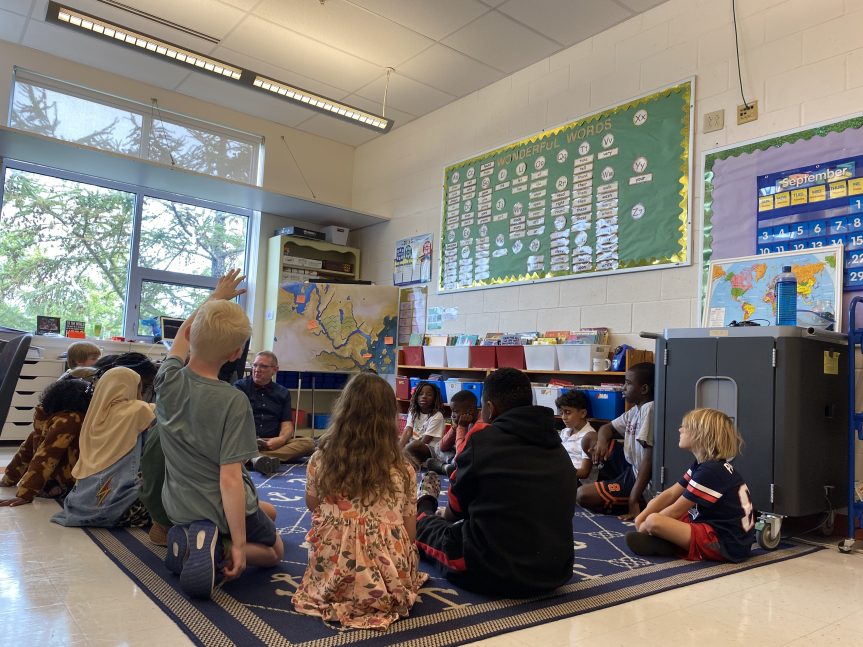
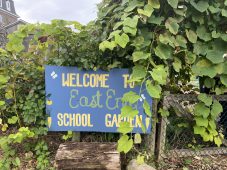 The Chardlings, as they’re affectionately called, go to school at East End Community School in Portland. East End is a diverse and welcoming school that sits on a hill overlooking the city and the water. Beyond extraordinary teachers, the school has its own garden with an outdoor classroom, a closet where students can get free clothes and other supplies, and a deep connection to the neighborhood and families as a community school.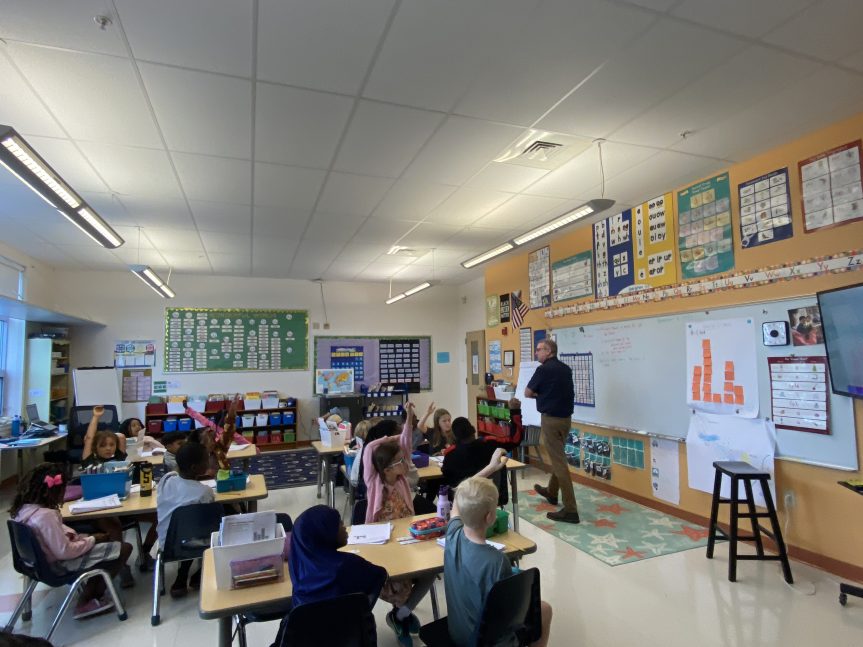
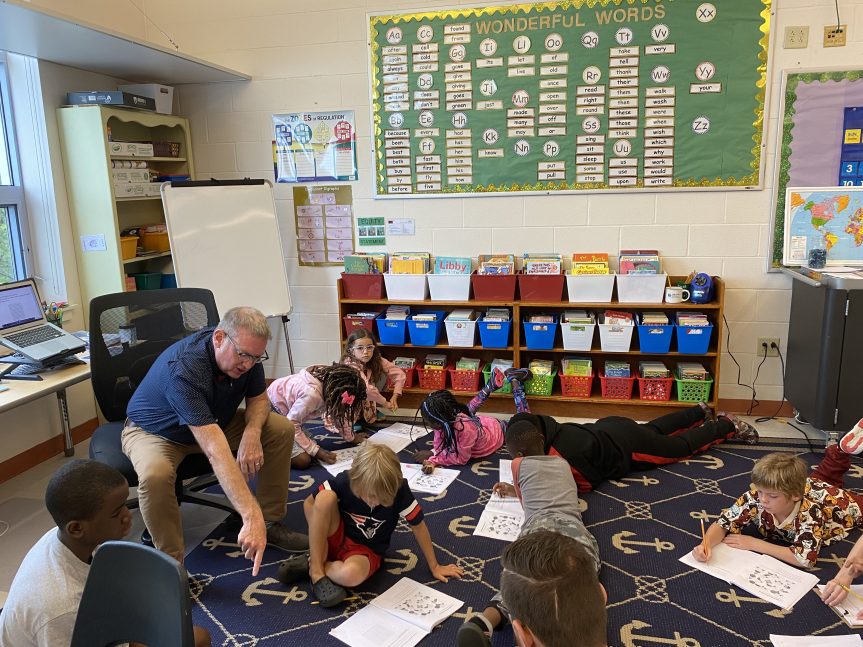 Later in the day, and after a snack, it was time for science. Mr. Chard and the students returned to their carpet to learn about Wabanaki history and rivers, using the Columbia River to compare to Maine’s Presumpscot River. Mr. Chard asked what the students had learned the day before, with almost every hand going up with excitement. The students talked about what they knew about the Wabanaki, the immigrants who arrived, and 20 million years since the Columbia River was first formed. But if we know the Columbia is 20 million years old, then how old would that make the Presumpscot? After lots of class discussion, the class collectively inferred that the Presumpscot must have been around the same age.
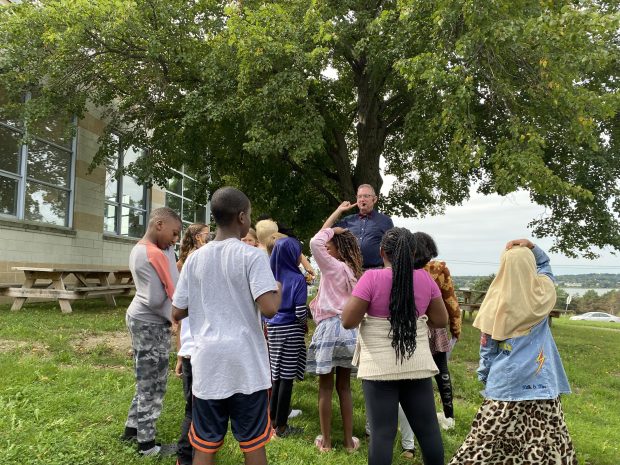 “That’s my flora!”

 Maine DOE Newsroom