Two Maine Students Selected for United States Senate Youth Program (USSYP)

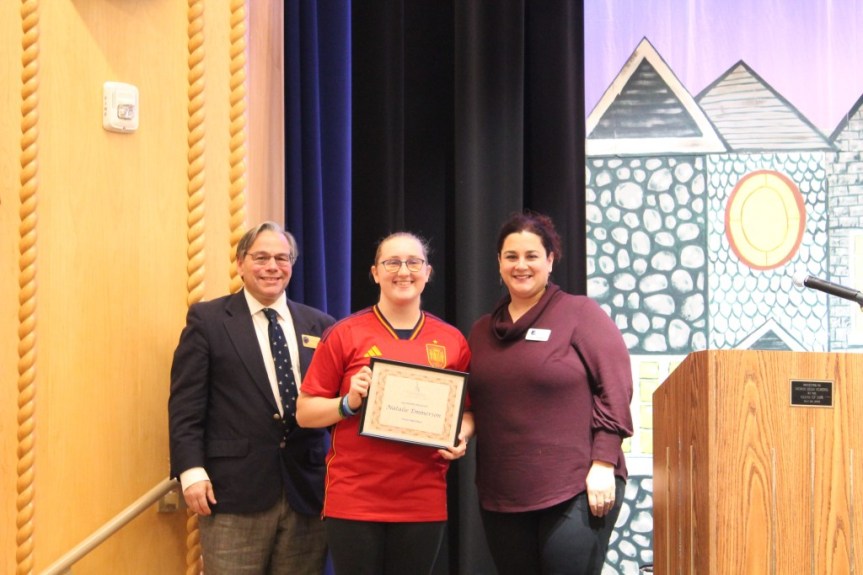
The Maine Department of Education (DOE) is pleased to announce that Natalie Emmerson, a student at Morse High School, in Bath, and Shawn Jiminez, a student at Gardiner Area High School, in Gardiner, were both selected for the United States Senate Youth Program (USSYP). They will each be attending USSYP’s Washington Week in Washington, D.C. during the first week of March where they will meet with the Senate leaders and the Senate parliamentarian and historian; a justice of the Supreme Court, the President, officials from the Departments of State and Defense and other executive agencies, a foreign ambassador to the U.S. and senior members of the media. They are also each awarded a $10,000 scholarship to any undergraduate institution of their choosing.

The United States Senate Youth Program (USSYP) provides a yearly opportunity for two students from each state, the District of Columbia, and the Department of Defense Education Activity, to gain an in-depth view of the United States Senate and the federal government as well as a deeper understanding of the interrelationship of the legislative, judicial, and executive branches. The overall mission of the program is to help instill within each class of USSYP student delegates more profound knowledge of the American political process and a lifelong commitment to public service.

The selection process for this prestigious award is rigorous and competitive and began when teachers and principals nominated qualified students this past fall. Once nominated, students had to complete an application and write an essay on a significant issue they would like the U.S. Congress to consider.

Based on the quality of their essay, ten students were selected as finalists. Those 10 students came to The Margaret Chase Smith library in Skowhegan where they were interviewed by a distinguished panel of judges including Chuck Mahaleris, Constituent Services Representative for Senator Susan Collins; and Ben Tucker, Regional Representative for Senator Angus S. King, Jr. Additionally, they were asked to write and deliver a four-minute senate simulation speech. At the end of the day, both Emmerson and Jiminez rose to the top.

Photos from the event:

Natalie Emmerson serves as the Student School Board Representative, president/co-founder of Morse’s Women’s Empowerment Club, a member of National Honors Society and Maine People’s Alliance, and a former member of the Feminist Action Board (Hardy Girls Healthy Women). She’s accumulated 206 volunteer hours since freshman year through swimming, climbing, the Teen Library Council, and more. She’s received AP Scholar With Distinction, AP Capstone Certificate, Phi-Beta-Kappa Certificate of Recognition, Harvard Book Award, Language Certificate in French from UMA, and the Seal of Biliteracy in French. This summer she won delegate of the week for her town at Dirigo State and attended the Cohen Leadership Institute. She also swims competitively.
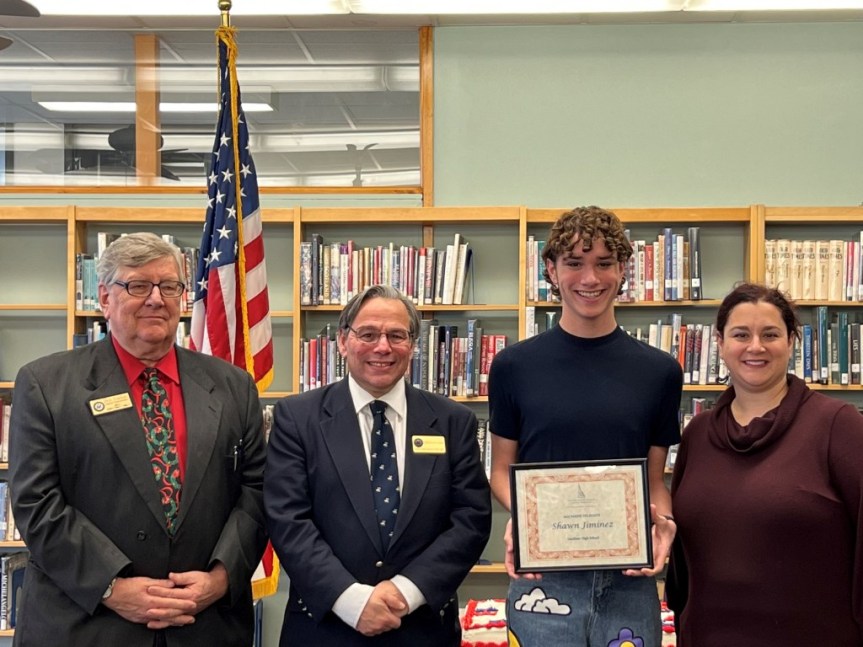
Shawn Jiminez has earned several leadership positions throughout his high school years, including secretary of the Gardiner ukulele club, secretary of the Gardiner debate team, and vice-president for the Gardiner band board. He was parliamentarian of the Maine Junior Classical League, Gardiner’s varsity tennis co-captain, and president of the Interact Club, the Drama Club, and the Maine Junior Classical League.
This year’s USSYP alternates are Ryan Hafener of Hampden Academy and Carolyne Sauda of Bangor High School. To learn more about the program, visit: https://ussenateyouth.org/
Free Webinar: Community Schools 101

The National Center for Community Schools at Children’s Aid is hosting a FREE informational session on the community school strategy and how it can work for your school community on Thursday, January 5, 2023 from 1:00-2:30 PM ET.

Community schools — a strategy to organize the resources and voices of schools and communities around student success — are needed now more than ever to transform our nation’s schools into dynamic, child-centered platforms that generate solutions and advance equity. While a growing number of school districts across the country are adapting and scaling the strategy, there are still leaders, practitioners, and partners that have questions about what it means to be a community school and how to get started.

During this session, participants will learn:

  • foundational elements of community schools
  • essential roles and functions associated with the strategy
  • resources and ideas for getting started in your community

Register here.

For more information about this webinar reach out to the National Center for Community Schools. For more information about Community Schools in Maine, reach out to Julie Smyth at julie.a.smyth@maine.gov.

Get to Know the Maine DOE Team: Meet Haley Neal

Maine DOE Team Member Haley Neal is being highlighted as part of the Get to Know the Maine DOE Team Campaign. Learn a little more about Haley in the question and answer below.

What is your role with DOE?

I am an Office Specialist I for the Learning Through Technology Team. I provide office support to the Office of Innovation/MLTI team which includes assisting in event planning, booking hotels, paying invoices, uploading contracts and purchase orders into Advantage (our financial tracking system), set up interviews, schedule meetings, take meeting notes, etc.

What do you like best about your job?

I love how every day is different. I’m constantly learning, challenging my creative side and seeing how our events make a difference in students. Before coming to DOE/MLTI I didn’t realize the impact MLTI had on schools, and I feel happy to be a part of that.

How or why did you decide on this career?

My mother worked at DOE years ago and I always loved visiting her office and the people there. When I started at the state at DHHS I knew I wanted to find my way to DOE and be a part of helping Maine’s schools. I’ve always had a love for education and with now having children of my own I want them to have every opportunity and resource available to ensure they get access to a great education and foundation to be able to pursue whatever they want in life.

What do you like to do outside of work for fun?

My family and I are big outdoor lovers. We have our own little farm on our 10 acres where we raise our own meat birds and pigs and I have my 5 ducks and 4 chickens, all named and loved. My almost-2-year-old son, boyfriend and I are usually outside playing with our tractor or doing home projects/renovations. If we’re not home, then we’re out with family doing something fun. I love exercising, walking, reading and cooking. I’m also a cheerleading coach at the Augusta Recreational Center, going on our 2nd year of doing it. Fun Fact, I was previously a cheerleader for 14 years, 1 year at USM and 2 years All-Star.

ADMINISTRATIVE LETTER: Local and State School Bus Bid and Purchase

Administrative Letter: 1
Policy Code: EEAEB
To: Public School Administrators, Business Managers, Transportation Directors, and School Bus Vendors
Date: 12/09/2022
Subject: Local and State School Bus Bid and Purchase

To assist and support school administrative units (SAUs) in their work to purchase school buses, the Maine Department of Education is providing clarification concerning the process to bid and purchase school buses.

This administrative letter replaces Administrative Letter #24 (2019). Administrative Letter #24 is no longer in effect and does not reflect the position of the Department of Education.

For a school bus purchase to be eligible for State subsidy, per 20-A M.R.S. § 5401(15) the school administrative unit (SAU) must:

(1) purchase the bus from the bidder selected through the State of Maine Division of Procurement school bus bid Request for Quotations (RFQ) for bus Type and capacity, or
(2) upon request, provide to the Department documentation that demonstrates the purchase was the result of a competitive bidding process conducted by the SAU following 20-A M.R.S § 5402 bid procedures or was made in the most economical manner consistent with the welfare and safety of students in accordance with 20-A M.R.S. § 5401(14).

For school buses purchased by a SAU when the SAU is not seeking subsidy, the SAU must still engage in competitive bidding, or make its purchase in the most economical manner, as outlined above.

SAU use of the Maine Department of Education’s School Bus Bid and Purchase System (SBBPS) is voluntary. SAUs are encouraged to contact Robert Susi at robert.w.susi@maine.gov with any questions about the SBBPS, transportation programs, or policy questions.

Student Writing Contest: ‘A Teacher Who Made a Positive Difference in Your Day’

The Maine County and State Teachers of the Year Association (MCSTOYA) and the Maine Council for English Language Arts (MCELA) have launched their inaugural Student Writing Contest. In honor of educators and #LoveTeaching week, they are inviting students to describe a teacher who has made a difference in their day, week, year, or life. Grade section winners will win a $100 gift card and an honorable mention in each section will win a $50 gift card.

Digital submissions must be uploaded and completed by 11:59 pm EST on Friday, January 13, 2023

To learn more about the writing prompts and rules for this contest, visit https://www.mainecela.org/student-writing-contest.html at MCELA’s website.

Download a flyer that you can print out.

For more information or questions, reach out to Maine County and State Teachers of the Year Association Board Member Heather Webster, heather_webster@msad40.org and/or Maine Council for English Language Arts President
Patti Forster, patti.forster@fivetowns.net.


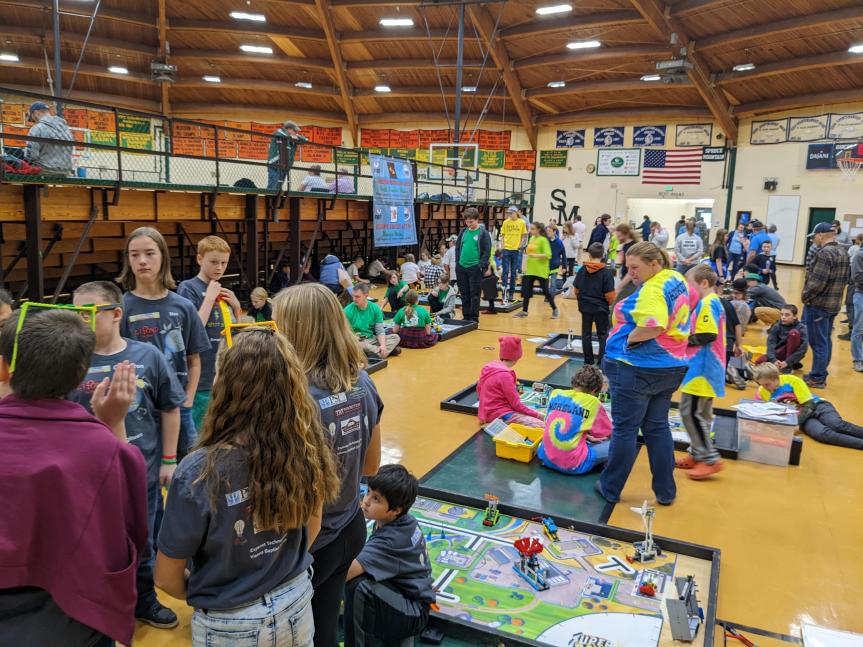
Maine FIRST Lego League Championship Brings Together Twenty-Four Robotics Teams at Spruce Mountain High School 

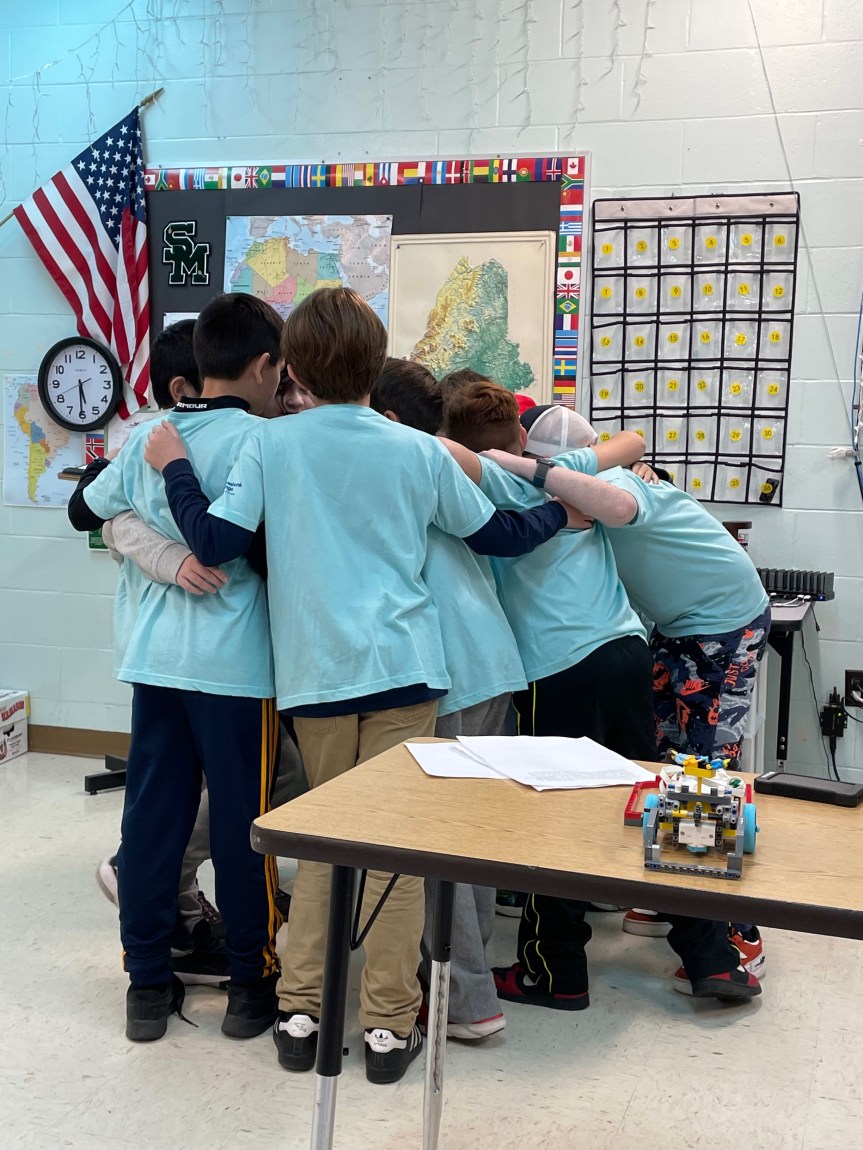
(Pictured: The RoboSharks in a team huddle before presenting to judges.)

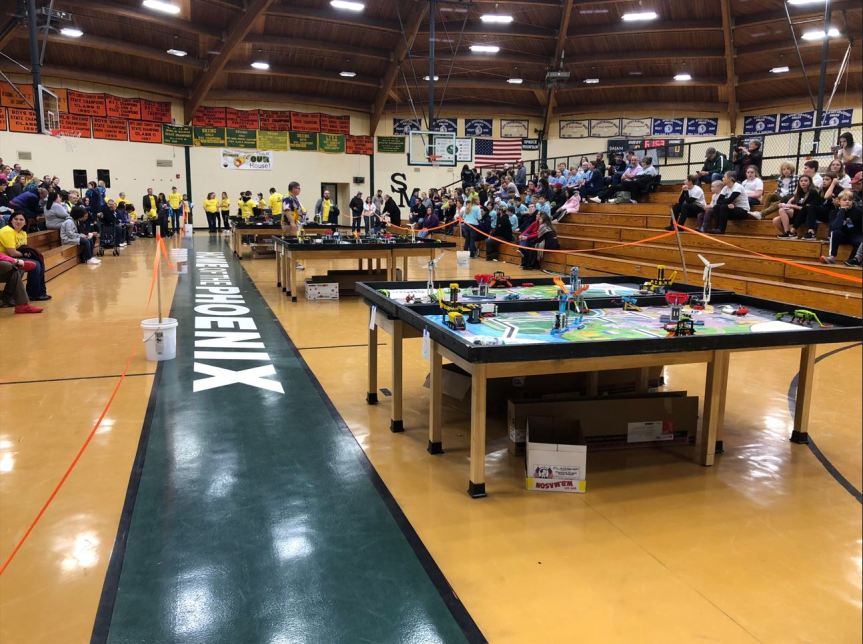
The 23rd annual Maine FIRST Lego League Championship on December 3rd was another success with two dozen teams from around the state coming to Spruce Mountain High School. Hosted by the Blue Crew out Farmington, all 24 teams shared their innovation projects with judges in the morning and competed in the robot performance in the afternoon. Teams came from Brewer, Caribou, Jay, Oakland, Old Town, Vinalhaven, Winslow and other towns mentioned below to present their innovative projects to judges and test out their robot designs on the field.  

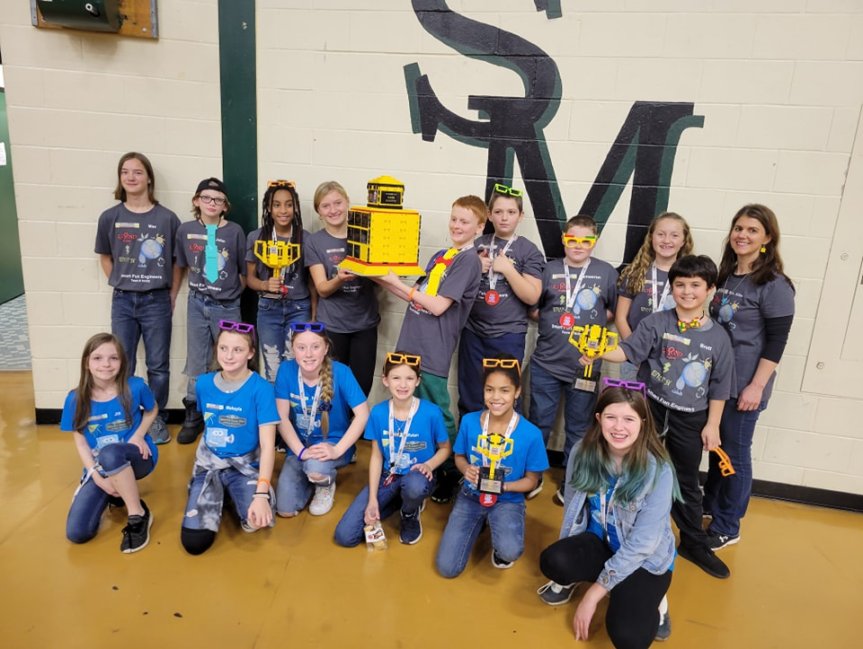
The Champion’s Award went to the Smart Fun Engineers (Team 16492,), who, for the fifth consecutive year won the Robot Game Award with their robot’s high score of 270 points. They will now have an opportunity to represent Maine at the international FLL event in Texas in 2023. Their win included defeating the Gardiner Iron Tiger Cubs (Team 48102) in the “Just for Fun” playoff finals.  

The fifth consecutive Champion’s Award for the Smart Fun Engineers was a thrill for these eighth graders who have been classmates and teammates for several years.

The Champion’s Finalist Award went to STEAM Powered Knights (Team 34104) from the St. George School. The team, led by coach Amy Palmer, is comprised of all new-to-the-game eighth graders. They performed strongly in the three judged areas – Core Values, Robot Design and Innovation Project. 

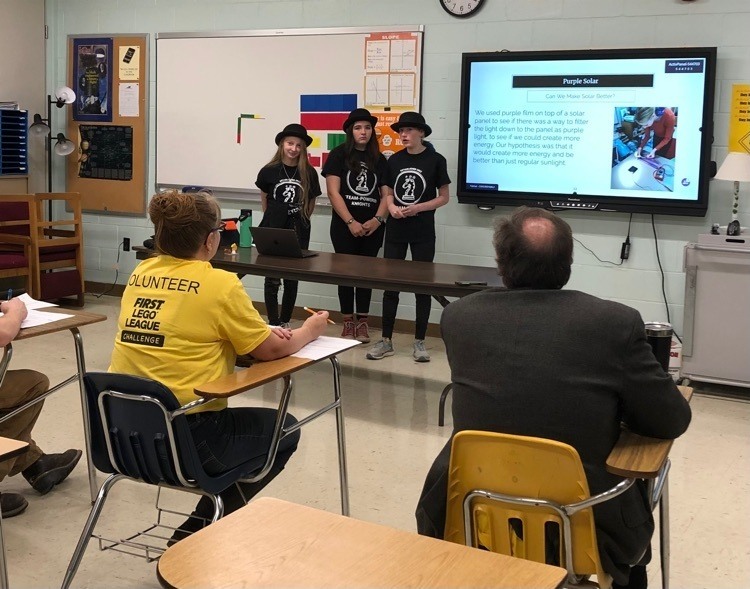
Members of the STEAM Powered Knights present their innovation project that focused on transforming PFAS contaminated areas into solar farms.

The Core Values Award went to the team from the Leeds Central School (Team 52374), who exemplified inclusion and teamwork in their performances and projects. The Core Values Finalist Award went to the Smart Fun Scientists (Team 57933). 

The Innovation Project Award went to the Legendary LEGO Coop Kids (Team 51454) from the Berwick area, who despite being a young team had another strong performance this year.  The Innovation Project Finalist Award went to the RoboSharks (Team 14407) from the Shapleigh School in Kittery, who made an impressive debut at the event in a team of all fifth graders. 

The Robot Design Award went to the Electronic Mustangs from the CK Burns School in Saco and the Robot Design Finalist Award went to the Renewable NRG Bars from Orono Middle School. 

The Outstanding Volunteer Award went to Dr. Laura Guerney from UMaine, whose involvement in the FIRST Lego League events and mentoring of judges has been invaluable over the years.  The Coach/Mentor Award went to Chris Herrick, whose positive and focused leadership has been key to the success of the young Legendary LEGO Coop Team in the past few years. 

23rd annual Maine FIRST Lego League Championship

To learn more about opportunities for Robotics in Maine schools, check out Robotics Institute of Maine (RIM). For information about computer science in Maine schools, please check out the Maine Department of Education’s Computer Science page. If you have a robotics success story at your school, email jonathan.m.graham@maine.gov. 

RSU 13 and Healthy Acadia Extended Learning Opportunity Coordinators Highlighted at First ELO Regional Day

Steffany Tribou, an 18-year education veteran and Assistant Superintendent for RSU 13 (pictured right), and Corrie Hunkler, ELO & Youth Engagement Coordinator at Healthy Acadia (pictured left) were panelists at JMG’s first North Regional Connection Event for Extended Learning Opportunity (ELO) Coordinators recently.

JMG’s Regional ELO Coaches are hosting bi-annual Regional Connection Events in the North, Central, and South regions of Maine, with Central and South scheduled for the week of 12/12 (read more about the schedule here). The events are intended to bring together education, workforce, and others interested in ELO work to share best practices, which is what Tribou and Hunkler are doing.

In her role at Healthy Acadia, Hunkler is the director for Downeast Teen Leadership Camp, a camp designed and led by youth. She runs youth employment programs and supports schools and organizations to engage youth in meaningful ways. Prior to her role with Healthy Acadia, she was a Guidance Counselor at four rural schools. As an ELO coordinator she is working with 5 schools to design, implement, and expand ELO offerings in coastal Washington County.

In her many roles in schools and districts, Tribou has always been passionate about finding ways to better prepare students for their future, and has been instrumental in seeing internships and ELOs taking hold, which she feels is important work that breathes life into what education can look like for students in Maine. During her presentation, Tribou shared a rap that she created based on the Hamilton play. The rap emphasized the need for ELOs to be available to Maine students in order to support a healthy economic future for Maine and the people who live here. Check out audio of the rap here.

Extended Learning Opportunities (ELOs) are hands-on, credit-bearing courses outside of the traditional classroom with an emphasis on community-based career exploration. These opportunities are personalized for students and help them explore options for their professional lives. They help students engage in learning through instruction, assignments, and experiential learning. The Maine Department of Education (DOE), along with state-wide partner Jobs for Maine Graduates (JMG), have made a concerted effort to provide working models, support, and funding opportunities for Maine schools to set up ELO programs within their school communities. To learn more about Maine’s initiatives with extended learning opportunities, visit: https://www.maine.gov/doe/index.php/learning/elo or reach out to Maine DOE ELO Coordinator Rick Wilson at rick.wilson@maine.gov.


Announcing the Monthly Multi-tiered System of Supports (MTSS) Book Club

Interested in learning MORE about MTSS (multi-tiered system of supports)?  Consider joining the MTSS monthly book club! That’s right, book club is back!  Feedback from the summer book club was overwhelmingly positive, so that is the format we will use for MTSS book study for this school year.  Details for signing up are below.

Here is how it works.  Register for the book club or clubs that you would like to attend.  Next, get yourself a copy of the text and read it at your own pace on your own schedule.  Then, show up on the date of that book club and be ready to pose thoughts, questions, and other innovative ideas to your peers.  While not necessary, it would be helpful to keep written notes to capture your thinking as you read the text.  That’s it!  You will receive 2 hours of professional learning units when you join and participate for the full 2-hour book session.

The text(s) that we will discuss are as follows:

  • January 30th from 4:00 PM – 6:00 PM – Leading Equity-based MTSS For All Students – This book is geared toward school principals, strategists, and other school/district decision-makers.  The book outlines a process for building MTSS from the ground up and is full of templates that can be used in MTSS implementation and design.  Although not required, this book is best experienced with a team.   Sign up for Leading Equity-based MTSS.
  • February 27th from 4:00 PM-6:00 PM – Effective Universal Instruction – Back by popular demand, this is an encore book club of a past title: Effective Universal Instruction.  Principals, classroom teachers, special ed teachers, strategists, and gifted and talented (GT) teachers can all benefit from this text.  While mostly centered around tier 1, this book briefly touches on tier 2, and tier 3, as well as some philosophical, historical, and future planning perspectives and activities.  Sign up for Effective Universal Instruction.
  • March 27th 4:00 PM-6:00 PM – Demystifying MTSS – This book is appropriate for classroom educators, principals, and instructional coaches/strategists, and gifted and talented teachers and is geared toward anyone who is looking for practical actions school improvement teams can take to ensure all students’ diverse needs can be met.  Although not required, this book is best experienced with a team.  Sign up for Demystifying MTSS.
  • April 25th 4:00 PM-6:00 PM – Best Practices at Tier 1 – Elementary Level –    This book offers an opportunity for elementary principals, teachers, strategists, and GT teachers to come together to chat about some specific best practices in Tier 1.  From Amazon, “Created specifically for K-5 educators, this book provides proven response to intervention strategies to differentiate instruction, engage students, increase success, and avoid additional interventions.”  Sign up for Best Practices in Tier 1 – Elementary.
  • May 30th 4:00 PM-6:00 PM – Best Practices in Tier 1: Secondary Level – Calling all secondary teachers, principals, strategists, support staff, etc.  This book club is just for you! This book does exactly what it says…. it explores best practices in tier 1 at the secondary level.  Join this book club and can learn alongside fellow secondary educators across the state.  Sign up for Best Practices in Tier 1 Secondary.
  • June 28th 4:00 PM-6:00 PM – The Road to Success with MTSS – This book is appropriate for classroom educators, principals, and instructional coaches/strategists, and gifted and talented teachers and is geared toward anyone who is beginning an MTSS implementation journey or is preparing to revise current MTSS practices.  Sign up for The Road to Success with MTSS.

For more information about the Monthly MTSS Book Club, you can contact Andrea Logan, MTSS Specialist, at andrea.logan@maine.gov.  If possible, please put “book club question” in the subject line.


Media Release: Maine Education Commissioner Pender Makin Visits Nokomis Regional Middle and High Schools to Highlight Maine’s Leadership During Computer Science Education Week

In celebration of Computer Science Education Week, Maine Education Commissioner Pender Makin visited Nokomis Regional Middle School and High Schools to showcase how Maine is leading the nation in offering universal computer science education to all students at all grade levels in the state. Through the Governor’s Emergency Education Relief Fund, the Maine Department of Education provided every Maine public school with a free mobile computer science lab to ensure that every student, pre-K through grade 12, has access to interdisciplinary, project-based computer science education with real-world applications.

“We are the first state in the nation to provide universal access to computer science education for all pre-K through grade 12 students,” said Maine Education Commissioner Pender Makin. “Computer science encourages students to think outside of the box and to solve problems creatively. This is authentic, engaged learning with students using the skills and strategies of computer science to solve real world problems and share their knowledge. Seeing this teaching and learning has been inspirational beyond words. These students are engaged, working collaboratively, and have immense pride in the projects they are working on. When you have educators who are so openhearted, openminded, and eager to share, they are inspiring their students and peers across the state.”

At Nokomis Regional Middle School, Makin met with sixth grade students and their educators who provided live demonstrations of the robotics projects they completed from equipment available to all Maine schools. Students designed, coded, and built their robotics projects while also strengthening their teamwork, collaboration, and communication skills. Students worked asynchronously with a teammate and had to provide notes, video updates, and other status updates. All students attend computer science education at Nokomis, with each grade level building on the skills and knowledge they learned in the previous grade. Fifth graders engage in projects focused on building teamwork and compete using cars and boats they build, sixth graders expand on those skills as showcased for the Commissioner, seventh graders add in production skills by building skateboards, and eighth graders build 3D design skills. The projects can also be integrated across all content areas.

Students at Nokomis Regional High School continue to build on the real-world skills and knowledge they learned in middle school while also sharing that knowledge with others. Makin joined a group of Student Leadership Ambassadors of Maine (SLAM) as they broadcast a live show to 37 other schools across the state to share their skills and knowledge with their peers.

“This is not a separate class—it’s an extension of every class,” said Keith Kelley, Innovative Technology Teacher at Nokomis Regional Middle School. “Students are building the robots, they learn coding, they compete, they are doing technical reading, they are having to learn how to virtually interact with a classmate and document their work to share with that teammate. It’s real-world engagement and our classes all build on each other. These projects can also be integrated into every content area so it’s fabulous the state is offering this to all schools. Kids live in a virtual world—and they are learning to use technology ethically, efficiently, and safely through hands-on engagement and working with others.”

“You don’t have to be a technology teacher to engage in computer science education. I was a language arts teacher and a librarian—any teacher can do this,” said Kelley.

Through the mobile computer science lab program, schools were able to order one of three mobile lab options: Robotics and Programming, Augmented and Virtual Reality, and Coding and Hardware. Each lab contains computer science equipment valued at $5,000 and is designed to be integrated into any content area and skill level. Additionally, the DOE is providing free professional learning opportunities for educators.

The DOE has a comprehensive computer science education plan guided by seven key principles: authentic and project-based instruction, computer science as a prek-12 learning continuum, equitable and inclusive access, educator-produced professional learning and statewide sharing, integrated applied learning, educator-informed policy and state planning, and computational thinking as a foundation. You can read more about Maine’s computer science education framework here.

School Absenteeism Reporting

As absences due to illness begin to impact schools across the state at increased rates, the DOE Data Team reminds school administrative units (SAUs) that schoolwide absences that meet or exceed 15% of the student population need to be reported.

This report is required to be done as needed based on 15% or more absences.

Nurses and/or school staff responsible for reporting illness-based absences will need access to NEO Student Health. Access to NEO must be requested by the superintendent of schools via an Access Request form. Staff members must be added into NEO Staff prior to submitting the Access Request. If the staff member has not been added into NEO staff, the request will not be processed.

Resources for locating and completing this report:

For questions regarding the submission of this report please contact MEDMS.Helpdesk@maine.gov or call 207-624-6896