Maine DOE Adult Education Team Awards $3.2 Million in Strengthening Maine’s Workforce Education and Training Grants

The Maine Department of Education’s Adult Education Team has funded 8 Strengthening Maine Workforce projects as part of the Maine Jobs and Recovery Program (MJRP).

The federal funding, awarded through a statewide competitive grant process for adult education providers, will enable programs statewide to:

  • Develop, implement, continue, and/or expand, workforce training programs in collaboration with employers
  • Partner with employers to address workforce shortages in employment sectors such as manufacturing, restaurants, lodging, healthcare and retail trade industries identified as suffering deep economic declines due to COVID-19
  • Develop and provide English language acquisition services
  • Improve availability, relevance, and access to English language acquisition courses, including reducing waitlists for English language acquisition services

Hub 7 Adult Education – Bridge to Employment
Waldo, Knox, Lincoln and Sagadahoc counties
Total award amount: $378,077 

Bridges to healthcare training, hospitality/retail Employment, and manufacturing training will focus on workforce training in collaboration with employers. Existing programs will be expanded, and new programs will be developed and implemented with significant input from area employers. Bridge or gap funding will be provided to eligible students who don’t already meet eligibility requirements through other sources. The bridge to employment for immigrants will focus on the goal of workforce training but will also be directed towards developing and providing English language acquisition services; and improving availability, relevance, and access to English language acquisition courses. A hub-wide training for ESOL/ML  conversation partner volunteers will be developed and provided as a means of sustainable capacity building. These services will further aid workforce training and English language acquisition students by providing financial support in areas of transportation, childcare, and training costs not covered under WIOA partner and Department of Health and Human Services financial resources. These will include gas cards, taxi vouchers, on-site childcare, childcare reimbursement, and training scholarships for students while attending adult transitions or college transitions classes, certification programs, or on-the-job training programs. In addition, earn-as-you-learn incentives will be offered to those eligible students who do not qualify for employer or grant-sponsored coverage of their time that would otherwise be spent working to support themselves and their families.

SAD 1 Adult & Community Education – Aroostook Hospitality Workforce Training Program
Aroostook County
Total award amount: $398,408

The goal of the Aroostook Hospitality Workforce Training Program is to develop sustainable and reliable career pathways within the hospitality (lodging and restaurants) industry in Aroostook County that will provide entry level employees, both current and prospective, the opportunity to receive high quality and meaningful training in order to grow and enhance the skills necessary to excel at their job. The focus will be on building skills in customer service, industry specific technology and skills, as well as leadership training opportunities.  In addition, education regarding the wide variety of careers available in the hospitality industry as well as an individualized career ladder plan will help participants meet their professional goals.

RSU 25 Adult Education – Healthcare Pathways
Hancock and Washington Counties
Total award amount: $486,080

The project supports expansion and improvement of allied healthcare training across Adult Education Hub 1 in collaboration with regional healthcare partners. This project will allow the expansion of currently established healthcare pathways to address barriers and skills gaps identified in the pilot phase as well as create new healthcare pathways to address industry needs identified during and because of the Covid 19 pandemic.

Expanded healthcare pathways will include hybrid course offerings that address healthcare skills gaps and include stronger and earlier employer connections and offer participants across the Hub an interrelated pathway to certifications, stackable credentials, and engagement with local employers.

New healthcare pathways will include Certified Clinical Medical Assistant curriculum that will include multiple entry points across the Hub.

All pathways supported with these funds will include resources both in and out of the classroom to assist students to address barriers to success in a timely manner.

South Portland – Adult Multilingual Program Expansion
Cumberland County
Total award amount: $260,450 

This program will The program will seek to build a culture of success by 1) providing scheduling and transportation that fits with the needs of parents who have children enrolled in school, 2) developing a childcare program for children too young for school, 3) translating materials and using language interpreters as needed to conduct outreach, recruitment and evaluation 4) increasing the relevance of English language acquisition courses by using a culturally aware model that builds towards readiness for workforce participation.   address the English language needs of immigrants and asylum-seekers who have little or no English language proficiency.

Westbrook Adult Education – Luke’s Lobster Workplace ESOL
Cumberland County
Total award amount: $199,319 

Adult Education will partner with Luke’s Lobster to build an employer-based and contextualized English Language Acquisition program for multilingual learners employed at the Luke’s Lobster production facility in Saco, Maine. Funding for the start-up of the program is being applied for.

Luke’s Lobster employees are in need of English Language Acquisition that fits with their constantly changing schedule and needs. The production schedule varies from day to day depending upon the amount of product coming in from the boats. This will require a flexible program with various training options from onsite training to virtual training, both including various online tools, i.e. EnGen, Zoom. With their ever-changing schedule, transportation and childcare become constant barriers for employees to attend area adult education program’s English Language Acquisition classes. In addition to the waitlists at various programs.

Portland Schools/Portland Adult Education: Extended Language Access Project
Total award amount: $489,850   

The Extended Language Access Project will enable Portland Adult Education, the largest adult education provider in Maine, to extend English language learning opportunities to a greater number of students disproportionately impacted by the COVID-19 pandemic through innovatively addressing the waitlist, expanding English instruction, and addressing barriers to participation.

Portland Public Schools/Portland Adult Education: English and Digital Skills Integration
Total award amount: $490,650

The English and Digital Skills Integration programming will increase relevance and accessibility of English language acquisition and workplace preparedness through 1) improving remote instruction, 2) adequate access to loaner devices and hot spots and 3) integrating a multi-pronged approach to digital skills building at all levels of the organization that includes a digital skills lab, targeted workshops and digital skills integration into traditional ESOL classes.

Portland Public Schools/Portland Adult Education: Healthcare Pathways
Total award amount: $500,000

Portland Adult Education’s Healthcare Pathways Program will create English language acquisition and workforce training opportunities in the healthcare industry for individuals disproportionately affected by COVID-19 including people of color, individuals with low-incomes, low English literacy levels, and women who may also be unemployed or underemployed, or currently out of the labor force.  Portland Adult Education will work closely with healthcare employers to design and implement programming and connect students to employment opportunities. Portland Adult Education will take a customized approach to meeting students’ education and training needs by offering a range of healthcare focused training opportunities and supports, and ensuring appropriate placement based on English level, professional backgrounds, and career aspirations.

Public Service Loan Forgiveness (PSLF) Temporary Waiver Set to Expire on 10/31/2022

APPLY BEFORE OCTOBER 31, 2022! The PSLF (Public Service Loan Forgiveness) temporary waiver allows eligible borrowers who work for a qualifying employer to apply for PSLF, despite having loans that may not have been previously eligible.

Don’t wait, you’ll need time to complete the PSLF Tool, gather your employment certifications, and submit the application. Visit studentaid.gov and file your waiver TODAY!

For questions reach out to the Finance Authority of Maine at 207-623-3263 or info@famemaine.com.

Maine DOE Update – October 21, 2022

From the Maine Department of Education


Reporting Items

Estimated Pre-K Enrollment Counts for New or Expanding Programs in 2023-2024

If your School Administrative Unit (SAU) is opening or expanding a Pre-K program in the 2023-2024 school year, you are eligible to receive funding on your FY24 ED279 for children you enroll in these new or expanded Pre-K programs in 2023. This means you will receive the funding for enrollment in the same year that you enroll the Pre-K children, without a year delay. |  More

| Visit the DC&R Reporting Calendar |


News & Updates

Governor Mills Announces $25 Million Maine Jobs & Recovery Plan Program to Offer Paid Work Experiences to Maine Students

Governor Janet Mills today announced the Maine Career Exploration program, a $25 million, two-year initiative of her Maine Jobs & Recovery Plan to connect 6,000 young people in Maine to future career opportunities by funding paid work experiences with employers across the state. |  More

New Seal of Biliteracy Awarding Process

The Maine Seal of Biliteracy is an award that recognizes student achievement in language learning. This award highlights the value of multilingualism and gives students an edge for their post-secondary studies and/or future careers. Starting this school year, schools will be able to award the Seal of Biliteracy to students directly, without submitting an application to the Maine Department of Education. |  More

Learning Through Technology Team Announces Expanding Access to Computer Science in Maine Classrooms at the 35TH Annual ACTEM Fall Conference!

On Thursday October 13th at the 35th annual Fall ACTEM (Association of Computer Technology Educators of Maine) Conference, the Maine Department of Education’s Learning Through Technology Team – along with Commissioner Pender Makin and Governor Janet T. Mills – announced a statewide plan for expanding access to computer science in Maine classrooms. This initiative is funded through the Governor’s Emergency Education Relief Fund and is a part of the Governor’s plan to expand access and support Computer Science in Maine. |  More

Maine DOE’s Child Nutrition Team Hosts 45 School Food Service Directors for Annual Fall Info Meeting

On Tuesday, October 18th, the Maine Department of Education (DOE) Child Nutrition Team staff were thrilled to be joined by 45 Food Service Directors from schools across Maine, for the first time in over two years, for the SY23 Fall Info Meeting. |  More

Annual Career and Technical Education Conference Draws 400+ Educators from Across Maine

On Friday October 7th the Maine Association for Career and Technical Education (MACTE) organization held their annual Career and Technical Education (CTE) conference at Lewiston Regional Technical Center (LRTC) in Lewiston. More than 400 CTE educators from secondary and post secondary schools across Maine came together to discuss their respective programs as well as attend workshops held throughout the day. Workshops that were offered ranged from clean energy, apprenticeship opportunities, and industry partners to name a few. |  More

UMaine, Maine DOE inclusive education collaboration changing name, expanding focus

A project that has served individuals with autism spectrum disorder (ASD) and their families for nearly a decade at the University of Maine is getting a new name and taking on a broader mission.|  More

Tune in to the MLTI 2.0 Student Leadership Ambassadors of Maine (SLAM) Show!

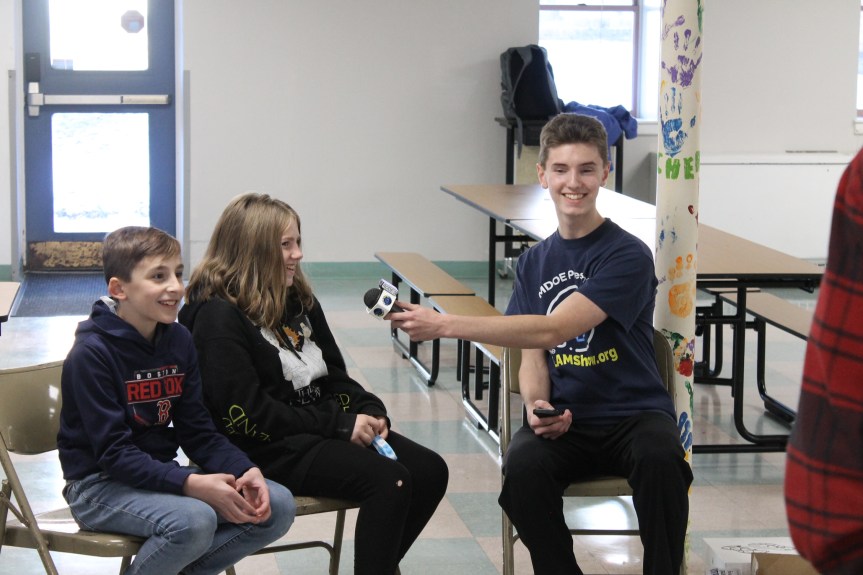
The Student Leadership Ambassadors of Maine (SLAM) show is a free, interactive, leadership opportunity where students connect with a community of ‘SLAMmers’ across the state. During these events, held both virtually and in-person this year, students learn presentation and technology skills using online tools to make creative products. |  More

Deadline Extended: Seeking Applicants for Contracted 21st CCLC Program Specialist (30 Hours/Week)

The Maine Department of Education (DOE) is seeking applicants for a Contracted 21st CCLC Program Specialist (30 Hours/Week). The deadline to submit an application for this position has been extended to Friday, October 28th. |  More

Get to Know the Maine DOE: Meet Kathy Bertini

Maine DOE Team member Kathy Bertini is being highlighted this week as part of the Get to Know the Maine DOE Team Campaign. Learn a little more about Kathy.. |  More


Maine Schools Sharing Success Stories

| Submit your Maine School Success Story |


Professional Development & Training Opportunities

WORKSHOP: Creating a Restorative Code of Conduct

As schools continue to adjust to a post-pandemic educational reality, teachers, administrators and students struggle to rebuild a sense of community and safety while undesirable behavior continues to escalate. The Maine School Safety Center, a division of the Maine DOE, believes that the development of an intentional community based on Restorative Practices is the best way to build a sense of safety, equity and belonging, while also responding to behavior in a victim centered, nonpunitive manner that encourages accountability, and restoration to individuals and community. |  More

National Summit on K-12 School Safety and Security Summit – Nov. 1-3

The Maine Department of Education supports Cyber Awareness Month. The National Summit on K-12 School Safety and Security Summit includes CYBERSECURITY AND ONLINE SAFETY. Please consider attending! November 1-3, 2022 @ 2:00-4:00pm |  More

Human Trafficking Webinar Series – Protecting Young People from Online Exploitation

Since 2020, the U.S. Department of Education has conducted a webinar series to address the growing response of America’s schools to child trafficking. The series draws attention to the important efforts underway in our nation’s education community to address both sex and labor trafficking. |  More

| Visit the Professional Development Calendar |


Latest DOE Career/Project Opportunities:

View current Maine Department of Education employment opportunities here


Learning Through Technology Team Announces Expanding Access to Computer Science in Maine Classrooms at the 35TH Annual ACTEM Fall Conference!

(Pictured: Maine DOE’s MLTI 2.0 Team.)

On Thursday October 13th at the 35th annual Fall ACTEM (Association of Computer Technology Educators of Maine) Conference, the Maine Department of Education’s Learning Through Technology Team – along with Commissioner Pender Makin and Governor Janet T. Mills – announced a statewide plan for expanding access to computer science in Maine classrooms. This initiative is funded through the Governor’s Emergency Education Relief Fund and is a part of the Governor’s plan to expand access and support Computer Science in Maine.

The #MaineTeachesCS initiative centers around the provision and use of mobile computer science labs along with ongoing professional learning opportunities for each school as well as a computer science integration cohort for a full calendar year (Dec. 2022 – Dec. 2023). Schools will be provided with a mobile lab that focuses on one of three computer science topic areas: Robotics and Programing, Coding and Circuitry, and Augmented and Virtual Reality. Each mobile lab will have equipment and supplies that teachers can use to integrate the topic area into their classrooms.

In addition to these mobile labs, the Maine Department of Education will also assemble cohorts of educators who will engage in comprehensive Computer Science Integration (CSI) professional learning. CSI cohorts will engage in hands on opportunities to explore best practices for computer science integration and will serve as the computer science integration “champions” for their schools, helping other educators to integrate computer science into their classrooms.

This initiative centers around the principles of Maine’s 7 Keys to Computer Science Education Success. These mobile labs, paired with targeted professional learning, and an ongoing CSI cohort, will help our schools to continue the important work of integrating computer science into their classrooms, to ensure that all Maine students have access to high quality computer science learning opportunities.

For more information on this initiative Contact the Computer Science Specialist, Emma-Marie Banks, emma-marie.banks@maine.gov

This announcement was targeted to those at the ACTEM Conference because many of the nearly four hundred and fifty people in attendance are the involved with computer science in Maine’s schools.  The two-day conference includes over a hundred sessions that focus on technology integration in the classroom, use of digital tools and other topics that cater to PreK-12 educators as well as school technology staff. This event traces its roots back to the Maine Department of Education’s “Maine Computes” conferences in the mid-1980s up through the MAINEducation Technology Conferences and is one of the state’s largest, ongoing educational conferences. While illnesses, substitute teacher shortages and even a severe storm might have limited attendance, those present fully embraced this year’s theme of “Connect and Reconnect.”

In addition to the computer science announcement the Learning Through Technology Team was present at the ACTEM Fall Conference in the exhibitor hall and presenting sessions throughout both days of the conference. The Learning Through Technology Team and the MLTI Ambassadors presented a number of sessions for educators such as “Learn about the MLTI SLAM Program from the students”, “Digital Tools and Math”, “Left to Their Own Devices”, “Getting Started with Blended Learning”, and a session to “Meet the MLTI Ambassadors” featuring the MLTI Ambassador team led by MLTI Digital Learning Specialists.

MLTI 2.0 Ambassadors

“Meet the MLTI Ambassadors” provided educators with the opportunity to meet the ambassadors and hear firsthand about MLTI’s continued focus on professional learning. The MLTI Ambassadors shared professional learning focus topics such as Digital Citizenship, Technology Integrations, and Digital Instructional Design. The MLTI Ambassadors also shared information on asynchronous learning opportunities, book studies, PLC’s. and Podcasts coming up in the 2022-2023 school year! For more information on MLTI Professional Learning contact the MLTI Digital Learning Specialist, Jonathan Graham,Jonathan.Graham@Maine.Gov

MLTI’s Student Leadership Ambassadors of Maine or SLAM were also present at the ACTEM conference with a teacher and student led session. Kern Kelley from RSU 19 presented along with his SLAM students to highlight and share the work of the SLAM program directly from the student leaders themselves. The session provided the SLAM students an opportunity to share the work they have created and highlight their weekly live SLAM show! The session also covered equipment, content, and how schools can involve their students to start their own SLAM clubs! For more information on SLAM contact the MLTI Student Leadership Development Coordinator, Kern Kelley,Kern.Kelley@Maine.Gov.

Student Leadership Ambassadors of Maine
Student Leadership Ambassadors of Maine (SLAM)

For more information on the MLTI program contact the MLTI Project Manager, Brandi Cota, brandi.m.cota@maine.gov.

The conference also included the return of their ACHIEVE Award and John Lunt Award after not being awarded in-person since 2019. ACTEM’s ACHIEVE Award was given to teacher Cathy Morse from the Lubec Consolidated School, who was introduced by Maine DOE Digital Learning Specialist Jon Graham.  This Award is ACTEM’s version of ISTE’s “Making IT Happen” Award, which “honors outstanding educators and leaders who demonstrate extraordinary commitment, leadership, courage and persistence in improving digital learning opportunities for students.”  In addition to winning $1000 for her school to spend on educational technology, Cathy won a $2000 cash award.

ACHIEVE Award being given to teacher Cathy Morse from the Lubec Consolidated School

The John Lunt Friend of Technology Award, which had not been given out since 2019, is ACTEM’s Lifetime Achievement Award.  This year, it was given to three retired educators who have had a significant impact not only on ACTEM, but educational technology in Maine as well as nationally.  Cheryl Oakes, who worked at Wells High School, was introduced by Alice Barr and Michael Richards.  Then, Alice was surprised as the next winner by ACTEM President Mike Arsenault and colleague at Yarmouth Schools Cathy Wolinsky.  Dennis Crowe, Technology Director in Gorham and Bonny Eagle and past ACTEM president, was introduced by ACTEM Executive Director Gary Lanoie

ACTEM will be hosting their Spring Leadership Conference, will be held at Holiday Inn by the Bay in Portland on May 1st, 2023.  For more information about their events or membership, please see their website at ACTEM.org.

Human Trafficking Webinar Series – Protecting Young People from Online Exploitation

Since 2020, the U.S. Department of Education has conducted a webinar series to address the growing response of America’s schools to child trafficking. The series draws attention to the important efforts underway in our nation’s education community to address both sex and labor trafficking.

On behalf of the U.S. Department of Education, Office of Elementary and Secondary Education’s Office of Safe and Supportive Schools, the National Center on Safe Supportive Learning Environments (NCSSLE) invites you to join the next webinar in this series, Protecting Young People from Online Exploitation.

Date: Wednesday, October 26, 2022

Time: 3:00 – 4:30 pm EDT

This webinar is focused on understanding what online exploitation is and how schools can protect young people from it. Speakers will start by defining what online exploitation is – describing how it is facilitated via technology and how online human trafficking compares with online sexual abuse – and then share what you can look out for and do if it is happening. Following a set of presentations, the speakers will engage in a panel discussion to share how they implemented mitigation strategies and how schools can educate young people to recognize grooming and other dangerous online behavior. After the panel, the speakers will be available to answer a few questions from participants. Join us to learn strategies you can use tomorrow!

Speakers/Panelists

  • Ruth Ryder, Deputy Assistant Secretary, Office of Elementary and Secondary Education, U.S. Department of Education
  • Jennifer O’Brien, Assistant Professor, Crimes Against Children Research Center, University of New Hampshire, Durham, NH
  • Wendy Walsh, Research Associate, Crimes Against Children Research Center, University of New Hampshire, Durham, NH
  • Stacey Robinson, Manager, Project-Grant Fund, Division of Equity and Student Empowerment, DeKalb County School District, Stone Mountain, GA
  • Dr. Nicole Prad-Jennings, Human Trafficking Prevention/Not a Number Facilitator, DeKalb County School District, Stone Mountain, GA
  • Dave Alley, Special Agent, U.S. Customs and Immigration Enforcement, Detroit, MI
  • Rachel Thomas, Member, U.S. Advisory Council on Human Trafficking, Person with Lived Experience

Webinar Materials

  • Speaker Bios (Coming Soon on October 26)
  • Slides (Coming Soon on October 26)
  • Recording (Coming Soon on October 27)
  • Transcript (Coming Soon on October 28)

Registration

You must register to participate in this presentation.

Please contact NCSSLE if you have any questions.

National Summit on K-12 School Safety and Security Summit – Nov. 1-3

The Maine Department of Education supports Cyber Awareness Month. The National Summit on K-12 School Safety and Security Summit includes CYBERSECURITY AND ONLINE SAFETY.  Please consider attending!

November 1-3, 2022 @ 2:00-4:00pm

The Cybersecurity and Infrastructure Security Agency (CISA) will host the inaugural National Summit on K-12 School Safety and Security on November 1-3, 2022. This three-day, virtual event will convene school safety experts, practitioners, and leaders from across the country to discuss current threats in school safety and explore research-informed strategies for addressing security challenges and risks in K-12 schools.

Sessions are planned for all members of the K-12 community and will include keynote remarks, one-on-one interviews, and panel discussions on issues such as targeted violence, violence prevention, cybersecurity, online safety, emergency planning, and physical security. The event is designed to foster a nationwide dialogue on school safety, as well as equip school stakeholders and personnel with resources, training, and expertise to apply in their local school settings and communities.

ABOUT THE SUMMIT

The Summit is a free, virtual event that combines discussion, education, networking, and knowledge-sharing among federal, state, and local school safety stakeholders. Through the event, attendees will hear from government, private sector, and community leaders in the field, who will speak about current and critical school safety issues, threats, and solutions.

EVENT DETAILS

The Summit will be held virtually over the course of three days in November. Each day will consist of a two-hour session centered around the themes of violence prevention (Day 1); cybersecurity and online safety (Day 2); and physical security (Day 3).

Additional event details include:

  • Dates: November 1-3, 2022
  • Time: 2:00 p.m. – 4:00 p.m. ET
  • Location: Held virtually via Microsoft Teams  (access link to be provided to all registrants)
  • Registration Information: The Summit is open to all interested parties and there is no cost to attend. Registration is required for planning purposes.

WHO SHOULD ATTEND

The Summit is open to anyone with a passion for improving school safety. K-12 educators, administrators, principals, school-based law enforcement, mental health professionals, policymakers, cybersecurity experts, community liaisons, and other school safety and security professionals are especially encouraged to attend.

Register here 

ADDITIONAL INFORMATION

Additional details, including confirmed speakers and a final agenda, will be shared when available. If you have any questions, please contact the CISA School Safety Task Force at SchoolSafety@hq.dhs.gov.

Governor Mills Announces $25 Million Maine Jobs & Recovery Plan Program to Offer Paid Work Experiences to Maine Students

Governor Janet Mills today announced the Maine Career Exploration program, a $25 million, two-year initiative of her Maine Jobs & Recovery Plan to connect 6,000 young people in Maine to future career opportunities by funding paid work experiences with employers across the state.

Through offering paid work experiences for Maine young people aged 16-24, the Maine Career Exploration program will enable thousands of students to enter the labor force in fields of their interest through work opportunities with Maine employers. In addition to work experience, students may also earn education credits through the program.

The Maine Career Exploration program is a recommendation of Maine’s 10-year Economic Development Strategy (PDF), unveiled by Governor Mills in 2019, to support Maine’s goal of adding 75,000 workers to Maine’s workforce by 2030. The program is led by the Department of Economic and Community Development in partnership with the Department of Education, Department of Labor, and the Governor’s Children Cabinet.

The Governor announced the Maine Career Exploration program today at Morse High School in Bath. Bath, Brunswick, and Topsham schools have used Jobs Plan funds to create a Regional Internship Program, in partnership with the Midcoast Chamber of Commerce, to provide students with work-based learning experiences at local businesses.

“Through the Maine Career Exploration program, high school students will gain meaningful, hands-on work experiences at local businesses that will prepare them to succeed in careers right here in Maine, strengthening our workforce over the long-term,” said Governor Janet Mills. “My Administration will continue to address Maine’s longstanding workforce shortage by making sure our students have the skills, and our businesses have the workers, that they need to succeed.”

“Our state needs to add 75,000 new workers by the end of the decade to keep our economy strong. Preparing Maine students for success in the workforce is a key part of achieving that goal,” said Heather Johnson, Commissioner of the Department of Economic & Community Development. “Maine Career Exploration will introduce thousands of Maine students to future employment options, giving them real world work experience and supporting our business community at the same time.”

“By expanding real-world, engaging learning opportunities with Maine employers, the Career Exploration program will help students explore career options, develop critical work and life skills, and plan for their futures,” said Pender Makin, Commissioner of the Department of Education. “These opportunities are also important for strengthening Maine’s workforce and building connections between schools and local businesses.”

“The mission of JMG is to identify students who face barriers to education, and to guide each one on to a successful path toward continued education, a meaningful career, and productive adulthood,” said Craig Larrabee, JMG President and CEO. “Our commitment is to equitably expand opportunity for students who need it most, particularly those most impacted by the COVID-19 pandemic. With this funding, JMG will support more than 4,000 high school juniors and seniors, throughout all sixteen counties of the state, in engaging with Maine’s employers to gain meaningful workforce experience.”

“This funding will significantly enhance the quality of our Mt. Ararat High School Community Pathways program. Most importantly, we will be positioned to provide many more meaningful and engaging learning experiences to support students in pursuing their dreams, interests, passions, and aspirations,” said Douglas Ware, Community Learning Coordinator at Mt. Ararat High School in Topsham.

“Governor Mills and her administration saw the workforce need, heard from the businesses and the schools, and made the incredible choice to invest in some of Maine’s best problem solvers – our teachers, administrators and business leaders,” said Cory King, Executive Director of the Midcoast Chamber of Commerce. “The investment into this program through the Maine Jobs and Recovery Plan is helping make this concept of paid, meaningful work for students a possibility.”

The Career Exploration program has three primary components:

Awards to Schools and School Districts

The Maine Department of Education has awarded over $5.6 million to 26 school districts, schools, adult education programs, and higher education institutions to create or expand extended learning opportunities for students, which include paid work experiences.

Examples of these efforts include:

  • The Aroostook County Action Program and Eastern Maine Development Corporation will provide paid work experiences to youth in northern and eastern Maine. Career Exploration funds will be used to strengthen and expand existing workforce & training programs through new employer partnerships, reaching students who do not qualify for existing programs, and offering support services to address transportation and technology needs.
  • In RSU 13 in Rockland, students will explore different career paths and learn basic job-seeking skills and financial literacy. Following these classes, students will participate in 10-week internships with local businesses.
  • Telstar Middle High School in Bethel will develop workforce opportunities for students in grades 9-12. These include job shadowing, career immersions with employers, credit-earning experiences, career camps during school breaks, and local internship programs.

Jobs for Maine Graduates

  • Funding from the Career Exploration Program will support expansion of extended learning opportunities, paid work experiences, and coaching now offered by Jobs for Maine Graduates for rising juniors and seniors at 90 high schools in Maine.

Community-Based Organizations

  • Through the Governor’s Children’s Cabinet, five community-based organizations in Cumberland, Sagadahoc, Androscoggin, Penobscot, and Aroostook counties will help disadvantaged young people access meaningful paid work opportunities and valuable employment experience.

The Maine Jobs & Recovery Plan is the Governor’s plan, approved by the Legislature, to invest nearly $1 billion in Federal American Rescue Plan funds to improve the lives of Maine people and families, help businesses, create good-paying jobs, and build an economy poised for future prosperity.

In the last year since the Jobs Plan took effect, the Mills Administration has delivered direct economic relief to nearly 1,000 Maine small businesses, supported more than 100 infrastructure projects around the state to create jobs and revitalize communities, and invested in workforce programs estimated to offer apprenticeship, career and education advancement, and job training opportunities to 22,000 Maine people.

Read a full report of the Jobs Plan’s investments in the past year here. For more about Maine Jobs & Recovery Plan, visit maine.gov/jobsplan.

Maine DOE’s Child Nutrition Team Hosts 45 School Food Service Directors for Annual Fall Info Meeting

On Tuesday, October 18th, the Maine Department of Education (DOE) Child Nutrition Team staff were thrilled to be joined by 45 Food Service Directors from schools across Maine, for the first time in over two years, for the SY23 Fall Info Meeting.

Discussions centered around additional funding sources for nutrition programs, best practices for the Federal nutrition programs such as the After School Snack Program, Fresh Fruit and Vegetable Program, Breakfast After the Bell, Child and Adult Care Food Program (CACFP) At-Risk, and the Farm and Sea to School program.

To break up the day, Representatives from C. Caprara and Hatch Jennings gave an equipment demonstration of Delfield Shelley Serving Lines equipment.

Old Town Elementary Hallway of Flags Celebrates Diverse School Community

A few years ago Old Town Elementary School (OTES) reflected on their school’s role in expanding the experiences and perspectives of the students and staff in the school. They realized they had an obligation to make the community aware of the diverse cultures and countries entering through their doors each day and to create a welcoming environment for all people at OTES. With the University of Maine as the school’s neighbor, they often receive students from the University because parents are finishing their degrees or are professors.

OTES decided to put a flag up for every country represented at the school to welcome families and teach their students about the various cultures represented at the school with each of these new community members. As a result, OTES families coming to the school building feel immediately welcomed by the gesture of seeing their native country flying in the hallways of the school.

“Students and staff are so excited about another country joining this hall of flags and getting to know about the country,” said OTES Principal Jeanna Tuell. “We have found more opportunities to make connections with other countries and to celebrate our diversity.”

UMaine, Maine DOE inclusive education collaboration changing name, expanding focus

A project that has served individuals with autism spectrum disorder (ASD) and their families for nearly a decade at the University of Maine is getting a new name and taking on a broader mission.

The Maine Autism Institute for Education and Research will now be Maine Access to Inclusive Education Resources (MAIER).

Established in 2014 with financial support from the Maine Department of Education, MAIER has sought to improve outcomes for individuals with autism in Maine throughout the spectrum and lifecycle by building statewide capacity for leadership, training, professional development, technical assistance, collaborative consultation, technology and research.

That work will continue as MAIER’s mission expands. The project will now serve as an information and resource clearinghouse that will assist professionals and families in accessing and navigating programs and services related to inclusive education of all students with disabilities. It will aim to ensure that educators and other service providers, as well as families and individuals with disabilities, receive information about practices to promote inclusion that are grounded in research.

Maine DOE’s Office of Special Services and Inclusive Education is providing MAIER with grant funding of nearly $632,000 over the next three years to carry out this mission.

“We’re excited that our partnership with Maine DOE will continue, and that MAIER will be able to touch the lives of more people in Maine by improving inclusive education and services throughout the state,” says Sarah Howorth, MAIER director and assistant professor of special education at the UMaine College of Education and Human Development.

“MAIER is one of many programs in our college that support positive inclusive outcomes for schools and students across Maine,” Howorth adds. “As part of the flagship university in the University of Maine System, we are continually looking to maximize the impact of our research, collaborations and engagement with educators, families and other service providers.”

Howorth says MAIER’s service to the state will be guided by four aspects of high-leverage practices to promote inclusion and equity in education for people with disabilities: collaboration, assessment, social/emotional/behavioral, and instruction. Future MAIER training and professional development topics will include improving access to inclusive post-school opportunities and employment for individuals with disabilities, inclusive teaching practices, and multi-tiered behavioral supports to serve those who are at-risk or have identified disabilities.

“Inclusion is vital to the development of all students from preschool through high school and beyond,” says Tracy Whitlock, special projects coordinator with the Maine Department of Education Office of Special Services and Inclusive Education. “We are proud to collaborate with the University of Maine on this work that will lead to stronger Maine communities.”

Among MAIER’s accomplishments during its first eight years was the establishment of an Early Start Maine program that provided early intervention services to nearly 400 toddlers and preschoolers with autism throughout the state. Based on the Early Start Denver Model, MAIER staff also trained 34 early intervention providers with Maine Child Development Services, which assumed oversight of the program in 2020.

During the COVID-19 pandemic, MAIER saw an increase in the number of educators and other professionals utilizing its professional development offerings. In 2019–20, there were 354 total participants in MAIER’s online training modules. That number went up to more than 1,000 participants from around the country in 202–21.

“As both a parent and an educator, I have been fortunate enough to utilize many of MAIER’s program offerings,” says Angela Lundy, a special education teacher at Mary Snow School in Bangor. “From professional development to PEERS social skills training with my son, MAIER is an invaluable resource for Maine families.”

In addition to the name change, MAIER recently transitioned to new leadership. Howorth took over as director after Deborah Rooks-Ellis, who started the project and led it for eight years, accepted a position at Coastal Carolina University. Longtime MAIER research associate Donna Doherty retired last year as well. Anica Miller-Rushing is MAIER’s new research associate and family partnership director. Miller-Rushing, who earned her Ph.D. in STEM Education from UMaine in 2022, will lead collaborations, manage programming and professional development, and support MAIER’s research agenda.

More information about MAIER can be found on the project website, umaine.edu/maier.