Governor Mills Announces $25 Million Maine Jobs & Recovery Plan Program to Offer Paid Work Experiences to Maine Students

Governor Janet Mills today announced the Maine Career Exploration program, a $25 million, two-year initiative of her Maine Jobs & Recovery Plan to connect 6,000 young people in Maine to future career opportunities by funding paid work experiences with employers across the state.

Through offering paid work experiences for Maine young people aged 16-24, the Maine Career Exploration program will enable thousands of students to enter the labor force in fields of their interest through work opportunities with Maine employers. In addition to work experience, students may also earn education credits through the program.

The Maine Career Exploration program is a recommendation of Maine’s 10-year Economic Development Strategy (PDF), unveiled by Governor Mills in 2019, to support Maine’s goal of adding 75,000 workers to Maine’s workforce by 2030. The program is led by the Department of Economic and Community Development in partnership with the Department of Education, Department of Labor, and the Governor’s Children Cabinet.

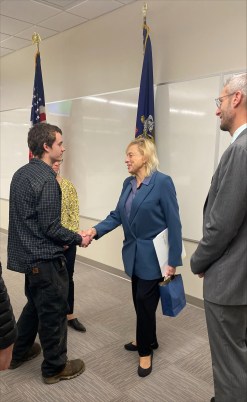
The Governor announced the Maine Career Exploration program today at Morse High School in Bath. Bath, Brunswick, and Topsham schools have used Jobs Plan funds to create a Regional Internship Program, in partnership with the Midcoast Chamber of Commerce, to provide students with work-based learning experiences at local businesses.

“Through the Maine Career Exploration program, high school students will gain meaningful, hands-on work experiences at local businesses that will prepare them to succeed in careers right here in Maine, strengthening our workforce over the long-term,” said Governor Janet Mills. “My Administration will continue to address Maine’s longstanding workforce shortage by making sure our students have the skills, and our businesses have the workers, that they need to succeed.”

“Our state needs to add 75,000 new workers by the end of the decade to keep our economy strong. Preparing Maine students for success in the workforce is a key part of achieving that goal,” said Heather Johnson, Commissioner of the Department of Economic & Community Development. “Maine Career Exploration will introduce thousands of Maine students to future employment options, giving them real world work experience and supporting our business community at the same time.”

“By expanding real-world, engaging learning opportunities with Maine employers, the Career Exploration program will help students explore career options, develop critical work and life skills, and plan for their futures,” said Pender Makin, Commissioner of the Department of Education. “These opportunities are also important for strengthening Maine’s workforce and building connections between schools and local businesses.”

“The mission of JMG is to identify students who face barriers to education, and to guide each one on to a successful path toward continued education, a meaningful career, and productive adulthood,” said Craig Larrabee, JMG President and CEO. “Our commitment is to equitably expand opportunity for students who need it most, particularly those most impacted by the COVID-19 pandemic. With this funding, JMG will support more than 4,000 high school juniors and seniors, throughout all sixteen counties of the state, in engaging with Maine’s employers to gain meaningful workforce experience.”

“This funding will significantly enhance the quality of our Mt. Ararat High School Community Pathways program. Most importantly, we will be positioned to provide many more meaningful and engaging learning experiences to support students in pursuing their dreams, interests, passions, and aspirations,” said Douglas Ware, Community Learning Coordinator at Mt. Ararat High School in Topsham.

“Governor Mills and her administration saw the workforce need, heard from the businesses and the schools, and made the incredible choice to invest in some of Maine’s best problem solvers – our teachers, administrators and business leaders,” said Cory King, Executive Director of the Midcoast Chamber of Commerce. “The investment into this program through the Maine Jobs and Recovery Plan is helping make this concept of paid, meaningful work for students a possibility.”
The Career Exploration program has three primary components:

Awards to Schools and School Districts

The Maine Department of Education has awarded over $5.6 million to 26 school districts, schools, adult education programs, and higher education institutions to create or expand extended learning opportunities for students, which include paid work experiences.

Examples of these efforts include:

  • The Aroostook County Action Program and Eastern Maine Development Corporation will provide paid work experiences to youth in northern and eastern Maine. Career Exploration funds will be used to strengthen and expand existing workforce & training programs through new employer partnerships, reaching students who do not qualify for existing programs, and offering support services to address transportation and technology needs.
  • In RSU 13 in Rockland, students will explore different career paths and learn basic job-seeking skills and financial literacy. Following these classes, students will participate in 10-week internships with local businesses.
  • Telstar Middle High School in Bethel will develop workforce opportunities for students in grades 9-12. These include job shadowing, career immersions with employers, credit-earning experiences, career camps during school breaks, and local internship programs.

Jobs for Maine Graduates

  • Funding from the Career Exploration Program will support expansion of extended learning opportunities, paid work experiences, and coaching now offered by Jobs for Maine Graduates for rising juniors and seniors at 90 high schools in Maine.

Community-Based Organizations

  • Through the Governor’s Children’s Cabinet, five community-based organizations in Cumberland, Sagadahoc, Androscoggin, Penobscot, and Aroostook counties will help disadvantaged young people access meaningful paid work opportunities and valuable employment experience.

The Maine Jobs & Recovery Plan is the Governor’s plan, approved by the Legislature, to invest nearly $1 billion in Federal American Rescue Plan funds to improve the lives of Maine people and families, help businesses, create good-paying jobs, and build an economy poised for future prosperity.

In the last year since the Jobs Plan took effect, the Mills Administration has delivered direct economic relief to nearly 1,000 Maine small businesses, supported more than 100 infrastructure projects around the state to create jobs and revitalize communities, and invested in workforce programs estimated to offer apprenticeship, career and education advancement, and job training opportunities to 22,000 Maine people.

Read a full report of the Jobs Plan’s investments in the past year here. For more about Maine Jobs & Recovery Plan, visit maine.gov/jobsplan.
Maine DOE’s Child Nutrition Team Hosts 45 School Food Service Directors for Annual Fall Info Meeting

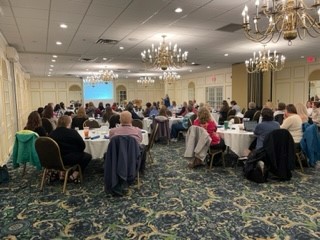
On Tuesday, October 18th, the Maine Department of Education (DOE) Child Nutrition Team staff were thrilled to be joined by 45 Food Service Directors from schools across Maine, for the first time in over two years, for the SY23 Fall Info Meeting.

Discussions centered around additional funding sources for nutrition programs, best practices for the Federal nutrition programs such as the After School Snack Program, Fresh Fruit and Vegetable Program, Breakfast After the Bell, Child and Adult Care Food Program (CACFP) At-Risk, and the Farm and Sea to School program.

To break up the day, Representatives from C. Caprara and Hatch Jennings gave an equipment demonstration of Delfield Shelley Serving Lines equipment.

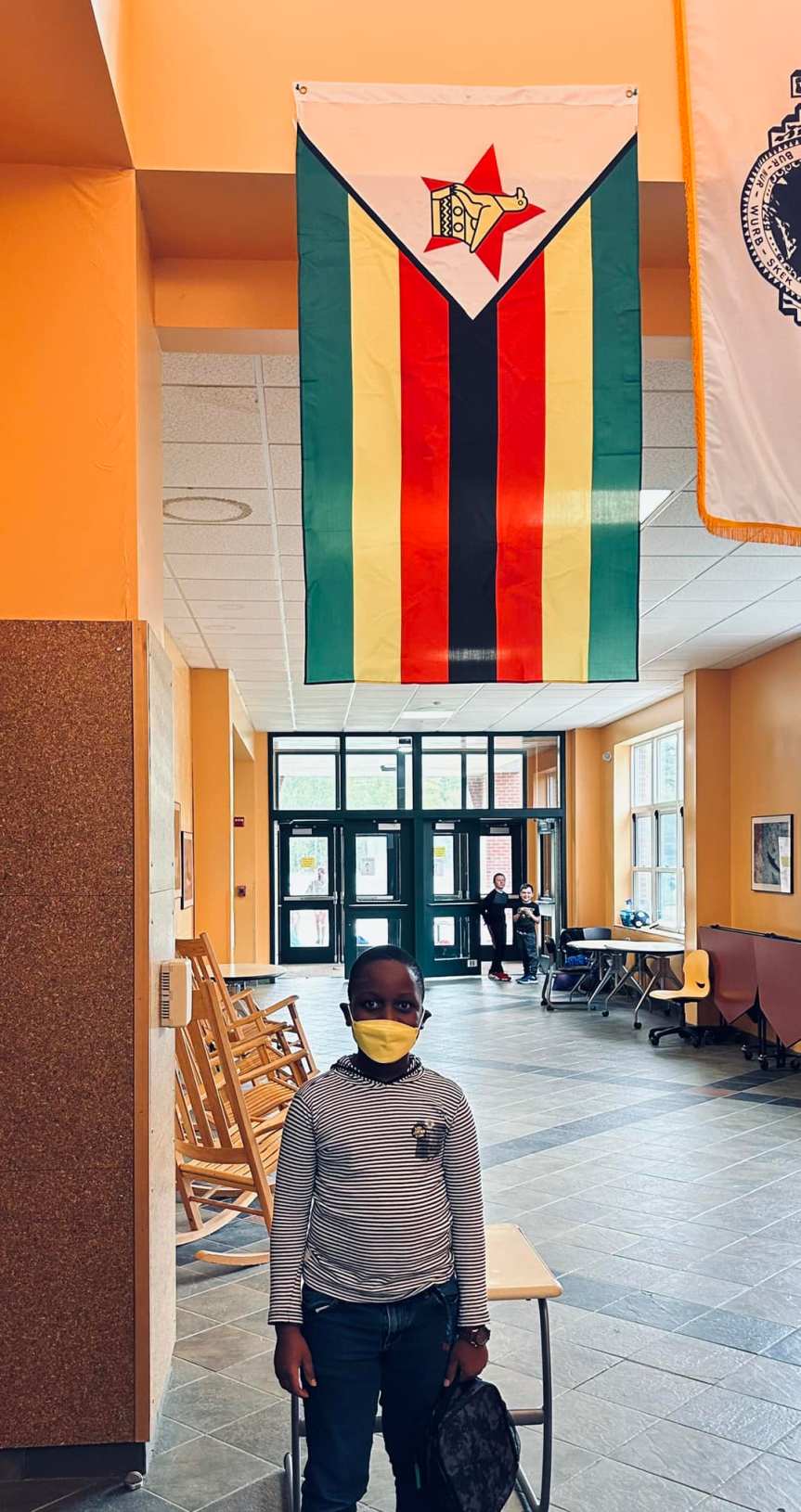
Old Town Elementary Hallway of Flags Celebrates Diverse School Community

A few years ago Old Town Elementary School (OTES) reflected on their school’s role in expanding the experiences and perspectives of the students and staff in the school. They realized they had an obligation to make the community aware of the diverse cultures and countries entering through their doors each day and to create a welcoming environment for all people at OTES. With the University of Maine as the school’s neighbor, they often receive students from the University because parents are finishing their degrees or are professors.

OTES decided to put a flag up for every country represented at the school to welcome families and teach their students about the various cultures represented at the school with each of these new community members. As a result, OTES families coming to the school building feel immediately welcomed by the gesture of seeing their native country flying in the hallways of the school.

“Students and staff are so excited about another country joining this hall of flags and getting to know about the country,” said OTES Principal Jeanna Tuell. “We have found more opportunities to make connections with other countries and to celebrate our diversity.”

UMaine, Maine DOE inclusive education collaboration changing name, expanding focus

A project that has served individuals with autism spectrum disorder (ASD) and their families for nearly a decade at the University of Maine is getting a new name and taking on a broader mission.

The Maine Autism Institute for Education and Research will now be Maine Access to Inclusive Education Resources (MAIER).

Established in 2014 with financial support from the Maine Department of Education, MAIER has sought to improve outcomes for individuals with autism in Maine throughout the spectrum and lifecycle by building statewide capacity for leadership, training, professional development, technical assistance, collaborative consultation, technology and research.

That work will continue as MAIER’s mission expands. The project will now serve as an information and resource clearinghouse that will assist professionals and families in accessing and navigating programs and services related to inclusive education of all students with disabilities. It will aim to ensure that educators and other service providers, as well as families and individuals with disabilities, receive information about practices to promote inclusion that are grounded in research.

Maine DOE’s Office of Special Services and Inclusive Education is providing MAIER with grant funding of nearly $632,000 over the next three years to carry out this mission.

“We’re excited that our partnership with Maine DOE will continue, and that MAIER will be able to touch the lives of more people in Maine by improving inclusive education and services throughout the state,” says Sarah Howorth, MAIER director and assistant professor of special education at the UMaine College of Education and Human Development.

“MAIER is one of many programs in our college that support positive inclusive outcomes for schools and students across Maine,” Howorth adds. “As part of the flagship university in the University of Maine System, we are continually looking to maximize the impact of our research, collaborations and engagement with educators, families and other service providers.”

Howorth says MAIER’s service to the state will be guided by four aspects of high-leverage practices to promote inclusion and equity in education for people with disabilities: collaboration, assessment, social/emotional/behavioral, and instruction. Future MAIER training and professional development topics will include improving access to inclusive post-school opportunities and employment for individuals with disabilities, inclusive teaching practices, and multi-tiered behavioral supports to serve those who are at-risk or have identified disabilities.

“Inclusion is vital to the development of all students from preschool through high school and beyond,” says Tracy Whitlock, special projects coordinator with the Maine Department of Education Office of Special Services and Inclusive Education. “We are proud to collaborate with the University of Maine on this work that will lead to stronger Maine communities.”

Among MAIER’s accomplishments during its first eight years was the establishment of an Early Start Maine program that provided early intervention services to nearly 400 toddlers and preschoolers with autism throughout the state. Based on the Early Start Denver Model, MAIER staff also trained 34 early intervention providers with Maine Child Development Services, which assumed oversight of the program in 2020.

During the COVID-19 pandemic, MAIER saw an increase in the number of educators and other professionals utilizing its professional development offerings. In 2019–20, there were 354 total participants in MAIER’s online training modules. That number went up to more than 1,000 participants from around the country in 202–21.

“As both a parent and an educator, I have been fortunate enough to utilize many of MAIER’s program offerings,” says Angela Lundy, a special education teacher at Mary Snow School in Bangor. “From professional development to PEERS social skills training with my son, MAIER is an invaluable resource for Maine families.”

In addition to the name change, MAIER recently transitioned to new leadership. Howorth took over as director after Deborah Rooks-Ellis, who started the project and led it for eight years, accepted a position at Coastal Carolina University. Longtime MAIER research associate Donna Doherty retired last year as well. Anica Miller-Rushing is MAIER’s new research associate and family partnership director. Miller-Rushing, who earned her Ph.D. in STEM Education from UMaine in 2022, will lead collaborations, manage programming and professional development, and support MAIER’s research agenda.

More information about MAIER can be found on the project website, umaine.edu/maier.

Annual Career and Technical Education Conference Draws 400+ Educators from Across Maine

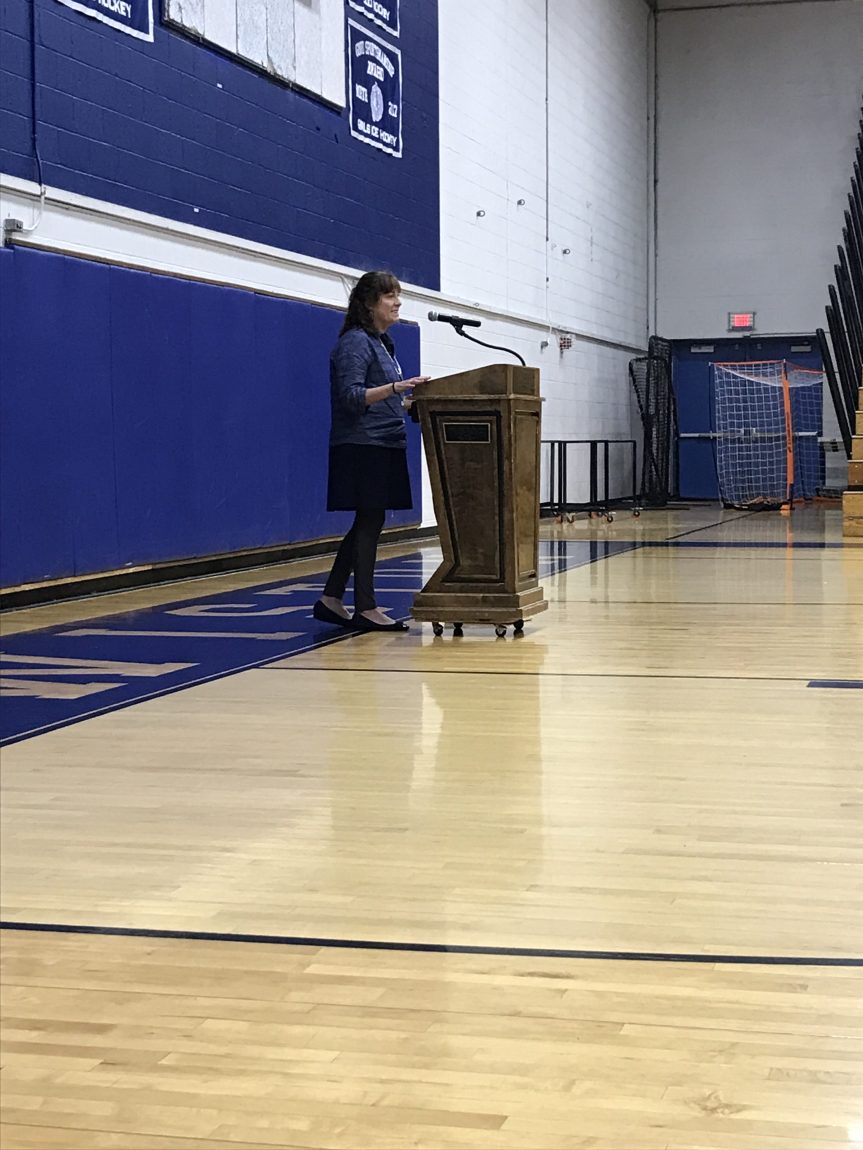
(Pictured: Commissioner Makin attended the conference to acknowledge and thank educators for their dedication to career and technical education.)

On Friday October 7th the Maine Association for Career and Technical Education (MACTE) organization held their annual Career and Technical Education (CTE) conference at Lewiston Regional Technical Center (LRTC) in Lewiston. More than 400 CTE educators from secondary and post secondary schools across Maine came together to discuss their respective programs as well as attend workshops held throughout the day. Workshops that were offered ranged from clean energy, apprenticeship opportunities, and industry partners to name a few.

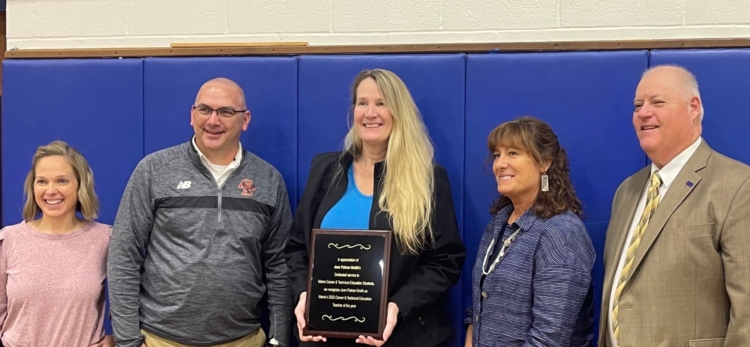
The conference also carried on its annual tradition of recognizing the MACTE CTE Teacher of the Year as well as the MACTE CTE Lifetime Achievement Award honorees.

2022 Career and Technical Education Teacher of the Year:

Jean Palmer
Creative Digital Media Instructor
Region 10 Technical High School in Brunswick
Read a story about her award in the Portland Press Herald

Jean Palmer
Photo from Portland Press Herald

Lifetime Achievement Award: 

Dan Caron
Chef and Culinary Instructor
Lewiston Regional Technical Center (LRTC)
Read a story about Dan in the Lewiston Sun Journal

Dan Caron
Photo from Lewiston Sun Journal

For more information about the MACTE CTE Conference reach out to MACTE http://mainecte.org/contact/

Tune in to the MLTI 2.0 Student Leadership Ambassadors of Maine (SLAM) Show

The Student Leadership Ambassadors of Maine (SLAM) show is a free, interactive, leadership opportunity where students connect with a community of ‘SLAMmers’ across the state. During these events, held both virtually and in-person this year, students learn presentation and technology skills using online tools to make creative products.

A part of the redesigned, Maine Learning Technology Initiative (MLTI 2.0), SLAM launched in the fall of the 2021/2022 school year to provide student leadership opportunities and allow students from across Maine to meet up virtually once a week to share skills, knowledge, and curiosity with each other.

This year, in addition to the weekly live online events, the Maine DOE’s MLTI team, led by Kern Kelley and the Student Leadership Ambassadors of Maine (SLAM), will host in-person monthly SLAM Shows at schools across Maine.

What is SLAM?

View the latest SLAM episode on the MLTI 2.0 Youtube Channel. To learn more about the MLTI 2.0 SLAM program visit: http://MLTI.me. To sign your school or classroom up to take part in this awesome opportunity, fill out this form.

Following the Maine Department of Education on Facebook and Twitter to see a posting of the latest virtual SLAM show each week. Subscribe to the Maine DOE Newsroom to see a re-cap of the in-person SLAM shows each month.

Get to Know the Maine DOE: Meet Kathy Bertini

Maine DOE Team member Kathy Bertini is being highlighted this week as part of the Get to Know the Maine DOE Team Campaign. Learn a little more about Kathy in the question and answer below.

What are your role or roles with the Maine DOE?

I am the Interdisciplinary Instruction Team Coordinator for the Maine Department of Education. My main job is to work with a team of Interdisciplinary Instruction specialists to support educators in empowering students with the tools to see the wondrous interconnectedness of instruction.

What do you like best about your job?

I appreciate that I am part of the Interdisciplinary Instruction team that shares a common vision regarding the importance of connecting student centered learning experiences across all disciplines. Also, I am thrilled to be able to work with educators and administrators statewide to provide innovative practices to help support Interdisciplinary Instruction.

Why did you decide on this career?

I am excited to be a part of the Innovation team at the Maine DOE and have the opportunities to promote the positive impact of student centered learning which is crucial for today’s evolving world. I have been in public education for more than 30 years and see how meaningful Interdisciplinary Instruction can be for all systems involved. I look forward to working with the education field to help support innovative teaching practices.

What do you like to do outside of work for fun?

I live on a rural farm in the western part of our beautiful state of Maine. This area allows me to connect deeply with nature. I enjoy spending time outdoors with my family and animals. Recently I have taken up the hobby of scientific drawings and I find this interest to be both relaxing and challenging at the same time.

Student Mental Health Support Modules

The Maine Department of Education’s SEL4ME platform is now hosting over 100 free, PK-12th grade modules focused specifically on supporting student mental health and wellness. While schools and districts are faced with significant educational and developmental priorities for many children and students associated with the pandemic, there is a need for balanced programming that supports learning, while also supporting their social, emotional, and behavioral adjustment.

The following resources can be incorporated into existing Social Emotional Learning, School Counseling and Health programs as well as part of an overall MTSS approach, and are accessed through a free registration of the SEL4ME platform.

Mental Health Modules: https://www.maine.gov/doe/mentalhealthmodules

More information on SEL4ME and login: https://www.maine.gov/doe/sel/sel4me

For more information, reach out to Bear Shea, Maine DOE Mental Health / School Counselor Specialist at w.bear.shea@maine.gov.

Annual Audit Requirements Reminder

Annual Audit Reports Due December 30th

Annual audit reports are due within six months after the end of the audit period (e.g., reports for the fiscal year ending June 30th are due on or before December 30th). In accordance with Title 20-A, §6051:

  • Per statute, the auditor is required to review the audit with the school board.
  • Per statute, it is the school board’s responsibility to submit the annual audit document unless it is stated in the engagement letter that the audit firm will submit the audit to the Department on behalf of the school board.
  • Municipal school units are required to submit either a combined annual audit or a school department audit and a municipal audit to the Department. The municipal annual report (a.k.a. town report) cannot be accepted in lieu of the complete municipal annual audit.
  • Per statute, Maine DOE must receive a Schedule of Expenditure of Federal Awards(SEFA), which includes federal award expenditures for all reporting entities, even if a Single Audit (formerly A-133 audit) is not required to be conducted. The SEFA provides information needed by Maine DOE to conduct sub-recipient monitoring as required by the US Department of Education and is due at the time of the annual audit.

In municipal school units where a combined audit is not conducted, Maine DOE should receive two audits: an audit with a SEFA for the school department, and an audit for the city/town including a SEFA.

  • If a management letter is prepared by the auditor, a copy must be submitted to Maine DOE with the annual audit, as this letter provides us with the information needed to conduct sub-recipient monitoring, as required by US DOE.

Extensions and Subsidy Payments

If an extension or exception is needed for the deadline to submit either the municipal or school department audit, the superintendent must contact us to request the extension.

The forms are available on the Fiscal Review and Compliance webpage, under forms on the menu bar.

  • Initial extension requests will be for a period of 2 months, and 30 days thereafter.
  • Extension requests will be considered until June 30th (six months after the due date); extensions will not be valid after June 30th and all municipalities and school administrative units with overdue audits which have not submitted an extension request before May 31st may have a delay in subsidy release. Those who have not submitted an extension request will have subsidy withheld until addressed.

Please submit all annual audit documents, reports, information requests, questions, and other audit correspondence via email to DOE.Audit@Maine.gov

Free Virtual On-Demand Financial Education Training for Maine Educators

The Finance Authority of Maine (FAME) and the Center for Financial Literacy at Champlain College, in partnership with the Maine Jump$tart Coalition for Personal Financial Literacy and its sponsors, the Office of the Maine State Treasurer, and Next Gen Personal Finance (NGPF), is offering free online and on-demand training for Maine teachers.

The Financial Educator Virtual Academy will train Maine educators on how to successfully teach personal finance in their classrooms and communities. Educators will receive contact hours for each course module attended, and the first 100 Maine classroom teachers to complete all seven hours of training will receive a $50 Amazon gift card.

The online course offering is available starting October 12, 2022 and will close on December 16, 2022. The goal of this training is to support educators as they work to ensure that all Maine students have access to high-quality personal financial education. Maine educators can earn up to seven hours of professional development training and receive suggestions for grade-appropriate personal finance classroom resources over the duration of the virtual academy.

During the virtual academy, which features nationally known experts, participants will learn how to implement the JumpStart National Standards in K-12 Financial Personal Finance Education. These standards allow for the teaching of personal finance in an interdisciplinary or stand-alone manner.

Interested educators may register for the program with this link.

Download a flyer for distribution 

For further questions contact Maine Jumpstart Coalition for Personal Financial Literacy at info@mejumpstart.org