Grants for After-School and Summer-Learning Programs Now Available; Applications Due April 7, 2026

The Maine Department of Education (DOE) is pleased to announce the release of a request for proposals (RFP), seeking bids from organizations interested in implementing comprehensive after-school and summer-learning programs during the 2026-2027 academic year. It is anticipated that approximately $1.75 million will be available in grant awards this spring as part of the 21st Century Community Learning Centers (21st CCLC) program.

Authorized under Title IV, Part B of the Elementary and Secondary Education Act (ESEA), as amended by the Every Student Succeeds Act of 2015 (ESSA), the 21st CCLC program provides competitive grant funding to support before-school, after-school, and summer-learning programs that focus on improving the academic performance of students in pre-K through grade 12. The primary purpose of the 21st CCLC program is to provide funding for school and community partnerships that establish or expand community learning center programs. These programs provide students in high-need, economically disadvantaged communities with academic tutoring and enrichment opportunities designed to complement their school-day academic program. In addition, these programs can provide a broad array of additional support services related to overall student health and well-being.

Local 21st CCLC programs—which can be established in elementary schools, secondary schools, or similarly accessible community facilities—provide high-quality support services to students during non-school hours. As such, these programs also support working parents and families by providing safe, supportive learning environments for students at times when school is not normally in session.

This RFP, which includes information regarding eligibility, program requirements, and more, is available here. An informational webinar for this RFP will be posted to the Maine DOE’s application website on January 21, 2026. It is strongly recommended that interested organizations view this presentation, in its entirety, prior to submitting a proposal for 21st CCLC program funding.

Below is the anticipated timeline for the RFP:

  • January 6, 2026—RFP released to the public
  • January 21, 2026—Informational webinar posted online
  • February 4, 2026—Deadline for submission of questions in response to RFP
  • February 25, 2026—Deadline for interested organizations to submit Intent to Apply form
  • April 7, 2026—Proposal submission deadline
  • April and May 2026—Formal peer review of proposals
  • May 2026—Grant Award Notifications
  • July 1, 2026—Grant Award start date

Please be advised that these dates are subject to change. Interested organizations must consult the RFP document for the most accurate dates and deadlines regarding this opportunity.

For more information about the 21st CCLC program, please contact Title IV State Coordinator Travis Doughty at travis.w.doughty@maine.gov.

Maine Students Invited to Participate in National Civics Bee® Competition

The Maine State Chamber of Commerce, in partnership with the Mid-Maine Chamber of Commerce and the U.S. Chamber of Commerce Foundation, is bringing the National Civics Bee® to Maine—offering middle school students a new opportunity to strengthen their civic knowledge and engage in meaningful learning about democracy, community, and citizenship.

The National Civics Bee® is designed to encourage students to explore real-world civic issues while building skills that support informed citizenship, resilient communities, and a strong future workforce. Maine students in grades 6-8 are invited to participate by submitting a civic-focused essay by February 3, 2026.

From the essay submissions, the top 20 students will advance to a live state competition in Waterville, scheduled for June 2026. The state champion will go on to represent Maine at the National Civics Bee® Championship in Washington, D.C., in the fall of 2026, when students from across the country will compete for major prizes, including a $100,000 grand prize.

The student application portal is now open, and additional details, resources, and submission information can be found on the National Civics Bee® website. All competition dates are set by the U.S. Chamber of Commerce Foundation and may be adjusted as the pilot program evolves.

For more information about the National Civics Bee®, or to learn how to help share this opportunity with Maine students and educators, please contact Angela Ouellette at angelao@mainechamber.org.

Maine DOE Recruiting Educators for High-Quality Instructional Material Capacity-Building Cohort

The Maine Department of Education (DOE) is recruiting 30 certified educators to participate in a statewide capacity-building cohort, a key component of Maine’s coordinated Literacy and Numeracy Action Plans. These plans outline a comprehensive system of supports designed to develop lifelong learners who can engage confidently and competently with the world through strong reading and math skills.

This cohort is intended to build educator capacity to evaluate, select, and implement high-quality instructional materials (HQIM), helping to ensure that all students in Maine have access to rigorous, standards-aligned, and culturally responsive instruction. Educators from all nine superintendent regions of Maine will deepen their own expertise, while also preparing to serve as regional leaders and facilitators of HQIM-focused professional learning.

Participants will engage in a sequenced professional learning experience that includes:

  • A virtual orientation and kickoff meeting (one hour).
  • Two days of in-person training focused on understanding nationally recognized HQIM evaluation criteria and rubrics, applying these tools to analyze instructional material with an emphasis on equity and standards alignment.
  • Three virtual sessions (two hours each) to develop guidance documents, resources, and professional learning to support school administrative unit (SAU)-level HQIM adoption.
  • Individualized coaching and peer collaboration.
  • A virtual reflection session (one hour).

Participants will be expected to complete the following deliverables:

  • Pre- and post-cohort surveys.
  • One or more resources or tools to support educators in evaluating, selecting, and implementing HQIM.
  • A professional learning session delivered within their region to build capacity for HQIM evaluation, selection, and implementation.
  • Documentation of the regional session, including materials used and a brief reflection.

Application Process and Timeline

Educators may apply for this opportunity here. Applications are due on January 16, 2026, with notification of selection planned for January 23. The Maine DOE will review applications with the goal of ensuring representation across grade levels, regions, professional roles, and school contexts.

Cohort Schedule:

  • Thursday, February 5, 2026, 3:30-4:30 p.m. – Virtual orientation and kickoff
  • Friday, February 27, 2026, 8 a.m.-4 p.m. – In-person, full-day training in the Bangor area
  • Monday, March 16, 2026, 8 a.m.-4 p.m. – In-person, full-day training in the Bangor area
  • Thursday, April 2, 2026, 3:30-5:30 p.m. – Virtual training
  • Thursday, April 16, 2026, 3:30-5:30 p.m. – Virtual training
  • Thursday, May 7, 2026, 3:30-5:30 p.m. – Virtual training
  • Thursday, June 4, 2026, 3:30-4:30 p.m. – Virtual reflection session
  • Monday, August 31, 2026 – Final day to deliver training and provide documentation

Participating educators will be eligible for a $400 stipend upon submission of the completed deliverable package. Trainings attendance will be eligible for contact hours.

For more information, please contact Jennifer Page, Maine DOE MOOSE Project Supervisor, at jennifer.page@maine.gov.

This project is supported by funds received from the U.S. Department of Education through the Governor’s Initiative: Integrating Literacy & Numeracy for Statewide Impact, Activity #4: Building Capacity to Identify and Select High-Quality Instructional Materials. The total award is $41,788.40, of which 40.3% is federally funded and directly attributed to project implementation. The contents of this program do not necessarily represent the official views of, nor an endorsement by, the U.S. Department of Education or the U.S. government.
Princeton Elementary Showcases Hands-On STEAM Learning Through Maine DOE Learning Tour

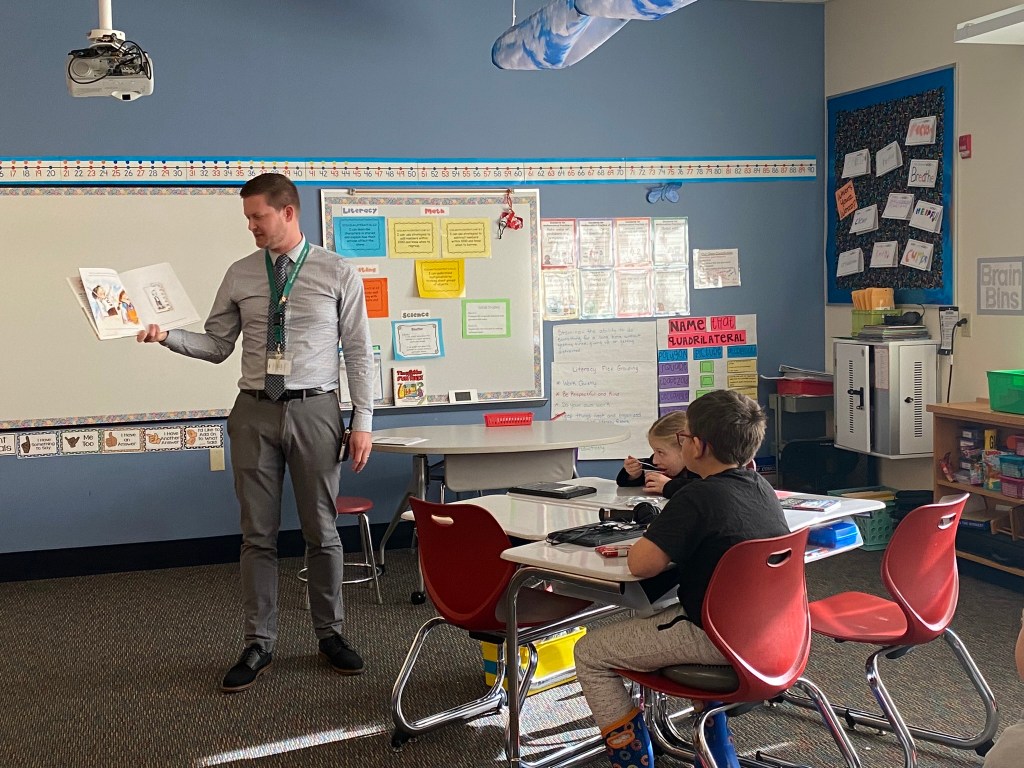
On December 9, 2025, Princeton Elementary School teacher Donna Netzer opened her classroom to educators from across Maine, as she demonstrated ways to incorporate numerous Science, Technology, Engineering, the Arts, and Mathematics (STEAM) technologies into the typical educational environment. This presentation was part of the Maine Department of Education (DOE) Office of Innovation’s latest Learning Tour, an opportunity for educators to participate in peer-to-peer learning.

During the Learning Tour, Netzer and her tech-savvy students demonstrated how each STEAM technology in her classroom (e.g., indi robots, Bee-Bots, Cubelets, 3D pens, etc.) is easily connected to the required grade-level Maine Learning Results. Netzer prepared demonstrations with students from pre-K through grade 8, illustrating how her students are “tech-sperts” for their peers and teachers at their small, rural school.


Experiential learning opportunities can be extremely powerful for many students, as they bring contextual meaning to the concepts being taught in the classroom, turning cerebral ideas into authentic life experiences. For some students, experiences in an outdoor environment may resonate, while for others, STEAM experiences may help to establish those learning connections.

The evening before Princeton’s Learning Tour, Netzer also arranged a STEAM night, where students, families, and community members could visit the school and explore some of these STEAM technologies for themselves.


It was a well-attended event, and many community members expressed excitement about trying things out for themselves. One of the unique applications was a Makey-Makey project that showcased conduction principles and programmable circuit boards in the form of a banana piano!

Check out this video highlighting the Princeton Elementary School Learning Tour:

The Maine DOE Office of Innovation is committed to providing Learning Tours that showcase these innovative learning experiences across the state. If you are interested in learning more, please contact Elaine Bartley, Maine DOE Rethinking Responsive Education Ventures (RREV) Research and Design Director, at elaine.bartley@maine.gov.

Maine Adult Education Educator Julie Berube Honored with National Barbara Bush Fund for Family Literacy Grant

The Maine Department of Education (DOE) is proud to recognize Julie Berube, Coordinator of the First Teachers Family Literacy Program at Biddeford Adult Education, as a recipient of a $10,000 national grant from the newly established Barbara Bush Fund for Family Literacy, an initiative of the George and Barbara Bush Foundation.

Berube’s program was selected as one of only three grant recipients nationwide in the Fund’s inaugural year, alongside organizations in Washington, D.C., and Florida. Announced in November 2025, the Barbara Bush Fund for Family Literacy builds on First Lady Barbara Bush’s decades-long commitment to literacy by supporting proven, community-based family literacy programs and elevating effective practices across the country.

For Berube, the recognition was both unexpected and deeply meaningful.

“When I initially found out my program was selected for the $10,000 grant, I was shocked,” Berube shared. “Pam Cote, Senior Director for the Barbara Bush Fund for Family Literacy, called me one evening in October. I was working late and happened to be the one answering the phone. I truly thought she had been gathering information for a national directory.”

Berube noted that after nearly six months of conversations with the Foundation, she never imagined her program would be among the first funded.

“I am profoundly grateful and humbled to be among the first recipients recognized by the newly launched George and Barbara Bush Foundation. After 26 years coordinating the First Teachers Family Literacy Program, this recognition serves as a powerful affirmation of my enduring commitment to family literacy.”

Berube’s connection to Barbara Bush’s literacy legacy runs deep. Berube joined Biddeford Adult Education in 1999 as a Child Care Coordinator and was soon encouraged by then-Director Anita Kramer to step into the role of Family Literacy Coordinator.

“I was hesitant at first—it was a big endeavor,” Berube recalled. “But Anita believed in me, and that made all the difference.”

With Kramer’s support, Biddeford Adult Education applied for and received a Maine Family Literacy Initiative (MEFLI) grant—funded through the original Barbara Bush Foundation. The program was named First Teachers, reflecting Barbara Bush’s belief that parents are a child’s first and best teachers.

Biddeford became the only program in Maine at the time to receive two consecutive MEFLI grants, and Berube noted that Barbara Bush herself had a strong personal connection to the region, spending summers in nearby Kennebunkport.

When MEFLI funding ended, Berube was determined to keep the program alive.

“I ran a penny auction fundraiser for four years to keep First Teachers going,” she said. “I wrote letters to local businesses six months in advance, and we were fortunate to have interns from the University of New England. It took a lot of time and energy, but I wasn’t willing to let the program end.”

In 2009, family literacy funding was formalized and became a permanent part of the local school budget—a testament to the program’s impact, longevity, and strong outcomes.

“Receiving funding now from the George and Barbara Bush Foundation feels like a full-circle moment,” Berube shared. “I started this program with a Barbara Bush Foundation grant, and more than two decades later, I’ve received a grant from the newly launched Barbara Bush Fund for Family Literacy.”

The First Teachers Family Literacy Program empowers parents and caregivers to build their own literacy skills while learning alongside their children. By engaging families together, the program strengthens early literacy, builds confidence, and helps break cycles of low literacy across generations.

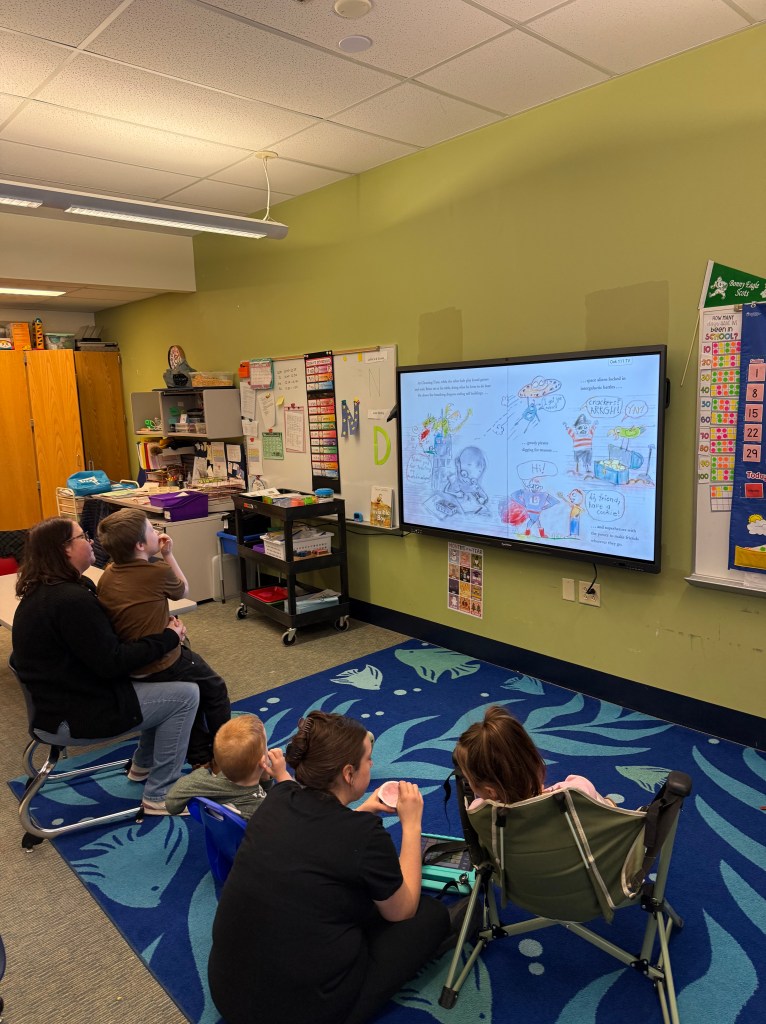
Families in Berube’s Creative Play Class are participating in an Intergenerational Literacy Activity (ILA).

David Durkee, Program Director at Biddeford Adult Education, emphasized the program’s importance within the broader adult education mission.

“Julie has strengthened our adult education program by engaging parents and children together, building foundational reading and language skills, and fostering lifelong learning,” Durkee said. “Her work benefits individual families and the broader community.”

Durkee described Biddeford Adult Education as a leader in accessible, high-quality adult education, offering flexible programming, workforce development, and strong community partnerships.

“Julie has expanded family literacy significantly through partnerships with organizations like Head Start and continually offers new learning opportunities for students and families,” Durkee added.

The new grant will allow Biddeford Adult Education to further its family literacy efforts.

“This funding will enable us to expand parent-child literacy events, increase early childhood reading activities, offer more parent education workshops, and strengthen partnerships,” Durkee said. “These funds will broaden the program’s reach and provide more families with the resources they need to build strong literacy foundations.”

The Barbara Bush Fund for Family Literacy aims not only to provide funding but also to serve as a national thought leader, amplifying effective programs that address one of the country’s most pressing educational challenges. By awarding this grant, the George and Barbara Bush Foundation is honoring Berube’s decades of dedication, while investing in a vision that spans generations.

The Maine DOE congratulates Julie Berube and Biddeford Adult Education on this well-deserved national recognition and applauds their leadership in adult education and family literacy in Maine.

This story was a collaboration between the Maine DOE and Biddeford Adult Education Program. To submit a good news story to the Maine DOE, please fill out the good news submission form.

Nominations Open for 2026 Outstanding Early Childhood Professionals Spotlight

Do you know an outstanding early childhood professional who works with children from birth through age eight (8) in a childcare program, public school, private school, or home-visiting setting? If so, please consider nominating them for the 2026 Week of the Young Child® Outstanding Early Childhood Professionals Spotlight. The nomination deadline is February 13, 2026.

Established in 1971 by the National Association for the Education of Young Children (NAEYC), the Week of the Young Child® highlights the importance of early childhood education and the foundational role it plays in a child’s success. It is also a chance to celebrate the early care and education professionals who nurture and support children and families during this critical stage of growth and development.

This annual recognition program, offered through collaboration between the Maine Department of Education (DOE) Early Learning Team and the Maine Department of Health and Human Services (DHHS) Office of Child and Family Services’ Early Care and Education Division, honors dedicated professionals who make a meaningful impact on young children and families. Last year’s inaugural Early Childhood Professionals Spotlight received more than 280 nominations! Those individuals were celebrated at the 2025 annual Early Childhood Education Conference in Portland.    


Recognize an outstanding early childhood professional by submitting a nomination through the 2026 Week of the Young Child® spotlight nomination form. The submission deadline is Friday, February 13, 2026, at 11:59 p.m. Nominees will be contacted prior to the Week of the Young Child®, which will take place from April 11-17, 2026.

For more information, please contact Michelle Belanger, Maine DOE Pre-K Partnership Specialist, at michelle.belanger@maine.gov or Meg Swanson, Program Manager, at megan.swanson@maine.gov.

Maine DOE Launches Second Year of Pine Tree Programming, Expanding Hands-On Computer Science Opportunities for Students Across Maine

The Maine Department of Education (DOE) Learning Through Technology team is excited to announce the launch of the second year of Pine Tree Programming, a statewide initiative designed to expand access to high-quality computer science education. Building on a successful first year that introduced more than 500 students to coding across 44 schools, Pine Tree Programming is returning with even more opportunities for Maine students.

This year, the program will feature hands-on coding experiences using micro:bits, small programmable devices that make computer science interactive, creative, and accessible for learners of all backgrounds. Students in grades 3-8 will participate in six weeks of progressively sequenced activities, empowering them to explore coding concepts, solve problems, and create their own digital projects.

“Pine Tree Programming is all about making computer science fun and approachable,” Allison Braley, Maine DOE Computer Science Specialist, said. “By giving students the chance to learn through doing, we’re helping them to develop the confidence and skills they’ll carry into high school, careers, and beyond.”

Pine Tree Programming clubs will launch in February and run for six weeks, providing students across the state with an engaging introduction to computer science—with no prior experience necessary.

Additionally, the Learning Through Technology team is committed to equitable access for all participating schools. As part of the Pine Tree Programming club sign-up process, schools may request micro:bits, if access to devices would otherwise be a barrier to participation. Schools that are planning to do so must submit their requests by Friday, January 9, 2026, to allow time for shipping before clubs begin.

Schools that are interested in participating in Year Two of Pine Tree Programming, or in requesting micro:bits, can sign up using this form.

With questions, please contact Allison Braley at allison.braley@maine.gov.

Maine DOE Update – December 19, 2025

From the Maine Department of Education


Data & Reporting

Upcoming Training Dates for New Connect Data System

The Maine Department of Education (DOE) Data Team will be offering webinars and office hours in January 2026 to assist in preparing for the implementation of the new Connect data integration system. These trainings will focus on data entry procedures into Connect, as well as the process for generating a collection “snapshot” within the system. |  More


News & Updates

Mainers Encouraged to Nominate an Educator for State/County Teacher of the Year

Nominations are now open for the Maine Teacher of the Year program, which celebrates excellence in teaching and elevates the importance of the teaching profession. Traditionally, Maine selects a County Teacher of the Year from each of Maine’s 16 counties. One of those educators is later named State Teacher of the Year and also becomes Maine’s nominee for National Teacher of the Year. |  More

Grant Funds Available to Rural SAUs through 2026 Aspirations Incubator Requests for Proposals; Submissions Due January 12

The Rural Youth Institute has announced the release of two 2026 Aspirations Incubator Requests for Proposals (RFP): a planning grant RFP and a seed grant RFP. Rural SAUs are encouraged to apply. The submission deadline for both RFPs is January 12, 2026. |  More


Maine Schools Sharing Success Stories

Maine School Nutrition Teams Sharpen Skills Through No-Cost Regional Culinary Trainings

With the support and participation of the Maine Department of Education (DOE) Child Nutrition Team, Full Plates Full Potential, in collaboration with the MaineHealth Center for Health Improvement, hosted another successful season of the Culinary Skills for School Meals training over the summer. This learning opportunity is a five-day, hands-on training, designed to strengthen the culinary skills of school nutrition professionals. |  More

Gorham Superintendent Heather Perry Named Finalist for AASA National Superintendent of the Year Award

Gorham School District Superintendent Heather Perry has been named one of four finalists for the AASA National Superintendent of the Year® Award, a prestigious honor administered by The School Superintendents Association (AASA), which recognizes exceptional leadership, professionalism, communication, and community engagement among school leaders nationwide. |  More

Submit good news to the Maine Department of Education here.


Professional Learning/Training Opportunities

Educators Invited to “Dawnland” Documentary Screenings and Guided Dinner Discussions

The Maine Department of Education (DOE), in partnership with Wabanaki REACH, the Maine Environmental Education Association (MEEA), Wabanaki Alliance, the Upstander Project, Wabanaki Culture Center, Maine Indian Education, RSU 34, RSU 5, and MSAD 44, invites Maine educators, school leaders, and parents to a series of free, in-person events across the state to view the award-winning documentary, Dawnland.These screenings, beginning in January 2026, will be followed by dinner and a discussion. |  More

Two-Part Professional Learning Series: Designing High-Quality ILAP Language Goals for Multilingual Learners

Are you looking for a clearer, more confident approach to creating effective language goals for multilingual learners? If so, consider participating in a two-part virtual series, led by Maine Department of Education (DOE) Teacher Leader Fellow Rebecca Carey. Participants will learn how to strengthen their practice surrounding Individual Language Acquisition Plans (ILAPs) by engaging in a clear and collaborative process for creating meaningful, measurable language goals that support and monitor student growth, connecting directly to classroom learning |  More

View the Maine Department of Education’s Events Calendar here.


Career/Project Opportunities:

Find education-related jobs in Maine.

Grant Funds Available to Rural SAUs through 2026 Aspirations Incubator Requests for Proposals; Submissions Due January 12

The Rural Youth Institute has announced the release of two 2026 Aspirations Incubator Requests for Proposals (RFP): a planning grant RFP and a seed grant RFP. Rural SAUs are encouraged to apply. The submission deadline for both RFPs is January 12, 2026.

The Aspirations Incubator is a transformative, evidence-based mentoring model designed to elevate aspirations and foster a strong sense of belonging among rural middle and high school students. Developed over six years ago in five rural Maine communities, this place-based model thrives through deep school-community partnerships and innovative mentoring practices. By engaging youth where they naturally are—at school, in the community, and in nature—the Aspirations Incubator creates authentic, lasting connections that empower the next generation. 

  • Planning Grant RFP: The Aspirations Incubator planning grant is designed to help communities assess their readiness to adopt an Aspirations Incubator long-term youth development and mentoring model that partners with local middle and high schools. Through this process, grantees will form a planning team, conduct a community needs assessment, ensure organizational capacity, and develop an Aspirations Incubator conceptual design. The total available funding for planning grants is $10,000.
  • Seed Grant RFP: The Aspirations Incubator Seed Grant is designed to provide financial support to new organizations committed to implementing the six-year Aspirations Incubator model. This grant will help organizations to establish the program and ensure its successful launch. The total available funding for seed grants is $20,000.

Both grant processes will follow this timeline:

  • RFP release date: December 1, 2025
  • RFP submission deadline: January 12, 2026
  • Review period: January 13-26, 2026
  • Notification of awards: January 30, 2026
  • Grant period: February 1-October 1, 2026

For more information, visit www.aspirationsincubator.org or contact Meg Taft at meg@ruralyouthinstitute.org.

Upcoming Training Dates for New Connect Data System

The Maine Department of Education (DOE) Data Team will be offering webinars and office hours in January 2026 to assist in preparing for the implementation of the new Connect data integration system. These trainings will focus on data entry procedures into Connect, as well as the process for generating a collection “snapshot” within the system.

Some trainings will be specific to certain student information systems (SIS). To make the most of your time, please be advised of the following system capabilities:

  • Schools Interoperability Framework (SIF) can be used by: Infinite Campus, PowerSchool, Rediker Software, and Web2School users.
  • Secure File Transfer Protocol (SFTP) can be used by: Synergy users (local instance only—not state edition).
  • Uploads will be used by any school administrative unit (SAU) opting not to use SIF or SFTP and any SAU without a local SIS

Please note: Manual entry of student data is no longer available. All data provided to Connect must originate from a source file (e.g., CSV uploads, SFTP, or SIF transfer.)

Training sessions include:

  • Connect SIF Data Entry Webinar – January 13 at noon – Register here.
  • Connect Upload Data Entry Webinar – January 15 at noon – Register here.
  • Connect SFTP Data Entry Webinar (Edupoint Users only) – January 20 at noon – Register here.
  • Connect Collection Webinar – January 22 at noon – Register here.
  • Connect Office Hours

As a reminder, the state edition of Synergy will be used for all remaining 2025-2026 data collections. These training sessions in Connect are designed to provide exposure to processes that will be implemented in the next school year.

With questions about upcoming webinars or Connect, please contact the Maine Education Data Management System Support Team at MEDMS.Support@maine.gov or call 207-624-6896.