Read to ME Challenge Student Video Reading, “Miss Rumphius”

To help kick off the Read to Me Challenge this month, the Maine DOE is posting videos of Maine students reading a book of their choosing each day in the first week of February. Some of the first set of videos are brought to you from members of the Maine DOE Student Cabinet along with other students from across Maine.

Today we are sharing a video created by Nayeli Monahan, a Hancock County representative on the Maine DOE Student Cabinet and she is reading “Miss Rumphius” by Barbara Cooney.

Reading aloud to children is one of the most cost effective and highly beneficial methods of building children’s literate abilities. The simple act of reading aloud to a child 15 minutes a day for five years results in 27,375 minutes of language exposure which can put children on the path to high literacy achievement. Reading aloud exposes children to the world around them, helps them see reading as an enjoyable and valuable activity and often strengthens bonds with trusted adults.

The remaining student video readings will be released in the Maine DOE Newsroom an on the official Maine DOE Facebook and Twitter pages each day this week.

The Read to ME Challenge will run for the month of February, leading up to Read Across America Day on March 2, 2021. Learn more about the Read to ME Challenge on the Maine DOE Website, which includes a heat map of participants and an opportunity to submit your Read to ME story for the heat map!

If you would like to request the videos be sent to you directly, please complete this form. If you would like to submit a video or for more information, contact Dee Saucier, Elementary Literacy Specialist for the Maine DOE.

Get to know the Maine DOE Team: Meet Jordan Dean

Maine DOE Team member Jordan Dean is being highlighted this week as part of the Get to know the Maine DOE Team Campaign. Learn a little bit about Jordan in the question and answer below.

What are your roles with DOE?

I am the Office Specialist for the Office of Innovation.

What do you like best about your job?

I love working with everyone on my team. I really enjoy the financial piece of my position including paying invoices and putting entries into Advantage, our financial tracking system.

What do you like to do outside of work for fun?

I love going up north ice fishing. I also enjoy spending time with my boyfriend and cat.

Maine DOE Accepting Peer Reviewer Applications for 21st CCLC Grant Proposals

The Maine Department of Education is seeking applications from qualified individuals interested in learning more about the competitive grant process.  Selected applicants will be trained to serve as peer reviewers who assist the Department in to reviewing, assessing, and scoring competitive grant proposals for the 21st Century Community Leaning Centers (21st CCLC) Program.  The 21st CCLC program is a federally funded education program that provides competitive funding for schools and communities to develop before-school, after-school, and summer educational programs that support students and their families.

This year’s Request for Proposals (RFP) for the 21st CCLC program was released to the public on January 6 and is available online at: https://www.4pcamaine.org/century21/FY2021/. The Department anticipates receiving proposals from local education agencies, community-based organizations, and other eligible entities seeking awards under this RFP.

Qualifications:

Applicants will be selected based on their experience in providing effective academic support, enrichment, youth development, and related support services for children and youth.  The most qualified candidates will be individuals who have experience in the administration of high-quality youth development programs within schools and communities.  Examples of the experienced individuals sought include, but are not limited to:

  • 21st CCLC program directors and site coordinators
  • Teachers and principals
  • College and university staff
  • Youth development workers
  • Community resource providers

Please note that an applicant or member of an applicant’s organization will not be selected to serve as a member of the Department’s peer review team.

Required Tasks:

Selected applicants must be able to participate in an online training webinar and review grant applications through a web-based system.  Applicants will work individually to read each assigned application and create detailed, objective, constructive, and well-written comments on approximately 10-15 applications based on the criteria established in the RFP.  These comments will be submitted to the Department prior to participating in the scheduled consensus scoring sessions.  It is anticipated that peer reviewers will have a three (3) week window in which to complete their individual review of assigned applications.  Following the individual review of applications, each successful applicant will be required to participate in a series of two (2) online/virtual consensus scoring sessions hosted by the Department.  It is during these consensus scoring sessions that the peer review team will score each application.

Selected applicants must complete the following tasks during the following date(s):


Task Date(s) Time(s)
Participate in an online training webinar March 30, 2021 1:00 PM – 2:30 PM
Review grant applications through a web-based system and provide individual, written comments on each application (which must be submitted to the Department) April 8, 2021 – April 28, 2021 Any Time
Participate in online/virtual consensus scoring sessions with other members of the peer review team (applicants MUST be available all four scoring days, but will only be selected to participate for two days) April 29, 2021 – April 30, 2021; or
May 4, 2020 – May 5, 2020
9:00 AM – 4:00 PM

Compensation for Services:

Selected reviewers who complete the required tasks will be provided an honorarium of $85 per assigned application.

Previous participants have also found that serving as a member of the peer review team is an excellent opportunity for professional development and growth. It is likely that, if selected, applicants will be exposed to new program models, strategies, and practices.  These new concepts may provide ideas and support for ongoing work as well as future grant writing efforts.  Most importantly, the time given to this effort will help ensure the funding of quality education programs for the children and families of Maine.

How to Apply:

Interested parties must contact Travis Doughty at travis.w.doughty@maine.gov to obtain a copy of the 2021 peer reviewer application and then return the completed application along with a current resume or CV.

Pursuant to Title IV, Part B of the Elementary and Secondary Education Act, as amended by the Every Student Succeeds Act of 2015, peer reviewers may not include any applicant, or representative of an applicant, who has or will submit a proposal in response to the current competition.

Deadline:

The Maine Department of Education will continue accepting peer reviewer applications through March 4, 2021, or until the needed positions are filled.  Interested parties are encouraged to apply as soon as possible.

Contact:

For more information, contact State Coordinator, Travis Doughty at travis.w.doughty@maine.gov or 624-6709.

MEDIA RELEASE: Application Process Open for Student Position on Maine State Board of Education

Student voice is critically important to the Maine State Board of Education, and they are seeking applications for the newest student member to join the Board. Applications are being accepted February 1, 2021 – March 1, 2021.

The Maine State Board of Education has two nonvoting student members who join the Board as high school juniors and serve for two years, one enrolled in a school in Maine’s First Congressional District; the other enrolled in a school in the Second Congressional District. At all times, the State Board has one high school junior and one senior as members, with staggered appointment.

Applications are currently being accepted from students who attend school in the First Congressional District (includes Cumberland, Knox, Lincoln, Sagadahoc, and York counties, and part of Kennebec County) and are currently a high school sophomore.  Application materials are available on the State Board of Education web page. The Board has also emailed and mailed application materials to all first congressional district high school principals and school counselors. Completed applications should be mailed to:

Mary Becker, Maine State Board of Education
23 State House Station
Augusta, ME 04333-0023

After applications close on March 1, 2021, they will be reviewed according to the process described in Maine Education and School Statutes, Title 20-A, Chapter 5, State Board of Education. Semifinalists will be interviewed in March 2021, after which three finalists will be chosen. The names and application materials of the finalists will be sent to the Governor’s office for final selection. The selected student will be appointed by the Governor and confirmed by the Maine State Senate.

This is an extraordinary opportunity for Maine students to practice civic engagement while serving as both a representative of Maine students and an active education leader in our state.

For further information please visit the Maine State Board of Education web page or contact Mary Becker, Board Assistant at 624-6616 or email at Mary.Becker@maine.gov.

FREE Professional Development Opportunity: Multi-Tiered Systems of Support (MTSS) in the Early Grades

The Maine Department of Education (DOE) is pleased to announce a professional development opportunity designed specifically for  early childhood educators (PK-3). MTSS is a framework that utilizes a tiered model of instruction and intervention for students in PK-12. This workshop series will support the high-quality implementation of MTSS frameworks designed specifically for Pre-K and early elementary school settings. This 6-session offering is available to any PK-3 educator in Maine. Lead teachers, ed techs, administrators and special education staff will benefit from this series.

The series facilitators will deliver a continuum of learning and support activities through six web-based meetings beginning March 8th and running through May 24th. Participants will meet every other Monday from 3-5pm, during which, participants will explore the components of MTSS for their individual settings. The series outline is below:

  • 3/8/2021-MTSS Overview and Implementation Frameworks
  • 3/22/2021-MTSS Resource Mapping
  • 4/5/2021-Assessing Capacity
  • 4/26/2021-Utilizing the Hexagon Tool
  • 5/10/2021-Family and Community Partnerships for MTSS
  • 5/24/2021-Action Planning for your Setting

You can register for this event here. Registration will close on Friday, February 26th. There is no cost for the series. Contact hours will be provided at the culmination of all sessions in May.

For more information or questions, please contact:  Nicole Madore, Early Childhood Specialist, nicole.madore@maine.gov or Andrea Logan, Multi-Tiered Systems of Support Specialist, andrea.logan@maine.gov

MEDIA RELEASE: Maine DOE Launches 2021 Read to ME Challenge with the Help of Maine Students

The Maine Department of Education (DOE) is pleased to announce the kickoff of the 6th annual Read to ME Challenge today, Monday, February 1, 2021. This year, to help kick off the challenge in a virtual and COVID friendly way, students from across Maine have been invited to share video recordings of themselves reading their favorite book to encourage the love of reading across the state.

The Read to ME Challenge is a month-long public awareness campaign held in February to promote childhood literacy in Maine. The challenge is an opportunity to promote children’s literacy growth by reading aloud to one or more children for at least 15 minutes. Part of the challenge is capturing the moment via a photo or video and then posting it on social media (with the hashtag #ReadtoME and tag the Maine DOE at @mdoenews on Twitter and @MaineDepartmentofEducation1 on Facebook!)

Reading aloud to children is one of the most cost effective and highly beneficial methods of building children’s literate abilities. The simple act of reading aloud to a child 15 minutes a day for five years results in 27,375 minutes of language exposure which can put children on the path to high literacy achievement. Reading aloud exposes children to the world around them, helps them see reading as an enjoyable and valuable activity and often strengthens bonds with trusted adults.

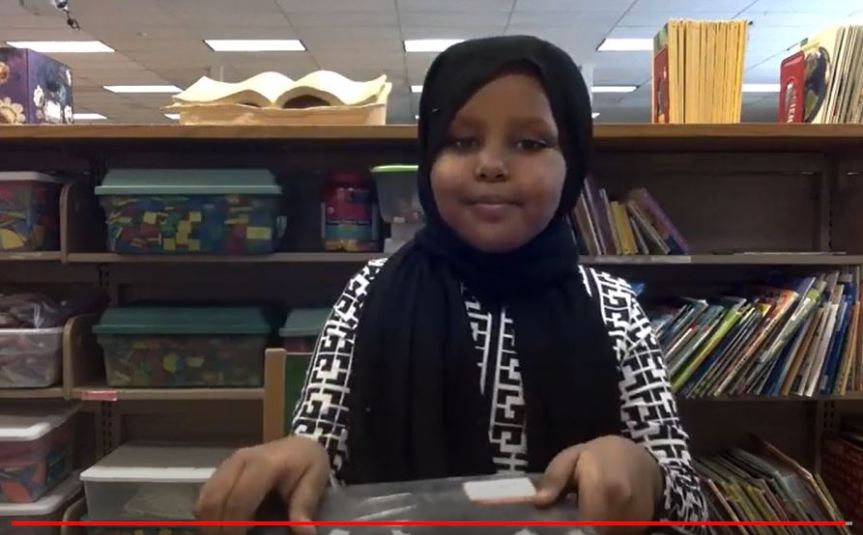
Some of the first set of videos are brought to you from members of the Maine DOE Student Cabinet along with other students from across Maine. The kick-off starts a video by Savea Lafaialii, one of the Student Cabinet’s Somerset County representatives with a reading of, “Strictly No Elephants” by Lisa Mantchev along with an another reading done by Gerald E. Talbot Community School 5th grade student Hamdi Abdullahi (pictured above) reading, “Creepy Carrots” by Aaron Reynolds.

The remaining student video readings will be released in the Maine DOE Newsroom an on the official Maine DOE Facebook and Twitter pages each day this week.

The Read to ME Challenge will run for the month of February, leading up to Read Across America Day on March 2, 2021. Learn more about the Read to ME Challenge on the Maine DOE Website, which includes a heat map of participants and an opportunity to submit your Read to ME story for the heat map!

If you would like to request the videos be sent to you directly, please complete this form. If you would like to submit a video or for more information, contact Dee Saucier, Elementary Literacy Specialist for the Maine DOE.

Priority Notice: ESSER II Application Portal Now Open

Maine Department of Education We are pleased to share an exciting update with our partners in education regarding the Elementary and Secondary School Emergency Relief (ESSER II) funds. Maine has received $183,138,601 for the Elementary and Secondary School Emergency Relief Fund (ESSER II) through the Coronavirus Response and Relief Supplemental Appropriations (CRRSA) Act. The ESSER II application is now available in Maine’s Consolidated Federal Grant portal. Completed applications will be reviewed on a rolling basis beginning Tuesday, February 2, 2021.  

The current ESSER FAQs from the U.S. Department of Education are available here and here. As a reminder, CRRSA also provides support for non-public schools through the Governor’s Emergency Education Relief (GEER II) funds.

Earlier this week the U.S. Department of released the Emergency Assistance for Non-Public Schools (EANS) webpage available here. Maine has been allocated $12,751,099 for eligible non-public schools based on the State’s relative number of children aged 5 through 17 at or below 185 percent of poverty who are enrolled in non-public schools. More information regarding the EANS application is forthcoming. 

Please contact Karen Kusiak at Karen.Kusiak@maine.gov with any questions.  

Going Remote: Mid-Maine Tech Center Pre-Nursing Program Builds in Hands-on Learning with Virtual Learning Kits

As a nurse, Tracy Cloutier the Pre-Nursing Instructor at Mid-Maine Technical Center learned early on that you need to be flexible and be able to shift gears quickly. “Shifting between remote learning and in class environment means we have to think outside the box,” said Cloutier. “I have had to have a plan in place since the return in August and be able to switch, if necessary, quickly from one to the other.”

Like schools around Maine, Mid-Maine Technical Center has been working around the clock to plan for the possibility that they may need to deliver instruction remotely at any time, a task that comes with its own unique set of challenges because of the essential hands-on learning components in Career and Technical Education programing.

“The hardest part for me is the unknown and how quickly everything can change,” said Caitlyn Smith a senior at Waterville Senior High School. “I could go to bed one night, excited for my clinicals the next day, and wake up to be told I need to quarantine.” Caitlyn is enrolled in the pre-nursing classes at Mid-Maine Technical Center and plans to pursue a nursing degree next year at the University of New England.

“This class has been ‘rock stars’ with all the pandemic protocol has brought,” said Cloutier. “They are diligent in keeping a safe distance of 6 feet. They all wear clean scrub jackets, masks, hand wash and disinfect without question.” Cloutier adds that if they are learning in an environment that requires them to be closer than the 6 feet, they are sure to add additional layers of PPE (personal protective equipment).

Cloutier prepared from the beginning of the school year knowing that remote learning was a possibility. Like so many educators have done this year, she set a goal to get students set up with supplies for hands-on remote learning ahead of time, including making sure that each one of her students had a computer or device with an internet connection to use for remote learning.

Students were sent home with a “virtual learning” bag that offered supplies for them to participate in the hands-on procedures of lab work and complete the necessary skills from home if needed.

Below is a list of skills attainable during Remote Learning with the help of the new kits:

  • Partial bath- face and peri care
  • Foley catheter care
  • Applying nasal cannula O2
  • Simple wound care
  • Suppository application
  • Stoma care
  • Application of ostomy wafer and drainage bag, how to empty & measure output, collect stool specimen
  • Empty/ Measure urinary output from a drainage bag, collect a urine specimen and strain for calculi
  • Application of Ted stockings
  • Apply a bedpan
  • Transfer with a gait belt
  • Natural teeth care
  • Apply a brief
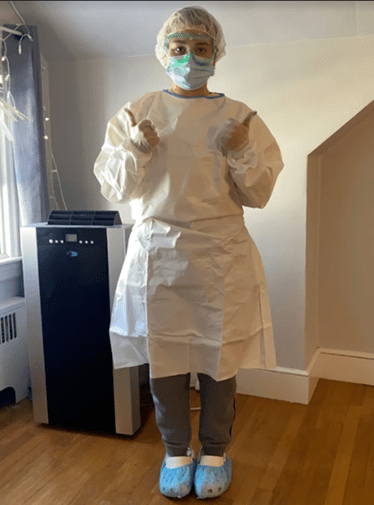
  • Donning and Doffing PPE- gown, gloves, mask, cap, booties, double bagging
  • Provide ADL’s for a patient with tracheostomy
  • Feed a patient with dysphagia thickened liquids, mechanical soft food, pureed food
    • nutritional supplement
    • “House” diet (regular)
  • Nail care
  • Special mouth care for an unconscious patient
  • Vital Signs (radial and apical pulse, respiration, blood pressure)

“Typically, when working in our lab we review the hands-on procedure from our textbook, I then demonstrate how to do it in the lab and then the students practice and show me in return,” describes Cloutier of her pre-pandemic classroom routine. However, when students are learning remotely, the typical in-person instruction model is not possible. With the help of a new virtual classroom program, the use of a new classroom “Owl” camera, along with their virtual learning kits, students can participate in lab activities and classroom discussion virtually.

The new system allows Cloutier to show the classroom learners at the same time as the virtual learners. The virtual learners can demonstrate their knowledge either by creating a video demonstration talking about all the steps they are doing and why, or they can take photos to show what they have learned.

“The pre-nursing class has faced challenges with having to quarantine and it’s been disappointing that we are behind on our clinical hours,” said Smith. She also said she has felt very fortunate that all of the students in her class, including her, have been provided with the take-home nursing kids to practice their skills at home when they have to quarantine.

“Being part of the Mid Maine Technical Center during this pandemic has been extremely beneficial for me,” said Smith. Thankful that she is able to focus on something that she is passionate about, Smith has kept herself motivated through her pre-nursing work knowing that it gives her something to look forward to each day. “Through it all, with the leadership of our instructor, we have stuck together like a family,” she added.

Cloutier says the silver lining in all of this is her students. “The students are fantastic and resilient young people. I am continuously amazed at their ability to adapt to changes and still stay engaged. I am so proud of them all and how much they have had to overcome and sacrifice to get their education this year and yet they are doing it, and well!”

Information and images for this story were provided by Mid-Maine Technical Center as part of the Maine Schools Sharing Success Campaign. To submit a story or an idea, email it to Rachel at Rachel.Paling@maine.gov.

FREE Anti-Bias Professional Learning Series for Educators

The Maine Department of Education is sponsoring a workshop by Amber Coleman-Mortley, Moving Beyond the Movement: Fostering Authentic Transformation for Sustainable Outcomes.  Amber Coleman-Mortley brings a diverse voice into civic education, manages a large network of education influencers, and has built a successful youth fellowship of students fighting for equity in civic education. Amber’s advocacy and expertise have been featured in the New York Times on several occasions.

Syllabus:

Module 1 – Now is the Time: Using the past to inform the present
How do we apply anti-racism, anti-bias, and equity to civics and history classrooms?

Module 2 – Be bold. Be brave. Be inclusive: Engaging your stakeholders
How do we facilitate community engagement around anti-bias work?

Module 3 – Culturally relevant pedagogy for all
How can we leverage culturally relevant pedagogy to support all learners in our school community?

Module 4 – Practical applications and continued strategies for continued allyship
What small, and large, changes are required to ensure that our practices and policies are investments, not investigations?

Every Wednesday in February

February 3, 2021; 7:00-9:00 PM
February 10, 2021; 7:00-8:30 PM
February 17, 2021; 7:00-9:00 PM
February 24,  2021; 7:00-8:30 PM

Register here: https://mainestate.zoom.us/meeting/register/tZUkdOihrzIoHtEhnto0lYp7KcxZ3tbYW9SQ 

Download the flyer.

Learn more about Amber

Amber Coleman-Mortley is a talented creator and builder of digital and grassroots networks where she focuses on cultivating an engaged community of active participants through multimedia video and virtual spaces. In her current role as Director of Social Engagement, she brings diverse voices into civic education, manages a large network of education influencers, and has built a successful youth fellowship of students fighting for equity in civic education.

Amber’s equity and civic work is centered around building strong teams for improved community outcomes, which is inspired by her years as a three-sport varsity athlete at Oberlin College where she earned North Coast Athletic Conference (NCAC) all-conference honors for 8 out of the 11 seasons she competed. She also has a Division 3 , NCAA appearance in the 4×100 m. She currently serves as an alumni advisor to Oberlin College’s, Black Student-Athlete Guild.

Amber taught for nine years as a P.E/Health teacher and head varsity volley ball and head varsity track coach. She has experience building curriculum and leadership programs for student-athletes and team captains. Amber presented on Anti-Racist Coaching and Sports and Social Justice at the U.S. Soccer

Foundation’s Virtual National Training. At the center of her work are equity, critical thinking, and civic problem-solving. She has experience collaborating virtually with parents and educators around equity, anti-racism, and culturally relevant pedagogy, which includes work with the DuPage (Illinois) Regional Office Of Education.

Amber is a highly regarded social media influencer whose work brought her to the White House to meet former first lady Michelle Obama to discuss influencer campaigns that focus on family health and wellness. She is a parenting expert and author of Mom Of All Capes where she covers parenting strategies in civic education, education technology, parent-teacher partnerships, and social-emotional development. The podcast she co-created with her children, Lets K12 Better, discusses how to improve K12 education and family life through partnerships and communication.

Amber’s advocacy and expertise have been featured in the New York Times on several occasions which includes viral videos, a full-page spread in print media, and several online articles. Her insights have been cited in publications from the LA Times to the Smithsonian Magazine, The Washington Post to LAist. Coleman-Mortley has shared insights for parents through her work for Edutopia, civic education and parenting for TODAY Parenting, and even shared tips for weary travelers through Southwest Airlines. Amber’s voice has been amplified on countless podcasts including Edit Your Life about how to talk to children about race, EduTable about education a inequity, NPR affiliate KPC Conprocessing the state of the world with children. She’s presented live with New York Times Parenting and Sree Sreenivansan’s daily global show on talking to kids about race.

Additional information:

This workshop series will require participants to maintain a reflection journal. Participants should come motivated to create change and should be prepared to participate in group discussions based on readings and resources shared prior to the session.

Engaging in this cohort provides an opportunity for participants to earn credit hours. To receive credit, participants must attend all four sessions.

For more information contact Danielle Despins; a volunteer member of Maine DOE’s internal Diversity, Equity and Inclusion (DEI) sub-committee at (207) 592-1448.

Media Release: Mills Administration Updates COVID-19 School Health Advisory System

Franklin joins Androscoggin, Oxford, and York counties designated yellow; Cumberland joins all other counties in green designation.

AUGUSTA — The Mills Administration today released an update to its color-coded Health Advisory System that classifies counties’ relative risk of COVID-19 transmission to assist schools as they continue with their plans to deliver instruction and support to students safely.

The Maine Department of Health and Human Services (DHHS) and Maine Center for Disease Control and Prevention (Maine CDC) continue to review evidence that indicates lower transmission of COVID-19 in schools compared to the general population. Over the last 30 days, the rate of new cases is 34 per 10,000 staff and students, compared to 116 per 10,000 people statewide. This rate of new cases in schools is less than 30% of the statewide rate for the general population.

DHHS and Maine CDC assessed COVID-19 data and trends for all counties and released the following designations:

  • REMAIN YELLOW: Androscoggin, Oxford, and York counties continue to exceed the statewide averages for both 14-day new case rates per 10,000 people and positivity rates.
  • NOW YELLOW: Franklin County has seen a significant increase in both the 14-day new case rate per 10,000 people and the positivity rate, which is now the highest of all counties in the state.
  • NOW GREEN: Cumberland County’s new case rate per 10,000 people has dropped by 25%, and the positivity rate is now below the statewide average.

All other counties remain in the green designation.

Under the “yellow” designation, which indicates an increased (moderate) level of community risk, schools may consider additional precautions, such as limiting numbers of people in school buildings at the same time, suspending extracurricular or co-curricular activities including competitions between schools, limiting interaction through cohorting, or other measures based on the unique needs of each school community.

These designations are made out of an abundance of caution and for the consideration of school administrative units in their decisions to deliver instruction.

It is essential that school districts across the State of Maine continue to implement plans that adhere to the six requirements for returning to in-person instruction, regardless of their county’s designation.

The Health Advisory System categorizations are defined as follows:

  • RED: Categorization as “red” suggests that the county has a high risk of COVID-19 spread and that in-person instruction is not advisable.
  • YELLOW: Categorization as “yellow” suggests that that the county has an elevated risk of COVID-19 spread and that schools may consider additional precautions and/or hybrid instructional models to reduce the number of people in schools and classrooms at any one time.
  • GREEN: Categorization as “green” suggests that the county has a relatively low risk of COVID-19 spread and that schools may consider in-person instruction, as long as they are able to implement the required health and safety measures.  Schools in a “green” county may need to use hybrid instruction models if there is insufficient capacity or other factors (facilities, staffing, geography/transportation, etc.) that may prevent full implementation of the health and safety requirements.

The county-level assessments are based on both quantitative and qualitative data, including but not limited to recent case rates, positivity rates, and syndromic data (e.g., symptoms of influenza or COVID-19). Those data are publicly posted every week on the Maine CDC website. DHHS and Maine CDC also consider qualitative factors, such as the presence of outbreaks that may potentially affect school-age children.

The Health Advisory System reflects ongoing analysis of evolving data, and serves as one piece of information that school and district leaders can use to make decisions about how to deliver education during the school year. The qualitative and quantitative considerations and data used by the CDC in determining community transmission risk levels for schools can be located here: How County Risk Levels for Maine Schools are Determined

The Health Advisory System can be found on the Maine DOE website in Part I of the Framework for Reopening Schools and Returning to In-Person Classroom Instructionhttps://www.maine.gov/doe/framework/part-I.

The next update will be provided on February 12, 2021. Updating this advisory on a two-week basis aligns with the incubation period for COVID-19 and allows for greater stability in the trend data for small counties.

###