Middle School Career and Technical Education: New Grant Information and Resources

Middle School Career and Technical Education (CTE) provides an opportunity for Maine middle school students to experience hands on learning, workplace skills, and career exploration. CTE empowers them to explore interests and discover activities that are inspiring. It allows students to experience potential career pathways, and gives them an awareness of the many options that are available.

In June of 2017, the legislature enacted law to expand CTE opportunities by requiring Maine schools to provide access to developmentally appropriate CTE for middle school students (grades 6-8). Along with this legislation, there was an opportunity for CTE schools to apply for grant funding to pilot a Middle School CTE experience. In the fall, the DOE opened the first round(Pilot A) of grants; 14 CTE schools applied and received funding to pilot a Middle School CTE experience. The second round(pilot B) application is now available for CTE centers and regions to apply.

The MS-CTE Pilot B Grants application must be submitted to the Maine Department Of Education by February 28, 2020.  The grant must be expended or encumbered by June 30, 2020.  Funds may be used in the summer and during the 2020-2021 school year, with proper obligation.   (Obligation – Amount representing orders placed, contracts awarded, services received, and similar transactions during an accounting period that will require payment during the same, or a future, period).

Through the current pilots, middle school students are discovering the many opportunities that are available to them in CTE! These pilots have included CTE camps, in-school MS-CTE experiences, professional development opportunities for Middle School and CTE teachers, hands on CTE tours, as well as after school CTE programming.

The Middle School CTE programs rely on collaboration between the CTE centers, regions and the middle schools. CTE centers and regions have oversight of the CTE programming, and can assist with resources. The middle schools and CTE centers and regions are working together to design programs that meet the needs of the students, and provide an engaging learning experience. Alignment with the middle school CTE standards is required for all programs. These standards are in draft form, and are being reviewed and revised through the implementation of the current pilot programs. The current draft standards can be found here.

For additional information please visit our new web site at https://www.maine.gov/doe/learning/cte/schools/middleschool or contact Margaret Harvey at margaret.harvey@maine.gov
Calling all High School Senior STEM Students! Exciting FREE Opportunity!

Each year two seniors are selected from each state to attend the National Youth Science Camp (NYSC). NYSC is a residential STEM program, designed to honor and challenge some of the nation’s rising STEM leaders. At the NYSCamp, STEM professionals present lectures and lead small-group directed studies on a broad array of STEM topics; some delegates are able to conduct research at the nearby Green Bank Observatory. The NYSCamp experience also features excursions into the Monongahela National Forest including backpacking, rock-climbing, caving, mountain biking, and kayaking.

Delegates are required to participate in the NYSCamp program for its entirety; the fast-paced activities and remote location simply make travel to and from the NYSCamp very difficult. The NYSCamp is offered to selected participants at NO COST, so that talented students may attend regardless of their financial ability – transportation included. This all-expense paid experience is open to students graduating between July 1, 2019 and June 30, 2020. Additionally, students must:

  • have documented superior academic proficiency, including recognition in mathematics or the sciences.
  • have documented leadership abilities and social maturity through involvement in school or community activities.
  • have documented skills and achievements outside the realm of science, technology, engineering, and mathematics and outside the realm of academia.
  • demonstrate a curiosity and an eagerness to explore many and varied topics.
  • intend to pursue higher education and a career in a science, technology, engineering, or mathematics-related field.
  • be willing and able to participate in the entire NYSCamp program.  The 2020 NYSCamp dates are June 22 – July 15, 2020.

Students will apply online by completing the application found at http://apply.nyscamp.org. The deadline to submit applications is 6:00 PM EST on February 28, 2020.

For more information visit http://www.nyscamp.org/ or contact Shari Templeton, Maine DOE Science and Technology Specialist, at shari.templeton@maine.gov

Changes in Statute Ease Access to Healthcare for Maine’s Homeless Youth

Changes to Maine statutes, enabling some minors to consent for health services, went into effect this year.  LD 1275, An Act to Support Access to Health Services for Homeless Youth in Maine, amended Title 22, Chapter 260 to make it easier for youth who are no longer living with or dependent upon a parent or guardian to access medical, dental, mental, and other health services.

Previously, the laws on minor consent required youth to be living independently for at least 60 days and be independent of parental support.  With no clear indication of how youth were to verify their status, it was often difficult for them to exercise this right when they needed care.

With the passage of LD1275, the 60 day requirement has been eliminated and there are specific ways that youth can demonstrate their independent status.  These include:

  1. A signed, written statement from an SAU’s homeless liaison, counselor, or school social worker affirming that the youth is living separately from parents/legal guardians and is independent of parental support;
  2. A statement from a director or designee from a governmental or nonprofit agency that provides services to homeless individuals;
  3. A statement from an attorney representing the minor on any legal matter;
  4. A copy of a protection from abuse complaint;
  5. A copy of a temporary or final order of protection against the minor’s parent or legal guardian;
  6. Proof that the youth has filed a petition for emancipation.

A health care practitioner who obtains such documentation is now immune from liability for the act of providing services to a minor, based on that assurance.

Schools should be aware that counselors, social workers, and homeless liaisons may receive requests for such letters from students when they are seeking outside care.  School based medical, dental, and mental health practitioners should be prepared to accept one of the above forms of verification in lieu of parent/guardian consent.  There is no minimum age limit connected with this right.

Regulatory Alert Update:  Federal Motor Carrier Safety Administration (FMCSA) Official Delays Entry Level Driver Training (ELD) Rule

Yesterday, February 4, 2020, the Federal Motor Carrier Safety Administration (FMCSA) received approval to announce a two-year delay in the compliance date for all aspects of its 2016 final rule, requiring entry level driver training (ELDT) for all new commercial drivers.  Click here for a copy of the Interim Final Rule that is expected to be posted soon.

The Interim Final Rule announces that, “FMCSA extends the compliance date for the 2016 final rule, “Minimum Training Requirements for Entry-Level commercial Motor Vehicle Operators” (81 FR 88732, December 8, 2016), from February 7, 2020, to February 7, 2022. The two-year extension applies to all requirements established by the ELDT final rule…”

For further information, please contact Maine Department of Education’s Transportation and Facilities Administrator Pat Hinckley at pat.hinckley@maine.gov or (207) 624-6886.

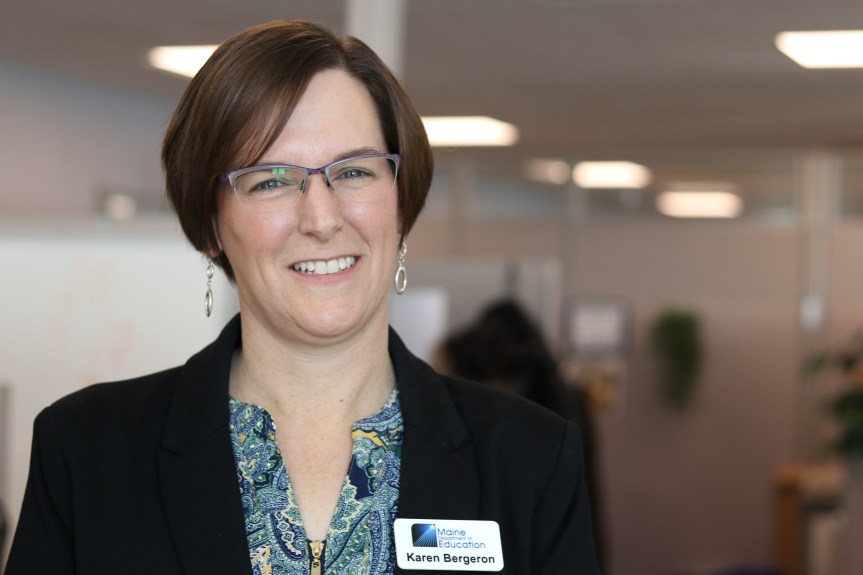
Get to know the DOE Team: Meet Karen Bergeron

Maine DOE team member Karen Bergeron is being highlighted this week as the part of a Get to know the DOE Team campaign! Learn a little more about Karen in the brief question and answer below.

What are your roles with DOE?

I work on the Early Learning Team and direct the Preschool Development Grant.  This grant, a collaboration with DHHS, is allowing the state to study it’s Birth-5 mixed delivery system to learn about strengths and needs in early childhood care and education as well as family supports and services.  The Needs Assessment was recently completed and the current focus is on completing a strategic plan to help plan for the future of the system.

What do you like best about your job?

I enjoy working with people across the B-5 sector and learning more about the great programs and organizations across the state. Additionally, as I come from early childhood education and social services, working with children up to 5, I am also enjoying learning more about the DOE and PK-12 education.

How or why did you decide on this career?

I become really interested in child development when I was in college.  For several years after, I worked in a variety of child care settings before returning to school for a Master’s in Child Development.  I then went on to work in Early Intervention and Home Visiting, enjoying the work of supporting the family as well as the child.  When the opportunity to work on this grant, it felt like a great fit, so here am I.

What do you like to do outside of work for fun?

I feel most of my outside time is spent keeping up with my teenage children (14 and 18) and attending all their sporting, music, and school events.  When there is true down time, I like to hike, alpine ski, hang out at our camp and getting together with friends and family.

Guidelines for Food Donations and Waste in Schools

Purpose: This document should be used to help schools develop their own Standard Operating Procedures (SOP) for leftovers and donating products.

Suggestions for Sharing and Donating Products:

Create a food sharing policy. A school food sharing guidance document which encourages schools and food banks to work together to collect whole and packaged school cafeteria surplus or leftover food and share it with the community.

Food share table guidance. The Department of Education and the Department of Health and Human Services, Maine Center for Disease Control and Prevention have collaborated to revise the guidance titled “Food Sharing Tables – Guidance for Schools.” The Share table guidance is available on Child Nutrition and DHHS websites at the links below:

https://www.maine.gov/doe/schools/nutrition/programs/nslp https://www.maine.gov/dhhs/mecdc/environmental-health/el/

Some important considerations when planning to reduce leftovers and waste:

  • When purchasing, is there an option with less packaging?
  • Will some of this product spoil before it is all used?
  • Is there a less-perishable product that is available in bulk?
  • Buy less, use good portion control methods, and use production records to view usage history.
  • Implement Offer vs Serve for all grades and self-serve for students.
  • Keep breakfast leftovers in the classroom for students to enjoy later, keeping in mind Food Safety guidelines.
  • Provide longer lunch periods for students to socialize and eat.
  • Schedule recess before lunch so students are hungry.
  • Using techniques listed on Smarter Lunchrooms Self-Assessment Scorecard to help reduce food waste.

Despite careful planning, now you have leftovers. What to do?

  • Determine what are the leftovers, via a use waste audit, and waste bins.
  • Separate leftovers into categories: human consumption, perishable, nonperishable and other.
  • Create a Share table using Maine share table guidelines for school lunch and breakfast and plan on how items can be shared in priority order. For example:
  1. Students use should always be first, in café or classroom and utilize self-serve.
  2. Set up outside the cafeteria to share with students and school personnel.
  3. Encourage students to take home items that are non-perishable.
  4. Donate items to soup kitchens and food pantries, utilizing their donation guidelines.
  • Donate food scraps to farmers to feed animals, as per your SOP.
  • Use food waste as composting for school gardens, as per you create SOP.
  • Create a contribution table for lunch box/brown bag items donations. This is the same as a share table, but items brought from home can be included to create one common table.
  • Use left overs for meal options the next day or as a la carte.
  • Use leftovers as an ingredient in another dish. For example, prepare meatball subs from spaghetti and meatballs.
  • Before long weekends/holidays/vacations, clean storage areas for food that will not be usable upon return. Place these on the share table or donate.
  • As an outreach method, provide extra food that was unserved due to over-production to students not taking part in program.
  • Create and maintain a plan for leftover unserved food. Depending on the food item(s), it should be used or donated.

How to develop guidelines for donating food and scraps:

 Collecting excess wholesome food after mealtimes to donate to food pantries is an excellent idea and supported by USDA and State of Maine. Donations must meet all Health Department guidelines as required by the Maine Food Code. Steps to take when creating your guidelines:

  • Determine what is being donated to farmers or other pantries/kitchens.
  • Pantries/kitchens donations are:
    • prepacked items
    • items on the share table
    • items never served and still meet food code safety guideline
  • Farmer donations are:
    • food scraps from the trays
    • food scraps from lunch boxes/brown bags
    • food waste from kitchen
    • opened milk
  • Items can be donated to a pantry located in the school if this is your first consideration.
  • Develop a list of contacts and order of consideration, with farmers and pantries/kitchens being first.
  • Establish boundaries of pickup times.
  • Require donation recipients to bring a container, and notify them of any container requirements.
  • Secure a location for pickup.
  • Address any security issues, parking, which door, identification, etc.

Additional Information:

The US Department of Agriculture stresses the importance of careful menu planning and production practices in the National School Lunch/Breakfast Programs to reduce food waste and improve consumption of healthy foods. But even with careful planning, there can be excess food from time to time. The USDA strongly encourages schools to donate leftover foods to appropriate nonprofit institutions, provided this practice is not prohibited by State or local laws or regulations. Food donation has been a longstanding policy in all Child Nutrition Programs, as clarified in Memos from the Food and Nutrition Service.

USDA also offers programs to encourage controlling food waste such as “USDA Food Waste Challenge”

Schools should consider innovative new programs such as:

https://www.doh.wa.gov/CommunityandEnvironment/Food/FoodWorkerandIndustry/SchoolF oodDonations

https://www.cde.ca.gov/ls/nu/sn/cnp022018.asp

References: SP 11-2012, CACFP 05-2012, SFSP 07-2012

Effective: Feb 1, 2020

Input Sought for Teacher Shortage Areas

As part of a federal requirement, the Maine Department of Education submits to the U.S. Department of Education teacher shortage areas for designation, based on collected data and public input.  The U.S. DOE annually designates teacher shortage areas for purposes of deferment of loan repayments or reductions of teaching obligation.

The Department intends to propose the following as K-12 teacher shortage areas during the 2020-2021 school year:

  • Early Elementary (K-3)
  • Early Childhood (Pre-K)
  • Teacher of Students with Disabilities
  • French
  • Spanish
  • Health
  • Theater
  • English – Second Language
  • CTE (Firefighter/EMT, Automotive Mechanics, Truck, Automotive Body Repair, Diesel Engine Mechanic, Carpentry, Marine Maintenance, Electrician, Computer Info Services, Machine Toll Oper/Shop, Weld Braze Solder, Building Maintenance, Plumbing, Agricultural Prod. Gen, Allied Health, Nursing Asst.)

The Maine Department of Education is committed to working with our schools to most accurately represent the needs and shortage areas across our state. We recognize the diverse geographic regions and varying conditions that comprise our public education system, and strive for equitable and accurate representation.

To provide input regarding a specific shortage area, or to propose additional shortage areas, please contact Stephanie Fyfe at stephanie.fyfe@maine.gov or (207)-624-6751.

MEDIA RELEASE: Maine Launches Innovative Bicentennial Curriculum Initiative; An Opportunity 200 Years in the Making

logo6The Maine Department of Education (DOE), in collaboration with the Maine Bicentennial Commission (maine200.org) and the Maine Historical Society has launched an online resource designed to help Maine teachers integrate Maine’s Bicentennial into their classrooms. The Bicentennial Curriculum Initiative enables educators to share their own lesson plans, download lesson plans created by other Maine teachers, and access new curriculum resources and primary documents related to Maine, its history, and culture.
This Initiative is supported by funding from Jane’s Trust and the Maine Bicentennial Commission.

memory networkAvailable through the Maine Memory Network, the statewide digital museum created by the Maine Historical Society features historical items, online exhibits, and stories contributed by 270 organizations across Maine, the Bicentennial Curriculum Initiative is a resource designed to encourage and support Maine’s pre-k through adult educators in sharing ideas and best practices for implementing engaging and effective lessons to commemorate Maine’s Bicentennial with Maine students. Educators are invited to visit the Bicentennial Education Initiative web page to search by grade level, topic, content area, standard, and other fields for incredible ideas on how to commemorate our State’s Bicentennial with students of all ages.

Today’s launch of the Bicentennial Curriculum Initiative opens the site for your contributions. Please consider uploading a lesson plan, browse the initial lesson plans that have been added to the site, and explore extensive Maine history content. Check back frequently: the site will grow throughout the year and become a permanent resource for teachers.

To submit a lesson plan, educators can visit mainememory.net/lessons/submit to complete a simple submission template, and then upload additional resources. Once uploaded, lesson submissions will be reviewed for completeness and then placed on the Bicentennial Curriculum Initiative web page, where other educators from across the state can access them.

Educators who participate by sharing resources will have their names entered into a random monthly drawing (February 2020 – December 2020) for $400 in cash for use in their classrooms. Participants for this program are intended to be public and private school educators for grades pre-k to 12, Career and Technical Educators, Adult Education Instructors, and Post-Secondary Instructors.

By participating in this unique collaboration, not only are you are setting the stage for present and future Mainers to learn more about our great state, you can also share and learn from the collective brain of educators around Maine.

For more information or to ask questions about the process, please contact Kathleen Neumann kneumann@mainehistory.org.

MEDIA ADVISORY: Commissioner Makin will Kick off Read to ME Challenge Monday, February 3.

WHAT: To kick off the 5th annual Read to ME Challenge, Maine Department of Education’s Commissioner Pender Makin will read to kindergarten-2 students at Lincoln School in Augusta.  Joining the Commissioner will be Senator Matthew Pouliot and Representative Donna Doore.  Following her reading of Full, Full, Full of LOVE, Commissioner Makin will issue a challenge to others to participate in the 2020 Read to ME Challenge campaign.  This simple but powerful campaign challenges adults to read to children for 15 minutes, and to capture that moment via a photo or a video, and then post it on social media and challenge others to do the same. The Read to ME Challenge will run for the month of February, leading up to Read Across America Day on March 2, 2019.

WHEN: Monday, February 3, 2020 at 8:45 am

WHERE:
Lincoln School
30 Lincoln St, Augusta, ME 04330
Media are asked to check in at the main office upon arrival to sign in, get a badge, and directions to the event.

WHO: Students in Kindergarten through 2nd Grade (ages 5 – 8 years old), their teachers, school and district administrators, and Commissioner Pender Makin.

For more information, please contact Maine Department of Education’s Director of Communications Kelli Deveaux at kelli.deveaux@maine.gov or (207) 624-6747.

MEDIA ADVISORY: Commissioner Makin will Kick off Read to ME Challenge Monday, February 3.

WHAT: To kick off the 5th annual Read to ME Challenge, Maine Department of Education’s Commissioner Pender Makin will read to kindergarten-2 students at Lincoln School in Augusta.  Joining the Commissioner will be Senator Matthew Pouliot and Representative Donna Doore.  Following her reading of Full, Full, Full of LOVE, Commissioner Makin will issue a challenge to others to participate in the 2020 Read to ME Challenge campaign.  This simple but powerful campaign challenges adults to read to children for 15 minutes, and to capture that moment via a photo or a video, and then post it on social media and challenge others to do the same. The Read to ME Challenge will run for the month of February, leading up to Read Across America Day on March 2, 2019.

WHEN: Monday, February 3, 2020 at 8:45 am

WHERE:
Lincoln School
30 Lincoln St, Augusta, ME 04330
Media are asked to check in at the main office upon arrival to sign in, get a badge, and directions to the event.

WHO: Students in Kindergarten through 2nd Grade (ages 5 – 8 years old), their teachers, school and district administrators, and Commissioner Pender Makin.

For more information, please contact Maine Department of Education’s Director of Communications Kelli Deveaux at kelli.deveaux@maine.gov or (207) 624-6747.