HEALTH UPDATE: Mosquito-Borne Illnesses and Schools

TO:        Superintendents, Heads of Private Schools, School Nurses, Principals, Athletic Directors and Coaches
FROM:  Maine Department of Education and Maine Center for Disease Control and Prevention
RE:        Mosquito-Borne Illnesses and Schools
DATE:   September 2019

Maine Department of Education (Maine DOE), in collaboration with Maine Center for Disease Control and Prevention (Maine CDC), is sharing this important guidance, developed by Maine CDC, with schools regarding mosquito-borne illnesses.

Three mosquito-borne illnesses are a local risk in Maine: Eastern Equine Encephalitis (EEE), Jamestown Canyon virus (JCV), and West Nile virus (WNV).  These are potentially serious viral infections, spread by the bite of an infected mosquito.  These diseases are especially severe in children (as well as adults over 50).  About one in every three people with EEE die, and many of those who recover have lasting health problems. It is important to practice prevention, since there is no vaccine or treatment for humans.

Maine saw the first human case of WNV in 2012, the first human case of EEE in 2014, and the first human case of JCV in 2017. Maine had two human cases of WNV and one human case of JCV in 2018. Maine also had one case of WNV in a horse and four WNV positive mosquito pools in 2018. Mosquito testing in Maine does not include JCV, and laboratory testing for JCV in humans is done out of state.

Maine identified an EEE positive horse in York County on August 30, 2019. To date in 2019, Maine has not identified any positive human or mosquito pools. Other northeastern states are reporting a very active season for EEE. Massachusetts is reporting one human death and four animal deaths from EEE. Hundreds of mosquito pools in Massachusetts have come back positive for EEE. New Hampshire also reports EEE positive mosquito pools and an EEE positive horse. Massachusetts also reports WNV positive mosquito pools.

The risk for getting a mosquito-borne disease is highest from dusk to dawn and when temperatures are above 50 degrees (and especially above 60 degrees), since these are the conditions when mosquitoes are most actively biting.

Schools play an important role in preventing mosquito-borne illnesses.  Maine CDC and its partners recommend:

  • Cover up outdoors. Children and others on outdoor field trips and participating in outdoor activities for a significant amount of time, when the temperature is above 50 degrees, should cover up with long sleeve shirts, long pants, and long socks.
  • Use repellent.   Use an EPA approved repellent containing DEET, picaridin, IR3535, or oil of lemon eucalyptus on skin. The repellent permethrin can be used on clothing and can be remain effective through several washes. Always follow the package directions.  See here for details on recommended repellents.  Schools that schedule practices or games at dusk or evening with temperatures above 50 degrees should encourage the use of repellent for all participants, including coaches and observers.  Please note:  School employees and volunteers must have authorization from parents/guardians before applying repellents to minor children (CMR 01-026, Chapter 10, Section 2.I.4.iii).
  • Implement Integrated Pest Management strategies. Since we anticipate the risk from mosquito-borne illnesses to continue, schools should consult with their IPM Coordinator to review their IPM policy.  Review information on Maine’s School IPM Program. 
  • Monitor Maine CDC’s arboviral website for the most up to date information on confirmed detection in the state. If mosquito-borne disease activity increases in your area, the following strategies should be implemented:
    1. Strongly encourage the use of EPA approved repellents.
    2. Talk with your school IPM coordinator and implement a plan to reduce the number of mosquitoes and mosquito breeding sites on school grounds.
    3. Limit and/or reschedule evening outdoor activities. Unless the dusk temperature is forecast to be less than 50 degrees, limit or reschedule outdoor evening activities such as school athletic events so people are able to go indoors by one hour before sunset.

All these recommendations are especially true in those areas with previously-identified mosquito-borne illnesses.  However, the lack of identified virus in an area of the state does not mean there is no risk.

Resources to learn more about mosquito-borne illness and mosquito control:

Maine DOE and Maine CDC continue to work very closely together and are greatly appreciative of your assistance in keeping Maine’s children and school communities healthy.

Get to Know the DOE Team: Meet Shawn Collier

Maine DOE team member Shawn Collier is being highlighted this week as the part of a Get to Know the DOE Team campaign! Learn a little more about Shawn in the brief question and answer below.

What are your roles with DOE?

As the Data and Research Coordinator for Special Services, I oversee the collection of special education data and work to ensure data quality for federal and state reporting. My role also involves research and data analysis to evaluate various special education programs and initiatives and assess compliance with federal and state regulations.

What do you like best about your job?

I enjoy the research aspects of my job the most, and I enjoy helping others use data to evaluate programs and initiatives and inform policies that promote student success. I also like to annoy my cube neighbor Leora Byras by singing classic Madonna hits like ‘Borderline’ as I work.

How or why did you decide on this career?

I’ve worked in a wide variety of positions over the years, including social work/case management, college teaching, psychological research, and I served 8 years in the Navy. In my current position, I draw most heavily on the investigative and statistical methods I learned as a researcher and teacher. I have always loved the ‘detective work’ of research – gathering data and testing hypotheses – and it is very rewarding to have these efforts benefit students.

What do you like to do outside of work for fun?

My favorite times are spent outdoors, especially at a beach or lake, with my 7-year-old daughter. I also enjoy hand-drumming and playing folk music, especially Celtic and Eastern European, on the fiddle. This winter, I’d like to start an ‘extreme’ (outdoors, in the snow) badminton league.

MAINE HARVEST OF THE MONTH

ABOUT

The Maine Department of Education Child Nutrition Program is excited to announce the official launch of Maine’s Harvest of the Month (HOM) Program. The program was piloted in schools in Spring 2019, with participation from over 165 schools state-wide. The full roll out of the program begins this fall for School Year 2020.

PROGRAM BACKGROUND

Harvest of the Month (HOM) is a nationwide marketing campaign, promoting the use of seasonally available, local products in schools, institutions, and communities. Each month a different local product is highlighted, and participating entities pledge to serve the product and promote it through educational materials and activities. The program launched in California, and has been replicated by dozens of other states across the country. With Maine’s participation, all New England states now have Harvest of the Month programs.

MAINE HARVEST OF THE MONTH

Participating School Food Service Directors are asked to take a pledge to serve the monthly HOM product at least two times per month in their cafeterias. In addition to this, they pledge to display HOM promotional materials, such as posters, fun facts, and stickers for students who have tried the HOM product. Featured recipes are also provided each month. In taking the pledge, schools agree to participate in evaluations so that local food procurement can be tracked and to analyze the success of the program. Local products may be sourced directly from farms, farmer cooperatives, and distributors. When buying produce directly from a farm or farmer cooperative, School Food Service Directors may take advantage of the Local Produce Fund, which reimburses $1 for every $3 spent on local produce (up to $1,000 per district for SY 2020).

To sign up for the Harvest of the Month Program, please sign the pledge at https://forms.gle/M3av147TXBHBjGPh9. Interested school districts have until October 1, 2019 to sign up.

FOR MORE INFORMATION, CONTACT: Stephanie Stambach, Child Nutrition Consultant at Stephanie.stambach@maine.gov or 207-624-6732, or visit www.maine.gov/doe/harvestofthemonth/

MORE Webinars to Assist with Data Submission!

To assist those who are responsible for the important task of reporting data to the Department of Education, the DOE Data Team will be holding two webinars on Tuesday September 24th.

  1. English Learners (EL) Webinar September 24th from 10:00 AM to 11:00 AM

This webinar will focus on required data submissions for students who are English Learners. If you are tasked with submitting student data for English Learners, you are encouraged to attend. If you have any questions, comments or concerns in regards to this webinar, please do not hesitate to contact us at the MEDMS helpdesk at MEDMS.Helpdesk@Maine.gov  or (207) 624-6896.

Registration URL:  https://attendee.gotowebinar.com/register/8362249225049745165

Webinar ID:  597-624-635

  1. Private School Oct. 1st Resident Enrollment Report (EF-M-13) Webinar September 24th from 1:00 PM to 2:00 PM

This webinar will focus on the Oct. 1st Resident Enrollment Report (EM-F-13), which should be completed and submitted by Private Schools. If you are tasked with submitting the Oct. 1st Resident Enrollment Report (EM-F-13), you are encouraged to attend. If you have any questions, comments or concerns in regards to this webinar, please do not hesitate to contact us at the MEDMS helpdesk at MEDMS.Helpdesk@Maine.gov  or (207) 624-6896.

Registration URL: https://attendee.gotowebinar.com/register/5395788843542832909

Webinar ID:  646-963-635

Mandatory Annual Notice of Integrated Pest Management Requirements

Encounters with rodents, hornets, bats, poisonous plants and other pests can threaten the health and safety of students, staff and visitors on school properties. However, pesticides can also pose a risk, and the use of these chemicals in Maine is strictly regulated.  All public and private schools serving any grades pre-k through 12 are required, under state law, to adopt and implement an integrated pest management (IPM) policy to reduce potential risks of exposure to pests and pesticides.

Specific requirements include:

Appointment of IPM Coordinator.  Appoint a staff member to serve as and annually report their name and contact information (e-mail address and phone number) by September 1st via the Department of Education NEO system. If unable to use NEO, report via email to pesticides@maine.gov or by calling 207-287-2731. This information is required to provide necessary educational information and training and ensure compliance with regulations.

Training. The IPM Coordinator must complete two trainings: 1) Initial Training Module must be completed within one month of appointment (available online at www.maine.gov/schoolipm  click on ‘Trainings and Events’) and 2) Comprehensive IPM Training Training must be completed within one year of appointment (free workshop offered in numerous locations throughout the year. See schedule at www.maine.gov/schoolipm). In addition, the IPM Coordinator must earn 1-hr of Continuing Education credit per year.

Notification, Signage and Authorization. A notice describing your school’s IPM program must be included in the school policy manual or student and staff handbooks.  Specific information is required.  A sample notice is available at www.maine.gov/schoolipm.  This information must be kept up to date, but an annual notice to parents and staff is no longer required. A notice about the schools’ IPM Policy must be published in your policy manuals, such as the student and staff handbooks. Before any pesticide application on school properties (including non-school properties used primarily for official school functions) the IPM Coordinator must authorize it. Parents and staff must be notified five days in advance and signs must be posted two days in advance. Some types of applications are exempted. More information and sample notices are available at maine.gov/schoolipm or by contacting the Maine Board of Pesticides Control at pesticides@maine.gov or 207-287-2731.

Licensing. A commercial Pesticide Applicators License is required for all pesticide applications except for the control of stinging insects and for routine use of disinfectants.

Record-Keeping.  A Pest Management Activity Log must be kept current and on file for at least two years. Specific records about IPM steps taken and pesticide use must be kept.  Sample logbook pages are available at maine.gov/schoolipm.

The School IPM Program, Maine Department of Agriculture, Conservation and Forestry, is available to help with pest problem-solving advice, training resources and more (www.maine.gov/schoolipm, e-mail: kathy.murray@maine.gov, phone: 207-287-7616).  For more information contact the Maine Board of Pesticides Control (pesticides@maine.gov or 207-287-2731) or Pat Hinckley at the Department of Education (pat.hinckley@maine.gov, 207-624-6886).


Hampden Academy Recognized for their Dedication to Creating a Climate of Inclusion

Submitted by Cindy Carlisle, Student Data Specialist for Regional School Unit  22.

Hampden Academy in RSU 22 was named on ESPN Honor Roll for 2019 — a list of top 34 schools from across the country — as part of its Special Olympics Unified Champion Schools National Recognition Program.

A “Unified Champion School” is one that has demonstrated commitment to inclusion by meeting 10 national standards of excellence developed by a panel of leaders from Special Olympics and the education community.

The aim of Unified Champion Schools is to incorporate Special Olympics sports, leadership and related activities that empower the youth to be the agents of change in their communities. shifting the focus from the events to that of a whole school movement for inclusion. Special education and general education students — along with educators and administrators — are encouraged to work together to create supportive classrooms, schoolwide activities and opportunities for growth and success for all.

See the full list here

PRIORITY NOTICE: Mandatory Annual Notification of Eligibility for Schoolwide Programs

Updated annual notification of eligibility for schoolwide programs 

Schools that receive federal Title I funds, have poverty rates of at least 40 percent and have approved Title IA Schoolwide Plans are eligible to use their Title I funds – and funds from other sources – to develop “schoolwide programs.”

Schoolwide programs are comprehensive reform strategies, aimed at raising the achievement levels of all students.

To facilitate the inclusion of students with disabilities in schoolwide programs, the Individuals with Disabilities Education Act (IDEA) and the federal regulations at 34 CFR §300.206(a) allow school administrative units to use a portion of the funds they receive under Part B of IDEA for any fiscal year to fund such schoolwide programs.

SAUs can use those funds, as long as students with disabilities receive the services to which they are entitled under their Individualized Education Programs and that are guaranteed under IDEA.

The amount of Part B funds a school expends for schoolwide programs cannot exceed the amount the SAU has received for that fiscal year, divided by the number of children with disabilities in that unit, multiplied by the number of children with disabilities participating in the schoolwide program.

For more information, contact Maine DOE’s Title I Coordinator Monique Sullivan at monique.sullivan@maine.gov, or Acting Director of Special Services Jan Breton at janice.breton@maine.gov.


Maine Partners Help Tackle Opioid Addiction with Mobile Bedroom Trailer

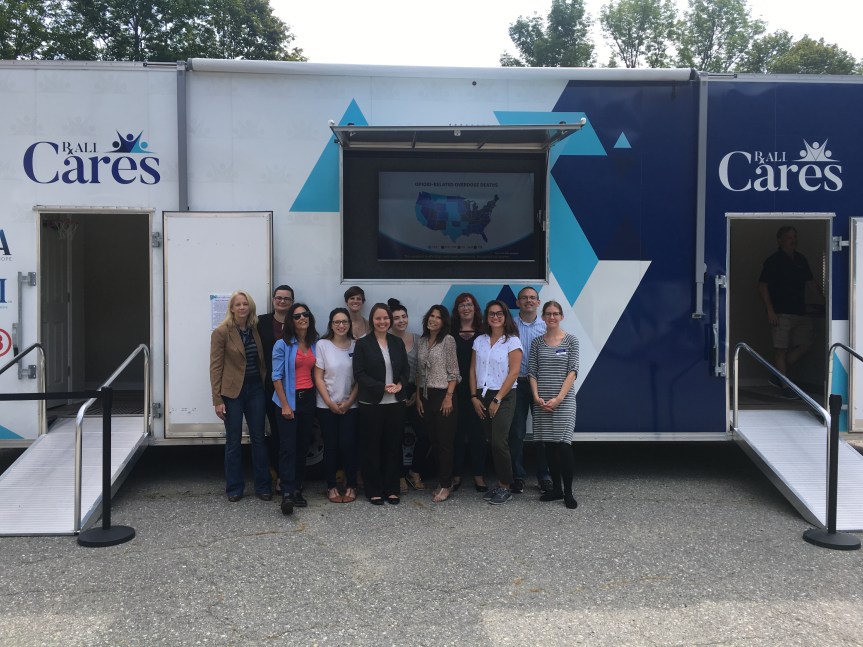
The Rx Abuse Leadership Initiative (RALI) of Maine hosted tours of a youth bedroom trailer in the parking lot at NAMI Maine (National Alliance on Metal Illness) today in Hallowell in an effort to raise awareness about the warning signs of opioid misuse in youths.

The youth bedroom trailer, created by Code 3 as a mobile awareness campaign, is staged as a typical teenager’s bedroom with tell-tale warning signs of opioid use arranged throughout the room. Tours of the trailer take participants through the bedroom pointing out a number of signs that the youth is misusing substances. The warning signs are often identifiable to veteran law enforcement but may not be as obvious to parents, guardians, or other adults.


Today’s tours hosted local law enforcement officers in addition to state government officials, members of the legislature, and local community members. The Trailer is scheduled to make another appearance today, details below, and plans for an appearance in Bangor are in the works:

Monday, September 9
3:00 pm-6:30 pm
Kennebunk Elementary School
177 Alewive Road
Kennebunk

RALI Maine is an alliance of organizations elevating programs that have a real impact on our state’s opioid crisis. They support a broad range of programs, including prevention, treatment and recovery services, facilitating the safe disposal of unused prescription medicines, and raising awareness of the warning signs of opioid misuse. For more information, including a list of local partners visit: https://www.rali-me.org/


Free Adverse Childhood Experiences and Resilience Building Training for Childcare and PreK Teachers

The Preschool Development Grant (PDG), B-5, a collaboration between the Departments of Education and Health and Human Services, will be providing free trainings on Adverse Childhood Experiences (ACES) and resilience building. The PDG is a one-year planning grant to study and improve the birth-5 early care, education and service system in our state, and has 5 goals:

  1. Conduct a statewide needs assessment plan
  2. Develop statewide Birth to 5 Strategic Plan
  3. Maximize parental knowledge and choice
  4. Share best practices
  5. Improve overall quality of programming for children birth-age five.

To address goal 4, the PDG is providing funds to team up with Maine Resilience Building Network (MRBN) and offer a free training around Adverse Childhood Experiences (ACES) and resilience building. Strong Kids, Strong Families, Strong Communities: The Impact of ACES and Resilience Building will cover Adverse Childhood Experiences research, early brain development science, and protective factors such as positive relationships. Strategies to promote resilience building in classrooms and to support families and their children, birth-5, will be offered.

This training is intended for child care and preschool/prek staff, and will be offered in 12 sites throughout the state from 6:00-8:30 PM on the following days:

Tuesday, 9/24/19, Brunswick

Tuesday, 10/1/19, Caribou

Wednesday, 10/2/19, Houlton

Tuesday, 10/8/19, Owls Head

Tuesday, 10/15/19, Mexico

Wednesday, 10/16/19, Westbrook

Thursday, 10/17/19, Belfast

Monday, 10/21/19, Bangor

Wednesday, 10/23/19, Auburn

Tuesday, 10/29/19, Calais

Monday, 11/4/19, Augusta

Tuesday, 11/5/19, York

To find out more and to register, visit the “Upcoming MRBN Events” at  https://maineresilience.org/ or contact Karen.J.Bergeron@maine.gov


Meet the First Cohort of Maine’s Leadership Development Program 

The Maine Department of Education (DOE) recently launched a new leadership program called Maine’s Leadership Development Program (Maine LDP). The initiative aims to build and strengthen instructional leadership skills among Maine’s educational leaders at schools, districts, and across the state.  

A group of 18 education leaders in Maine, including superintendents, assistant superintendents, curriculum and instructional leaders, regional education leaders, Maine DOE staff, and other school and district level staff are among the first cohort of candidates on track to become certified trainers and facilitators of future cohorts. The names, pictures, and biographies of the group of Fellows in the 1st cohort of the Maine LPD can be found here. 

The Maine LDP is a partnership among the Maine DOE and its successful Transformation Leaders’ Network, along with the National Institute for School Leaders (NISL) and their nationally recognized Executive Development Program (EDP). NISL experts are delivering the Maine LDP curriculum and will provide additional training for Maine LDP facilitators. The cohort has already begun its trainings with a session about strategic thinking within systems, and high quality aligned instructional systems in classrooms, schools, and at the state level. The program is a full year commitment. 

LDP Fellow Al Pfeiffer, Superintendent of Vassalboro School Department, had this to say about the training so far, “ Some of the richest, most robust and rewarding professional learning that I have experienced in recent memory. Powerful readings, case studies reinforced with video snapshots, and engaging conversations have left me eager for the next session and future sessions over the coming year.” 

Paul Knowles, an educational leadership lecturer at the University of Maine and the UMaine Liaison to the Maine DOE for this initiative added that, “The University of Maine and the Educational Leadership Department are pleased to partner with the Department of Education for this important work. Personally, I am impressed with the caliber, diversity, passion, and commitment of the leaders participating in Maine’s Leadership Development Program.” 

Maine’s LDP is delivered through a blended learning model and includes study, inquiry, and hands-on activities with practical applications that meet the rigorous expectations for today’s educational leaders. Some graduates from this cohort will deliver the Maine LDP curriculum to future cohorts regionally.  The Department will be releasing an application for those interested in applying to be in the 2nd cohort of the LDP in March of 2020.