PRIORITY NOTICE: Conceptual Conversation Around the Performance Evaluation and Professional Growth Systems (PEPG)     

Since 2012, educators across the State of Maine have worked collaboratively to create locally developed, effective models for professional growth. Since that time, plans have been revised and refined to reflect the requirements of Chapter 180 and school or district goals. In response to changes to Chapter 180 made during the 129th legislative session, The Maine Department of Education invites interested stakeholders to attend a conceptual conversation related to educator effectiveness on August 5, 2019 from 3pm-5pm at the Burton Cross Building (Room 103A and 103B) in Augusta.  The conceptual conversations will provide an opportunity to explore hallmarks of educator effectiveness in the current rule Chapter 180.   

PL 2019, Chapter 27, removed the mandate that student learning and growth be used as a measure in summative effectiveness ratings effective on September 1, 2021.  In accordance with the Maine Revised Statutes, Title 20-A, sections 13704 and 13706, the Department of Education is required to amend the department’s rule Chapter 180: Performance Evaluation and Professional Growth Systems, to implement the provisions of the law, and submit the provisionally adopted rule to the Legislature.   

The department intends to take the following steps in order to submit the provisionally adopted rule to the Legislature by January 10, 2020, as required.   

  1. On August 5, 2019 stakeholders are invited to attend a conceptual conversation which will be facilitated by Maine Department of Education’s Educator Effectiveness Specialist Emily Gribben and Legislative Liaison Jaci Holmes; the Commissioner and other Maine DOE members may join the conversations as their schedules allow. This conversation will be guided by the following discussion prompt: 

Prompt: What are the critical components of educational practice that lead to educator’s overall effectiveness?  

2.  Taking into consideration the insights gained from conceptual discussions and the requirements under Chaptered Law 27, the Maine DOE staff will write a proposed rule Chapter 180 and begin again the Maine Administrative Procedures Act (A.P.A.) major substantive rule process pursuant to 5 MRS §8052 (public notice of filing, public hearing, open public comment period).The Maine DOE is working diligently to honor the hard work that has been done by steering committees and all educators to implement PEPG systems that foster improved teaching and learning.   

3.  Once the proposed rule has been filed, the public will be notified of the scheduled public hearing and comment period.  This will be an opportunity to provide written and oral comments regarding the proposed rule.  

4.  The department will review all comments and respond accordingly.  Updates to rule will then be filed for legal review before being submitted to the legislature by January 10, 2020.   

For more information on the conceptual conversations for Chapter 180 and Educator Effectiveness, contact Emily Gribben at Emily.gribben@maine.gov.   
 

Seeking Innovative Educational Leaders to Join Maine’s Leadership Development Program

The Maine Department of Education is thrilled to announce that the facilitator candidates for Maine’s Leadership Development Program (Maine LDP) have been selected. The selected facilitator candidates represent the following regions of the state: Washington, Kennebec, Penobscot, Cumberland, Androscoggin, and York counties.  The Department is looking forward to highlighting the selected facilitator candidates in August.  Maine’s LDP is an initiative designed to build and strengthen instructional leadership skills among Maine’s educational leaders at the school, district, and state levels. In our ongoing efforts to support and foster the educational expertise in Maine, educators who aspire to do the same are invited to take advantage of this high impact opportunity!

In recent weeks, the Department has been contacted by educational leaders interested in participating in the Maine LDP, but not able to commit to serving as future facilitators. In response to this feedback, the Department has made available  a limited number of seats for Maine leaders join the cohort. If you are interested in participating in Maine’s LDP and are able to make the one-year commitment, this is your chance to join this exciting professional learning opportunity. Maine’s LDP brings together the Maine DOE’s successful Transformational Leaders’ Network with NISL’s nationally recognized Executive Development Program (EDP).

Maine’s LDP is delivered through a blended learning model and includes study, inquiry, and hands-on activities with practical applications that meet the rigorous expectations for today’s educational leaders. Completion of the program can contribute to credit hours for participants pursuing an advanced degree, or contact hours for re-certification purposes.

Benefits for Maine Schools

  • Prepares educational leaders to lead for excellence and equity
  • Increases student achievement, fosters a culture of high expectations
  • Enhances teacher recruitment, retention, and quality

Program Curriculum

  • Nationally researched, evidenced-based, and locally delivered in a cohort model
  • Improves the practice of leadership, transforms instruction and student achievement in schools
  • Consists of 12 two-day units, delivered in 12 to 15 months
  • Bridged with online coursework, readings and job-embedded application of key concepts

Characteristics of Ideal Candidates

  • A belief in and commitment to improving instruction and increasing student achievement
  • Experience (five years) in a leadership role at the school, district, and/or state level and background as a classroom teacher. Ideal candidates include, but are not limited to, principals, assistant principals, instructional coaches, deans, Title I directors, department leaders, ESEA coordinators, special education directors, English Learner directors, assistant superintendents, instruction and curriculum directors, and superintendents.
  • Excellent communications skills; able to effectively facilitate professional development for peers
  • Demonstrated skills in mentoring and coaching
  • Experience as a successful practitioner—able to translate concepts to actions, theory to practice, and programs to craft
  • Able to participate in the entire NISL program and attend all required sessions
  • Likely to live and work in Maine for the next five years

The Department encourages experienced educational leaders to consider applying to join the initial cohort of participants for Maine’s LDP. The deadline for participant candidates is August 5, 2019. Please visit http://www.maine.gov/doe/educators/maineldp for more information and email nisledp.doe@maine.gov  with any questions. Interviews will be scheduled upon review of submitted applications.

Annual Audit Requirements- an Early Reminder

We know that superintendents are busy during this season of hiring and preparation for the new school year. We wanted to get audit dates to district leaders and key personnel as an early reminder, so that you can mark your calendars and take any initial steps needed.

Initial Report to the Commissioner Due November 1st:

As is required by Title 20-A MRSA 6051 §4, statements of assurance and Maine Education Financial System reconciliations are due to the Department by November 1, 2019. Please submit via email to DOE.audit@maine.gov .

  • Any adjustments identified by these reconciliations should be uploaded to the Maine Education Financial System in NEOby November 30, 2019.

Annual Audit Reports Due December 30th

Annual audit reports are due within six months after the end of the audit period (e.g., reports for the fiscal year ending June 30th are due on or before December 30th).

  • Per statute, the auditor is required to review the audit with the school board.
  • Per statute, it is the school board’s responsibility to submit the annual audit document unless it is stated in the engagement letter that the audit firm will submit the audit to the Department on behalf of the school board.
  • Municipal school units are required to submit either a combined annual audit or a school department audit and a municipal audit to the Department. The municipal annual report (a.k.a. town report) cannot be accepted in lieu of the complete municipal annual audit.
  • Per statute, Maine DOE must receive a Schedule of Expenditure of Federal Awards(SEFA), which includes federal award expenditures for all reporting entities, even if a Single Audit (formerly A-133 audit) is not required to be conducted. The SEFA provides information needed by Maine DOE to conduct sub-recipient monitoring as required by the US Department of Education and is due at the time of the annual audit.
      • In municipal school units where a combined audit is not conducted, Maine DOE should receive two audits: an audit with a SEFA for the school department, and an audit for the city/town including a SEFA.
  • If a management letter is prepared by the auditor, a copy must be submitted to Maine DOE with the annual audit, as this letter provides us with information needed to conduct sub-recipient monitoring, as required by US DOE.

Extensions and Subsidy Payments

If an extension or exception is needed for the deadline to submit either the municipal or school department audit, the superintendent must contact us to request the extension.

The forms are available on the Fiscal Review and Compliance webpage, under forms on the menu bar.

  • Extensions will expire no less than 30 days from the date the extension was submitted.
  • Extension requests will be considered until June 30th (six months after due date); extensions will not be valid after June 30th and all municipalities and school administrative units with overdue audits that have not submitted an extension request before May 31th may have a delay in subsidy release. Those who have not submitted an extension request will have subsidy withheld until addressed.

Please submit all annual audit documents, reports, information requests, questions and other audit correspondence via email to DOE.Audit@Maine.gov or via the direct link provided on the Fiscal Review and Compliance webpage.


Educators Invited to Write Maine’s Computer Science Plan. Application Due Monday, July 29th!

The Maine Department of Education is hosting a Computer Science Summit, where educators will create a statewide plan for Pre-K to 12 Computer Science. This plan will help coordinate and guide the efforts of many stakeholders, and serve as a set of recommendations in a report to the Legislature in January 2020. The two-day event will be held on Monday, August 5th and Tuesday, August 6th, 2019 at the RiSE Center at the University of Maine in Orono.

In order to make sure we have a diverse set of perspectives and all the needed knowledge, the Department will be limiting the participation to 40 educators, who will be selected based on a short application process. The goal is to have representation from various geographic areas, content areas, and grade-levels to shape this plan over the course of the two-day Summit. Additionally, the Department hopes to have representation from district and school leadership.

The application to participate can be located using this link or by copying and pasting this link into your browser: https://forms.gle/3EGengsXFyMNtgLt7

The application is due by close of business Monday, July 29th and invites will be sent on Tuesday, July 30th, 2019. 

Reimbursement for mileage, overnight accommodations, and meal costs are available for eligible participants.

The Department will also be inviting a variety of stakeholders to participate in specific ways in this process before, during, and after the Summit, however, this two-day gathering is primarily designed for educators to create the statewide plan.

Who: Maine Pre-K to 12 Classroom Teachers and Administrators (limited by application process)

What: Creating a Statewide Computer Science Plan

Where: RiSE Center in Estabrooke Hall at the University of Maine in Orono

When: Monday 8/5 from 10am – 8pm AND Tuesday 8/6 from 9am – 5pm

Application (https://forms.gle/3EGengsXFyMNtgLt7) due Monday, July 29th, 2019.

If you are unable to participate in the two-day event, but would like to share input, please review the digital workspace educators will use during the planning process. There are links to share your questions, ideas, feedback, and notes at the top of most pages. Click here for the link to the Computer Science 2019 State Planning Digital Workspace or copy and paste this link into your browser: https://sites.google.com/view/mainedoecsplanning2019/home

For answers to questions or more information, please reach out to Beth Lambert, Coordinator of Secondary Education and Integrated Instruction at Beth.Lambert@maine.gov or 207-624-6642.


Cultivating Safe, Equitable, Strengths Focused School Communities- A Collaborative Opportunity

What:

The goal of this convening is to build capacity, communication, and collaboration among youth serving practitioners based in schools, law enforcement, community corrections, and community programs to cultivate safe, equitable, strengths focused school communities where all youth experience positive outcomes. The meeting will advance effective and ongoing multidisciplinary partnerships to increase communication, expand training and resources, align strategies, and measure progress across youth serving systems.

When:

Tuesday, July 30, 2019
8am-4pm

Where:

Cony High School
60 Pierce Dr.
Augusta, ME 04330

More Details:

Registration and breakfast open at 8 am, the program will begin at 9 am. The full agenda, featuring Judge Steven Teske presenting the School Justice Partnership Model, will be published in July.

Contact:

Contact Jay Pennell with questions:
jay.h.pennell@maine.gov

Employee of the Week: Rhonda Casey

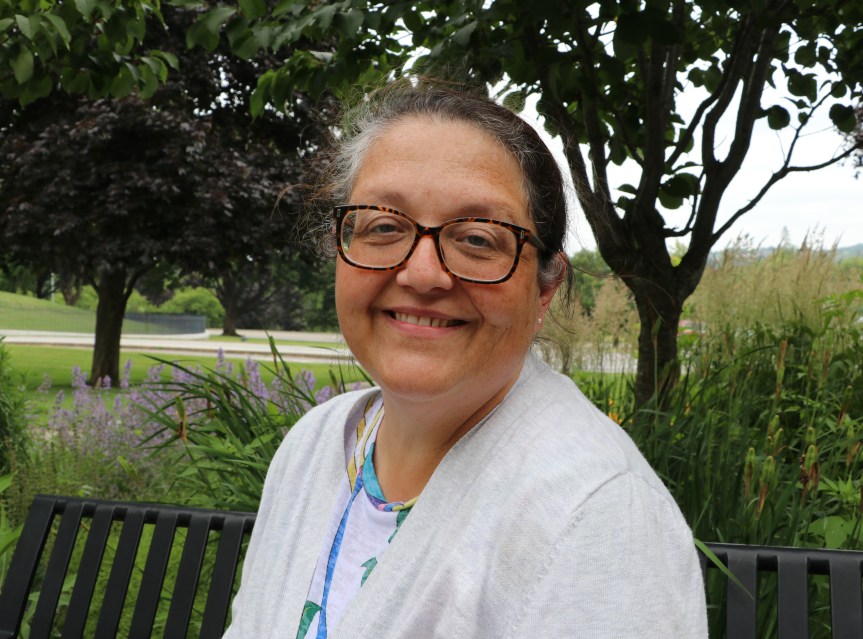
Business Manager in the Unorganized Territory , Rhonda Casey is being highlighted this week as the Maine DOE’s Employee of the Week! Learn a little more about Rhonda in this brief question and answer:

What are your roles with DOE?

I am the Business Manager in the Unorganized Territory. My role within the DOE is to support education services for all residents of the unorganized territory, its students, staff who are employed by the UT, the UT schools, monitoring education expenses, establishing sufficient a budget, reporting yearly education expenses to the Department of Audit for reimbursement, monitoring federal grants and expenses.

What do you like best about your job?

I like the variety of my position, the people I work for and with. In my position, there is always something new or different to challenge me. I began employment with the state 1988 as a Clerk Typist I working for the Controller’s Office part-time. A few short months later a full-time position was offered to me filing tax certificates – not something that I enjoyed, but a full-time job none the less. Then in April of that same year, I began employment with what was known as Management Information Systems(MIS) within the Department of Education. Today, MIS is School Finance and Operations. I quickly found that I enjoyed the fast pace work of this agency as well as the variety of the position.

How or why did you decide on this career?

In high school I took the business track career path and began working as a secretary when I was very young. My parents taught me to work hard, do my best, keep an open mind, and to continue to learn and grow. In state government advancement opportunities were available, I worked hard and took advantages of opportunities when these opportunities presented themselves. My state career path has taken me from full-time filing to traveling from Kittery to Presque Isle to Vinalhaven, working with special education students to CEO’s, as well as teachers and parents.

What do you like to do outside of work for fun?

This is an easy one! Outside of work I spend time with my husband of 27 years, our parents, two dogs, four children, their spouses, and five grandchildren. My husband and I like to disc golf, garden, go camping, fly fish, ice fish, ride our motorcycles, snowmobile, and snow shoe. I enjoy the four seasons Maine offers and we spend as much time outside as we can.

Shana Goodall Named 2019 Maine History Teacher of the Year

Shana Goodall, a teacher at Orono High School, has been named the 2019 Maine History Teacher of the Year, an award presented annually by the Gilder Lehrman Institute of American History, the nation’s leading organization dedicated to K-12 American history education.

Inaugurated in 2004, the History Teacher of the Year Award highlights the crucial importance of history education by honoring exceptional American history teachers from elementary school through high school. The award honors one K-12 teacher from each state, the District of Columbia, Department of Defense schools and US Territories. In fall 2019, the National History Teacher of the Year will be selected from the pool of state winners.

Ms. Goodall is a lifelong learner, as evidenced by her embrace of technology in the classroom and her continuous quest to find new, engaging ways to present material.  She earned an undergraduate degree in Growth and Structure of Cities from Bryn Mawr College (Bryn Mawr, Pennsylvania) and graduate degrees in teaching and educational leadership from the University of Maine (Orono, Maine).  In her classroom, she creates a flexible environment for all learners to explore history while stimulating, directing, and pacing whole class instruction while at the same time encouraging independent inquiry.  Shana is noted for her sense of humor and laugh, and students view Shana as a mentor and valuable source of information and guidance.

In addition to a $1,000 honorarium, Shana Goodall’s school will receive a core archive of American history books and Gilder Lehrman educational materials and recognition at a ceremony at the annual fall conference of the Maine Council for the Social Studies to take place on Monday, November 5, 2019.

The National History Teacher of the Year Award will be presented by John Avlon, Senior Political Analyst and anchor at CNN, at a ceremony in New York City on October 2, 2019. Past presenters at the ceremony include the Honorable Sandra Day O’Connor, Good Morning America‘s Robin Roberts, First Lady Laura Bush, former US Secretary of Education Arne Duncan, and former New York City Mayor Michael Bloomberg.

Nominations for the 2020 History Teacher of the Year awards are now open. Students, parents, colleagues, and supervisors may nominate K-12 teachers for the award by visiting gilderlehrman.org/nhtoy. The deadline for 2019 nominations is March 31, 2020.

Maranacook Community Middle School Students Among 12 Winners in 2nd Annual Student Podcast Contest

Submitted by Kristen Levesque, Principal at Maranacook Community Middle School

Podcast audiences have grown exponentially in the past few years and so has my enthusiasm for having students extend their writing skills with this new genre.  After many trials and semi-successful experiments, the students have identified and operationalized the attributes of a captivating podcast adventure to the extent that two of them were recently announced as winners of the second annual New York Times Podcast Contest.  Designed for students age 13 to 18, Silas Bartol and Mila Barnes-Bukher, were among the youngest contestants of the 12 winning podcasts.

Class member, Maggie Morrill, deserves credit for the inspiration provided in her original story entitled:  “Alexa, and the Start of the Robot Revolution.” The story was adapted by Silas and Mila to conform to a podcast format based on several weeks of study on “What makes a great podcast.”  All three students were 7th graders at Maranacook Middle School in Ms. Godin’s GT English/Language Arts class when this assignment and contest challenge was undertaken.


A Hopeful Path Forward at Maine’s Opiate Crisis Summit

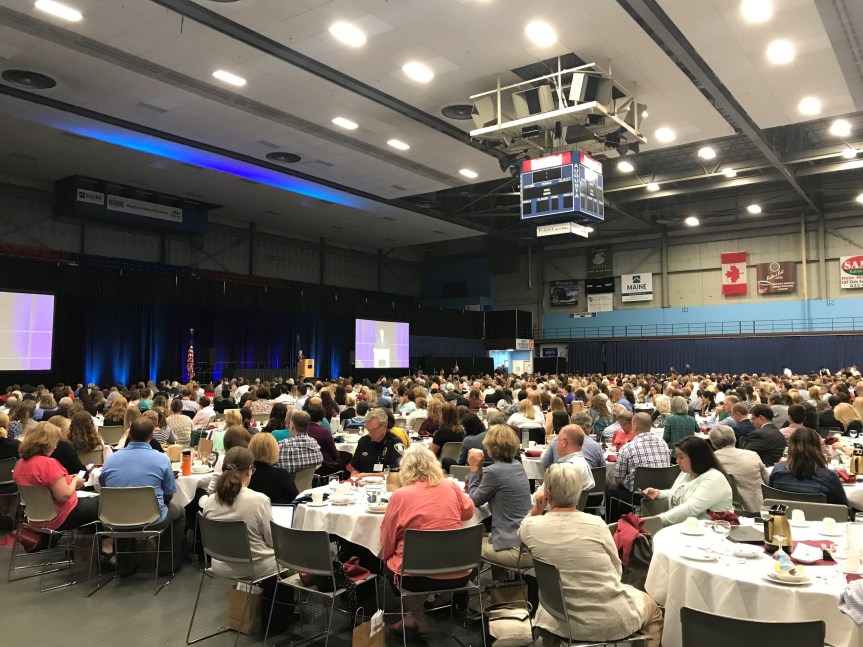
In her opening remarks at the Opiate Response Summit, Governor Janet Mills expressed her appreciation for Gordon Smith. One of the Governor’s first actions, post-inauguration, was to found the Opiate Response and Prevention Taskforce directed by Smith. Mills’ founding of this taskforce underscores what a large priority the Opiate Epidemic represents for Mainers. Turning the Tide: Maine’s Path Forward in the Opiate Crisis, a summit which packed the Augusta Civic Center with over 1,000 people on the 15th, represented an overwhelmingly hopeful attitude towards harm reduction and prevention. Several days prior to the event, Smith commented that the need to cap registration at 1,050 people was a good problem to have. Many are invested in solving this Crisis.

The Governor opened the event with a grave message stressing the urgent need for awareness, and what is at stake for Maine families. In the past five years, 1,700 Mainers have died of drug overdose. If 1,700 baby seals washed up dead on the beach, said Mills, there would be a massive public response. “These are not ‘druggies’,” said Mills, “they are neighbors.” The Governor stressed in her speech that people affected by substance use disorders are family members: they are sons and daughters and parents, employees and employers, neighbors and friends.

Commissioners from many government Departments such as Health and Human Services, Public Safety, and Law Enforcement were present. Department of Education Commissioner Pender Makin was also in attendance. Following the Governor’s remarks, attendees heard from Sam Quiones, author of Dreamland, a book which outlines the evolution of an American Opioid Crisis.

Afterward, the nine morning breakout sessions began. These were hosted by a variety of experts. The diverse topics from both morning and afternoon sessions included the following critical subjects:

· Addressing Stigma: Using Researched-Based Evidence

· Building Public Health Infrastructure

· Needle Exchanges and Naloxone Distributions

· Challenges in Recovery Centers and Housing

· Community Prevention Services at Work

· Data to Action: Harnessing Information to Tackle the Opioid Crisis

· Emerging Threats: Current and Predictive Trends

· Harm Reduction with Neonatal Focus

· How to Best Navigate Jobs and Transportation During Recovery

· Improving Access to Medications for OUD: Considerations for Special Populations

· Improving Access to Medications for OUD: Engaging More Clinicians to Offer Treatment

· Law Enforcement and its Role of Bringing Hope to Recovery

· MaineWorks: Offering Dignity, Trust, and a Path Forward

· OD Mapping and Overdose Response Through Community Partnerships

· Responsible Prescribing and Pain Control Debate: Has the Pendulum Swung Too Far?

· State Prevention Services: Opioid Task Force Update

· The Importance of Law Enforcement in Community Based Recovery

· The Power of Community Coalitions

· Voices of Recovery: Panel of Individuals in Recovery

Summit2
Peter Michaud, Debate Moderator addressed the audience at the Responsible Prescribing and Pain Control Debate breakout session.

At lunch, the parents of two young men who lost their lives to substance abuse disorders spoke and shared their story before the assembled audience. Former White House Director of National Drug Control Policy, Michael Botticelli, then spoke on the importance of community support in the recovery process. Speaking on his own experience with the disorder, he highlighted the stigma which only perpetuates the issue. “Epidemics don’t happen in a vacuum,” he said. Botticelli stressed the ways in which the epidemic is exacerbated by poor data, over-prescription, and lack of information and resources. He closed his remarks by pointing out the number of options that Maine should employ moving forward, saying “We cannot dictate other people’s paths to recovery.”

The panel of speakers who following the afternoon breakout session demonstrated a deluge of support from state government bodies all over New England and the North East. The Senior Advisor to the Governor of Rhode Island Tom Coderre, Senior Advisor to the Governor of New Hampshire David Mara, and the Commissioner of Health in Vermont Dr. Mark Levine sat on the panel, as well as the President of the American Medical Association Dr. Patrice Harris. Coderre succinctly represented the mentality of support shared by those in attendance when he encouraged Maine to “flatter Rhode Island by mimicking any of their ideas.” The goal of the Summit was to build on existing positive information so New England can better tackle this unprecedented Crisis.

Turning the Tide: Maine’s Path Forward in the Opiate Crisis served as a lightning rod for activists who wish to generate a reason for hope. And there are reasons to be hopeful. The Summit alone demonstrates an effort by the administration and the public to address an Opiate

Crisis sweeping Maine and America. Those in the recovery process are being given a larger voice at the table. Maine Law Enforcement is now prepared to administer Naloxone to those experiencing an overdose. In fact, 2017 was Maine’s high water mark for overdoses. We are turning the tide, and this Summit was among the first steps of many more to come.

Employee of the Week: Leora Byras

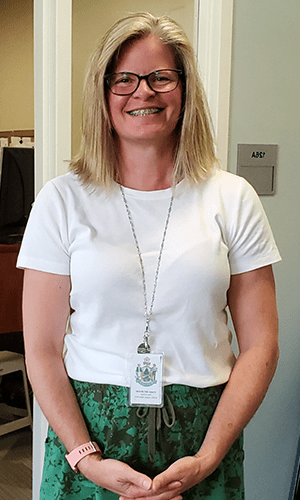
Education Specialist Leora Byras is being highlighted this week as the Maine DOE’s Employee of the Week! Learn a little more about Leora in this brief question and answer:

What are your roles with DOE?

My position at the DOE is on the Public School Monitoring Team within the Special Services Department.  We work with public schools, regional programs and charter schools to ensure that children with disabilities have access to FAPE and the best programming possible to not only meet their needs, but to grow and thrive.  This includes professional development with the administration and teachers, and helping to oversee compliance to federal indicators.

What do you like best about your job?

I love to go out to the districts and meet the teachers, conduct professional development with them, and meet the children they teach.

How or why did you decide on this career?

I entered the field of special education over 25 years ago to help children who were not having positive experiences in school.  I was blessed to work alongside amazing people over the years who shared my vision of building a positive, welcoming classroom environment where children who had trauma backgrounds, or autism, for example,  would be welcomed and supported through their academic and emotional growth.

What do you like to do outside of work for fun?

I recently joined a roller derby league (Go Androscoggin Fallen Angels!) and am having so much fun learning the sport!  I also love to read and do crafty things.