Michelle Strattard Named 2021 Maine History Teacher of the Year

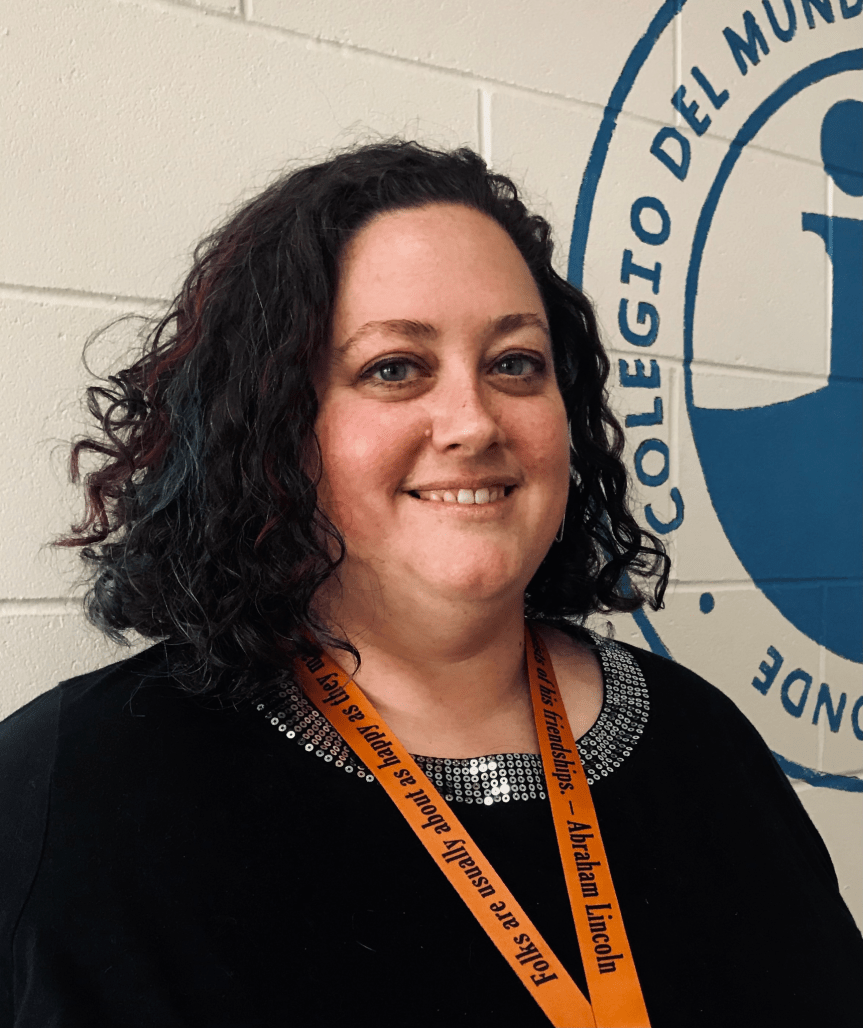
Michelle Strattard, a teacher at Gray-New Gloucester High School has been named the 2021 Maine History Teacher of the Year, an award presented annually by the Gilder Lehrman Institute of American History, the nation’s leading organization dedicated to K-12 American history education. The selection of the award winner in Maine is facilitated by the Maine Department of Education (DOE) by Joe Schmidt, Social Studies Specialist for the Maine DOE.

In 2021, parents, students, teachers, and administrators nationwide nominated a record 8,510 teachers for the History Teacher of the Year Award. Amidst a very competitive field, Michelle rose to the top in Maine.

In 2012, Michelle earned a Master’s of Teaching and Learning from the University of Southern Maine after completing the Extended Teacher Education Program (ETEP). She previously earned a BA in History from the same institution.  As an alumna of Gray-New Gloucester High school, she was proud to join their faculty in 2015, eventually coming to teach the very class that inspired her love of local history as a student, Shaker Studies. She brings this love of local history to the classroom so students can see where they fit into the larger picture. Students engage in historical research, exploration, and inquiry in the classroom to build academic skills and become engaged citizens.  Michelle also serves as a board member of the Maine Council for the Social Studies, helping to support social studies educators around the state.

In addition to a $1,000 honorarium, Michelle’s school will receive a core archive of American history books and Gilder Lehrman educational materials and recognition at a ceremony in Maine.

Inaugurated in 2004, the History Teacher of the Year Award highlights the crucial importance of history education by honoring exceptional American history teachers from elementary school through high school. The award honors one K-12 teacher from each state, the District of Columbia, Department of Defense schools and US Territories. In fall 2021, the National History Teacher of the Year will be selected from the pool of state winners.

The 10 finalists for the National History Teacher of the Year Award will be announced on Thursday, September 9, with the national winner announced later that month. An in-person ceremony for the winner will be held in late fall 2021, health and safety protocols permitting. Support for the National History Teacher of the Year Award ceremony is provided by HISTORY®

Nominations for the 2022 History Teacher of the Year awards are now open. Students, parents, colleagues, and supervisors may nominate K-12 teachers for the award by visiting gilderlehrman.org/nhtoy. The deadline for 2022 nominations is March 31, 2022.
Water Treatment Provides Opportunity for Adult Education Program

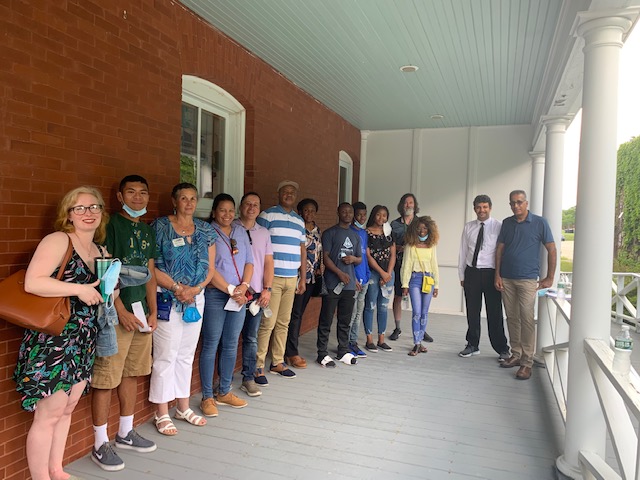
Maine Adult Education Hub 9 staff, Biddeford Adult Education students and some of their college aged children attended a professional Water Treatment forum at Southern Maine Community College recently.

Across the county, a growing need is present for trained water treatment professionals. As such, Southern Maine Community College has partnered with Northern Maine Community College to create a training program for the profession at the South Portland campus. Their lectures can be accessed remotely, however, hands-on laboratory exercises guided by trained faculty members are taking place on campus.

The Hub 9 group learned about scholarship and apprenticeship opportunities, and toured the learning lab. Industry professionals were available to discuss the great need for new water professionals and how dynamic and exciting this important work is, an exciting experience that the group intends to bring back to their learning community in Biddeford.

Visit Maine Rural Water Association and Maine Water to see current job postings. Anyone interested in discussing this as a potential pathway into the field, can contact their local adult education student advisor.

This article was written by Marci Dionne, student advisor at Biddeford Adult Education, in collaboration with Maine DOE Intern Clio Bersani as part of the Maine Schools Sharing Success Campaign. To submit a story or an idea email it to Rachel at rachel.paling@maine.gov.

CTE Summer Camps Offer Safe, Hands-on Learning to Middle Schoolers

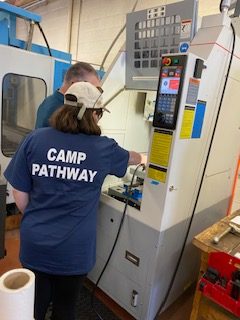
Middle School Career and Technical Education (MS-CTE) summer camps are keeping it cool this summer! There are currently nine Career and Technical Education (CTE) schools across Maine that are hosting summer camps specifically for middle school aged students this year as part of an on-going effort to bring career and technical education opportunities to students at the middle school level.

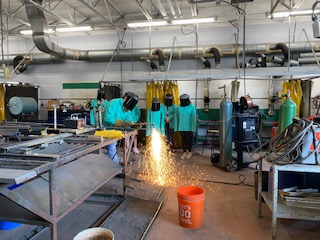
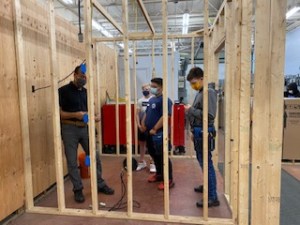
Students participating in these excellent summer programs are exploring careers, participating in hands on experiences in culinary arts, media technology, automotive, engineering, welding and carpentry, just to name a few. The MS-CTE camp experiences are offered either for one or two weeks for two to five days per week. Maine’s CTE instructors are enjoying the opportunity to share many career options available in Maine to middle school aged students, a younger audience than the traditional high school age of students that attend CTE schools throughout the school year.

Students, too, are excited about the opportunity to spend a few weeks of the summer learning about career options and engaging in hands-on learning opportunities. “I am the happiest girl in the world right now,” said one of the students currently participating in a MS-CTE summer camp.

There are 21 CTE schools across Maine that are piloting MS-CTE programs which have allowed students to experience career options through hands on activities. The pilots have ranged from in-school programming, online career exploration, mentorships as well as the camp experiences currently taking place this summer. All programs offer a hands on component and a career exploration element as required by the standards.  

Check out this recent Portland Press Herald news article highlighting this excellent work: Summer camps build on effort to extend vocational programs to middle schoolers.

For more information about Maine’s MS-CTE programs, visit the MS-CTE website at or contact the Middle School CTE Specialist Margaret Harvey at Margaret.Harvey@maine.gov    

Gray-New Gloucester Adult & Community Education Celebrates Graduates

Gray-New Gloucester Adult & Community Education awarded five diplomas in a ceremony on Monday, June 7th. While the heat caused a venue change, it didn’t dampen the spirit of the celebration and the students receiving their hard-earned High School Equivalency Diplomas (HiSET, formerly GED). A total of eight students earned either a HiSET or Adult High School Diploma during the 2020-2021 school year.

Director Stephanie Haskins and Program Coordinator Theresa Boynton, and Adult Education Faculty, Maureen Mitchell, Sheila Myhaver and Laurie Wells recognized each graduate in five individual ceremonies. Graduates invited special guests to the ceremony and each received a personalized cake to continue their celebration at home.

Diplomas were presented by Haskins and Boynton to the following graduates who attended the ceremony: Joseph Amend, Eunice Burns, Dayla Davis, Kassandra Mercer, and Leila Nelson. The following students earned diplomas during the 2020-2021 school year and were awarded diplomas in prior ceremonies: Lucas Rogers, Makayla Smart, Zachary St.Clair, and Adam Tarsetti. Students who earned their diplomas during the 2019-2020 school year, and were recognized in individual events were: Crystal Jordan, Devin Julian, Aric Lutz, Jessica Roberts, Hunter Russell.

Kassandra Mercer was recognized as an outstanding adult education graduate, and received the Courage to Grow award from Central Maine Community College. The award provides a scholarship to the recipient for three credit hours of tuition for the upcoming fall semester.

Gray-New Gloucester Adult & Community Education provides individualized programming in a friendly environment to help adult learners achieve their academic, career and personal goals. Programming includes high school diploma and high school equivalency preparation classes, college and career advising, college preparation, career training, as well as personal enrichment classes.

For more information about Gray-New Gloucester Adult & Community Education’s programming visit gngadulted.org or call 657-9612.

This article was submitted by Gray-New Gloucester Adult & Community Education Program as part of the Maine Schools Sharing Success Campaign. To submit an article or a story idea, email Rachel at rachel.paling@maine.gov.

New Maine Initiative to Build Ag Literacy Through Immersive CTE Culinary Arts Programs

A new University of Maine initiative to build agricultural literacy through an immersive culinary experience for career and technical education (CTE) culinary arts instructors is one of 21 projects funded nationwide by the U.S. Department of Agriculture’s National Institute of Food and Agriculture (NIFA).

NIFA has invested $6.2 million in the Professional Development and Secondary School Teacher grants to increase the number of K–14 teachers and educational professionals trained in the food and agricultural sciences. The grants to prepare more educators in food and ag science, and support best teaching practices that enhance student learning outcomes, are part of NIFA’s Agriculture and Food Research Initiative.

UMaine’s Building Agriculture Literacy Through an Immersive Culinary Experience project, which received a $300,000, four-year grant, is led by Kathy Savoie, University of Maine Cooperative Extension educator and professor; Willie Grenier, executive director of Maine Agriculture in the Classroom; and Rob Dumas, UMaine food science pilot plant manager. CTE culinary arts instructors will receive professional development experiences to increase their agricultural literacy, and enhance the connectedness between agriculture and food service in their culinary arts curricula.

A goal of the project is to help create a skilled, educated workforce that will increase the use of Maine grown, processed and produced foods in their programs and careers by changing the way students — tomorrow’s food professionals — think about the importance and value of local food, according to the researchers.

“Providing professional development experiences for CTE instructors will help to shift culinary arts programs toward local food system education with the end goal to create a workforce that is proficient in Maine agriculture, and that will be poised to meet today’s consumer needs and ultimately boost our state agriculture” says Savoie, the principal investigator on the initiative.

The project provides a holistic approach to uniting community partners to identify the best practices for agriculture literacy education at CTE culinary arts programs in Maine. UMaine Cooperative Extension and Maine Agriculture in the Classroom will collaborate to provide experiential learning opportunities for CTE culinary arts instructors through a week-long Immersive Culinary Arts Summer Institute. Project activities will include hands-on experience in local food procurement practices, demonstrations of food system lessons, educational field trips, financial support for experiential activities through their existing school restaurants, participation in a UMaine Local Foods Competition and coaching during the school year.

The CTE instructors also will experience the educational power of job shadowing, flipped classrooms and working relationships with employers that could help students make career connections. Participating instructors will be eligible to receive mini-grants to support nontraditional learning experiences — on-site learning opportunities with farmers, food processors and butchers, for example, and at food hubs, food incubator labs, aquaculture facilities, food pantries and restaurants — to increase students’ understanding of local food systems. In addition, the UMaine Food Pilot Plant will host local food competitions for CTE culinary arts students, challenging them to use Maine foods in creative and innovative ways to meet the demands of today’s consumers.

Maine DOE Director of Special Education Honored by MADSEC

The Maine Administrators of Services for Children with Disabilities (MADSEC) awarded Erin Frazier, Maine Department of Education (DOE) Director of Special Education from birth to 22, with the MADSEC President’s Award this year.

Frazier was selected to receive the award by the past MADSEC president Cheryl Mercier and current MADSEC president Deb Murphy.

Through weekly informational meetings with MADSEC and state special education leaders that she has led since March 2020, her ongoing coordination of the necessary changes to special education throughout the pandemic, and her continuous words of encouragement, Frazier was more than a worthy recipient of this prestigious award.

“Erin’s leadership has truly served as our beacon of light during this time of great uncertainty,” Mercier and Murphy stated at the recent award ceremony.

The Maine DOE is proud of this recognition of Erin’s leadership efforts and her ongoing accomplishments as a education leader in Maine.

This article was written by Maine DOE Intern Clio Bersani in collaboration with Maine Administrators of Service for Children with Disabilities as part of the Maine Schools Sharing Success Campaign. To submit a story or an idea email it to Rachel at rachel.paling@maine.gov.

Maine Students Earn Honors at the National History Day

Students from across Maine impressed judges from across the globe in the National History Day (NHD) competition. NHD is an international program focusing on studying and learning history in middle and high schools. Students choose a specific topic that fits in with the year’s theme and lead an extensive research project. NHD culminates in the presenting of the students’ projects to experts from across the field of history. The theme of the 2021 NHD contest was “Communication in History: the Key to Understanding.”

Several Maine students were given the Outstanding Affiliate Award. Jillian Muller, Charlotte McGreevy, and Brittany Carrier from Buckfield Jr./Sr. High school received this award for the documentary they created titled “Communicating with Children: How Fred Rogers Approached Tough Topics with Kids.” Uyen Nguyễn from John Bapst Memorial High school was also awarded for her website “United States Involvement in the Vietnam War: The Impacts of Multimedia ON Mainstream Opinion and U.S. Foreign Policy.”

The highlight of the tournament for the state of Maine was Maya Faulstich, who took second place overall in the Individual Performance category. Maya, an eighth-grader from Frank H. Harrison Middle School in Yarmouth, drew on Charles Dickens’ A Christmas Carol to create her project “A Climate Carol.”

Maya’s project illustrates how the Keep America Beautiful campaign in the 1950s-1970s had a lasting negative influence on how the public thinks about trash and litter and highlights how the campaign continues to influence public opinion today. Maya’s second-place finish is the highest place a Maine student has taken in the category of Individual Performance on NHD. Maya’s performance can be watched below. In addition, her research and process can be read here.

The Maine DOE congratulates all students and teachers involved in the competition on such an impressive showing.

More details on the NHD completion can be found on the official press release. Extensive information on Maya’s project can be found in her recent interview.

This article was written by Maine DOE Intern Clio Bersani in collaboration with National History Day in Maine and Yarmouth School Department as part of the Maine Schools Sharing Success Campaign. To submit a story or an idea email it to Rachel at rachel.paling@maine.gov.

EMCC, MCCS, and Maine DOE Celebrate 88 “Badguates” in Inaugural Cohort of Learning Facilitator Program

Eastern Maine Community College (EMCC), in partnership with the Maine Community College System (MCCS) and the Maine Department of Education (DOE), held a “Badguation” ceremony on June 23rd for the first class of Learning Facilitator Program completers, or “Badguates.”

In a response to critical staff shortages in Maine schools as a result of the pandemic, Governor Mills created additional flexibilities and opportunities for educators in Executive Order #7, which enabled the Maine DOE, MCCS, and EMCC to collaborate on a high quality, fast-track training program for paraprofessional level educators to expand, strengthen, and support our excellent educator workforce.

“This is emergency response at its finest, but this is also innovation at its finest where a real problem, a critical issue was presented, and everybody came to the fore to make it happen,” said Commissioner Makin during her remarks at the ceremony.

The Badguation ceremony honored the Learning Facilitators, many of whom were present during the virtual event, and featured a video message from Governor Janet Mills and remarks from EMCC faculty, EMCC President Dr. Lisa Larson, MCCS President David Daigler, Maine Education Commissioner Pender Makin, and DOE Representatives.

“You participated in a new model, a new way of thinking, and learning, and leading together,” said EMCC President Lisa Larson during her opening remarks. “You’ve earned credits and credentials, and along the way you also gained some new friends and colleagues.”

“You’re not only the first, you’re also a part of building the future of our economy and you’re core to families being able to find new successes as opportunities unveil themselves through this new, ever-changing economy,” MCCS President David Daigler said to the graduates in his remarks.

“While many people were reeling and pulling inward and saying, ‘I’m just going to try to stay safe and ride this out,’ you ran into the fire like first responders. You said, ‘yep, sign me up! I’m going to go take those courses, I am going to get into this credentialing program, and I’m going to help our schools,’” added Commissioner Makin in her remarks.

The event also featured a short video showcasing written messages from program participants who shared sentiments on how they changed in positive ways throughout the program. Here are a few:

“I am happy to say I learned that if I put my mind to it then I will do it. I really wanted to learn how to write a lesson plan for my students and I did. It took a few tries before I got there, but I did.”

“I am excited to take what I have learned and apply it to the areas of my teaching. I can observe a student and know what I am looking for, I can be a better co-teacher.”

“I don’t think you will ever be able to measure the success of this program as it will continue to have a positive impact for many, many years to come.”

Offered at no cost to the participants, the Learning Facilitator Program is completed in two phases in one academic year with the ongoing support of Eastern Maine Community College faculty. Upon completion of a 3-credit “boot camp” course in phase one of the program, participants have the foundational skills necessary to fill short-and long-term substitute educator roles, as well as all paraprofessional positions. In phase two, participants engage in a combination of online work and professional learning community meetings, as well as a 315-hour structured teaching apprenticeship. When they complete the program, participants are eligible for an emergency Education Technician authorization which allows them to be employed as an Education Technician III.

For more information related to the program, please visit the EMCC website, here.

Watch the 34 minute virtual ceremony on EMCC’s YouTube Channel:

Adult Education Determination Leads to a Diploma

Struggling in high school because she was a teen mom with no childcare, Michelle B. dropped out her junior year.  She first came to RSU #54 Adult Education in 2005. Initially, Michelle pursued her GED.  Because she is not a strong test taker, however, she found the high-stakes high school equivalency exams an insurmountable obstacle.

In 2010, Michelle followed the advice of the Adult Ed director and opted to pursue an SAHS diploma.  Despite her struggles in high school, Michelle had made good progress and was only a few classes shy of graduating, so she began the long process of earning her missing credits.

An English and history class were first in 2010. The pressures of marriage and raising children forced her to put academics on hold for a long while, but Michelle eventually returned to class in 2018, earning another English credit in 2019, American Government in 2020, and, lastly, science in 2021.

Despite working full time, raising two daughters as a single mom, grappling with the unexpected death of her own mother, and dealing with the disruption of a global pandemic, Michelle found time for her education.  She proudly joined many other Adult Education graduates for our June 9 ceremony.

Michelle did it for herself, but—even more importantly—she did it for her daughters.  In an essay written for her most recent English class, she explained that she wanted to show her children that if they are willing to work hard, anything is possible.  She wrote:

“Even if their dreams change ten times, as their mother I’ll always tell them they can be anything they want. Always, forever, I believe in my kids.”

Congratulations, Michelle!  Your experience testifies to the importance of diligence and determination as we pursue our goals.

This article was provided by RSU 54 as part of the Maine Schools Sharing Success Campaign. To submit a story or an idea email it to Rachel at rachel.paling@maine.gov

Down Syndrome Does Not Hold Back Portland Photographer Caleb Dunlap

Caleb Dunlap was born with down syndrome, but he did not let it get in the way of pursuing his passion for photography. Caleb was enrolled in the Maine Department of Education (DOE) led Child Development Services (CDS) when he was six days old. CDS along with the support of his family and friends enabled Caleb to follow his dreams. Caleb was gifted a camera after his high school graduation which began his passion for taking photos.

One day, a professional photographer looked at Caleb’s photos and remarked that he had a good eye- he could see things other people could not and turn it into a beautiful picture from then on, what began as a hobby turned into a business for Caleb.

Caleb now runs “Good Eye Photography” out of Portland where he hopes to inspire people with his photos. “When I take pictures of a cloud, I feel like a cloud,” Caleb stated in a presentation. He hopes other people can feel the transformative properties of art through his work. Caleb is inspired by the city of Portland and the nature surrounding the city. He aspires to have his work displayed in magazines and museums in the future.

Watch Caleb’s presentation below and view his photography on his website.

This article was written by Maine DOE Intern Clio Bersani as part of the Maine Schools Sharing Success Campaign. To submit a story or an idea email it to Rachel at rachel.paling@maine.gov