Maine Researchers, Teacher Begin Scientific Cruise

Submitted by Barbara Powers, Superintendent of Long Island School.

A unique educational opportunity launches on January 24, when a Maine teacher sets sail for the Southern Ocean as part of a Bigelow Laboratory for Ocean Sciences team. This partnership with the Maine Mathematics and Science Alliance’s “WeatherBlur” education project will bring the experience of an ocean research cruise to students in Maine and beyond.

“Research cruises are tremendously exciting, and sharing that excitement is a great way to interest students in science,” said Senior Research Scientist Barney Balch. “The ocean is endlessly fascinating, and learning about its vital role is essential to understanding life on Earth.”

Marci Train, a teacher at the two-room Long Island School in Casco Bay, will join Balch and several other Bigelow Laboratory scientists in order to engage students throughout the National Science Foundation-funded cruise. The research team aims to investigate how algae in the Southern Ocean may be affecting the future of sea life as far away as the Northern Hemisphere.

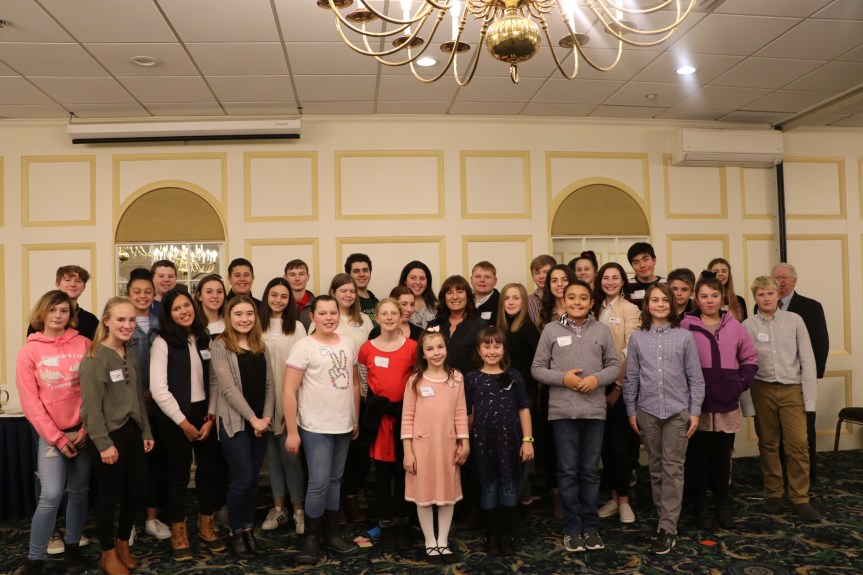
Marci Train with students

Throughout the cruise, Train will connect frequently with students in Maine and beyond. She will conduct video tours of the ship to show what a day at sea looks like, post learning materials on the WeatherBlur website, and share photos on social media. She will also assist with scientific operations and help conduct experiments.

“I can’t wait to have a first-hand experience with a scientific research project, and I think it is important for teachers to show their students that you are never too old to learn new information,” Train said. “It is important to get out of your comfort zone and share your own learning experiences with your students.”

Coccolithophores are a common type of algae that help form the base of ocean food webs, and they play a significant role in global chemical and carbon cycles. Balch recently found that they are remarkably scarce in the fertile waters near the equator, and his team aims to learn why during this cruise.

The Southern Ocean and equator are connected by an important ocean layer called “Sub-Antarctic mode water,” which forms at the surface of the Southern Ocean, sinks, and flows to the equator over a 40-year journey. Balch suspects that booming coccolithophore populations in the Southern Ocean are depleting its supply of essential nutrients before Sub-Antarctic mode water flows north, making the water layer sub-optimal for coccolithophore growth by the time it reaches the equator.

While at sea, the team will use satellite imagery to locate eddies rich in coccolithophores, whose chalk shells are so reflective that they can be seen from space. By measuring water properties in these eddies and collecting water to conduct onboard experiments, the researchers hope to uncover how coccolithophores in the Southern Ocean are altering this important source of nutrients before its long journey towards the equator.

“Sub-Antarctic mode water travels far north from where it forms, and it exerts a staggering level of control on much of the global ocean,” Balch said. “If coccolithophores are changing its essential properties, then they could be influencing which species grow in food webs as far away as the equator or even in the Northern Hemisphere.”

The team will use a creative approach to calculate how fast this water layer changes. The ship will follow Sub-Antarctic mode water for more than 1,000 miles on its journey to the Indian Ocean. As they measure the water’s basic properties, they will also collect samples at depth to measure freons, manufactured refrigerants that can be found throughout the environment.

Freons have constantly changed since their invention in the 1950s – a fact that today allows scientists to detect when water was last at the surface and exposed to freons in the atmosphere. Back on shore, a team from the University of Miami will determine which types of freons are present in different parcels of Sub-Antarctic mode water along the ship’s transect.

“Freons are a great timekeeper for the age of water,” Balch said. “We’ll use their time signatures to figure out how long it took a sample of Sub-Antarctic mode water to arrive where we found it, and to understand how quickly the water is changing as it’s moving north.”

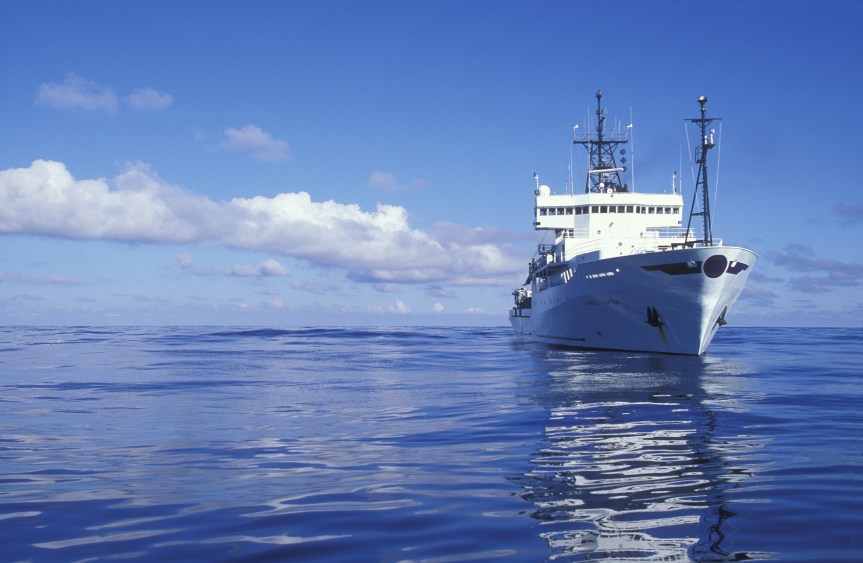
The researchers will investigate these questions over 38 days aboard the RV Thomas Thompson. The team will depart from South Africa and return to the island of Mauritius in early March. The Bigelow Laboratory InstagramFacebook, and Twitter accounts will post updates during the cruise, as will the Maine Mathematics and Science Alliance’s Twitter and Facebook accounts.

This cruise is the latest research topic to be explored by WeatherBlur, an online citizen science community funded by National Academy of Sciences, Engineering, and Medicine. The project brings together students, teachers, community members, and scientists, who collaborate to ask questions, design scientific investigations, and bring back data and findings to discuss with each other.

Currently, WeatherBlur engages six Maine schools, as well as two schools from Mississippi and one school from Alabama. Train’s outreach from the cruise will be followed by more than 1,300 students and 26 teachers.

“I think this will be a wonderful opportunity for students to see all the different career options onboard a research vessel, including positions in research and on the crew,” Train said. “It’s important that students are exposed to STEM in action, and I can’t wait for them to be immersed in this experience and see how big scientific questions get answered.”
Saco Middle School Students Partner with their Community to Conserve Local Land

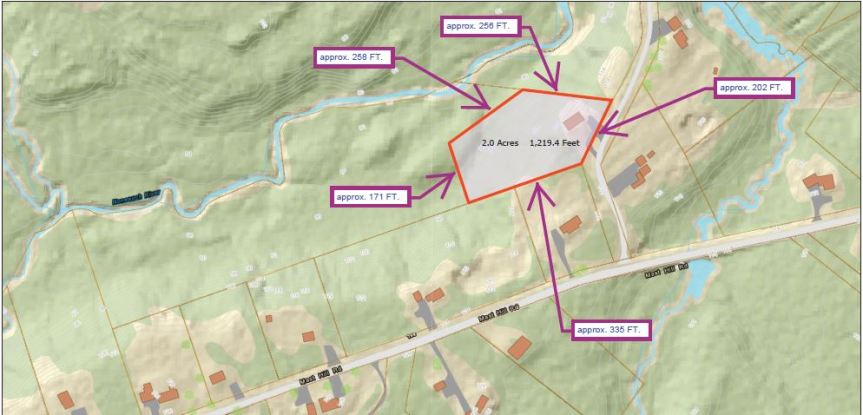
Students at Saco Middle School have teamed up with the Saco Valley Land Trust to conserve an eight-acre piece of land in Saco that runs along the Nonesuch River in what the students are calling the “Conserving Our Community” project.

The project started the first few weeks of school this year as part of a ‘community block’ at Saco Middle School where students are challenged to work on projects that will improve their local community. Community block projects range from creating and pitching a dog park to the city, aiming to increase protected bike lanes, doing compost for the school, or in this case, conserving a local piece of land.

The project started with just seven students who were interested in embarking on an endeavor that somehow protected the land around them. The group, along with their teacher Andrew Fersch, contacted the Saco Valley Land Trust who was eager to collaborate and had their eye on this specific property. Since then the project has evolved and grown as the original group of students have convinced the rest of the 7th grade class to get involved. More recently they have been joined by some of the 8th grade students, growing their group to over 100 students at this point. They are now conducting full school assemblies at every school in the Saco School Department with hopes of getting everyone on board.

Gianna, a student working on the Conserving Our Community Project explains more about it in a written post on the Saco Valley Land Trust Website:

As a team we believe that learning about our community and world is important knowledge to have. It is important to know what is happening in the natural world around us, because it affects us. Every impact to Saco’s ecosystem is an impact on us as well.

One of the perks of owning this land is that it will help make a longer wildlife corridor and trail where (hopefully, eventually) we can connect from Saco all the way to Gorham, though there are still some gaps where roads flow through. If we conserved this land it would make it possible for all the majestic animals of Maine to travel through the woods with no fear of getting hit by a car (and for humans to enjoy open spaces too!).

The students make frequent trips to study the land, capturing their adventures in trail documentaries and they have even written a book, The Secret Wisdom of Saco (PDF), a collection of place-based stories. The project also provides them with a community service learning project where they can advocacy for something they feel passionate about and deeply connected to.

“Children learn what is possible through example. If the community shows them that conservation matters, and that working hard pays off, they’ll carry that message their whole life,” said Andrew Fersch, project adviser and Saco Middle School Teacher.

For more information about Conserving Our Community, including how to donate or get involved, please visit the Saco Valley Land Trust Website.

This story was written by Maine DOE Staff Rachel Paling in collaboration with Saco Middle School as part of the Maine Schools Sharing Success Campaign. If you have an idea or a story for the campaign, email Rachel at rachel.paling@maine.gov.

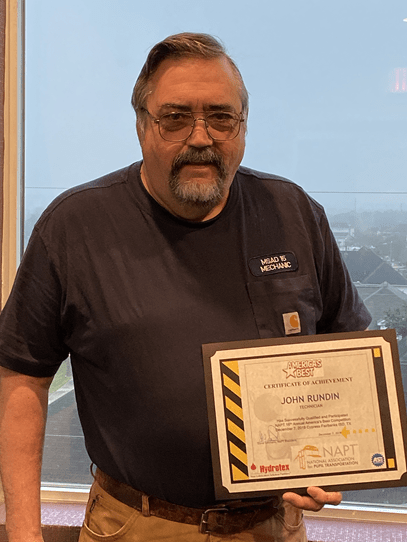
MSAD 15 Mechanic John Rundin Takes 1st Place at Maine Mechanics Competition and 9th Place in National Challenge

Each year the National Association for Pupil Transportation (NAPT) holds America’s Best Training & Skills Challenge. For 15 years America’s Best program has offered a training and skills challenge for the technicians and inspectors in the school bus industry. In addition to hands-on training relevant to their specific area of expertise, participants have an opportunity to connect with all of the industry suppliers involved in America’s Best. In between all of the training activities, participants demonstrated their technical skills and knowledge as they rotated through written exams administered by ASE and various hands-on stations.

This year John Rundin, Mechanic from MSAD No. 15, who took first place at this year’s State of Maine Mechanics competition at Sugarloaf, competed in this national event representing Maine. John took 9th place overall during this event representing not only Maine but fellow mechanics well.

The Maine Association for Pupil Transportation and the Maine Department of Education extend their congratulations to John and the entire MSAD No. 15 transportation team. Well done John!

Deer Isle-Stonington High School to Celebrate Arts Week

Submitted by REACH Performing Arts Center.

The fourth annual Deer Isle – Stonington High School Arts Week will run January 27-31, culminating in a public dinner and performance on Friday Jan, 31 at 5:15 PM.

In previous years grades 9-12 were split into four teams, each writing and creating a devised theater piece answering an essential question, this year’s Arts Week will have students in grades 8-12 identifying the projects most intriguing to them. They will then be assigned to one group based on their interest, working within that discipline for the entire week.

This year, Arts Week is celebrating the bicentennial of Maine with projects that will focus on the history and culture of our state. Funding for the week is made possible by the REACH Performing Arts Center, and additionally, is funded in part by a grant from the Maine Arts Commission, an independent state agency supported by the National Endowment for the Arts.

Projects include 3D Printing with James Rutter and Screen Printing with Hope Rovelto of Portland’s Little Chair Printing, who have both worked for Haystack Mountain School of Crafts. Mural Making with DISHS Art Teacher Cynthia Pease. A culinary project hosted by Healthy Island Project’s Edible Island exploring native Maine food pathways with Chef Cheryl Wixson. A music through technology workshop run by Mark Churchill. The traditional theater Arts Week theater project with veteran director Jesse Gorden and Opera House Arts’ Joshua McCarey. A filmmaking experience with Current Harbor’s Jamie Watkins, and a week building in the shop with DISHS teacher Steve Zembrusky.

The public event on Friday Jan 31st will begin at 5:15 at the Elementary School Cafeteria with a meal created, prepared, and served by the culinary group led by Chef Wixson. At 6:00, all will move to the REACH Performing Arts Center for presentations by each of the disciplines.

There are no tickets required for any events, though donations will be accepted by the REACH Performing Arts Center to offset the costs of Arts Week.

We hope to see you there!

The Washington County Consortium Educator Profile: Dale Bailey

Submitted by Sarah Woog, Executive Director at Washington County Consortium.

Washington County Consortium (WCC) Educator Profile: Meet Dale Bailey, Speech-Language Pathologist at AOS 90

I first heard about Dale Bailey’s work from Mandy Belanger, Principal at Woodland Elementary School. Mandy praised his passion for supporting educators and students and his expertise in the areas of speech and language. She thought he’d be a great presenter for Harvest of Ideas, too.

I reached out to Dale to ask him to consider presenting at Harvest of Ideas and, in his response to the request for proposals (RFP), he described a professional background that speaks to Dale’s depth of experience and tremendous expertise. I was excited to be able to offer Dale’s session about dyslexia screening in Maine to Washington County educators:

Over a more than 20 year time span, Dale has worked as a speech-language pathologist, LD evaluator (079), district data consultant and early literacy coordinator.  He has a special interest in the connection between oral and written language assessment and development. Dale has extensive experience designing and delivering PD in the areas of assistive technology, assessment, language and early literacy.  Dale has held positions as adjunct faculty (UMFK & UWSP) and as the Statewide Early Literacy Coordinator for the state of Wisconsin. He currently provides services to students in AOS90 while continuing to provide professional development & support to educators in both Maine and Wisconsin.

The feedback from Dale’s session at Harvest of Ideas confirmed that he has a lot to offer. Many shared it was the best part of their day, and that it gave them ideas and practices to try immediately in their classroom. He was also lauded as an incredibly informed and skilled presenter. 

I reached out to Dale to interview him for a profile because I wanted to hear more about his journey, his core beliefs around language and learning, and his hopes for schools and students in Washington County. He welcomed me in his office at Woodland Elementary School so we could sit down for a conversation. I am grateful for his time, candor and insights, and am excited to share them here.

Dale had a stutter growing up, and described himself as an “under the radar kid.” His academic success earned him admission to Colby College, where he studied economics. While at Colby, and during summer internships, he realized he’d “have to learn to be a successful communicator in order to succeed in the world.” During the summer after his junior year, he participated in a residential speech therapy program for adults, which helped him achieve his goals around speech fluency, and sparked a deeper interest in the area of speech and language.

Dale did enter the business field, but his interest and personal connection to speech and language nagged at him. After oscillating for some time between working in business and working on his Master’s Degree in Communication Disorders, Dale obtained a Master’s from the University of Maine at Orono in 1997, and went right to work in the field in 1998. After building his career and expertise in Maine and then Wisconsin, Dale decided to come back to Maine in 2018 and found a fit working with all schools and grade levels in AOS 90.

At AOS 90, Dale sees unique assets and challenges. He appreciates how, in a small district, he is able to work with both students and educators and sees professional development as an integral part of his work. His understandings are constantly informed by both students and educators, and he is able to support educators’ growth while informed directly by students’ experiences. 

As for challenges, Dale shared that “sustained, purposeful, targeted effort is required to move the needle,” and lamented the challenges that limited resources in most districts pose to engaging in sustained efforts. He elaborated: “Teachers work their tails off, they work so hard and oftentimes, if not all the time, do good work with limited information…and/or with limited materials. It’s quite remarkable to see really great results from teachers who have these limits. If we give teachers great materials and great information about what they are trying to teach or how they are trying to teach it, gosh, we could do a lot.”

There are many people with whom Dale has worked who give him great hope when imagining the possible. He spoke of Mandy Belanger, Principal at Woodland Elementary School. “Mandy- she’s hungry; she wants to figure it out. She wants to understand reading as a door to learning and development; she wants to figure out how to move the needle on reading development, to open up doors for kids in learning, thinking, and developing as individuals.” 

Dale’s work and story inspire my imagination, too. Consider Dale’s early challenges with speech and recall the Harvest of Ideas feedback around Dale’s gift for speech. Dale wasn’t born with his speech skills; he was motivated to gain these skills and was able to access the resources to achieve them. He then worked throughout his career to understand speech and language and use his evolving understandings to impact student learning. Dale’s gift that I’d like to celebrate is the gift he gives us through his work, to his colleagues, and his students, and all those impacted by his work throughout his career. Thank you, Dale, and thank you, too, to the passionate educators he celebrates as well. 

Please, take a moment to reflect on the gifts educators all over Washington County give each other, their communities and their students. And take another moment to celebrate the gifts you give and receive, as well.


Student Cabinet Meets with Commissioner Makin to Discuss Education in Maine

Students from across Maine met with Maine Department of Education (DOE) Commissioner Pender Makin in Augusta for an all-day summit on December 20th. The students were each selected from a pool of nearly 300 applicants to be part of the Maine Department of Education’s first Student Cabinet. The 12/20 meeting was the first of four meetings to take place this school year.

The Maine DOE and the Maine State Board of Education, with special help from the Board’s two student representatives, Jaylee Rice and Casey Maddock put together the Student Cabinet as a way to include student voice in decision making at the state level. The Cabinet is made up of students from all 16 counties in Maine in grades 4th through 1st year of college, who were selected based on their thoughtful responses on the application distributed to the public by the Maine DOE this past fall.

During the day-long meeting, students had the opportunity to connect with one another through team-building activities, along with values-based activities to help them identify the importance of their own values and that of others, including the populations they represent. The bulk of the work was done in the second half of the day, as students worked in like-age groups to categorize important topics in education for the Commissioner to be aware of, topics for discussion, and topics to act on.

The day ended with a round table discussion about the topics discussed within each of the groups. From the master list of topics, the students each got the opportunity to vote on the topics they felt were the most important to explore further as a group. Addressing issues of mental health and trauma for students, ensuring inclusive and welcoming schools for all, and ensuring equitable opportunities for all Maine students were goals the group identified as most important.

Three additional follow up meetings are being planned for the winter and spring, in addition to an online discussion board where student cabinet members will have the opportunity to engage with one another and invite other students from their region to join in county level discussions.

Maine DOE Student Cabinet Members: 

Name  County 
Klara Androscoggin
Cadence Androscoggin
Nicholas Aroostook
Damon Aroostook
Fiona Cumberland
Leela Cumberland
Katelyn Cumberland
Josh Cumberland
Monica Franklin
Mackenzie Franklin
Sarah Hancock
Avahnnah Hancock
Rhayna Kennebec
Cecilia Kennebec
Emmett Knox
Isaiah Knox
Emma Lincoln
Zaid Lincoln
Alexi Oxford
Connor Oxford
Maya Penobscot
Sam Penobscot
Brooke Piscataquis
Isabel Sagadahoc
Madison Sagadahoc
Savea Somerset
Annabelle Somerset
Gaby Waldo
Stephanie Waldo
Matthew Washington
Sarah York
William York


China Primary School Second Graders do Pumpkin Decomposition Project

Submitted by Keith Morin, Assistant Superintendent of Schools and Chief Academic Officer for  Regional School Unit No. 18.

In preparation for China Primary School’s second grade’s spring Earth Science studies, earlier this fall we researched where our trash goes and prepped a project we will be digging up on Earth Day! We hollowed out a pumpkin, filled the pumpkin with our snack time trash, and then buried our pumpkin behind our school!

Our second graders placed seeds, nuts, plastic wrappers, juice boxes, apples, carrots, and
goldfish into the pumpkin! We made predictions as to which items would break down between now and April – and which snack items would not! We are so excited to dig up our pumpkin in the spring and make our observations!

Belgrade Central School Celebrates 2nd Annual Young Reader’s Week

Submitted by Keith Morin, Assistant Superintendent of Schools and Chief Academic Officer for  Regional School Unit No. 18.

Founded by Pizza Hut and the Center for the Book in the Library of Congress in 1989, National Young Readers Week has been an annual event held at Belgrade Central School during the second week of November to raise awareness around the importance of reading. This is Belgrade Central’s second year of using this week to spread the love of reading around our school community.

Each teacher scheduled events to take place throughout the week that would highlight reading, and we participated in some school-wide events too. On Thursday, November 14th grades K-2 and grades 3-5 each held a “Read-In” event where they all gathered together in the gym to “get cozy and read” for a period of time. Blankets were spread out everywhere, kids were snuggled up with their friends and favorite books, and we all read together! Mrs. “Bacon” brought along her special friend “Mrs. SunnysideUp” to join in on the fun!!

On Friday, November 15th, the whole school participated in a Book Parade, allowing students to dress up as their favorite book characters, carry their favorite books, and spread the love of books up and down our hallways.

Other events and things you could see around the school were bookmark projects, decorated doors, guest readers in classrooms, math literacy (students finding math concepts in picture books), and whole day “read ins” feeding off our school-wide events.

This was a great way to bring the school together around the love of books!

Windham High School Students Learn the Reality of Journalism

Submitted by Lanet Hane, Director of Community Connections in RSU 14.

Students in Windham High School’s Journalism course have been learning all about the process of writing great stories. In addition to learning the craft, they have a number of opportunities throughout the course to experience the real-life world of careers in journalism.

Students were recently provided the opportunity to tour WGME, experiencing everything from green screens to the feeling of being on-air. They had the chance to interact with people who have made a career out of journalism, and were immersed in the real-life application of the work they have been doing in the class.

Later in the week, Lorraine Glowczak of The Windham Eagle joined the class to talk about her experiences as a writer and editor.  They had the opportunity to ask questions about the process of writing articles, keeping deadlines, working for a newspaper, and much more.

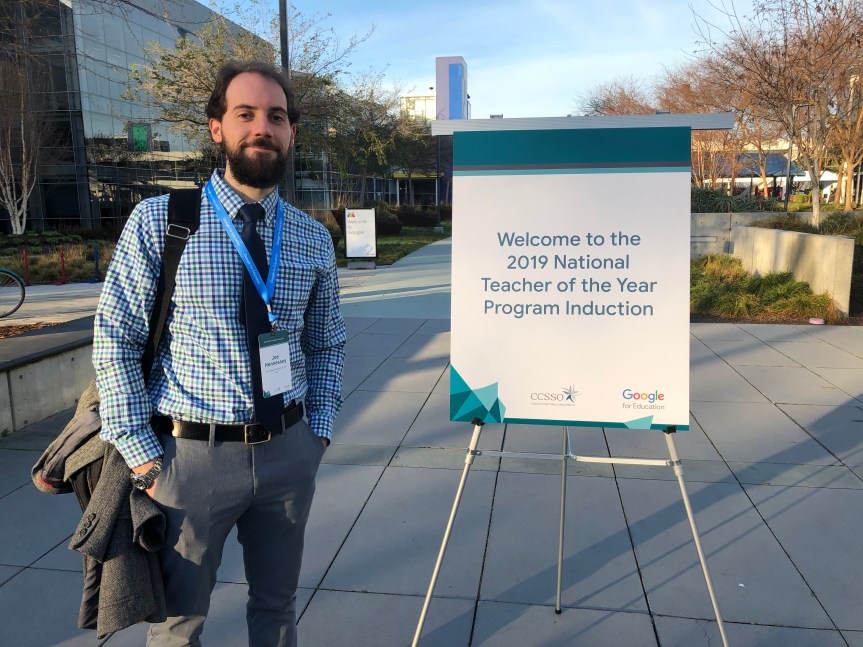
Joe Hennessey, Maine 2019 Teacher of the Year: A Year in Review

An open letter written by Maine’s 2019 Teacher of the Year Joe Hennessey.

To my fellow colleagues, educators of all levels, and community members throughout the state:

What follows is an open letter to you which originates from a place of profound gratitude. It has been my sincere pleasure and honor to represent our profession and its schools as the 2019 Maine Teacher of the Year, and I hope that I have fulfilled that charge acceptably. Eighteen months ago, my principal nominated me for a recognition which many of our colleagues would have been unable to accept for any number of reasons or would have refused upon philosophical grounds. I think we can all agree that there is no single best teacher in our state, and unequivocally, I am only one piece of a larger whole in Guilford; no person works in a vacuum, and I find myself having been named Teacher of the Year precisely because the students, parents, community members, and staff members where I work put me in a position to succeed. Time and again, they have permitted me to broaden my intellectual horizons and to augment my pedagogy by taking risks, iterating, and refining. They have shown me great trust and support throughout my year of recognition, and I am not able to repay their kindness other than to offer my deepest thanks.

Despite my initial inner conflict, and throughout my personal doubts, I have sought to serve as an ambassador of public education in Maine on behalf of my students, their sending communities, my school, and various invested parties. I have endeavored to gather, to highlight, and to learn beyond the opportunities afforded to most of my colleagues, and my immediate task is to share these salient pieces with others. As I transition back into a regular classroom routine, I have thought about how to articulate these truths in a coherent manner to others. For the time being, I have grouped my thoughts into these three tasks from the outset of my year: What I have gathered, what I have highlighted, and I what I have learned.

The resources which I have been able to gather on behalf of myself and others over my year are numerous and profound.  On one front, my professional network has been expanded with 55 cohort colleagues, who are diverse and capable beyond my ability to express. On another front, I have also become aware of new paradigms, teacher/community leadership opportunities, centers for teaching excellence, and partners in education. It appears that we are all working in concert, whether we are aware of one another or not. The crux, to me, is how to harness these different pieces together so that we may all benefit from one another’s strengths, across grade levels and state lines. Perhaps a comprehensive, well-indexed database of resources? A dedicated center for teaching excellence in the geographic center of our state? New fellowships and networking opportunities for teachers? I do not know, but I am optimistic that some assortment of the above could be realized if we decide we want it.

In my written and spoken work, I have striven to highlight the challenges and assets of rural education in our state. I have written honestly about our challenges with chronic absenteeism, low literacy/functional illiteracy, progressive mental health education, and spare mental health infrastructure because I know how hard every school district is working to meet the needs of its students. I have also written and spoken about the wonderful additions to intellectual life Maine’s rural areas are making through interdisciplinary classes, project-based learning, multiple pathways via differentiation, and the essential time and space to think and grow which Maine’s rural students are afforded. Schools in the countryside are adaptable, responsive, and committed to being community centers– a notion that other portions of our country are not fortunate enough to possess at present. I remain convinced that rural schools are good places to be in the state of Maine, and that they themselves will be the determining factor in what the essential public service of the future will look like.

My reading, writing, speaking, and listening has taken me all over the world in the last twelve months. From California, to Washington, D.C., to Virginia, to New York, to Alabama, to Louisiana, and throughout our own state, I have seen what public education has to offer American society. In Germany and Switzerland, I have further observed the capacity and enthusiasm of young people from entirely disparate walks of life. And, what I have found in all of these places is an interconnected, interdependent, curious, compassionate, and ultimately fallible world. It is up to us to think critically, articulate ourselves well, and help students to learn to do the same, regardless of whether we agree with their eventual conclusions. In contemporary life as in the past, we are better as individuals and groups for having been exposed to diverse viewpoints. And, I will, in kind, treasure this travel for the rest of my life and incorporate those experiences back into my classroom through planned lessons, impromptu discussions, and further extrapolation which I cannot anticipate as of now.

More than anything, though, my time as the 2019 Maine Teacher of the Year has been affirming, and my mantra that we are all “thinking people” has been further impressed upon me. In Maine and beyond, we are all capable of great intellect and great thought, and our academic and technical education programs ought to reflect that premise. Education– formal and informal, primary or secondary or post-secondary– remains the path to self-betterment and community-betterment. And, in a time of social and political division, technological acceleration, and possibly increased alienation and distraction, it has been made clearer to me that we need all of Maine’s society to achieve what it is capable of achieving. Our collective progress depends upon the essential public service– public education– and we need to frame our discussions moving forward around that fact.

Learning from colleagues and organizations from coast to coast and continent to continent, it is more evident to me than before that our education system is whatever we make it and are willing to pursue. I am enchanted by learning and in awe of the art which education is able to evince in our society. In a manner of closing, I would equate James Weldon Johnson’s “Before a Painting” as metaphor for education writ large.

I knew not who had wrought with skill so fine
What I beheld; nor by what laws of art
He had created life and love and heart
On canvas, from mere color, curve and line.
Silent I stood and made no move or sign;
Not with the crowd, but reverently apart;
Nor felt the power my rooted limbs to start,
But mutely gazed upon that face divine.

And over me the sense of beauty fell,
As music over a raptured listener to
The deep-voiced organ breathing out a hymn;
Or as on one who kneels, his beads to tell,
There falls the aureate glory filtered through
The windows in some old cathedral dim

Let us all look forward to taking the time and space we need to educate one another, educate ourselves, and remember the value of teaching and learning in Maine.

Sincerely,

Joseph Hennessey
English Teacher– Piscataquis Community High School of Guilford, Maine
2018 Piscataquis County Teacher of the Year
2019 Maine Teacher of the Year