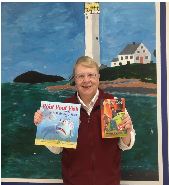
Hartford-Sumner Elementary School Implements Jolly Phonics Program

Submitted by Ryan Wilkins, Principal of Hartford-Sumner Elementary School in RSU 10.
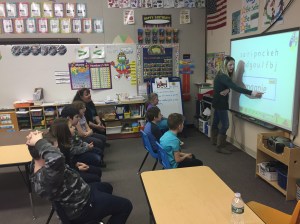
Jolly Phonics is a phonics program that teaches children the alphabetic code of English. It is a full year program for those in Kindergarten, and is being implemented at Hartford-Sumner Elementary School. In the first nine weeks or so of school, the students are taught the forty-two letter sounds and motions and how to blend the sounds in order to read words. Students also learn the forty-two Jolly Jingles songs and learn about Tricky Words. Then the students are taught the letter names. Lastly, the students are taught how to read books by themselves. Jolly Phonics is mainly for 3-8 year olds, but may be used to effectively teach reading to any age person.

There are five main skills taught in Jolly Phonics. They are:

  1. Learning the Letter Sounds
  2. Learning Letter Formation
  3. Blending and Segmenting
  4. Identifying Sounds in Words
  5. Tricky Words

The main forty-two sounds of English are taught in an unusual pace and order. One sound is taught each day, with a short story, a song, and a hand motion. Letter names are not emphasized, but rather the sound the letter makes becomes the focus.

As the sounds are introduced, the children are shown exactly how to form each letter correctly. By practicing in the air, tracing and feeling the letters in the Finger Phonics Board Books and by writing it, most children begin forming their letters correctly after the first twelve weeks or so. The correct tripod pencil grip is also taught, and practice is given tracing over dotted letters.

Blending is seeing a word and simply putting the sounds together, one by one, in order to read a word as you would do for c-a-t. Segmenting is hearing a word and learning how to remember how to spell each sound so you can write the word, sound by sound.

It is essential that children can hear the individual sounds in words, especially for writing. Initially, the children are asked to listen carefully and say if they can hear a given sound in words. Then they are trained to hear if the sound comes in the beginning, middle or end of the word. As soon as the children can hear the sounds in three letter words, they can start their dictation work found in The Phonics Handbook.

After their first month at school, when the majority of the children know about eighteen letter sounds and have been blending and segmenting regular words as a group activity, they can begin to learn the Tricky Words. Tricky Words are words that cannot always be worked out by blending – sight words they have to memorize, such as: said, who, was, my.

By the end of the kindergarten year in the Jolly Phonics program, each child should be able to read and write the 42 letter sounds, form the letters correctly holding their pencil in the tripod grip, blend decodable words fluently, like “flag” or “mushroom”, segment and write regular words like “bed” or “campground”, and read and write independently and with confidence.
 

Garret Schenck School has Success with Positive Action Program

Submitted by Lisa Savage, Reading Interventionist for Garret Schenck Elementary School.

Garret Schenck School serves healthy choices to preK-5 students in Anson every day. At every grade level our Positive Action program helps students learn that making positive choices feels better, and that positive choices include caring for our bodies through nutrition and hygiene.

Supporting nutrition learning, our 5-2-1-0 participation brings raw fruits and vegetables right into the classroom. Older grades receive a visit from a nutrition educator who conducts food prep classes where everyone gets to eat what they just learned how to make. Younger grades learn about a food before daring to try a bite of something new. The motto, “Don’t yuck my yum!” helps create a positive atmosphere for guided nutritional risk taking.

Our school’s community garden brings together students, teachers, school board members and neighbors to grow produce and nurture a love of gardening. Some of the goodies make their way to classrooms at snack time while others are used for our annual harvest dinner, which is held on open house night. Students at each grade level help prepare a harvest meal that is shared by their families.

Cooking club for grades 2-5 also benefits from the bounty of the harvest. In this after school activity teams work to prepare popular dishes like lasagne, shepherd’s pie and tossed salad using tomatoes and basil from the garden in season. Students learn teamwork, measurement, and math through cooking, eating and cleaning up.

We are proud of the healthy positive choices we are making at Garret Schenck!

Madison Junior High School Teacher Recognized with 2019 NELMS Master in Middle Award

The New England League of Middle Schools (NELMS) announced at its 38th Annual Conference (held March 21-22, 2019) that Kathy Bertini, a teacher at Madison Junior High School in Madison, Maine was awarded a NELMS 2019 Master in Middle Award. Jeff Rodman, Executive Director of NELMS, state “Paying attention to the learning needs of young adolescents and recognizing their unique developmental stage can make a significant difference in the lives of 10-14-year olds.” He added “recognizing those experienced in middle level educators is a major part of the work of the Recognition’s Committee who often have a very difficult task choosing winners.”
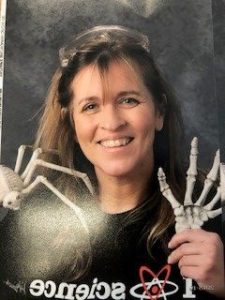
Kathy Bertini is the project director for the cooperative FEDES grant awarded by the Maine Department of Education in 2017, for a project called Kennebec Valley STEAM Outreach. Among the FEDES STEAM Outreach Project goals is the development of an upper elementary/middle level STEAM curriculum including a curriculum pilot in the three project partner districts, RSU 74, RSU 59, and RSU 83/MSAD 13. The STEAM curriculum is based on the engineering design process and incorporates trends in the work force and builds skills in areas of the State’s workforce where shortages are projected. The STEAM project also employs University of Maine engineering undergraduates to aid classroom teachers with curriculum implementation. The UMO undergrads also consult with the curriculum writer, Kathy Bertini, providing specific guidance on the engineering elements of each build, they act as mentors, and help with staff professional development. The KVSOP curriculum includes lessons/builds for grades 3-8 including a scope and sequence, alignment to NGSS content, Maine Learning Results and Engineering Design standards. Embedded in each build/lesson is a digital reference that reinforces the science content appropriate for the grade level.  Each build is connected to a real-life science career to support the connection with real world science application and a referenced to a habit of work element to encourage design change and performance expectations.

Rumford Elementary School Promotes Student Wellness

Jill Bartash, Principal of Rumford Elementary School in RSU 10.

Rumford Elementary School makes a commitment each day to partner with families and the community to promote student wellness! A huge part of this focuses on encouraging students to attend school each day. With work from the school’s Attendance Committee, more than 95% of students are at school each day! We’ve celebrated as a whole school (bubble gum for all), as classes (pizza parties for the class with the best attendance each month), and individuals (RES t-shirts for perfect attendance). As Woody Allen says, “80% of success is just showing up!”

This year, we also began partnering with Oxford County Mental Health to provide resiliency-building strategies in our trauma-informed school. This includes leading small groups focused on self-regulation, hosting a parent group, having counseling available at school, and teaching staff strategies for responding to difficult student behaviors.

Student wellness is a goal we can only accomplish with help from families! We have been very successful in bringing families into school to read to students and to participate in literacy activities through our Family Fun Night! And the support is a two-way street! Each weekend students take home backpacks of food to help throughout the weekend. Happy, fed, and connected students are ready to do their best learning!


Bruce M. Whittier Middle School in Poland Celebrates Whittier History Day

Submitted by Logan Landry, Social Studies teacher at Bruce M. Whittier Middle School in RSU 16.

Each year Bruce M. Whittier Middle School in Poland, Maine participates in the National History Day program that is  sponsored by the History Channel. This year Whittier celebrated their 7th annual Whittier History Day on Tuesday,  February 12, 2019. Whittier Middle School is unique, as every student does a project. Students first pick a topic that fits in with the year’s theme. This year’s theme was Triumph and Tragedy. The students conduct research and create a project which is then presented on Whittier History Day.

The National History Day program is focused on historical research, interpretation and creative expression for middle and high school students. By participating in NHD, students become writers, filmmakers, web designers, playwrights and artists as they create unique contemporary expressions of history.

On February 12th, we had 75 members of the community, and even teachers from other school’s around the state, volunteer their time to judge the student’s projects. Students with the top projects have been invited to participate in Maine History Day at the University of Maine at Orono in April. For the past 6 years we have also had students from Whittier make it to the national competition in Maryland/Washington D.C. that is held each June.

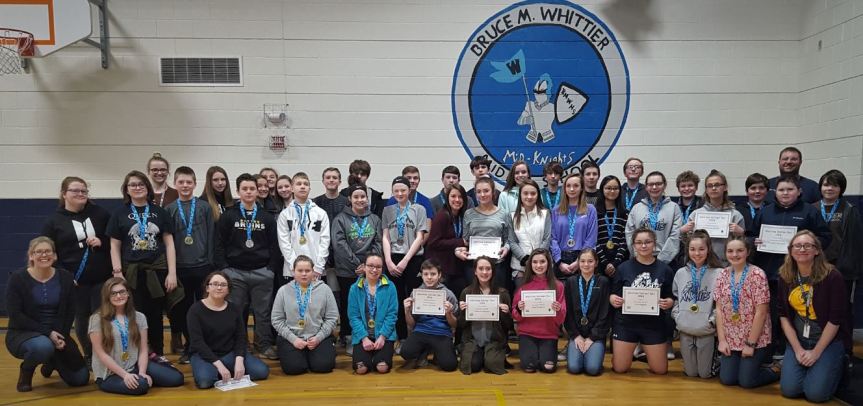
This year’s winners and the Social Studies teachers

While this is mainly a social studies project, every content area pitches in to help students succeed in their work. All staff members value the skills that the students learn from doing this project, and have supported the social studies department in leading this project for our students.

Whittier History Day is an incredible experience for the students. They not only learn research skills and history, but they also learn a lot of interpersonal skills including interview skills. These skills will help them for the rest of their life.

If you have questions about Whittier Middle School’s History Day, or you would be interested in judging next year, please feel free to contact Social Studies teacher, Logan Landry at llandry@rsu16.org.

Flexible Grouping a Success at Ridge View Community School

Submitted by Jerry Kiesman, Principal of Ridge View Community School  in AOS 94

How successful has flexible grouping been at Ridge View Community School?

Preliminary results reported last spring from NWEA testing in the fall of 2017 and the winter of 2018 indicated that many students were doing better. Now, the results of  last year’s testing are in for 2017-18 first graders, and Principal Jerry Kiesman says the data is “amazing.” Not only are students generally doing significantly better flexible grouping, the gains have been across the board—for all students and all needs.

In a cohort of 17 first graders who were tested using the Fountas and Pinnell reading level chart, 15 students ended the year at or above grade level, and 13 of those 15 students received additional support, either through title or special ed supplemental instruction or co-taught environments.

“To have that many students performing at grade level is very unusual and shows how successful flexible grouping has been,” said Mr. Kiesman.

The performance of last year’s first graders on the NWEA tests was even more impressive. On the Literacy NWEAs, 25 of 49 first graders exceeded their expected yearly growth rate of 8 to l2 points, 19 met the expected yearly growth rate, and only 5 did not meet the target growth rate because of flexible grouping. “That’s unheard of,” Mr. Kiesman said.

On the Math NWEA’s, the performance was even better, with 47 of 51 first graders exceeding their yearly growth target of 8 to 12 points, and 4 students meeting the target. No students—zero—failed to meet the yearly growth target.

In the Literacy NWEAs, the average growth for first graders during the 2017-18 school year was 17 points, compared to the expected growth of 8 to 12 points. The average number of growth points on the Math NWEAS was 27.4 points—almost three times the expected growth.

Flexible grouping has replaced the traditional classroom arrangement in grades K-4 at Ridge View, starting last year.

Instead of requiring students to spend the entire day with the same teacher in the same classroom, a variety of “learning environments” are set up for literacy and math to meet students’ individual needs.

“We have multiple teachers in the same room, and multiple places, approaches, and events to educate all the students,” Mr. Kiesman said. “We try to meet individual students where they are, and if a student isn’t progressing in a particular environment, we’ll try another environment depending on the student’s needs.”

When students are assigned to the literacy and math environments, they may move down or up a grade, depending on the standards they’re working on. Or they may move to an environment where they can receive the emotional or social support they need.

Mr. Kiesman says the best thing about flexible grouping is that it seems to be having a positive impact on the entire student population.

“It’s been affecting the kids at both the and bottom of the scale, as well as those in the middle,” he said. “That’s pretty neat.”

When flexible grouping started last year, Mr. Kiesman had to secure permission from the parents of special education students, because of IEP requirements.

“I asked them to try flexible grouping for four weeks,” Mr. Kiesman said. “One parent demurred, saying the student didn’t like noise or big crowds. I said. ‘Let me try.’ After four weeks, I called and asked if the parent wanted the child to be taken out of flexible grouping. The parent replied, ‘No, I want to keep him there—he’s having fun.’”

Next year, Mr. Kiesman says he doesn’t expect the same level of growth that the first graders saw last year, but he thinks that test results will show that everybody is still growing.

Meet Bertha Caler, Retired Teacher, Volunteer Extraordinaire, and Downeast Gem.

Submitted by Sarah Woog, Executive Director of the Washington County Consortium.

Bertha graciously welcomed me into her home in Cherryfield so I could learn about her work at D.W. Merritt School in Addison. Thank you, Bertha, for your time, and for all you do to enrich children’s lives.
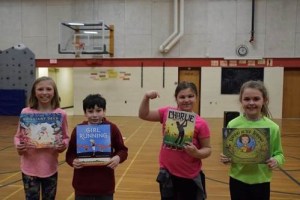
In the January Washington County Consortium Newsletter, I encouraged Washington County educators to reach out if they knew someone who should be profiled for future newsletters. I soon received an email from Suzanne Plaisted, a teacher at D.W. Merritt School, who recommended I reach out to Bertha Caler. Bertha, she shared, “is a retired teacher who has not only been subbing for years but established a free library at D.W. Merritt School in Addison.” Bertha seemed like a great person to profile. She is doing replicable work that truly enhances the lives of many students.

Bertha’s work is replicable, but she is not. She has the energy of my seven-year old, the passion of a crusader, and the generosity of the heart we see in every great educator. As soon as I was seated in her living room, Bertha pulled out her overflowing 3-inch binder where she logs every book donation with donors’ names. When students take out a book, that’s logged too, but they are not required to return it. They are welcome, encouraged, to keep books. Bertha explained, “We’ve had over 2500 donations. Hundreds haven’t come back and that’s the goal.”

Here’s how the free library works: Bertha collects book donations. She started collecting from public libraries and local donors and now, thanks to her Facebook page, she regularly gets books shipped to her from all over the country, from Minnesota all the way down to Florida, and from throughout New England. Last year, she received a package every day and would even get calls from the Post Office asking her to come pick up the overflow.

Bertha logs the donations, takes a picture, gives a shout-out on Facebook, and stores the books by grade level in her garage. She brings rotations of books from the garage into D.W. Merritt School to give them away. She has two book carts she carts around the school, one for the littles and one for the big kids. “I’ll take the books down and get surrounded,” Bertha shared. From there, little hands grab books and consume them with a happy fury. Some books are returned, some get a new home.

Bertha runs the free library “because I don’t see kids reading anymore… We need to get the world opened up to them and this is the way to do it.” Not only does the free library open the world to kids through reading, but it also opens lines of communication between D.W. Merritt students and the world outside of Washington County. Every donor receives a hand-made (not just hand-written, but hand-made with illustrations) thank-you note from students at D.W. Merritt. The free library teaches students how to express appreciation, how to write thank-you notes,  and even how to address envelopes.

The free library’s impact is constantly expanding. Last year, the Stephen and Tabitha King foundation donated $5000 to buy books and supplies for the free library. D.W. Merritt has re-instituted school-wide sustained silent reading because of a growing enthusiasm for books at the school. Bertha believes the free library “can happen at any school. You just have to have someone willing to put in the time.” If you’re interested in setting one up at your school, find Bertha on Facebook and reach out to her. Or just reach out to her, because she’s worth getting to know.


Highlights from the Williams Elementary School in Oakland

Submitted by Melanie Smith, Principal of Williams Elementary School in RSU 18.

March Madness

It’s the fourth year of Williams Elementary School’s annual school-wide reading tournament.  Williams elementary staff, Valerie Glueck and Shelly Moody, started Nonfiction March Madness four years ago to celebrate our school community’s of reading and capture our excitement in a school-wide event.  Every year 16 outstanding nonfiction books are selected that we hope will foster our students’ curiosity while building background knowledge about a variety of engaging topics. On February 27, Williams kicked off the reading event by having a student representative from each classroom run into the gymnasium when each book was announced.

This year we have a book bracket with the 16 outstanding nonfiction books included in this year’s tournament. Alternative Ed teacher, Ryan Sucy created the PDF bracket for us so that students could predict the winner and monitor their favorite books throughout the rounds of our tournament.  The bracket will be sent home with students to encourage them to chat with their parents about their favorite books.
Jason Pellerin, JMG teacher at MHS, is our incredible master of ceremonies for our March Madness events.  He really knows how to hype the crowd and get kids excited about reading! Amanda Levesque, 4th grade teacher at Williams, organizes the music, lights and sound for our events, too!  We have many other staff who have helped this year and in the past to make this tradition exciting for our students. It takes a village!

Our big assembly to announce the winning title will be on Wednesday, April 3rd.

Bedtime Math’s Crazy 8’s Club

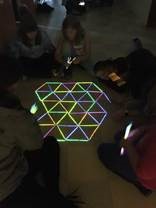
Valerie Glueck, Williams Elementary’s title 1 math teacher, organized the first Williams Elementary School Bedtime Math’s Crazy 8’s After School Club. The club started on February 27 with an activity titled Glow-In-The-Dark Geometry.  Glueck, three teachers from WES (Alexandra Cotter, Kinsey Hilton and Karen Mayo) and Messalonskee High School students Ben Hellen, Cameron Croft and Tieran Croft have volunteered their time to provide our students with fun and engaging math activities after school.

“The goal of Crazy 8s is to show that math is fun and recreational, not compulsory, in order to change our culture and get kids to think of math as play.  We offer mischief-making activities that kids love, like Bouncy Dice Explosion and Toilet Paper Olympics. We start with the fun, then roll in the math,”  (https://crazy8s.bedtimemath.org/home/what).

Breakfast with the Best 

Williams Elementary School put their Gratitude Grant into action yesterday morning as they welcomed some special guests who joined them for breakfast. As part of the RSU 18 Lifestyle Team’s focus on Being Thankful, Gracious, and Giving our schools submitted proposals for gratitude grants to support a particular project. WES set its sights on hosting a Breakfast with the Best.
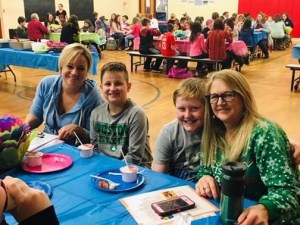
The proposal written by Principal Melanie Smith read, “It is important that we help our students develop strong character traits by creating activities that allow them to be compassionate, respectful and responsible citizens. At Williams Elementary School, we would like to provide our students with the opportunity to express their gratitude to a person in their life that they are thankful for and/or that has made a difference in their life.”

Each student selected a person and wrote an essay explaining how that person was important in their lives. They worked on their essays over the course of several writing blocks.  They drafted and redrafted, working on standards, receiving feedback and support as they developed a thoughtful, polished essay detailing why they are thankful for the person they invited.  They also wrote formal invitations for the breakfasts for their guests to RSVP to.

On the day of the breakfast, students came downstairs to greet their guests with a laminated copy of their essay to give to them as a keepsake. They then escorted their guest into the beautifully decorated gymnasium to share a breakfast and celebrate the difference that these special people had made in their lives.
Guests included many parents, grandparents, siblings, aunts, and uncles, but also coaches, teachers or formers teachers, and other staff members or mentors. Students opened each breakfast with a speech of welcome and the reading of a special poem.  After everyone had the chance to enjoy some snacks, each student took a moment to share their essay with their person, leaving few dry eyes around the room.

“It was really a team effort to get this morning together,” said Principal Melanie Smith. “The kitchen staff organized and prepared the breakfasts, the custodial staff had the gym set up and ready to go for Wednesday morning’s events, many staff attended multiple breakfasts to help out, and several students volunteered to stay in during recess one day to make paper flowers to decorate the tables. They also helped set up for the event, and clean up after the event took place.”

Thanks to everyone’s efforts the breakfast was a huge success. Guests were very moved by the students’ thoughtful pieces, the beautiful handmade decorations, the food and its presentation, and the event as a whole.

“This is a day that will be remembered by many for a long, long time,” said Principal Melanie Smith


Strong Community Bonds Benefit Cushing Community School in RSU 13

Submitted by Dawn Jones, Teaching Principal at Cushing Community School in RSU 13

A new after school math program for Cushing Community School students begins this week, thanks to our partnership with Cushing Public Library. This is the latest example of how community organizations and volunteers in our small, rural town partner with our school to support students.

Bedtime Math®’s Crazy 8s Club provides high-energy standards-aligned math activities to build motivation and confidence. Starting out as a once-a-week program for students in grades K-2, the library has plans to possibly expand for grades 3-5 in the fall. The school provides bus transportation and helps support communications with families, while the library provides planning, healthy snacks, and staff and supplies to implement the activities. Not only is Crazy 8s Club helping fill a community need for after school programming, but the school anticipates benefits will come back to the classrooms as students bring increased confidence and enthusiasm to their math learning each day.

In addition to Crazy 8s Club, the Langlais Sculpture Preserve in Cushing also provides after-school nature-based arts enrichment to Cushing students in grades 1-5. Growing out of a partnership between Cushing Community School and The Georges River Land Trust, this program is approaching the end of its second year. Among their many projects this spring, students will work with a local woodworker to create a sculpture for the school garden area, modeled after the work of well-known Cushing Artist, Bernard Langlais, whose homestead-studio is the site and inspiration for this after
school program.

Community organizations also help support reading and science enrichment. Students take monthly walking trips to the town library for stories and activities with library volunteers. A community “Green Team” — composed of retired community members with a passion for nature and gardening — helps maintain the school garden area and supports teachers in using our garden and school nature trail to take learning outside and help students learn about and care for our local resources.

This past fall the Green Team worked with school administration and staff to organize the school’s first ever “Outdoor Science Day.” Students spent the day rotating through outdoor activities led by community volunteers and experts from environmental education organizations to learn about seeds, soil, pollinators and beekeeping, ecosystems and apple-pressing. Teachers were able to connect activities with specific expectations in the Next Generation Science Standards so they could continue to build on the learning back in their classrooms. The centerpiece of the day was students enjoying apple cider they pressed themselves, thanks to a local community member who brings his cider press to our school each year. This year they had a better idea of all the natural resources and ecosystem
connections needed to produce a delicious cup of cider.

These are a few examples of how community volunteers and organizations are helping provide unique activities for Cushing students. In combination with the support of the CCS Friends & Family parent group — whose active support could easily fill another article — our growing network of community connections helps make Cushing Community School a special place. You can follow school news and events on our Facebook page.

Recent Highlights from Noble Middle School in RSU 60

Civil Rights Team Hosts Annual “Theme Week” with Success

Submitted by Terese Hodgdon, Secretary at Noble Middle School

In Berwick, Maine, Noble Middle School Guidance Counselors, Amy Malette and Sarah Burcalow, have been co-advisors of our Civil Rights Team for many years. They typically have 15-20 students on the Civil Rights Team. Meeting once a week, the students work on projects that fulfill the Maine Civil Rights Team Project mission statement:  We help schools think and talk about issues related to race and skin color, national origin and ancestry, religion, disabilities, gender (including gender identity and expression), and sexual orientation.

Recently, the Civil Rights Team hosted the annual “theme week.” This year, it was called “Identity Week.” Students and staff wore different clothing each day to show support for the different areas covered under the Maine Civil Rights Law. Students were invited to the office each morning to read a quote that pertained to the daily category. This year’s clothing options were as follows:

  • Monday: Wear Black and White clothing to show your support of all races and skin colors
  • Tuesday: Wear the colors of the flag of your national origin or ancestry.
  • Wednesday:  Wear all the colors of the rainbow to show your support of all genders and sexual orientations.
  • Thursday: Wear comfy clothing to show that people of all religions should feel comfortable in school.
  • Friday: Wear a hat to ‘put a lid’ on discrimination against disabilities.

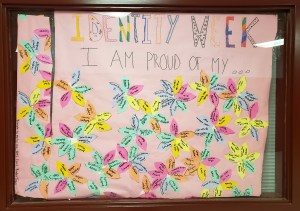
During lunch periods, a table was set up in the cafeteria where there was a banner of flowers. Students could pick a petal and write on it what they were proud to identify with.

Fitness for Life and Teacher Good Enrich the Lives at Noble Middle School

Submitted by Elyse Galeucia, Literacy Coach at Noble Middle School

Over the years Noble Middle School (NMS), in Berwick, Maine, has been lucky enough to have wonderful teachers. Many do not compare to that of Physical Education teacher Rebecca Good. Ms. Good not only embraces her physical education curriculum, but is stellar in building relationships with students by investing and modeling the lifestyle she thinks everyone should have both physically and emotionally.

Every child Ms. Good has taught, both past and present, would all agree that she is a powerful, impactful, and unforgettable teacher. She has always had such finesse when working with students within their middle school years, an extremely delicate period of their lives.

Although there are many notable moments in Ms. Good’s 35+ year career, one of her many successes has been her Fitness for Life program at NMS. This program has allowed Ms. Good to invite many different community members, such as firefighters, police officers, Navy personnel, and parents, into the school to lead fitness classes in order to model how they are “fit for life.” Furthermore, she not only has brought this program to the classroom, on multiple occasions, she has scheduled times during the morning for the whole school (all 532 students) to work out together, staff and administrators included!

Ms. Good strives for excellence and is never satisfied with “good enough.” Within her daily physical education curriculum she is always finding ways to imbed literacy and technology in order to engage and bind her message of truly living a balanced life.