Outdoor Learning Educators Share Expertise With Panel Presentation at RSU 16 in Poland

Pictured left to right – RREV Panelists Katie West (Portland), Robin Chernow (MSAD 28), Margaret Sobol (Falmouth), Maggie Corlett (RSU 10), Justin Deri (Falmouth) and Sarah Timm (MSAD 17)

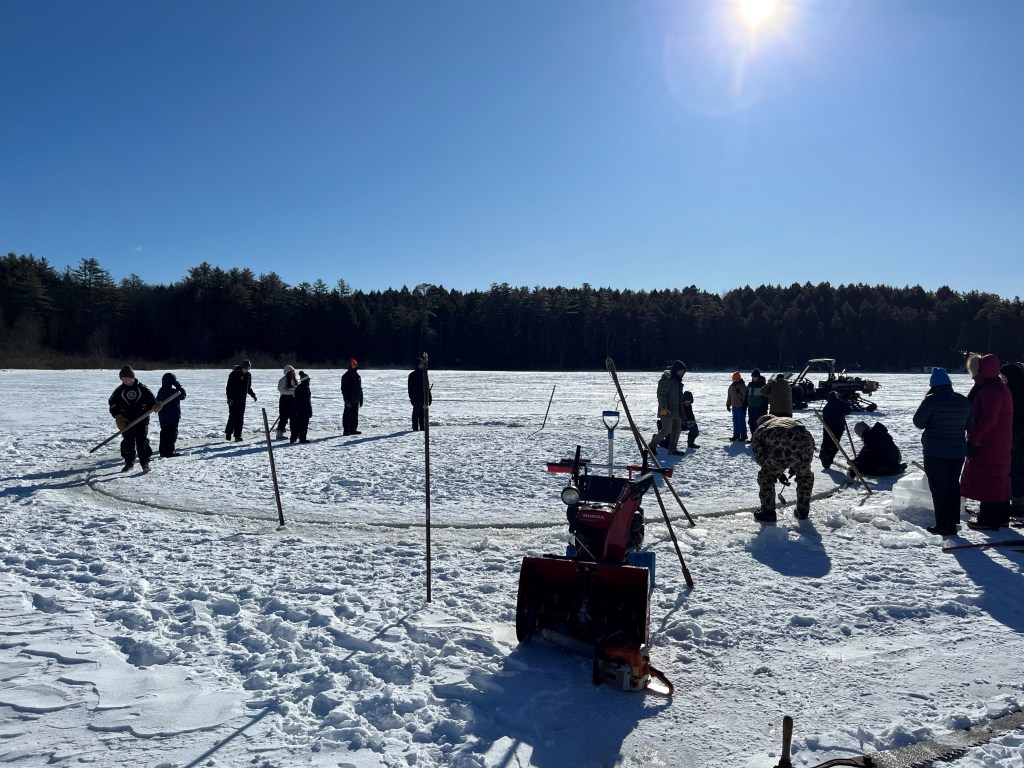
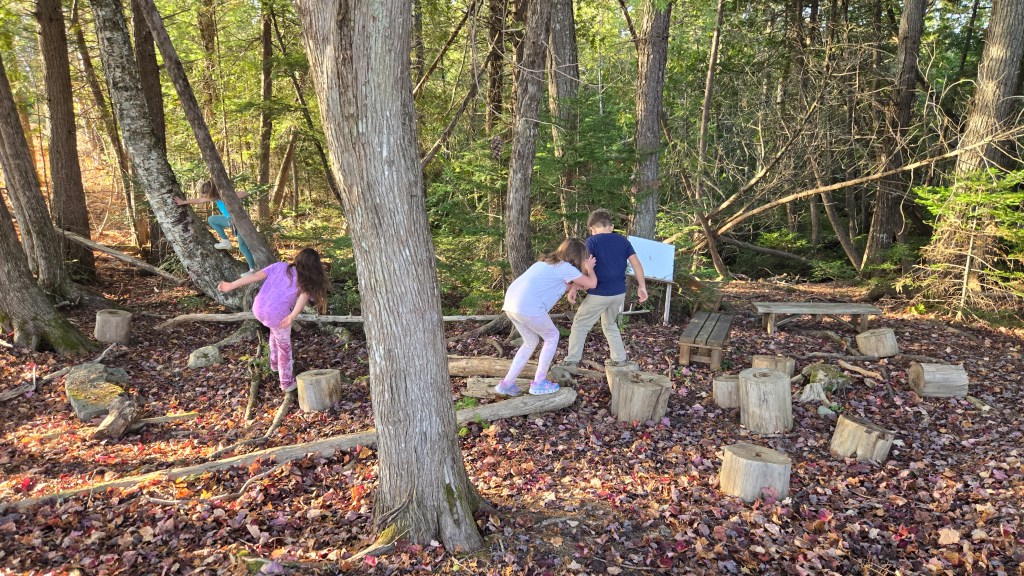
On Monday, January 27, five educators from schools that received funding from the Maine Department of Education’s (DOE) Rethinking Responsive Education Ventures (RREV) project participated in two panel presentations at RSU 16 in Poland. The panels, led by representatives from the Maine DOE’s RREV Research and Design (R&D) team, consisted of educators from schools in MSAD 28 (Camden), MSAD 17 (Oxford Hills), RSU 10 (Rumford), Falmouth, and Portland who shared their RREV pilot projects and ongoing efforts in experiential outdoor learning.

In August of 2020, the Maine DOE was awarded $16.9 million from the U.S. Department of Education’s Rethink K-12 Education Models funding. Maine was one of 11 states to receive funding, which was used to launch the RREV project, a multi-pronged solution with a primary goal of generating innovative remote learning models to provide equitable access to high-quality remote learning opportunities for all students.

The federal RREV funding ended in July of 2024, but the Maine DOE RREV R&D team is continuing the momentum of this work by promoting collaboration and sharing events that bring RREV awardees together with other educators who are interested in developing innovative and responsive learning opportunities for their students.

These panel presentations at RSU 16 are one example of that continued effort. In December, the Maine DOE published a Newsroom story that showcased RSU 16’s inaugural Outdoor Learning Day event. Afterwards, Jill Mathieu, RSU 16’s Director of Curriculum, Instruction, and Assessment, reached out to the Maine DOE to seek a way to provide additional support for RSU 16 educators interested in developing ongoing outdoor learning opportunities for their students. The Maine DOE’s RREV R&D team subsequently contacted all of its outdoor learning RREV awardees and set up these panels.

These discussions provided an enriching peer-to-peer learning opportunity for both RREV panelists and educators from RSU 16, with many ideas, suggestions, and lessons shared. The group will continue to stay connected through EnGiNE, an online collaborative portal created by the Maine DOE for Maine educators.

You may learn more about the innovative pilots produced through the RREV awards here.

RREV awardees are always interested in sharing their learning through online and in-person panel presentations. There will also be additional RREV Learning Tours scheduled throughout this school year. Learning Tours are typically conducted on-site at a RREV school, and educators from across Maine are invited to see the RREV pilot project’s programming in-action with students and educators. A list of upcoming tours is available on the Maine DOE website.

For further information, or to schedule a panel opportunity, please contact Elaine Bartley, Maine DOE RREV R&D Project Director, at elaine.bartley@maine.gov.

RSU 16 Initiates Annual District-Wide Outdoor Learning Day in Maine

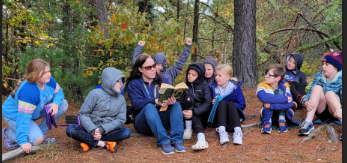
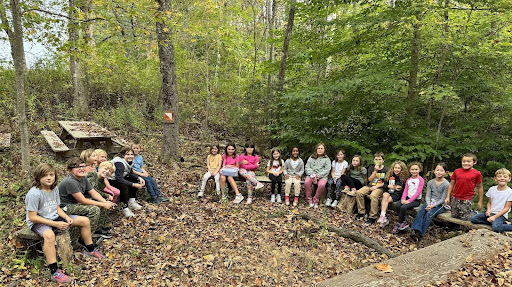
On October 16, students and teachers at all five Regional School Unit 16 (RSU 16) schools in Mechanic Falls, Minot, and Poland participated in the first annual “Drop Everything and Get Everyone Outside (GEO) Day.” The new initiative involves integrating an outdoor learning activity into nearly every content area for students’ daily lessons.

This effort comes as research continues to demonstrate the many benefits of outdoor learning, including improved focus and academics, increased cooperative learning and social interaction, better physical and mental health, and the fostering of an appreciation of and love for nature.

Jessica Harvey, a second-grade teacher at Elm Street School and the 2021 Androscoggin County Teacher of the Year, is one of the educators who has helped RSU 16 to realize its vision of outdoor learning. She and a team of other RSU 16 teachers participated in outdoor learning sessions through The Ecology School to develop a vision and progression of outdoor learning at RSU 16.

Following this professional learning opportunity, teachers held a casual lunch meeting to connect and share successes and challenges related to outdoor learning. That’s how they created the Get Everyone Outside (GEO) initiative, which they decided would be brought to life with a Drop Everything and Get Everyone Outside (GEO) Day across the district to promote outdoor learning.

“Great things happen when teachers have time together,” Harvey said.

The teachers worked with RSU 16 Curriculum Director Jill Mathieu, to establish a representative at each school to help promote and support outdoor learning. Eventually, a plan was put in place for the first annual Drop Everything and GEO Day.

“Outdoor learning is for everyone, and we are proud to see how many educators took their students outside for learning that day,” Harvey said.

Through grants and the district’s Tri-Town Education Fund, RSU 16 has acquired outdoor learning seating and other materials to help teachers and students start teaching and learning outdoors.

RSU 16 hopes to continue to grow outdoor learning district-wide, making it a natural part of the curriculum for years to come.

Information for this story was provided by RSU 16. To share good news from your school, please fill out the Maine DOE good news submission form.

Katahdin Elementary School Honored for Healthy Afterschool Programming

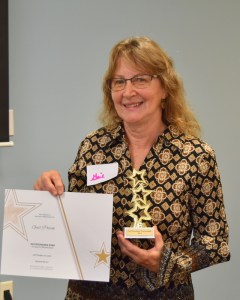
Recently, the Maine Family Resource Center’s After School Program at Katahdin Elementary School received an Outstanding Star award from Bangor Public Health and Community Services. This award recognizes the school for its dedication to increasing students’ physical activity by establishing a Mileage Club in the After School Program.

Gail Pocock
Gail Pocock, Katahdin Elementary After School Program Coordinator

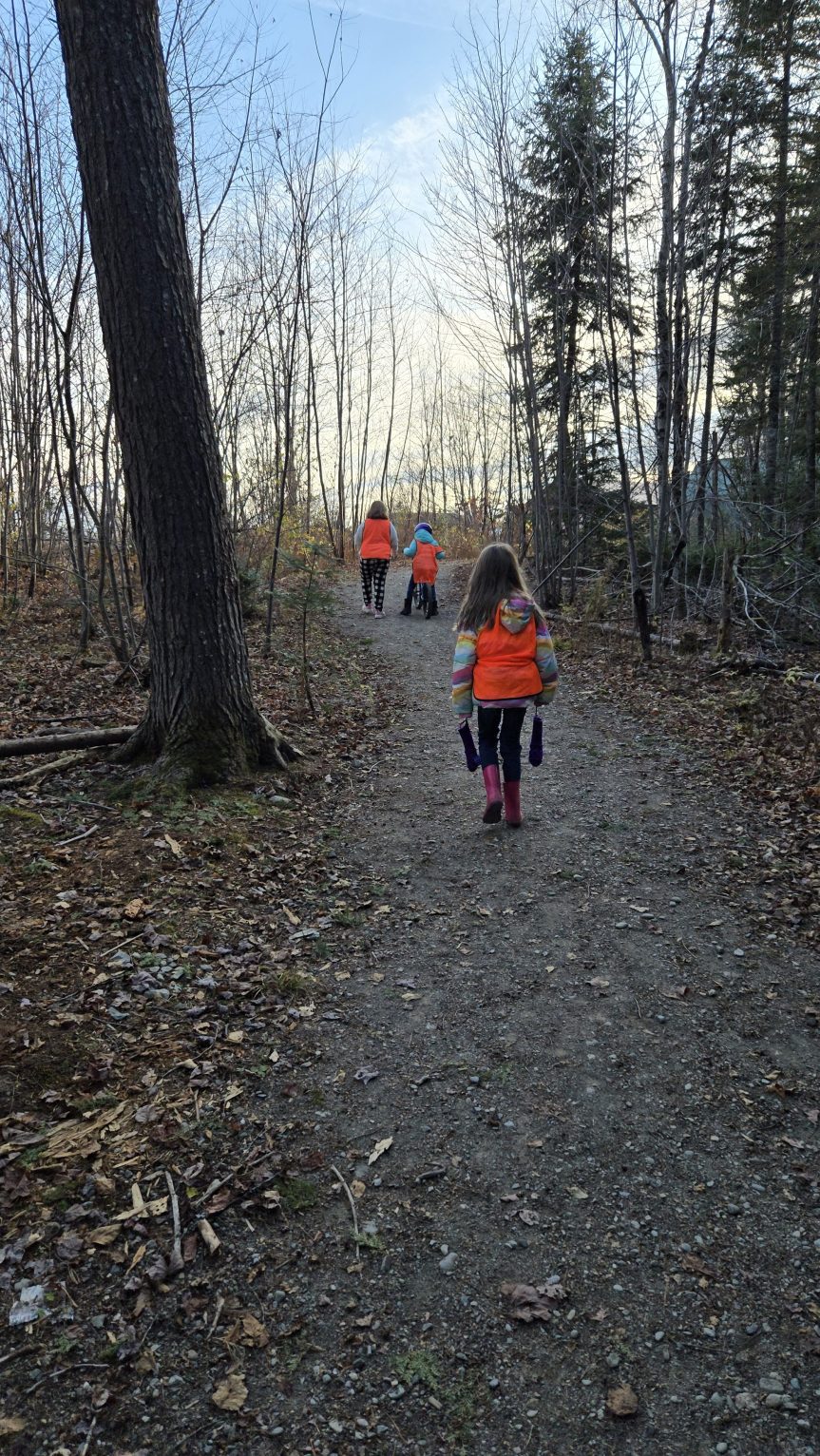
Mileage Club is a physical activity challenge that engages students in a team atmosphere. Students can walk, run, or ride bicycles around Katahdin Elementary School’s half-mile outdoor trail, counting their distance traveled toward a larger group goal. Along the way, students get rewards, like differently-colored foot charms to go on necklaces they wear. These motivational activities keep kids moving and having fun.

“I decided to organize the Mileage Club as an avenue for students to participate in physical exercise,” Gail Pocock, Katahdin Elementary After School Program Coordinator, said. “My goal is to provide opportunities for children to experience and develop healthy lifestyle choices and spend less time on screens.”

This is the first year of Bangor Public Health and Community Services’ Outstanding Star recognition program. Staff from the Health Promotion Team at Bangor Public Health and Community Services nominated organizations and individuals based on the experiences they’ve had working with them.

The Healthy Eating Active Living Team (HEAL) for the city of Bangor nominated Pocock for the award. They have collaborated with Pocock since 2017 to ensure students in the often-underserved, rural community of Katahdin have access to as many programs and resources as possible to support their health. In addition to the Mileage Club, which began in 2023 at Katahdin Elementary School, Pocock has also included SNAP-Ed and Let’s Go! in the After School Program, both of which have been very successful.

“Students have voice and choice at our After School Program,” said Pocock.

“This is the best day ever,” one of the After School Program students said of the Mileage Club. “I get to ride a bike!”

Katahdin Elementary School and RSU 89 have invested in outdoor education through the Maine Department of Education’s (DOE) Rethinking Responsive Education Ventures (RREV) grant. It was with this funding that these outdoor trails were created at Katahdin Elementary School. The grant has also funded outdoor classrooms, gear, and clothing to encourage more outdoor learning.

Nine organizations and individuals were recognized this year as Outstanding Stars by Bangor Public Health and Community Services. For more information about this award, click here.

Information for this story was provided by Bangor Public Health and Community Services and Katahdin Elementary School. To share good news from your school, fill out the Maine DOE good news submission form.

MEDIA RELEASE: The Maine Department of Education Opens New Outdoor Learning Pavilion on Mackworth Island

The Maine Outdoor Learning Pavilion is the latest effort by the Maine Department of Education to support outdoor education in Maine.

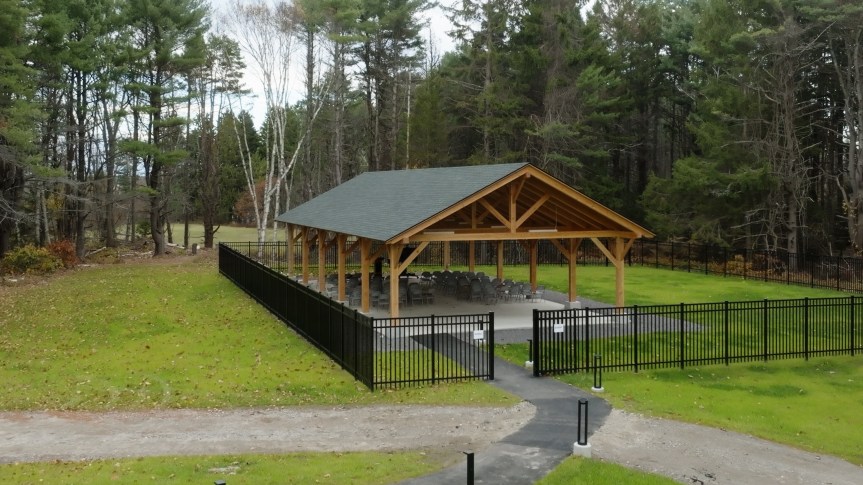
FALMOUTH, Maine — On Wednesday, Nov. 6, the Maine Department of Education (DOE) unveiled the Maine Outdoor Learning Pavilion on Mackworth Island, marking another milestone in the push to combat pandemic-related learning loss through outdoor education.

The pavilion is the latest addition to the Maine DOE’s Maine Outdoor Learning Initiative, which has connected more than 14,000 students to high-quality outdoor learning programs since 2021. This past summer, thousands of Maine students participated in more than 100 outdoor programs, from backpacking the Appalachian Trail to learning to sail to exploring nature-based careers.

“Outdoor learning is central to student engagement, health, and wellbeing” said Maine DOE Commissioner Pender Makin. “Since the summer of 2021, we’ve invested more than $11 million in the Maine Outdoor Learning Initiative to provide students with highly-engaging outdoor and environmental learning opportunities.”

“Before last year, I thought that learning was meant for classrooms,” George, an eighth-grade student from Scarborough Middle School, said. “I realized how being outside can teach us so much, from hands-on learning to real-life scenarios. The outdoors was a great environment to learn. It provided plenty of fresh air, along with a break from sitting still. When we were outside, I felt happier and had more energy. When we came back inside, I was relaxed, focused, and ready to learn.”

The new facility unveiled on Wednesday, nestled in the woods at the center of Mackworth Island, features a pavilion and an adjacent lawn, designed to make outdoor education more accessible for Maine schools.

“The Maine Outdoor Learning Pavilion is a place where schools can bring students to make learning come alive,” Jonathan Ross, superintendent of the Acton School Department and Maine DOE Outdoor Learning Initiative Coordinator, said. “Maine schools can bring a class here, teach a lesson under the pavilion or inside where we will have desks and bathrooms, and then take that lesson onto the trails around the island.”

At Wednesday’s event, students and educators from Scarborough, South Portland, Biddeford, Wiscasset, and Acton schools shared their experiences with the Maine Outdoor Learning Program.

Photos of students are courtesy of the South Portland School Department.

Sarah, an eighth-grade student from Wiscasset Middle School, emphasized the program’s impact on her education.

“The biggest lessons that I learned last year were that learning is all around us, and the things that you can learn outdoors are so worthwhile,” she said. “Even if you think that you don’t need a break from your school day, going outside and giving your brain breaks is always helpful.”

Tabatha Frawkins, a science teacher at Biddeford Alternative Pathways Center, shared powerful feedback from parents about the program’s effectiveness. She said one parent told her, “The wilderness program gave me back my son and all his glory and gave my son back the confidence and the desire to attend school. He went on to attend leadership classes for his senior year and is on track to graduate.”

Wednesday’s event concluded with a nature-based scavenger hunt across the island, which Ross and the Maine DOE coordinated.

The Maine Outdoor Learning Pavilion was created using federal emergency relief funding as part of Maine’s Whole Student Pandemic Response and represents the Maine DOE’s broader commitment to outdoor education. For more information, please visit the Maine DOE Newsroom.

To reserve the pavilion, schools may reach out to Jonathan Ross at jonathan.j.ross@maine.gov.

Andover Elementary School Students Learn Homesteading Techniques Through New School Garden 

Since the spring of 2024, staff members at Andover Elementary School (AES) have been volunteering their time to a large garden project behind the school building. School secretary Amanda Beliveau and teachers Rachael Wyman, Brooke Harris, and Sarah Woodbury have been instrumental in bringing this exciting initiative to fruition. 

AES is a small, rural school in western Maine with fifteen staff members and twenty-six students. Several of these staff members have farms of their own and are eager to pass down the traditional skills of gardening and food preparation—including canning—to students. The garden project is designed to embody the school’s vision of AES as place that fosters a positive and personalized learning environment and allows for relationship-building in a respectful and inclusive setting.  

Last fall, after getting approval from their school board, Beliveau, Wyman, and Harris applied for a $3,000 Whole Kids Garden Grant through the Whole Kids Foundation to bolster this effort. They were awarded that funding on August 1, 2024, and since then, even more volunteers have stepped forward to help with the garden project. 

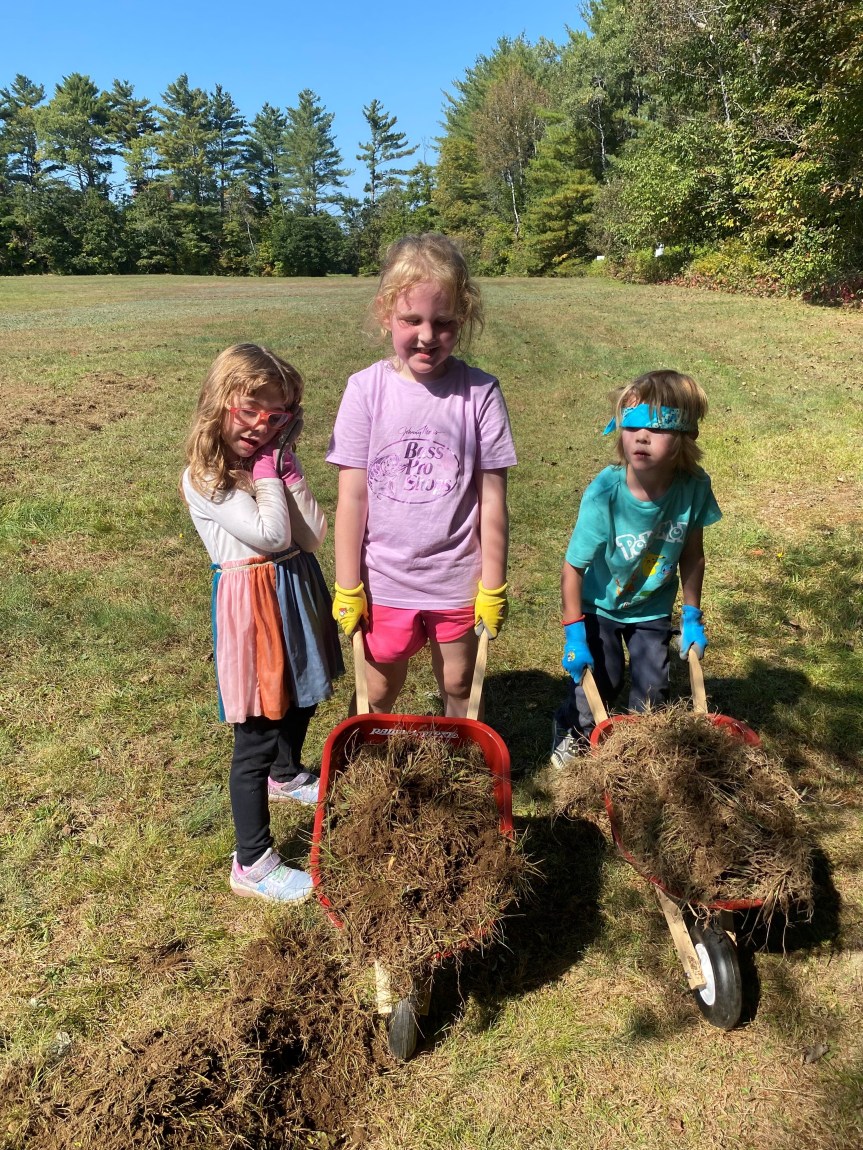
This fall, as part of their daily classroom routines, AES students have been spending time outside preparing, planting, weeding, and harvesting the garden. That work continues with the Andover After-School Program. AES has purchased garden tools and wheelbarrows for students, and staff members and volunteers are working to build and till twenty raised beds. These will be used for strawberry and raspberry plants, as well as other crops that grow in the spring, like asparagus, dill, and daffodils. 

AES hopes that the garden project will eventually include a bird-watching element and a section of pollinator plants to attract more birds and bees to the area. In the future, students will also learn to can and ferment food. Additionally, AES has purchased sewing and knitting machines, and community volunteers are ready to share these additional homemaking skills with students. 

Information for this article was provided by Andover Elementary School. To submit good news from your school, fill out the Maine Department of Education (DOE) good news submission form. 


New Yurt at Fiddlehead School of Arts and Sciences Provides Creative Outdoor Learning Space for Students

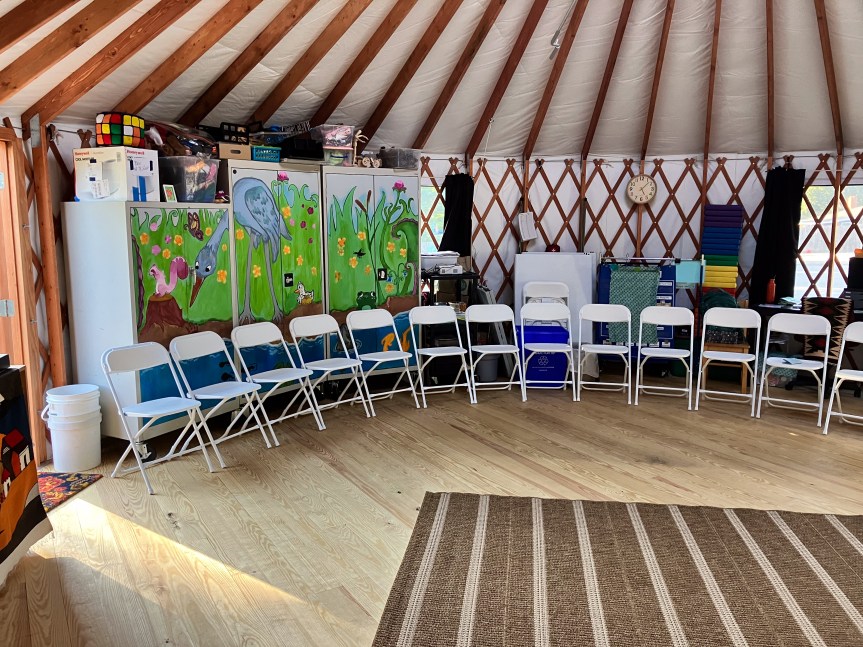
Nestled in the campus green area at Fiddlehead School of Arts and Sciences in Gray is a new yurt, serving as a unique outdoor learning space for students. For the school, it also represents something more: the power of creativity and community.

“Lovingly crafted by the local artisans at Your Community Carpenter LLC in Bridgton, this hand-built structure reflects the spirit of collaboration that makes our school so special,” said Fiddlehead School founder Jacinda Cotton-Castro.

This summer, Fiddlehead School was on a tight deadline to get the yurt up before the start of the 2024-2025 school year. As a result, community members volunteered to help by sanding down boards for the yurt’s floor and then lifting the structure into place.

“We were honored to bring this unique space to life, knowing that it would soon become a canvas for the imaginations of our students,” said Cotton-Castro. “We are also very lucky to have incredible families and volunteers who help us in many different ways.”

The yurt serves many purposes throughout the school week as a flexible environment. On Mondays and Tuesdays, it hums with the sounds of young artists at work, painting, drawing, and engaging in hands-on projects that let their creativity soar. The yurt’s circular design fosters a sense of togetherness and curiosity during expressive Spanish classes. There’s also time for students to have quiet reflection. Even after the final bell of the day has rung, the yurt is a lively hub of choice and exploration where students come together to collaborate, dream, try, and grow as part of Fiddlehead School’s after-school enrichment program Whether students are running outside of the structure or working on projects inside of it, the yurt gives them the freedom to learn and play in ways that feel meaningful.

Excitingly, the yurt isn’t meant just for Fiddlehead School students. It will also be used as a gathering place for the wider community, hosting local authors for story readings, art auctions, and other events that celebrate the creativity and talent within the wider community.

Above all, the yurt is more than just a building; it’s a new chapter in Fiddlehead School’s story—one to be written by the students, families, and community members who are helping to bring it to life.

“We look forward to the connections, creativity, and shared experiences that will unfold within its walls,” said Cotton-Castro.

Information for this article was provided by the Fiddlehead School of Arts and Sciences. To submit good news from your school, fill out our good news submission form.
See Innovative PreK-8 Career and Technical Education (CTE) in Action!

Are you a PreK-8 educator interested in providing more hands-on, minds-on learning that is focused on offering your students a look into possible careers and connecting them to their community? If so, check out a Learning Tour at St. George Municipal School on Friday, Oct. 25 from 9 a.m. to 2 p.m.

In August of 2020, the Maine DOE was awarded $16.9 million from the U.S. Department of Education’s Rethink K-12 Education Models Funding. Maine was one of 11 states to receive funding and used it to launch the Rethinking Responsive Education Ventures (RREV) project, a multi-pronged solution with a primary goal of generating innovative remote learning models to provide equitable access to high-quality remote learning opportunities for all students. The RREV Research & Design (R&D) team is continuing the momentum of this work by offering Learning Tours and fostering peer-to-peer professional learning.

St. George Municipal School (PreK-8) was a RREV awardee. Through its innovative pilot, the school has been exploring the benefits of career and technical education for the last few years. CTE is typically only available at the high school level, so those involved have been creating their curriculum along the way! On Oct. 25 at the Learning Tour, you will get the opportunity to see their new Makerspace building, observe the learning in action, and talk to teachers and students.

This Learning Tour space is limited to 10 additional Maine educators. If you are interested in joining us on this tour, please reach out to Elaine Bartley, the RREV R&D Director, at elaine.bartley@maine.gov.

To learn more about the RREV awarded innovative pilots, please click here. There will be other Learning Tours available throughout this school year.  You can find the list of upcoming tours on our website.

Maine Department of Education Awards $750,000 in Climate Education Professional Development Grants

Grants Provide Opportunities for Maine Schools to Partner with Climate and Environmental Community Organizations to Strengthen Climate Education for Students

The Maine Department of Education (DOE) awarded $750,000 in climate education professional development grants to 10 programs throughout the state. These programs will support partnerships between school administrative units (SAUs), schools, and community organizations to strengthen climate education opportunities for students across Maine.

This grant funding increases access to climate education for students throughout Maine. The grant directly funds professional learning for educators to partner with climate science experts and organizations in their communities. These programs are instrumental in providing educators and schools the support needed to address climate and resiliency in the classroom.

Programs for SY24-25:

  • Brownville Elementary School along with Penquis Valley Middle School will partner with Appalachian Mountain Club and Piscataquis County Soil and Water Conservation District on a program for 4th, 6th and 10th grades, focused on wildlife and forest ecology and health.
  • Calais Public Schools will partner with Maine TREE Foundation to develop curriculum with Project Learning Tree tools including the Forest Ecology Research Network.
  • Cherryfield Public Schools, with a focus on PreK-8, will work with Rural Aspirations Project and Downeast Education Institute to design and implement new climate-based projects at every grade level in science and social studies classrooms.
  • Fiddlehead School will partner with Center for Ecology Based Economy to develop climate focused curriculum units in Grades 5 through 8. They will also work with Learning by Nature for ME to help PreK-4 teachers understand green school yards and incorporate their use into classroom work.
  • RSU 80/MSAD 4 in Guilford will have an Environmental Education Coordinator overseeing and working with teachers as a part of the staff throughout the school year. This coordinator will work with partners, Appalachian Mountain Club and Rural Aspirations Project in help develop curriculum and work with teachers.
  • RSU 17 in South Paris will partner with Gulf of Maine Research Institute, Center for Ecology Based Economy to review, plan, and introduce new units and lessons for teachers of 1st through 7th as well as 10th Additionally, MSAD 17 will work with Roberts Farm to develop and implement 5th grade curriculum and have a Food Corps Member create school garden team curriculum for 3rd and 4th grade.
  • Pembroke Elementary School will host a 1-day Professional Development Conference open to teachers throughout Washington County in partnership with Island Readers and Writers, along with additional partners and speakers.
  • RSU 12 Windsor Elementary will partner with Friends of Cobbossee Watershed to expand its Watershed Climate Professional Development workshop from Phase 1 on this grant program. Friends of Cobbossee will additionally provide several workshops throughout the year on the national curriculum Project Wet.
  • RSU 34 in Old Town will work with the Maine Center for Research in STEM Education (RiSE Center) and Wabanaki Science and Indigenous Knowledge to develop and implement curriculum that focuses on braiding Indigenous Knowledge and Western Science concepts with Cultural Knowledge Sharers and into units for 6th through 12th
  • Westbrook Public Schools will work with Wild Seed Project to design and implement outdoor learning and climate-focused plans into classroom units throughout the school year. Additionally, Maine TREE will partner with Westbrook to host climate education professional development and create a school-wide climate education plan.

“Teachers will deepen their knowledge, draw in peer partners, and develop/implement curriculum this school year in continued relationship with the CKS’s and Western researchers.  This fall a second cohort will initiate, as will a book study cohort, with an early-spring share-out date to share and reflect upon the journey in developing place-based, project-based learning.” said RSU 34 Assistant Superintendent Jon Doty

“Our work with the Climate Education grant perfectly aligns with our commitment to outdoor learning and creating place-based, relevant curricula for our students. We are working to help them to become knowledgeable stewards of both their local and global communities, and all of this is made possible through partnerships with local organizations and the grant funding.” said RSU 17 Curriculum Director Jill Bartash

“These grants provide Maine educators and schools with the tools, resources, and partnerships they need to provide students with engaging, hands-on climate and environmental education. From the mountains to the coast, Maine has an enormous amount of natural resources for students to explore and learn from so they can be effective environmental stewards and leaders,” said Maine Education Commissioner Pender Makin.

Maine continues to be a leader in outdoor learning and climate education. The Maine DOE’s Rethinking Responsive Education Ventures (RREV) initiative, funded through a $16.9 million federal grant, has supported the expansion of outdoor education classrooms, programs, professional learning, partnerships, and spaces across the state. Schools across Maine utilized federal relief funding to expand outdoor learning spaces and programs. Governor Mills’ Maine Outdoor Learning Initiative has provided thousands of Maine middle and high school students with coastal and inland forestry learning and career exploration opportunities during the summer. The Maine DOE recently hired a Climate Education Specialist to support and expand this work with educators, schools, and community partners across the state. You can learn more about the Maine DOE’s climate and outdoor education work here.

The grant initiative was designed out of LD 1902, which was passed by the Legislature in 2022 and signed by the Governor to establish a pilot program to provide support for climate education in Maine public schools. Priority was given to communities historically underserved by climate education, socioeconomically disadvantaged communities, and interdisciplinary, place-based, and project-based learning focused activities. In its second year now, the Climate Education Professional Development Pilot Grant Program has awarded over $1 million dollars to 16 programs which will serve 40+ schools in 10 counties and hundreds of teachers and thousands of students statewide. The program will accept applications for 2025-26 School Year programs this coming winter. More Details to follow.

Maine Outdoor Learning Initiative Helps Students Learn to White Water Kayak

Six students, ranging from grades 8th to 12th, participated in an Introduction to Whitewater Kayaking Camp offered by the Main Street Skowhegan Organization. Thanks to the Maine Outdoor Learning Initiative, these students could participate in the experience at no cost to them.

The Maine Outdoor Learning Initiative is a program created by the Maine Department of Education (DOE) to engage Maine students with outdoor learning and make outdoor experiences more accessible. This initiative was inspired by a promise made in Governor Mills’ 2022 State of the State Address to provide students with more opportunities like the Whitewater Kayaking Camp, where kids can go outside and engage with Maine’s natural beauty.

Of the students attending the Whitewater Kayaking Camp, half had participated last year, and half were entirely new to whitewater paddling. The camp was led by expert Ben Koehler, who serves as the program coordinator and has ten years of river guiding and kayak instruction experience. Wasting no time, the students took straight to the water, spending most of their trip in the river. A typical day of camp consisted of driving to the Kennebec River, putting on gear, getting into boats, and riding the currents as they developed their new skills. They would run ‘good rapids’ for practice only, then hike back upriver to repeat them.

On the first day, all students were in duckies, which are inflatable sit-on-top kayaks with good stability and maneuverability. On the second day, after repeating the skills learned the prior day in duckies, students graduated to whitewater kayaks, in which the kayaker sits inside the boat with a skirt (material that covers the inside of the boat).

“One student was apprehensive to get into a kayak, so the staff helped her by letting her use a funded pack raft, which is an inflated boat that one sits in without a skirt. The funded pack raft was a good bridge between a duckie and a kayak. Practicing on the inflatable raft helped build the student’s confidence in paddling and being on the water. Another student in the camp mastered the ability to roll a kayak in whitewater, which is a big step towards becoming an expert at whitewater kayaking,” said Koehler.

At the end of the week, all six students could successfully kayak the lower-class III section of the Kennebec River, which is remarkable considering that three of them were brand new to the activity.

Main Street Skowhegan, an organization dedicated to revitalizing historic Skowhegan, hosted the camp. The organization has an impressive collection of outdoor gear that Somerset County residents can rent at no cost. Their partnership with the Maine Outdoor Learning Initiative allowed them to expand their gear and provide cost-free programs, like their white water rafting camp. Main Street Skowhegan will continue to offer white water camps and clinics throughout the summer. More information can be found on their website. 

Register for Main Street Skowhegan’s White Water Camps

The Maine Outdoor Learning Initiative was created with Federal Emergency Relief Funding and is a part of Maine’s Whole Student Pandemic Response. Please visit the Maine DOE Website to learn more about Whole Student Pandemic Response and the many other programs that make it up.

Carrabec Students Trek the Northern Forest Canoe Trail Thanks to Maine Outdoor Learning Initiative

In June, Seven Carrabec High School students joined a Teens to Trails intern and registered Maine Guide Tammy Long on a 30-mile canoe trip along the Northern Forest Canoe Trail on Flagstaff Lake. On this three-day trip, participants navigated the waters via canoe, camped on remote islands, and prepared food over a campfire. Thanks to the Maine Outdoor Learning Initiative, the trip and necessary gear were free for all participants.

The Maine Outdoor Learning Initiative is a program created by the Maine Department of Education (DOE) to engage Maine students with outdoor learning and make outdoor experiences more accessible. The Initiative was inspired by a promise made in Governor Mills’ 2022 State of the State Address to provide students with more opportunities like Carrabec’s canoe trip. The students on the trip were from Long’s Outdoor Leadership Class, taught at Carrabec High School.Long is a registered Maine guide and is extremely enthusiastic about sharing her expertise with students. She is also thankful that she has the skills and knowledge to help them stay safe on trips in remote areas. While Long noted that some of the students had prior canoe experience or had been on a trip with her before, none of them had ever embarked on a three-day, 30-mile paddling trip.

Before embarking on the trip, students were taught extended canoeing skills in an Outdoor Leadership class with Guide Tammy Long. Even for those who did have prior canoeing experience, this trip was challenging.

However, the students accepted the challenge and grew more confident in their canoeing abilities while enjoying the beauty of Flagstaff Lake.

“The highlight for me was when the students stopped holding their phones over their heads ‘looking’ for service and simply relented to the fact that they were unconnected,” remarked Long. “After three days, they couldn’t stop talking about how good it felt.”

Long said she also hopes students will continue to cherish outdoor experiences in our unique state and that they spend more time away from screens.

The Maine Outdoor Learning Initiative was created with Federal Emergency Relief Funding and is a part of Maine’s Whole Student Pandemic Response. Please visit the Maine DOE Website to learn more about Whole Student Pandemic Response and the many other programs that make it up.

“I hope to continue being able to take students on extensive canoe trips like this one, and I am very thankful for the grant money provided by the Maine Outdoor Learning Initiative, said Long.