See Innovative PreK-8 Career and Technical Education (CTE) in Action!

Are you a PreK-8 educator interested in providing more hands-on, minds-on learning that is focused on offering your students a look into possible careers and connecting them to their community? If so, check out a Learning Tour at St. George Municipal School on Friday, Oct. 25 from 9 a.m. to 2 p.m.

In August of 2020, the Maine DOE was awarded $16.9 million from the U.S. Department of Education’s Rethink K-12 Education Models Funding. Maine was one of 11 states to receive funding and used it to launch the Rethinking Responsive Education Ventures (RREV) project, a multi-pronged solution with a primary goal of generating innovative remote learning models to provide equitable access to high-quality remote learning opportunities for all students. The RREV Research & Design (R&D) team is continuing the momentum of this work by offering Learning Tours and fostering peer-to-peer professional learning.

St. George Municipal School (PreK-8) was a RREV awardee. Through its innovative pilot, the school has been exploring the benefits of career and technical education for the last few years. CTE is typically only available at the high school level, so those involved have been creating their curriculum along the way! On Oct. 25 at the Learning Tour, you will get the opportunity to see their new Makerspace building, observe the learning in action, and talk to teachers and students.

This Learning Tour space is limited to 10 additional Maine educators. If you are interested in joining us on this tour, please reach out to Elaine Bartley, the RREV R&D Director, at elaine.bartley@maine.gov.

To learn more about the RREV awarded innovative pilots, please click here. There will be other Learning Tours available throughout this school year.  You can find the list of upcoming tours on our website.

Maine Department of Education Awards $750,000 in Climate Education Professional Development Grants

Grants Provide Opportunities for Maine Schools to Partner with Climate and Environmental Community Organizations to Strengthen Climate Education for Students

The Maine Department of Education (DOE) awarded $750,000 in climate education professional development grants to 10 programs throughout the state. These programs will support partnerships between school administrative units (SAUs), schools, and community organizations to strengthen climate education opportunities for students across Maine.

This grant funding increases access to climate education for students throughout Maine. The grant directly funds professional learning for educators to partner with climate science experts and organizations in their communities. These programs are instrumental in providing educators and schools the support needed to address climate and resiliency in the classroom.

Programs for SY24-25:

  • Brownville Elementary School along with Penquis Valley Middle School will partner with Appalachian Mountain Club and Piscataquis County Soil and Water Conservation District on a program for 4th, 6th and 10th grades, focused on wildlife and forest ecology and health.
  • Calais Public Schools will partner with Maine TREE Foundation to develop curriculum with Project Learning Tree tools including the Forest Ecology Research Network.
  • Cherryfield Public Schools, with a focus on PreK-8, will work with Rural Aspirations Project and Downeast Education Institute to design and implement new climate-based projects at every grade level in science and social studies classrooms.
  • Fiddlehead School will partner with Center for Ecology Based Economy to develop climate focused curriculum units in Grades 5 through 8. They will also work with Learning by Nature for ME to help PreK-4 teachers understand green school yards and incorporate their use into classroom work.
  • RSU 80/MSAD 4 in Guilford will have an Environmental Education Coordinator overseeing and working with teachers as a part of the staff throughout the school year. This coordinator will work with partners, Appalachian Mountain Club and Rural Aspirations Project in help develop curriculum and work with teachers.
  • RSU 17 in South Paris will partner with Gulf of Maine Research Institute, Center for Ecology Based Economy to review, plan, and introduce new units and lessons for teachers of 1st through 7th as well as 10th Additionally, MSAD 17 will work with Roberts Farm to develop and implement 5th grade curriculum and have a Food Corps Member create school garden team curriculum for 3rd and 4th grade.
  • Pembroke Elementary School will host a 1-day Professional Development Conference open to teachers throughout Washington County in partnership with Island Readers and Writers, along with additional partners and speakers.
  • RSU 12 Windsor Elementary will partner with Friends of Cobbossee Watershed to expand its Watershed Climate Professional Development workshop from Phase 1 on this grant program. Friends of Cobbossee will additionally provide several workshops throughout the year on the national curriculum Project Wet.
  • RSU 34 in Old Town will work with the Maine Center for Research in STEM Education (RiSE Center) and Wabanaki Science and Indigenous Knowledge to develop and implement curriculum that focuses on braiding Indigenous Knowledge and Western Science concepts with Cultural Knowledge Sharers and into units for 6th through 12th
  • Westbrook Public Schools will work with Wild Seed Project to design and implement outdoor learning and climate-focused plans into classroom units throughout the school year. Additionally, Maine TREE will partner with Westbrook to host climate education professional development and create a school-wide climate education plan.

“Teachers will deepen their knowledge, draw in peer partners, and develop/implement curriculum this school year in continued relationship with the CKS’s and Western researchers.  This fall a second cohort will initiate, as will a book study cohort, with an early-spring share-out date to share and reflect upon the journey in developing place-based, project-based learning.” said RSU 34 Assistant Superintendent Jon Doty

“Our work with the Climate Education grant perfectly aligns with our commitment to outdoor learning and creating place-based, relevant curricula for our students. We are working to help them to become knowledgeable stewards of both their local and global communities, and all of this is made possible through partnerships with local organizations and the grant funding.” said RSU 17 Curriculum Director Jill Bartash

“These grants provide Maine educators and schools with the tools, resources, and partnerships they need to provide students with engaging, hands-on climate and environmental education. From the mountains to the coast, Maine has an enormous amount of natural resources for students to explore and learn from so they can be effective environmental stewards and leaders,” said Maine Education Commissioner Pender Makin.

Maine continues to be a leader in outdoor learning and climate education. The Maine DOE’s Rethinking Responsive Education Ventures (RREV) initiative, funded through a $16.9 million federal grant, has supported the expansion of outdoor education classrooms, programs, professional learning, partnerships, and spaces across the state. Schools across Maine utilized federal relief funding to expand outdoor learning spaces and programs. Governor Mills’ Maine Outdoor Learning Initiative has provided thousands of Maine middle and high school students with coastal and inland forestry learning and career exploration opportunities during the summer. The Maine DOE recently hired a Climate Education Specialist to support and expand this work with educators, schools, and community partners across the state. You can learn more about the Maine DOE’s climate and outdoor education work here.

The grant initiative was designed out of LD 1902, which was passed by the Legislature in 2022 and signed by the Governor to establish a pilot program to provide support for climate education in Maine public schools. Priority was given to communities historically underserved by climate education, socioeconomically disadvantaged communities, and interdisciplinary, place-based, and project-based learning focused activities. In its second year now, the Climate Education Professional Development Pilot Grant Program has awarded over $1 million dollars to 16 programs which will serve 40+ schools in 10 counties and hundreds of teachers and thousands of students statewide. The program will accept applications for 2025-26 School Year programs this coming winter. More Details to follow.

Maine Outdoor Learning Initiative Helps Students Learn to White Water Kayak

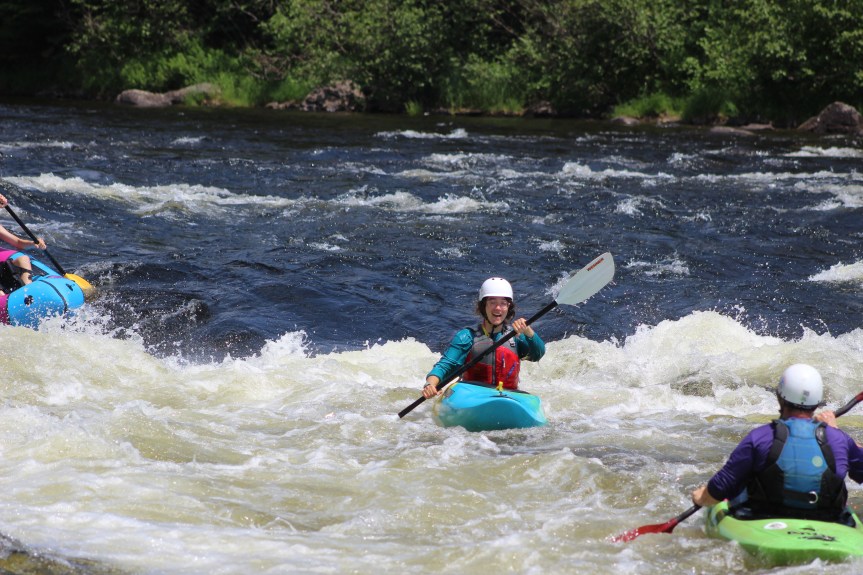
Six students, ranging from grades 8th to 12th, participated in an Introduction to Whitewater Kayaking Camp offered by the Main Street Skowhegan Organization. Thanks to the Maine Outdoor Learning Initiative, these students could participate in the experience at no cost to them.

The Maine Outdoor Learning Initiative is a program created by the Maine Department of Education (DOE) to engage Maine students with outdoor learning and make outdoor experiences more accessible. This initiative was inspired by a promise made in Governor Mills’ 2022 State of the State Address to provide students with more opportunities like the Whitewater Kayaking Camp, where kids can go outside and engage with Maine’s natural beauty.

Of the students attending the Whitewater Kayaking Camp, half had participated last year, and half were entirely new to whitewater paddling. The camp was led by expert Ben Koehler, who serves as the program coordinator and has ten years of river guiding and kayak instruction experience. Wasting no time, the students took straight to the water, spending most of their trip in the river. A typical day of camp consisted of driving to the Kennebec River, putting on gear, getting into boats, and riding the currents as they developed their new skills. They would run ‘good rapids’ for practice only, then hike back upriver to repeat them.

On the first day, all students were in duckies, which are inflatable sit-on-top kayaks with good stability and maneuverability. On the second day, after repeating the skills learned the prior day in duckies, students graduated to whitewater kayaks, in which the kayaker sits inside the boat with a skirt (material that covers the inside of the boat).

“One student was apprehensive to get into a kayak, so the staff helped her by letting her use a funded pack raft, which is an inflated boat that one sits in without a skirt. The funded pack raft was a good bridge between a duckie and a kayak. Practicing on the inflatable raft helped build the student’s confidence in paddling and being on the water. Another student in the camp mastered the ability to roll a kayak in whitewater, which is a big step towards becoming an expert at whitewater kayaking,” said Koehler.

At the end of the week, all six students could successfully kayak the lower-class III section of the Kennebec River, which is remarkable considering that three of them were brand new to the activity.

Main Street Skowhegan, an organization dedicated to revitalizing historic Skowhegan, hosted the camp. The organization has an impressive collection of outdoor gear that Somerset County residents can rent at no cost. Their partnership with the Maine Outdoor Learning Initiative allowed them to expand their gear and provide cost-free programs, like their white water rafting camp. Main Street Skowhegan will continue to offer white water camps and clinics throughout the summer. More information can be found on their website. 

Register for Main Street Skowhegan’s White Water Camps

The Maine Outdoor Learning Initiative was created with Federal Emergency Relief Funding and is a part of Maine’s Whole Student Pandemic Response. Please visit the Maine DOE Website to learn more about Whole Student Pandemic Response and the many other programs that make it up.

Carrabec Students Trek the Northern Forest Canoe Trail Thanks to Maine Outdoor Learning Initiative

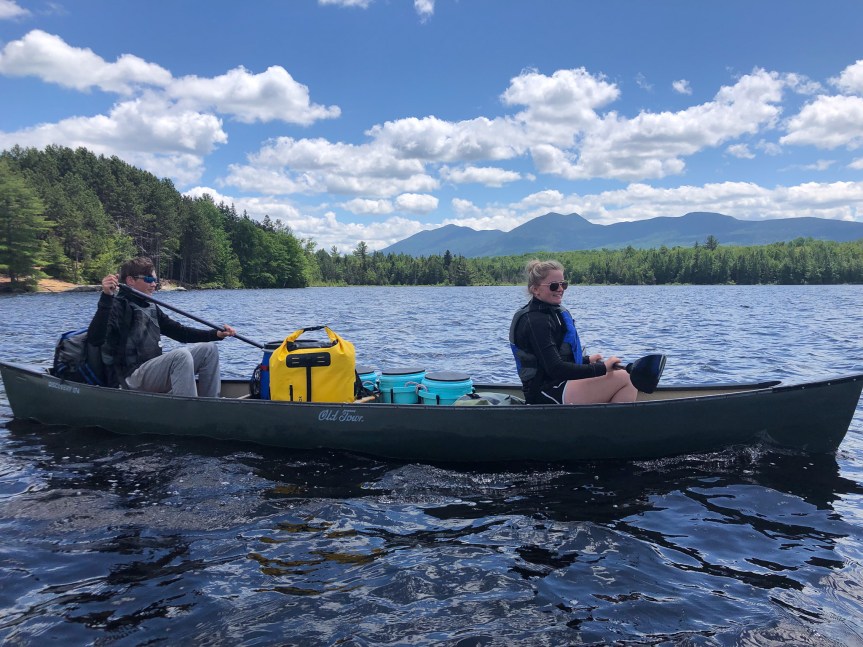
In June, Seven Carrabec High School students joined a Teens to Trails intern and registered Maine Guide Tammy Long on a 30-mile canoe trip along the Northern Forest Canoe Trail on Flagstaff Lake. On this three-day trip, participants navigated the waters via canoe, camped on remote islands, and prepared food over a campfire. Thanks to the Maine Outdoor Learning Initiative, the trip and necessary gear were free for all participants.

The Maine Outdoor Learning Initiative is a program created by the Maine Department of Education (DOE) to engage Maine students with outdoor learning and make outdoor experiences more accessible. The Initiative was inspired by a promise made in Governor Mills’ 2022 State of the State Address to provide students with more opportunities like Carrabec’s canoe trip. The students on the trip were from Long’s Outdoor Leadership Class, taught at Carrabec High School.Long is a registered Maine guide and is extremely enthusiastic about sharing her expertise with students. She is also thankful that she has the skills and knowledge to help them stay safe on trips in remote areas. While Long noted that some of the students had prior canoe experience or had been on a trip with her before, none of them had ever embarked on a three-day, 30-mile paddling trip.

Before embarking on the trip, students were taught extended canoeing skills in an Outdoor Leadership class with Guide Tammy Long. Even for those who did have prior canoeing experience, this trip was challenging.

However, the students accepted the challenge and grew more confident in their canoeing abilities while enjoying the beauty of Flagstaff Lake.

“The highlight for me was when the students stopped holding their phones over their heads ‘looking’ for service and simply relented to the fact that they were unconnected,” remarked Long. “After three days, they couldn’t stop talking about how good it felt.”

Long said she also hopes students will continue to cherish outdoor experiences in our unique state and that they spend more time away from screens.

The Maine Outdoor Learning Initiative was created with Federal Emergency Relief Funding and is a part of Maine’s Whole Student Pandemic Response. Please visit the Maine DOE Website to learn more about Whole Student Pandemic Response and the many other programs that make it up.

“I hope to continue being able to take students on extensive canoe trips like this one, and I am very thankful for the grant money provided by the Maine Outdoor Learning Initiative, said Long.

Lincoln Academy Students are Building a Greenhouse to Support Their Free Summer Program

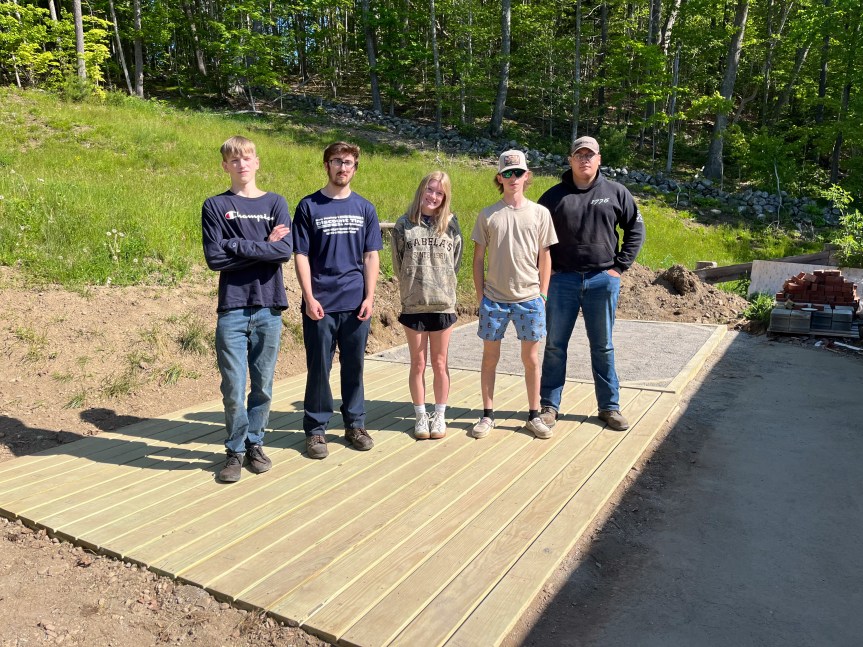
(The Lincoln Academy edLab students who built the greenhouse deck and foundation to support their outdoor learning space.)

The greenhouse will be a part of Lincoln Academy’s Maine Outdoor Learning Initiative program, LA Launch.

Lincoln Academy’s edLab students have been building a greenhouse to support the school’s new LA Launch Program. This free summer program, funded by the Maine Department of Education’s (DOE) Maine Outdoor Learning Initiative, will support rising 9th graders preparing to enter high school.

The Maine Outdoor Learning Initiative is a statewide effort to increase access to engaging, hands-on outdoor experiences and career exploration for middle and high school students throughout the state. The initiative, created by the Maine Department of Education, was born from a promise made during Governor Mills’ 2022 State of the State Address to provide children with more opportunities to get outside and engage with Maine’s natural beauty following the pandemic.

Students in edLab, Lincoln’s alternative education program, took the lead on the construction project with the help of edLab Director Jody Matta and their teachers. As part of the project, edLab teachers and students researched the town of Newcastle zoning process and received guidance from Town Planner Michael Martone. Students prepared and applied for the building permit. With assistance from the facilities department at Lincoln Academy, edLab students wrestled with the many rocks at the site and dug the foundation area. Along with the base for the Maine Garden Products greenhouse, they also built a deck to be used as an outdoor education space.

“It was a great opportunity for us to learn about the process involved in constructing a new building,” said edLab student Ariel Cowan. “It is information that we will be able to use in the future.”

“Our students worked hard on the greenhouse project, and I am proud of their work,” said Matta. “We look forward to utilizing the greenhouse as a learning space in the future.”

High school students sit at a metal table covered in oyster shells, paper, clipboards, pens and plastic gloves. Some students are inspecting the oysters while others write on their clipboards.
As part of the LA Launch program, students will learn about oyster aquaculture at the University of Maine’s Darling Marine Center.

The LA Launch program is designed to support students as they transition to high school and help them connect with Lincoln Academy while they learn more about their community and the importance of connection in a marine ecosystem.

“The greenhouse is a great resource that will allow LA Launch participants to explore and experiment, which will supplement our field trips to meet with community members and learn more about fishing, aquaculture, boatbuilding, and outdoor recreation,” said Lincoln Academy’s Director of Applied Learning Maya Crosby.

Crosby worked with Heather D’Ippolito, Lincoln Academy’s Director of Community Engagement and Development, to build the LA Launch program and apply for the Maine Outdoor Learning Initiative funding. Lincoln Academy was one of more than 60 organizations that received funding through the Maine DOE grant, thanks to an expansion of the program announced by the governor.

The Maine Outdoor Learning Initiative grant covers participants’ transportation and the school is providing lunch. Families interested in enrolling their rising ninth graders in LA Launch should reach out to the program director, Andrew Jonash, at jonash@lincolnacademy.org or visit the Summer at Lincoln Academy page.

Sign Up for the Free Summer Launch Program Here

Maine Garden Products will deliver the greenhouse in mid-July and place it on the prepared base. The project will be completed by the end of July, before the LA Launch program starts in August.

If you live outside the Lincoln Academy district or want an alternative summer program, check out the Maine Outdoor Learning Initiative’s search program table. Over a hundred free summer programs are happening all over the state!

The Maine Outdoor Learning Initiative was created with Federal Emergency Relief Funding and is a part of Maine’s Whole Student Pandemic Response. Please visit the Maine DOE Website to learn more about Whole Student Pandemic Response and the many other programs that make it up.

No Cost Educational Trip Leader Permit Training Available at Maine DOE Annual Summit

Does your school unit sponsor outdoor learning opportunities in one of the following categories? 

  • Overnight trips away from potable water 
  • Use of non-motorized watercraft on Maine’s waterways 

Answering yes to either statement indicates that your school unit requires a school employee or approved volunteer to hold an Educational Trip Leader (ETL) permit to lead outdoor educational trips. Per the Maine Department of Inland Fisheries and Wildlife, an educational institution conducting an outdoor educational trip that would normally require a registered Maine guide (trips overnight away from potable water and/or trips that occur on Maine’s waterways) shall provide for every 12 trip participants at least one educational trip leader who holds a valid educational trip leader permit and who is associated with the educational institution. If the person who is conducting the trip holds a valid Maine Guide’s license, then the educational trip leader permit is not required.

On August 6-8, during the 2024 Maine DOE Annual Summit, 18 educators in Maine have the opportunity to receive free Education Trip Leader (ETL) training. The course, Educational Trip Leader Permit and Wilderness First Aid (WFA), is being taught by Sarah Hubert, Registered Maine Guide, and Jeremy Hargreaves, owner of Northeast Whitewater. 

The Maine Department of Education (DOE) is partnering with Teens to Trails, Northeast Whitewater, and Camp Mechuwana to provide this hands-on training and certification. 

Registration for the course is a 3-day commitment, as participants will be immersed in integrating the curriculum and training over the three days. Participants will need to provide their own overnight camping and personal gear and can sleep in their own tent or in a lean-to on the shores of Camp Mechuwana on the nights of Tuesday, August 6th, and Wednesday, August 7th 

For more information about the Educational Trip Leader Permits, please visit the Maine Department of Inland Fisheries and Wildlife (ETL Permits) or call (207) 287-8000.  

For questions regarding the Educational Trip Leader Permit/Wilderness First Aid course for the 2024 Educator Summit, contact Dr. Carolyn Gross (carolyn.gross@maine.gov /207-441-9043). 

For general information about the 2024 Educator Summit, please visit the 2024 Maine DOE Annual Summit Event website. 

In 2021, Chapter 927: Guides, Youth Camp Trip Leaders and Education Trip Leaders guidance was established by the Maine Legislature and the Maine Department of Inland Fisheries and Wildlife. An Educational Trip Leader Permit is required for schools and postsecondary institutions in the state of Maine that sponsor trips on waterways and lack of potable water. Read more about this legislation at Chapter 927: Guides, Youth Camp Trip Leaders and Educational Trip Leaders. 

Bucksport Eighth Graders Unplug and Help Out During Camping Trip at Birch Point Beach State Park

(Bucksport eighth graders had the opportunity to watch the aurora borealis over the ocean.)

This May, eighth graders from Bucksport Middle School left the screens behind for a weekend of learning and service at Birch Point Beach State Park in Owls Head. Miles Bisher, Bucksport Middle School’s social studies teacher and outdoor club advisor, brought his students out as part of the Teens to Trails’ Life Happens Outside® Challenge, one of the Maine Outdoor Learning Initiative’s 2024 programs.

The Maine Outdoor Learning Initiative is a state-wide effort to increase access to engaging, hands-on outdoor experiences and career exploration for middle and high school students throughout the state. Since its creation in 2022, the program has brought thousands of students on outdoor adventures inspired by educators like Bisher.

“When I was in high school, my outing club advisor took our club on extended camping trips, and those experiences had a profound impact on my life by exposing me to new experiences outside with peers, in settings that would challenge me physically and mentally, and allow me to grow as a person and develop some resiliency and adaptability in the face of adversity. I wanted to offer a similar experience to my 8th graders,” explained Bisher. “Additionally, the prevalence of screen time and phone/social media usage for teens has skyrocketed, while teen time spent outside and synchronous, in-person time with friends has plummeted, and I wanted to show students the innumerable benefits of flipping those two trends.

Teens to Trails Program Manager Samantha Andrews accompanied the group from Bucksport on their trip. Teens to Trails is a nonprofit organization whose mission is “connecting Maine teens to life-changing experiences.” Their Life Happens Outside® Challenge is a weeklong competition for middle school communities. To compete in the challenge, students track every minute spent outside – whether on a dedicated trip like Bisher planned or doing everyday actions like walking the dog or taking out the trash. The challenge takes place May 10-17, and at the end of the week, the eight schools with the most outside minutes logged win $1,000 to apply to future outdoor activities.

“Teens to Trails hears from healthcare experts, parents, and teachers that teenagers feel better on the inside when they spend time outside,” said Executive Director Alicia Heyburn in a recent press release. “We heard so many amazing stories from students and faculty about the positive impact spending a week outdoors can have.”

Bucksport students were a testament to this effort: “I felt like I didn’t need my phone even after we left and felt better and more in the present,” said one student. It made me feel so much better. I felt more energized and like I had time to do things again,” said another. I had some of the best nights of sleep I’ve had in a long time.”

This is Teens to Trails’ first year working with the Maine Outdoor Learning Initiative, and the Challenge is just one of four free programs they are offering students. The initiative, created by the Maine Department of Education, was born from a promise made during Governor Mill’s 2022 State of the State Address to provide children with more opportunities to learn about and explore Maine’s natural beauty and resources after two years of the pandemic.

“Teens to Trails and Bucksport Middle School are grateful to Maine Outdoor Learning Initiative for supporting a student opportunity to enjoy a weekend of coastal camping. The experience also marked the first overnight trip for this great group of middle schoolers,” said Jennifer Hazard


During their trip, Bucksport Middle School students worked together to complete many important projects, such as cleaning up debris on Birch Point Beach State Park’s trails, replacing picnic tables, and burning branches off fallen trees. There were also opportunities for fun, such as exploring Owls Head Lighthouse and hiking Mt. Megunticook. Students were even lucky enough to watch the colors of the Northern Lights reflect over the water. Experts from the Maine Bureau of Parks & Land visited on Saturday evening to teach students about the solar system and constellations and allowed them to see the moon through a high-power telescope.

When asked about their favorite parts of the trip, students most noted their appreciation for being away from technology and, of course, the best part of any camping trip: s’mores.

“The air in the morning with the ocean a bit away and the smores and the energy that came along with it,” one student told Bisher about their favorite part of the trip.

Another noted, “It was probably one of the best camping experiences that someone could experience. I felt like I always had something fun going on, and it was nice talking to people I usually wouldn’t.”

Bucksport middle schoolers can identify the importance of engaging with nature. “Outdoor experiences like this are important for teenagers because they don’t realize how fun or relaxing it is to do these things until they actually do it,” explained one student, “we are constantly on our phones and so disconnected from the real world. Most kids don’t get to have that experience.”

Bisher agrees with the sentiment: “Outdoor education and experiences are not just important but absolutely critical for the holistic development of children and adolescents. Kids need to take risks, be challenged, face and overcome adversity, learn to be adaptable and flexible, disconnect from screens and the online world, and reconnect with the physical world of nature with their friends. Everything is more real and authentic outside, and students need that, now more than ever.”

There are still dozens of free Maine Outdoor Learning programs happening this summer. If you or a student you know is looking for a fun way to spend the summer outside, please visit our searchable program table by tapping or clicking here.

The Maine Outdoor Learning Initiative was created with Federal Emergency Relief Funding and is a part of Maine’s Whole Student Pandemic Response. Please visit the Maine DOE Website to learn more about Whole Student Pandemic Response and the many other programs that make it up.


No Cost ‘Envirothon KickStarter Kits’ Available to Maine Educators/Schools

Do you want to engage students in learning about Maine’s Natural Resources? Do you want to promote outdoor education? Do you want access to environmental science equipment? Do you want to provide students with more opportunities to master the Maine Science and Technology Learning Results Standards? The Envirothon KickStarter Program may be for you.

Through a collaboration between the Maine Association of Conservations Districts and the Spruce Mountain High School Envirothon Team, an Envirothon KickStarter Program is available to organizations that have not had teams compete in the last 2 years.

Available through a Diversity Grant from the U.S. Forest Service, the National Conservation Foundation, and the NCF Envirothon, the KickStarter Kits are intended to provide resources to help new advisors teach students content and skills related to preparing for an Envirothon Competition.

The Kits will include materials such as a Biltmore Log Scale Stick, Trees of Maine book, soil testing materials, water data sampling materials, and other supplies for environmental science. It is expected that organizations receiving Envirothon Starter kits will organize a team to compete in the 2024 or 2025 Envirothon and the kits will be available this spring through 2025 or until the funds are depleted.

Additionally, as part of the Envirothon KickStarter program, there will be online training for any advisors and students to help them learn about Envirothon, including newly formed and veteran teams. Teachers may receive contact hours towards recertification for participation.

For more information about Envirothon or the Envirothon KickStarter Program, you may email Spruce Mountain High School Envirothon Advisor Rob Taylor at rtaylor@rsu73.com.

More information on the Envirothon and how to register:

A Day on Fahi Pond Ice Fishing with Upper Kennebec Valley High School’s Wildlife Studies and Maine Woodsmen Classes

On February 9th, 2024 Mr. Atwood’s Wildlife Studies class and Mr. Davis’s Maine Woodsmen class ventured out to Fahi Pond in Embden, Maine for a day of ice fishing and outdoor skills practice.

Mr. Atwood’s class was tasked with the assignment of manually drilling half a dozen holes in the sixteen-inch ice to set traps for a chance to catch some local fish.  Everyone took turns dragging and/or carrying all the necessary equipment out onto the ice.  Hauled in by manufactured and makeshift sleds alike, a camp for the day was soon on its way.

While the Wildlife Studies students were learning how to bait their hooks and set traps from Mr. Atwood, the Maine Woodsmen class, with help from their teacher, Mr. Davis, were in full swing setting up their fifteen-foot, pop-up ice fishing shack and preparing their kitchen within.  The woodsmen students took turns cooking meals, cleaning, and serving everyone food and drinks. The morning started with a breakfast of chocolate chip pancakes, sausage, and locally harvested maple syrup with orange juice, milk, and hot chocolate.

When students weren’t busy tending to traps or providing creature comforts to their peers, everyone was able to relax and enjoy the calm sunny weather and one another’s company. Several students tried their hands at drilling holes for jigging both outside and inside the shack as well as making a comfortable campfire.  As everyone began to cool down, it was soon time for lunch, and once again, the woodmen students were busy in the kitchen. This time making a meal of grilled cheese sandwiches and tomato soup that really hit the spot.

Though only one flag flew and not a fish was caught, the day was a great success.

This story was submitted by MSAD 13. To submit a good news story to the Maine Department of Education, fill out this submission form.

A Celebration of Outdoor Learning

(A group photo of  the Celebration of Outdoor Learning attendees.)

The Maine Department of Education (DOE) joined Maine environmental education organizations at the State House’s Hall of Flags in celebration of outdoor learning and the release of the 2022 Census of Community-Based Outdoor and Environmental Learning. 

Olivia Griset, the Executive Director of the Maine Environmental Education Association (MEEA), helped organize the event with Teach Maine Outside, a collaborative project between MEEA, the Maine Math and science Alliance, and the Nature Based Education Consortium.

“The goal of the event is to really showcase the importance of environmental education and outdoor learning in Maine,” explained Griset. “We wanted to create a space to share our new amazing census report, where we study the field and try to understand what the needs of educators are, as well as just create a space to shout out all of the amazing statewide networks that exist, invite students and teachers to celebrate their hard work to get people learning outside.”

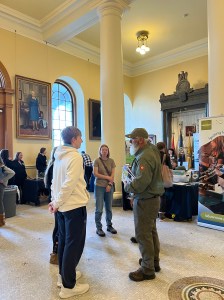
In a crowded room, a group of teenagers speak to two uniformed Maine Game Wardens.
Outdoor Education students connect with Maine Game Wardens at the Celebration of Outdoor Learning.

Students from throughout the state came to connect with their peers, explore the State House, and attend a panel of young professionals in environmental policy. At the panel, students discussed translating their love for nature into tangible actions for meaningful change through advocacy. Students also had an opportunity to share their outdoor education experiences.

Liam Lemire, a sixth grader from Lillian Parks Hussey School in Augusta, reflected on his experience learning about ecosystems at an after school snowshoeing program.

“We learn how one thing in the outdoors connects to everything else, and how if one thing goes away, it will change the whole outdoors,” he said.

After the panel, ten speakers shared their passion for outdoor education. Among the speakers were four Maine DOE representatives. First up from the DOE was Chief Innovation Officer Page Nichols, who expressed her pride in the Maine DOE and Mills Administration’s dedication to outdoor learning. Nichols informed attendees that “the Department of Education has invested nearly $20 million to support the expansion of nature-based programming and climate education. In 2022, with support from a number of other state agencies, we updated the 2011 environmental literacy plan to help advance environmental literacy for Maine students. The updated plan also positions the state to receive federal funding to further support this important work.”

Climate Education Specialist Teddy Lyman spoke after Nichols, thanking the crowd for their attendance, updating them on the success of the Climate Education Personal Development Grant, and announcing a new task force.

“This task force will spend the spring designing the future of climate education for the department over the next four years so we’ll have meetings both in person and virtually. And if you are a partner to education groups, if you are a teacher, if you are a school administrator, and if you are a youth, we would love to have you participate in this task force,” he said. You can click here to complete the taskforce form.

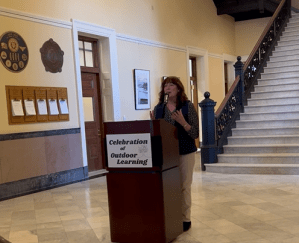
Commissioner Pender Mekin stands at a wooden podium with a white sign that says “Celebration of Outdoor Learning” in green. The Commissioner is speaking and holding her hands up in emphasis.
Maine Department of Education Commissioner Pender Makin speaking at the Celebration of Outdoor Learning.

Following Lyman, Brianne Lolar, a Panawahpskek citizen and the DOE Wabanaki Studies Team Leader, took center stage to illustrate the critical role Maine’s indigenous people play in climate education.

“Wabanaki traditional ways teach us to honor and strengthen our relationships with the environment as well as the people around us,” shared Lolar. “This is not easy work by any means, but together we will be stronger for our use across Wabanaki homelands.”

Lastly, Commissioner Makin used her time at the podium to emphasize the significance of encouraging young people to spend time outdoors.

“There is something qualitatively important about being in nature and just being outdoors. There are neurological impacts of 30 seconds of listening to the sound of birds or nature in general that are so critically needed by all kids,” said Makin.

Learn more about Maine’s Outdoor Learning Opportunities here.