2024 Maine Outdoor Learning Initiative (MOLI) Grant Information Sessions

Start your scope of work now! The Maine Department of Education (DOE) will soon be seeking applications for the next round of Maine Outdoor Learning Initiative grants.  These grants support hands-on, engaging, interdisciplinary outdoor learning and career exploration opportunities that connect students with Maine’s amazing natural bounty. See a Newsroom story about 2023 Maine Outdoor Learning Initiative Grants.

With massive expansions in eligibility, this funding can potentially be used to facilitate outdoor learning programs before, during, or after school; on weekends; during school breaks and/or over the summer. The Request for Applications (RFA) is slated to be published December 1, 2023.

Join Maine DOE staff for a series of open office hours in November to learn more about the application process and how your organization can maximize this opportunity for students.   Make sure you sign up for these Open Office Hours sessions.  After the RFA is published on the State website, the Maine DOE will not be able to field questions outside of the formal Procurement process.

Join the Maine DOE Open Office Hours to brainstorm how your school or organization can take advantage of this one-time federal funding.

The significant expansion of the eligibility rules beyond non-profits to include most local education providers, makes many schools in Maine eligible for this funding.  For 2024, schools, private and nonprofit organizations, municipal Parks and Recreation Departments that are current members of the Maine Recreation and Park Association, and public libraries can apply.  In this sense, “schools” include charter schools, Career and Technical Education (CTE) Centers or Regions, Education in Unorganized Territories (EUTs), approved private schools located in Maine, and school administrative Units (SAU). Applications will also be considered for schools and organizations who wish to use the funding to enhance or expand existing outdoor programming.

The Maine DOE expects more than 60 applications. In 2023 our non-profit partners reached 1,500+ students. In expanding the eligibility and length of the 2024 grant, we expect to reach 2,500+ students with meaningful outdoor educational experiences.

The Maine Outdoor Learning Initiative was created by Governor Mills in 2022 to connect Maine’s young people to the outdoors through engaging summer learning opportunities. The initiative has grown each year in scope and the number of students served. Click here to learn about the 2022 and 2023 Maine Outdoor Learning Initiative programs. The initiative is supported through Federal Emergency Relief Funding.


How Project G.R.O.W. (Garden Roots & Outdoor Wellness) is Impacting Students at Mt. Ararat High School

Project G.R.O.W. (Garden Roots & Outdoor Wellness) at Mt. Ararat High School has taken off! The program is led by Darcy Baggett and Becca Norklun.

Throughout the 2022/2023 school year, they had garden involvement in a variety of ways, all of which contributed to meeting their impact goal of 1870 student hours.

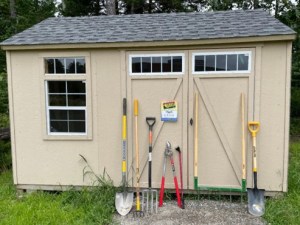
In the Fall, the team was able to partner with both the Interact Club and the Brunswick Area Rotary Club to build a tool shed. Two adults and five students built it together over a weekend using the MAITC (Maine Agriculture in the Classroom) grant-funded shed kit. This now enables them to house all of their new tools and equipment, also purchased with the funding, out of harm, and in a locked space.

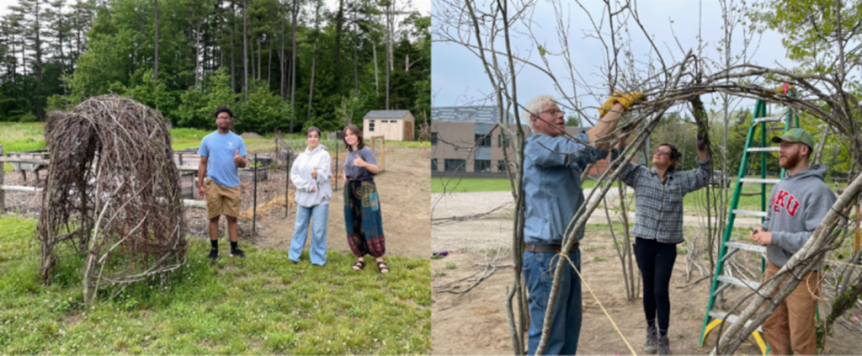
Perhaps the most exciting project of the year was the collaborative sculpture project, organized by the school’s Art Department, their Community Pathways Program, and Project GROW. They invited internationally known environmental sculptor, Patrick Dougherty and his son, Sam Dougherty to work with roughly 200 students over the course of two full days to make large garden sculptures out of local saplings. It was featured on local news and in local papers – a huge success that students are still talking about!

Check out this video with more info!

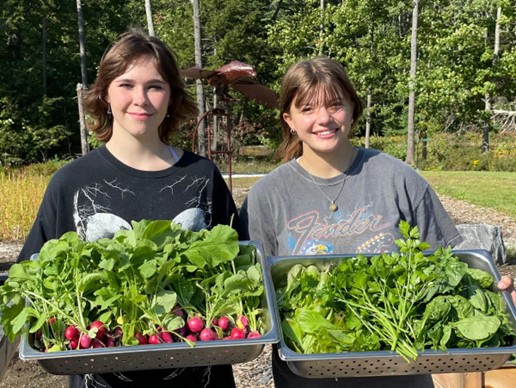
Project GROW Garden Group met weekly, even throughout the winter, to plan the garden’s development, write area businesses and collaborators, harvest and sow Maine native seeds from their own school property, and more. The Leadership group is led by two Garden Coordinators, and eight students of varying high school ages. In the Spring, this group continued their work in the physical garden space, planting, harvesting, and planning new sections of the project’s “campus.”

Science teachers brought their students out to the garden during class time to teach them about the environment, plant and animal biology, and conduct soil science. An estimated number of students who were involved in the program through science classes is 100; some classes did this one time, others used the garden several times throughout the year for their research and outdoor exploration.

The health classes also used the garden to explore healthy living options, such as growing one’s own food, and discussing garden work as an opportunity for physical exercise. More specifically, t

he teacher of the “Fit for Life” course brought her students to the garden each semester, creating short-term visits with long-term impact for approximately 50 students.The Functional Life Skills class, Alternative Education Program, and the Community Pathways programs each used the garden this spring as a place for healthy, hands-on, outdoor learning. Collectively, these programs serve approximately thirty students and do a variety of things appropriate for their students’ needs.

This year, the district’s extended school year program for students with special needs was offered at Mt. Ararat High School, which means that 95 elementary and middle school students had access to Project GROW, as well. Every rain-free day of the 4-week program, these young students could be seen walking the gardens, sampling green beans, exploring our stick sculptures, and playing games.

“As a garden coordinator, it was an incredibly rewarding and unexpected scene this summer,” said one of the Project GROW organizers.

While their goal for student use has been met this year, they still hope to increase garden access even further. The Project organizers believe all academic disciplines at MTA can benefit from the use of Project GROW.

Follow along on their new Instagram account: @MTA_ProjectGROW

This story originated in the Maine Agriculture in the Classroom Newsletter where you can find more good news, grants, resources and more. To submit a story or an idea to showcase the great things happening in Maine schools email Rachel Paling at rachel.paling@maine.gov.

Maine Outdoor Learning Initiative: Maine Students’ Forestry and Recreation Careers Blossom Thanks to Friends of Katahdin Woods and Waters Summer Program 

Friends of Katahdin Woods and Waters, in partnership with the Katahdin Learning Project and numerous local outdoors-oriented organizations, facilitated multiple summer experiences for 217 youth grades 6-12 from the Katahdin Region and beyond this summer as part of the Maine Outdoor Learning Initiative. 

The Maine Outdoor Learning Initiative was launched by the Maine Department of Education in 2022 at the request of Governor Mills with the goal of expanding student access to hands-on, immersive experiences allowing them to explore while learning in Maine’s beautiful bounty of natural resources. Summer 2022 focused on coastal education and career exploration opportunities; this year the Initiative was expanded to include inland forestry opportunities. More than 1,000 middle and high school students participated in programs across Maine this past summer.  

Through the programs offered by the Katahdin Learning Project, a program of the Friends of Katahdin Woods and Waters, career development conversations took place during hiking, camping, paddling, and mountain biking trips across the region. During their excursions, students got to experience hiking, biking, fishing, camping, outdoor cooking, canoeing, wading, stargazing, team building, plant identification, career discussions, fire-starting, and more!   

After spending time outdoors engaged in these activities, one student remarked, “I make better decisions, my brain feels much more clear. I’ve started to ride my bike. And you get to appreciate nature and see beautiful views.” 

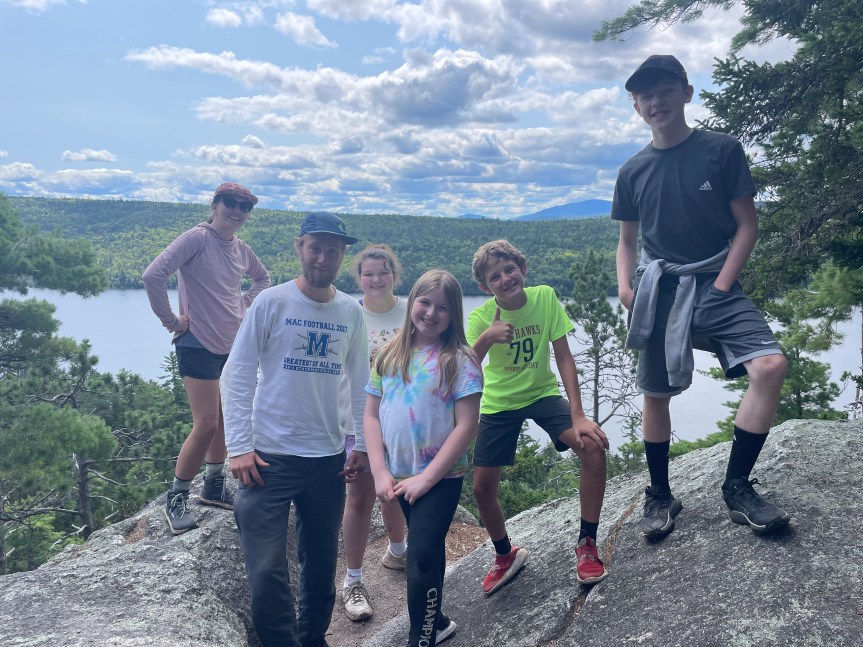
Pictures from a day hike this summer:

During their summer programs, students also engaged in career-related conversations with Maine professionals from logging and outdoor recreation businesses and nonprofits, exposing them to multiple support networks, and enabling them to understand possible next steps in their forestry or recreation careers. 

“I truly have learned a lot, and I’ve been able to reflect on my abilities, passions, hobbies, and think about exactly what career would fit me best,” said one high school participant. “I have never thought about a future career path in that sense before.” 

“Students have formed lifelong connections to their place and the people in it,” said Kala Rush, Education Director for Friends of Katahdin Woods and Waters. Rush explains that some youth arrived at their summer programs unaware of how to explore their interests or were hesitant to initiate career-related conversations. Many arrived knowing little about Maine’s vast and varied woods and backwoods. Through career discussions along a hiking trail or on a paddling trip, they strengthened bonds with not only the lands and waters of Maine but importantly, the people whose careers are based on forest stewardship and outdoor recreation. 

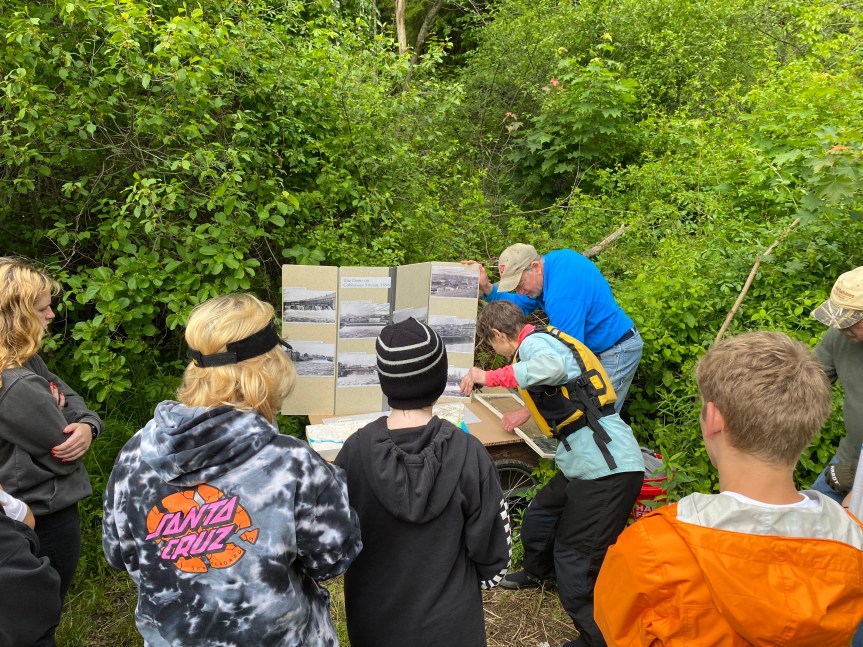
Pictures from an overnight paddle this summer:

A key tenet of The Katahdin Learning Project is the support of students along varied developmental pathways.  It is hoped that by combining outdoor adventures with career discussion and mentorship, students develop a love for the outdoors and a desire to grow and thrive as individuals. Katahdin Learning Project students are able to begin their next school year with knowledge, experiences, support, and connections critical for making decisions about their next steps in life. 

“I want to go to college to work just like you guys,” said one of the elementary students who participated. 

“We now have multiple young adults who want to continue with additional training and head into a career in the outdoor industry,” said Rush. “They know who to reach out to in their community and feel well-supported.” The summer 2023 programming provided participants with a great breadth of new experiences, connections, and resources for their personal, academic, and career futures.” 

Looking ahead, The Katahdin Learning Project hopes that students who participated in the summer career exploration program return to their schools comfortable and ready to share their experiences while staying connected to summer leaders and co-participants.  

Community organizations collaborating with Friends of Katahdin Woods and Waters included The Katahdin Gear Library, Katahdin Area Trails, The Outdoor Sports Institute, Skowhegan Outdoors, and Syntiro, a Maine-based nonprofit that provides professional development and services, focusing on career exploration, and promoting equity and social justice. 

Pictures from an overnight hike this summer:

 A project of the Maine Department of Education, The Maine Outdoor Learning Initiative, was offered to middle and high school students during the summers of 2022 and 2023. The summer programs provided opportunities for students across Maine to participate in either marine and coastal ecology or inland forestry experiences allowing and encouraging them to learn about and interact with nature through hands-on, interactive projects and experiences.  Career exploration opportunities that connect them to Maine-based industries were a key component of all programming.   

Governor Mills’s Emergency Education Relief (GEER) Program funds received from the US Department of Education supported the implementation of this project.  The $1.3 million dollar project was fully funded with GEER funds to support The Maine Outdoor Learning Initiative. The contents are those of the author(s) and do not necessarily represent the official views of, nor an endorsement, by the USDOE or the U.S. Government. 

Read more about the Maine Outdoor Learning Initiative and see a listing of summer programs. To learn about more outdoor education initiatives and opportunities provided by the Maine DOE  visit our website. 

Maine Department of Education Releases Climate Education Professional Development Grant to Promote Climate Education in Maine Schools

The Maine Department of Education (DOE) is excited to launch a new climate education professional development pilot grant opportunity to support the growth of climate education throughout the state and most especially in underserved communities. This grant initiative was designed out of LD 1902 which passed in the spring of 2022. This grant initiative is designed first and foremost to support teachers and schools. Climate change content and pedagogy can be challenging to approach for many different reasons. It can be a new area for teachers, a subject matter that is challenging to navigate in a school’s community, and an area of education where teachers and schools just don’t know where to get started.  

This initiative asks that schools partner with a non-profit community-based organization because these organizations are integral to communities throughout Maine. They have created, sustained, and grown an incredible framework of outdoor and environmental education opportunities and programs that are tailored to their local regions traits and needs. This initiative will expand on their work to form new connections and expand partnerships between community organizations and schools. These partnerships will support teachers and schools to bring climate education to more of Maine’s students. 

The RFA can be found here, and applications are due on November 3, 2023.

The RFA grant will be phase 1 of 2 initial phases the Maine DOE plans for this effort. Phase 1 will have an application window from early September to October 20th. Phase 1 professional development programs will be awarded for a term from mid-November through the end of August 2024. Phase 2 will build on the successes and learnings of phase one. Phase 2 will have an application window in the winter of 2024 and be designed for programs leading up to and during the school year of 2024-2025. These phases are designed for a wide variety of applicants and programs that might vary in style, content, age, duration, and breadth or depth. 

Applicants should take the time to review the application and ask questions by September 29th (full instructions in the RFA). Just like the program itself, the application can be collaborative with community partners and other local education providers if desired. Applicants that hit priorities one and/or two and cannot connect with a partner or do not know where to start are still encouraged to apply. If the timeline for phase 1 is too tight for applying or the award window does not make sense for this year, phase 2 is a great option with additional time to plan and connect with a partner. 

This program is overseen by Teddy Lyman, the Maine DOE’s new Climate Education Specialist. Teddy will coordinate this program including the application, awards, and deliverables. During the RFA application window, Teddy cannot communicate directly with anyone that might benefit from direct communication that is not publicly available.  

Questions about the RFA should be emailed to Teddy at: Theodore.Lyman@maine.gov by 11:59 pm on September 29th, 2023. Questions and answers will be posted publicly at the link below.  The Climate Education Specialist will also set and execute a wider range of climate education initiatives throughout the state. This will include working with grant recipients, stakeholders, and youth to design, encourage, and build the future of climate education around Maine. 

For more information and updates, check out the DOE climate education webpage.  

A copy of the RFA, as well as the Question & Answer Summary and all amendments related to the RFA, can be obtained at: https://www.maine.gov/dafs/bbm/procurementservices/vendors/grants. 


Gardiner Area High School Improves Student Engagement in Earth Science Class Through Outdoor Learning

Gardiner Area High School is one of 45 Maine schools that have received an award through RREV, or Rethinking Responsive Education Ventures. Supported by the Office of Innovation at the Maine Department of Education, the RREV initiative is a U.S. DOE grant that provides Maine educators funds to implement innovative, cross-disciplinary learning opportunities to be incorporated into curricula. This grant has allowed schools like Gardiner Area High School to redesign instruction that leads to improved learning experiences for students.

Gardiner Area High School directed their RREV funds to their freshman Earth Science class. Prior to the start of the pilot, teachers reported that students were demonstrating increased incidences of social and emotional issues, declining grades, and significant disengagement. Spearheaded by 2023 Kennebec County Teacher of the Year, Sharon Gallant, the goal of this pilot was to reverse the disengagement by having students in the Earth Science class spend 75% of their class time outdoors. When asked about the idea behind the pilot Gallant said, “I have always known what outdoor learning can do.” Adding that as incoming freshmen, students end up spending a lot more time in the classroom than they had previously. Sharon felt that increasing the time students spent outside engaged in hands-on learning would remedy these issues. After beginning implementation, the feedback from students was resoundingly positive, with subsequent improvements in learning. Sharon described her experience with the implementation of the pilot as “amazing” adding that “it has totally changed my teaching style, and what I know to be great teaching.”

The freshman Earth Science class has navigated many challenges in implementing this pilot, from unexpected weather patterns to tracking mud through the halls after class, but with these challenges came widespread support and improved engagement from students and teachers alike.

Gallant remarked that since implementing this class structure she has been able to teach practical applications of Earth Science, incorporating knowledge that was once “taught at home,” such as what poison ivy looks like, and how to start a fire. Additionally, this class has provided students with a connection to the natural world that was not previously there for many of them, as well as offer indispensable hands-on learning and problem-solving opportunities. From rushing rivers to 10-degree snowy fields, to rock-covered hills, this freshman Earth Science class has had some unique classrooms, to say the least.

After one year of pilot implementation, the RREV team attended one of the outdoor science classes to see the implementation process in action. On this day, the science class was taking place on the Cobbosseecontee Stream and students were to catch, record, and release migrating alewives. An instructor helping to lead the alewife capture noted that their migration was slowing down as spring was progressing, and the science class had been conducting their observations for several days at this stream. The slowing migration was borne out in students’ study on the day of the RREV team’s visit, as the students only caught and recorded one alewife and one elver that day. “That’s real science” remarked Gallant, “Some days you get hundreds of alewives, some days you get one.” 

When the class came to an end, the RREV team accompanied them back to the road where their transportation was. Elaine Bartley – the RREV Project Director – recounted her conversation with a student on the walk back. Elaine asked the student whether they liked outside classes or not, to which the student responded something to the effect of “I’m more of an inside person.” Elaine followed up, “So you would rather be inside learning from a book?”

“Well, if I really want to learn it then I have to be doing it,” replied the student.  This interaction between Elaine and the student emphasizes the ways that Gardiner Area High School’s outdoor education integration pilot has reimagined the ways that students can learn, and redefined what can constitute a classroom.

It is with the help of the RREV grant that awardee schools like Gardiner are able to provide enhanced learning opportunities and experiences for students, and has allowed educators at Gardiner to address the ubiquitous student need for learning through doing in a unique and meaningful way.

RREV is an initiative of the Maine Department of Education, funded by the Education Stabilization Funds through the US Department of Education’s Rethink K-12 Education Models, that bolsters Maine educators’ innovative efforts to support their students with agile, effective, and resilient learning experiences that improve learning outcomes for all students.  

The Maine DOE encourages all schools and districts across the State of Maine to learn more about these innovative educators and their RREV pilots through the RREV website and the online RREV collaborative platform known as EnGiNE. It is through EnGiNE that we hope to continue the momentum to change students’ lives through innovative and responsive educational programs.

Commissioner Makin Joins Students Participating in Maine Outdoor Learning Initiative Program in Port Clyde

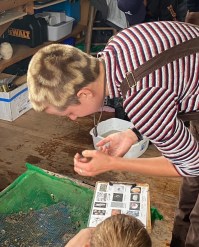
Maine Education Commissioner Pender Makin joined high school students as they dug clams and took part in hands-on coastal ecology learning opportunities at Herring Gut Coastal Science Center in Port Clyde.

The Herring Gut program, part of the Maine Outdoor Learning Initiative, provides students with a multi-day, immersive experience learning about coastal habitats and species. Students measured pH levels, studied coastal habitats while engaging in activities like digging clams, studied climate change in Maine, kayaked, learned about aquaculture, measured mussels being raised in Herring Gut’s historic lobster pound, and met with experts and those working in local marine-related industries.
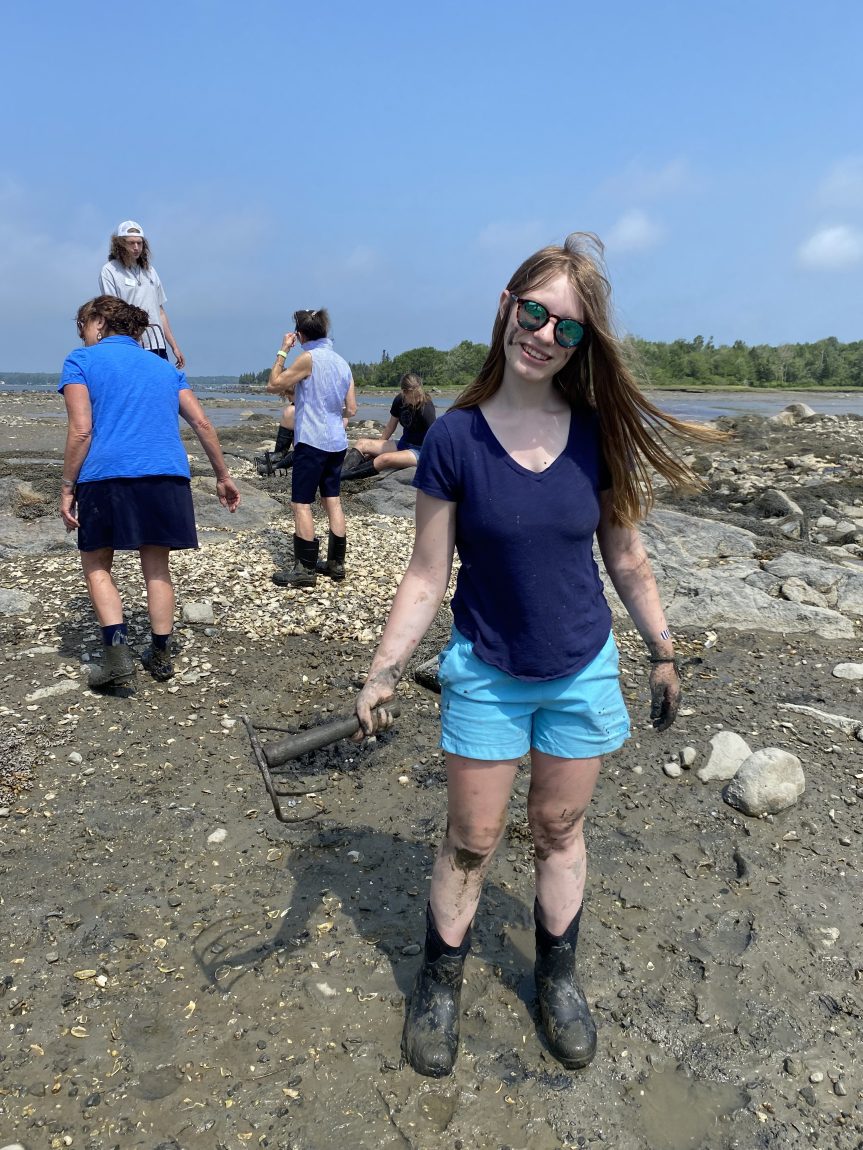
Students across the state are spending their summers engaged in hands-on, project-based coastal ecology and forestry education programs through the Maine Outdoor Learning Initiative.

Molly Ockett School 3rd Graders Study Maine Forests in Outdoor Classroom

Brian Cushing, a 3rd grade teacher at Molly Ockett School in MSAD 72 was looking to do something different with his students this past fall after a year of working indoors through the pandemic.

Inspired by a “Forests of Maine Teacher Study Tour” he took in the summer of 2021 at the Maine Outdoor Center on Millinocket Lake near Mt. Katahdin, Cushing created a lesson for his 3rd graders that gave them the opportunity to study Maine forests.

“Our field experiences [on the Forests of Maine Teacher Study Tour] were what inspired me most to have my students get outside and learn about forestry,” said Cushing. “Our teacher field experiences took us from harvesting and processing the harvest to retail operations.”

In a 10-session study that integrated reading, writing, technology, science, and geography components, Cushing collaborated with Tin Mountain Conservation to create something really special for this students. He worked with Tin Mountain to co-teach lessons on tree identification, internal structure/components of trees and how to tell how old a tree is when cut down by counting rings on tree cookies.

Cushing decided to use their local school site in Fryeburg, which is located on several acres of mixed woods on one side, for a place to set up their outdoor classroom.

“Students enjoyed having an outdoor classroom,” said Cushing. “Being indoors so much of the day during this pandemic can be monotonous, and even though protocols are in place for outdoor classrooms, it was a change, the air was fresh, and they were learning about a new topic.”

In addition to learning about tree science, the students also studied animal habitat, and what mammals live in the Maine woods. They kept science journals for their weekly lessons, the majority of which were outside at their school site. They also worked in teams of two or three and used their laptops to research selected Maine mammals such as black bear, moose, snowshoe hare, flying squirrels, and bobcat, and then created visuals to present their findings to their classmates, as experts on their chosen mammal.

“They were so enthusiastic to research and write about their mammal, and then to present to the class,” said Cushing. “This was the first time any of them had been able to do any kind of team work since the pandemic hit.”

As part of the collaboration with Tin Mountain, students also had the opportunity to assemble a Maine moose skeleton in class, as part of a traveling museum that came to their classroom. Students also got see a Maine black bear skin, a taxidermied pileated woodpecker, and a saw-whet owl.

“The best part for me was seeing how integration really makes sense to students,” Cushing reflected.

To learn more about Tin Mount Conservation visit their website. To learn more about Mr. Cushing’s study on Maine forests, reach out to him at brian.cushing@msad72.org.