Carl J. Lamb Elementary Students Get a Sweet Lesson in Science, Math, and New England Tradition

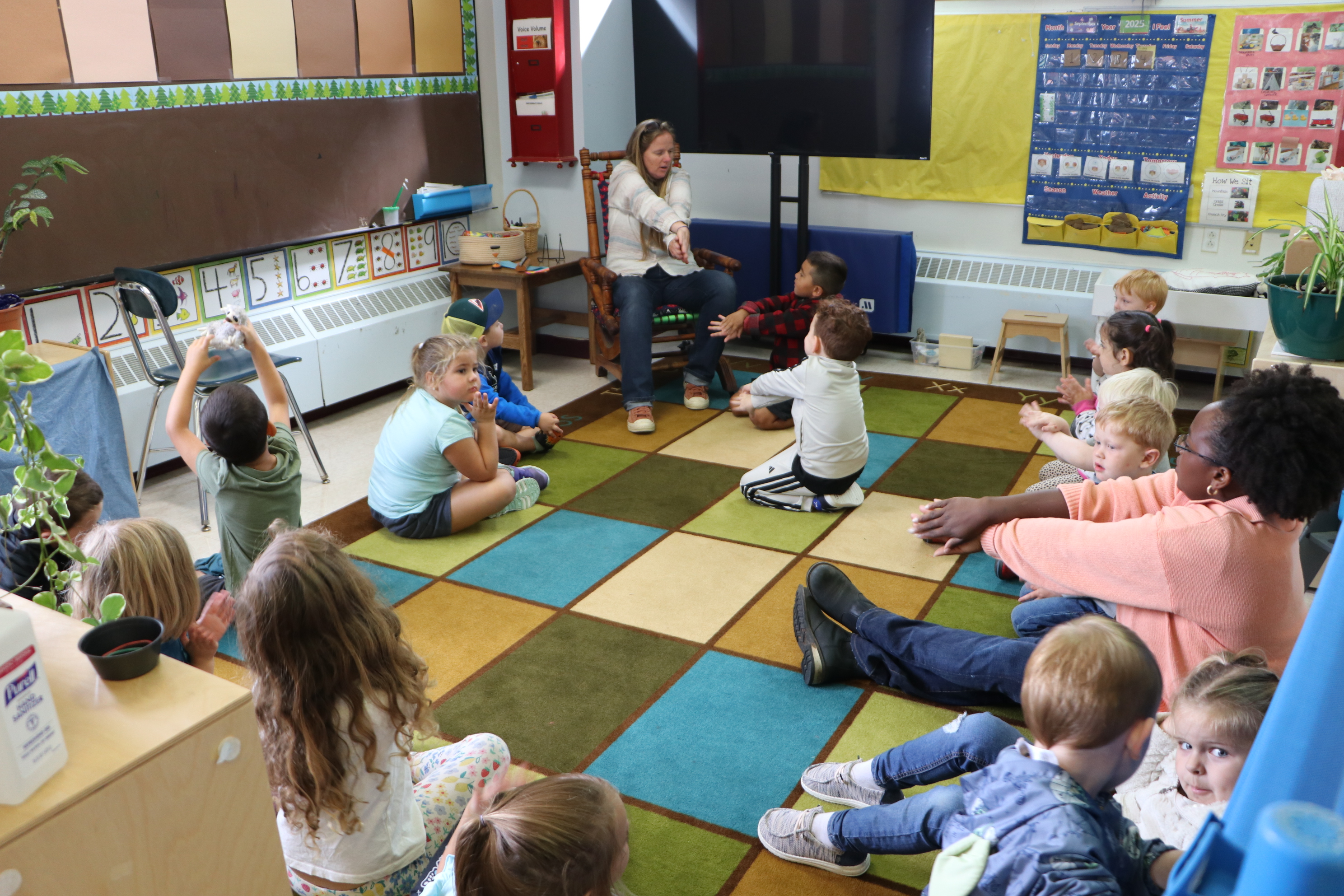
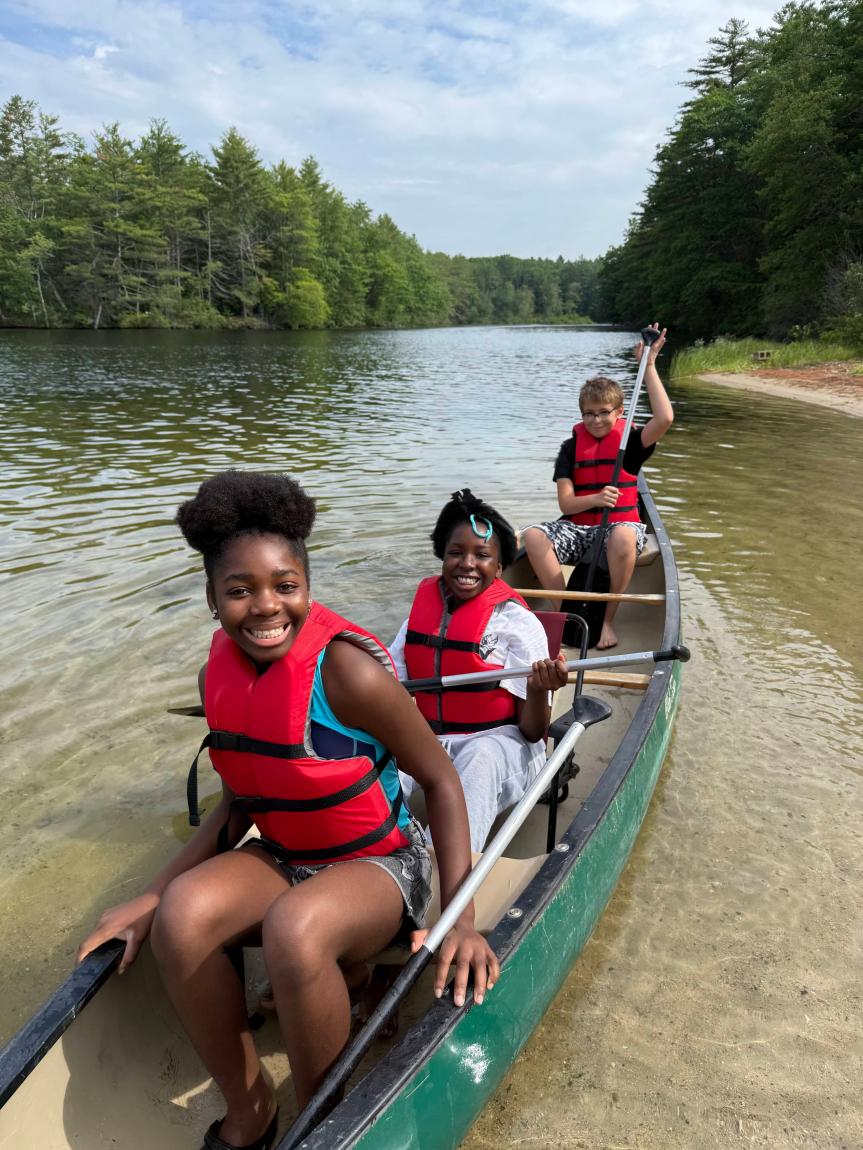
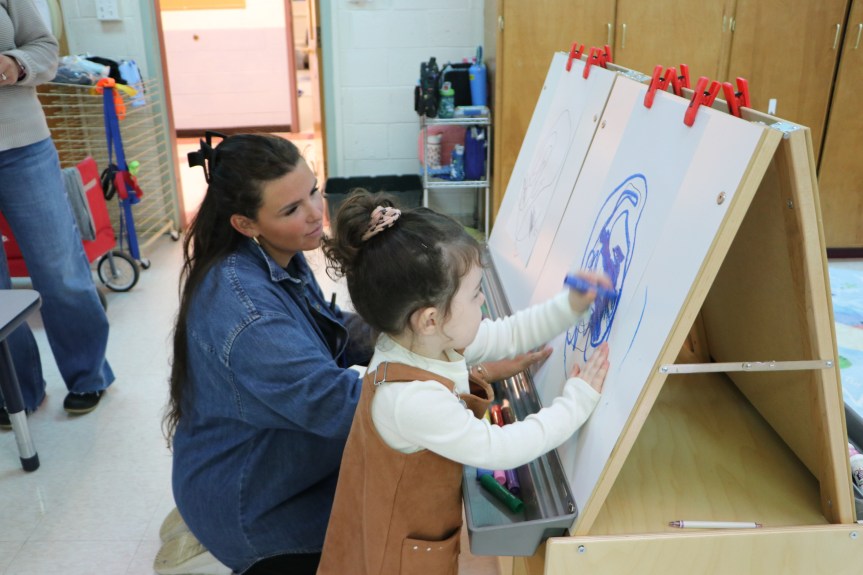
Students at Carl J. Lamb Elementary School in Springvale have had a sweet lesson in science, math, and New England tradition, thanks to a school-wide maple sugaring project.

This initiative transformed playground maple trees into educational tools, as children collected sap, tracked data, and ultimately created their own maple syrup in a unique cross-curricular learning experience.

“We have to check the buckets to make sure the sap is going up every time,” second-grader Morrigan Duggan explained. “The temperature needs to be above freezing for the sap to come out.”

This project, years in the making, is the brainchild of teachers Kim Minchin and Robert Rothwell (also known as “Mr. Bob”), who have transformed a New England tradition into a comprehensive learning opportunity for the entire school.

“We’ve been talking about doing this for probably four or five years,” Minchin shared. “This was the year we decided to go whole-school because a lot of our students don’t get to experience maple syrup weekend, where you go to farms and see the process.”

What makes this project particularly valuable is how it integrates multiple subjects. Students learn across disciplines – geography, math, science, and literacy – all through the authentic context of maple syrup production.

In math classes, students track the gallons of sap collected daily. Fourth-graders work on converting measurements (gallons to cups, pints, and quarts), while second-graders calculate temperature differences to understand how weather affects sap flow.

“I have a little more flexibility in math,” Minchin said. “We can still work on what they’re learning in the classroom but use the context of maple syrup and sap collection to make it meaningful.”

The maple sugaring process begins with identifying and tapping maple trees on school grounds. Though the playground features red maples rather than sugar maples, they still produce sap. Mr. Bob has also tapped about 14 sugar maple trees at the Spring Road library to ensure enough sap for production.

Students are involved in every step – from drilling holes and inserting taps to collecting sap daily and measuring volumes. They learn that it takes approximately 40 gallons of sap to produce just one gallon of maple syrup—a ratio that amazes even adults.

“It looked like water,” second-grader Thomas Lapointe recalled of the first sap collection, “but, when we tried to taste it, it was a little bit sugary.”

Beyond academics, this initiative builds community and life skills. Students work together, communicating and problem-solving as they carefully collect and measure the sap.

“There’s a lot of teamwork,” Mr. Bob said. “They have to communicate and plan together.”

For many students, especially those who struggle in traditional classroom settings, the hands-on nature of this project provides a confidence boost.

“Our students don’t always feel like they have that success,” Minchin noted. “So, to be able to have the floor and teach others about something they’ve experienced firsthand – it’s pretty uplifting for their confidence.”

This story was submitted by Carl J. Lamb Elementary School. To submit a good news story to the Maine DOE, please fill out the good news submission form.
Westbrook Middle School STEAM Students Take Flight with WozED Drone Curriculum

Students in grades 5-8 at Westbrook Middle School are—literally—reaching new heights, thanks to an innovative STEAM (Science, Technology, Engineering, Arts, and Mathematics) program integrating drone technology.

Under the guidance of STEAM teachers Stephen Moulen and Frank Lynham, students are participating in the WozED Drone Curriculum, a hands-on learning experience that combines aeronautics, problem-solving, and teamwork. It engages students in piloting small, unmanned aerial vehicles (UAVs), while developing critical skills in engineering, physics, and digital literacy. Through a series of structured modules, students learn the fundamentals of drone operation, including pre-flight checklists, basic and advanced maneuvers, and real-world applications of UAV technology.

“The students are not just learning how to fly drones; they’re applying scientific concepts, honing their communications skills, and working collaboratively to complete flight challenges,” Moulen said. “It’s exciting to see their enthusiasm and problem-solving abilities take off—literally and figuratively!”

The drones used in this program were funded by the Maine Department of Education (DOE) Teach with Tech grant, which supports innovative technology integration in classrooms across the state. This funding has enabled students to gain hands-on experience with cutting-edge tools that enhance their learning and prepare them for future careers in STEM fields.

As part of the program, students take on various roles, such as pilot-in-command and visual observer, to ensure safe and effective drone operation. They engage in mission-based activities, including navigating obstacle courses, performing precision landings, and even designing delivery systems to transport objects via drone.

Beyond technical skills, the WozED Drone Curriculum also emphasizes responsible drone usage, including discussions on safety regulations, ethical considerations, and the broader impact of UAVs in industries like agriculture, search and rescue, and environmental monitoring.

The hands-on learning approach has proven to be a hit with students.

“I love flying drones because it feels like I’m learning and having fun at the same time,” one 7th-grade participant said. “It’s really cool to see how drones are used in real life and to actually control one myself.”

Westbrook Middle School’s implementation of the WozED Drone Curriculum reflects a growing commitment to providing students with future-ready skills. By integrating drone technology into the STEAM program, the school is preparing students for careers in STEM fields, while fostering creativity, innovation, and critical thinking.

For more information about the WozED Drone Curriculum and its impact on student learning, click here.

This article was submitted by Westbrook Middle School. To submit a good news story to the Maine DOE, please fill out the good news submission form.

Washington County Expands Its Extended Learning Opportunities for Youth

(Pictured: Youth at the DownEast Teen Leadership Camp.)

Thanks to an Extended Learning Opportunities (ELO) Expansion grant from the Maine Department of Education (DOE), Healthy Acadia is working to provide more ELO opportunities to young people in Washington County in a variety of ways.

Last July, forty-three teenagers from Downeast Maine enjoyed Healthy Acadia’s 2024 DownEast Teen Leadership Camp (DETLC), a weeklong overnight summer camp experience at the Cobscook Institute in Trescott. DETLC is primarily a camp for youth, led by youth. The program challenges and empowers youth by providing them with the skills necessary to be leaders and workers in their communities.

The program begins months before the actual summer camp experience in January, when a youth advisory team takes the lead in planning the camp’s activities, ensuring that campers have a say in shaping their own experiences. This unique approach allows for the camp to feel personalized, as activities and discussions are specifically designed to reflect the interests of the participants.

Throughout the week, campers engage in various activities to promote leadership, community bonding, and holding space for healthy discussions. Students participate in workshops sponsored by regional and statewide businesses and organizations, as well as other physical team-building exercises that further build self-confidence and community. These immersive activities help campers to explore new interests, push their comfort zones, and form lasting connections.

“One of my favorite parts of camp as a youth staff member is the family groups,” Naomi Eyerman, DETLC 2024 Student Staff Media and Arts Coordinator, shared. “It’s great to get to know campers on a more personal level. Family groups really foster connections and are safe spaces where campers can have fun, as well as open up and get deep. DETLC overall has so many unique experiences that make camp truly memorable.”

Family group time plays an important role in the overall philosophy and structure of DETLC.  Through Community Sessions and Mini-Workshops, students begin to develop an awareness of relationships, coping skills and issues with substances and other sensitive topics.  Family Group is a place to question, discuss, and put into practice what campers learn in the community sessions and mini-workshops. This can be done by questioning and discussing workshop content, relating issues to their personal lives, sharing thoughts and feelings, practicing life skills, and building on their self-esteem.

ELO coordinator Corrie Hunkler, who works for Healthy Acadia, spearheaded DETLC. In her recent endeavors, Hunkler has also worked with the Coastal Washington County Institute of Technology (CWCIT) and Maine Youth Action Network (MYAN) to further her work with ELOs in Washington County and the surrounding areas.

Hunkler is helping to create tangible pathways for students to explore their interests and career aspirations. This hands-on support is reflected in the 53 students she has helped to engage in meaningful work opportunities, such as coordinating the Washington County Leadership Challenge, which allows students, teachers, and civic leaders to collaborate to formulate plans and create goals to address relevant local civic issues; and group trips like the Maine Youth Leadership Conference, which brings eight students to Augusta, providing workshops and guest speakers to help participants learn valuable leadership skills.

Through programs like these, ELOs continue to open doors for young people in the region. The Early Childhood Education program at CWCIT has embedded ELOs into its Wednesday class time, for example, ensuring that even more students are introduced to these vital opportunities—and that those opportunities remain accessible to all students in the region.

Students at the Coastal Washington County Institute of Technology. 

“We don’t have classes on gender studies; we don’t have classes on environmental science; and so it’s [ELOs] allowing kids who maybe have an interest or passion to be able to do what they’re interested in, and I think that’s so important,” Hunkler said. “This work is just so key in places that don’t have as much access to things.”

Corrie Hunkler presents on ELOs at the Youth Development Summit held at Washington County Community College on April 29, 2025.

These efforts are integral to broadening the horizons of students in Maine who may otherwise lack the resources and opportunities to explore their passions. Providing these pathways for personal and academic growth is vital for creating a more inclusive and empowered future generation, especially in rural communities like those in Washington County.

Students at Maine Youth Action Network.

To view a short clip of ELOs in Washington County and to learn more about Healthy Acadia and its ELO community support, contact Corrie Hunkler at corrie.hunkler@healthyacadia.org.

For more information about Extended Learning Opportunities, contact Lana Sawyer at lana.sawyer@maine.gov. Healthy Acadia was an awardee of Maine Jobs and Recovery Plan grants, starting in 2022, that supported 26 programs across Maine, covering 13 counties.

Designing the Future: Developing Climate Awareness and Resilience on Deer Isle

Since the summer of 2024, Healthy Acadia, JustME for JustUS, and Deer Isle – Stonington High School have partnered to develop and implement a year-long project called “Designing the Future.” The school-wide program has engaged the entire high school community in a series of events, activities, and guest speakers and has also brought together teams of students to develop proposals for specific challenges facing the island community.

The devastating storms in January of 2024 heightened the awareness of the island community of the dangers represented by climate change. Students, families, and school staff alike experienced the impact of the storms, whether due to personal loss, the impact felt by neighbors, or just by witnessing the causeways under four feet of water. The storms highlighted the vulnerability of the island community, while presenting an opportunity for students to think about how they could have a positive impact on climate resilience.

Designing the Future kicked off with a full day of activities on November 14 and culminated in March with STEM Week, when students collaborated to create a vision for one place on Deer Isle that represents the future that they want to live in. This project is inspired by Arts Week, in which each student group collaborates with a visiting professional to imagine, draft, and present a project that responds to a local need and answers the question: “What could we build here?” The faculty, staff, and student body are divided into five groups based on interest, each working collaboratively on a different project across the island.

The kick-off event in November included a visit to each site and feedback from a community member living or working at the site. The five areas explored were: Sunshine Causeway, Lily Pond, Stonington Main Street, Greenhead Lobster, and Billings Diesel and Marine.

In November, students heard from Gayle Bowness of the Gulf of Maine Research Institute, James Rutter of the Haystack Fab Lab, and Genevieve McDonald, a Stonington resident and the local school board chair.

In December, students heard from Will Steinharter of Osprey’s Echo about the effects of storms on the island ecosystem and ecotourism economy.

In February, students heard from Linda Nelson, the town of Stonington’s Director of Economic and Community Development, about the impact of climate change on Stonington. Also in February, the entire school visited the University of Maine Process Development Center and the Advanced Structures and Composites Center to learn more about emerging technologies and their role in climate resilience.

In addition, the five faculty, staff, and student body groups have met several times throughout the year to collect information, consider their sites, and, most importantly, think creatively and critically about possible solutions to the challenges they face.

The final project in March included a tabling event and presentation to the school and community members, as students shared their vision for the future of their chosen site on the island.

Deer Isle – Stonington High School, Healthy Acadia, and JustME for JustUS are grateful to the following partners for their support throughout this project with expertise, facilities, and funding: Healthy Acadia; Andrew Simon, JustME for JustUS; Isidora Muñoz Segovia, Gulf of Maine Research Institute (GMRI); Meggie Harvey, Haystack School of Crafts; James Rutter, Island Heritage Trust; Martha Bell and Alex Drenga, University of Maine; Renee Kelly, Maine App Challenge; Matt Jones, Maine Math and Science Alliance; Alexandria Brasili, Kleinschmidt Associates; Nicholas Ciomei (Deer Isle-Stonington High School ‘05); Katy Rinehart and Herb Carter, Opera House Arts; Allison Melvin, Greenhead Lobster; Genevieve McDonald, Billings Diesel and Marine.

This story was submitted by Deer Isle – Stonington High School, Healthy Acadia, and JustME for JustUS. To submit a good news story to the Maine DOE, please fill out the good news submission form.
Maine Indian Education Students Travel to MIT, Thanks to Beaver Works Summer Institute

During the week of March 24, 2025, 32 middle school students and 12 staff members from Maine Indian Education’s three schools—Indian Island School, Indian Township School, and Sipayik Elementary School—traveled to the Massachusetts Institute of Technology (MIT) as part of the Beaver Works Summer Institute, a STEM program at MIT. This trip represented part of an ongoing effort to engage Indigenous youth in STEM programming to increase their exposure to and interest in potential STEM career opportunities. 

These students and educators participated in two and a half days of programming that included workshops, demonstrations, an opportunity expo, and more. Workshops included focuses on wearable technology, self-driving cars, and climate change and water quality. Students also participated in tours and demonstrations at unique MIT spaces like the Hobby Shop, the Edgerton Center’s Milk Drop Shop, D-Lab, Breakerspace, and the Center for Bits and Atoms. 

The students’ days at MIT were full and engaging. They walked for miles, traversing MIT’s campus, and ate supper in one of the student cafeterias. They were also treated to an evening improvisation session with Nova Comedy Collective. The students and staff members have said they are incredibly grateful for their experience at MIT and will treasure their memories for years to come.  

Joel Grimm, manager of Beaver Worksat MIT Lincoln Laboratory, and Nancy Dalrymple, Native American Student Association advisor, began engaging with Maine Indian Education last November to discuss the possibilities of a student trip from the Penobscot Nation’s Indian Island and the Passamaquoddy Tribe’s two reservations in Downeast Maine. Soon after those conversations began, scientists, engineers, and other academics from across New England signed on to support this first-time program, sponsored by MIT Beaver Works. 

Beaver Works received generous grant support from Jameel World Education Lab (J-WEL) to engage Indigenous youth in STEM programming. The National Science Foundation reported in 2019 that 0.6% of Indigenous peoples received a bachelor’s degree in STEM disciplines. 

Maine Indian Education’s leadership expressed an overwhelming sense of gratitude for Beaver Works with the following statement:

“Joel and Nancy have advocated for and supported programming for our students for a number of years, with much of it occurring locally until this year. These opportunities for engagement are an invaluable gift that has planted more seeds for future experiences than we can imagine.”

This story was submitted by Maine Indian Education. To submit a good news story to the Maine DOE, please fill out the good news submission form.
Maine Connections Academy Hosts Statewide Academic Summit to Foster In-Person Learning and Community

(Pictured: Maine Connections Academy students at the University of Maine at Farmington drawing)

On January 17, 2025, Maine Connections Academy, a tuition-free, grades 7-12 online public charter school, brought students together for an in-person Academic Summit at several locations across the state. This summit provided students with valuable opportunities to engage in hands-on learning, interact with teachers, and connect with peers beyond the virtual classroom.

The Academic Summit featured a variety of immersive experiences at institutions across Maine, including the University of Maine at Farmington, the University of Maine at Orono, the Maine Maritime Museum, and the Portland Museum of Art.

Event highlights included:

  • University of Maine at Farmington – Students visited the Field House, where they participated in basketball, swimming, or teacher-led activities, such as board games and crafts. Maine Connections Academy students also had a campus tour that introduced them to university life.
  • University of Maine at Orono – Students experienced Cosmic Mashups, a planetarium show exploring black holes and star collisions, followed by a guided campus tour.
  • Maine Maritime Museum – A hands-on program, How to Build a Wooden Vessel, immersed students in Maine’s rich shipbuilding history through interactive exhibits and demonstrations.
  • Portland Museum of Art – Students engaged in Learning to Look with Visual Thinking Strategies, which was a guided tour designed to encourage deeper analysis and appreciation of visual art.

Maine Connections Academy’s Academic Summit underscores the importance of face-to-face interactions in an online learning environment, helping students to form lasting connections with their peers and educators and explore future academic and career pathways.

For more information about this event or Maine Connections Academy, click here.

This story was submitted by Maine Connections Academy. To submit a good news story to the Maine DOE, please fill out the good news submission form.
Bridging Education and Career: East Grand School’s Extended Learning Opportunities Program Defies Rural Barriers

(Pictured: East Grand School Student Emily Pride at the Danforth Town Hall, where she interned and completed an eight-hour new clerk training, certifying her to handle registrations and essential paperwork for the town)

The East Grand School’s Extended Learning Opportunities (ELO) program is cultivating diverse business partnerships, enhancing students’ career development, and community engagement in the Danforth area.

“It’s hard to put into words the growth that is observed in students throughout the ELO process. The confidence gained as these students navigate the working world is huge!” Angela Cowger, East Grand School ELO Coordinator, said.

Many of the East Grand School students participating in the ELO program have displayed growth in several different areas. Cowger said she has observed improvement in their personal responsibility and work skills, such as students showing up for work on time, taking ownership of their schedules, and communicating with their ELO employer/mentor. She said she also sees growth in students’ social skills, including improvement in interpersonal skills and increased confidence. Additionally, students have gained hands-on, real-world knowledge about their chosen, specific career pathway, as well as an increased understanding of how businesses operate in general.

Collaborations have included local organizations in and around Danforth, and as far as Houlton and Calais, such as East Grand School’s maintenance and after-school programs, Maple Lane Family Child Care, Knight’s Yankee Grocer, CCA Auto, Canoe the Wild, the Snow Farm, and Modern Beauty. Students have also been placed in ELOs with Stair Welding RL Inc. in Hodgdon, the Aroostook County Action Program, Houlton Regional Hospital, and Serendipity Embroidery & Design. East Grand collaborates with Washington County Community College, too, to expand internship and apprenticeship opportunities.

ELO and career prep students have broadened their professional perspectives through field trips, including to Washington County Community College, Louisiana-Pacific Building Solutions, and a job fair at Northern Maine Community College, which featured more than 70 employers in Presque Isle. The program has hosted several guest speakers and local business leaders from institutions and sectors, such as the Maine Guide Service, health care, and outdoor recreation.

While the Danforth program has successfully established these partnerships, geographic challenges remain. The nearest automotive service center is 34 miles away in Houlton, posing a transportation barrier for students without a driver’s license. East Grand Schools, however, has used some of the funding received through a Maine Department of Education (DOE) ELO Expansion grant to address these transportation barriers. Through that effort, five students have since completed driver’s education and obtained their permits and are now working toward their licenses.

Cowger has also been instrumental in removing barriers for her students. The East Grand School ELO program has a van, which allows her to transport students. Additionally, the Region Two School of Applied Technology program has generously provided a few East Grand-region students the opportunity to be dropped off at work sites near their bus routes, which has allowed for a few of these ELO students to be placed in Houlton. The geographic remoteness will continue to be a challenge, as jobs and resources are limited in the East Grand area, but the school continues to adapt and think outside of the box.

One notable success story is that of Emily Pride, who moved to East Grand School during the final months of her sophomore year. She was unsure of what she wanted to do after high school, so she enrolled in a Career Exploration ELO. She completed coursework and job shadows in real estate, the Maine Department of Health and Human Services (DHHS), and a local daycare. Her exploration led to an internship at the Danforth Livable Community Center, where she assisted with organization, scheduling, meal preparation, and administrative duties at the town office. Pride also completed an eight-hour new clerk training, certifying her to handle registrations and essential paperwork for the town.

Pride’s dedication led to a summer job offer from the town office, an opportunity she said she viewed as a valuable learning experience that gave her insight into local governance and inspired her to consider pursuing a career in this field.

“With the knowledge I have gained from all these opportunities, I am able to apply them to my future!” Pride said.

This spring marks an exciting advancement for the East Grand School ELO program with the completion of a new business innovation center at the school. Funded by a Maine DOE Rethinking Responsive Education Ventures (RREV) grant, the center features a business learning lab designed for ELO and career preparation classes. This initiative supports the school’s decade-long effort to promote a small business pathway. Students have utilized the space for career preparation classes and ELO projects. The goal is for students to develop and execute business plans and use the lab as a launchpad for entrepreneurial endeavors.

Recently, an ELO student, with the help of a mentor graphic design artist, used the lab to create an art studio. 

The business innovation center is now a hub for East Grand School’s small business pathway, which includes four dual-credit college courses and 8th- and 10th-grade career preparation classes. These classes include components such as personal finance, cooking and other life skills, entrepreneurial guest speakers, career exploration, and other curricula. These developments represent significant strides in preparing East Grand students for their future careers and fostering individual growth and community engagement.

Eighth-grade students participate in a career preparation class.

East Grand School was a 2022 awardee of the Maine Jobs and Recovery Plan (MJRP) ELO grants, which supported 26 programs across Maine, covering 13 counties. This year, East Grand received a Maine DOE grant to further ELO expansion by establishing a “Missing Jobs Pathway.” This new pathway helps students to identify in-demand jobs/businesses that are missing in their community and supports them in developing the skills to meet the demand and remain in their home community.

Biddeford High School Helps Students Explore Interests and Build Connections Through ‘Passion Classes’ Event

(Pictured: Biddeford High School (BHS) students try out making homemade pasta as part of the “Passion Classes,” a special day filled with a unique curriculum designed to help students explore new hobbies and interests while fostering meaningful connections with teachers.)

Discovering what excites and motivates students can be a game-changer in education, boosting engagement, academic performance, and overall wellbeing. Last month, Biddeford High School (BHS) hosted “Passion Classes,” a special day filled with a unique curriculum designed to help students explore new hobbies and interests, while fostering meaningful connections with teachers.

The Passion Classes event allowed teachers to step outside of their traditional subjects to share something they are passionate about—whether it’s a life skill, creative hobby, or unique interest. Students were given the opportunity to choose three sessions throughout the day, selecting from a wide range of engaging topics. Some sessions focused on practical life skills, such as making sushi, homemade pasta, or pancakes, while others introduced students to weightlifting techniques or the basics of sourdough baking. Creativity took center stage in sessions on knitting and crocheting, embroidery, and candle-making, while other offerings helped students to develop social-emotional skills through communication workshops, meditation, and even mapmaking. For those looking for something fun and interactive, applicable options included trivia, chess, and even a session on planning the perfect Disney trip.

Biddeford High School (BHS) students enjoy making diamond paintings as part of the “Passion Classes,” a special day filled with a unique curriculum designed to help students explore new hobbies and interests while fostering meaningful connections with teachers.

The Passion Classes event aligns with the growing focus on social-emotional learning (SEL), which encourages students to explore their passions, develop confidence, and build a sense of purpose. Finding one’s passion in high school can lead to greater motivation, more substantial learning outcomes, and even help shape future career choices. Just as importantly, this initiative creates opportunities for students to connect with teachers in new and meaningful ways, discovering shared interests over common hobbies that can strengthen relationships beyond the classroom. Those bonds continue to grow throughout the school year, contributing to a more positive and supportive learning environment.

“Passions fuel curiosity and drive learning in ways traditional instruction sometimes cannot,” Martha Jacques, Biddeford High School Principal, said. “When students have a reason to build skills—whether it’s reading, math, or problem-solving—because they need those skills to go further in something they love, they become more engaged and invested in their learning.”

The Passion Classes event reflects the school’s commitment to connecting with one another and continuously fostering a sense of belonging for students and staff. While strong relationships are forged in the classrooms each day, Biddeford High School works to elevate these efforts with school-wide co-curricular activities to support its core values of Perseverance, Respect, Integrity, Dependability, and Empathy. These opportunities are called “PRIDE Days”.

This story was submitted by Biddeford High School. To submit a good news story to the Maine Department of Education, please fill out the good news submission form.

Sanford Middle School Students Launch New School Newspaper

Sanford Middle School has a new wave of young journalists who are making their mark with the launch of a new school newspaper. The SMS Times, which launched in early February, is giving students a platform to report on school events, sports, and issues that matter to them.

Inspired by the Sanford High School’s Spartan Times, this newspaper project began when Sanford Middle School Gifted and Talented Coordinator Chambree Kumka introduced the idea to her English Language Arts groups.

“I thought this would be something that would really get them feeling connected to the school,” Kumka explained.

The SMS Times has already made an impact within the school community. Fifth-grader Henry Defrance wrote a popular article about a malfunctioning water fountain that got real-world results.

“It hadn’t been working, but the day after I wrote the article it got fixed,” he said. Henry said he is preparing a follow-up piece for the next issue.

Sports coverage has emerged as a central feature, with fifth-graders Ivy Peters and Tanner Provencher (pictured above) forming a dedicated reporting team.

“I thought it would be fun to write about school sports and stuff,” Ivy expressed. Though her article wasn’t in the debut issue, she said she is excited to see her work in the next edition.

Tanner said she appreciates the opportunity to learn about sports that she doesn’t personally play.

“I like to learn about the experiences,” she noted. Both reporters said they are looking forward to covering spring sports, particularly softball and baseball.

Fellow fifth-grader Luke Levesque, who also contributes to sports coverage, said his favorite part is simply “seeing all the sports.”

These young reporters are learning to conduct interviews, speaking with coaches and players and gathering quotes and perspectives to enrich their articles. Students are gaining valuable experience in writing, editing, and meeting deadlines. They are also learning to research topics independently.

“I want to teach them about making sure they’ve checked their facts,” Kumka noted. “If we do make a mistake, we correct it in the next issue.”

Students receive guidance when needed but are encouraged to develop their own story ideas.

“If they’re stuck on something, I’ll guide them toward something that might be needed,” Kumka said. “But I definitely try to let them choose.”

The SMS Times has received positive feedback from teachers and students alike. The first edition featured a diverse range of content, including Henry’s investigative water fountain report; sports coverage by Luke and Eamon McGuckin-Welsch; a feature on Sanford Middle School Resource Officer Joe Jourdain receiving the Wayne Drown Award; a spotlight on eighth-grader Paityn Ricker’s SnackDash program; a guide to school clubs written by Lia Tullo, Alana Repolt, and Gabe Donovan; a student poll on allied arts classes; historical photos of Sanford; and even a joke section. It also promoted upcoming events like the school’s production of “Beauty and the Beast,” scheduled for May of 2025.

While fifth graders form the core of the reporting staff, Kumka said she hopes to increase involvement among older students in the future. These young journalists are already thinking about future coverage. Some are preparing to report on the school talent show, while others are developing ideas for feature stories about student concerns, such as lunch table seating arrangements.

Kumka currently handles design and production of the newspaper but said she plans to gradually pass these responsibilities to the students, as well.

“Eventually, I’d like for them to be doing pretty much all of it,” she said.

This story was submitted by Sanford Middle School. To submit a good news story to the Maine DOE, please fill out the good news submission form.

Maine Association of School Libraries Announces Annual Awards

The Maine Association of School Libraries (MASL) is celebrating two educators: Maranacook Community High School Principal Michele Laforge, who has been awarded the 2025 MASL Administrator of the Year Award, and Dirigo Elementary School Librarian Cindy Petherbridge, who has been awarded the 2025 MASL Walter J. Taranko School Librarian of the Year Award.

The MASL School Administrator Award honors administrators who, through individual leadership and sustained effort, have made worthy contributions to the operations of effective school library media services within the educational program. The Walter J. Taranko School Librarian Award, named for the former Maine State consultant for school libraries, honors certified school librarians who have made a significant contribution to the profession.

At school-wide assemblies on Thursday, March 27, and Friday, March 28, the awardees were each surprised by an awards presentation. Both awards include a personalized plaque and $500 for their school libraries.

Michele Laforge
Maranacook Community High School Principal
2025 MASL Administrator of the Year Award

Michele Laforge was nominated for this award by Maranacook’s Librarian, Liz Guillemette, and Literacy Interventionist, Juliet Tinckham. Guillemette and Tinckham noted in their nomination that Laforge is an avid reader who talks about books to staff and students all the time, supports the Writing Center program in the library, and works tirelessly to nurture a culture of literacy in the school. They also described her as “a champion of libraries and librarians” who “creates opportunities for the library to be utilized and recognized as a hub for reading, information, and community.”

Pictured from left to right: Juliet Tinckham, Michele Laforge, and Liz Guillemette at an all-school assembly on March 27, 2025, where MASL past-President Heather Perkinson surprised Laforge with the award.

Cindy Petherbridge
Dirigo Elementary School Librarian
2025 MASL Walter J. Taranko School Librarian of the Year Award

The impressive nomination of Cindy Petherbridge submitted to MASL by Dirigo Principal Dr. Charlie Swan included testimonials from colleagues, parents, and students. Teachers describe Petherbridge as a “ray of sunshine,” whose “unwavering dedication to her students and school” is unmatched. A parent noted that “she knows all the kids by name, is always helpful and kind, and makes every child feel welcome” and “has created a safe, nurturing environment where children can thrive.” Swan described the many programs that the “immensely passionate, creative, and caring” librarian oversees, including book fairs, field trips to the town library, technology instruction, mentoring colleagues, and aligning books with the new reading program. He said she is a “true inspiration for the love of reading” and makes a “difference in the academic and social development of our students.” Swan explained that during the Covid pandemic, Petherbridge even volunteered to teach 4th grade remotely, because she is “always all in on doing what is best for kids in our school.”

The entire student body at the pre-K to grade 5 school, along with parents and staff in attendance, were so thrilled for their librarian that they gave her a standing ovation when MASL past-President Heather Perkinson surprised Petherbridge with the award at the assembly on March 28, 2025.

Pictured from left to right: RSU 56 Superintendent Pamela Doyen, Dirigo Elementary School Librarian Cindy Petherbridge, and Principal Charlie Swan gather for a group picture after the award presentation.

MASL’s mission is to provide connections for creating and advancing effective school library programs through professional development, advocacy, and community-building. For more information about MASL’s awards and how to nominate educators for them, please visit the MASL website and choose the Awards and Scholarships tab.