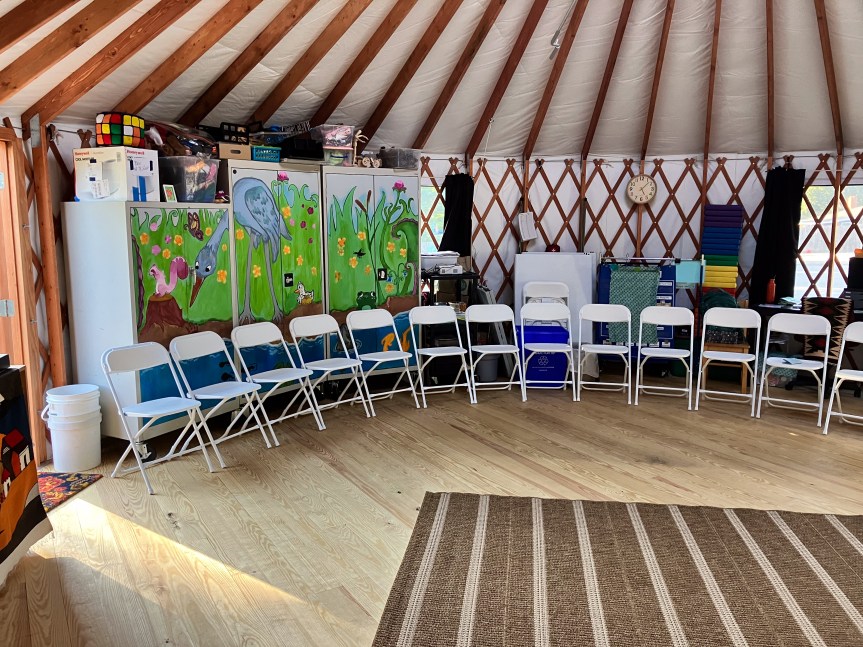
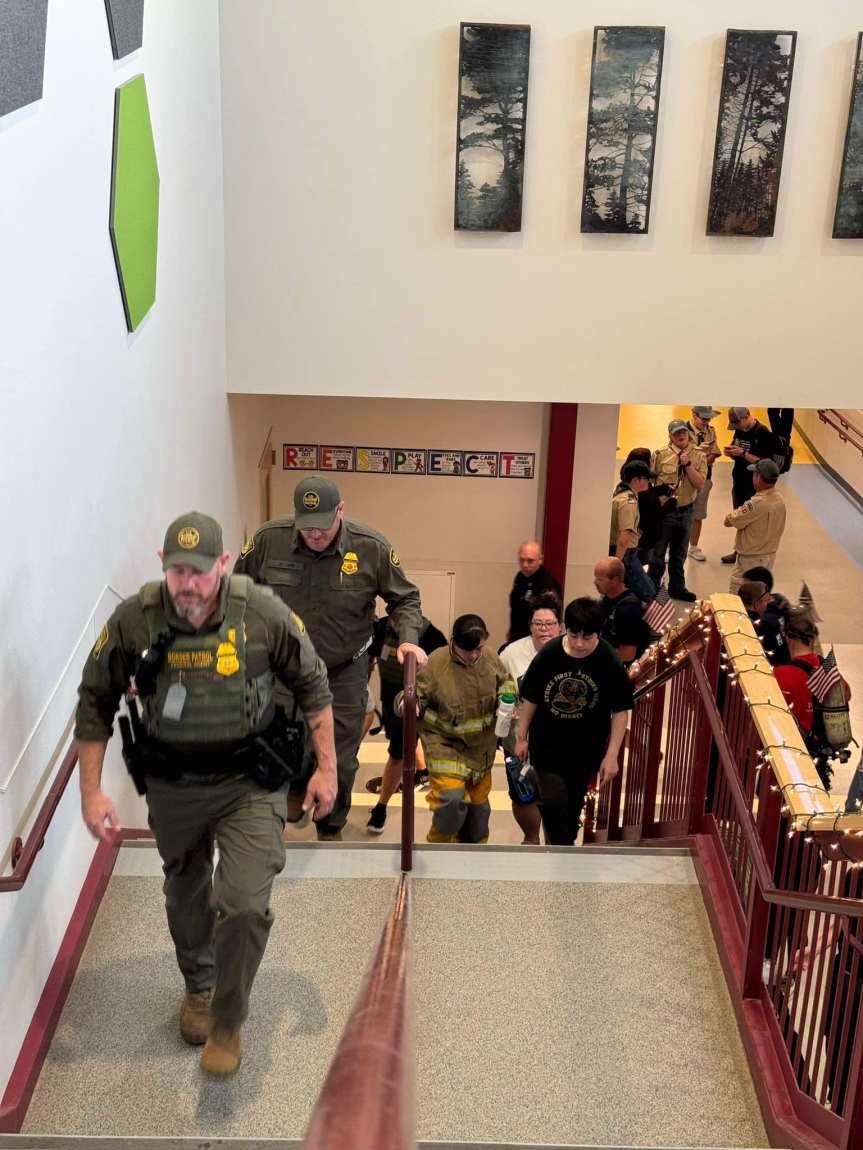
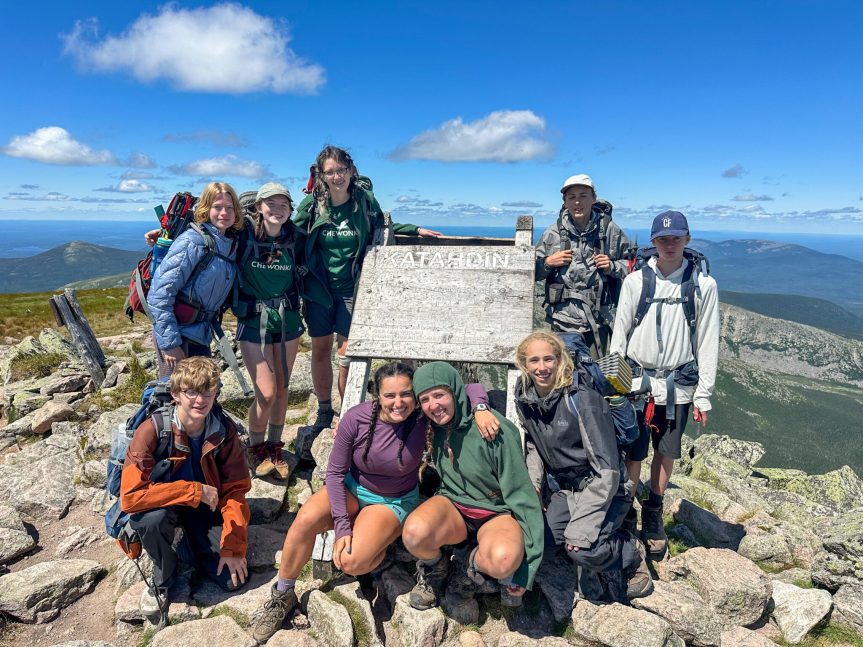
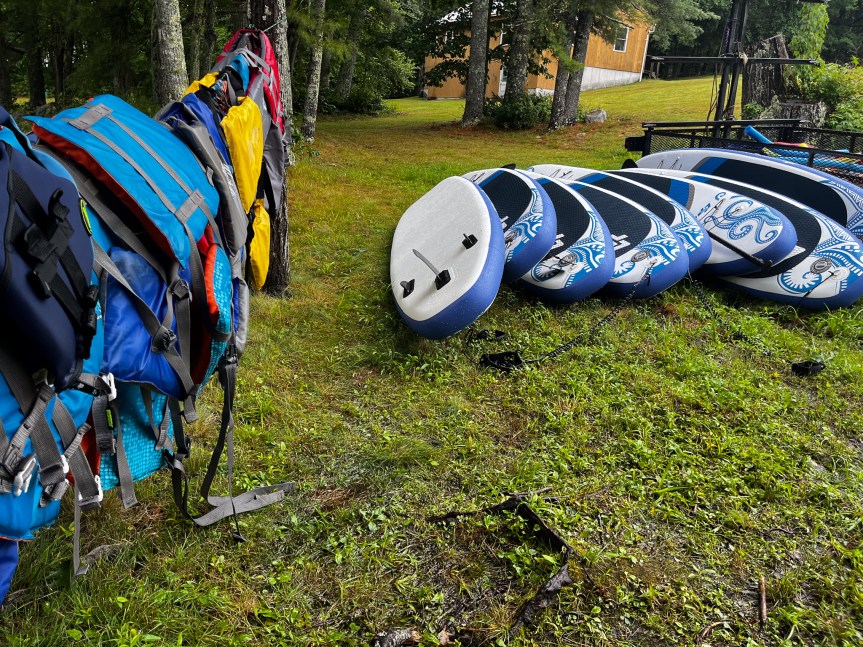
With support from the Maine Department of Education’s (DOE) Maine Out of School Time grant, upper elementary and middle school students from North Haven Community School, located on North Haven Island, visited and explored a variety of Maine businesses this summer.
The grant was funded through the Maine Jobs and Recovery Plan, a statewide expansion of extended learning programming to engage students throughout the state in real-world career exploration experiences.
North Haven Community School Principal Shaun Johnson did most of the planning, logistics, and drove the school van on all trips over the course of the two-week, first of its kind, “camp” experience. The opportunity allowed students to participate in early career exploration in various aspects of Maine’s “green” economy, giving students the chance to learn more about businesses and jobs focused on environmental sustainability.
Students went on off-island visits, including tours of Robbins Lumber, Front Street Shipyard, Lyman Morse, Midcoast School of Technology, GoLogic, Revision Energy, and Bowdoin University’s Office of Sustainability. Students were also visited on the Island by businesses, such as EcoMaine.
Students also got to experience environmentally sustainable efforts closer to home. North Haven Community School’s high school science teacher, Samantha Taggart worked with students in the school garden and gave them a tour of Cider Hill Farm on North Haven, which is owned by community member Becky Bartovics. School board member and local contractor Morten Hansen gave students a tour of Congresswoman Chellie Pingree’s house near Turner Farm. Local Island Institute Fellow Claire Oxford talked to students about how climate change will impact flooding and tide levels over the next several decades.
Here are a few pictures from the two-week opportunity:
One student, having such a good time, remarked, “Why can’t this camp be longer?”
Johnson says that finding local and school-related enrichment activities for students on the island during the summer, especially those who are too young to work, can be a challenge.
“This grant opportunity really gave us the motivation and support we needed to make something happen,” said Johnson.
“Education and support for our students goes way beyond the classroom,” said Principal Jeanna Tuell. As a long-time administrator for RSU 34, Tuell has been an integral part of Old Town Elementary School’s shift to the Community School Model.
Tuell explains that years ago, the school’s long-time school counselor raised concerns about the sheer amount of work it was taking to give their student population the support they truly needed to thrive at school. It was at that time that they had a collective realization they needed to seriously think outside the box to improve things not only for their students, families, and the community but for their teachers and staff as well.
A community school model, as defined by the Coalition for Community Schools, is both a place and a set of partnerships between the school and other community resources. Community schools exist in all regions of the United States, and their numbers are growing fast.
“When you are looking at student support, you are not just looking at what the supports are that the student needs right now, you have to look bigger, at what they might need outside the school, and what their families might need, and how that affects the whole school environment and the whole community outside,” said Jennifer Goodwin, Old Town Elementary School Coordinator. Goodwin has served in the role of Community School Coordinator since the school set in motion their plan to become a community school in 2017.
The community school model was first recognized by the Maine State Legislature in 2015/2016 when they authorized state funding for a limited number of community schools established under 20-A MRSA Chapter 333. Currently, three schools in Maine receive funding from the Maine DOE to support their community school strategies: Old Town Elementary School in Old Town, Cape Cod Hill Community School in New Sharon, and Gerald E. Talbot School in Portland.
As the longest-standing community school in Maine, Old Town has had time to build community partnerships and strategies that truly support its student population. One of those strategies is their amazing outdoor learning program which is complimented by a robust set of garden beds and greenhouses located right on school grounds.
“Almost immediately when I started, I got approached by teachers saying, ‘we want school gardens,’” explained Goodwin. “The University of Maine was able to do their capstone project and build us our first 12 beds. Then we got a partnership with Rogers Farms, and then we had an amazing parent garden coordinator come on that really helped it grow.”
The program has been so successful over the years that they have been able to do a full curriculum integration at every grade level. They have also benefited from a fruitful partnership with Rogers Farms that includes a community farm stand.
Old Town School Gardens:
Jennifer Goodwin
Several other community partnerships provide their students with everything from winter fun with Winter Kids, to theatre, and even more outdoor education through Maine Outdoor Education program in Millinocket. They also partner on Community Cupboard which serves students, families, and community members.
Another important tentacle of this work is their partnership with local health services such as Pathways of Maine, Acadia Hospital, and Penobscot Community Health Care (PCHC) for counseling services for students and families. Their partnership with PCHC extends into a recently added health clinic located inside the school building. The clinic is staffed with licensed health care professionals who provide students not only with counseling services, but basic healthcare needs like an annual wellness check, a strep test, or an ear/eye exam to diagnose and treat common childhood viruses.
The PCHC Health Clinic located inside Old Town Elementary School:
With the incredible number of meaningful community partnerships Old Town has worked so hard to get under their belt, they are quick to credit their partners and community for their shared commitment to this work.
“When anything needs to be done, it gets done here because people really care about their community, their kids, and there is a lot of pride,” explained Tuell. “Those community partners happen very naturally. It’s not just one particular partner, it’s a combination of a lot of people. I feel like that’s what makes this town so unique and so special.”
Tuell also acknowledges how incredibly important it has been for them to have a Community School Coordinator who can not only coordinate and see through the partnerships and strategies but also works to pull together administrators, teachers, and school support staff on a regular basis to prioritize the evaluation and re-evaluate their student (and community) support strategies.
To learn more about Old Town Elementary Community School, check out this video interview with Principal Tuell and Community School Coordinator Jennifer Goodwin.
Maine DOE Community Schools Consultant Ann Hanna (former principal of Gerald E. Talbot Community School) is working on advancing community school strategies in interested schools across Maine by providing technical assistance and support.
To learn more about community schools in Maine, please contact Ann Hanna, at ann.c.hanna@maine.gov.
(Pictured: Back row, from left: Emma Hafenecker, Clara Ernst, Abigail Ragsdale, Emily Roy, Stacey Augustine, Tim Strange. Front, from left: Wiley Billings, Brennan Tibbetts, Maple Corey, Sandy Jamison. [photo courtesy of Annie Twitchell])
The fifth-grade students at Cascade Brook School had some very exciting projects this past school year. Two teams entered the 2023/24 Toshiba/NSTA ExploraVision National Science competition.
Led by their Gifted and Talented Teacher/Coach, Sandra Jamison, the students brainstormed world problems, picked one, and then developed an invention that could solve the problem. This required lots of research and innovative thinking. They researched past and present technology, designed their “solution” and then wrote about breakthroughs needed to make it a reality, explained their design process, and drew their invention.
One team, comprised of fifth graders Emily Roy, Brennan Tibbetts, and Maple Corey came up with the idea for ‘H.E.L.P.’, a small device that would sit in the ear and receive signals and data from the body, diagnose the symptoms, and help treat the cause.

H.E.L.P. stands for ‘Helping Everyone Live Perfectly’ and the device is like having a doctor in your ear. The H.E.L.P. team earned an honorable mention in the ExploraVision competition, which means they placed in the top ten percent of all 2,000 competing teams. Each student received a certificate commemorating this achievement.
The second team, comprised of fifth graders Clara Ernst, Wiley Billings, Emma Hafenecker, and Abigail Ragsdale, designed MER, short for Medical Earth Robot. The students wanted to find a way to help with one of the most preventable deaths on the battlefield: loss of blood.
A prototype of the MER device.
MER is a robot with three compartments, two of which have drills to tunnel through the ground. The third compartment is where the magic happens: a protective dome unfolds and covers an injured person. Inside the dome, robotic arms equipped with tools perform essential emergency medical care to stabilize the patient before transmitting a signal to the nearest emergency medical personnel and moving to the next patient.
The MER project was selected as one of 24 regional winning projects. As Regional winners, each student and their coach received a Chromebook and participated in a National competition.
Both teams were recognized and honored in a special ceremony on April 25, 2024 at Cascade Brook School with a Toshiba representative Tim Strange. Cascade Brook School sure is proud of these students!! Congratulations to Emily, Brennan, Maple, Clara, Wiley, Emma, and Abigail!
Each year, the Maine Teacher of the Year attends Space Camp for Educators at the US Space and Rocket Center in Huntsville, Alabama. They are joined by their National Teacher of the Year cohort, comprised of teachers from across the nation. Space Camp is a program for educators that includes simulations of astronaut training and various activities designed to deepen educators’ understanding of what it’s like to go to space. Beyond the fun and interesting activities, Space Camp allows the National Teacher of the Year cohort to connect, network, and learn from one another.
Participants at Space Camp had the opportunity to build and launch rockets, participate in an escape room, design heat shields, and rovers, learn about how origami influences the design of space vehicles, and experience two “missions” in the space station. An example of a day-long activity included a water rescue simulation where a zipline and a downed helicopter were used to simulate a pre-launch emergency escape. Then, participants had to swim out to a raft in the middle of the lake, climb said raft, fall backwards from it, swim back to shore, and climb into a sling to escape the water.
Joshua Chard, 2024 Maine Teacher of the Year and teacher at East End Elementary, enjoyed Space Camp for its fun activities and bonds he created with other educators. Although he was initially nervous about the water rescue simulation due to his limited swimming skills, the support of his team helped him overcome his fears. For Chard, the experience reinforced the importance of teamwork, a lesson he plans to bring back to his classroom in the fall.
While Chard enjoyed the experience of Space Camp, he notes that some of his favorite moments were the ones where he got to speak with other accomplished educators and hear about their teaching.
“The relationships that I have built through the National Teacher of the Year program are ones that will inform my professional journey moving forward. We bonded over our love for our students and our commitment to a rigorous and equitable education for all. I have created friendships that will last a lifetime,” said Chard.
Chard also found much value in being in a student position at Space Camp and being reminded of what it feels like to be a learner. Space Camp reminded him of what it is like to be a student experiencing new material for the first time, not knowing what to do, and being nervous of judgment from others.
“Teachers are lifelong learners, but usually we have some control over what we are learning. Being out of my comfort zone was a great reminder that many of our learners find themselves outside of their comfort zone every day,” he said.
While Chard was incredibly grateful for befriending and learning from teachers from all over the country, he is grateful that he teaches in Maine.
“I am proud to work in a state where public education is valued and celebrated and where diversity is seen as an asset,” he said. “Maine is such an amazing place to work and live.”
When Chard was asked about what lessons from space camp he would share with the 2025 Maine Teacher of the Year Cohort, he emphasized the importance of teamwork.
“It sounds cliche, but we are more successful together. NASA’s scientists, astronauts, and support personnel all work together in the interest of expanding our knowledge of our world and beyond. All of us who work in schools strive for the same thing, to expand the minds and lives of our students.”
The 2025 Maine Teacher of the Year will have the opportunity to attend the annual Space Camp just like Chard did. Read more about the Teacher of the Year program here.
This past spring, 100+ students and teachers joined Teens to Trails for their annual Adventure Bound weekend, a free camping and white-water rafting experience at Adventure Bound, a youth and family group whitewater rafting and outdoor recreation center in Caratunk, Maine on the Kennebec River. Participants could enjoy this trip at no cost because of the Maine Department of Education (DOE), Maine Outdoor Learning Initiative, a program designed to engage more Maine students with outdoor learning and make outdoor experiences more accessible. This initiative was inspired by a promise in Governor Mills’ 2022 State of the State Address to provide students with more opportunities like the Whitewater Kayaking Camp, where kids can go outside and engage with Maine’s natural beauty.
On Friday night, the first night of the trip, participants from different schools had the chance to get to know each other through campfires, dinner, and fun icebreakers. Sam Andrews, Teens to Trails’ Program Manager, led a group conga line as well as a favorite camp game called Bob the Weasel. In this game, one person stands alone. The rest form a circle and pass a banana around while singing, “Bob the Weasel, keep it going, keep it going.” It is up to the person inside the circle to guess who has the banana, and the game almost always results in good-natured laughter.
The next day, the students enjoyed a full day of activities, including volleyball, paddle boarding, canoeing, climbing, swinging on the ropes course, hiking to Moxie Falls, and whitewater rafting. The wide variety of offerings allowed students to choose activities in their comfort zone; however, many felt encouraged to try new things and learn from their experiences. Since whitewater rafting was new to many, the students learned basic paddling skills from Adventure Bound staff. After learning the basics, students took on the challenge of paddling in white water with the help of skilled guides.
“I was incredibly nervous, but I’m glad I did it,” said a 12th-grade student from Belfast High School.
While students were out enjoying activities, teachers had the opportunity to network with other colleagues who are outdoor club leaders. Many reported it was amazing for them to see their students challenge themselves, bond with others, and enjoy nature.
On the final night, Teens to Trails’ Youth Advisory Council members led the annual s’mores contest, which included some creative confections from the students. Some combinations included a toasted banana, chocolate, marshmallow, and caramel s’more, as well as a raspberry, chocolate-covered pretzel, and marshmallow s’more. One student even created an Oreo-wheeled s’mores truck.
The joy and energy of spending a weekend outdoors and unplugged are experiences many will remember fondly. Students and teachers reported feeling connected, inspired, and excited to return to Adventure Bound with their Outdoor Clubs for many years to come.
Twelve school communities were able to attend, including Mt. Abram High School, Dirigo High School, Maine Academy of Natural Sciences, Houlton High School, Ecology Learning Center, Westbrook High School, Edward Little High School, Wiscasset Middle High School, Mountain Valley High School, Marshwood High School, Belfast Area High School, and John Bapst High School.
Thanks to the Maine DOE Maine Outdoor Learning Initiative, Teens to Trails, and Adventure Bound, the positive feelings, memorable adventures, and skills learned throughout the weekend will last a lifetime.
“One of my students wants to become a rafting guide now,” added Brian Davis, a Science Teacher at Westbrook High School
Registration links for future trips will be included in Teens to Trails’ school newsletters and on their Facebook, Instagram, and website.
Six students, ranging from grades 8th to 12th, participated in an Introduction to Whitewater Kayaking Camp offered by the Main Street Skowhegan Organization. Thanks to the Maine Outdoor Learning Initiative, these students could participate in the experience at no cost to them.
The Maine Outdoor Learning Initiative is a program created by the Maine Department of Education (DOE) to engage Maine students with outdoor learning and make outdoor experiences more accessible. This initiative was inspired by a promise made in Governor Mills’ 2022 State of the State Address to provide students with more opportunities like the Whitewater Kayaking Camp, where kids can go outside and engage with Maine’s natural beauty.
Of the students attending the Whitewater Kayaking Camp, half had participated last year, and half were entirely new to whitewater paddling. The camp was led by expert Ben Koehler, who serves as the program coordinator and has ten years of river guiding and kayak instruction experience. Wasting no time, the students took straight to the water, spending most of their trip in the river. A typical day of camp consisted of driving to the Kennebec River, putting on gear, getting into boats, and riding the currents as they developed their new skills. They would run ‘good rapids’ for practice only, then hike back upriver to repeat them.
On the first day, all students were in duckies, which are inflatable sit-on-top kayaks with good stability and maneuverability. On the second day, after repeating the skills learned the prior day in duckies, students graduated to whitewater kayaks, in which the kayaker sits inside the boat with a skirt (material that covers the inside of the boat).
“One student was apprehensive to get into a kayak, so the staff helped her by letting her use a funded pack raft, which is an inflated boat that one sits in without a skirt. The funded pack raft was a good bridge between a duckie and a kayak. Practicing on the inflatable raft helped build the student’s confidence in paddling and being on the water. Another student in the camp mastered the ability to roll a kayak in whitewater, which is a big step towards becoming an expert at whitewater kayaking,” said Koehler.
At the end of the week, all six students could successfully kayak the lower-class III section of the Kennebec River, which is remarkable considering that three of them were brand new to the activity.
Ducky
Main Street Skowhegan, an organization dedicated to revitalizing historic Skowhegan, hosted the camp. The organization has an impressive collection of outdoor gear that Somerset County residents can rent at no cost. Their partnership with the Maine Outdoor Learning Initiative allowed them to expand their gear and provide cost-free programs, like their white water rafting camp. Main Street Skowhegan will continue to offer white water camps and clinics throughout the summer. More information can be found on their website.
In June, Seven Carrabec High School students joined a Teens to Trails intern and registered Maine Guide Tammy Long on a 30-mile canoe trip along the Northern Forest Canoe Trail on Flagstaff Lake. On this three-day trip, participants navigated the waters via canoe, camped on remote islands, and prepared food over a campfire. Thanks to the Maine Outdoor Learning Initiative, the trip and necessary gear were free for all participants.
The Maine Outdoor Learning Initiative is a program created by the Maine Department of Education (DOE) to engage Maine students with outdoor learning and make outdoor experiences more accessible. The Initiative was inspired by a promise made in Governor Mills’ 2022 State of the State Address to provide students with more opportunities like Carrabec’s canoe trip. The students on the trip were from Long’s Outdoor Leadership Class, taught at Carrabec High School.Long is a registered Maine guide and is extremely enthusiastic about sharing her expertise with students. She is also thankful that she has the skills and knowledge to help them stay safe on trips in remote areas. While Long noted that some of the students had prior canoe experience or had been on a trip with her before, none of them had ever embarked on a three-day, 30-mile paddling trip.
Before embarking on the trip, students were taught extended canoeing skills in an Outdoor Leadership class with Guide Tammy Long. Even for those who did have prior canoeing experience, this trip was challenging.
However, the students accepted the challenge and grew more confident in their canoeing abilities while enjoying the beauty of Flagstaff Lake.
“The highlight for me was when the students stopped holding their phones over their heads ‘looking’ for service and simply relented to the fact that they were unconnected,” remarked Long. “After three days, they couldn’t stop talking about how good it felt.”
Long said she also hopes students will continue to cherish outdoor experiences in our unique state and that they spend more time away from screens.
“I hope to continue being able to take students on extensive canoe trips like this one, and I am very thankful for the grant money provided by the Maine Outdoor Learning Initiative, said Long.
By Ann Dooling, Maine DOE Transformational Leaders’ Network Facilitator and Maine educator/administrator with 34 years of experience working in Maine schools.
As a principals’ facilitator for the Maine Department of Education’s (DOE) Transformational Leaders’ Network (TLN) in the Western Maine Region, I was recently asked why three dedicated, very busy, hard-working Western Maine principals have made it a priority to participate in the Transformational Leaders’ Network this year, as well as why they always make time to attend the small regional meetings.
The Transformational Leaders’ Network regional meetings are an offshoot of the larger Network. Three principals and I have met at a mutually determined location three times over the course of this school year.
First, let’s explain TLN. The Transformational Leaders’ Network (TLN) is a Maine DOE sponsored statewide community of principals who are engaged in learning about themselves and their leadership. The TLN meets once a month either in person, on Zoom, or in small regional meetings, and is led by a group of facilitators who are all current or former school administrators with backgrounds in Maine’s public education.
I asked Jodi Ellis, Principal of Meroby Elementary and Rumford Elementary in RSU 10; Tabitha Emery, Principal of Stratton Elementary School at Eustis School Department; and Leanne Condon Principal and Superintendent of Andover School Department what keeps them coming back month after month to the TLN meetings.
Leanne Condon
Tabitha Emery
Jodi Ellis
In their own words they shared:
The TLN offers me time to meet with other people who know what it is to be a building leader. It provides an atmosphere in which you feel much less isolated in your job as a school leader and know you have people who can empathize with you and who care about you!
The whole group TLN sessions are set up for the participants in terms of the activities, reading and discussion, along with the fact the books and articles are relevant and timely. Personally, I’ve used several of the checklists and rubrics from our books over this school year to make sure I’m on track with staff relationships and decision making. I’ve also successfully used the protocols, video clips, and articles from our TLN sessions with my staff.
The TLN facilitators are consummate teachers who know how to keep our time together focused, important and fun, which is really helpful as a new principal.
Finally, if you are looking for a supportive network of others who are facing similar struggles, this is the place for you!
I also asked these same three principals why they take the time to always attend our small regional meetings. Again, in their own words:
Honestly, self-care. The time we meet is worth its weight in gold! We talk, collaborate, share ideas, laugh, commiserate, be real, enjoy each other’s company, and feel good overall. During this time, you find yourself sitting at a table with a group of kind, compassionate educators who truly understand what you are talking about and that just feels good.
When we discuss common issues, we each have something to contribute. It is a time for deep conversations and relaxation with fellow educators who understand one another. Our TLN facilitator is as friendly and relaxed as we are, but she is always ready to ask in-depth questions to probe our thinking.
I look forward to these meetings every single time! These women have become a resource for me in my role as a school principal, they offer support, reassurance, and kudos to keep going.
We dream together about what education can be and walk out the door refreshed and ready to take on the next day.
If you are a school principal in the State of Maine, and in this role, believe you could benefit from the educational learning, self-discovery, and the comradery that the TLN offers, please consider joining the Transformational Leaders’ Network this coming 2024-25 school year!
To learn more, visit the Maine DOE Website or reach out to Christina O’Neal, Maine DOE Educator Excellence Coordinator at christina.l.oneal@maine.gov.
Portland Public Schools has been recognized as a Common Sense District for its work educating students on safe and healthy ways of using technology and integrating technology into the curriculum as a learning tool.
It is no secret that technology has become an integral part of students’ lives and their education. Curriculum makers and educators have been figuring out how to integrate technology innovatively. Maine has been a leader in this integration, with many technology-related initiatives and grants.
“We’re honored to be recognized as a Common Sense District,” said Superintendent Ryan Scallon. “Explicitly teaching students media balance and wellbeing and how to be safe online is a step we are taking to support our ‘Whole Student’ goal in our Strategic Plan.”
The Portland Public Schools have been utilizing Common Sense Education’s research-based digital citizenship resources, working to foster a positive technology culture in the whole community. These resources teach students, educators, and families about internet safety, protecting online reputations, personal privacy, media balance, media literacy, and online relationships. There are lessons for all grade levels, K-12.
Courtney Graffius, District Technology Integration Coordinator, has credited the hard work of librarians and digital literacy as an imperative part of this recognition.
“Our librarians at the elementary level have been the leaders and teachers of these lessons,” Graffius said. “At middle school, it’s been a combination of digital literacy teachers and librarians, and at the high school level, it’s been the librarians taking the lead. This will be a part of the SEL (social-emotional learning) priority for middle school next year and will continue to be part of the work of the librarians at both our elementary and secondary levels. These educators are committed to teaching students essential digital citizenship skills!”
The librarians, digital literacy teachers, other educators, and community of Portland Public Schools are grateful for the support of the Maine Learning and Technology Initiative Ambassadors for helping them become a Common Sense District.
“The Portland Public Schools has demonstrated its commitment to taking a whole-community approach to preparing its students to use the immense power of digital media to explore, create, connect, and learn, while limiting the perils that exist in the online realm, such as plagiarism, loss of privacy, and cyberbullying,” according to Common Sense Education. “The recognition acknowledges the district’s commitment to creating a culture where the whole community is invested in helping kids thrive as digital learners and citizens.” The Portland Public School District received the Digital Citizenship Award on June 14th, 2024, being the second in the state (following Lewiston School District) to receive this recognition. Maine’s devotion to technology integration, including resources to national training programs and handbooks, will hopefully help more students and families navigate the challenging process of using media for good.
Common Sense Education, a national non-profit devoted to educating students and families on technology and its uses, awards school districts as Common Sense Districts when they show commitment to using technology in a safe way that helps enhance students’ education.
(The Lincoln Academy edLab students who built the greenhouse deck and foundation to support their outdoor learning space.)
The greenhouse will be a part of Lincoln Academy’s Maine Outdoor Learning Initiative program, LA Launch.
Lincoln Academy’s edLab students have been building a greenhouse to support the school’s new LA Launch Program. This free summer program, funded by the Maine Department of Education’s (DOE) Maine Outdoor Learning Initiative, will support rising 9th graders preparing to enter high school.
The Maine Outdoor Learning Initiative is a statewide effort to increase access to engaging, hands-on outdoor experiences and career exploration for middle and high school students throughout the state. The initiative, created by the Maine Department of Education, was born from a promise made during Governor Mills’ 2022 State of the State Address to provide children with more opportunities to get outside and engage with Maine’s natural beauty following the pandemic.
Students in edLab, Lincoln’s alternative education program, took the lead on the construction project with the help of edLab Director Jody Matta and their teachers. As part of the project, edLab teachers and students researched the town of Newcastle zoning process and received guidance from Town Planner Michael Martone. Students prepared and applied for the building permit. With assistance from the facilities department at Lincoln Academy, edLab students wrestled with the many rocks at the site and dug the foundation area. Along with the base for the Maine Garden Products greenhouse, they also built a deck to be used as an outdoor education space.
“It was a great opportunity for us to learn about the process involved in constructing a new building,” said edLab student Ariel Cowan. “It is information that we will be able to use in the future.”
“Our students worked hard on the greenhouse project, and I am proud of their work,” said Matta. “We look forward to utilizing the greenhouse as a learning space in the future.”
As part of the LA Launch program, students will learn about oyster aquaculture at the University of Maine’s Darling Marine Center.
The LA Launch program is designed to support students as they transition to high school and help them connect with Lincoln Academy while they learn more about their community and the importance of connection in a marine ecosystem.
“The greenhouse is a great resource that will allow LA Launch participants to explore and experiment, which will supplement our field trips to meet with community members and learn more about fishing, aquaculture, boatbuilding, and outdoor recreation,” said Lincoln Academy’s Director of Applied Learning Maya Crosby.
Crosby worked with Heather D’Ippolito, Lincoln Academy’s Director of Community Engagement and Development, to build the LA Launch program and apply for the Maine Outdoor Learning Initiative funding. Lincoln Academy was one of more than 60 organizations that received funding through the Maine DOE grant, thanks to an expansion of the program announced by the governor.
The Maine Outdoor Learning Initiative grant covers participants’ transportation and the school is providing lunch. Families interested in enrolling their rising ninth graders in LA Launch should reach out to the program director, Andrew Jonash, at jonash@lincolnacademy.org or visit the Summer at Lincoln Academy page.
Maine Garden Products will deliver the greenhouse in mid-July and place it on the prepared base. The project will be completed by the end of July, before the LA Launch program starts in August.