Moscow Elementary School Connects with Families Through Video

As the holiday season approaches and the COVID-19 pandemic continues present ongoing challenge for school communities across the country, the staff at Moscow Elementary School in MSAD 13/RSU 83 have strived to find creative ways to share with parents and community members. In a recent effort, the staff created this heart warming video featuring students in Kindergarten through 4th grade holding up signs saying what they are thankful for this year and they have shared it with the surrounding community.

It is a wonderful reminder of how important positive relationships are, both between schools and the committees they serve but also between students and the people around them.

Enjoy!

This video was submitted Sandra MacArthur, Superintendent of MSAD 13/RSU 83 as part of the Maine Schools Sharing Success Campaign. To submit a story or an idea, email it to Rachel at rachel.paling@maine.gov.

Helping Young People Find Their Voice Through Public Media – An article by Mid-Maine Technical Center Instructor David Boardman

Mid-Maine Technical Center (MMTC) Instructor of Mass Media Communications David Boardman recently contributed to an article in the the national Association for Career & Technical Education (ACTE) magazine, Techniques.

The article, “Helping Young People Find Their Voice Through Public Media,” is about the power and importance of student-led media projects with a focus on a team of students from Boardman’s class at MMTC that produced a four-minute story for Maine Public Television on a student-led groundwater testing study that found high levels of arsenic in drinking water.

Boardman writes, “Not only did students contribute to the ‘participatory culture’ of our media-rich society, but, as young consumers, they gained a sense of how to watch news with a critical eye. They learned to seek out connections where they exist and about what good journalism looks like, as a producer and as a consumer.”

The article is an enthusiastic nod to how important project-based learning and student led initiatives are to student learning and pays tribute to the amazing things happening within the learning communities of career and technical education programs all over Maine and across the country.

To read the article, scroll to pages 24-28 of this digital version of Techniques magazine.

This story idea was provided by MMTC as part of the Maine Schools Sharing Success Campaign. To submit a story or an idea email it to Rachel at rachel.paling@maine.gov.
RSU 22 Arts Educators Transform Curriculum to Provide Safe and Meaningful Music Education

Music is alive and well in RSU22. Let me start by saying that from the very beginning, the teachers of the arts and the administration never thought of cutting the arts during the pandemic. The question was, “How do we deliver these subjects to our students with quality?”

Before COVID-19, our music program included general music K-5, choruses and bands 5-12, with before or after school jazz ensembles and show choirs 6-12, and Tri-M Music Honor Society at the high school.

During the pandemic, our offerings are the same with the addition of remote classes. However, they look a bit different. Our system is operating under a hybrid system. Half of the students attend in-person Monday and Thursday with asynchronous assignments on Tuesday and Friday. The other half attends in-person Tuesday and Friday with asynchronous assignments on Monday and Thursday. AP classes also meet on Wednesdays remotely and chorus and band students have 1 to 1 sectionals/lessons on a rotating basis on Wednesdays via google meet. The high school ordinarily has 4 blocks per day every other day for 8 total blocks on an A/B day system. This year we are running 4 blocks (A day) every day for 1st and 3rd quarters and the other 4 blocks every day for 2nd and 4th quarter. This is not ideal for skills based classes, but it is better than splitting it by semester and makes things easier to keep track of for both teachers and students.

Elementary music classes are meeting every other week and posting activity choice boards reinforcing musical concepts on the opposite weeks. All music teachers who teach elementary classes have divided up our districtwide remote classes, each of us having 1 or 2. Each elementary student has their own white board, marker, and eraser. Some classes have been given rhythm sticks. Older students are playing melodic instruments such as boomwhackers, tone bells, and glockenspiels that must be wiped down after each class.

Chorus classes are singing outside 14 feet apart unmasked as long as the weather is 40 degrees or higher and not raining. When it is raining or too cold to be outside, we are learning basic piano skills, ear training, humming softly distanced with masks, music theory, listening examples, discussions about song texts, artistry, etc. Their asynchronous lessons include sight singing with “thepracticeroom.net“, learning tracks with practice log, recording themselves for teacher critique, music theory, listening examples, etc. We are also working with our technology department to allow our high school students to work in small ensembles virtually through the Jacktrip foundation.  We have rhythm sections rehearsing in person after school.  We have been working with composer Kris Berg.  He has written several high school arrangements for small jazz ensembles which include interchangeable parts for various instruments.  Students can also play along with the mp3 files of each song Kris has arranged.  Horn players and vocalists have been assigned to each group and are practicing their songs at home.  We are hoping for adjustments to be made to allow our students to play in person using the required PPE.

Bands are learning similar concepts. Some of our bands are playing outside 14 feet apart unmasked. Those not going outside are studying music as it relates to social issues, music history, music theory, rhythm using sticks and drums, ear training, listening to musical examples, recording themselves for critique by teachers, etc.

In the music department, we start on Wednesday mornings together discussing our successes and struggles for the week in order to pass on any things we have learned or to get help with our hurdles. Our K-2 classes all use Seesaw and our 3-12 students all use Google classroom for their work and our district has decided that we will all use google meet for our virtual classes and meetings. We regularly use Google slides, Screencastify, Padlet, Quicktime Player, YouTube, VideoLink, Soundtrap, and now we are exploring Jacktrip to use for virtual teaching with very little time lag.

For our subject area, this is anything but ideal. However, our focus continues to be on how we can foster musical growth in our students and supporting their musical goals.

This story was submitted by Heidi Corliss, Choral Music Teacher at RSU 22 Hampden Academy Visual and Performing Arts Team Leader, with support from Jason Anderson, Maine DOE Visual and Performing Arts Specialist as part of the Maine Schools Sharing Success Campaign. So submit a story or an idea email it to Rachel at rachel.paling@maine.gov.

Everyone Has a Story: Lewiston Mom Finds a New Passion and Career Through Local Adult Education Program

A podcast called “We All Have a Story” features standup comedian Dawn Hartill, who got her start by taking a Lewiston Adult Education class called “Standup Comedy Workshop.” Check out her story and how she got stated on We All Have a Story – A podcast about people @WAHASpodcast. Here is a link to where you can listen to her story (She mentions adult education at 4:13 during her interview).

Now teaching the standup class at Lewiston Adult Education, Dawn’s story exemplifies how important education can be at any age, and how trying something new through a wonderful local resource can change your life in so many positive ways.

To learn more about the Lewiston Adult Education Program, check out their website, or you can contact your local school system to learn more about the Adult Education classes available near you.

Finding Creative Ways to Extend Career Development: Portland High Internships Go Virtual

More students than ever are participating in Portland High School’s internship program despite its alternate format

While the coronavirus pandemic caused many of Portland High’s regular partners to be unable to offer internships, some organizations got creative in offering safe internship opportunities for PHS students.

A record 20 PHS students are participating in virtual or socially distant internships this fall. Students are interning with organizations including Maine Audubon, The Portland Press Herald, Planned Parenthood, Cultivating Community, Maine Youth for Climate Justice, Little Chair Print Shop, multiple professional photographers, SMRT Architects and Engineers, Tetra Tech, and the New England Historical Society. More students and internship sites are matched daily.

The pandemic has sparked some creative partnerships, such as between Maine Audubon, PHS, and the Portland Press Herald photography team. Neddie Clews, a senior at PHS will be honing her photography skills to tell the stories of the various Audubon trails. Not only will she be mentored by Melissa Kim, the Director of Communications and Marketing for the Audubon; Michele McDonald, photo editor for the Portland Press Herald, and her team will provide guidance.

Clews reflects, “Being able to do this internship with Maine Audubon is allowing me to pursue some of my top interests while at the same time getting me great work experience, working as a trail photographer I get to have free range of the outdoors while improving my photography skills.”

“We’re always looking for ways to connect with young people, and that’s been challenging this year,” said Melissa Kim, Maine Audubon’s Director of Communications. “This project allows for collaboration, learning, creativity, and content, all within the confines of pandemic restrictions. Having Neddie explore and photograph trails at our sanctuaries, and help us create visual stories of each trail, will give us new ways to engage our supporters and provide reasons for people to come visit and connect with wildlife and habitat.”

If your organization is interested in hosting an intern, contact Andrea Levinsky, Extended Learning Opportunities Coordinator at levina@portlandschools.org.


An Innovative Approach to School Drama: Filming Begins on the MDI High School’s Fall Musical

BAR HARBOR – MDI Drama began principal photography on its 2020 fall musical, “Ruddigore; or The Witch’s Curse,” this weekend in Acadia National Park. Determined to provide an authentic and safe drama experience for students and the community, the staff and senior student representatives of the Mount Desert Island High School’s drama program decided that filming the show would create opportunities for innovation and new learning while adhering, not only to the school’s COVID-19 protocols, but to the state’s regulations on live performances and the MPA’s guidance on co-curricular activities.

The Gilbert and Sullivan operetta, which is in the public domain, has been adapted by director Frank Bachman and music director Anne Leonardi and trimmed to approximately forty minutes. Jeff Zaman, who teaches filmmaking and design thinking classes at the high school, is the director of photography.

MDI Drama staff members were aware throughout the spring and summer that flexibility might be required in order to produce MDIHS’s annual fall musical, particularly after the cancellation of the Maine Drama Festival and the school’s annual two spring plays. They did not want to cancel a fall production if they did not have to. Casey Rush, the director of MDI Drama, began online discussions with the adult staff and senior representatives of student actors and tech crew members in late summer to brainstorm possibilities when it became evident that they would not be able to proceed with the fall season in the usual way. On the basis of the experiences of livestreaming the drama department’s annual Bravo Awards and the high school’s successful drive-in graduation in the spring, and with the support of the school’s administration, the team decided that the most interesting and safest option would be to film the production and present it as a drive-in movie at the high school. 

Filming the musical outdoors on location has enabled the actors to abide by safety protocols while experiencing a different kind of acting. A closed set limits the number of people present, and actors only unmask when they are about to film their scene and are appropriately physically distanced from the crew and other actors. The tech crew is learning about the different creative considerations for sound, lights, and set design in filmmaking while incorporating Covid-19 mitigation protocols as well as the intricacies of creating safe sound recording situations for the singers and “MacGyvering” sound booths in cars, as well as how to use new equipment and computer programs.

Some scenes will be shot indoors on the stage of the MDIHS Higgins-Demas theater, where physical distancing and sanitizing protocols are in place. Group numbers will be created in post-production using footage of individual actors and dancers. Rehearsals are primarily online, with some in-person rehearsals held outdoors, weather permitting. The tech crew meets once a week for physical builds, following the school’s protocols on mask wearing, hand sanitizing and physical distancing, and has online sessions to learn the principles of designing for theatre and the computer-based programs they will have to use.

This story was submitted by Chris Dougherty, Learning Center, Mount Desert Island High School in partnership with Jason Anderson, Maine DOE VPA Specialist as part of the Maine Schools Sharing Success Campaign. To submit a story or an idea email it to Rachel at rachel.paling@maine.gov.
Gorham Middle School Music Educator a Semifinalists for GRAMMY Association’s Music Educator of the Year Award

Tracy Williamson, music educator at Gorham Middle School, has been selected as 1-of-25 semifinalists for the GRAMMY Association’s Music Educator of the Year. A total of 25 music teachers from 24 cities across 16 states, have been announced as semifinalists, selected from more than 1,989 initial nominations submitted from all 50 states

The Music Educator Award recognizes current educators who have made a significant and lasting contribution to the field of music education and who demonstrate a commitment to the broader cause of maintaining music education in the schools. The recipient will be recognized during GRAMMY Week 2021.

The award is open to current U.S. music teachers, and anyone can nominate a teacher — students, parents, friends, colleagues, community members, school deans, and administrators.

Each year, one recipient is selected from 10 finalists and recognized for their remarkable impact on students’ lives. They will receive a $10,000 honorarium and matching grant for their school’s music program. The nine additional finalists will receive a $1,000 honorarium and matching grants. The remaining fifteen semifinalists will receive a $500 honorarium with matching school grants.

The matching grants provided to the schools are made possible by the generosity and support of the GRAMMY Museum’s Education Champion Ford Motor Company Fund. In addition, the American Choral Directors Association, National Association for Music Education, NAMM Foundation, and National Education Association support this program through outreach to their constituencies.

The finalists will be announced in December, and nominations for the 2022 Music Educator Award are now open.   To nominate a music educator, or to find more information, please visit www.grammymusicteacher.com.

See a full list of educator selected nation-wide.

This story is part of the Maine Schools Sharing Success campaign. To submit a story or an idea email it to Rachel at rachel.paling@maine.gov.
MSSM Graduate Working to Bring Commercial Suborbital Launch Market to Maine

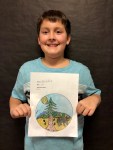
Seth Lockman, a graduate of Maine School of Science and Mathematics (MSSM) is part of the team launching “Stardust,” a 20′-tall, 14”-diameter prototype rocket from Loring Commerce Centre in Limestone in late October. The rocket will have a 540-pound liftoff mass and reach 4,000 feet. The purpose of the launch is to show the bio-derived, carbon-neutral rocket fuel in flight, and to demonstrate commercial demand for suborbital launches by carrying commercial payloads. Lockman said one benefit of the non-toxic fuel is that it could be ingested without causing notable harm. Lockman believes Maine could be an affordable alternative to existing suborbital and orbital launch sites for small rockets and noted the growth pipeline company Frost & Sullivan “projects small-satellite launch service revenues will pass $69 billion by 2030.”

Lockman graduated MSSM in 2011 and received a Bachelor’s Degree in Psychology summa cum laude from the University of Maine in 2015.

Lockman said he enjoyed the psychology program because it has “a great focus on statistics, data sampling, and skeptical interpretation of data.” After college, he volunteered at Southworth planetarium at the University of Southern Maine under the tutelage of Edward Gleason, Planetarium Manager. While there, Lockman founded a radio program in collaboration with WMPG in Portland, Maine. The program, Radio Astronomy, now called Scientifically Speaking, brought astronomy to the general public and included field recordings from events, live shows, as well as guest interviews with industry experts. One such interview was with Sascha Deri, Founder and CEO of BluShift Aerospace, Inc. in Brunswick, Maine. That connection led to Lockman’s employment with the company in October of 2018.

This story was submitted by Ryan McDonald, Public Relations Coordinator from Maine School of Science and Mathematics as part of the Maine Schools Sharing Success Campaign. To submit a story or an idea, email it to Rachel at rachel.paling@maine.gov.

Nokomis High School “Tech Sherpas” Maintain Global Presenter Status During Pandemic

A group of Nokomis High School students known as the “Tech Sherpas” have been around the state, nation, and globe presenting to groups of students, teachers, and experts about the technology they are using in school and beyond. 

Led by Kern Kelley, a long-time teacher at Nokomis High School and district-wide tech integrator, the Tech Sherpas are all part of Mr. Kelley’s and Mr. Brown’s Broadcasting classes which maintain a school TV station, live stream school events, create video tutorials, and dabble in a host of other cool things like robotics, 3D printing, drones, and more. 


Kern Kelley with student presenters in Porterville, California

A presenter and tech professional development expert himself, Mr. Kelley moonlights as a speaker on a global level, something he has always incorporated with his students and career as an educator. What started out as taking students along to take part in his presentations has evolved into students presenting around the world.

Starting in 2012 on a train ride back from the New York Google Offices at a presentation with Mr. Kelley, the students came up with the idea of taking their skillset on the road more formally and the Tech Sherpas were born. Since then they have grown both in size and knowledge with every passing year and every advance in technology. Pre-COVID-19, the Tech Sherpas had traveled to places like Japan, Ottawa, Hawaii, Pennsylvania, and Chicago presenting to large audiences on topics like Google Slides, Google Meets, Google Classroom, and Flipgrid among others.

Kern Kelley presenting with Kris Redman Jared Gay and Chandler Cossar at the New York Google Offices in 2012

After the pandemic forced schools to adapt in the way that education is provided, Mr. Kelley and the Tech Sherpas didn’t miss a beat. What was once in-person presentations all over the world has now become a busy job of booking virtual meetings and presentations to keep up with the ever-changing needs of educators, students, people of all walks of life who need to learn, keep up with, and use technology in their everyday lives.

Nokomis High School Senior Rachel Wilcox has been a Tech Sherpa since she set foot in the Nokomis Warrior Broadcasting class her freshman year. Now a senior and finishing her final year of high school during a pandemic, Rachel is the project manager working behind the scenes to coordinate the Tech Sherpas’ virtual presentations.

Rachel Wilcox and Britney Bubar presenting at ISTE in Chicago

“I like it,” said Rachel in a virtual interview. “I want to go to college for business management, so this is a good step in that direction,” she added. Rachel is in charge of organizing the Tech Sherpas into groups in terms of their readiness to present with the technology they feel most comfortable teaching others. She also works with outside organizations to schedule the presentations, lines up the students to present, coordinates the practice sessions, and participates in the actual event by doing a pre-event tech check, and helping to host the meeting. During the event, Rachel is usually working with a moderator who watches the meeting chat during the presentation, in addition to the presenters.

One of their most recent endeavors was a student-led presentation at the Virtual End of Summer Fest for the Google Waterloo Engineers. It was an opportunity for Google engineers to see creative uses of their tools by ‘real’ people. The topic was using Google Slides to Create Animations, like this one. The Tech Sherpas worked with EdTechTeam Canada for the event which featured the skills of Tech Sherpa, Kaiden Kelley who also happens to be Mr. Kelley’s son.

Kaiden Kelley presenting to Google Engineers

“When presenting, I’m there to share my skills with the teachers,” Kaiden said of his experiences presenting with the Tech Sherpas. In the event with Google engineers, he shared the skills, tips, and tricks that he learned from using Google Slides on various projects over the years. Be began working with the tool in 2012 and has experienced a myriad of changes and upgrades from Google that he has been able to navigate and use in his everyday work. 

A pro at presenting, Kaiden said he doesn’t get nervous anymore during presentations and that the most memorable part of the presentation to Google was seeing everyone “come in” to the virtual meeting from all over the world. The successful presentation has led to further talks with Google Canada about more presentations by the Tech Sherpas.

 “We are in a world now that everybody has experienced video conferencing,” said Mr. Kelley. “We will never again live in a world where that has not happened.” Mr. Kelley hopes to give his students as much experience as possible doing video conferencing knowing that when they graduate from high school they will need to be ready with skill sets that allow them to compete for jobs and post-secondary opportunities all over the country, and potentially enabling them to work and learn from right here in Maine.

While Mr. Kelley is excited about the incredible opportunities his students have experienced during the pandemic, he is quick to explain that using video conferencing is not necessarily better education for students, “it is a tool that we can use to keep providing opportunities for kids.”

Austin Taylor and Brittney Bubar presenting at the Hawaii Island TechEd Conference

Other ongoing projects of the team include helping Mr. Kelley on professional learning opportunities for teachers in Maine. One is an opportunity for educators in any part of the State to explore distance learning tools for students and teachers with the help of the United Technologies Center Adult Education and the Tech Sherpas (Learn more about this opportunity here).

Another is a similar “adopt a teacher” project at Nokomis where the students help resident educators with any technology needs they may be having as they navigate hybrid and remote teaching this year. It not only helps boost technology opportunities for students at Nokomis, but also bolsters relationship building, presenting, and teaching skills for the students. Their hope is to expand on these efforts to expand these types of opportunities for students and teachers state-wide

RSU 16 Gets Creative to Offer In-Person Adult Ed Graduation

Maine Adult Education programs are working hard through the COVID-19 Pandemic to help students meet their goals. That’s why RSU 16 planned an end of summer graduation ceremony to celebrate the accomplishments of their Adult Education students. In a short, in-person, socially distanced graduation on August 6th the program was able to honor 8 out of 13 of their graduates.

While a group picture is not necessarily easy to accomplish, the staff at RSU 16 made a picture collage to memorialize the event for years to come.

This story was submitted by Jenny Rose, RSU 16 Adult Education Director and McKinney Vento Homeless Liaison as part of the Maine Schools Sharing Success Campaign. To submit a story or an idea please email Rachel rachel.paling@maine.gov.