The Washington County Consortium Educator Profile: Dale Bailey

Submitted by Sarah Woog, Executive Director at Washington County Consortium.

Washington County Consortium (WCC) Educator Profile: Meet Dale Bailey, Speech-Language Pathologist at AOS 90

I first heard about Dale Bailey’s work from Mandy Belanger, Principal at Woodland Elementary School. Mandy praised his passion for supporting educators and students and his expertise in the areas of speech and language. She thought he’d be a great presenter for Harvest of Ideas, too.

I reached out to Dale to ask him to consider presenting at Harvest of Ideas and, in his response to the request for proposals (RFP), he described a professional background that speaks to Dale’s depth of experience and tremendous expertise. I was excited to be able to offer Dale’s session about dyslexia screening in Maine to Washington County educators:

Over a more than 20 year time span, Dale has worked as a speech-language pathologist, LD evaluator (079), district data consultant and early literacy coordinator.  He has a special interest in the connection between oral and written language assessment and development. Dale has extensive experience designing and delivering PD in the areas of assistive technology, assessment, language and early literacy.  Dale has held positions as adjunct faculty (UMFK & UWSP) and as the Statewide Early Literacy Coordinator for the state of Wisconsin. He currently provides services to students in AOS90 while continuing to provide professional development & support to educators in both Maine and Wisconsin.

The feedback from Dale’s session at Harvest of Ideas confirmed that he has a lot to offer. Many shared it was the best part of their day, and that it gave them ideas and practices to try immediately in their classroom. He was also lauded as an incredibly informed and skilled presenter. 

I reached out to Dale to interview him for a profile because I wanted to hear more about his journey, his core beliefs around language and learning, and his hopes for schools and students in Washington County. He welcomed me in his office at Woodland Elementary School so we could sit down for a conversation. I am grateful for his time, candor and insights, and am excited to share them here.

Dale had a stutter growing up, and described himself as an “under the radar kid.” His academic success earned him admission to Colby College, where he studied economics. While at Colby, and during summer internships, he realized he’d “have to learn to be a successful communicator in order to succeed in the world.” During the summer after his junior year, he participated in a residential speech therapy program for adults, which helped him achieve his goals around speech fluency, and sparked a deeper interest in the area of speech and language.

Dale did enter the business field, but his interest and personal connection to speech and language nagged at him. After oscillating for some time between working in business and working on his Master’s Degree in Communication Disorders, Dale obtained a Master’s from the University of Maine at Orono in 1997, and went right to work in the field in 1998. After building his career and expertise in Maine and then Wisconsin, Dale decided to come back to Maine in 2018 and found a fit working with all schools and grade levels in AOS 90.

At AOS 90, Dale sees unique assets and challenges. He appreciates how, in a small district, he is able to work with both students and educators and sees professional development as an integral part of his work. His understandings are constantly informed by both students and educators, and he is able to support educators’ growth while informed directly by students’ experiences. 

As for challenges, Dale shared that “sustained, purposeful, targeted effort is required to move the needle,” and lamented the challenges that limited resources in most districts pose to engaging in sustained efforts. He elaborated: “Teachers work their tails off, they work so hard and oftentimes, if not all the time, do good work with limited information…and/or with limited materials. It’s quite remarkable to see really great results from teachers who have these limits. If we give teachers great materials and great information about what they are trying to teach or how they are trying to teach it, gosh, we could do a lot.”

There are many people with whom Dale has worked who give him great hope when imagining the possible. He spoke of Mandy Belanger, Principal at Woodland Elementary School. “Mandy- she’s hungry; she wants to figure it out. She wants to understand reading as a door to learning and development; she wants to figure out how to move the needle on reading development, to open up doors for kids in learning, thinking, and developing as individuals.” 

Dale’s work and story inspire my imagination, too. Consider Dale’s early challenges with speech and recall the Harvest of Ideas feedback around Dale’s gift for speech. Dale wasn’t born with his speech skills; he was motivated to gain these skills and was able to access the resources to achieve them. He then worked throughout his career to understand speech and language and use his evolving understandings to impact student learning. Dale’s gift that I’d like to celebrate is the gift he gives us through his work, to his colleagues, and his students, and all those impacted by his work throughout his career. Thank you, Dale, and thank you, too, to the passionate educators he celebrates as well. 

Please, take a moment to reflect on the gifts educators all over Washington County give each other, their communities and their students. And take another moment to celebrate the gifts you give and receive, as well.
 

Student Cabinet Meets with Commissioner Makin to Discuss Education in Maine

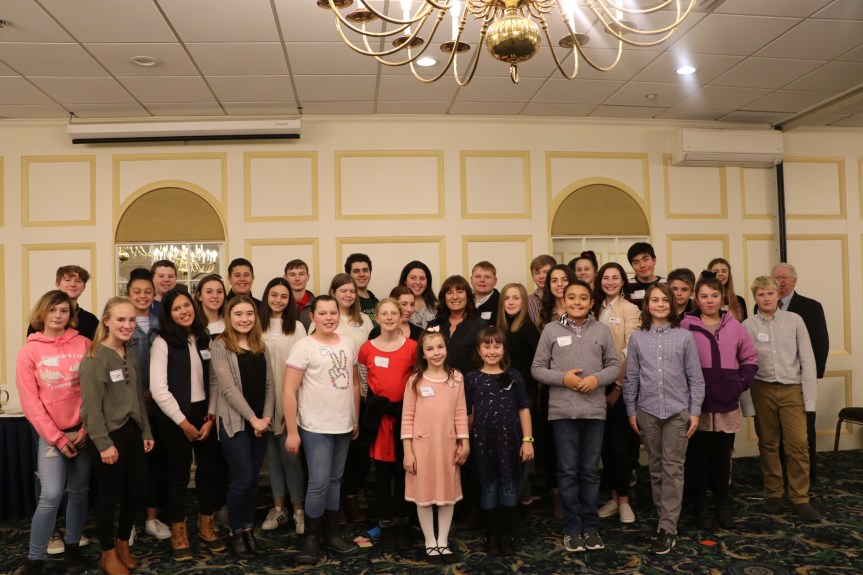
Students from across Maine met with Maine Department of Education (DOE) Commissioner Pender Makin in Augusta for an all-day summit on December 20th. The students were each selected from a pool of nearly 300 applicants to be part of the Maine Department of Education’s first Student Cabinet. The 12/20 meeting was the first of four meetings to take place this school year.

The Maine DOE and the Maine State Board of Education, with special help from the Board’s two student representatives, Jaylee Rice and Casey Maddock put together the Student Cabinet as a way to include student voice in decision making at the state level. The Cabinet is made up of students from all 16 counties in Maine in grades 4th through 1st year of college, who were selected based on their thoughtful responses on the application distributed to the public by the Maine DOE this past fall.
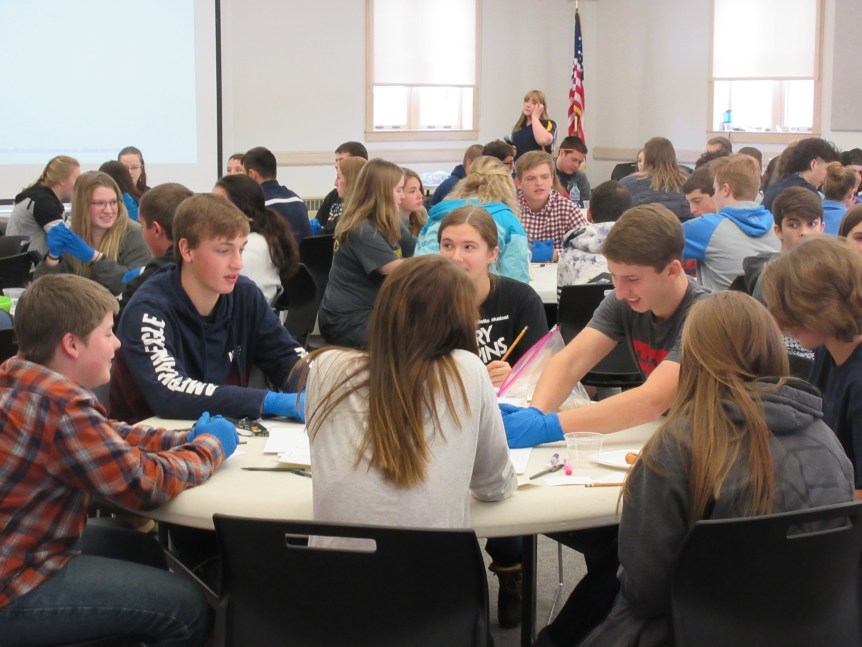
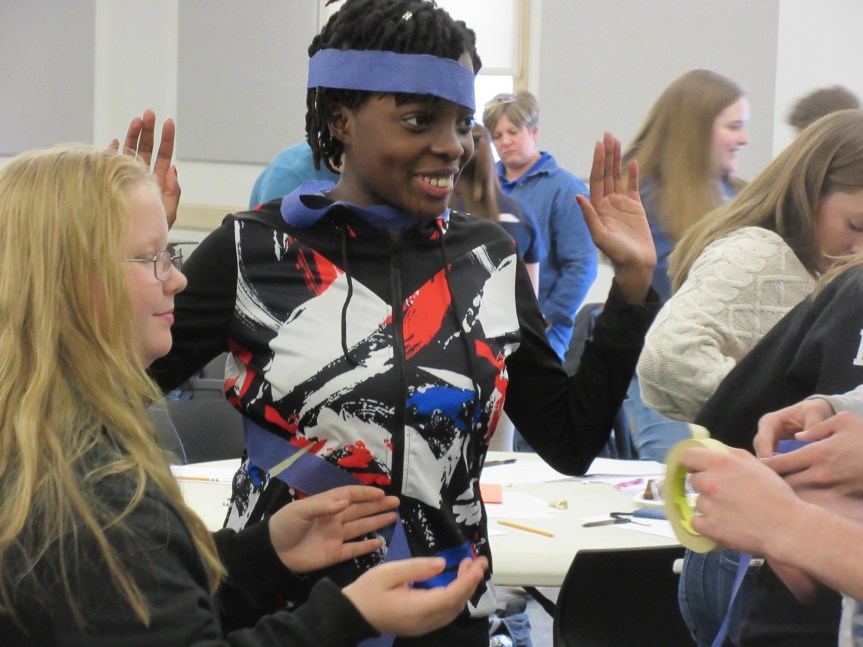
During the day-long meeting, students had the opportunity to connect with one another through team-building activities, along with values-based activities to help them identify the importance of their own values and that of others, including the populations they represent. The bulk of the work was done in the second half of the day, as students worked in like-age groups to categorize important topics in education for the Commissioner to be aware of, topics for discussion, and topics to act on.

The day ended with a round table discussion about the topics discussed within each of the groups. From the master list of topics, the students each got the opportunity to vote on the topics they felt were the most important to explore further as a group. Addressing issues of mental health and trauma for students, ensuring inclusive and welcoming schools for all, and ensuring equitable opportunities for all Maine students were goals the group identified as most important.

Three additional follow up meetings are being planned for the winter and spring, in addition to an online discussion board where student cabinet members will have the opportunity to engage with one another and invite other students from their region to join in county level discussions.

Maine DOE Student Cabinet Members: 

Name  County 
Klara Androscoggin
Cadence Androscoggin
Nicholas Aroostook
Damon Aroostook
Fiona Cumberland
Leela Cumberland
Katelyn Cumberland
Josh Cumberland
Monica Franklin
Mackenzie Franklin
Sarah Hancock
Avahnnah Hancock
Rhayna Kennebec
Cecilia Kennebec
Emmett Knox
Isaiah Knox
Emma Lincoln
Zaid Lincoln
Alexi Oxford
Connor Oxford
Maya Penobscot
Sam Penobscot
Brooke Piscataquis
Isabel Sagadahoc
Madison Sagadahoc
Savea Somerset
Annabelle Somerset
Gaby Waldo
Stephanie Waldo
Matthew Washington
Sarah York
William York


China Primary School Second Graders do Pumpkin Decomposition Project

Submitted by Keith Morin, Assistant Superintendent of Schools and Chief Academic Officer for  Regional School Unit No. 18.

In preparation for China Primary School’s second grade’s spring Earth Science studies, earlier this fall we researched where our trash goes and prepped a project we will be digging up on Earth Day! We hollowed out a pumpkin, filled the pumpkin with our snack time trash, and then buried our pumpkin behind our school!

Our second graders placed seeds, nuts, plastic wrappers, juice boxes, apples, carrots, and
goldfish into the pumpkin! We made predictions as to which items would break down between now and April – and which snack items would not! We are so excited to dig up our pumpkin in the spring and make our observations!

Belgrade Central School Celebrates 2nd Annual Young Reader’s Week

Submitted by Keith Morin, Assistant Superintendent of Schools and Chief Academic Officer for  Regional School Unit No. 18.

Founded by Pizza Hut and the Center for the Book in the Library of Congress in 1989, National Young Readers Week has been an annual event held at Belgrade Central School during the second week of November to raise awareness around the importance of reading. This is Belgrade Central’s second year of using this week to spread the love of reading around our school community.

Each teacher scheduled events to take place throughout the week that would highlight reading, and we participated in some school-wide events too. On Thursday, November 14th grades K-2 and grades 3-5 each held a “Read-In” event where they all gathered together in the gym to “get cozy and read” for a period of time. Blankets were spread out everywhere, kids were snuggled up with their friends and favorite books, and we all read together! Mrs. “Bacon” brought along her special friend “Mrs. SunnysideUp” to join in on the fun!!

On Friday, November 15th, the whole school participated in a Book Parade, allowing students to dress up as their favorite book characters, carry their favorite books, and spread the love of books up and down our hallways.

Other events and things you could see around the school were bookmark projects, decorated doors, guest readers in classrooms, math literacy (students finding math concepts in picture books), and whole day “read ins” feeding off our school-wide events.

This was a great way to bring the school together around the love of books!

Windham High School Students Learn the Reality of Journalism

Submitted by Lanet Hane, Director of Community Connections in RSU 14.

Students in Windham High School’s Journalism course have been learning all about the process of writing great stories. In addition to learning the craft, they have a number of opportunities throughout the course to experience the real-life world of careers in journalism.

Students were recently provided the opportunity to tour WGME, experiencing everything from green screens to the feeling of being on-air. They had the chance to interact with people who have made a career out of journalism, and were immersed in the real-life application of the work they have been doing in the class.

Later in the week, Lorraine Glowczak of The Windham Eagle joined the class to talk about her experiences as a writer and editor.  They had the opportunity to ask questions about the process of writing articles, keeping deadlines, working for a newspaper, and much more.

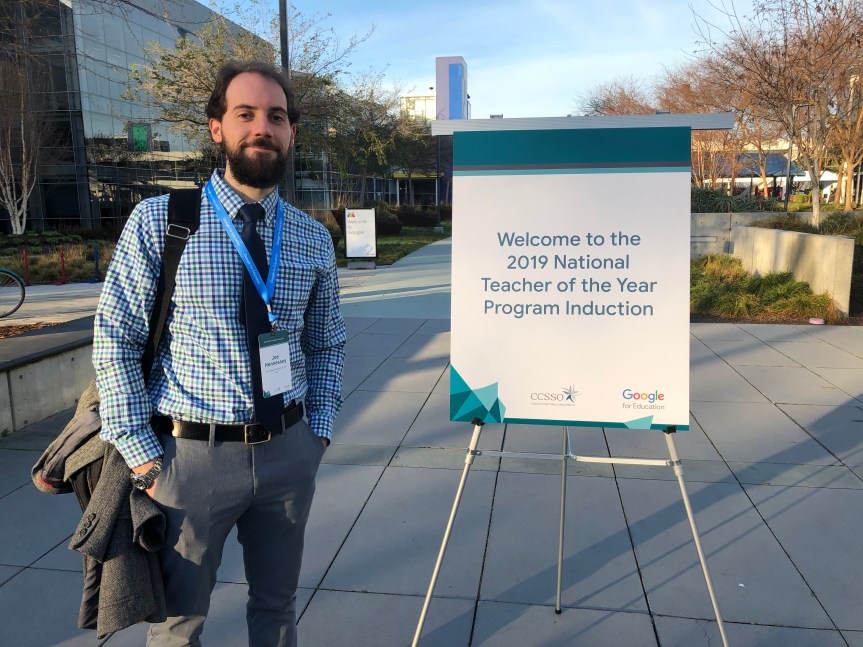
Joe Hennessey, Maine 2019 Teacher of the Year: A Year in Review

An open letter written by Maine’s 2019 Teacher of the Year Joe Hennessey.

To my fellow colleagues, educators of all levels, and community members throughout the state:

What follows is an open letter to you which originates from a place of profound gratitude. It has been my sincere pleasure and honor to represent our profession and its schools as the 2019 Maine Teacher of the Year, and I hope that I have fulfilled that charge acceptably. Eighteen months ago, my principal nominated me for a recognition which many of our colleagues would have been unable to accept for any number of reasons or would have refused upon philosophical grounds. I think we can all agree that there is no single best teacher in our state, and unequivocally, I am only one piece of a larger whole in Guilford; no person works in a vacuum, and I find myself having been named Teacher of the Year precisely because the students, parents, community members, and staff members where I work put me in a position to succeed. Time and again, they have permitted me to broaden my intellectual horizons and to augment my pedagogy by taking risks, iterating, and refining. They have shown me great trust and support throughout my year of recognition, and I am not able to repay their kindness other than to offer my deepest thanks.

Despite my initial inner conflict, and throughout my personal doubts, I have sought to serve as an ambassador of public education in Maine on behalf of my students, their sending communities, my school, and various invested parties. I have endeavored to gather, to highlight, and to learn beyond the opportunities afforded to most of my colleagues, and my immediate task is to share these salient pieces with others. As I transition back into a regular classroom routine, I have thought about how to articulate these truths in a coherent manner to others. For the time being, I have grouped my thoughts into these three tasks from the outset of my year: What I have gathered, what I have highlighted, and I what I have learned.

The resources which I have been able to gather on behalf of myself and others over my year are numerous and profound.  On one front, my professional network has been expanded with 55 cohort colleagues, who are diverse and capable beyond my ability to express. On another front, I have also become aware of new paradigms, teacher/community leadership opportunities, centers for teaching excellence, and partners in education. It appears that we are all working in concert, whether we are aware of one another or not. The crux, to me, is how to harness these different pieces together so that we may all benefit from one another’s strengths, across grade levels and state lines. Perhaps a comprehensive, well-indexed database of resources? A dedicated center for teaching excellence in the geographic center of our state? New fellowships and networking opportunities for teachers? I do not know, but I am optimistic that some assortment of the above could be realized if we decide we want it.

In my written and spoken work, I have striven to highlight the challenges and assets of rural education in our state. I have written honestly about our challenges with chronic absenteeism, low literacy/functional illiteracy, progressive mental health education, and spare mental health infrastructure because I know how hard every school district is working to meet the needs of its students. I have also written and spoken about the wonderful additions to intellectual life Maine’s rural areas are making through interdisciplinary classes, project-based learning, multiple pathways via differentiation, and the essential time and space to think and grow which Maine’s rural students are afforded. Schools in the countryside are adaptable, responsive, and committed to being community centers– a notion that other portions of our country are not fortunate enough to possess at present. I remain convinced that rural schools are good places to be in the state of Maine, and that they themselves will be the determining factor in what the essential public service of the future will look like.

My reading, writing, speaking, and listening has taken me all over the world in the last twelve months. From California, to Washington, D.C., to Virginia, to New York, to Alabama, to Louisiana, and throughout our own state, I have seen what public education has to offer American society. In Germany and Switzerland, I have further observed the capacity and enthusiasm of young people from entirely disparate walks of life. And, what I have found in all of these places is an interconnected, interdependent, curious, compassionate, and ultimately fallible world. It is up to us to think critically, articulate ourselves well, and help students to learn to do the same, regardless of whether we agree with their eventual conclusions. In contemporary life as in the past, we are better as individuals and groups for having been exposed to diverse viewpoints. And, I will, in kind, treasure this travel for the rest of my life and incorporate those experiences back into my classroom through planned lessons, impromptu discussions, and further extrapolation which I cannot anticipate as of now.

More than anything, though, my time as the 2019 Maine Teacher of the Year has been affirming, and my mantra that we are all “thinking people” has been further impressed upon me. In Maine and beyond, we are all capable of great intellect and great thought, and our academic and technical education programs ought to reflect that premise. Education– formal and informal, primary or secondary or post-secondary– remains the path to self-betterment and community-betterment. And, in a time of social and political division, technological acceleration, and possibly increased alienation and distraction, it has been made clearer to me that we need all of Maine’s society to achieve what it is capable of achieving. Our collective progress depends upon the essential public service– public education– and we need to frame our discussions moving forward around that fact.

Learning from colleagues and organizations from coast to coast and continent to continent, it is more evident to me than before that our education system is whatever we make it and are willing to pursue. I am enchanted by learning and in awe of the art which education is able to evince in our society. In a manner of closing, I would equate James Weldon Johnson’s “Before a Painting” as metaphor for education writ large.

I knew not who had wrought with skill so fine
What I beheld; nor by what laws of art
He had created life and love and heart
On canvas, from mere color, curve and line.
Silent I stood and made no move or sign;
Not with the crowd, but reverently apart;
Nor felt the power my rooted limbs to start,
But mutely gazed upon that face divine.

And over me the sense of beauty fell,
As music over a raptured listener to
The deep-voiced organ breathing out a hymn;
Or as on one who kneels, his beads to tell,
There falls the aureate glory filtered through
The windows in some old cathedral dim

Let us all look forward to taking the time and space we need to educate one another, educate ourselves, and remember the value of teaching and learning in Maine.

Sincerely,

Joseph Hennessey
English Teacher– Piscataquis Community High School of Guilford, Maine
2018 Piscataquis County Teacher of the Year
2019 Maine Teacher of the Year

Kennebec Valley Regional Superintendents’ Association Hosts 4th Biennial Showcase Event

In an effort to promote the masterful work our public schools do for the students in the Kennebec valley region, the Kennebec Valley Regional Superintendents’ Association (KVRSA) sponsored it’s 4th biennial Showcase Event on November 15, 2019 at Cony High School in Augusta.

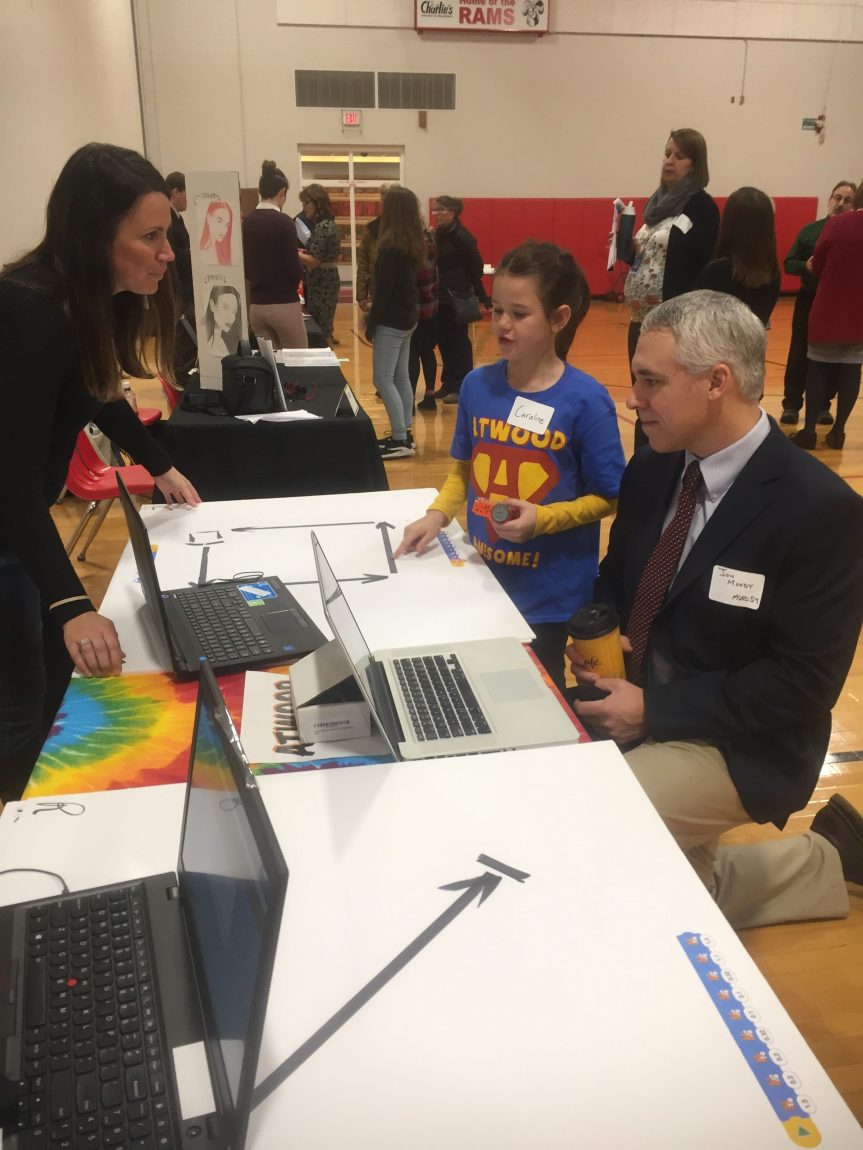
This year 10 school districts participated with their students sharing 20 different and ingenious educational opportunities taking place in their schools. Showcase activities ranged from digital photography, ELL programming, culinary arts, Fast Break Café, Dual Enrollment opportunities, JMG Backpack programs, innovation using upcycled materials, STEM and the latest technology such as 3D, printers and Robots.  We had students share their digital graphics program, multiple pathway opportunities and a 20% Project program.  We were also entertained by two performing groups.

This worthwhile event was attended by DOE representatives, Superintendents, Principals, School Board Members, Parents, and Maine Legislators.

“This was such an awesome event!” said Page Nicols, Chief Innovation Officer for the Maine DOE. “I was especially impressed by a group of high school students from Gardiner working on ‘The 20% Project’ in which they developed a business idea and then actually launched the business.  There were a couple of graduates with them who have further pursued their project/business since they graduated.”

“I was so impressed by the caliber of the student ambassadors as they shared what they were learning and doing in the various programs they were representing,” said Shari Templeton, Maine DOE Science & Technology Specialist and Kennebec County Regional Representative. “From RSU 3 elementary students adeptly discussing Cougar coins and PBIS strategies to RSU 18 high school students proudly describing their Fast Break Café, the young people were poised, confident and strong advocates for the programs they represented. Kudos to the next generation and the teachers who lead them,” she added.

Participating School Districts and what they were showcasing are as follows:

Elementary – Grades Pre-K – 5

  • RSU 3 – PBIS
  • RSU 18 – Robotics

Middle School – Grades 6 – 8

  • RSU 3 – IKnowME
  • RSU 38 – Ratio Math Projects

High School – Grades 9 – 12 & Technical Center

  • Augusta – Digital Photography and ELL Program, CATC Culinary Arts and serving, Cony Madrigals – Welcoming performance
  • RSU 3 – Chamber Singers (Performing during event)
  • RSU 18 – Fast Break Café
  • RSU 38 – Dual Enrollment
  • MSAD 49 – JMG Backpack Program
  • MSAD 13, 59 & 74 – Innovation using upcycled materials and the latest technology such as 3D printers and Robotics
  • MSAD 13, 59 & 74 – Multiple Pathways Academy
  • MSAD 11 – 20% projects completed and in progress
  • MSAD 54 – Digital Graphics Program

Adult Education

  • RSU 38 – Maranacook Adult and Community Education

Information and pictures for this article were provided by administrators from the Kennebec Valley Regional Superintendents’ Association (KVRSA).

Maine FFA Aroostook Chapter Students Collaborate on Leadership

On November 15, 2019, 160 enthusiastic Aroostook County FFA student members (formerly known as “Future Farmers of America”) participated in a one-day workshop at the University of Maine at Presque Isle devoted to leadership skills of positive influence, prioritizing, time management, and teamwork.  The University’s Sustainable Agriculture program sponsored the event.

Student State FFA Officers Graham Berry (President), Camryn Curtis (Vice President) and Ava Cameron (Secretary-Treasurer) developed, organized and conducted the workshop, with assistance from Haillee Cunningham and Alli Kenney of Ashland High School and from Emma Burby, Brandon Dubie, Izzy Higgins, Rheanna Ortman, and Amanda Winslow of Presque Isle Regional Career & Technical Center.  Logistics were assisted by Doug Robertson, State FFA Advisor, Maine Department of Education.

All current FFA chapters of Aroostook County fielded students to the event:  Ashland High School, Ashland Middle School, Caribou Technology Center, Central Aroostook High School, Central Aroostook Junior High School, Easton Junior/Senior High School, Hodgdon High School, Presque Isle Regional Career & Technical Center, Presque Isle Middle School, Washburn High School.
Considering Positive Influence in Leadership (left to right at table in foreground, five students facing camera): Hunter Cunningham, Ashland Middle School - Nick Margeson, Caribou Technology Center – Madelyn Buzza, Presque Isle Regional Career & Technical Center (PIRCTC) - Creed Chasse, Ashland High School – Maggie Currie & Clay Gregg, PIRCTC
Considering Positive Influence in Leadership (left to right at table in foreground, five students facing camera): Hunter Cunningham, Ashland Middle School – Nick Margeson, Caribou Technology Center – Madelyn Buzza, Presque Isle Regional Career & Technical Center (PIRCTC) – Creed Chasse, Ashland High School – Maggie Currie & Clay Gregg, PIRCTC

Maine FFA is a statewide organization whose nearly 500 members come from grades 7-12 classes devoted to areas of agriculture and natural resources (including science curricula infused with agriculture and natural resources topics).  Workshop content included discussion of topics, brainstorming, and hands-on illustrative activities.  In additional to leadership skills, students had the chance to meet and work together with peers from other schools.  Some students at the workshop had also recently returned from the National FFA Convention in Indianapolis, an event attended by nearly 70,000 students from across the country.  In addition to workshops and conventions, students in FFA are often involved in local community service and may benefit from numerous awards and scholarships.
Schools interested in starting new FFA chapters should contact:  Doug Robertson, Maine FFA Advisor, Maine Department of Education, doug.robertson@maine.gov  (207) 624-6744.

MSSM Student Elected as Youth Governor of YMCA Youth and Government Program

Submitted by Ryan McDonald, Public Relations Coordinator, Maine School of Science and Mathematics. 

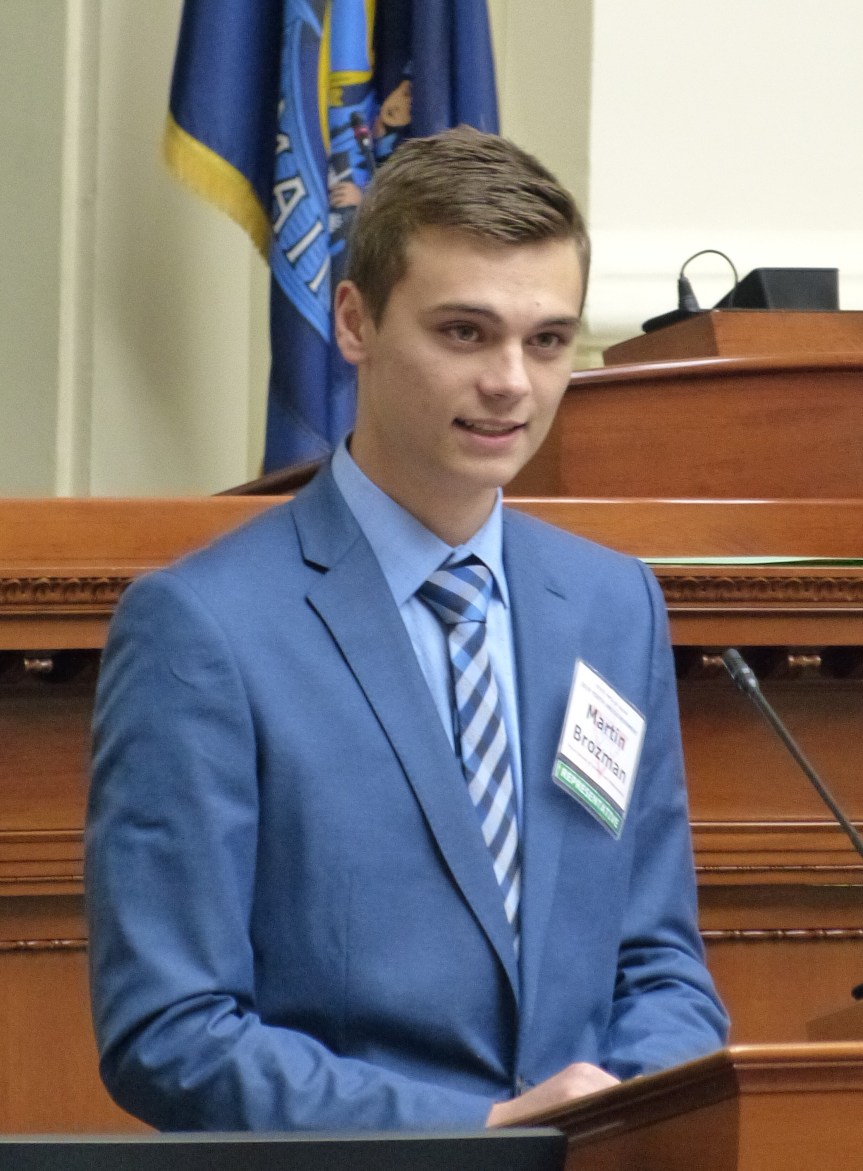
Maine School of Science and Mathematics (MSSM) student Martin Brozman, a junior from Bangor, will serve as the 78th YMCA Youth Governor of the Great State of Maine. He was elected to the office by his peers at the 2019 Maine YMCA Youth and Government program on Sunday, November 11th. Martin is the first MSSM student ever to hold the position. With his election, Martin will attend the YMCA Youth Governor’s Conference in Washington, D.C., representing the Maine YMCA, and he will serve as Governor of the 2020 Youth and Government program in Augusta.

The MSSM delegation returned to Limestone Sunday evening where they were welcomed by a Limestone Police and Fire Department escort at the town line and a celebratory student body ready to welcome Governor Brozman and the rest of the group home. Additional recognition to this year’s senior participants: Will Whitman (Swan’s Island), Michael Delorge (Biddeford), Toben Streevy (Bar Harbor), Taesu Joo (Republic of Korea), Jordan Theriault (Fort Fairfield), James Lau (Buxton), Jay Philbrick (North Yarmouth), Christian Chagnon (Eliot), Annie Giroux (Wales), Shea Sewall (Hope), and Madelyn Battcock-Emerson (Kittery).

Brozman’s platform was based on a need for affordable healthcare here in Maine. He believes that this would “attract young people and families to live here and thrive. Without having to worry about healthcare costs, young families will be more likely to stay and be active members of their communities.” Brozman comes from a family of doctors and plans to be either an orthopedic surgeon or a neurologist. Brozman went on to say, “This program has helped me realize the role of government, and now I have a better understanding of the politics behind medicine.”

YMCA Youth and Government program allows any High School student in Maine to participate in a hands-on experience of how Maine’s Legislative process works. Delegates have a variety of duties such as drafting all the bills to be debated and discussed, and electing their peers to serve in leadership positions to lead at the State House weekend. They also receive training in how to complete all leadership roles for the weekend. YMCA Youth and Government Program Delegates serve as Youth Governor, Cabinet, Representatives, Senators, Lobbyists, and Media Staff, and have a unique opportunity to have access to the State House during the program. The program takes place in the actual chamber and committee rooms.

For more information contact Lonney Steeves, Maine YMCA Youth and Government Director, at lonneysteeves@gmail.com.


Lewiston Adult Ed Class Sparks New Life In Clown Car

Submitted by Mike Reagan, Education and Marketing Coordinator, Lewiston Adult Education.

Small Engine & Power Equipment Repair students at Lewiston Adult Education bring in chainsaws and snowblowers with seasonal regularity.

When the weather gets warm again, instructor Richard Hussey will see the return of lawnmowers. But this fall, he had a student bring in a repair job that would not fit in with the others, though it did have a small engine.

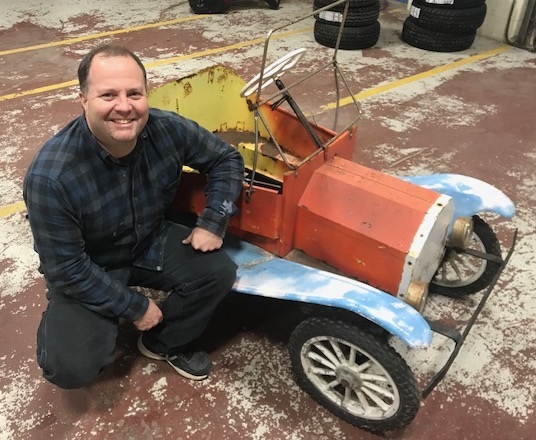
Patrick Penley is a member of the Kora Temple Shrine, a Kora clown and the owner of a multicolored jalopy that had several owners before him.

“My goal was to get that running,” he said.

The clown car had a three-horsepower engine and during the semester, it was removed and replaced by a power washer engine.

“We had to modify the engine. We had to modify the framework. We had to modify the drive system. And this was done primarily by the student. I just gave the guidance,” Hussey said.

He said that students can bring in gasoline engines at the start of the semester but are responsible for bringing them in and taking them home at the end of class. Penley brought the clown car in the back of his pickup truck.

“It has to come and go. That’s your size reference,” Hussey said.

The Small Engine class is finishing up for the fall semester but is scheduled to return for Winter-Spring 2020. The class listing will appear in the combined Lewiston Adult Education-Auburn Adult & Community Education brochure, which is set to come out in early January.

In addition to the clown car, Penley worked on a leaf blower and chainsaw in the class.

He hopes to have the car off and running in a 2020 parade. For those interested in seeing it run a little sooner, here is a link to a video of a test run on Tuesday night at Lewiston High School’s main entrance.