Maine DOE Update – October 30, 2020

From the Maine Department of Education


Reporting Items

| Visit the DC&R Reporting Calendar |


News & Updates

MEDIA RELEASE: Mills Administration Updates COVID-19 School Health Advisory System

The Mills Administration today released an update to its color-coded Health Advisory System that classifies counties’ relative risk of COVID-19 transmission by color and is provided to assist schools as they continue with their plans to deliver instruction and support students safely this fall. The Maine Department of Health and Human Services (DHHS) and Maine Center for Disease Control and Prevention (Maine CDC) assessed the data and trends for all counties. Based on this assessment, Somerset and Washington counties are now categorized as yellow, joining Waldo County, which was designated yellow last week. All other counties remain green. | More

PRIORITY NOTICE: Maine DOE Launches Social Emotional Learning Curriculum

The Maine Department of Education is excited to announce the release of Maine’s first, state owned and free, PreK-12th grade Social Emotional Learning (SEL) Curriculum. | More

U.S. DOE Seeks Maine Educators for National School Ambassador Fellowship

This opportunity is for school-based educators. The Fellowship is designed to improve educational outcomes for students by leveraging the expertise of school-based practitioners in the creation, dissemination, and evaluation of national education policy. Founded on the principles of partnership, collaboration and cooperation with school-based educators, the Fellowship seeks to: | More

Maine Integrated Youth Health Survey Administration Postponed

The Maine Integrated Youth Health Survey (MIYHS) has been conducted in the February of odd-numbered years since 2009, with the next administration due in February 2021. Given the extraordinary circumstances due to the COVID-19 pandemic, the MIYHS will be postponed to Fall 2021. With a significant portion of students learning remotely in some capacity, high quality data collection is not feasible for the 2020-2021 academic year. | More

Educators Honored at Unique Teacher of the Year Tailgate Gala

The Maine Teacher of the Year Program hosted a unique celebration this year to honor its 2020 Maine County Teachers of the Year and the 2021 Maine Teacher of the Year. With COVID-19 health protocols in mind, the innovative team of people behind Maine’s Teacher of the Year Program planned a safe, in-person tailgate event this year in place of the traditional indoor evening gala. | More

Updated Resources Available in COVID-19 Toolkit for Schools

The Maine Department of Education has transformed the Back to School Toolkit rolled out at the beginning of the year into a COVID-19 Toolkit with additional tools to help schools as they face the challenges and realities of providing education during the COVID-19 pandemic.  | More

Computer Science in Maine: Updates and News

Resilient even amidst a pandemic, the computer science education community is continuing to grow and expand computer science opportunities throughout Maine.  Many partners including the Maine Computer Science Teachers Association (CSTA), Maine Department of Education, Maine Mathematics and Science Alliance (MMSA), Educate Maine, and others are working together to make sure that computer science education is available to Maine students throughout the state. Check out these upcoming computer science learning opportunities for students and educators below! | More


Maine Schools Sharing Success Stories

| Submit your Maine School Success Story |


Professional Development & Training Opportunities

MYAN Hosting Fall and Winter Virtual Training Series & Youth Action Forum

This year, MYAN (Maine Youth Action Network) has eight new virtual trainings across three topic areas: Supporting Social Justice Movements, Community Based Action, and Positive Youth Development. | More

Early Childhood Text Studies: Free Professional Development for Educators

Specialists from the Maine Department of Education’s Early Learning Team are excited to offer a web-based professional development opportunity for early childhood educators in the Pre-K and Kg grade span.| More

Community Learning for ME Offers November Wellness Wednesdays for Educators

Community Learning for ME will be hosting wellness related workshops and activities for teachers on Wednesdays in November.  All workshops are FREE to attend and participants will receive contact hours for participation in live sessions. More

| Visit the Professional Development Calendar |


Latest DOE Career/Project Opportunities View current Maine Department of Education employment opportunities here

Computer Science in Maine: Updates and News

Resilient even amidst a pandemic, the computer science education community is continuing to grow and expand computer science opportunities throughout Maine.  Many partners including the Maine Computer Science Teachers Association (CSTA), Maine Department of Education, Maine Mathematics and Science Alliance (MMSA), Educate Maine, and others are working together to make sure that computer science education is available to Maine students throughout the state. Check out these upcoming computer science learning opportunities for students and educators below!

Virtual Family Code Nights

Date/Time: Various Dates, November 2nd through December 9th

In the past three years, more than 100 Maine schools and community organizations have hosted Family Code Nights. These events have brought together nearly 3,000 children and parents to learn how to code side-by-side. Now, the makers of Family Code Night have started a program called CS is Elementary.

It’s simple and free for Maine elementary schools to get involved. Visit Maine Mathematics and Science Alliance’s Family Code Night Host site to learn more – https://mmsa.org/familycodenight/

CS Connected

Date/Time: Wednesdays, 12pm

A weekly virtual series for college students, produced by Project>Login & UMaine’s School of Computing and Information Sciences. Check out CS Connected on Eventbrite to register for upcoming sessions.

CS Educator Happy Hour

Date/Time: Thursdays, 5pm

Are you teaching computer science or interested in doing so in the future? Join a virtual Zoom gathering of the Maine Computer Science educator community to engage in themed informal interactions. Email angela@educatemaine.org for the link to join!

CodeHS

Date/Time: November 12th, 4:30pm

Join a one-hour workshop for middle school teachers on JavaScript using Intro to Programming with Karel the Dog.

Click here to sign up for this event, hosted by Maine CSTA President, Sean Wasson.

Would you like to see your computer science events and news listed in a computer science release? Are you doing something new and exciting with computer science that you want to share with the rest of the community? Reach out to Emma-Marie Banks, Computer Science Specialist at the Maine Department of Education. emma-marie.banks@maine.gov


Community Learning for ME Offers November Wellness Wednesdays for Educators

Community Learning for ME will be hosting wellness related workshops and activities for teachers on Wednesdays in November.  All workshops are FREE to attend and participants will receive contact hours for participation in live sessions.

November 4th, 11th and 18th:

  • 7:15 – 7:30 AM – Start your day with a meditation session, physical activity or a good laugh.
  • 12:00 & 3:00 PM- Workshop sessions to provide teachers with a variety of practical and applicable wellness resources.

Self-Care is never selfish! For more information and to sign up visit Community Learning for ME or contact Megan Leach, Communications and Content Coordinator for Rural Asperations at megan@ruralaspirations.org.

MEDIA RELEASE: Mills Administration Updates COVID-19 School Health Advisory System

Somerset and Washington counties join Waldo County with yellow designation, all other counties remain green

AUGUSTA — The Mills Administration today released an update to its color-coded Health Advisory System that classifies counties’ relative risk of COVID-19 transmission by color and is provided to assist schools as they continue with their plans to deliver instruction and support students safely this fall. The Maine Department of Health and Human Services (DHHS) and Maine Center for Disease Control and Prevention (Maine CDC) assessed the data and trends for all counties. Based on this assessment, Somerset and Washington counties are now categorized as yellow, joining Waldo County, which was designated yellow last week. All other counties remain green.

In Somerset County, both the positivity rate and the rate of new cases per 10,000 people have risen over the previous 14-day period. In Washington County, the site of the Second Baptist Church outbreak, the new two-week case rate per 10,000 is four times higher than it was last week. Waldo County continues to have Maine’s highest county positivity rate at 3.0% and highest new case rate of 17.4 per 10,000 over the last two weeks.  No outbreaks have been identified in Waldo or Washington county schools at this time.

Under the “yellow” designation, which indicates an increased (moderate) level of community risk, schools may consider additional precautions, such as limiting numbers of people in school buildings at the same time, suspending extracurricular or co-curricular activities including competitions between schools, limiting interaction through cohorting, or other measures based on the unique needs of each school community.

These designations are made out of an abundance of caution and for the consideration of school administrative units in their decisions to deliver instruction.

It is essential that school districts across the State of Maine continue to implement plans that adhere to the six requirements for returning to in-person instruction, regardless of their county’s red, yellow, or green designation:

Symptom Screening at Home Before Coming to School (for all Staff and Students) – Students (parents/caregivers) and staff members must conduct self-checks for symptoms prior to boarding buses or entering school buildings each day.  Schools should provide information to families in their primary language to support them in conducting this check.   Any person showing symptoms must report their symptoms and not be present at school.  Schools must provide clear and accessible directions to parents/caregivers and students for reporting symptoms and absences.

Physical Distancing and Facilities – Adults must maintain 6 feet of distance from others to the extent possible. Maintaining 3 feet of distance is acceptable between and among students when combined with the other measures outlined in this list of safety requirements.  6 feet of physical distancing is required for students while eating breakfast and lunch, as students will be unable to wear masks at that time.   A “medical isolation space” (separate from the nurse’s office) must be designated for students/staff who exhibit COVID-19 symptoms during the school day. Adequate ventilation is required for classrooms, with schools having flexibility in implementation such as using properly working ventilation systems or outdoor air exchange using fans in open windows or doors. Groups in any one area, room, or classroom must not exceed the Governor’s gathering size limits.

Masks/Face Coverings – Adults, including educators and staff, are required to wear a mask/face covering. Students age five and above are required to wear a mask/face covering that covers their nose and mouth.  Masks are recommended for children ages two to four, when developmentally appropriate. Masks/face coverings must be worn by all students on the bus. Face shields may be an alternative for those students with documented medical or behavioral challenges who are unable to wear masks/face coverings. The same applies to staff with medical or other health reasons for being unable to wear face coverings. Face shields worn in place of a face covering must extend below the chin and back to the ears. An exception for wearing a mask or face shield applies only to an individual participating in voluntary school sports during vigorous physical exercise. Nothing in the mask/face covering requirements should be interpreted as preventing a school from making accommodations on an individualized basis as required by state or federal disabilities laws.

Hand Hygiene – All students and staff in a school must receive training in proper hand hygiene. All students and staff must wash hands or use sanitizing gel upon entering the school, before and after eating, before and after donning or removing a face mask, after using the restroom, before and after use of playgrounds and shared equipment, and before and after riding school transportation.

Personal Protective Equipment – Additional safety precautions are required for school nurses and/or any staff supporting students in close proximity, when distance is not possible, or when student require physical assistance. These precautions must at a minimum include eye protection (e.g., face shield or goggles) and a mask/face covering. Classrooms and/or areas that have been used by an individual diagnosed with Covid-19 must be closed off until thorough cleaning and sanitization takes place.

Return to School after Illness – Sick staff members and students must use home isolation until they meet criteria for returning to school.

The Health Advisory System categorizations are defined as follows:

  • RED: Categorization as “red” suggests that the county has a high risk of COVID-19 spread and that in-person instruction is not advisable.
  • YELLOW: Categorization as “yellow” suggests that that the county has an elevated risk of COVID-19 spread and that schools may consider additional precautions and/or hybrid instructional models as a way to reduce the number of people in schools and classrooms at any one time.
  • GREEN: Categorization as “green” suggests that the county has a relatively low risk of COVID-19 spread and that schools may consider in-person instruction, as long as they are able to implement the required health and safety measures.  Schools in a “green” county may need to use hybrid instruction models if there is insufficient capacity or other factors (facilities, staffing, geography/transportation, etc.) that may prevent full implementation of the health and safety requirements.

The county-level assessments are based on both quantitative and qualitative data, including but not limited to recent case rates, positivity rates, and syndromic data (e.g., symptoms of influenza or COVID-19). Those data are publicly posted every week on the Maine CDC website. DHHS and Maine CDC also consider qualitative factors, such as the presence of outbreaks that may potentially affect school-age children.

The Health Advisory System reflects ongoing analysis of evolving data, and serves as one piece of information that school and district leaders can use to make decisions about how to deliver education this fall. The qualitative and quantitative considerations and data used by the CDC in determining community transmission risk levels for schools can be located here: How County Risk Levels for Maine Schools are Determined

The Health Advisory System can be found on the Maine DOE website in Part I of the Framework for Reopening Schools and Returning to In-Person Classroom Instructionhttps://www.maine.gov/doe/framework/part-I.

###

Updated Resources Available in COVID-19 Toolkit for Schools 

The Maine Department of Education has transformed the Back to School Toolkit rolled out at the beginning of the year into a COVID-19 Toolkit with additional tools to help schools as they face the challenges and realities of providing education during the COVID-19 pandemic.  

In addition to the myriad of links to printable resources, videos, websites, and posters about COVID-19, how to identify its symptoms, and how to prevent its spread, the toolkit now has expanded to include a section of resources for positive cases of COVID-19 in schools. This includes direct links to the Standard Operating Procedure (SOP) for Positive COVID-19 Cases in Schools and includes additional resources to help school nurses and other school staff navigate the SOP with greater ease.   

Visit the COVID-19 ToolKit »  

Other important updates include the following: 

  • Updated contact information for the FrontLine WarmLine (FLWL)Now available for school staff, FLWL volunteers can help callers address concerns with anxiety, irritability, poor sleep, grief or worry and, if needed, connect them with additional supports. Contact them from 8 AM to 8 PM, 7 days a week by calling (207) 221-8196 or text the word “frontline” to 898-211 for support. 
  • Updated translations of the Pre-screening Tool for School Attendance. This flyer is available in several translated versionsEnglish | Arabic | Chinese | French | Vietnamese | Swahili | Spanish | Somali | Portuguese | 
    Kinyarwanda | Khmer 
  • Updated COVID-19 Child Feels or Appears Unwell Flowchart – now available in easier to print formats:  PDF Legal Sized | JPG Legal Sized 
  • A Community Support Information Flyer from Maine DHHS that can be provided to families that need support in isolation or quarantine. This flyer is available in several translated versions: English | Arabic | Azerbaijani | Croatian | Dari | Farsi | French | Hindi | Khmer | Kinyarwanda | Kirundi | Lingala | Pashto | Portuguese | Russian | Somali | Spanish | Swahili | Telugu | Vietnamese 

Visit the COVID-19 ToolKit » 

Early Childhood Text Studies: Free Professional Development for Educators

Specialists from the Maine Department of Education’s Early Learning Team are excited to offer a web-based professional development opportunity for early childhood educators in the Pre-K and Kg grade span. Participants in this opportunity will get the chance to explore strategies for managing student trauma and mental health behaviors through a text study of both Responding to Student Trauma by Stephanie Filio, M.Ed. and A Practical Guide to Mental Health & Learning Disorders for Every Educator by Myles Cooley, Ph.D.

The text studies will take place virtually in hour-long sessions on a weekly basis between November 30, 2020 and April 2, 2021:

  • Responding to Student Trauma by Stephanie Filio, M.Ed is tentatively set to run Nov. 30-January 8, 2021 (with a scheduled holiday break).
  • A Practical Guide to Mental Health & Learning Disorders for Every Educator by Myles Cooley, Ph.D. is tentatively set to run January 11, 2021 through April 2, 2021.

The learning groups will be limited to 48 participants each. Goals of this professional learning opportunity are to improve participant awareness and understanding of what causes student trauma and to acquire strategies for how to better educate our students exhibiting behaviors related to trauma, mental health, and learning disorders.

Those interested are welcomed to register for one or both studies. Participants will receive a copy of the book(s). Contact hours will be provided at the end of each text study.

Registration is free and can be completed here. Registration closes November 13th at 5pm. Participants will be notified on a first come, first served basis.

For further information, please contact Nicole Madore, Early Childhood Specialist at Nicole.madore@maine.gov.

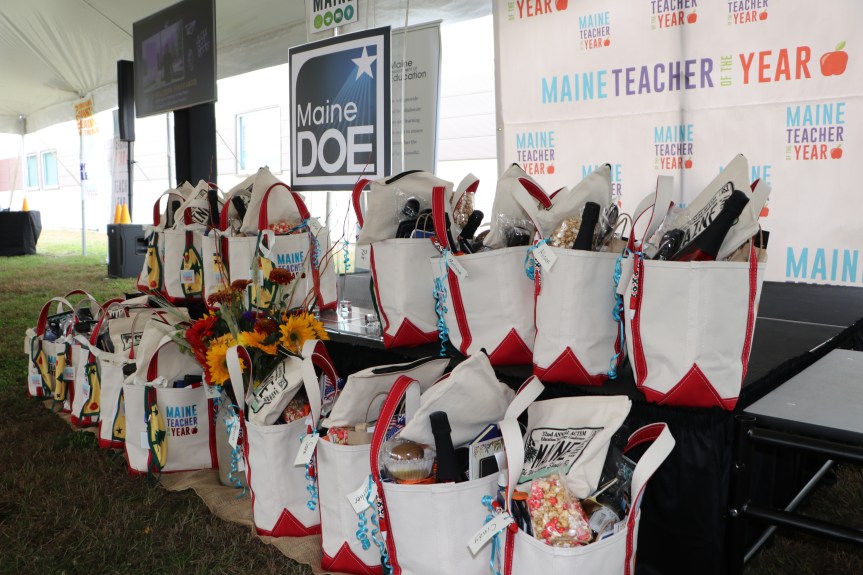
Educators Honored at Unique Teacher of the Year Tailgate Gala

The Maine Teacher of the Year Program hosted a unique celebration this year to honor its 2020 Maine County Teachers of the Year and the 2021 Maine Teacher of the Year. With COVID-19 health protocols in mind, the innovative team of people behind Maine’s Teacher of the Year Program planned a safe, in-person tailgate event this year in place of the traditional indoor evening gala.

Hosted in Lewiston at an outdoor event at Geiger, a longtime supporter of the Maine Teacher of the Year Program, the celebration featured lunch provided by Lewiston Regional Technical Center’s Green Ladle Food Truck, a socially distanced awards ceremony, and remarks (both in-person and recorded) from partners, supporters, and 2020 Maine Teacher of the Year Heather Whitaker. Event attendees included the 2020 Maine County Teachers of the Year and Maine’s 2021 Teacher of the Year Cindy Soule, who were each accompanied by members of their family.

The event was made possible by the impeccable planning of Educate Maine and the program’s generous sponsors: Bangor Savings Bank, Dead River, Geiger, Hannaford, the Maine State Lottery, Unum and the Silvernail Family.

Staff from the Maine Department of Education, including Commissioner Pender Makin, were also present, along with Secretary of State Mathew Dunlap. Honoring an annual tradition, Secretary Dunlap graciously presented Maine’s signature license plate to the 2021 Teacher of the Year.


Representatives from the Maine Teacher of the Year Association, legacy County and Maine Teachers of the Year, and members of the Maine State Board were also there to celebrate and honor their fellow awardees.

Attendees adhered to state COVID-19 safety requirements by keeping socially distanced and wearing face coverings. Additional protocols were implemented to ensure a safe event for all. As was stated by several speakers at the event, in a year that has been very different in many ways, all were grateful for the opportunity to come together, in-person, to celebrate and honor Maine’s outstanding teachers!

https://www.youtube.com/watch?v=FeTZckT_IjQ

Maine Integrated Youth Health Survey Administration Postponed

Dear Superintendents and Principals,

The Maine Integrated Youth Health Survey (MIYHS) has been conducted in the February of odd-numbered years since 2009, with the next administration due in February 2021. Given the extraordinary circumstances due to the COVID-19 pandemic, the MIYHS will be postponed to Fall 2021. With a significant portion of students learning remotely in some capacity, high quality data collection is not feasible for the 2020-2021 academic year. Postponing the survey will reduce the burden on schools and increase the chances of securing high quality data on students’ mental, physical, social, and emotional health.

We ask for your help in making the fall 2021 MIYHS successful by registering to participate early. Our partner, Pan Atlantic Research, will send out Fall 2021 registration information this winter. We are also excited to announce that select schools will have the option to conduct their surveys online next fall! Please stay tuned for more information.

If you have any questions or concerns, please contact Jean Zimmerman at jean.zimmerman@maine.gov or Korey Pow at korey.pow@maine.gov.

U.S. DOE Seeks Maine Educators for National School Ambassador Fellowship

The U.S. Department of Education’s School Ambassador Fellowship application window for the 2021-2022 cohort is now open.

Applications are being accepted through Monday, January 11, 2021.

This opportunity is for school-based educators. The Fellowship is designed to improve educational outcomes for students by leveraging the expertise of school-based practitioners in the creation, dissemination, and evaluation of national education policy. Founded on the principles of partnership, collaboration and cooperation with school-based educators, the Fellowship seeks to:

  • Create a community of teachers, administrators, counselors, psychologists, social workers, and other school staff members who share their expertise with one another and collaborate with Department of Education leaders on issues important to students and educators nationwide.
  • Involve practicing educators in developing policies that holistically affect learning environments.
  • Highlight practitioners’ voices and expand educators’ critical leadership at the local, state, and national levels.
  • The School Ambassador Fellowship offers two separate year-long tracks: full-time and part-time. The full-time appointment is based at the Department of Education Headquarters in Washington, DC; and the part-time fellowship enables educators to collaborate with the Department while maintaining their regular school responsibilities in their home communities.
    To be eligible for the School Ambassador Fellowship program, participants must:
  • Be a U.S. Citizen or permanent resident.
  • Currently be a teacher, administrator, counselor, social worker, or other school staff member (and anticipate being employed in this role during the 2021 – 2022 school year).
  • Be employed by a traditional public, charter, private, virtual, military (DoDEA), or tribal (BIE) school that serves any grade, preschool through twelfth.
  • Have at least five years of experience in his/her role, up to and including the current school year.
  • Have daily interaction with students and/or educators in his/her school/district role.

Ideal candidates for this program are educators from public, charter, independent, magnet, parochial schools, etc. who have made significant contributions to student learning and culture, can effectively communicate to a variety of internal and external education stakeholders, and can promote excellence in education through their collaboration and leadership capabilities.

The deadline to apply for the 2021 – 2022 School Ambassador Fellowship is Monday, January 11, 2021 at 11:59 p.m. Eastern. Program and application submission information can be found at the School Ambassador Fellowship Website.

Have Questions About the School Ambassador Fellowship? Contact the School Ambassador Fellowship program office at SAF@ed.gov.

Finding Creative Ways to Extend Career Development: Portland High Internships Go Virtual

More students than ever are participating in Portland High School’s internship program despite its alternate format

While the coronavirus pandemic caused many of Portland High’s regular partners to be unable to offer internships, some organizations got creative in offering safe internship opportunities for PHS students.

A record 20 PHS students are participating in virtual or socially distant internships this fall. Students are interning with organizations including Maine Audubon, The Portland Press Herald, Planned Parenthood, Cultivating Community, Maine Youth for Climate Justice, Little Chair Print Shop, multiple professional photographers, SMRT Architects and Engineers, Tetra Tech, and the New England Historical Society. More students and internship sites are matched daily.

The pandemic has sparked some creative partnerships, such as between Maine Audubon, PHS, and the Portland Press Herald photography team. Neddie Clews, a senior at PHS will be honing her photography skills to tell the stories of the various Audubon trails. Not only will she be mentored by Melissa Kim, the Director of Communications and Marketing for the Audubon; Michele McDonald, photo editor for the Portland Press Herald, and her team will provide guidance.

Clews reflects, “Being able to do this internship with Maine Audubon is allowing me to pursue some of my top interests while at the same time getting me great work experience, working as a trail photographer I get to have free range of the outdoors while improving my photography skills.”

“We’re always looking for ways to connect with young people, and that’s been challenging this year,” said Melissa Kim, Maine Audubon’s Director of Communications. “This project allows for collaboration, learning, creativity, and content, all within the confines of pandemic restrictions. Having Neddie explore and photograph trails at our sanctuaries, and help us create visual stories of each trail, will give us new ways to engage our supporters and provide reasons for people to come visit and connect with wildlife and habitat.”

If your organization is interested in hosting an intern, contact Andrea Levinsky, Extended Learning Opportunities Coordinator at levina@portlandschools.org.